

Posterior Wnts Have Distinct Roles in Specification and Patterning of the Planarian Posterior Region
Open accessThe DOI matches its Crossref record; 34 of the 34 references it cites were found in a registry or an index.
Abstract
The wnt signaling pathway is an intercellular communication mechanism essential in cell-fate specification, tissue patterning and regional-identity specification. A βcatenin-dependent signal specifies the AP (Anteroposterior) axis of planarians, both during regeneration of new tissues and during normal homeostasis. Accordingly, four wnts (posterior wnts) are expressed in a nested manner in central and posterior regions of planarians. We have analyzed the specific role of each posterior wnt and the possible cooperation between them in specifying and patterning planarian central and posterior regions. We show that each posterior wnt exerts a distinct role during re-specification and maintenance of the central and posterior planarian regions, and that the integration of the different wnt signals (βcatenin dependent and independent) underlies the patterning of the AP axis from the central region to the tip of the tail. Based on these findings and data from the literature, we propose a model for patterning the planarian AP axis.
Overview
The claims and statistics of this paper haven’t been checked yet.
Free: it reads the open-access text and checks the first 5 claims that cite a source we can check. Create a free account to check every claim.
Integrity signals
Registry
Cites
Statistics
Figures
Verification
Claims the paper makes
The claims and statistics of this paper haven’t been checked yet.
Free: it reads the open-access text and checks the first 5 claims that cite a source we can check. Create a free account to check every claim.
Self-check
Percentages, sums and reported differences re-computed from the paper’s own numbers.
The self-check needs the paper’s full text.
Citations
Cites
Wnt signal transduction pathways
Komiya, Y., & Habas, R. (2008) · Organogenesis · doi:10.4161/org.4.2.5851 · Cited by 1,528
Towards an integrated view of Wnt signaling in development
van Amerongen, R., & Nusse, R. (2009) · Development · doi:10.1242/dev.033910 · Cited by 1,175
Clonogenic Neoblasts Are Pluripotent Adult Stem Cells That Underlie Planarian Regeneration
Wagner, D. E., Wang, I. E., & Reddien, P. W. (2011) · Science · doi:10.1126/science.1203983 · Cited by 660
Wallingford, J. B., Fraser, S. E., & Harland, R. M. (2002) · Developmental Cell · doi:10.1016/s1534-5807(02)00197-1 · Cited by 613 · cited 2×
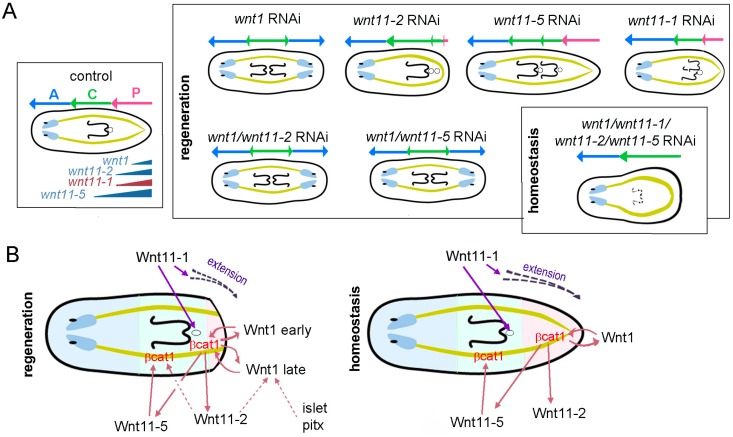
“For that reason, we hypothesize that Smed-wnt11-1 would not function in a βcatenin-dependent manner but it would be involved in the non-canonical/βcatenin-independent Wnt signaling, a well known mechanism to regulate migration and cell movement, which are the main morphogenetic processes required for tissue extension…”
BackgroundT-Cell Signaling Regulated by the Tec Family Kinase, Itk
Andreotti, A. H., Schwartzberg, P. L., Joseph, R. E., & Berg, L. J. (2010) · Cold Spring Harbor Perspectives in Biology · doi:10.1101/cshperspect.a002287 · Cited by 593
Wnt Signaling and the Polarity of the Primary Body Axis
Petersen, C. P., & Reddien, P. W. (2009) · Cell · doi:10.1016/j.cell.2009.11.035 · Cited by 550 · cited 1×
“One of the most conserved roles of βcatenin-dependent Wnt signaling is the specification of the AP (Anteroposterior) axis, where βcatenin is required to confer posterior features in most developmental models studied [4].”
BackgroundDouble-stranded RNA specifically disrupts gene expression during planarian regeneration
Sánchez Alvarado, A., & Newmark, P. A. (1999) · Proceedings of the National Academy of Sciences · doi:10.1073/pnas.96.9.5049 · Cited by 535 · cited 2×
“Double-stranded RNAs (dsRNAs) used in these experiments were synthesized by in vitro transcription (Roche) as previously described [29].”
Methodβ-Catenin Defines Head Versus Tail Identity During Planarian Regeneration and Homeostasis
Gurley, K. A., Rink, J. C., & Alvarado, A. S. (2008) · Science · doi:10.1126/science.1150029 · Cited by 469 · cited 7×
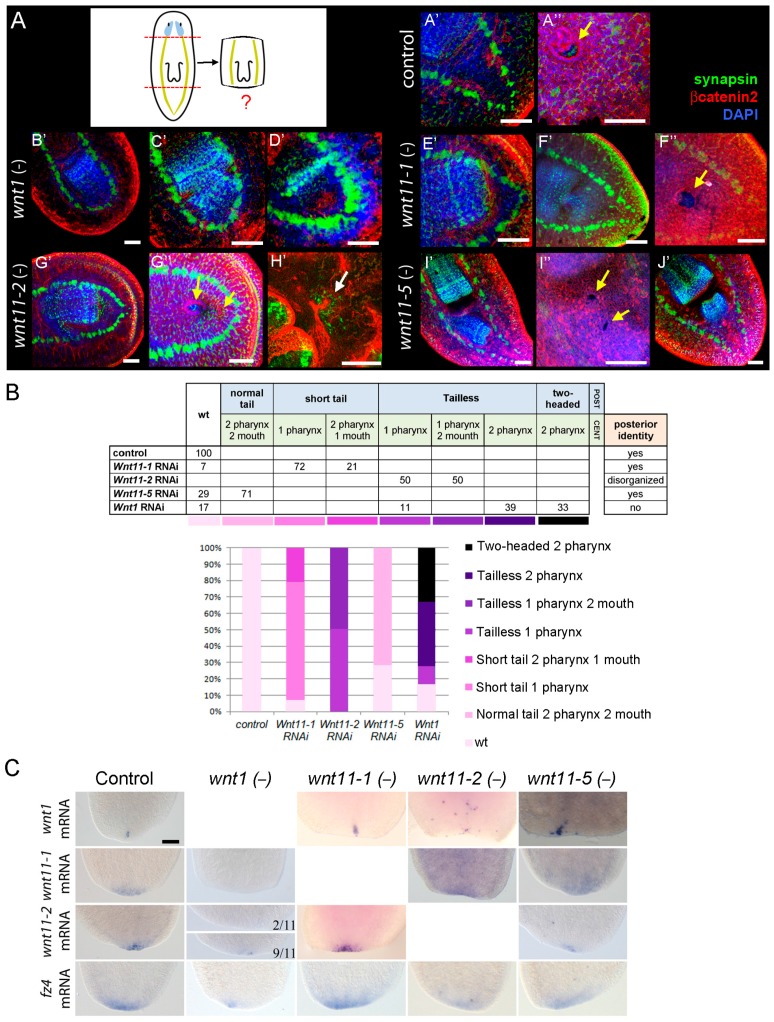
“The analysis of anterior and posterior identity markers corroborates the “tailless” phenotype, since RNAi planarians completely lost the expression of the posterior marker fz4, and the anterior markers sFRP [18] and notum [16] never appear in the posterior region (Figure 3C).”
BackgroundMethodInfluentialSmed- β catenin-1 Is Required for Anteroposterior Blastema Polarity in Planarian Regeneration
Petersen, C. P., & Reddien, P. W. (2008) · Science · doi:10.1126/science.1149943 · Cited by 364 · cited 4×
“βcatenin-depend nt Wnt signaling i lso equ red for the maintenance of posterior identity and pattern during planarian hom ostasis, sinc Smed-βcateni 1 inhibition in intact planarians produces the appearance of ectopic eyes and brain in the posterior tip [12,17,18].”
BackgroundInfluentialWnts as ligands: processing, secretion and reception
Mikels, A. J., & Nusse, R. (2006) · Oncogene · doi:10.1038/sj.onc.1210053 · Cited by 356
Mlodzik, M. (2002) · Trends in Genetics · doi:10.1016/s0168-9525(02)02770-1 · Cited by 341 · cited 1×
“βcatenin-independent pathways are mainly involved in the control of cell shape and movements [5,6].”
BackgroundBaguñà, J., Saló, E., & Auladell, C. (1989) · Development · doi:10.1242/dev.107.1.77 · Cited by 288
A wound-induced Wnt expression program controls planarian regeneration polarity
Petersen, C. P., & Reddien, P. W. (2009) · Proceedings of the National Academy of Sciences · doi:10.1073/pnas.0906823106 · Cited by 251 · cited 6×
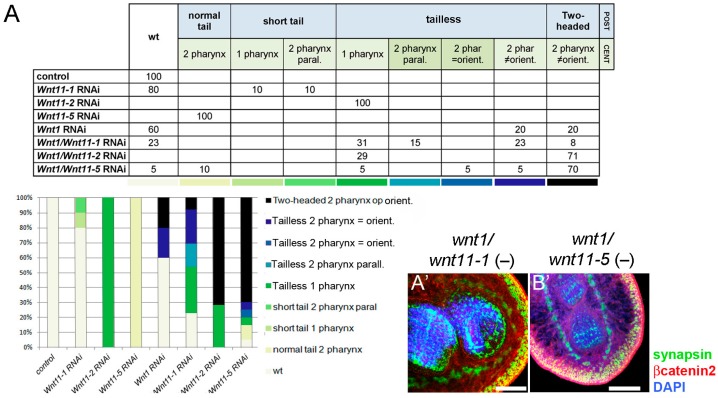
“During regeneration of the tail, Smed-wnt1 inhibition leads to “tailless” or “two-headed” planarians, and Smed-wnt11-2 inhibition leads to “tailless” planarians [14,15,19].”
BackgroundInfluentialPolarized notum Activation at Wounds Inhibits Wnt Function to Promote Planarian Head Regeneration
Petersen, C. P., & Reddien, P. W. (2011) · Science · doi:10.1126/science.1202143 · Cited by 239 · cited 1×
“The analysis of anterior and posterior identity markers corroborates the “tailless” phenotype, since RNAi planarians completely lost the expression of the posterior marker fz4, and the anterior markers sFRP [18] and notum [16] never appear in the posterior region (Figure 3C).”
BackgroundSilencing of Smed -β catenin1 generates radial-like hypercephalized planarians
Iglesias, M., Gomez-Skarmeta, J. L., Saló, E., & Adell, T. (2008) · Development · doi:10.1242/dev.020289 · Cited by 221 · cited 7×
“Consequently, it has been proposed that the graded activation of Smed-βcatenin1 from posterior to anterior is responsible for specifying the whole AP axis in planarians [12,20].”
BackgroundResultSelf-citationGurley, K. A., Elliott, S. A., Simakov, O., Schmidt, H. A., Holstein, T. W., & Alvarado, A. S. (2010) · Developmental Biology · doi:10.1016/j.ydbio.2010.08.007 · Cited by 212 · cited 8×
“During regeneration of the tail, Smed-wnt1 inhibition leads to “tailless” or “two-headed” planarians, and Smed-wnt11-2 inhibition leads to “tailless” planarians [14,15,19].”
BackgroundMethodResultInfluentialUmesono, Y., Watanabe, K., & Agata, K. (1997) · Development, Growth & Differentiation · doi:10.1046/j.1440-169x.1997.t01-5-00008.x · Cited by 210 · cited 1×
“An in situ Pro hybridization robot (Abimed/Intavis, Tübinguen, BW, Germany) was used for the in situ protocol, as previously described [30,31].”
MethodThe power of regeneration and the stem‐cell kingdom: freshwater planarians (Platyhelminthes)
Saló, E. (2006) · BioEssays · doi:10.1002/bies.20416 · Cited by 190 · cited 1×
“They are bilateral animals with a complex cephalized nervous system and a three-branched gut which converges into a pharynx, which takes in food and expulses debris through a ventral mouth [7].”
BackgroundAdell, T., Salò, E., Boutros, M., & Bartscherer, K. (2009) · Development · doi:10.1242/dev.033761 · Cited by 185
Self-citationThe Wnt code: cnidarians signal the way
Guder, C., Philipp, I., Lengfeld, T., Watanabe, H., Hobmayer, B., & Holstein, T. W. (2006) · Oncogene · doi:10.1038/sj.onc.1210052 · Cited by 177 · cited 1×
“In cnidarians, it has been suggested that the patterning of the oral-aboral axis could be established by the cooperation between different Wnts, a “Wnt code”, which would exert the function of the Hox code in bilatelians [26].”
BackgroundMolina, M. D., Saló, E., & Cebrià, F. (2007) · Developmental Biology · doi:10.1016/j.ydbio.2007.08.019 · Cited by 163 · cited 1×
“An in situ Pro hybridization robot (Abimed/Intavis, Tübinguen, BW, Germany) was used for the in situ protocol, as previously described [30,31].”
MethodRange, R., Angerer, R. C., & Angerer, L. M. (2013) · PLoS Biology · doi:10.1371/journal.pbio.1001467 · Cited by 127 · cited 1×
“The cooperation and integration of βcatenin-dependent and -independent Wnt signaling has been demonstrated to be essential also in the patterning of the AP neuroectoderm axis in sea urchin [25].”
BackgroundMärz, M., Seebeck, F., & Bartscherer, K. (2013) · Development · doi:10.1242/dev.100081 · Cited by 105 · cited 2×
“Additional factors, such as Smed-pitx or Smed-islet, could cooperate with Smed-wnt11-2, since their i hibition leads to sup ression of late Smed-wnt1 expression and regeneration of “tailless” planarians [21,22].”
BackgroundGradients in Planarian Regeneration and Homeostasis
Adell, T., Cebria, F., & Salo, E. (2010) · Cold Spring Harbor Perspectives in Biology · doi:10.1101/cshperspect.a000505 · Cited by 105 · cited 3×
“Consequently, it has been proposed that the graded activation of Smed-βcatenin1 from posterior to anterior is responsible for specifying the whole AP axis in planarians [12,20].”
BackgroundSelf-citationNovel monoclonal antibodies to study tissue regeneration in planarians
Ross, K. G., Omuro, K. C., Taylor, M. R., Munday, R., Hubert, A., King, R. S., & Zayas, R. M. (2015) · BMC Developmental Biology · doi:10.1186/s12861-014-0050-9 · Cited by 97 · cited 1×
“Immunostaining was carried out as described in previous studies [32].”
MethodDishevelled is essential for neural connectivity and planar cell polarity in planarians
Almuedo‐Castillo, M., Saló, E., & Adell, T. (2011) · Proceedings of the National Academy of Sciences · doi:10.1073/pnas.1012090108 · Cited by 90
Self-citationReuter, H., März, M., Vogg, M. C., Eccles, D., Grífol-Boldú, L., Wehner, D., Owlarn, S., Adell, T., Weidinger, G., & Bartscherer, K. (2015) · Cell Reports · doi:10.1016/j.celrep.2014.12.018 · Cited by 81 · cited 1×
“Only the inhibition of Smed-βcatenin1 itself or downstream elements, like Smed-teashirt [27], or the removal of the organizer after a posterior amputation, enables its re-specification towards a different fate.”
BackgroundSelf-citationIglesias, M., Almuedo‐Castillo, M., Aboobaker, A. A., & Saló, E. (2011) · Developmental Biology · doi:10.1016/j.ydbio.2011.07.013 · Cited by 79 · cited 1×
“Moreover, the study of several elements of the pathway confirms this function, since inhibition of APC and axin, elements of the βcatenin destruction complex, lead to posteriorization of planarians [11,18].”
BackgroundRiddiford, N. J., & Olson, P. D. (2011) · Development Genes and Evolution · doi:10.1007/s00427-011-0370-8 · Cited by 76 · cited 1×
“The possible non-canonical function of Smed-wnt11-1 and Smed-wnt11-2 compared to the βcatenin-dependent function of Smed-wnt11-5 is further supported by their evolutionary origin, since phylogenetic analysis shows that Smed-wnt11-5 does not branch with Wnt11 but with the Wnt4 family [23].”
BackgroundFernández-Taboada, E., Moritz, S., Zeuschner, D., Stehling, M., Schöler, H. R., Saló, E., & Gentile, L. (2010) · Development · doi:10.1242/dev.042564 · Cited by 68 · cited 1×
“They were maintained as previously described [28].”
Wnt signaling in planarians: new answers to old questions
Almuedo-Castillo, M., Sureda-Gómez, M., & Adell, T. (2012) · The International Journal of Developmental Biology · doi:10.1387/ijdb.113451ma · Cited by 58
Self-citationHayashi, T., Motoishi, M., Yazawa, S., Itomi, K., Tanegashima, C., Nishimura, O., Agata, K., & Tarui, H. (2011) · Development · doi:10.1242/dev.060194 · Cited by 58 · cited 2×
“Additional factors, such as Smed-pitx or Smed-islet, could cooperate with Smed-wnt11-2, since their i hibition leads to sup ression of late Smed-wnt1 expression and regeneration of “tailless” planarians [21,22].”
BackgroundChai, G., Ma, C., Bao, K., Zheng, L., Wang, X., Sun, Z., Salò, E., Adell, T., & Wu, W. (2010) · Journal of Biological Chemistry · doi:10.1074/jbc.m110.113662 · Cited by 50 · cited 1×
“The antibodies used in these experiments were: anti-synapsin (anti-SYNORF1,1:50, Developmental Studies Hybridoma Bank, Iowa City, IA, USA), anti-Smed-β-catenin2 (1:1000) [33] and anti-α-tubulin (AA4, 1:20, Developmental Studies Hybridoma Bank).”
MethodSelf-citationLi, H., Wang, X., Jin, Y., Xia, Y., Feng, X., Yang, J., Qi, X., Yuan, C., & Lin, J. (2010) · Parasitology Research · doi:10.1007/s00436-010-1933-8 · Cited by 20 · cited 1×
“Moreover, a wnt4 has been suggested to act in a βcatenin-dependent manner in the platyhelminth Schistosoma [24].”
Background
Cited by
The Cellular and Molecular Basis for Planarian Regeneration
Reddien, P. W. (2018) · Cell · doi:10.1016/j.cell.2018.09.021 · Cited by 393
Model systems for regeneration: planarians
Ivanković, M., Hanečková, R., Thommen, A., Grohme, M. A., Vila‐Farré, M., Werner, S., & Rink, J. C. (2019) · Development · doi:10.1242/dev.167684 · Cited by 163
“In addition, many canonical Wnt signalling pathway components are expressed in tail-to-head gradients (Gurley et al., 2010; Petersen and Reddien, 2009; Reuter et al., 2015; Stückemann et al., 2017; Sureda-Gómez et al., 2015), which result in a corresponding gradient of canonical Wnt signalling activity in the tissue (…”
BackgroundStückemann, T., Cleland, J. P., Werner, S., Thi-Kim Vu, H., Bayersdorf, R., Liu, S.-Y., Friedrich, B., Jülicher, F., & Rink, J. C. (2017) · Developmental Cell · doi:10.1016/j.devcel.2016.12.024 · Cited by 133
“, in the brain) and individual Wnts may have specific cellular targets, consistent with recent reports of tail Wnt-specific RNAi phenotypes (Lander and Petersen, 2016; Scimone et al., 2016; Sureda-Gómez et al., 2015).”
BackgroundTwo FGFRL-Wnt circuits organize the planarian anteroposterior axis
Scimone, M. L., Cote, L. E., Rogers, T., & Reddien, P. W. (2016) · eLife · doi:10.7554/elife.12845 · Cited by 122
Levin, M., Pietak, A. M., & Bischof, J. (2019) · Seminars in Cell & Developmental Biology · doi:10.1016/j.semcdb.2018.04.003 · Cited by 82
“Most distinctly, canonical Wnt/ β -Catenin signaling has been strongly implicated in posterior development [151, 152], via the inhibition of signaling pathways such as extracellular receptor kinase (ERK) that are associated with head development [153–155].”
Background
Metadata
- Authors
- Sureda-Gómez, M., Pascual-Carreras, E., & Adell, T.
- Affiliations
- Institut de Biomedicina de la Universitat de Barcelona (ES)
- Corresponding author
- Adell, Teresa
- Venue
- International Journal of Molecular Sciences
- Publisher
- MDPI AG
- Published
- 2015-11-05
- Volume
- 16
- Issue
- 11
- Pages
- 26543-26554
- ISSN
- 1422-0067 (ISSN-L)
- PMC
- PMC4661829
- OpenAlex
- W2098373130
- Cited by
- 32
- References
- 34
- Citations by year
- 2025: 5 · 2023: 3 · 2022: 4 · 2021: 2 · 2020: 2 · 2019: 3 · 2018: 7 · 2017: 3 · 2016: 3
- FWCI
- 1.53
- Type
- journal article
- Language
- en
- Open access
- gold
- dx.doi.org
- Licence
- Locations
- International Journal of Molecular Sciences (publishedVersion, cc-by)
- Europe PMC (PubMed Central) (publishedVersion, cc-by)
- PubMed Central (publishedVersion, cc-by)
- PubMed (publishedVersion)
- Dipòsit Digital de la Universitat de Barcelona (Universitat de Barcelona) (publishedVersion, cc-by)
- DOAJ (DOAJ: Directory of Open Access Journals) (submittedVersion, cc-by-sa)
- RECERCAT (Consorci de Serveis Universitaris de Catalunya) (submittedVersion, cc-by)
- Funders
- Ministerio de Educación y Ciencia (BFU2008-01544)
- Generalitat de Catalunya (2009SGR1018 (AGAUR))
- Topics
- Life Sciences › Biochemistry, Genetics and Molecular Biology › Molecular Biology › Planarian Biology and Electrostimulation
- Life Sciences › Biochemistry, Genetics and Molecular Biology › Molecular Biology › Developmental Biology and Gene Regulation
- Life Sciences › Biochemistry, Genetics and Molecular Biology › Molecular Biology › Wnt/β-catenin signaling in development and cancer
- Keywords
- Wnt signaling, β-catenin-independent signaling, cell fate specification, tissue regeneration, regional identity
- MeSH terms
- Animals, Homeostasis, Planarians, Regeneration, Body Patterning, Gene Silencing, Wnt Proteins, Wnt Signaling Pathway
About these checks
Registry, retraction, Cites and statistics results are computed, not judged, with one exception: a printed reference that no index lists is read once by a model before it counts as a citation error. Claims are extracted by a model and kept only when their quote appears verbatim in the text; each cited source is then checked, with a model’s help, for whether it says what the claim relies on. Those verdicts can be wrong — read the claim’s quote and the cited source before relying on one.
Statistics and arithmetic are recomputed, not judged.
Confidence bands are shown only for fields calibrated on our annotated test set. None is calibrated yet, so no band is shown.
What counts as a claim ›How we measure confidence ›How we check this ›
Are you an author, or do you see a problem with this page? Request a review
Data sources
Bibliographic data: Semantic Scholar, OpenAlex, Crossref.
Contains information from the Semantic Scholar Academic Graph Datasets, made available under the ODC Attribution License (ODC-BY 1.0).
Semantic Scholar’s data is described in: Kinney, R., et al. (2023). The Semantic Scholar Open Data Platform. arXiv:2301.10140.
