

Opinion on the Hurdles and Potential Health Benefits in Value-Added Use of Plant Food Processing By-Products as Sources of Phenolic Compounds
Open accessThe DOI matches its Crossref record; 329 of the 330 references it cites were found in a registry or an index.
Abstract
Plant foods, their products and processing by-products are well recognized as important sources of phenolic compounds. Recent studies in this field have demonstrated that food processing by-products are often richer sources of bioactive compounds as compared with their original feedstock. However, their final application as a source of nutraceuticals and bioactives requires addressing certain hurdles and challenges. This review discusses recent knowledge advances in the use of plant food processing by-products as sources of phenolic compounds with special attention to the role of genetics on the distribution and biosynthesis of plant phenolics, as well as their profiling and screening, potential health benefits, and safety issues. The potentialities in health improvement from food phenolics in animal models and in humans is well substantiated, however, considering the emerging market of plant food by-products as potential sources of phenolic bioactives, more research in humans is deemed necessary.
Overview
The claims and statistics of this paper haven’t been checked yet.
Free: it reads the open-access text and checks the first 5 claims that cite a source we can check. Create a free account to check every claim.
Integrity signals
Registry
Cites
Statistics
Figures
Verification
Claims the paper makes
The claims and statistics of this paper haven’t been checked yet.
Free: it reads the open-access text and checks the first 5 claims that cite a source we can check. Create a free account to check every claim.
Claims other papers make about this one
Each is checked against this paper’s own text: does it say what the citing paper says it does?
The cited source says what the claim attributes to it.
In the citing paper
“The fundamental function of phenolics is in plant defense against biotic and abiotic stressors, pathogens, and pests [192,193,194].”
From Valorization of Fruit Waste for Bioactive Compounds and Their Applications in the Food Industry (2023) · cites this paper as [194]
Self-check
Percentages, sums and reported differences re-computed from the paper’s own numbers.
The self-check needs the paper’s full text.
Citations
Cites
Singleton, V. L., Orthofer, R., & Lamuela-Raventós, R. M. (1999) · Methods in Enzymology · doi:10.1016/s0076-6879(99)99017-1 · Cited by 19,125 · cited 2×
“Therefore, expression of the results as a single number is necessarily arbitrary [189] and the trends among several samples, prepared under the same conditions, may be more important than comparing a single number.”
BackgroundImmunity, Inflammation, and Cancer
Grivennikov, S. I., Greten, F. R., & Karin, M. (2010) · Cell · doi:10.1016/j.cell.2010.01.025 · Cited by 10,755 · cited 1×
“Inflammation is a host defense response against an invading agent which involves the participation of immune system cells, such as neutrophils, macrophages and lymphocytes [304,305].”
BackgroundRole of nrf2 in oxidative stress and toxicity
Ma, Q. (2013) · Annual Review of Pharmacology and Toxicology · doi:10.1146/annurev-pharmtox-011112-140320 · Cited by 4,903 · cited 1×
“As mentioned before, polyphenols are classically known to reduce oxidative stress [297] by scavenging free radicals via modulation of redox-sensitive enzymes and NRF2, among other mechanisms [297,298].”
BackgroundBoerjan, W., Ralph, J., & Baucher, M. (2003) · Annual Review of Plant Biology · doi:10.1146/annurev.arplant.54.031902.134938 · Cited by 4,504
Bioavailability and bioefficacy of polyphenols in humans. I. Review of 97 bioavailability studies
Manach, C., Williamson, G., Morand, C., Scalbert, A., & Rémésy, C. (2005) · The American Journal of Clinical Nutrition · doi:10.1093/ajcn/81.1.230s · Cited by 4,219 · cited 1×
“Within phenolic compounds, proanthocyanidins have been listed among the least absorbed [245].”
BackgroundType 2 diabetes as an inflammatory disease
Donath, M. Y., & Shoelson, S. E. (2011) · Nature Reviews Immunology · doi:10.1038/nri2925 · Cited by 3,737 · cited 1×
“Despite beneficial effects, the occurrence of an inappropriate inflammatory process may commonly trigger the onset of inflammatory disorders, for instance, rheumatoid arthritis and diabetes mellitus [306,307].”
BackgroundThe phenolic constituents of Prunus domestica. I.—The quantitative analysis of phenolic constituents
Swain, T., & Hillis, W. E. (1959) · Journal of the Science of Food and Agriculture · doi:10.1002/jsfa.2740100110 · Cited by 3,696 · cited 1×
“The term quantification of total phenolics has long been used [188].”
BackgroundFlavonoid Biosynthesis. A Colorful Model for Genetics, Biochemistry, Cell Biology, and Biotechnology
Winkel-Shirley, B. (2001) · Plant Physiology · doi:10.1104/pp.126.2.485 · Cited by 3,635 · cited 4×
“These compounds are found in most higher plants, and isoflavonoids are mainly present in legumes [89].”
BackgroundInfluentialShahidi, F., & Ambigaipalan, P. (2015) · Journal of Functional Foods · doi:10.1016/j.jff.2015.06.018 · Cited by 3,081 · cited 2×
“Several classes of phenolic and polyphenolic derivatives have been described in the literature [1].”
BackgroundSelf-citationVogt, T. (2010) · Molecular Plant · doi:10.1093/mp/ssp106 · Cited by 3,072 · cited 2×
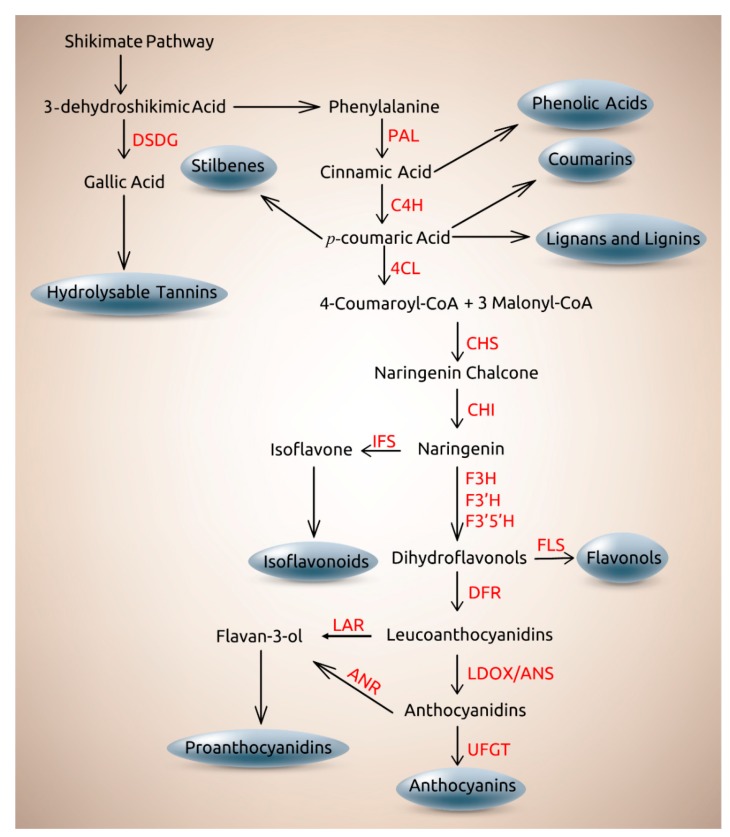
“From this point onwards, the different types of plant phenolics are synthetized (Figure 3) [90].”
Background
Research works printed but not linked: 1
- Samanta A. Das G. Das S. Roles of flavonoids in plants Int. J. Pharm. Sci. Technol. 2011 6 12 35
Cited by
Food by-products and food wastes: are they safe enough for their valorization?
Socas-Rodríguez, B., Álvarez-Rivera, G., Valdés, A., Ibáñez, E., & Cifuentes, A. (2021) · Trends in Food Science & Technology · doi:10.1016/j.tifs.2021.05.002 · Cited by 327
Valorization of Fruit Waste for Bioactive Compounds and Their Applications in the Food Industry
Nirmal, N., Khanashyam, A., Mundanat, A., Shah, K., Babu, K., Thorakkattu, P., Al-Asmari, F., & Pandiselvam, R. (2023) · Foods · doi:10.3390/foods12030556 · Cited by 305
Banana peels as a bioactive ingredient and its potential application in the food industry
Mohd Zaini, H., Roslan, J., Saallah, S., Munsu, E., Sulaiman, N. S., & Pindi, W. (2022) · Journal of Functional Foods · doi:10.1016/j.jff.2022.105054 · Cited by 259
Jimenez-Lopez, C., Fraga-Corral, M., Carpena, M., García-Oliveira, P., Echave, J., Pereira, A. G., Lourenço-Lopes, C., Prieto, M. A., & Simal-Gandara, J. (2020) · Food & Function · doi:10.1039/d0fo00937g · Cited by 223
Is Chickpea a Potential Substitute for Soybean? Phenolic Bioactives and Potential Health Benefits
de Camargo, A. C., Favero, B. T., Morzelle, M. C., Franchin, M., ́Álvarez-Parrilla, E., la Rosa, L. A. D., Geraldi, M. V., Maróstica, M. R., Shahidi, F., & Schwember, A. R. (2019) · International Journal of Molecular Sciences · doi:10.3390/ijms20112644 · Cited by 160
Self-citationAbellán, Á., Domínguez‐Perles, R., Moreno, D. A., & García‐Viguera, C. (2019) · Nutrients · doi:10.3390/nu11020429 · Cited by 133
“The physiological relevance of the phenolic compounds in foods and the cruciferous sprout intake may contribute to the positive effects on health of the phenolic metabolites on the different mode of actions that have been widely studied and reported in literature [13].”
BackgroundAgro-industrial wastes as sources of bioactive compounds for food and fermentation industries
Shirahigue, L. D., & Ceccato‐Antonini, S. R. (2020) · Ciência Rural · doi:10.1590/0103-8478cr20190857 · Cited by 142
de Camargo, A. C., Biasoto, A. C. T., Schwember, A. R., Granato, D., Rasera, G. B., Franchin, M., Rosalen, P. L., de Alencar, S. M., & Shahidi, F. (2019) · Food Chemistry · doi:10.1016/j.foodchem.2019.03.145 · Cited by 93
Self-citationGreen Synthesis of Silver Nanoparticles Using Bilberry and Red Currant Waste Extracts
Zuorro, A., Iannone, A., Natali, S., & Lavecchia, R. (2019) · Processes · doi:10.3390/pr7040193 · Cited by 79
“They consist mainly of the fruit skins and seeds, which are known to contain phenolic compounds and other phytochemicals with antioxidant and metal-reducing properties [26].”
BackgroundLeon‐Bejarano, M., Durmuş, Y., Ovando‐Martínez, M., & Şimşek, Ş. (2020) · Foods · doi:10.3390/foods9020226 · Cited by 73
“Nowadays, agricultural or food by-products are considered a rich source of phenolic compounds (PC) that are not commonly used [16].”
BackgroundA review on the composition, extraction and applications of phenolic compounds
Edo, G. I., Nwachukwu, S. C., Ali, A. B. M., Yousif, E. A., Jikah, A. N., Zainulabdeen, K., Ekokotu, H. A., Isoje, E. F., Igbuku, U. A., Opiti, R. A., et al. (2024) · Ecological Frontiers · doi:10.1016/j.ecofro.2024.09.008 · Cited by 90
Czajkowska–González, Y. A., ́Álvarez-Parrilla, E., Martínez–Ruiz, N. D. R., Vazquez-Flores, A. A., Gaytán‐Martínez, M., & la Rosa, L. A. D. (2021) · Food Production Processing and Nutrition · doi:10.1186/s43014-021-00068-8 · Cited by 88
“The occurrence of phenolic compounds in plants and their by-products, has recently been reviewed (de Camargo et al. 2018; Shahidi et al. 2019).”
BackgroundPatinho, I., Saldaña, E., Selani, M. M., de Camargo, A. C., Merlo, T. C., Menegali, B. S., Silva, A. P. D. S., & Contreras-Castillo, C. J. (2019) · Food Production Processing and Nutrition · doi:10.1186/s43014-019-0006-3 · Cited by 69
“Mushrooms have a high percentage of easily digestible protein and present a meat-like texture (de Jesus, 2015), which make them an interesting choice for the replacement of animal proteins.”
BackgroundDinani, S. T., & van der Goot, A. J. (2022) · Critical Reviews in Food Science and Nutrition · doi:10.1080/10408398.2022.2049692 · Cited by 73
Bioaccessibility of phenolic compounds using the standardized INFOGEST protocol: A narrative review
Rasera, G. B., de Camargo, A. C., & de Castro, R. J. S. (2022) · Comprehensive Reviews in Food Science and Food Safety · doi:10.1111/1541-4337.13065 · Cited by 66
Plant-Based Food By-Products: Prospects for Valorisation in Functional Bread Development
Amoah, I., Taarji, N., Johnson, P. T., Barrett, J., Cairncross, C., & Rush, E. C. (2020) · Sustainability · doi:10.3390/su12187785 · Cited by 71
Shahidi, F., Danielski, R., Rhein, S. O., Meisel, L. A., Fuentes, J., Speisky, H., Schwember, A. R., & de Camargo, A. C. (2022) · Plants · doi:10.3390/plants11233283 · Cited by 53
“However, like bran, this fraction still contains phenolic antioxidants, mainly responsible for protecting the intact seed against biotic, abiotic, and oxidative stress [20].”
BackgroundInfluentialSelf-citationPinaffi‐Langley, A. C. D. C., Sampaio, G. R., Soares, M. J., Shahidi, F., de Camargo, A. C., & Torres, E. A. F. S. (2020) · Molecules · doi:10.3390/molecules25030679 · Cited by 45
Self-citationGuo, F., Danielski, R., Santhiravel, S., & Shahidi, F. (2024) · Antioxidants · doi:10.3390/antiox13060636 · Cited by 55
Self-citationde Camargo, A. C., Álvarez, A. C., Arias‐Santé, M. F., Oyarzún, J. E., Andía, M. E., Uribe, S. A., Pizarro, P. N., Bustos, S. M., Schwember, A. R., Shahidi, F., et al. (2022) · Antioxidants · doi:10.3390/antiox11061139 · Cited by 41
Self-citationBioconversion of Agro-Industrial Waste into Value-Added Compounds
Mehmood, T., Nadeem, F., Qamar, S. A., Bilal, M., & Iqbal, H. M. N. (2021) · Advances in Science, Technology & Innovation/Advances in science, technology & innovation · doi:10.1007/978-3-030-61837-7_22 · Cited by 43
Cioancă, O., Lungu, I. I., Mita-Baciu, I., Robu, S., Burlec, A. F., Hăncianu, M., & Crivoi, F. (2024) · Separations · doi:10.3390/separations11060171 · Cited by 45
Paranavitana, L., Oh, W. Y., Yeo, J., & Shahidi, F. (2021) · Food Chemistry · doi:10.1016/j.foodchem.2021.130083 · Cited by 36
Self-citationAthanasiadis, V., Palaiogiannis, D., Poulianiti, K., Bozinou, E., Lalas, S. I., & Makris, D. P. (2022) · Sustainability · doi:10.3390/su14116864 · Cited by 38
“Polyphenols are natural secondary plant metabolites that have been found to express numerous chemical and/or biochemical mechanisms, through which these molecules may manifest their effects [4].”
BackgroundChel-Guerrero, L. D., Oney‐Montalvo, J. E., & Rodríguez‐Buenfil, I. M. (2021) · Plants · doi:10.3390/plants10040779 · Cited by 31
“Thus, the by-products can be used for the extraction of valuable components and/or novel pharmaceuticals, food supplements, or functional foods [7,8].”
BackgroundBridi, R., Echeverría, J., Larena, A., Pizarro, P. N., Atala, E., de Camargo, A. C., Oh, W. Y., Shahidi, F., Garcia, O., Ah‐Hen, K., et al. (2022) · Frontiers in Pharmacology · doi:10.3389/fphar.2022.775219 · Cited by 36
Self-citationSilva, A. P. D. S., Rosalen, P. L., de Camargo, A. C., Lazarini, J. G., Rocha, G. E., Shahidi, F., Franchin, M., & de Alencar, S. M. (2021) · Food Research International · doi:10.1016/j.foodres.2021.110353 · Cited by 27
Self-citationSoares, M. J., Sampaio, G. R., Guizellini, G. M., Figueira, M. S., Pinaffi‐Langley, A. C. D. C., Freitas, R. A. M. S., Shahidi, F., de Camargo, A. C., & Torres, E. A. F. D. S. (2020) · LWT · doi:10.1016/j.lwt.2020.110255 · Cited by 28
Self-citationPomegranate as a natural source of phenolic antioxidants: a review
de Oliveira, F. L., Arruda, T. Y. P., Lima, R. D. S., Casarotti, S. N., & Morzelle, M. C. (2020) · Journal of Food Bioactives · doi:10.31665/jfb.2020.9214 · Cited by 42
“However, studies must be conducted to show the biological effect, focusing on the mechanism of action by biotransformed forms (de Camargo et al., 2018).”
de Camargo, A. C., & Lima, R. D. S. (2019) · Journal of Food Bioactives · doi:10.31665/jfb.2019.7193 · Cited by 21
“More than 8,000 phenolic compounds have been reported in the literature (de Camargo et al., 2018).”
BackgroundLakka, A., Lalas, S. I., & Makris, D. P. (2020) · Applied Sciences · doi:10.3390/app10103611 · Cited by 23
Houasni, A., Grigorakis, S., Kellil, A., & Makris, D. P. (2022) · Biomass · doi:10.3390/biomass2010004 · Cited by 19
“, protection against cancer and cardiovascular disorders [5].”
BackgroundAgaj, A., Peršurić, Ž., & Pavelić, S. K. (2022) · Molecules · doi:10.3390/molecules27248655 · Cited by 20
Guarana as a source of bioactive compounds
da Silva, C. P., Freitas, R. A. M. S., Sampaio, G. R., de Camargo, A. C., & Torres, E. A. F. S. (2019) · Journal of Food Bioactives · doi:10.31665/jfb.2019.6182 · Cited by 19
“Therefore, these parameters have to be considered (de Camargo et al., 2018; Shahidi and Peng, 2018; Shahidi et al., 2019).”
BackgroundHaldar, S., Gan, L., Tay, S. L., Ponnalagu, S., & Henry, C. J. (2019) · Foods · doi:10.3390/foods8100437 · Cited by 19
del Rosario, G.-G. M., & Miranda‐López, R. (2022) · MOJ Food Processing & Technology · doi:10.15406/mojfpt.2022.10.00270 · Cited by 15
Albishi, T. S., Banoub, J. H., de Camargo, A. C., & Shahidi, F. (2019) · Journal of Food Bioactives · doi:10.31665/jfb.2019.8211 · Cited by 14
“The potential bioactives of plant industrial by-products may also be interesting from an economic standpoint (de Camargo et al., 2018; Louli et al., 2004; Moure et al., 2001; Shahidi et al., 2019) as many of them are discarded.”
BackgroundSelf-citationIn Vitro Digestion of Peanut Skin Releases Bioactive Compounds and Increases Cancer Cell Toxicity
Massironi, K. C., Freitas, R. A. M. S., Sampaio, G. R., Pinaffi‐Langley, A. C. D. C., Bridi, R., de Camargo, A. C., & Torres, E. A. F. D. S. (2023) · Antioxidants · doi:10.3390/antiox12071356 · Cited by 16
Annunziata, G., Capó, X., Quetglas‐Llabrés, M. M., Monserrat-Mesquida, M., Tejada, S., Tur, J. A., Ciampaglia, R., Guerra, F., Maisto, M., Tenore, G. C., et al. (2021) · Antioxidants · doi:10.3390/antiox10071009 · Cited by 15
“It is well known that agri-food industry by-products represent an important source of bioactive compounds [16], including organic acids, pigments, fiber, essential oils, vitamins, and antioxidants [17], occasionally present in higher amounts than in the edible part of the food [16].”
BackgroundDate palm wood as a new source of phenolic antioxidants and in preparation of smoked salmon
Albishi, T. S., Banoub, J. H., de Camargo, A. C., & Shahidi, F. (2019) · Journal of Food Biochemistry · doi:10.1111/jfbc.12760 · Cited by 13
Self-citationHayat, K., Zhang, X., Qamar, S., Hussain, A., Tahir, M. U., & Hussain, S. (2020) · Journal of Food Processing and Preservation · doi:10.1111/jfpp.14574 · Cited by 12
The Functional Components of By-Product Resources from the Aerial Parts of Polygonatum cyrtonema Hua
Xia, J., Mei, X., Cheng, H., Chen, S., Ye, X., & Chen, J. (2023) · Agriculture · doi:10.3390/agriculture13091820 · Cited by 12
Do Flavonoids from Durum Wheat Contribute to Its Bioactive Properties? A Prospective Study
de Camargo, A. C., Silva, A. P. D. S., Soares, J. C., de Alencar, S. M., Handa, C. L., Cordeiro, K. S., Figueira, M. S., Sampaio, G. R., Torres, E. A. F. D. S., Shahidi, F., et al. (2021) · Molecules · doi:10.3390/molecules26020463 · Cited by 14
“These molecules also protect the plant against oxidative stresses derived from ultraviolet radiation and high intensity light [5,6].”
BackgroundSelf-citationSilva, M. B. R., Falcão, H. G., Kurozawa, L. E., Prudêncio, S. H., de Camargo, A. C., Shahidi, F., & Ida, E. I. (2019) · Journal of Food Bioactives · doi:10.31665/jfb.2019.6191 · Cited by 12
Self-citationda Rocha, T. S., de Lima, A. L. L., Silva, J. D. N., Sampaio, G., Freitas, R. A. M. S., Danielski, R., de Camargo, A. D., Shahidi, F., & Torres, E. A. F. D. S. (2022) · Molecules · doi:10.3390/molecules27030627 · Cited by 9
Self-citationBioactive compounds in cruciferous sprouts and microgreens and the effects of sulfur nutrition
Zeng, W., Yang, J. H., He, Y. M., & Zhu, Z. (2023) · Journal of the Science of Food and Agriculture · doi:10.1002/jsfa.12755 · Cited by 16
Echave, J., Pereira, A. G., Carpena, M., Prieto, M. A., & Simal‐Gándara, J. (2020) · IntechOpen eBooks · doi:10.5772/intechopen.91785 · Cited by 24
Abdel-Khalek, H. H., & Mattar, Z. A. (2022) · Journal of Food Measurement & Characterization · doi:10.1007/s11694-022-01289-2 · Cited by 15
Polyphenol lipophilisation: a suitable tool for the valorisation of natural by‐products
Grajeda‐Iglesias, C., Figueroa‐Espinoza, M., Barouh, N., Castellanos, L., & Salas, E. (2022) · International Journal of Food Science & Technology · doi:10.1111/ijfs.15730 · Cited by 10
Future perspective safe cosmetics: Focused on associated with ISO natural organic index
Lee, J., & Kwon, K. H. (2022) · Journal of Cosmetic Dermatology · doi:10.1111/jocd.15398 · Cited by 9
Development and characterization of cracker fillings with natural antioxidants
Masutti, M. F., Patrignani, M., & Conforti, P. A. (2019) · Journal of Food Measurement & Characterization · doi:10.1007/s11694-019-00306-1 · Cited by 10
Guenaoui, A., Casasni, S., Grigorakis, S., & Makris, D. P. (2023) · Environments · doi:10.3390/environments10070118 · Cited by 9
Gindri, R. V., Pauletto, R., Franco, F. W., Fortes, J. P., Treptow, T. C., Rodrigues, E., Somacal, S., & Sautter, C. K. (2021) · Journal of Food Science and Technology · doi:10.1007/s13197-021-05191-5 · Cited by 7
Casasni, S., Guenaoui, A., Grigorakis, S., & Makris, D. P. (2023) · Applied Sciences · doi:10.3390/app13169484 · Cited by 9
Nuts by-products: the Latin American contribution
Dufoo‐Hurtado, E., Luzardo‐Ocampo, I., Ceballos-Duque, S. M., Oomah, B. D., Celis, M. E. M., & Campos-Vega, R. (2021) · Elsevier eBooks · doi:10.1016/b978-0-12-824044-1.00025-8 · Cited by 10
Valorization of seeds of the genera Cucumis, Citrullus, and Cucurbita
Nunes, P. A., & Bhat, R. (2021) · Elsevier eBooks · doi:10.1016/b978-0-12-824044-1.00016-7 · Cited by 10
Celli, G. B., & de Camargo, A. C. (2019) · Journal of Food Bioactives · doi:10.31665/jfb.2019.6185 · Cited by 10
Kamchen, C. M., de Oliveira, F. L., de Souza, T. R., Vieira, B. S., Telles, B. L., & Morzelle, M. C. (2023) · Journal of the Science of Food and Agriculture · doi:10.1002/jsfa.13020 · Cited by 10
Al-Hamoud, G. A., Amina, M., Alrashoudi, R. H., Mateen, A., Maqsood, F., & Al-Yousef, H. M. (2025) · PeerJ · doi:10.7717/peerj.19524 · Cited by 8
Maciel, C., Meneses, R., Danielski, R., Sousa, S. C., Komora, N., & Teixeira, P. (2023) · Springer eBooks · doi:10.1007/978-3-031-37534-7_6 · Cited by 11
Challenges hindering the commercialization of nutraceuticals derived from agri-food by-products
Danielski, R. (2023) · Journal of Food Bioactives · doi:10.31665/jfb.2023.18358 · Cited by 5
Amoah, I., Attakora, R., Arthur, M. A., Lombardo, M., Osei, E. O., Mohammed, A. Z., Adadi, P., Adukonu, E. K., Solomon, D., Ackom, R., et al. (2025) · Journal of Food Biochemistry · doi:10.1155/jfbc/4087414 · Cited by 3
Danielski, R., da Silva, C. P., & de Camargo, A. C. (2020) · Journal of Food Bioactives · doi:10.31665/jfb.2020.12247 · Cited by 2
“…since this bioactive class of compounds is backed by mounting scientific evidence about their heath-promoting benefits, such as antioxidant, cardioprotective, anticancer, and anti-inflammatory properties (de Camargo et al., 2018), deeming them suitable for possible use as food supplement.”
BackgroundYuxi, L., Lei, F., Feng, D., Luo, J., Jin, Q., Zhang, H., & Wang, L. (2025) · European Spine Journal · doi:10.1007/s00586-025-08850-9 · Cited by 5
Călinoiu, L. F., Fărcaș, A. C., Socaci, S., & Vodnar, D. C. (2019) · Elsevier eBooks · doi:10.1016/b978-0-12-816450-1.00008-8 · Cited by 2
Căpruciu, R., & Popescu, S. M. (2026) · Foods · doi:10.3390/foods15091514 · Cited by 3
High-Performance Green Extraction of Natural Products
Makris, D. P. (2021) · MDPI eBooks · doi:10.3390/books978-3-0365-0293-9 · Cited by 2
Vegetable by-products in the European food legislative framework
Knežević, N., Ranilović, J., Cvetković, T., Grbavac, S., & Palfi, M. (2021) · Hrvatski časopis za prehrambenu tehnologiju biotehnologiju i nutricionizam · doi:10.31895/hcptbn.16.3-4.1 · Cited by 1
Lipids, Lipoproteins, and Health
Furlan, C. P. B., de Camargo, A. C., & Maróstica, M. R. (2020) · Wiley eBooks · doi:10.1002/047167849x.bio101 · Cited by 1
Patinho, I. (2020) · Digital Library of Theses and Dissertations (Universidade de São Paulo) · doi:10.11606/d.11.2020.tde-17032020-152953
Silva, M. B. R., Falcão, H. G., Kurozawa, L. E., Prudêncio, S. H., de Camargo, A. C., & Ida, E. I. (2019) · Journal of Food Bioactives · doi:10.31665/jfb.2019.5189
Influence of led light on the phytochemical profile of cruciferous sprouts: a bioaccesibility studio
Abellán-Victorio, Á. (2022) · Digital Repository (Polytechnic University of Cartagena) · doi:10.31428/10317/11390 · Cited by 1
Centomo, A. M., Vergara, L. I., Levit, R., Perelmuter, K., Bodoira, R. M., de LeBlanc, A. D. M., LeBlanc, J. G., Bollati‐Fogolín, M., Maestri, D., Montenegro, M. A., et al. (2026) · Discover Food · doi:10.1007/s44187-026-00849-5
Sohaimy, S. A. E., Oleneva, Z. A., Vorobieva, V. A., Kolomiyets, L. V., Gorshenina, S. P., & Lyamina, A. A. (2025) · Proceedings of the Voronezh State University of Engineering Technologies · doi:10.20914/2310-1202-2025-3-78-86
Metadata
- Authors
- De Camargo, A. C., Schwember, A. R., Parada, R., Garcia, S., Maróstica Júnior, M. R., Franchin, M., Regitano-d’Arce, M. A. B., & Shahidi, F.
- Affiliations
- Departamento de Ciencias Vegetales, Facultad de Agronomía e Ingeniería Forestal, Pontificia Universidad Católica de Chile, Casilla 306-22, Santiago, Chile
- Pontificia Universidad Católica de Chile (CL)
- Department of Food Science and Technology, Londrina State University, Londrina 86051-990, Parana State, Brazil
- Department of Food and Nutrition, University of Campinas—UNICAMP, Campinas 13083-862, São Paulo State, Brazil
- Universidade Estadual de Campinas (UNICAMP) (BR)
- Universidade de São Paulo (BR)
- Memorial University of Newfoundland (CA)
- Corresponding author
- Shahidi, Fereidoon
- ORCID
- Venue
- International Journal of Molecular Sciences
- Publisher
- MDPI AG
- Published
- 2018-11-06
- Volume
- 19
- Issue
- 11
- Pages
- 3498
- ISSN
- 1422-0067 (ISSN-L)
- PMC
- PMC6275048
- OpenAlex
- W2900140687
- Cited by
- 75
- References
- 330
- Citations by year
- 2026: 2 · 2025: 4 · 2024: 3 · 2023: 9 · 2022: 15 · 2021: 13 · 2020: 13 · 2019: 16
- FWCI
- 1.09
- Type
- journal article
- Language
- en
- Open access
- gold
- dx.doi.org
- Licence
- Locations
- International Journal of Molecular Sciences (publishedVersion, cc-by)
- Europe PMC (PubMed Central) (publishedVersion, cc-by)
- PubMed Central (publishedVersion, cc-by)
- PubMed (publishedVersion)
- LA Referencia (Red Federada de Repositorios Institucionales de Publicaciones Científicas) (publishedVersion, other-oa)
- DOAJ (DOAJ: Directory of Open Access Journals) (submittedVersion, cc-by-sa)
- Funders
- Fundação de Amparo à Pesquisa do Estado de São Paulo (2015/00336-4, 2012/17683-0, 2016/15563-9, 2015/50333-1)
- Coordenação de Aperfeiçoamento de Pessoal de Nível Superior (xxx)
- Fondo Nacional de Desarrollo Científico y Tecnológico (3180432)
- Fundación para la Innovación Agraria - FIA (PYT-2017-0490)
- Conselho Nacional de Desenvolvimento Científico e Tecnológico (403328/2016-0, 301108/2016-1)
- Natural Sciences and Engineering Research Council of Canada (xxx)
- Topics
- Health Sciences › Medicine › Biochemistry (medical) › Phytochemicals and Antioxidant Activities
- Life Sciences › Agricultural and Biological Sciences › Food Science › Agricultural and Biological Research
- Physical Sciences › Chemistry › Organic Chemistry › Edible Oils Quality and Analysis
- Keywords
- phenolic compounds, bioactive compounds, nutraceuticals, phenolic biosynthesis, plant genetics, phenolic profiling, health benefits, food safety
- MeSH terms
- Decontamination, Food Contamination, Food Handling, Humans, Nutritive Value, Phenols, Plants, Public Opinion, Biosynthetic Pathways, Food Safety
About these checks
Registry, retraction, Cites and statistics results are computed, not judged, with one exception: a printed reference that no index lists is read once by a model before it counts as a citation error. Claims are extracted by a model and kept only when their quote appears verbatim in the text; each cited source is then checked, with a model’s help, for whether it says what the claim relies on. Those verdicts can be wrong — read the claim’s quote and the cited source before relying on one.
Statistics and arithmetic are recomputed, not judged.
Confidence bands are shown only for fields calibrated on our annotated test set. None is calibrated yet, so no band is shown.
What counts as a claim ›How we measure confidence ›How we check this ›
Are you an author, or do you see a problem with this page? Request a review
Data sources
Bibliographic data: Semantic Scholar, OpenAlex, Crossref.
Contains information from the Semantic Scholar Academic Graph Datasets, made available under the ODC Attribution License (ODC-BY 1.0).
Semantic Scholar’s data is described in: Kinney, R., et al. (2023). The Semantic Scholar Open Data Platform. arXiv:2301.10140.
