

The DOI matches its Crossref record; 3 of the 3 references it cites were found in a registry or an index.
The Potential of Combining Tubulin-Targeting Anticancer Therapeutics and Immune Therapy
Abstract
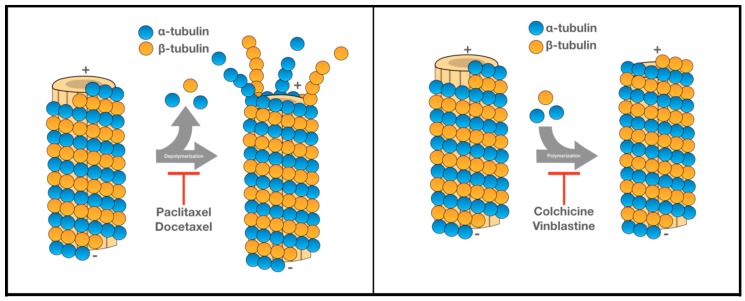
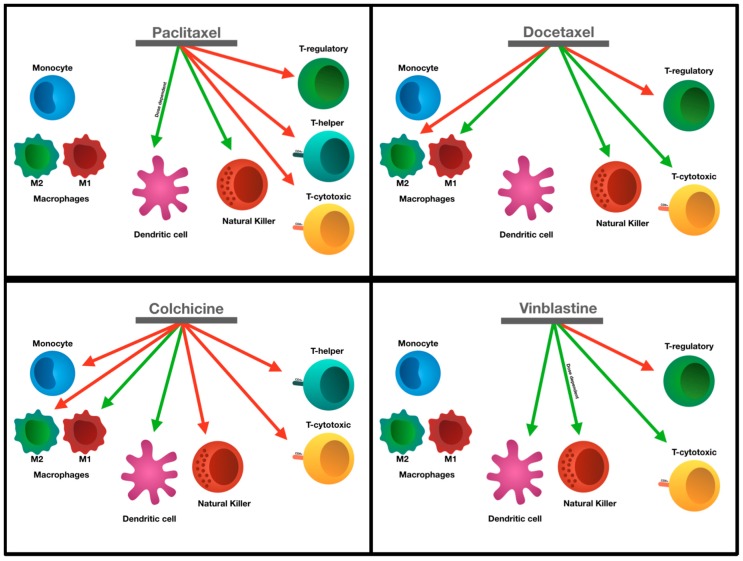
Cancer immune therapy has recently shown tremendous promise to combat many different cancers. The microtubule is a well-defined and very effective cancer therapeutic target. Interestingly, several lines of evidence now suggest that microtubules are intimately connected to the body’s immune responses. This raises the possibility that the combination of microtubule inhibitors and immune therapy can be a highly effective option for cancer treatments. However, our understanding on this potentially important aspect is still very limited, due in part to the multifaceted nature of microtubule functions. Microtubules are not only involved in maintaining cell morphology, but also a variety of cellular processes, including the movement of secretory vesicles and organelles, intracellular macromolecular assembly, signaling pathways, and cell division. Microtubule inhibitors may be subdivided into two classes: Anti-depolymerization agents such as the taxane family, and anti-polymerization agents such as colchicine and vinka alkaloids. These two different classes may have different effects on immune cell subtypes. Anti-depolymerization agents can not only induce NK cells, but also appear to inhibit T regulatory (Treg) cells. However, different inhibitors may have different functions even among the same class. For example, the doxetaxel anti-depolymerization agent up-regulates cytotoxic T cells, while paclitaxel down-regulates them. Certain anti-polymerization agents such as colchicine appear to down-regulate most immune cell types, while inducing dendritic cell maturation and increasing M1 macrophage population. In contrast, the vinblastine anti-polymerization agent activates many of these cell types, albeit down-regulating Treg cells. In this review, we focus on the various effects of tubulin inhibitors on the activities of the body’s immune system, in the hope of paving the way to develop an effective cancer therapy by combining tubulin-targeting anticancer agents and immune therapy.
Overview
The claims and statistics of this paper haven’t been checked yet.
Run the check — free, no account needed. It reads the open-access text and checks the sources it cites.
Integrity signals
Registry
Cites
Statistics
Figures
Verification
Claims the paper makes
The claims and statistics of this paper haven’t been checked yet.
Run the check — free, no account needed. It reads the open-access text and checks the sources it cites.
Claims other papers make about this one
Each is checked against this paper’s own text: does it say what the citing paper says it does?
In the citing paper
“Recently, antimitotic agents such as COL were reported to have a regulatory effect on most immune cell types, leading to the development of effective cancer immunotherapies [17].”
From Targeted Nano-Drug Delivery of Colchicine against Colon Cancer Cells by Means of Mesoporous Silica Nanoparticles (2020) · cites this paper as [17]
Self-check
Percentages, sums and reported differences re-computed from the paper’s own numbers.
The self-check needs the paper’s full text.
Citations
Cites
Cancer immunotherapy comes of age
Mellman, I., Coukos, G., & Dranoff, G. (2011) · Nature · doi:10.1038/nature10673 · Cited by 3,893
Garon, E. B., Ciuleanu, T.-E., Arrieta, O., Prabhash, K., Syrigos, K. N., Goksel, T., Park, K., Gorbunova, V., Kowalyszyn, R. D., Pikiel, J., et al. (2014) · The Lancet · doi:10.1016/s0140-6736(14)60845-x · Cited by 1,309
Immune changes in patients with advanced breast cancer undergoing chemotherapy with taxanes
Tsavaris, N., Kosmas, C., Vadiaka, M., Kanelopoulos, P., & Boulamatsis, D. (2002) · British Journal of Cancer · doi:10.1038/sj.bjc.6600347 · Cited by 343
Research works printed but not linked: 71
- Barnum, K.J., and O’Connell, M.J. (2014). Cell cycle regulation by checkpoints. Methods in Molecular Biology, Humana Press. · DOI
- 2008, Cell division: Stages of mitosis, Nat. Educ., 1, 188
- Barisic, 2015, Cracking the (tubulin) code of mitosis, Oncotarget, 6, 19356, 10.18632/oncotarget.5108 · DOI
- Parker, A.L., Kavallaris, M., and McCarroll, J.A. (2014). Microtubules and their role in cellular stress in cancer. Front. Oncol., 4. · DOI
- Xiao, 2016, Tubb3 regulation by the erk and akt signaling pathways: A mechanism involved in the effect of arginine adp-ribosyltransferase 1 (art1) on apoptosis of colon carcinoma ct26 cells, Tumour Biol., 37, 2353, 10.1007/s13277-015-4058-y · DOI
- Janssen, L.M.E., Ramsay, E.E., Logsdon, C.D., and Overwijk, W.W. (2017). The immune system in cancer metastasis: Friend or foe?. J. Immunother. Cancer, 5. · DOI
- Berraondo, 2016, Innate immune mediators in cancer: Between defense and resistance, Immunol. Rev., 274, 290, 10.1111/imr.12464 · DOI
- Gradishar, 2012, Taxanes for the treatment of metastatic breast cancer, Breast Cancer, 6, 159
- Anampa, J., Makower, D., and Sparano, J.A. (2015). Progress in adjuvant chemotherapy for breast cancer: An overview. BMC Med., 13. · DOI
- Hoffman, R.M., and Bouvet, M. (2015). Nanoparticle Albumin-Bound-Paclitaxel: A Limited Improvement under the Current Therapeutic Paradigm of Pancreatic Cancer, Taylor & Francis. · DOI
- Ringel, 1991, Studies with rp 56976 (taxotere): A semisynthetic analogue of taxol, J. Natl. Cancer Inst., 83, 288, 10.1093/jnci/83.4.288 · DOI
- Riou, 1992, Effects of taxotere on murine and human tumor cell lines, Biochem. Biophys. Res. Commun., 187, 164, 10.1016/S0006-291X(05)81474-3 · DOI
- Bissery, 1995, Docetaxel (taxotere®) a review of preclinical and clinical experience. Part i, Anticancer Drugs, 6, 339, 10.1097/00001813-199506000-00001 · DOI
- Herbst, 2003, Mode of action of docetaxel – a basis for combination with novel anticancer agents, Cancer Treat. Rev., 29, 407, 10.1016/S0305-7372(03)00097-5 · DOI
- Moudi, 2013, Vinca alkaloids, Int. J. Prev. Med., 4, 1231
- Leung, 2015, Colchicine—Update on mechanisms of action and therapeutic uses, Semin. Arthritis Rheum., 45, 341, 10.1016/j.semarthrit.2015.06.013 · DOI
- Weaver, 2014, How taxol/paclitaxel kills cancer cells, Mol. Biol. Cell, 25, 2677, 10.1091/mbc.e14-04-0916 · DOI
- Pienta, K.J. (2001). Preclinical mechanisms of action of docetaxel and docetaxel combinations in prostate cancer. Seminars in Oncology, Elsevier. · DOI
- Engels, 2005, Potential for improvement of docetaxel-based chemotherapy: a pharmacological review, Br. J. Cancer, 93, 173, 10.1038/sj.bjc.6602698 · DOI
- Lin, 2013, Anti-cancer mechanisms of clinically acceptable colchicine concentrations on hepatocellular carcinoma, Life Sci., 93, 323, 10.1016/j.lfs.2013.07.002 · DOI
- Fakih, 1995, Inhibition of prostate cancer growth by estramustine and colchicine, Prostate, 26, 310, 10.1002/pros.2990260606 · DOI
- Kuo, M.-C., Chang, S.-J., and Hsieh, M.-C.J.M. (2015). Colchicine significantly reduces incident cancer in gout male patients: A 12-year cohort study. Medicine, 94. · DOI
- Gigant, 2005, Structural basis for the regulation of tubulin by vinblastine, Nature, 435, 519, 10.1038/nature03566 · DOI
- Pennock, 2013, T cell responses: Naive to memory and everything in between, Adv. Physiol. Educ., 37, 273, 10.1152/advan.00066.2013 · DOI · Paper page
- Krejsek, 2010, Regulatory t cells (treg) and their roles in immune system with respect to immunopathological disorders, Acta Med., 53, 73
- Turk, 2004, Concomitant tumor immunity to a poorly immunogenic melanoma is prevented by regulatory t cells, J. Exp. Med., 200, 771, 10.1084/jem.20041130 · DOI
- Ilfeld, 1984, Effect of colchicine on t cell subsets of healthy volunteers, Immunology, 53, 595
- Vicari, 2008, Paclitaxel reduces regulatory t cell numbers and inhibitory function and enhances the anti-tumor effects of the tlr9 agonist pf-3512676 in the mouse, Cancer Immunol. Immunother., 58, 615, 10.1007/s00262-008-0586-2 · DOI
- Mullins, 1998, Interleukin-12 overcomes paclitaxel-mediated suppression of t-cell proliferation, Immunopharmacol. Immunotoxicol., 20, 473, 10.3109/08923979809031511 · DOI
- Li, 2014, Selective depletion of regulatory t cell subsets by docetaxel treatment in patients with nonsmall cell lung cancer, J. Immunol. Res., 2014, 286170, 10.1155/2014/286170 · DOI · Paper page
- North, 1990, Elimination of cycling cd4+ suppressor t cells with an anti-mitotic drug releases non-cycling cd8+ t cells to cause regression of an advanced lymphoma, Immunology, 71, 90
- Geissmann, 2010, Development of monocytes, macrophages, and dendritic cells, Science, 327, 656, 10.1126/science.1178331 · DOI · Paper page
- Nichols, 1971, Differentiation of monocytes. Origin, nature, and fate of their azurophil granules, J. Cell Biol., 50, 498, 10.1083/jcb.50.2.498 · DOI
- Ancuta, 2010, Nomenclature of monocytes and dendritic cells in blood, Blood, 116, e74, 10.1182/blood-2010-02-258558 · DOI
- Ghattas, 2013, Monocytes in coronary artery disease and atherosclerosis: Where are we now?, J. Am. Coll. Cardiol., 62, 1541, 10.1016/j.jacc.2013.07.043 · DOI
- Mills, 2012, M1 and M2 macrophages: Oracles of health and disease, Crit. Rev. Immunol., 32, 463, 10.1615/CritRevImmunol.v32.i6.10 · DOI
- Richards, 2013, Monocytes and macrophages in cancer: Development and functions, Cancer Microenviron., 6, 179, 10.1007/s12307-012-0123-x · DOI
- Kubar, 1993, Disruption of microtubule network in human monocytes induces expression of interleukin-1 but not that of interleukin-6 nor tumor necrosis factor-alpha. Involvement of protein kinase a stimulation, J. Biol. Chem., 268, 13675, 10.1016/S0021-9258(19)38700-9 · DOI
- Schwarz, 2016, Pro-inflammatory effects of colchicine on macrophages stimulated with atherogenic stimuli in vitro, Heart Lung Circ., 25, S89, 10.1016/j.hlc.2016.06.210 · DOI
- Millrud, 2018, Docetaxel promotes the generation of anti-tumorigenic human macrophages, Exp. Cell Res., 362, 525, 10.1016/j.yexcr.2017.12.018 · DOI
- Zingoni, A., Fionda, C., Borrelli, C., Cippitelli, M., Santoni, A., and Soriani, A. (2017). Natural killer cell response to chemotherapy-stressed cancer cells: Role in tumor immunosurveillance. Front. Immunol., 8. · DOI
- Markasz, 2007, Effect of frequently used chemotherapeutic drugs on the cytotoxic activity of human natural killer cells, Mol. Cancer Ther., 6, 644, 10.1158/1535-7163.MCT-06-0358 · DOI
- Larsen, 2014, Nk cells in the tumor microenvironment, Crit. Rev. Oncog., 19, 91, 10.1615/CritRevOncog.2014011142 · DOI
- Glasner, 2018, Nkp46 receptor-mediated interferon-γ production by natural killer cells increases fibronectin 1 to alter tumor architecture and control metastasis, Immunity, 48, 396, 10.1016/j.immuni.2018.01.010 · DOI
- Kubo, 2005, Paclitaxel probably enhances cytotoxicity of natural killer cells against breast carcinoma cells by increasing perforin production, Cancer Immunol. Immunother., 54, 468, 10.1007/s00262-004-0617-6 · DOI
- Sfondrini, 2016, Taxanes enhance trastuzumab-mediated adcc on tumor cells through nkg2d-mediated nk cell recognition, Oncotarget, 7, 255, 10.18632/oncotarget.6353 · DOI
- Chuang, 1994, Alteration of lymphocyte microtubule assembly, cytotoxicity, and activation by the anticancer drug taxol, Cancer Res., 54, 1286
- Orange, 2003, The mature activating natural killer cell immunologic synapse is formed in distinct stages, Proc. Natl. Acad. Sci. USA, 100, 14151, 10.1073/pnas.1835830100 · DOI
- Katz, 1982, Mechanisms of human cell-mediated cytotoxicity. III. Dependence of natural killing on microtubule and microfilament integrity, J. Immunol., 129, 2816, 10.4049/jimmunol.129.6.2816 · DOI
- Barber, 2003, Coexpression of cd58 or cd48 with intercellular adhesion molecule 1 on target cells enhances adhesion of resting nk cells, J. Immunol., 170, 294, 10.4049/jimmunol.170.1.294 · DOI
- Davis, 1999, The human natural killer cell immune synapse, Proc. Natl. Acad. Sci. USA, 96, 15062, 10.1073/pnas.96.26.15062 · DOI
- Almeida, 2007, Increased surveillance of cells in mitosis by human nk cells suggests a novel strategy for limiting tumor growth and viral replication, Blood, 109, 670, 10.1182/blood-2006-07-036509 · DOI
- Virtanen, 1981, The cytotoxic activity of human natural killer cells requires an intact secretory apparatus, Cell. Immunol., 58, 97, 10.1016/0008-8749(81)90152-0 · DOI
- Kang, 2000, Effects of mitomycin-c, cisplatin, and vinblastine on natural killer cell activity in mice, J. Korean Assoc. Cancer Prev., 5, 144
- Howard, 2004, The role of dendritic cells in shaping the immune response, Anim. Health Res. Rev., 5, 191, 10.1079/AHR200468 · DOI
- Collin, 2013, Human dendritic cell subsets, Immunology, 140, 22, 10.1111/imm.12117 · DOI
- Palucka, K., and Banchereau, J. (2013). Cancer immunotherapy via dendritic cells. Interaction of Immune and Cancer Cells, Springer-Verlag Wien. · DOI
- Donnadieu, E. (2016). Defects in t Cell Trafficking and Resistance to Cancer Immunotherapy, Springer. · DOI
- Aspord, 2007, Breast cancer instructs dendritic cells to prime interleukin 13-secreting cd4+ t cells that facilitate tumor development, J. Exp. Med., 204, 1037, 10.1084/jem.20061120 · DOI
- Ferrari, 2003, Lack of dendritic cell mobilization into the peripheral blood of cancer patients following standard- or high-dose chemotherapy plus granulocyte-colony stimulating factor, Cancer Immunol. Immunother., 52, 359, 10.1007/s00262-002-0365-4 · DOI
- Perera, 2001, Cd11b/cd18 acts in concert with cd14 and toll-like receptor (tlr) 4 to elicit full lipopolysaccharide and taxol-inducible gene expression, J. Immunol., 166, 574, 10.4049/jimmunol.166.1.574 · DOI
- John, J., Ismail, M., Riley, C., Askham, J., Morgan, R., Melcher, A., and Pandha, H. (2010). Differential effects of paclitaxel on dendritic cell function. BMC Immunol., 11. · DOI
- Wen, 2011, Specific microtubule-depolymerizing agents augment efficacy of dendritic cell-based cancer vaccines, J. Biomed. Sci., 18, 44, 10.1186/1423-0127-18-44 · DOI
- Mizumoto, 2007, Colchicine promotes antigen cross-presentation by murine dendritic cells, J. Investig. Dermatol., 127, 1543, 10.1038/sj.jid.5700699 · DOI
- Tanaka, 2009, Dual therapeutic efficacy of vinblastine as a unique chemotherapeutic agent capable of inducing dendritic cell maturation, Cancer Res., 69, 6987, 10.1158/0008-5472.CAN-09-1106 · DOI · Paper page
- Tanaka, 2009, Classification of chemotherapeutic agents based on their differential in vitro effects on dendritic cells, Cancer Res., 69, 6978, 10.1158/0008-5472.CAN-09-1101 · DOI
- Schmidt, 2017, The benefits of immunotherapy combinations, Nature, 552, S67, 10.1038/d41586-017-08702-7 · DOI
- Brown, J.S., Sundar, R., and Lopez, J.J.B.J.O.C. Combining DNA damaging therapeutics with immunotherapy: More haste, less speed. Br. J. Cancer, 2017. · DOI
- Johnson, 2018, Immune checkpoint inhibitor toxicity in 2018, JAMA, 320, 1702, 10.1001/jama.2018.13995 · DOI
- George, 2016, P1. 46: Phase i study of nivolumab+ nab-paclitaxel in solid tumors: Preliminary analysis of the non-small cell lung cancer cohort: Track: Advanced nsclc, J. Thorac. Oncol., 11, S211, 10.1016/j.jtho.2016.08.068 · DOI
- Gadgeel, S.M., Stevenson, J., Langer, C.J., Gandhi, L., Borghaei, H., Patnaik, A., Villaruz, L.C., Gubens, M.A., Hauke, R.J., and Yang, J.C.-H. (2016). Pembrolizumab (Pembro) Plus Chemotherapy as Front-Line Therapy for Advanced Nsclc: Keynote-021 Cohorts AC, American Society of Clinical Oncology. · DOI
Cited by
Sorted by citations
AbouAitah, K., Hassan, H. A., Swiderska-Sroda, A., Gohar, L., Shaker, O. G., Wojnarowicz, J., Opalinska, A., Smalc-Koziorowska, J., Gierlotka, S., & Lojkowski, W. (2020) · Cancers · doi:10.3390/cancers12010144 · Cited by 105
Metadata
- Authors
- Fong, A., Durkin, A., & Lee, H.
- Venue
- International Journal of Molecular Sciences
- Publisher
- MDPI AG
- Published
- 2019-01-30
- Volume
- 20
- Issue
- 3
- Pages
- 586
- ISSN
- 1422-0067
- PMC
- PMC6387102
- Cited by
- 50
- References
- 3
- Language
- en
- Funders
- Northern Cancer Foundation (Not applicable)
About these checks
Registry, retraction, Cites and statistics results are computed, not judged, with one exception: a printed reference that no index lists is read once by a model before it counts as a citation error. Claims are extracted by a model and kept only when their quote appears verbatim in the text; each cited source is then checked, with a model’s help, for whether it says what the claim relies on. Those verdicts can be wrong — read the claim’s quote and the cited source before relying on one.
Statistics and arithmetic are recomputed, not judged.
Confidence bands are shown only for fields calibrated on our annotated test set. None is calibrated yet, so no band is shown.
What counts as a claim ›How we measure confidence ›How we check this ›
Are you an author, or do you see a problem with this page? Request a review
