

miR-34a-5p Increases Hepatic Triglycerides and Total Cholesterol Levels by Regulating ACSL1 Protein Expression in Laying Hens
Open accessThe DOI matches its Crossref record; 49 of the 49 references it cites were found in a registry or an index.
Abstract
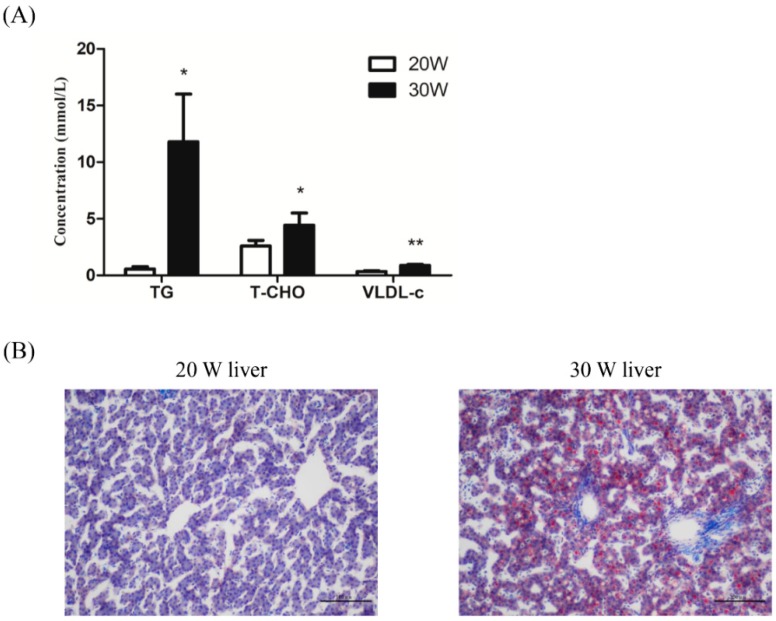
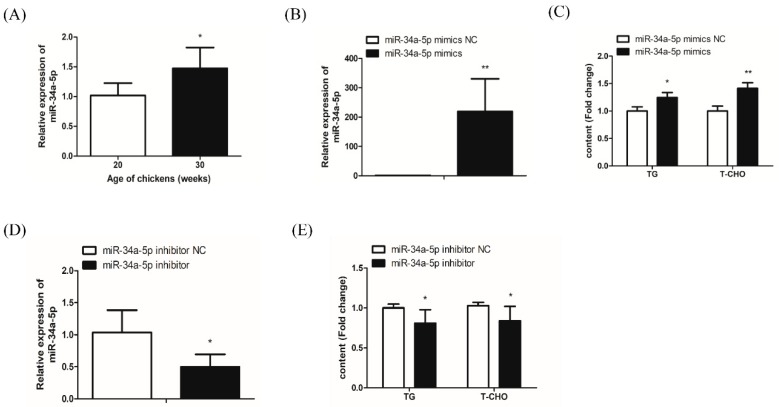
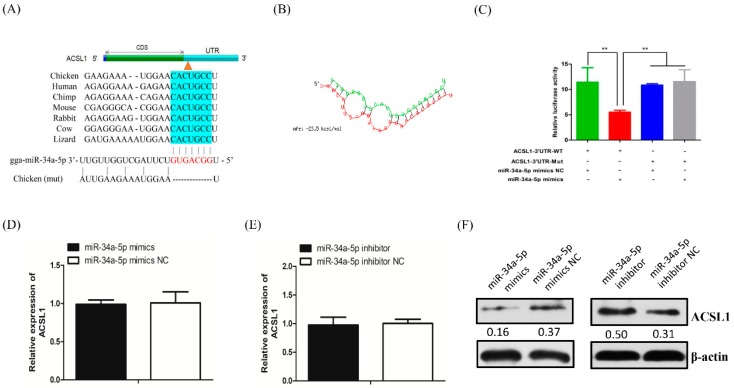
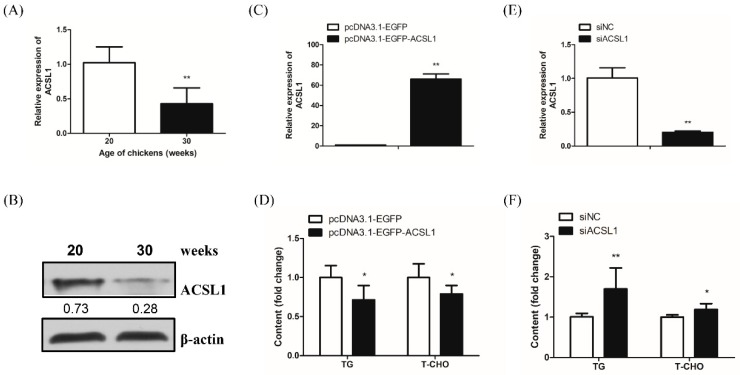
Accumulating evidence has shown that miR-34a serves as a posttranscriptional regulatory molecule of lipid metabolism in mammals. However, little studies about miR-34a on lipid metabolism in poultry have been reported until now. To gain insight into the biological functions and action mechanisms of miR-34a on hepatic lipid metabolism in poultry, we firstly investigated the expression pattern of miR-34a-5p, a member of miR-34a family, in liver of chicken, and determined its function in hepatocyte lipid metabolism by miR-34a-5p overexpression and inhibition, respectively. We then validated the interaction between miR-34a-5p and its target using dual-luciferase reporter assay, and explored the action mechanism of miR-34a-5p on its target by qPCR and Western blotting. Additionally, we looked into the function of the target gene on hepatocyte lipid metabolism by gain- and loss-of-function experiments. Our results indicated that miR-34a-5p showed a significantly higher expression level in livers in peak-laying hens than that in pre-laying hens. miR-34a-5p could increase the intracellular levels of triglycerides and total cholesterol in hepatocyte. Furthermore, miR-34a-5p functioned by inhibiting the translation of its target gene, long-chain acyl-CoA synthetase 1 (ACSL1), which negatively regulates hepatocyte lipid content. In conclusion, miR-34a-5p could increase intracellular lipid content by reducing the protein level, without influencing mRNA stability of the ACSL1 gene in chickens.
Overview
The claims and statistics of this paper haven’t been checked yet.
Free: it reads the open-access text and checks the first 5 claims that cite a source we can check. Create a free account to check every claim.
Integrity signals
Registry
Cites
Statistics
Figures
Verification
Claims the paper makes
The claims and statistics of this paper haven’t been checked yet.
Free: it reads the open-access text and checks the first 5 claims that cite a source we can check. Create a free account to check every claim.
Claims other papers make about this one
Each is checked against this paper’s own text: does it say what the citing paper says it does?
In the citing paper
“The liver is an estrogen-targeted organ [61], and estradiol has been shown to inhibit hepatic stellate cell proliferation and fibrogenesis in animal models [62].”
From Emerging role of liver-bone axis in osteoporosis (2024) · cites this paper as [61]
Self-check
Percentages, sums and reported differences re-computed from the paper’s own numbers.
The self-check needs the paper’s full text.
Citations
Cites
Bartel (2004) · doi:10.1016/s0092-8674(04)00045-5 · Cited by 34,714
The functions of animal microRNAs
Ambros, V. (2004) · Nature · doi:10.1038/nature02871 · Cited by 10,728
Wightman, B., Ha, I., & Ruvkun, G. (1993) · Cell · doi:10.1016/0092-8674(93)90530-4 · Cited by 4,292 · cited 1×
“miRNA, lin4, was proven to complementarily bind to the lin14 3′ UTR and negatively regulate lin14 protein expression without changing lin14 mRNA levels [41] as a result of the following two possible mechanisms: impaired ribosome assembly on the mRNA and degradation of the newly synthesized polypeptide [42].”
BackgroundNon-coding RNAs and cancer: microRNAs and beyond
Raia, R. M., & Calin, G. A. (2011) · Journal of Nucleic Acids Investigation · doi:10.4081/jnai.2011.e5 · Cited by 3,382
Fast and effective prediction of microRNA/target duplexes
REHMSMEIER, M., STEFFEN, P., HÖCHSMANN, M., & GIEGERICH, R. (2004) · RNA · doi:10.1261/rna.5248604 · Cited by 2,560
c-Myc-regulated microRNAs modulate E2F1 expression
O'Donnell, K. A., Wentzel, E. A., Zeller, K. I., Dang, C. V., & Mendell, J. T. (2005) · Nature · doi:10.1038/nature03677 · Cited by 2,347 · cited 1×
“miR-17-5p and miR-20a have been reported to suppress the protein translation of the E2F1 gene, a target of the two miRNAs, without altering E2F1 mRNA levels in HeLa cell [43].”
BackgroundOlsen, P. H., & Ambros, V. (1999) · Developmental Biology · doi:10.1006/dbio.1999.9523 · Cited by 1,234 · cited 1×
“miRNA, lin4, was proven to complementarily bind to the lin14 3′ UTR and negatively regulate lin14 protein expression without changing lin14 mRNA levels [41] as a result of the following two possible mechanisms: impaired ribosome assembly on the mRNA and degradation of the newly synthesized polypeptide [42].”
BackgroundRepression of protein synthesis by miRNAs: how many mechanisms?
Pillai, R. S., Bhattacharyya, S. N., & Filipowicz, W. (2007) · Trends in Cell Biology · doi:10.1016/j.tcb.2006.12.007 · Cited by 1,108 · cited 1×
“The pathway through which miRNAs silence genes depends on the complementarity of the miRNA and target mRNA [37,38].”
BackgroundThe mechanics of miRNA-mediated gene silencing: a look under the hood of miRISC
Fabian, M. R., & Sonenberg, N. (2012) · Nature Structural & Molecular Biology · doi:10.1038/nsmb.2296 · Cited by 1,025 · cited 1×
“However, when a miRNA binds to a target with imperfect complementarity, the miRNA obstructs the translation of the gene due to miRISC blocking the formation of the translation initiation complex, resulting in mRNA deadenylation, preventing the assembly of a productive ribosome at the translation initiation stage, or i…”
BackgroundMicroRNAs: History, Biogenesis, and Their Evolving Role in Animal Development and Disease
Bhaskaran, M., & Mohan, M. (2014) · Veterinary Pathology · doi:10.1177/0300985813502820 · Cited by 605 · cited 1×
“It has been successively demonstrated that miRNAs exert crucial functions in various biological processes, such as animal growth and development, immune response, metabolic activity, and diseases [18,19].”
BackgroundMicroRNA silencing through RISC recruitment of eIF6
Chendrimada, T. P., Finn, K. J., Ji, X., Baillat, D., Gregory, R. I., Liebhaber, S. A., Pasquinelli, A. E., & Shiekhattar, R. (2007) · Nature · doi:10.1038/nature05841 · Cited by 510 · cited 1×
“However, when a miRNA binds to a target with imperfect complementarity, the miRNA obstructs the translation of the gene due to miRISC blocking the formation of the translation initiation complex, resulting in mRNA deadenylation, preventing the assembly of a productive ribosome at the translation initiation stage, or i…”
BackgroundMammalian Long-Chain Acyl-CoA Synthetases
Soupene, E., & Kuypers, F. A. (2008) · Experimental Biology and Medicine · doi:10.3181/0710-mr-287 · Cited by 461
Evidence for 26 distinct acyl-coenzyme A synthetase genes in the human genome
Watkins, P. A., Maiguel, D., Jia, Z., & Pevsner, J. (2007) · Journal of Lipid Research · doi:10.1194/jlr.m700378-jlr200 · Cited by 377
Ellis, J. M., Li, L. O., Wu, P.-C., Koves, T. R., Ilkayeva, O., Stevens, R. D., Watkins, S. M., Muoio, D. M., & Coleman, R. A. (2010) · Cell Metabolism · doi:10.1016/j.cmet.2010.05.012 · Cited by 357 · cited 1×
“The fatty acid oxidation rate was 50–90% lower in the adipocytes isolated from adipose-specific ACSL1 knockout mice than in control adipocytes and mitochondria [14].”
BackgroundLewin, T. M., Kim, J.-H., Granger, D. A., Vance, J. E., & Coleman, R. A. (2001) · Journal of Biological Chemistry · doi:10.1074/jbc.m102036200 · Cited by 284
Long-Chain Acyl-Coa Synthetases And Fatty Acid Channeling
Mashek, D. G., Li, L. O., & Coleman, R. A. (2007) · Future Lipidology · doi:10.2217/17460875.2.4.465 · Cited by 279 · cited 2×
“and β-oxidation by catalyzing the conversion of long-chain FAs to acyl-CoA, which can be metabolized to form triacylglycerol, phospholipids and cholesteryl esters [4,5].”
BackgroundA metabolic stress-inducible miR-34a-HNF4α pathway regulates lipid and lipoprotein metabolism
Xu, Y., Zalzala, M., Xu, J., Li, Y., Yin, L., & Zhang, Y. (2015) · Nature Communications · doi:10.1038/ncomms8466 · Cited by 277 · cited 2×
“Recent reports proved that miR-34a is involved in regulating mammalian lipid metabolism and that the overexpression of miR-34a promotes the accumulation of TGs in human and mouse hepatocytes, while silencing miR-34a-alleviated hepatic steatosis [28,30].”
BackgroundDing, J., Li, M., Wan, X., Jin, X., Chen, S., Yu, C., & Li, Y. (2015) · Scientific Reports · doi:10.1038/srep13729 · Cited by 261 · cited 2×
“Recent reports proved that miR-34a is involved in regulating mammalian lipid metabolism and that the overexpression of miR-34a promotes the accumulation of TGs in human and mouse hepatocytes, while silencing miR-34a-alleviated hepatic steatosis [28,30].”
BackgroundEstrogen Induction of VLDLy Assembly in Egg-Laying Hens
Walzem, R. L., Hansen, R. J., Williams, D. L., & Hamilton, R. L. (1999) · The Journal of Nutrition · doi:10.1093/jn/129.2.467s · Cited by 245 · cited 1×
“During the laying period, especially the peak-laying period, hepatic lipid synthesis and metabolism are strongly activated, resulting in high levels of triglycerides (TG), cholesterol and phospholipid, which are assembled by apolipoprotein into very low density lipoprotein (VLDL) and then released into the blood circu…”
BackgroundLi, L. O., Ellis, J. M., Paich, H. A., Wang, S., Gong, N., Altshuller, G., Thresher, R. J., Koves, T. R., Watkins, S. M., Muoio, D. M., et al. (2009) · Journal of Biological Chemistry · doi:10.1074/jbc.m109.022467 · Cited by 241 · cited 3×
“In addition, the knockdown of the ACSL1 gene slowed TG synthesis but promoted long-chain FA oxidation [9].”
BackgroundInfluentialAcyl-coenzyme A synthetases in metabolic control
Ellis, J. M., Frahm, J. L., Li, L. O., & Coleman, R. A. (2010) · Current Opinion in Lipidology · doi:10.1097/mol.0b013e32833884bb · Cited by 226
Yan, S. (2015) · World Journal of Gastroenterology · doi:10.3748/wjg.v21.i12.3492 · Cited by 219
Lipid biosynthesis and transport in the domestic chick (Gallus domesticus)
O'Hea, E. K., & Leveille, G. A. (1969) · Comparative Biochemistry and Physiology · doi:10.1016/0010-406x(69)91309-7 · Cited by 219 · cited 2×
“During the laying period, especially the peak-laying period, hepatic lipid synthesis and metabolism are strongly activated, resulting in high levels of triglycerides (TG), cholesterol and phospholipid, which are assembled by apolipoprotein into very low density lipoprotein (VLDL) and then released into the blood circu…”
BackgroundMeta-regulation: microRNA regulation of glucose and lipid metabolism
Lynn, F. C. (2009) · Trends in Endocrinology & Metabolism · doi:10.1016/j.tem.2009.05.007 · Cited by 187 · cited 1×
“Numerous studies have reported that miRNAs regulate lipid metabolism processes [20,33].”
BackgroundIn Vivo Lipogenesis in the Domestic Chicken
Leveille, G. A., O'Hea, E. K., & Chakrabarty, K. (1968) · Experimental Biology and Medicine · doi:10.3181/00379727-128-33022 · Cited by 185 · cited 1×
“In chickens, the liver is generally considered the major organ where lipid metabolism, including lipid synthesis, digestion, absorption, decomposition, and transport, conducts; in contrast, adipose tissue is the main site of lipid metabolism in mammals [1].”
BackgroundDifferential expression of microRNAs in mouse liver under aberrant energy metabolic status
Li, S., Chen, X., Zhang, H., Liang, X., Xiang, Y., Yu, C., Zen, K., Li, Y., & Zhang, C.-Y. (2009) · Journal of Lipid Research · doi:10.1194/jlr.m800509-jlr200 · Cited by 184 · cited 1×
“Increased expression of miR-34a was detected more in the liver of obese mice than in normal mice [29].”
BackgroundLocalization of adipocyte long-chain fatty acyl-CoA synthetase at the plasma membrane
Gargiulo, C. E., Stuhlsatz-Krouper, S. M., & Schaffer, J. E. (1999) · Journal of Lipid Research · doi:10.1016/s0022-2275(20)32123-4 · Cited by 156
Li, L. O., Mashek, D. G., An, J., Doughman, S. D., Newgard, C. B., & Coleman, R. A. (2006) · Journal of Biological Chemistry · doi:10.1074/jbc.m604427200 · Cited by 123 · cited 1×
“ACSL1 was reported to accelerate FA reacylation, guiding FAs into diglycerides and phospholipids, but away from cholesterol [46].”
BackgroundYoung, P. A., Senkal, C. E., Suchanek, A. L., Grevengoed, T. J., Lin, D. D., Zhao, L., Crunk, A. E., Klett, E. L., Füllekrug, J., Obeid, L. M., et al. (2018) · Journal of Biological Chemistry · doi:10.1074/jbc.ra118.004049 · Cited by 110
Role of estrogen in avian osteoporosis
Beck, M. M., & Hansen, K. K. (2004) · Poultry Science · doi:10.1093/ps/83.2.200 · Cited by 104 · cited 1×
“Plasma estrogen level gradually rises with the arrival of hens’ sexual maturity, then gradually declines over the production year, and especially decreased during molt but increases when productions regains, and again dramatically decreases in late-stage production [34].”
BackgroundDiversity and history of the long-chain acyl-CoA synthetase (Acsl) gene family in vertebrates
Lopes‐Marques, M., Cunha, I., Reis-Henriques, M. A., Santos, M. M., & Castro, L. F. C. (2013) · BMC Evolutionary Biology · doi:10.1186/1471-2148-13-271 · Cited by 100
MicroRNAs: emerging roles in lipid and lipoprotein metabolism
Sacco, J., & Adeli, K. (2012) · Current Opinion in Lipidology · doi:10.1097/mol.0b013e3283534c9f · Cited by 96 · cited 1×
“Notably, increasing evidence has revealed that miRNAs participate in lipid metabolism [20,21].”
BackgroundThe miRNA Interactome in Metabolic Homeostasis
Hartig, S. M., Hamilton, M. P., Bader, D. A., & McGuire, S. E. (2015) · Trends in Endocrinology and Metabolism · doi:10.1016/j.tem.2015.09.006 · Cited by 95 · cited 1×
“It has been successively demonstrated that miRNAs exert crucial functions in various biological processes, such as animal growth and development, immune response, metabolic activity, and diseases [18,19].”
BackgroundFunctional Analysis of Long-chain Acyl-CoA Synthetase 1 in 3T3-L1 Adipocytes
Lobo, S., Wiczer, B. M., & Bernlohr, D. A. (2009) · Journal of Biological Chemistry · doi:10.1074/jbc.m109.017244 · Cited by 77 · cited 1×
“It has been demonstrated that ACSL1 is involved in lipid efflux, including FA reesterification, but not lipid influx, including long-chain FA uptake and TG synthesis in 3T3-L1 adipocytes [47].”
BackgroundBiochemical Studies of Two Rat Acyl‐CoA Synthetases, ACS1 and ACS2
Iijima, H., Fujino, T., Minekura, H., Suzuki, H., Kang, M., & Yamamoto, T. T. (1996) · European Journal of Biochemistry · doi:10.1111/j.1432-1033.1996.0186r.x · Cited by 72 · cited 1×
“Moreover, ACSL1 was reported to be localized in the mitochondrial membrane, plasma membrane and endoplasmic reticulum [10–12] and to primarily interact with palmitoleate, oleate and linoleate as substrates [13].”
BackgroundSystematic analysis of the regulatory functions of microRNAs in chicken hepatic lipid metabolism
Li, H., Ma, Z., Jia, L., Li, Y., Xu, C., Wang, T., Han, R., Jiang, R., Li, Z., Sun, G., et al. (2016) · Scientific Reports · doi:10.1038/srep31766 · Cited by 64 · cited 1×
“Our previous study identified a total of 996 differentially expressed miRNAs between the livers of pre-laying and peak-laying Lushi blue-shelled-egg hens using RNA-seq [32], of which, the expression level of miR-34a-5p, a member of the miR-34a family, significantly increased more in the liver of peak-laying hens than…”
BackgroundSelf-citationMicroRNA regulation of lipid metabolism
Flowers, E., Froelicher, E. S., & Aouizerat, B. E. (2012) · Metabolism · doi:10.1016/j.metabol.2012.04.009 · Cited by 62
Role of the Sex Hormone Estrogen in the Prevention of Lipid Disorder
Pellegrini, M., Pallottini, V., Marín, R., & Marino, M. (2014) · Current Medicinal Chemistry · doi:10.2174/0929867321666140303123602 · Cited by 61 · cited 1×
“The liver is one of target organs for estrogen [35], and estrogen exerts its role in lipid metabolism in the liver of chickens by regulating the transcriptional activity of lipogenic genes via dimerizing with its receptor and binding to canonical or non-canonical estrogen response elements (ERE) (canonical ERE, GGTCAN…”
BackgroundACSL1 Is Associated With Fetal Programming of Insulin Sensitivity and Cellular Lipid Content
Joseph, R., Poschmann, J., Sukarieh, R., Too, P. G., Julien, S. G., Xu, F., Teh, A. L., Holbrook, J. D., Ng, K. L., Chong, Y. S., et al. (2015) · Molecular Endocrinology · doi:10.1210/me.2015-1020 · Cited by 60
Wang, M., Li, L., Liu, R., Song, Y., Zhang, X., Niu, W., Kumar, A. K., Guo, Z., & Hu, Z. (2018) · Gene · doi:10.1016/j.gene.2018.05.072 · Cited by 55 · cited 1×
“It was proved that miR-24 could suppress TG content and lipid accumulation in HepG2 cells by targeting scavenger receptor B1 (SR-B1) gene, which regulates cholesterol trafficking and the selective transfer of cholesteryl ester [22].”
BackgroundZhang, M., Li, C.-C., Li, F., Li, H., Liu, X., Loor, J. J., Kang, X.-T., & Sun, G.-R. (2017) · International Journal of Molecular Sciences · doi:10.3390/ijms18071405 · Cited by 48 · cited 1×
“Our previous studies also demonstrated that both miR-101-2-5p and miR-218-5p were down-regulated in the liver of peak-laying hens versus pre-laying hens, and targeted the ApoB gene related to lipid transportation and very long chain fatty acid elongase 5 (ELOV5) gene involved in the synthesis of long-chain polyunsatur…”
Self-citationDiscovery of chicken microRNAs associated with lipogenesis and cell proliferation
Hicks, J. A., Trakooljul, N., & Liu, H. (2010) · Physiological Genomics · doi:10.1152/physiolgenomics.00156.2009 · Cited by 43 · cited 1×
“A differentially expressed miRNA, nc-miR-33, in the livers between 15- and 20-embryonic-day-old chick embryos, which had a rapid growing rate and increasing energy demands, could target the fatty acid synthase (FASN) gene which plays significant roles in fatty acid biosynthesis [24].”
BackgroundBiogenesis and Physiology of MicroRNAs
Melo, C. A., & Melo, S. A. (2013) · Springer eBooks · doi:10.1007/978-1-4614-8444-8_2 · Cited by 40 · cited 1×
“The pathway through which miRNAs silence genes depends on the complementarity of the miRNA and target mRNA [37,38].”
BackgroundProtein sequence homology between plant 4-coumarate: CoA llgase and firefly luciferase
Schröder, J. (1989) · Nucleic Acids Research · doi:10.1093/nar/17.1.460 · Cited by 38 · cited 1×
“It was demonstrated that the AMP-binding region was a classical characteristic of ACSs, which combined with their substrates by the ATP-dependent covalent binding of AMP [45] (Figure S5).”
BackgroundHuman MicroRNA-548p Decreases Hepatic Apolipoprotein B Secretion and Lipid Synthesis
Zhou, L., & Hussain, M. M. (2017) · Arteriosclerosis Thrombosis and Vascular Biology · doi:10.1161/atvbaha.117.309247 · Cited by 35 · cited 1×
“Human miR-548p could not only significantly reduce apolipoprotein B (apoB) secretion in hepatoma cells and primary hepatocytes by interacting with apoB mRNA, but also significantly repress lipid synthesis in hepatoma cells by reducing 3-Hydroxy-3-Methylglutaryl-CoA Reductase (HMGCR) and long-chain acyl-CoA synthetase…”
BackgroundAnalysis of miRNAs and their target genes associated with lipid metabolism in duck liver
He, J., Wang, W., Lu, L., Tian, Y., Niu, D., Ren, J., Dong, L., Sun, S., Zhao, Y., Chen, L., et al. (2016) · Scientific Reports · doi:10.1038/srep27418 · Cited by 27 · cited 1×
“In addition, miRNA N-mir-16020 and miR-144 were differentially expressed in the livers of ducks with/without 5% oil added in feed, and were proved to respectively target FASN and very long chain fatty acid elongase 6 (ELOVL6), two very well-known genes related to lipid metabolism [25].”
BackgroundSelf-citationHicks, J. A., Porter, T. E., Sunny, N. E., & Liu, H. (2019) · Genes · doi:10.3390/genes10040272 · Cited by 26 · cited 1×
“To our knowledge, only a recent study found that hepatic expression of miR-34a was affected by delaying feed consumption for 48-h post-hatching in chicken, but no further investigation on the functional mechanism of miRNA was carried out [31].”
BackgroundEstrogen receptor action through target genes with classical and alternative response elements
Kushner, P. J., Webb, P., Uht, R. M., Liu, M.-M., & Price, R. H. (2003) · Pure and Applied Chemistry · doi:10.1351/pac200375111757 · Cited by 18 · cited 1×
“The liver is one of target organs for estrogen [35], and estrogen exerts its role in lipid metabolism in the liver of chickens by regulating the transcriptional activity of lipogenic genes via dimerizing with its receptor and binding to canonical or non-canonical estrogen response elements (ERE) (canonical ERE, GGTCAN…”
BackgroundMicroRNA-101-2-5p targets the ApoB gene in the liver of chicken (Gallus Gallus)
Ma, Z., Li, H., Zheng, H., Jiang, K., Jia, L., Yan, F., Tian, Y., Kang, X., Wang, Y., & Liu, X. (2017) · Genome · doi:10.1139/gen-2017-0020 · Cited by 18 · cited 1×
“Our previous studies also demonstrated that both miR-101-2-5p and miR-218-5p were down-regulated in the liver of peak-laying hens versus pre-laying hens, and targeted the ApoB gene related to lipid transportation and very long chain fatty acid elongase 5 (ELOV5) gene involved in the synthesis of long-chain polyunsatur…”
Self-citation
Cited by
Molecular Regulation of Lipogenesis, Adipogenesis and Fat Deposition in Chicken
Nematbakhsh, S., Chong, P. P., Selamat, J., Nordin, N., Idris, L. H., & Razis, A. F. A. (2021) · Genes · doi:10.3390/genes12030414 · Cited by 139
“Long-chain acyl-CoA synthetase (ACSL) is a candidate gene for the regulation of skeletal muscle fatty acid composition [15] and catalyzes the conversion of long-chain fatty acids into acyl-CoA [46].”
BackgroundThe potential role and mechanism of circRNA/miRNA axis in cholesterol synthesis
Chen, W., Xu, J., Wu, Y., Liang, B., Yan, M., Sun, C., Wang, D., Hu, X., Liu, L.-Z., Hu, W., et al. (2023) · International Journal of Biological Sciences · doi:10.7150/ijbs.84994 · Cited by 122
“circOgdh miR-34a-5p/ACSL1 axis [175, 176] circMED12L miR-34a-5p/ACSL1 axis [175, 180] circ_FURIN miR-34a-5p/ACSL1 axis [175, 181]”
BackgroundInfluentialEmerging role of liver-bone axis in osteoporosis
Gao, H., Peng, X., Li, N., Gou, L., Xu, T., Wang, Y., Qin, J., Liang, H., Ma, P., Li, S., et al. (2024) · Journal of Orthopaedic Translation · doi:10.1016/j.jot.2024.07.008 · Cited by 36
“The liver is an estrogen-targeted organ [61], and estradiol has been shown to inhibit hepatic stellate cell proliferation and fibrogenesis in animal models [62].”
BackgroundZhang, D., Wang, D., Wang, Z., Wang, Y., Li, G., Sun, G., Tian, Y., Han, R., Li, Z., Jiang, R., et al. (2020) · International Journal of Molecular Sciences · doi:10.3390/ijms21051624 · Cited by 36
“In chicken liver, miR-34a-5p promotes the accumulation of TG by regulating the expression of long-chain acyl-CoA synthetase 1 (ACSL1), and it has a function similar to that of human and mouse hepatocytes, thus achieving the positive regulation of fatty acid synthesis [65].”
BackgroundSelf-citationEmerging Roles of Non-Coding RNAs in the Feed Efficiency of Livestock Species
Hu, G., Do, D. N., Davoudi, P., & Miar, Y. (2022) · Genes · doi:10.3390/genes13020297 · Cited by 24
Metadata
- Authors
- Tian, W.-H., Wang, Z., Yue, Y.-X., Li, H., Li, Z.-J., Han, R.-L., Tian, Y.-D., Kang, X.-T., & Liu, X.-J.
- Affiliations
- College of Animal Science and Veterinary Medicine, Henan Agricultural University, Zhengzhou 450002, China
- Henan Agricultural University (CN)
- Venue
- International Journal of Molecular Sciences
- Publisher
- MDPI AG
- Published
- 2019-09-08
- Volume
- 20
- Issue
- 18
- Pages
- 4420
- ISSN
- 1422-0067 (ISSN-L)
- PMC
- PMC6770783
- OpenAlex
- W2972120896
- Cited by
- 35
- References
- 49
- Citations by year
- 2026: 3 · 2025: 5 · 2024: 8 · 2023: 5 · 2022: 6 · 2021: 5 · 2020: 3
- FWCI
- 1.10
- Type
- journal article
- Language
- en
- Open access
- gold
- dx.doi.org
- Licence
- Locations
- International Journal of Molecular Sciences (publishedVersion, cc-by)
- Europe PMC (PubMed Central) (publishedVersion, cc-by)
- PubMed Central (publishedVersion, cc-by)
- PubMed (publishedVersion)
- DOAJ (DOAJ: Directory of Open Access Journals) (submittedVersion, cc-by-sa)
- Funders
- Key Project of NSFC-Henan Province Joint Fund (U1704233)
- China Agriculture Research System (CARS-40-K04)
- China Postdoctoral Science Foundation (2017M520301)
- Topics
- Life Sciences › Biochemistry, Genetics and Molecular Biology › Cancer Research › MicroRNA in disease regulation
- Life Sciences › Biochemistry, Genetics and Molecular Biology › Biochemistry › Lipid metabolism and biosynthesis
- Life Sciences › Biochemistry, Genetics and Molecular Biology › Biochemistry › Cholesterol and Lipid Metabolism
- Keywords
- miR-34a-5p, ACSL1, hepatic lipid metabolism, triglycerides, total cholesterol, laying hens, chicken liver, microRNA target regulation, translation repression, mRNA stability
- MeSH terms
- Animals, Base Sequence, Cell Line, Chickens, Cholesterol, Coenzyme A Ligases, Liver, Triglycerides, Gene Expression, MicroRNAs, Lipid Metabolism
About these checks
Registry, retraction, Cites and statistics results are computed, not judged, with one exception: a printed reference that no index lists is read once by a model before it counts as a citation error. Claims are extracted by a model and kept only when their quote appears verbatim in the text; each cited source is then checked, with a model’s help, for whether it says what the claim relies on. Those verdicts can be wrong — read the claim’s quote and the cited source before relying on one.
Statistics and arithmetic are recomputed, not judged.
Confidence bands are shown only for fields calibrated on our annotated test set. None is calibrated yet, so no band is shown.
What counts as a claim ›How we measure confidence ›How we check this ›
Are you an author, or do you see a problem with this page? Request a review
Data sources
Bibliographic data: Semantic Scholar, OpenAlex, Crossref.
Contains information from the Semantic Scholar Academic Graph Datasets, made available under the ODC Attribution License (ODC-BY 1.0).
Semantic Scholar’s data is described in: Kinney, R., et al. (2023). The Semantic Scholar Open Data Platform. arXiv:2301.10140.
