

The DOI matches its Crossref record; 3 of the 3 references it cites were found in a registry or an index.
Excitatory Amino Acid Transporters (EAATs): Glutamate Transport and Beyond
Abstract
Na+-dependent excitatory amino acid transporters (EAATs) are the major transport mechanisms for extracellular glutamate removal in the central nervous system (CNS). The primary function assigned to EAATs is the maintenance of low extracellular glutamate levels, thus allowing glutamate to be used as a signaling molecule in the brain and to avoid excitotoxicity. However, glutamate has other recognized functions. For instance, it is a key anaplerotic substrate for the tricarboxylic acid (TCA) cycle, as it can be converted to α-ketoglutarate by transaminases or glutamate dehydrogenase. Furthermore, glutamate is a precursor of the main antioxidant glutathione, which plays a pivotal role in preventing oxidative cell death. Therefore, glutamate signaling/use is at the crossroad of multiple metabolic pathways and accordingly, it can influence a plethora of cell functions, both in health and disease. Here, we provide an overview of the main functions of glutamate and its transport systems, analyzing its role as a neurotransmitter and at the same time, the possible metabolic fates it can undergo in the intracellular milieu. Specifically, the metabolic role of glutamate and the molecular machinery proposed to metabolically support its transport will be further analyzed.
Overview
The claims and statistics of this paper haven’t been checked yet.
Run the check — free, no account needed. It reads the open-access text and checks the sources it cites.
Integrity signals
Registry
Cites
Statistics
Figures
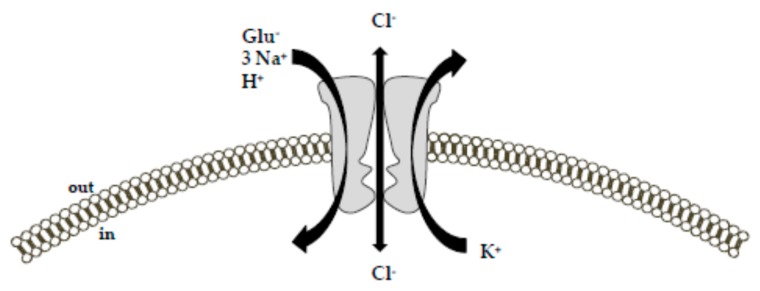
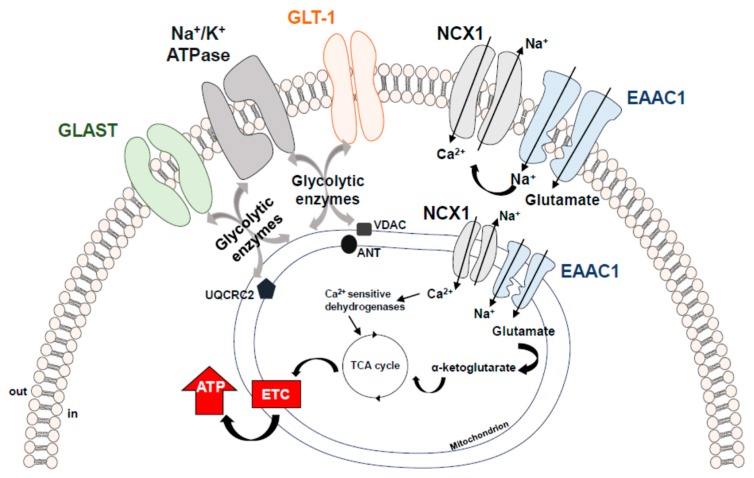
Verification
Claims the paper makes
The claims and statistics of this paper haven’t been checked yet.
Run the check — free, no account needed. It reads the open-access text and checks the sources it cites.
Claims other papers make about this one
Each is checked against this paper’s own text: does it say what the citing paper says it does?
In the citing paper
“SLC1A1 is thought to be primarily expressed in neurons particularly at the pre-synapse whilst SLC1A2 and SLC1A3 are thought to be primarily astrocytic [117].”
From Global identification of neuronal and astrocytic integral membrane proteins that require Retromer for their endosomal recycling (2026) · cites this paper as [117]
Self-check
Percentages, sums and reported differences re-computed from the paper’s own numbers.
The self-check needs the paper’s full text.
Citations
Cites
Neuronal glutathione deficiency and age-dependent neurodegeneration in the EAAC1 deficient mouse
Aoyama, K., Suh, S. W., Hamby, A. M., Liu, J., Chan, W. Y., Chen, Y., & Swanson, R. A. (2006) · Nature Neuroscience · doi:10.1038/nn1609 · Cited by 484
Redox imbalance in cystine/glutamate transporter-deficient mice
Sato, H., Shiiya, A., Kimata, M., Maebara, K., Tamba, M., Sakakura, Y., Makino, N., Sugiyama, F., Yagami, K.-I., Moriguchi, T., et al. (2005) · Journal of Biological Chemistry · doi:10.1074/jbc.m506439200 · Cited by 422
From glutamate co-release to vesicular synergy: vesicular glutamate transporters
El Mestikawy, S., Wallén-Mackenzie, Å., Fortin, G. M., Descarries, L., & Trudeau, L.-E. (2011) · Nature Reviews Neuroscience · doi:10.1038/nrn2969 · Cited by 385
Research works printed but not linked: 73
- Gonzalez, 2013, In silico insights of L-glutamate: Structural features in vacuum and in complex with its receptor, J. Amino Acids, 2013, 872058, 10.1155/2013/872058 · DOI
- Magi, 2019, The dual face of glutamate: From a neurotoxin to a potential survival factor-metabolic implications in health and disease, Cell. Mol. Life Sci., 76, 1473, 10.1007/s00018-018-3002-x · DOI
- Reiner, 2018, Glutamatergic Signaling in the Central Nervous System: Ionotropic and Metabotropic Receptors in Concert, Neuron, 98, 1080, 10.1016/j.neuron.2018.05.018 · DOI
- Whetsell, 1993, Neuroexcitation, excitotoxicity and human neurological disease, Lab. Investig., 68, 372
- Ribeiro, 2017, Metabotropic glutamate receptors and neurodegenerative diseases, Pharmacol. Res., 115, 179, 10.1016/j.phrs.2016.11.013 · DOI
- Crupi, 2019, Role of Metabotropic Glutamate Receptors in Neurological Disorders, Front. Mol. Neurosci., 12, 20, 10.3389/fnmol.2019.00020 · DOI
- Olloquequi, 2018, Excitotoxicity in the pathogenesis of neurological and psychiatric disorders: Therapeutic implications, J. Psychopharmacol., 32, 265, 10.1177/0269881118754680 · DOI
- Zhou, 2014, Glutamate as a neurotransmitter in the healthy brain, J. Neural Transm., 121, 799, 10.1007/s00702-014-1180-8 · DOI
- Grewer, 2014, SLC1 glutamate transporters, Pflug. Arch. Eur. J. Physiol., 466, 3, 10.1007/s00424-013-1397-7 · DOI
- Vandenberg, 2013, Mechanisms of glutamate transport, Physiol. Rev., 93, 1621, 10.1152/physrev.00007.2013 · DOI
- Fremeau, 2004, VGLUTs define subsets of excitatory neurons and suggest novel roles for glutamate, Trends Neurosci., 27, 98, 10.1016/j.tins.2003.11.005 · DOI · Paper page
- Danbolt, 1990, Purification and reconstitution of the sodium- and potassium-coupled glutamate transport glycoprotein from rat brain, Biochemistry, 29, 6734, 10.1021/bi00480a025 · DOI
- Pines, 1992, Cloning and expression of a rat brain L-glutamate transporter, Nature, 360, 464, 10.1038/360464a0 · DOI
- Storck, 1992, Structure, expression, and functional analysis of a Na+-dependent glutamate/aspartate transporter from rat brain, Proc. Natl. Acad. Sci. USA, 89, 10955, 10.1073/pnas.89.22.10955 · DOI
- Kanai, 1993, The elusive transporters with a high affinity for glutamate, Trends Neurosci., 16, 365, 10.1016/0166-2236(93)90094-3 · DOI
- Fairman, 1995, An excitatory amino-acid transporter with properties of a ligand-gated chloride channel, Nature, 375, 599, 10.1038/375599a0 · DOI
- Arriza, 1997, Excitatory amino acid transporter 5, a retinal glutamate transporter coupled to a chloride conductance, Proc. Natl. Acad. Sci. USA, 94, 4155, 10.1073/pnas.94.8.4155 · DOI
- Rothstein, 1994, Localization of neuronal and glial glutamate transporters, Neuron, 13, 713, 10.1016/0896-6273(94)90038-8 · DOI
- Mennerick, 1998, Neuronal expression of the glutamate transporter GLT-1 in hippocampal microcultures, J. Neurosci., 18, 4490, 10.1523/JNEUROSCI.18-12-04490.1998 · DOI
- Kugler, 1999, Glutamate transporter EAAC1 is expressed in neurons and glial cells in the rat nervous system, Glia, 27, 129, 10.1002/(SICI)1098-1136(199908)27:2<129::AID-GLIA3>3.0.CO;2-Y · DOI
- Domercq, 1999, Expression of glutamate transporters in rat optic nerve oligodendrocytes, Eur. J. Neurosci., 11, 2226, 10.1046/j.1460-9568.1999.00639.x · DOI
- Stover, 2001, Early expression of glutamate transporter proteins in ramified microglia after controlled cortical impact injury in the rat, Glia, 35, 167, 10.1002/glia.1082 · DOI
- Palos, 1996, Rat C6 and human astrocytic tumor cells express a neuronal type of glutamate transporter, Mol. Brain Res., 37, 297, 10.1016/0169-328X(95)00331-L · DOI
- Danbolt, 2001, Glutamate uptake, Prog. Neurobiol., 65, 1, 10.1016/S0301-0082(00)00067-8 · DOI · Paper page
- Ryan, 2005, A channel in a transporter, Clin. Exp. Pharmacol. Physiol., 32, 1, 10.1111/j.1440-1681.2005.04164.x · DOI
- Owe, 2006, The ionic stoichiometry of the GLAST glutamate transporter in salamander retinal glia, J. Physiol., 577, 591, 10.1113/jphysiol.2006.116830 · DOI
- Zerangue, 1996, Flux coupling in a neuronal glutamate transporter, Nature, 383, 634, 10.1038/383634a0 · DOI
- Kanai, 1995, Electrogenic properties of the epithelial and neuronal high affinity glutamate transporter, J. Biol. Chem., 270, 16561, 10.1074/jbc.270.28.16561 · DOI
- Wadiche, 1995, Ion fluxes associated with excitatory amino acid transport, Neuron, 15, 721, 10.1016/0896-6273(95)90159-0 · DOI
- Vandenberg, 1995, Constitutive ion fluxes and substrate binding domains of human glutamate transporters, J. Biol. Chem., 270, 17668, 10.1074/jbc.270.30.17668 · DOI
- Billups, 1996, Anion conductance behavior of the glutamate uptake carrier in salamander retinal glial cells, J. Neurosci., 16, 6722, 10.1523/JNEUROSCI.16-21-06722.1996 · DOI
- Sonders, 1996, Channels in transporters, Curr. Opin. Neurobiol., 6, 294, 10.1016/S0959-4388(96)80111-5 · DOI
- Vandenberg, 2008, Slips, leaks and channels in glutamate transporters, Channels, 2, 51, 10.4161/chan.2.1.6047 · DOI
- Veruki, 2006, Activation of a presynaptic glutamate transporter regulates synaptic transmission through electrical signaling, Nat. Neurosci., 9, 1388, 10.1038/nn1793 · DOI
- Wersinger, 2006, The glutamate transporter EAAT5 works as a presynaptic receptor in mouse rod bipolar cells, J. Physiol., 577, 221, 10.1113/jphysiol.2006.118281 · DOI
- Gameiro, 2011, The discovery of slowness: Low-capacity transport and slow anion channel gating by the glutamate transporter EAAT5, Biophys. J., 100, 2623, 10.1016/j.bpj.2011.04.034 · DOI
- 2012, Toward a new role for plasma membrane sodium-dependent glutamate transporters of astrocytes: Maintenance of antioxidant defenses beyond extracellular glutamate clearance, Amino Acids, 42, 181, 10.1007/s00726-011-0863-9 · DOI
- Chen, 2003, The glutamate transporters EAAT2 and EAAT3 mediate cysteine uptake in cortical neuron cultures, J. Neurochem., 84, 1332, 10.1046/j.1471-4159.2003.01630.x · DOI
- Cho, 1990, Uptake of glutamate and cysteine in C-6 glioma cells and in cultured astrocytes, J. Neurochem., 55, 2091, 10.1111/j.1471-4159.1990.tb05800.x · DOI
- Shanker, 2001, Methylmercury inhibits cysteine uptake in cultured primary astrocytes, but not in neurons, Brain Res., 914, 159, 10.1016/S0006-8993(01)02791-3 · DOI
- Bender, 2000, Characterization of cystine uptake in cultured astrocytes, Neurochem. Int., 37, 269, 10.1016/S0197-0186(00)00035-8 · DOI
- Hayes, 2005, Transport of L-[14C]cystine and L-[14C]cysteine by subtypes of high affinity glutamate transporters over-expressed in HEK cells, Neurochem. Int., 46, 585, 10.1016/j.neuint.2005.03.001 · DOI
- Zerangue, 1996, Interaction of L-cysteine with a human excitatory amino acid transporter, J. Physiol., 493, 419, 10.1113/jphysiol.1996.sp021393 · DOI
- Himi, 2003, Role of neuronal glutamate transporter in the cysteine uptake and intracellular glutathione levels in cultured cortical neurons, J. Neural Transm., 110, 1337, 10.1007/s00702-003-0049-z · DOI
- Harada, 2007, The potential role of glutamate transporters in the pathogenesis of normal tension glaucoma, J. Clin. Investig., 117, 1763, 10.1172/JCI30178 · DOI
- Berman, 2011, N-acetylcysteine prevents loss of dopaminergic neurons in the EAAC1-/- mouse, Ann. Neurol., 69, 509, 10.1002/ana.22162 · DOI
- Li, 2011, Glutamate transporter type 3 knockout reduces brain tolerance to focal brain ischemia in mice, J. Cereb. Blood Flow Metab., 31, 1283, 10.1038/jcbfm.2010.222 · DOI
- McKenna, 2007, The glutamate-glutamine cycle is not stoichiometric: Fates of glutamate in brain, J. Neurosci. Res., 85, 3347, 10.1002/jnr.21444 · DOI
- Panov, 2009, The neuromediator glutamate, through specific substrate interactions, enhances mitochondrial ATP production and reactive oxygen species generation in nonsynaptic brain mitochondria, J. Biol. Chem., 284, 14448, 10.1074/jbc.M900985200 · DOI
- Hertz, 2003, Cataplerotic TCA cycle flux determined as glutamate-sustained oxygen consumption in primary cultures of astrocytes, Neurochem. Int., 43, 355, 10.1016/S0197-0186(03)00022-6 · DOI
- McKenna, 2013, Glutamate pays its own way in astrocytes, Front. Endocrinol., 4, 191, 10.3389/fendo.2013.00191 · DOI
- McKenna, 1993, Regulation of energy metabolism in synaptic terminals and cultured rat brain astrocytes: Differences revealed using aminooxyacetate, Dev. Neurosci., 15, 320, 10.1159/000111351 · DOI
- Tildon, 1985, Substrate oxidation by isolated rat brain mitochondria and synaptosomes, J. Neurosci. Res., 14, 207, 10.1002/jnr.490140206 · DOI
- Olstad, 2007, Glutamate is preferred over glutamine for intermediary metabolism in cultured cerebellar neurons, J. Cereb. Blood Flow Metab., 27, 811, 10.1038/sj.jcbfm.9600400 · DOI
- Divakaruni, 2017, Inhibition of the mitochondrial pyruvate carrier protects from excitotoxic neuronal death, J. Cell. Biol., 216, 1091, 10.1083/jcb.201612067 · DOI
- Fendt, 2017, Neurons eat glutamate to stay alive, J. Cell. Biol., 216, 863, 10.1083/jcb.201702003 · DOI
- Magi, S., Lariccia, V., Castaldo, P., Arcangeli, S., Nasti, A.A., Giordano, A., and Amoroso, S. (2012). Physical and functional interaction of NCX1 and EAAC1 transporters leading to glutamate-enhanced ATP production in brain mitochondria. PLoS ONE, 7. · DOI
- Palmieri, 2001, Citrin and aralar1 are Ca2+-stimulated aspartate/glutamate transporters in mitochondria, EMBO J., 20, 5060, 10.1093/emboj/20.18.5060 · DOI
- Fiermonte, 2002, Identification of the mitochondrial glutamate transporter. Bacterial expression, reconstitution, functional characterization, and tissue distribution of two human isoforms, J. Biol. Chem., 277, 19289, 10.1074/jbc.M201572200 · DOI · Paper page
- Ortega, 2017, Glial Glutamate Transporters as Signaling Molecules, Adv. Neurobiol., 16, 185, 10.1007/978-3-319-55769-4_9 · DOI
- Ralphe, 2004, Localization and function of the brain excitatory amino acid transporter type 1 in cardiac mitochondria, J. Mol. Cell. Cardiol., 37, 33, 10.1016/j.yjmcc.2004.04.008 · DOI
- Ralphe, 2005, Correlation between myocardial malate/aspartate shuttle activity and EAAT1 protein expression in hyper- and hypothyroidism, Am. J. Physiol. Heart. Circ. Physiol., 288, H2521, 10.1152/ajpheart.00991.2004 · DOI
- Annunziato, 2004, Pharmacology of brain Na+/Ca2+ exchanger: From molecular biology to therapeutic perspectives, Pharmacol. Rev., 56, 633, 10.1124/pr.56.4.5 · DOI
- Blaustein, 1999, Sodium/calcium exchange: Its physiological implications, Physiol. Rev., 79, 763, 10.1152/physrev.1999.79.3.763 · DOI
- Philipson, 2000, Sodium-calcium exchange: A molecular perspective, Annu. Rev. Physiol., 62, 111, 10.1146/annurev.physiol.62.1.111 · DOI
- Quednau, 1997, Tissue specificity and alternative splicing of the Na+/Ca2+ exchanger isoforms NCX1, NCX2, and NCX3 in rat, Am. J. Physiol., 272, C1250, 10.1152/ajpcell.1997.272.4.C1250 · DOI
- Giladi, 2017, Structure-based dynamic arrays in regulatory domains of sodium-calcium exchanger (NCX) isoforms, Sci. Rep., 7, 993, 10.1038/s41598-017-01102-x · DOI
- Magi, 2013, Glutamate-induced ATP synthesis: Relationship between plasma membrane Na+/Ca2+ exchanger and excitatory amino acid transporters in brain and heart cell models, Mol. Pharmacol., 84, 603, 10.1124/mol.113.087775 · DOI
- Maiolino, 2017, Essential role of the Na+-Ca2+ exchanger (NCX) in glutamate-enhanced cell survival in cardiac cells exposed to hypoxia/reoxygenation, Sci. Rep., 7, 13073, 10.1038/s41598-017-13478-x · DOI
- Piccirillo, 2018, Glutamate as a potential “survival factor” in an in vitro model of neuronal hypoxia/reoxygenation injury: Leading role of the Na+/Ca2+ exchanger, Cell. Death Dis., 9, 731, 10.1038/s41419-018-0784-6 · DOI
- Gegelashvili, 2019, Glutamate transport system as a key constituent of glutamosome: Molecular pathology and pharmacological modulation in chronic pain, Neuropharmacology, 153, 53
- Genda, 2011, Co-compartmentalization of the astroglial glutamate transporter, GLT-1, with glycolytic enzymes and mitochondria, J. Neurosci., 31, 18275, 10.1523/JNEUROSCI.3305-11.2011 · DOI
- Bauer, 2012, The glutamate transporter, GLAST, participates in a macromolecular complex that supports glutamate metabolism, Neurochem. Int., 61, 566, 10.1016/j.neuint.2012.01.013 · DOI
Cited by
Sorted by citations
Hadi, F., Kashefinejad, S., Kamalzadeh, L., Hoobehfekr, S., & Shalbafan, M. (2021) · BMC Pharmacology and Toxicology · doi:10.1186/s40360-021-00534-6 · Cited by 36
Jones, E., Adams, H., Chen, K.-E., Maroof, F., Ibbotson, T. M., Nakamura, Y., Banks, P. J., Healy, M. D., Lewis, P. A., Heesom, K. J., et al. (2026) · doi:10.64898/2026.05.14.724903
Metadata
- Authors
- Magi, S., Piccirillo, S., Amoroso, S., & Lariccia, V.
- Venue
- International Journal of Molecular Sciences
- Publisher
- MDPI AG
- Published
- 2019-11-13
- Volume
- 20
- Issue
- 22
- Pages
- 5674
- ISSN
- 1422-0067
- PMC
- PMC6888595
- Cited by
- 146
- References
- 3
- Language
- en
About these checks
Registry, retraction, Cites and statistics results are computed, not judged, with one exception: a printed reference that no index lists is read once by a model before it counts as a citation error. Claims are extracted by a model and kept only when their quote appears verbatim in the text; each cited source is then checked, with a model’s help, for whether it says what the claim relies on. Those verdicts can be wrong — read the claim’s quote and the cited source before relying on one.
Statistics and arithmetic are recomputed, not judged.
Confidence bands are shown only for fields calibrated on our annotated test set. None is calibrated yet, so no band is shown.
What counts as a claim ›How we measure confidence ›How we check this ›
Are you an author, or do you see a problem with this page? Request a review
How to cite
Cite CoChat for the checks on this page, and the paper for its own findings.
- This page
- CoChat. (2026). Citation check: Excitatory Amino Acid Transporters (EAATs): Glutamate Transport and Beyond. https://app.cochat.ai/papers/10.3390/ijms20225674
- The paper
- Magi, S., Piccirillo, S., Amoroso, S., & Lariccia, V. (2019). Excitatory Amino Acid Transporters (EAATs): Glutamate Transport and Beyond. International Journal of Molecular Sciences. https://doi.org/10.3390/ijms20225674
