

The DOI matches its Crossref record; 102 of the 104 references it cites were found in a registry or an index.
BIOPEP-UWM Database of Bioactive Peptides: Current Opportunities
Open accessAbstract
The BIOPEP-UWM™ database of bioactive peptides (formerly BIOPEP) has recently become a popular tool in the research on bioactive peptides, especially on these derived from foods and being constituents of diets that prevent development of chronic diseases. The database is continuously updated and modified. The addition of new peptides and the introduction of new information about the existing ones (e.g., chemical codes and references to other databases) is in progress. New opportunities include the possibility of annotating peptides containing D-enantiomers of amino acids, batch processing option, converting amino acid sequences into SMILES code, new quantitative parameters characterizing the presence of bioactive fragments in protein sequences, and finding proteinases that release particular peptides.
Overview
The claims and statistics of this paper haven’t been checked yet.
Run the check — free, no account needed. It reads the open-access text and checks the sources it cites.
Integrity signals
Registry
Cites
Statistics
Figures
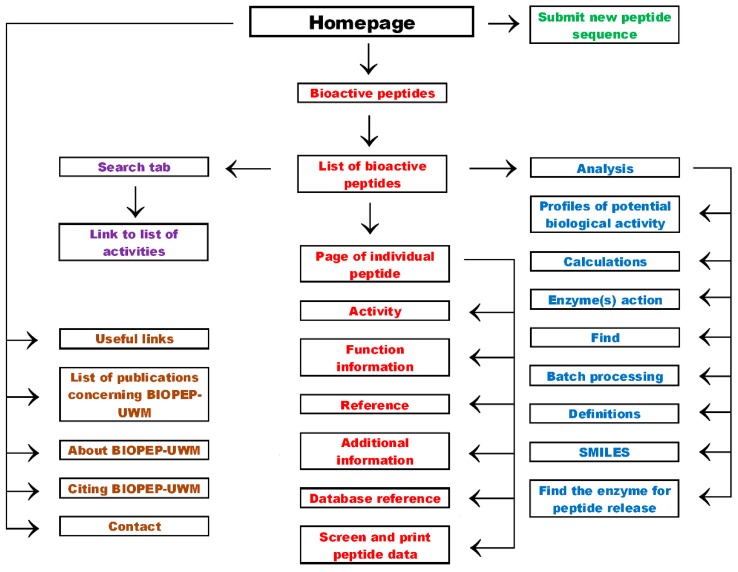
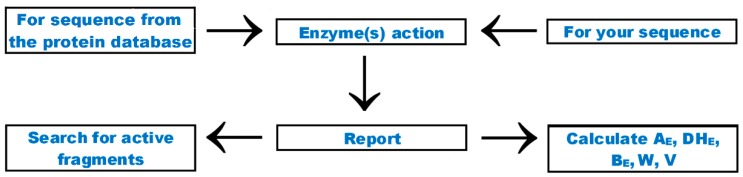
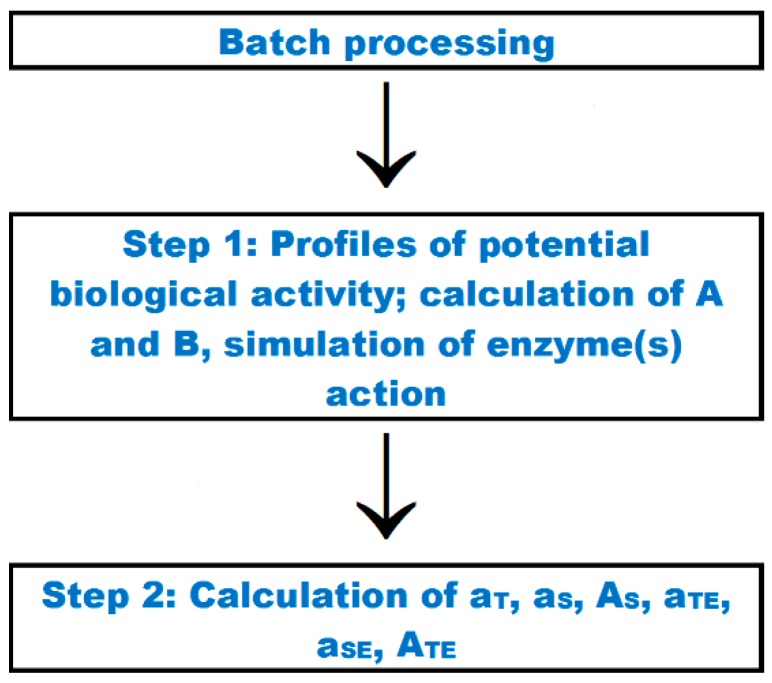
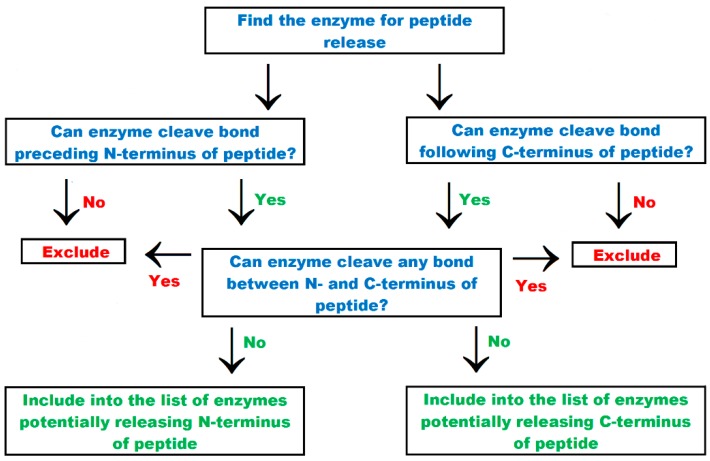
Verification
Claims the paper makes
The claims and statistics of this paper haven’t been checked yet.
Run the check — free, no account needed. It reads the open-access text and checks the sources it cites.
Claims other papers make about this one
Each is checked against this paper’s own text: does it say what the citing paper says it does?
The source backs part of the claim, not all of it — or backs it for a different population, condition or comparison.
In the citing paper
“Libraries of bioactive peptide sequences obtained via proteolysis of food proteins are widely available in databases like BIOPEP-UWM and contain modules of in silico proteolysis, activity prediction, and structure-function analysis [209].”
From Navigating the potential of algal peptides: health effects, market applications, and scientific challenges (2026) · cites this paper as [209]
Experimental — accuracy not yet measuredThe source backs part of the claim, not all of it — or backs it for a different population, condition or comparison.
In the citing paper
“Biological informatics platforms based on machine learning and artificial intelligence (AI) have transformed the field of peptide studies by allowing predictions of bioactivity, toxicity, physicochemical properties, and possible health impact within hours.”
From Navigating the potential of algal peptides: health effects, market applications, and scientific challenges (2026) · cites this paper as [209]
Experimental — accuracy not yet measured
Self-check
Percentages, sums and reported differences re-computed from the paper’s own numbers.
The self-check needs the paper’s full text.
Citations
Cites
Open Babel: An open chemical toolbox
O'Boyle, N. M., Banck, M. S., James, C. A. J., Morley, C., Vandermeersch, T., & Hutchison, G. R. (2011) · Journal of Cheminformatics · doi:10.1186/1758-2946-3-33 · Cited by 10,745
DrugBank 5.0: a major update to the DrugBank database for 2018
Wishart, D. S., Feunang, Y. D., Guo, A. C., Lo, E. J., Marcu, A., Grant, J. R., Sajed, T., Johnson, D., Li, C., Sayeeda, Z., et al. (2018) · Nucleic Acids Research · doi:10.1093/nar/gkx1037 · Cited by 8,404
Weininger, D. (1988) · Journal of Chemical Information and Computer Sciences · doi:10.1021/ci00057a005 · Cited by 7,436
INFOGEST static in vitro simulation of gastrointestinal food digestion
Brodkorb, A., Egger, L., Alminger, M., Alvito, P., Assunção, R., Ballance, S., Bohn, T., Bourlieu-Lacanal, C., Boutrou, R., Carrière, F., et al. (2019) · Nature Protocols · doi:10.1038/s41596-018-0119-1 · Cited by 5,199
HMDB 4.0: the human metabolome database for 2018
Wishart, D. S., Feunang, Y. D., Marcu, A., Guo, A. C., Liang, K., Vázquez-Fresno, R., Sajed, T., Johnson, D., Li, C., Karu, N., et al. (2018) · Nucleic Acids Research · doi:10.1093/nar/gkx1089 · Cited by 3,438
PubChem 2019 update: improved access to chemical data
Kim, S., Chen, J., Cheng, T., Gindulyte, A., He, J., He, S., Li, Q., Shoemaker, B. A., Thiessen, P. A., Yu, B., et al. (2019) · Nucleic Acids Research · doi:10.1093/nar/gky1033 · Cited by 3,249
ZINC 15 – Ligand Discovery for Everyone
Sterling, T., & Irwin, J. J. (2015) · Journal of Chemical Information and Modeling · doi:10.1021/acs.jcim.5b00559 · Cited by 3,224
APD3: the antimicrobial peptide database as a tool for research and education
Wang, G., Li, X., & Wang, Z. (2015) · Nucleic Acids Research · doi:10.1093/nar/gkv1278 · Cited by 2,402
ChEMBL: towards direct deposition of bioassay data
Mendez, D., Gaulton, A., Bento, A. P., Chambers, J., De Veij, M., Félix, E., Magariños, M. P., Mosquera, J. F., Mutowo, P., Nowotka, M., et al. (2019) · Nucleic Acids Research · doi:10.1093/nar/gky1075 · Cited by 2,372
New approach for understanding genome variations in KEGG
Kanehisa, M. I., Sato, Y., Furumichi, M., Morishima, K., & Tanabe, M. (2018) · Nucleic Acids Research · doi:10.1093/nar/gky962 · Cited by 1,845
Research works printed but not linked: 1
- Skrzypczak, 2019, Effects of probiotic fermentation of selected milk and whey protein preparations on bioactive peptides and technological properties, Ital. J. Food Sci., 31, 437
Cited by
Sorted by citations
Molecular representations in AI-driven drug discovery: a review and practical guide
David, L., Thakkar, A., Mercado, R., & Engkvist, O. (2020) · Journal of Cheminformatics · doi:10.1186/s13321-020-00460-5 · Cited by 587
Limón, A. M. V., Aguilar-Toalá, J. E., & Liceaga, A. M. (2022) · Journal of Agricultural and Food Chemistry · doi:10.1021/acs.jafc.1c06110 · Cited by 534
Wen, C., Zhang, J., Zhang, H., Duan, Y., & Ma, H. (2020) · Trends in Food Science & Technology · doi:10.1016/j.tifs.2020.09.019 · Cited by 472
A Global Review on Short Peptides: Frontiers and Perspectives
Apostolopoulos, V., Bojarska, J., Chai, T., Elnagdy, S. M., Kaczmarek, K., Matsoukas, J., New, R. R. C., Parang, K., Paredes‐López, O., Parhiz, H., et al. (2021) · Molecules · doi:10.3390/molecules26020430 · Cited by 459
Current Trends of Bioactive Peptides—New Sources and Therapeutic Effect
Jakubczyk, A., Karaś, M., Rybczyńska‐Tkaczyk, K., Zielińska, E., & Zieliński, D. (2020) · Foods · doi:10.3390/foods9070846 · Cited by 259
Metadata
- Authors
- Minkiewicz, P., Iwaniak, A., & Darewicz, M.
- Affiliations
- Chair of Food Biochemistry, University of Warmia and Mazury in Olsztyn, Plac Cieszyński 1, 10-726 Olsztyn-Kortowo, Poland
- University of Warmia and Mazury in Olsztyn (PL)
- Venue
- International Journal of Molecular Sciences
- Publisher
- MDPI AG
- Published
- 2019-11-27
- Volume
- 20
- Issue
- 23
- Pages
- 5978
- ISSN
- 1422-0067 (ISSN-L)
- PMC
- PMC6928608
- OpenAlex
- W2989775272
- Cited by
- 958
- References
- 104
- Citations by year
- 2026: 161 · 2025: 189 · 2024: 156 · 2023: 160 · 2022: 135 · 2021: 103 · 2020: 53 · 2019: 1
- FWCI
- 24.15
- Type
- journal article
- Language
- en
- Open access
- gold
- dx.doi.org
- Licence
- Locations
- International Journal of Molecular Sciences (publishedVersion, cc-by)
- Europe PMC (PubMed Central) (publishedVersion, cc-by)
- PubMed Central (publishedVersion, cc-by)
- PubMed (publishedVersion)
- Funders
- The project was financially supported by the Minister of Science and Higher Education in the range of the program entitled “Regional Initiative of Excellence” for the years 2019–2022, amount of funding 12,000,000 PLN (010/RID/2018/19)
- Topics
- Life Sciences › Agricultural and Biological Sciences › Food Science › Protein Hydrolysis and Bioactive Peptides
- Physical Sciences › Chemistry › Organic Chemistry › Chemical Synthesis and Analysis
- Life Sciences › Immunology and Microbiology › Microbiology › Antimicrobial Peptides and Activities
- Keywords
- bioactive peptides, peptide database, food-derived peptides, chronic disease prevention, D-enantiomer, peptide annotation
- MeSH terms
- Amino Acid Sequence, Amino Acids, Animals, Humans, Peptide Hydrolases, Peptides, Databases, Factual
About these checks
Registry, retraction, Cites and statistics results are computed, not judged, with one exception: a printed reference that no index lists is read once by a model before it counts as a citation error. Claims are extracted by a model and kept only when their quote appears verbatim in the text; each cited source is then checked, with a model’s help, for whether it says what the claim relies on. Those verdicts can be wrong — read the claim’s quote and the cited source before relying on one.
Statistics and arithmetic are recomputed, not judged.
Confidence bands are shown only for fields calibrated on our annotated test set. None is calibrated yet, so no band is shown.
What counts as a claim ›How we measure confidence ›How we check this ›
Are you an author, or do you see a problem with this page? Request a review
