

Influence of Acrylamide Administration on the Neurochemical Characteristics of Enteric Nervous System (ENS) Neurons in the Porcine Duodenum
Open accessThe DOI matches its Crossref record; 77 of the 77 references it cites were found in a registry or an index.
Abstract
The digestive tract, especially the small intestine, is one of the main routes of acrylamide absorption and is therefore highly exposed to the toxic effect of acrylamide contained in food. The aim of this experiment was to elucidate the effect of low (tolerable daily intake—TDI) and high (ten times higher than TDI) doses of acrylamide on the neurochemical phenotype of duodenal enteric nervous system (ENS) neurons using the pig as an animal model. The experiment was performed on 15 immature gilts of the Danish Landrace assigned to three experimental groups: control (C) group—pigs administered empty gelatine capsules, low dose (LD) group—pigs administered capsules with acrylamide at the TDI dose (0.5 μg/kg body weight (b.w.)/day), and the high dose (HD) group—pigs administered capsules with acrylamide at a ten times higher dose than the TDI (5 μg/kg b.w./day) with a morning feeding for 4 weeks. Administration of acrylamide, even in a low (TDI) dose, led to an increase in the percentage of enteric neurons immunoreactive to substance P (SP), calcitonin gene-related peptide (CGRP), galanin (GAL), neuronal nitric oxide synthase (nNOS), and vesicular acetylcholine transporter (VACHT) in the porcine duodenum. The severity of the changes clearly depended on the dose of acrylamide and the examined plexus. The obtained results suggest the participation of these neuroactive substances in acrylamide-inducted plasticity and the protection of ENS neurons, which may be an important line of defence from the harmful action of acrylamide.
Overview
The claims and statistics of this paper haven’t been checked yet.
Free: it reads the open-access text and checks the first 5 claims that cite a source we can check. Create a free account to check every claim.
Integrity signals
Registry
Cites
Statistics
Figures
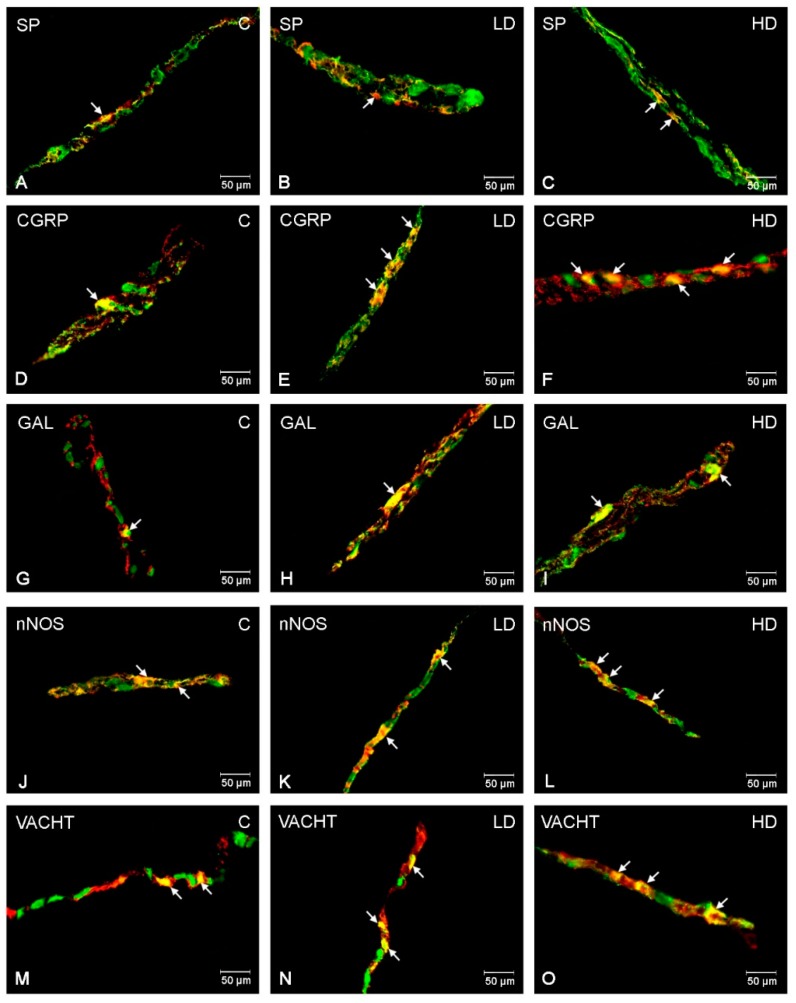
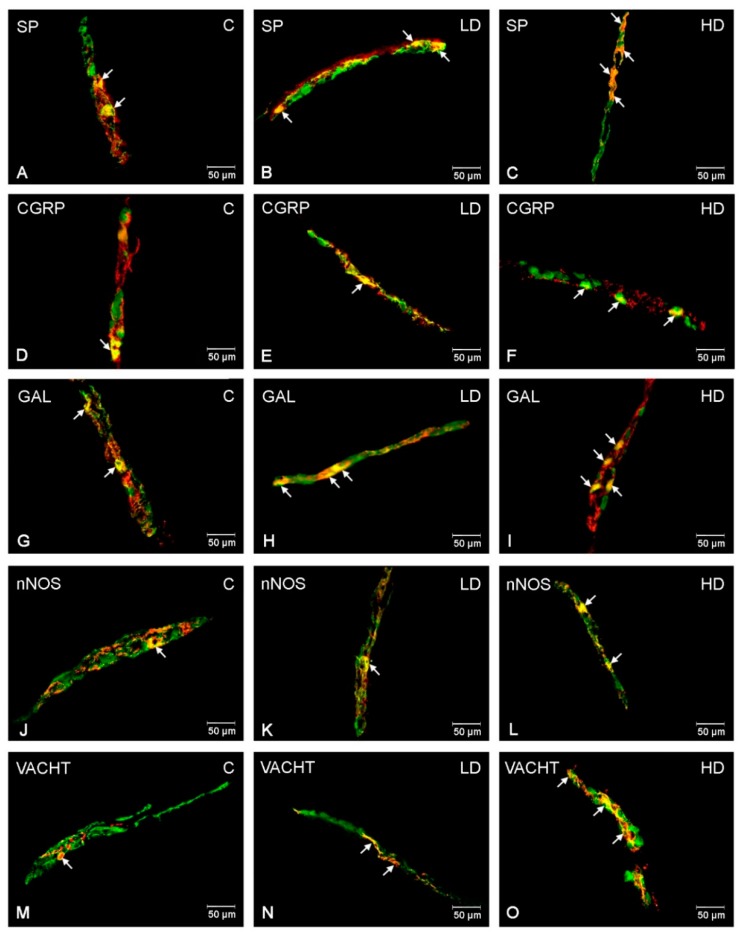
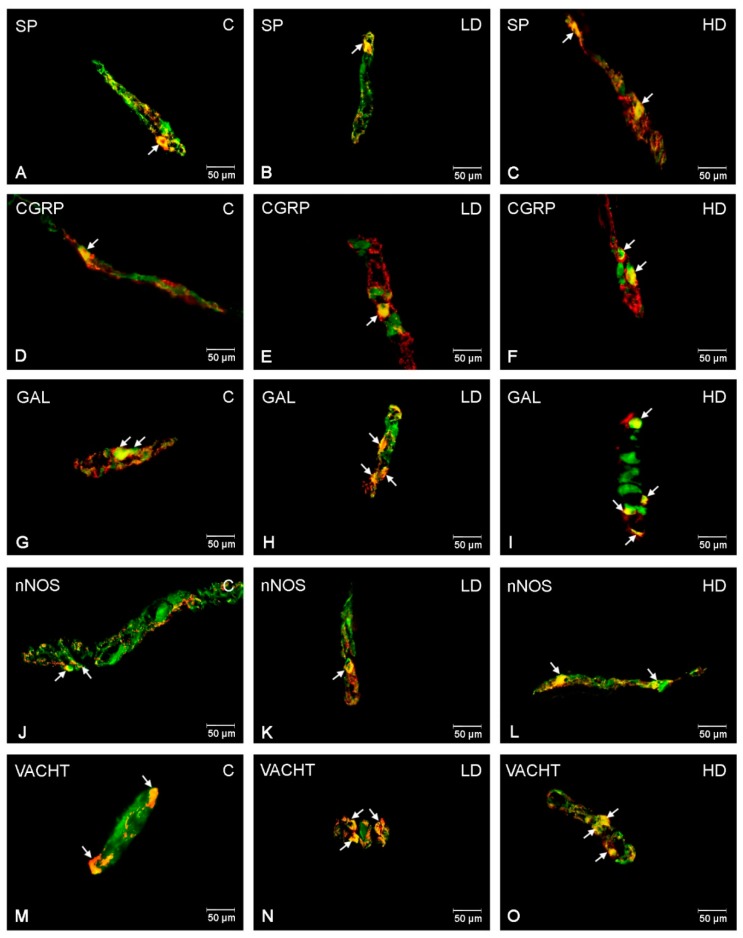
Verification
Claims the paper makes
The claims and statistics of this paper haven’t been checked yet.
Free: it reads the open-access text and checks the first 5 claims that cite a source we can check. Create a free account to check every claim.
Claims other papers make about this one
Each is checked against this paper’s own text: does it say what the citing paper says it does?
The source backs part of the claim, not all of it — or backs it for a different population, condition or comparison.
In the citing paper
“Both treatments led to significant increases in the percentage of neurons immunoreactive to substance P (SP), CGRP, galanin, nNOS, and vesicular acetylcholine transporter (VACHT), although the high dose exerted more intense changes.”
From Effects of Coffee and Its Components on the Gastrointestinal Tract and the Brain–Gut Axis (2020) · cites this paper as [194]
Experimental — accuracy not yet measured
Self-check
Percentages, sums and reported differences re-computed from the paper’s own numbers.
The self-check needs the paper’s full text.
Citations
Cites
Vagus nerve stimulation attenuates the systemic inflammatory response to endotoxin
Borovikova, L. V., Ivanova, S., Zhang, M., Yang, H., Botchkina, G. I., Watkins, L. R., Wang, H., Abumrad, N., Eaton, J. W., & Tracey, K. J. (2000) · Nature · doi:10.1038/35013070 · Cited by 4,211 · cited 3×
“The anti-inflammatory action of ACh was also observed in human blood macrophages during LPS administration expressed as an elevated level of TNF-α, IL-6, IL-18 [69].”
BackgroundKararli, T. T. (1995) · Biopharmaceutics & Drug Disposition · doi:10.1002/bdd.2510160502 · Cited by 1,459 · cited 1×
“The pig is an omnivorous animal whose anatomical and histological structure is highly comparable with the human body [74].”
BackgroundThe enteric nervous system and gastrointestinal innervation: integrated local and central control
Furness, J. B., Callaghan, B. P., Rivera, L. R., & Cho, H.-J. (2014) · Advances in Experimental Medicine and Biology · doi:10.1007/978-1-4939-0897-4_3 · Cited by 827
Harrison, S. (2001) · The International Journal of Biochemistry & Cell Biology · doi:10.1016/s1357-2725(01)00031-0 · Cited by 447
Arvidsson, U., Riedl, M., Elde, R., & Meister, B. (1997) · The Journal of Comparative Neurology · doi:10.1002/(sici)1096-9861(19970224)378:4<454::aid-cne2>3.0.co;2-1 · Cited by 435 · cited 1×
“In turn, VACHT, as a cholinergic component, stimulates smooth muscle contractility and the secretion of digestive enzymes [31].”
BackgroundHuman exposure and internal dose assessments of acrylamide in food
Dybing, E., Farmer, P. B., Andersen, M., Fennell, T. R., Lalljie, S. P. D., Müller, D. J. G., Olin, S., Petersen, B. J., Schlatter, J., Scholz, G., et al. (2005) · Food and Chemical Toxicology · doi:10.1016/j.fct.2004.11.004 · Cited by 395 · cited 1×
“Since the presence of ACM in food products has been confirmed, numerous toxicological studies have been conducted to investigate its effect on living organisms [2,3].”
BackgroundLANG, R., GUNDLACH, A., & KOFLER, B. (2007) · Pharmacology & Therapeutics · doi:10.1016/j.pharmthera.2007.05.009 · Cited by 376 · cited 3×
“GAL is also thought to regulate numerous physiological actions in the mammalian digestive tract, including the secretion of digestive enzymes and hydrochloric acid secretion, regulation of peristalsis, and the release of other neurotransmitters [29].”
BackgroundThe Changing View of Acrylamide Neurotoxicity
LoPachin, R. M. (2004) · NeuroToxicology · doi:10.1016/j.neuro.2004.01.004 · Cited by 310
Acrylamide: Review of Toxicity Data and Dose-Response Analyses for Cancer and Noncancer Effects
Shipp, A., Lawrence, G., Gentry, R., McDonald, T., Bartow, H., Bounds, J., Macdonald, N., Clewell, H., Allen, B., & Van Landingham, C. (2006) · Critical Reviews in Toxicology · doi:10.1080/10408440600851377 · Cited by 305 · cited 3×
“Since the presence of ACM in food products has been confirmed, numerous toxicological studies have been conducted to investigate its effect on living organisms [2,3].”
BackgroundResultPain and inflammatory bowel disease.
Bielefeldt, K., Davis, B., & Binion, D. G. (2009) · Inflammatory Bowel Diseases · doi:10.1002/ibd.20848 · Cited by 304
Pathophysiological significance of neuronal nitric oxide synthase in the gastrointestinal tract
Takahashi, T. (2003) · Journal of Gastroenterology · doi:10.1007/s00535-003-1094-y · Cited by 272 · cited 1×
“However, a decrease in nNOS immunoreactivity was observed in Crohn’s disease, inflammatory processes, and diabetes [19,72,73].”
BackgroundNitric oxide in gastrointestinal health and disease
Shah, V., Lyford, G., Gores, G., & Farrugia, G. (2004) · Gastroenterology · doi:10.1053/j.gastro.2003.11.046 · Cited by 267 · cited 1×
“Further, nNOS, a marker of nitrergic neurons, is an inhibitory neurotransmitter responsible for the slowing of intestinal motility, suppression of the release of other neurotransmitters, and the control of blood flow in intestinal blood vessels [30].”
BackgroundA review of mechanisms of acrylamide carcinogenicity
Besaratinia, A., & Pfeifer, G. P. (2006) · Carcinogenesis · doi:10.1093/carcin/bgm006 · Cited by 243 · cited 1×
“The genotoxic and carcinogenic effects of acrylamide have been described in many experimental models of acrylamide toxicity [5,6].”
BackgroundProjections of substance P-containing neurons within the guinea-pig small intestine
Costa, M., Furness, J. B., Llewellyn-Smith, I. J., & Cuello, A. C. (1981) · Neuroscience · doi:10.1016/0306-4522(81)90134-2 · Cited by 224
Enteric neuroplasticity evoked by inflammation
Vasina, V., Barbara, G., Talamonti, L., Stanghellini, V., Corinaldesi, R., Tonini, M., De Ponti, F., & De Giorgio, R. (2006) · Autonomic Neuroscience · doi:10.1016/j.autneu.2006.02.025 · Cited by 221 · cited 1×
“This is congruent with the phenomenon of neural plasticity, described by many authors as an adaptation in ENS neurons to disturbances of homeostasis and pathological factors manifested by the change of neurochemical features of neurons, overexpression of certain genes, or a reduction in the expression of others [32].”
Substance P induces TNF-α and IL-6 production through NFκB in peritoneal mast cells
Azzolina, A., Bongiovanni, A., & Lampiasi, N. (2003) · Biochimica et Biophysica Acta (BBA) - Molecular Cell Research · doi:10.1016/j.bbamcr.2003.09.003 · Cited by 196
Rivera, L. R., Poole, D. P., Thacker, M., & Furness, J. B. (2011) · Neurogastroenterology & Motility · doi:10.1111/j.1365-2982.2011.01780.x · Cited by 184 · cited 1×
“However, a decrease in nNOS immunoreactivity was observed in Crohn’s disease, inflammatory processes, and diabetes [19,72,73].”
BackgroundEnteric Nervous System in the Small Intestine: Pathophysiology and Clinical Implications
Nezami, B. G., & Srinivasan, S. (2010) · Current Gastroenterology Reports · doi:10.1007/s11894-010-0129-9 · Cited by 155
Dietary acrylamide and cancer risk: An updated meta‐analysis
Pelucchi, C., Bosetti, C., Galeone, C., & La Vecchia, C. (2015) · International Journal of Cancer · doi:10.1002/ijc.29339 · Cited by 144 · cited 1×
“To date, a carcinogenic effect has not been confirmed in humans [34].”
BackgroundCao, J., Liu, Y., Li, J., Jiang, L., Geng, C., Yao, X., Kong, Y., Jiang, B.-N., & Zhong, L. (2008) · Journal of Agricultural and Food Chemistry · doi:10.1021/jf8026827 · Cited by 129 · cited 1×
“reduction of cellular concentration of the reduced form of glutathione (GSH) in isolated human monocytes and HepG2 cells [41].”
BackgroundLessons from the porcine enteric nervous system
Brown, D. R., & Timmermans, J. ‐. (2004) · Neurogastroenterology & Motility · doi:10.1111/j.1743-3150.2004.00475.x · Cited by 120 · cited 1×
“In addition, physiological and pathological processes, as well as microflora, are more like those found in rodents [75].”
BackgroundDelafoy, L., Gelot, A., Ardid, D., Eschalier, A., Bertrand, C., Doherty, A. M., & Diop, L. (2006) · Gut · doi:10.1136/gut.2005.064063 · Cited by 112
Naruszewicz, M., Zapolska‐Downar, D., Kośmider, A., Nowicka, G., Kozłowska−Wojciechowska, M., Vickström, A., & Törnqvist, M. (2009) · American Journal of Clinical Nutrition · doi:10.3945/ajcn.2008.26647 · Cited by 109 · cited 1×
“A similar observation was noted in humans, in which the consumption of potato chips resulted in an elevated level of inflammatory indicators (IL-6, C-reactive protein (CRP)) as well as an increase in cholesterol (LDH) content in the blood [53].”
BackgroundSanthanasabapathy, R., Vasudevan, S., Anupriya, K., Pabitha, R., & Sudhandiran, G. (2015) · Neuroscience · doi:10.1016/j.neuroscience.2015.08.067 · Cited by 104
Ohno, T., Hattori, Y., Komine, R., Ae, T., Mizuguchi, S., Arai, K., Saeki, T., Suzuki, T., Hosono, K., Hayashi, I., et al. (2007) · Gastroenterology · doi:10.1053/j.gastro.2007.10.001 · Cited by 104
Chemical Modifications of Peptides and Their Impact on Food Properties
Van Lancker, F., Adams, A., & De Kimpe, N. (2011) · Chemical Reviews · doi:10.1021/cr200032j · Cited by 102 · cited 1×
“ACM is also formed in the Maillard reaction during the thermal processing of food at high temperatures and its highest content was recorded in toasted bread, French fries, instant coffee, and chips [1].”
BackgroundFast Axonal Transport: A Site of Acrylamide Neurotoxicity?
Sickles, D. W., Stone, J. D., & Friedman, M. A. (2002) · NeuroToxicology · doi:10.1016/s0161-813x(02)00025-6 · Cited by 91
Intestinal transport and metabolism of acrylamide
Zödl, B., Schmid, D., Wassler, G., Gundacker, C., Leibetseder, V. J., Thalhammer, T., & Ekmekçioğlu, C. (2006) · Toxicology · doi:10.1016/j.tox.2006.12.014 · Cited by 77 · cited 1×
“The digestive tract, especially the small intestine, is one of the main routes of acrylamide absorption and is therefore highly exposed to the toxic effect of acrylamide contained in food [4].”
BackgroundWinston, J. H., Li, Q., & Sarna, S. K. (2013) · American Journal of Physiology-Gastrointestinal and Liver Physiology · doi:10.1152/ajpgi.00052.2013 · Cited by 66 · cited 1×
“An increased population of NOS-LI neurons in the ENS was described in inflammatory bowel disease (IBD), Crohn’s disease, and bisphenol A intoxication [18,70,71].”
BackgroundLearning, memory deficits, and impaired neuronal maturation attributed to acrylamide
Lee, S., Park, H. R., Lee, J. Y., Cho, J.-H., Song, H. M., Kim, A. H., Lee, W., Lee, Y., Chang, S., Kim, H. S., et al. (2018) · Journal of Toxicology and Environmental Health · doi:10.1080/15287394.2018.1440184 · Cited by 64 · cited 1×
“[39] demonstrated that acrylamide led to developmental neurotoxicity by a delay of maturation of primary cultured neurons.”
BackgroundZong, C., Hasegawa, R., Urushitani, M., Zhang, L., Nagashima, D., Sakurai, T., Ichihara, S., Ohsako, S., & Ichihara, G. (2019) · Archives of Toxicology · doi:10.1007/s00204-019-02471-0 · Cited by 64 · cited 1×
“Acrylamide-induced oxidative stress may also help to mediate the activation of glial cells and the release of proinflammatory cytokines, consequently leading to neuronal damage [44].”
BackgroundSandgren, K., Lin, Z., Svenningsen, Å. F., & Ekblad, E. (2003) · Journal of Neuroscience Research · doi:10.1002/jnr.10612 · Cited by 59 · cited 2×
“Secondly, over-expression of nNOS in myenteric neurons has been described in many pathological processes in the gut, which suggests its participation in neuroprotective and recovery processes [49].”
BackgroundAcrylamide-induced oxidative stress in human erythrocytes
Catalgol, B., Özhan, G., & Alpertunga, B. (2009) · Human & Experimental Toxicology · doi:10.1177/0960327109350664 · Cited by 55 · cited 1×
“The activity of superoxide dismutase (SOD) was elevated in the liver, testes, kidney, and lung of rats during acrylamide administration and in human erythrocytes treated with acrylamide in vitro [42].”
BackgroundSensory innervation of the canine esophagus, stomach, and duodenum
Khurana, R. K., & Petras, J. M. (1991) · American Journal of Anatomy · doi:10.1002/aja.1001920309 · Cited by 53
Gonkowski, S. (2013) · BioFactors · doi:10.1002/biof.1097 · Cited by 50 · cited 2×
“The plasticity of ENS neurons has been confirmed in studies demonstrating the effect of pathological gut conditions, intoxications, and other experimental treatments in numerous animal models and humans [13,15,18,19,21,25,33].”
BackgroundToxic neuropathies: Mechanistic insights based on a chemical perspective
LoPachin, R. M., & Gavin, T. (2014) · Neuroscience Letters · doi:10.1016/j.neulet.2014.08.054 · Cited by 45 · cited 1×
“[37] reported that acrylamide affects nerve terminals, leading to autonomic, sensory, and motor disturbances.”
BackgroundGalanin-like immunoreactivity in enteric neurons of the human colon.
Hoyle, C. H. V., & Burnstock, G. (1989) · PubMed · Cited by 42
Mantyh, C. R., Vigna, S. R., Maggio, J. E., Mantyh, P. W., Bollinger, R. R., & Pappas, T. N. (1994) · Neuroscience Letters · doi:10.1016/0304-3940(94)90772-2 · Cited by 42 · cited 1×
“SP is one of the major factors involved in the regulation of inflammatory conditions in the GI tract via activation of NK1 receptors [55].”
BackgroundErdemli, M. E., Türköz, Y., Altınöz, E., Elibol, E., & Doğan, Z. (2016) · Human & Experimental Toxicology · doi:10.1177/0960327116632049 · Cited by 41
Protein targets of acrylamide adduct formation in cultured rat dopaminergic cells
Martyniuk, C. J., Feswick, A., Fang, B., Koomen, J. M., Barber, D. S., Gavin, T., & LoPachin, R. M. (2013) · Toxicology Letters · doi:10.1016/j.toxlet.2013.03.031 · Cited by 40 · cited 1×
“Other authors pointed out that acrylamide intoxication is involved in dysfunction of the dopaminergic system [38].”
BackgroundBisphenol A—Induced changes in the enteric nervous system of the porcine duodenum
Szymanska, K., & Gonkowski, S. (2018) · NeuroToxicology · doi:10.1016/j.neuro.2018.03.008 · Cited by 40 · cited 3×
“Further, an elevated number of VACHT-LI enteric neurons were also found in numerous GI tract disorders [18,50].”
BackgroundMönnikes, H., van der Voort, I. R., Wollenberg, B., Heymann‐Mönnikes, I., Tebbe, J. J., Alt, W., Arnold, R., Klapp, B. F., Wiedenmann, B., & McGregor, G. P. (2005) · Digestion · doi:10.1159/000084625 · Cited by 39
McQuade, R. M., Stojanovska, V., Donald, E. L., Rahman, A. A., Campelj, D. G., Abalo, R., Rybalka, E., Bornstein, J. C., & Nurgali, K. (2017) · Frontiers in Physiology · doi:10.3389/fphys.2017.00391 · Cited by 38 · cited 1×
“Further, an elevated number of VACHT-LI enteric neurons were also found in numerous GI tract disorders [18,50].”
BackgroundLeite, H. R., Oliveira‐Lima, O. C., Pereira, L. D. M., Oliveira, V. E. D. M., Prado, V. F., Prado, M. A. M., Pereira, G. S., & Massensini, A. R. (2016) · Brain Behavior and Immunity · doi:10.1016/j.bbi.2016.05.005 · Cited by 37 · cited 2×
“[68] demonstrated that VACHT is involved in inflammatory response induced by lipopolysaccharide (LPS).”
BackgroundThompson, S. A., Smith, O. M., Linn, D. M., & Linn, C. L. (2006) · Experimental Eye Research · doi:10.1016/j.exer.2006.05.022 · Cited by 35
Kwolek‐Mirek, M., Zadrąg‐Tęcza, R., Bednarska, S., & Bartosz, G. (2010) · Toxicology in Vitro · doi:10.1016/j.tiv.2010.12.007 · Cited by 35 · cited 1×
“Previous findings also demonstrated the involvement of oxidative stress in the toxicity of acrylamide [40].”
BackgroundMakowska, K., & Gonkowski, S. (2018) · International Journal of Molecular Sciences · doi:10.3390/ijms19020548 · Cited by 35
Li, W., Hou, L., Hua, Z., & Wang, X. (2004) · The FASEB Journal · doi:10.1096/fj.04-1737fje · Cited by 33 · cited 6×
“In a previous report, the authors also confirmed that acrylamide intoxication led to a local inflammatory state in the porcine ileum wall and the release of pro-inflammatory cytokines in the ileal Payer patches (IL-6, IL-1β, and tumour necrosis factor-α (TNF-α)) [54].”
BackgroundInfluentialAcrylamide-induced prenatal programming of intestine structure in guinea pig.
Tomaszewska, E., Dobrowolski, P., Puzio, I., Prost, Ł., Kurlak, P., Sawczuk, P., Badzian, B., Hulas-Stasiak, M., & Kostro, K. (2014) · PubMed · Cited by 33
The effects of acrylamide and Vitamin E administration during pregnancy on adult rats testis
Erdemli, Z., Erdemli, M. E., Türköz, Y., Gül, M., Yiğitcan, B., & Bag, H. G. (2019) · Andrologia · doi:10.1111/and.13292 · Cited by 31
Swine used in the medical university: overview of 20 years of experience
Kobayashi, E., Hanazono, Y., & Kunita, S. (2017) · EXPERIMENTAL ANIMALS · doi:10.1538/expanim.17-0086 · Cited by 29 · cited 1×
“Earlier reports also confirm that the pig is a great model for biomedical research concerning gastrointestinal disorders [76].”
BackgroundGrivet, P. (1951) · Biochimica et Biophysica Acta · Cited by 28
Role of Calcitonin Gene-Related Peptide in Gastric Mucosal Defence and Healing
Evangelista, S. (2009) · Current Pharmaceutical Design · doi:10.2174/138161209789207024 · Cited by 28 · cited 2×
“In turn, SP and CGRP are engaged in the conduction of pain accompanying neuronal damage or injury [26,27].”
BackgroundKasparek, M. S., Fatima, J., Iqbal, C. W., Duenes, J. A., & Sarr, M. G. (2007) · Journal of Surgical Research · doi:10.1016/j.jss.2007.01.021 · Cited by 27
Galanin receptor expression in cultured human keratinocytes and in normal human skin
Dallos, A., Kiss, M., Polyánka, H., DOBOZY, A., Kemény, L. V., & Husz, S. (2006) · Journal of the Peripheral Nervous System · doi:10.1111/j.1085-9489.2006.00081.x · Cited by 26 · cited 2×
“Moreover, GAL triggers an immunological system response and modulates the synthesis of pro-inflammatory mediators, including TNF-α, IL-1α, and IL-8 [67].”
BackgroundToxic effects of acrylamide on survival, development and haemocytes of Musca domestica
Szczerbina, T., Banach, Z., Tylko, G., & Pyza, E. (2008) · Food and Chemical Toxicology · doi:10.1016/j.fct.2008.02.019 · Cited by 26 · cited 2×
“Inhibition of creatine kinase activity in the brain and sciatic nerve has also been reported, resulting in a deficiency of ATP in cells, leading to their death [7].”
BackgroundDortaj, H., Yadegari, M., Sharifabad, M. H., Sarcheshmeh, A. A., & Anvari, M. (2018) · Basic and Clinical Neuroscience Journal · doi:10.29252/nirp.bcn.9.1.27 · Cited by 26
Calcitonin Gene-Related Peptide Is a Promising Marker in Ulcerative Colitis
Li, F., Zou, Y.-Y., Cui, Y., Yin, Y., Guo, G., & Lu, F. (2012) · Digestive Diseases and Sciences · doi:10.1007/s10620-012-2406-y · Cited by 25
Bulc, M., Palus, K., Dąbrowski, M., & Całka, J. (2019) · International Journal of Molecular Sciences · doi:10.3390/ijms20071681 · Cited by 25 · cited 2×
“However, a decrease in nNOS immunoreactivity was observed in Crohn’s disease, inflammatory processes, and diabetes [19,72,73].”
BackgroundSelf-citationWolf, M., Schroedl, F., Neuhuber, W., & Brehmer, A. (2007) · The Anatomical Record · doi:10.1002/ar.20577 · Cited by 24
Erin, N., Türker, S., Elpek, G. Ö., & Yıldırım, B. (2012) · Peptides · doi:10.1016/j.peptides.2012.03.018 · Cited by 22 · cited 1×
“The plasticity of ENS neurons has been confirmed in studies demonstrating the effect of pathological gut conditions, intoxications, and other experimental treatments in numerous animal models and humans [13,15,18,19,21,25,33].”
BackgroundMatkowskyj, K. A., Royan, S. V., Blunier, A., Hecht, G. A., Rao, M. C., & Benya, R. V. (2009) · Gut · doi:10.1136/gut.2008.163832 · Cited by 20
Matkowskyj, K. A., Nathaniel, R., Prasad, R., Weihrauch, D., Rao, M. C., & Benya, R. V. (2004) · Inflammatory Bowel Diseases · doi:10.1097/00054725-200407000-00012 · Cited by 20 · cited 1×
“Further, numerous reports confirm the involvement of GAL in the control of inflammatory processes in the digestive tract [29,64].”
BackgroundPalus, K., Bulc, M., & Całka, J. (2017) · BioMed Research International · doi:10.1155/2017/9037476 · Cited by 20
Self-citationPalus, K., Makowska, K., & Całka, J. (2018) · Annals of Anatomy - Anatomischer Anzeiger · doi:10.1016/j.aanat.2018.06.002 · Cited by 19
Self-citationRychlik, A., Gonkowski, S., Nowicki, M., & Całka, J. (2017) · PubMed Central · Cited by 19
Self-citationBulc, M., Palus, K., Zielonka, Ł., Gajęcka, M., & Całka, J. (2017) · World Journal of Gastroenterology · doi:10.3748/wjg.v23.i33.6088 · Cited by 18 · cited 1×
“The plasticity of ENS neurons has been confirmed in studies demonstrating the effect of pathological gut conditions, intoxications, and other experimental treatments in numerous animal models and humans [13,15,18,19,21,25,33].”
BackgroundSelf-citationThe impact of low and high doses of acrylamide on the intramural neurons of the porcine ileum
Palus, K., Obremski, K., Bulc, M., & Całka, J. (2019) · Food and Chemical Toxicology · doi:10.1016/j.fct.2019.110673 · Cited by 17 · cited 1×
“In a previous report, the authors also confirmed that acrylamide intoxication led to a local inflammatory state in the porcine ileum wall and the release of pro-inflammatory cytokines in the ileal Payer patches (IL-6, IL-1β, and tumour necrosis factor-α (TNF-α)) [54].”
BackgroundSelf-citationBrancati, S. B., Zádori, Z., Németh, J., & Gyires, K. (2013) · Brain Research Bulletin · doi:10.1016/j.brainresbull.2013.01.004 · Cited by 16
Krishna, G., & ., M. (2018) · PubMed · doi:10.26402/jpp.2018.5.14 · Cited by 16 · cited 1×
“It has been shown that acrylamide, by binding to GSH stores, led to a change in the redox status of the cell and, consequently, induced apoptosis [43].”
BackgroundPalus, K., & Całka, J. (2016) · Neural Plasticity · doi:10.1155/2016/8596214 · Cited by 15
Self-citationSubstance P and the neurokinin-1 receptor expression in dog ileum with and without inflammation
Polidoro, G., Giancola, F., Fracassi, F., Pietra, M., Bettini, G., Asti, M., & Chiocchetti, R. (2017) · Research in Veterinary Science · doi:10.1016/j.rvsc.2017.06.002 · Cited by 14 · cited 2×
“In the digestive tract, substance P participates in the regulation of gastrointestinal motility, affects endothelial ion transport, and increases vascular permeability in inflammatory tissues [25].”
BackgroundChildhood chronic gastritis and duodenitis: Role of altered sensory neuromediators
İşlek, A., Yılmaz, A., Elpek, G. Ö., & Erin, N. (2016) · World Journal of Gastroenterology · doi:10.3748/wjg.v22.i37.8349 · Cited by 12
Ewaleifoh, O., Trinh, M., Griffin, J. W., & Nguyen, T. H. (2012) · Experimental Neurology · doi:10.1016/j.expneurol.2012.05.021 · Cited by 8 · cited 1×
“Furthermore, acrylamide is a substance used in murine models of peripheral neuropathies [8].”
BackgroundImam, R. A., & Gadallah, H. (2018) · Folia Morphologica · doi:10.5603/fm.a2018.0105 · Cited by 8
Gonkowski, S., Równiak, M., & Wojtkiewicz, J. (2017) · International Journal of Molecular Sciences · doi:10.3390/ijms18020338 · Cited by 7 · cited 1×
“The plasticity of ENS neurons has been confirmed in studies demonstrating the effect of pathological gut conditions, intoxications, and other experimental treatments in numerous animal models and humans [13,15,18,19,21,25,33].”
BackgroundGalaninergic intramural nerve and tissue reaction to antral ulcerations
Załęcki, M., Pidsudko, Z., Franke‐Radowiecka, A., Wojtkiewicz, J., & Kaleczyc, J. (2018) · Neurogastroenterology & Motility · doi:10.1111/nmo.13360 · Cited by 6
Cited by
Effects of Coffee and Its Components on the Gastrointestinal Tract and the Brain–Gut Axis
Iriondo-DeHond, A., Uranga, J. A., del Castillo, M. D., & Abalo, R. (2020) · Nutrients · doi:10.3390/nu13010088 · Cited by 126
“In this case too, the interpretation given by the authors is that all these changes may be compensatory plastic effects in an attempt to protect neurons from damage and restore enteric neuronal homeostasis [194].”
BackgroundDietary Acrylamide: A Detailed Review on Formation, Detection, Mitigation, and Its Health Impacts
Govindaraju, I., Maidin, S., Chakraborty, I., Rahman, M. H., Biswas, R., & Mazumder, N. (2024) · Foods · doi:10.3390/foods13040556 · Cited by 98
“It was observed that even low amounts of acrylamide altered the ENS neurons, which can induce gastrointestinal disorders [57].”
BackgroundLi, Y., Fang, R., Liu, Z., Jiang, L., Zhang, J., Li, H., Liu, C., & Li, F. (2020) · Chemosphere · doi:10.1016/j.chemosphere.2020.128238 · Cited by 101
Kinoshita, Y., Niwa, H., Uchida‐Fujii, E., & Nukada, T. (2021) · Scientific Reports · doi:10.1038/s41598-021-91425-7 · Cited by 63
Burster, T., Traut, R., Yermekkyzy, Z., Mayer, K., Westhoff, M., Bischof, J., & Knippschild, U. (2021) · Frontiers in Cell and Developmental Biology · doi:10.3389/fcell.2021.695325 · Cited by 54
Metadata
- Authors
- Palus, K., & Całka, J.
- Affiliations
- University of Warmia and Mazury in Olsztyn (PL)
- Corresponding author
- Palus, Katarzyna
- Venue
- International Journal of Molecular Sciences
- Publisher
- MDPI AG
- Published
- 2019-12-18
- Volume
- 21
- Issue
- 1
- Pages
- 15
- ISSN
- 1422-0067 (ISSN-L)
- PMC
- PMC6982244
- OpenAlex
- W2995561472
- Cited by
- 22
- References
- 77
- Citations by year
- 2026: 2 · 2025: 1 · 2024: 3 · 2021: 12 · 2020: 4
- FWCI
- 3.09
- Type
- journal article
- Language
- en
- Open access
- gold
- dx.doi.org
- Licence
- Locations
- International Journal of Molecular Sciences (publishedVersion, cc-by)
- Europe PMC (PubMed Central) (publishedVersion, cc-by)
- PubMed Central (publishedVersion, cc-by)
- PubMed (publishedVersion)
- Funders
- Ministerstwo Nauki i Szkolnictwa Wyższego (No. 05-1/KNOW2/2015)
- Uniwersytet Warmińsko-Mazurski w Olsztynie (statutory research: grant No 15.610.003-300)
- Topics
- Life Sciences › Agricultural and Biological Sciences › Food Science › Potato Plant Research
- Health Sciences › Medicine › Gastroenterology › Gastrointestinal motility and disorders
- Life Sciences › Neuroscience › Cellular and Molecular Neuroscience › Neuropeptides and Animal Physiology
- Keywords
- acrylamide, enteric nervous system, neurochemical phenotype, substance P, calcitonin gene-related peptide, galanin, neuronal nitric oxide synthase, vesicular acetylcholine transporter, dose-dependent neurotoxicity, tolerable daily intake, neuroplasticity, porcine model, food-derived acrylamide
- MeSH terms
- Animals, Duodenum, Fluorescent Antibody Technique, Myenteric Plexus, Neurons, Submucous Plexus, Swine, Enteric Nervous System, Acrylamide
About these checks
Registry, retraction, Cites and statistics results are computed, not judged, with one exception: a printed reference that no index lists is read once by a model before it counts as a citation error. Claims are extracted by a model and kept only when their quote appears verbatim in the text; each cited source is then checked, with a model’s help, for whether it says what the claim relies on. Those verdicts can be wrong — read the claim’s quote and the cited source before relying on one.
Statistics and arithmetic are recomputed, not judged.
Confidence bands are shown only for fields calibrated on our annotated test set. None is calibrated yet, so no band is shown.
What counts as a claim ›How we measure confidence ›How we check this ›
Are you an author, or do you see a problem with this page? Request a review
Data sources
Bibliographic data: Semantic Scholar, OpenAlex, Crossref.
Contains information from the Semantic Scholar Academic Graph Datasets, made available under the ODC Attribution License (ODC-BY 1.0).
Semantic Scholar’s data is described in: Kinney, R., et al. (2023). The Semantic Scholar Open Data Platform. arXiv:2301.10140.
