

Understanding MAPK Signaling Pathways in Apoptosis
Open accessThe DOI matches its Crossref record; 157 of the 158 references it cites were found in a registry or an index.
Abstract
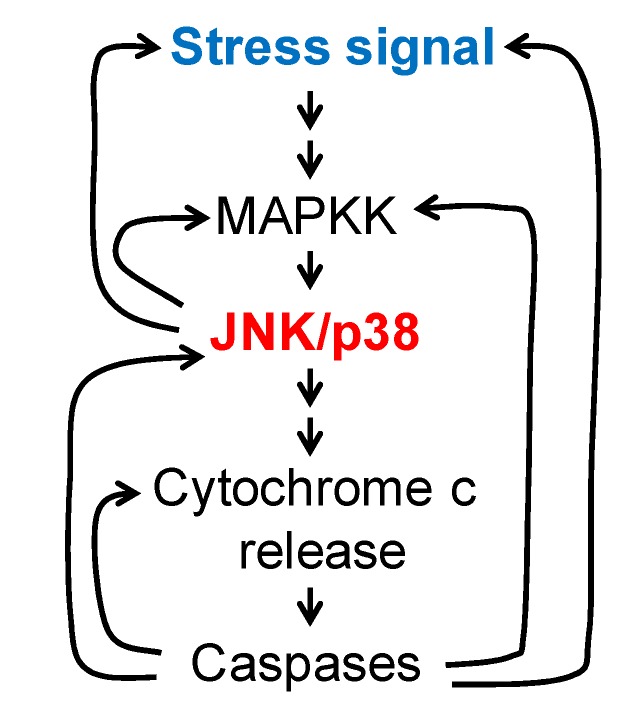
MAPK (mitogen-activated protein kinase) signaling pathways regulate a variety of biological processes through multiple cellular mechanisms. In most of these processes, such as apoptosis, MAPKs have a dual role since they can act as activators or inhibitors, depending on the cell type and the stimulus. In this review, we present the main pro- and anti-apoptotic mechanisms regulated by MAPKs, as well as the crosstalk observed between some MAPKs. We also describe the basic signaling properties of MAPKs (ultrasensitivity, hysteresis, digital response), and the presence of different positive feedback loops in apoptosis. We provide a simple guide to predict MAPKs’ behavior, based on the intensity and duration of the stimulus. Finally, we consider the role of MAPKs in osmostress-induced apoptosis by using Xenopus oocytes as a cell model. As we will see, apoptosis is plagued with multiple positive feedback loops. We hope this review will help to understand how MAPK signaling pathways engage irreversible cellular decisions.
Overview
The claims and statistics of this paper haven’t been checked yet.
Free: it reads the open-access text and checks the first 5 claims that cite a source we can check. Create a free account to check every claim.
Integrity signals
Registry
Cites
Statistics
Figures
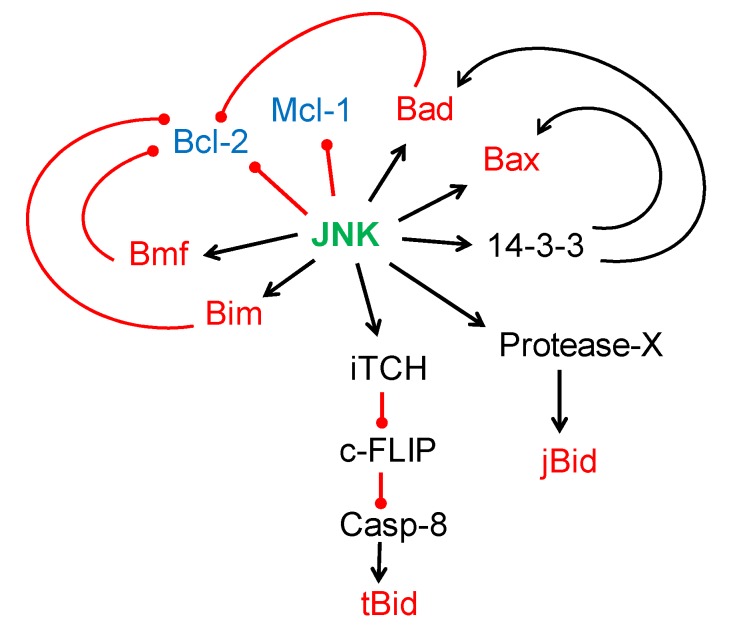
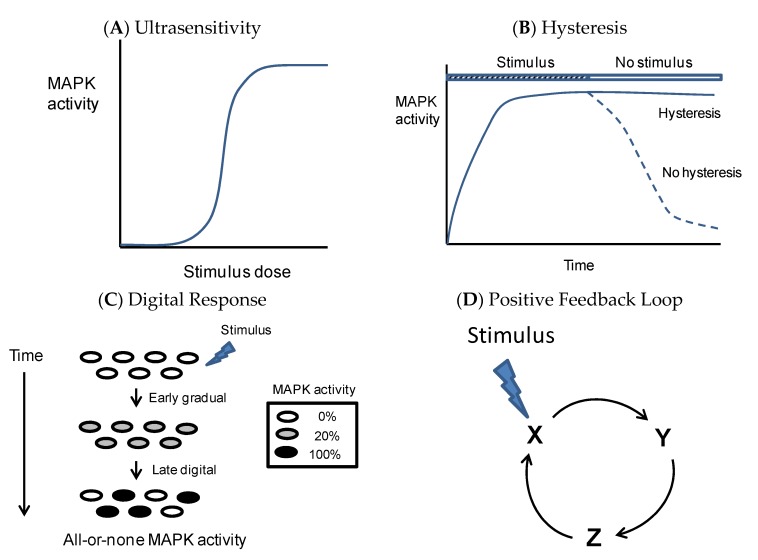
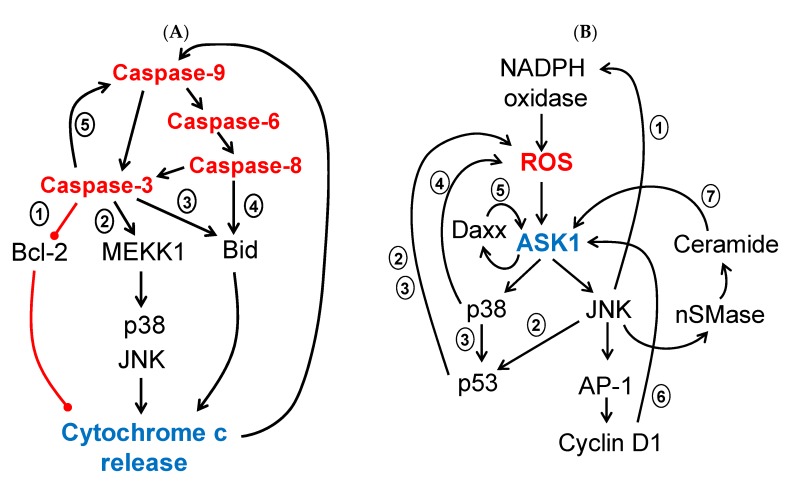
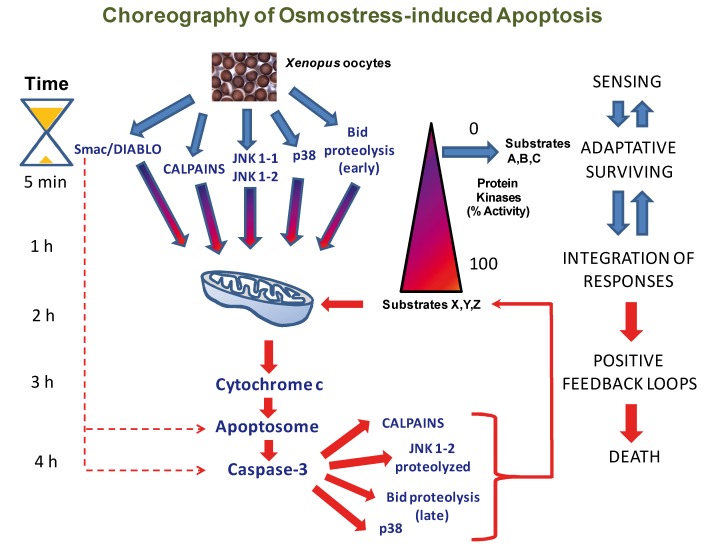
Verification
Claims the paper makes
The claims and statistics of this paper haven’t been checked yet.
Free: it reads the open-access text and checks the first 5 claims that cite a source we can check. Create a free account to check every claim.
Claims other papers make about this one
Each is checked against this paper’s own text: does it say what the citing paper says it does?
The source backs part of the claim, not all of it — or backs it for a different population, condition or comparison.
In the citing paper
“In previous studies, the MAPK signaling pathway is acknowledged for its pivotal role in regulating the proliferation and differentiation of inflammatory cells [54]”
From Picroside II suppresses chondrocyte pyroptosis through MAPK/NF-κB/NLRP3 signaling pathway alleviates osteoarthritis (2024) · cites this paper as [54]
Experimental — accuracy not yet measuredThe source backs part of the claim, not all of it — or backs it for a different population, condition or comparison.
In the citing paper
“and it also plays an instrumental role in cartilage differentiation and degradation.”
From Picroside II suppresses chondrocyte pyroptosis through MAPK/NF-κB/NLRP3 signaling pathway alleviates osteoarthritis (2024) · cites this paper as [54]
Experimental — accuracy not yet measuredThe cited source says what the claim attributes to it.
In the citing paper
“In addition, the JNK and p38 MAPK cascades result in increased expression of proapoptotic proteins and decreased expression of antiapoptotic proteins through a variety of transcription factors, e.g., activator protein-1 (AP-1) and p53 [168].”
From RhoA Signaling in Neurodegenerative Diseases (2022) · cites this paper as [168]
Self-check
Percentages, sums and reported differences re-computed from the paper’s own numbers.
The self-check needs the paper’s full text.
Citations
Cites
The Release of Cytochrome c from Mitochondria: A Primary Site for Bcl-2 Regulation of Apoptosis
Kluck, R. M., Bossy-Wetzel, E., Green, D. R., & Newmeyer, D. D. (1997) · Science · doi:10.1126/science.275.5303.1132 · Cited by 4,714 · cited 2×
“apoptotic pathway and the role of cytochrome c release in caspase activation [133,134].”
BackgroundMethodThe BCL-2 protein family: opposing activities that mediate cell death
Youle, R. J., & Strasser, A. (2008) · Nature Reviews Molecular Cell Biology · doi:10.1038/nrm2308 · Cited by 4,679 · cited 1×
“The C-terminal truncated form of Bid (tBid) translocates to mitochondria and induces the release of cytochrome c, which in turn induces further caspase activation (caspase-9 and the effector caspases-3, -6, and -7) through the intrinsic pathway [31].”
BackgroundSignal transduction by the JNK group of MAP kinases
Davis, R. J. (2000) · Cell · doi:10.1016/s0092-8674(00)00116-1 · Cited by 4,237 · cited 3×
“ASK1 (apoptosis signal-regulating kinase 1) is a MAP kinase kinase kinase (MAP3K) of JNK and p38 MAPK, which is preferentially activated by ROS (reviewed in [127]).”
BackgroundInfluentialSeger, R., & Krebs, E. G. (1995) · The FASEB Journal · doi:10.1096/fasebj.9.9.7601337 · Cited by 3,602 · cited 2×
“ERK1/2 activation is widely associated with anti-apoptotic functions by controlling cell proliferation and differentiation [11,66].”
BackgroundInfluentialDérijard, B., Hibi, M., Wu, I.-H., Barrett, T., Su, B., Deng, T., Karin, M., & Davis, R. J. (1994) · Cell · doi:10.1016/0092-8674(94)90380-8 · Cited by 3,188 · cited 1×
“For example, c-Jun can be phosphorylated by JNK [17] and p38 [18], and the activated c-Jun can autoregulate its own expression in a positive regulatory loop through a c-Jun/AP-1 enhancer element in its promoter [19].”
BackgroundAP-1 as a regulator of cell life and death
Shaulian, E., & Karin, M. (2002) · Nature Cell Biology · doi:10.1038/ncb0502-e131 · Cited by 2,961 · cited 1×
“AP-1 regulates a wide range of cellular processes, including cell proliferation, differentiation, cell survival, and apoptosis [20,21].”
BackgroundSignal integration by JNK and p38 MAPK pathways in cancer development
Wagner, E. F., & Nebreda, Á. R. (2009) · Nature Reviews Cancer · doi:10.1038/nrc2694 · Cited by 2,586 · cited 1×
“The stress-activated JNKs and p38 MAPKs play key roles in balancing cell survival and death in response to both extracellular and intracellular stresses (reviewed in [12]).”
BackgroundAP-1: a double-edged sword in tumorigenesis
Eferl, R., & Wagner, E. F. (2003) · Nature Reviews Cancer · doi:10.1038/nrc1209 · Cited by 2,242 · cited 1×
“AP-1 regulates a wide range of cellular processes, including cell proliferation, differentiation, cell survival, and apoptosis [20,21].”
BackgroundBoulton, T. G., Nye, S. H., Robbins, D. J., Ip, N. Y., Radzlejewska, E., Morgenbesser, S. D., DePinho, R. A., Panayotatos, N., Cobb, M. H., & Yancopoulos, G. D. (1991) · Cell · doi:10.1016/0092-8674(91)90098-j · Cited by 1,897 · cited 1×
“As most family members are involved in processing signals stimulated by growth factors, the super kinase family was termed “mitogen-activated” protein kinase (MAPK) [4].”
BackgroundDhanasekaran, D. N., & Reddy, E. P. (2008) · Oncogene · doi:10.1038/onc.2008.301 · Cited by 1,525 · cited 1×
“A variety of transcription factors have been reported to be regulated by JNK and p38, which result in increased expression of pro-apoptotic proteins and decreased expression of anti-apoptotic proteins [14,16].”
Background
Cited by
Regulated cell death (RCD) in cancer: key pathways and targeted therapies
Peng, F., Liao, M., Qin, R., Zhu, S., Peng, C., Fu, L., Chen, Y., & Han, B. (2022) · Signal Transduction and Targeted Therapy · doi:10.1038/s41392-022-01110-y · Cited by 832
“MAPK pathway is the main pathway for transmitting signals from the cell membrane to the nucleus, which could be divided into three subtypes: ERK1/2, JNK, and p38 MAPK.237 Among them, ERK1/2 plays a critical role in autophagic regulation in various tumor cells, and ERK1/2 could be phosphorylated and activated to regula…”
BackgroundMustafa, M., Ahmad, R., Tantry, I. Q., Ahmad, W., Siddiqui, S., Alam, M., Abbas, K., Moinuddin, Hassan, M. I., Habib, S., et al. (2024) · Cells · doi:10.3390/cells13221838 · Cited by 595
“While MAPKs can promote cell survival, they also contribute to apoptotic processes, reflecting the complex regulatory networks that govern cellular fate decisions [49]. caspase-3 cascade, eventually causing cell demolition [74].”
Ogrodnik, M. (2021) · Aging Cell · doi:10.1111/acel.13338 · Cited by 349
“Other binary programs include the initiation of the cell cycle, apoptosis, and oocyte maturation, among others as they operate on a basis of unidirectional commitment (Ferrell, 2013; Xiong & Ferrell, 2003; Yue & Lopez, 2020).”
MAPK/ERK Signaling Pathway in Hepatocellular Carcinoma
Moon, H., & Ro, S. W. (2021) · Cancers · doi:10.3390/cancers13123026 · Cited by 326
“The MAPK/ERK signaling pathway promotes survival by inhibiting the activati of pro-apoptotic BCL-2 family proteins such as BAX and BIM and inducing the expression f nti-apoptotic members of the BCL-2 family, such as CL-2, BCL-XL, and MCL-1 [11].”
BackgroundApoptosis in Alzheimer’s disease: Insight into the signaling pathways and therapeutic avenues
Kumari, S., Dhapola, R., & Reddy, D. H. (2023) · Apoptosis · doi:10.1007/s10495-023-01848-y · Cited by 324
“Regardless of the number, the BCL-2 family as a whole is distinguished by the expression of these domains [38, 39].”
Background
Metadata
- Authors
- Yue, J., & López, J. M.
- Affiliations
- Soochow University (CN)
- Universitat Autònoma de Barcelona (ES)
- Corresponding author
- López, José M.
- Venue
- International Journal of Molecular Sciences
- Publisher
- MDPI AG
- Published
- 2020-03-28
- Volume
- 21
- Issue
- 7
- Pages
- 2346
- ISSN
- 1422-0067 (ISSN-L)
- PMC
- PMC7177758
- OpenAlex
- W3013726226
- Semantic Scholar
- 0ec8eda064d63bdd78cee4f60dcac40c53ab451a
- Cited by
- 1,245
- References
- 158
- Citations by year
- 2026: 163 · 2025: 269 · 2024: 250 · 2023: 216 · 2022: 192 · 2021: 134 · 2020: 16
- FWCI
- 13.35
- Type
- journal article
- Language
- en
- Open access
- gold
- dx.doi.org
- Licence
- Locations
- International Journal of Molecular Sciences (publishedVersion, cc-by)
- PubMed Central (publishedVersion, cc-by)
- PubMed (publishedVersion)
- Dipòsit Digital de Documents de la UAB (Universitat Autònoma de Barcelona) (submittedVersion, cc-by)
- DOAJ (DOAJ: Directory of Open Access Journals) (submittedVersion, cc-by-sa)
- Funders
- Spanish Ministerio de Economía y Competitividad (BFU2010-15978)
- Topics
- Life Sciences › Biochemistry, Genetics and Molecular Biology › Molecular Biology › Cell death mechanisms and regulation
- Life Sciences › Biochemistry, Genetics and Molecular Biology › Molecular Biology › Protein Kinase Regulation and GTPase Signaling
- Life Sciences › Biochemistry, Genetics and Molecular Biology › Molecular Biology › Protein Tyrosine Phosphatases
- Keywords
- MAPK signaling, apoptosis, anti-apoptotic mechanisms, ultrasensitivity, hysteresis, positive feedback loop, Xenopus oocytes, cell fate determination
- MeSH terms
- Animals, Enzyme Activation, Humans, Osmotic Pressure, Apoptosis, Mitogen-Activated Protein Kinases, MAP Kinase Signaling System
About these checks
Registry, retraction, Cites and statistics results are computed, not judged, with one exception: a printed reference that no index lists is read once by a model before it counts as a citation error. Claims are extracted by a model and kept only when their quote appears verbatim in the text; each cited source is then checked, with a model’s help, for whether it says what the claim relies on. Those verdicts can be wrong — read the claim’s quote and the cited source before relying on one.
Statistics and arithmetic are recomputed, not judged.
Confidence bands are shown only for fields calibrated on our annotated test set. None is calibrated yet, so no band is shown.
What counts as a claim ›How we measure confidence ›How we check this ›
Are you an author, or do you see a problem with this page? Request a review
How to cite
Cite CoChat for the checks on this page, and the paper for its own findings.
- This page
- CoChat. (2026). Citation check: Understanding MAPK Signaling Pathways in Apoptosis. https://app.cochat.ai/papers/10.3390/ijms21072346
- The paper
- Yue, J., & López, J. M. (2020). Understanding MAPK Signaling Pathways in Apoptosis. International Journal of Molecular Sciences. https://doi.org/10.3390/ijms21072346
Data sources
Bibliographic data: Semantic Scholar, OpenAlex, Crossref.
Contains information from the Semantic Scholar Academic Graph Datasets, made available under the ODC Attribution License (ODC-BY 1.0).
Semantic Scholar’s data is described in: Kinney, R., et al. (2023). The Semantic Scholar Open Data Platform. arXiv:2301.10140.
