

Understanding MAPK Signaling Pathways in Apoptosis
Open accessThe DOI matches its Crossref record; 157 of the 158 references it cites were found in a registry or an index.
Abstract
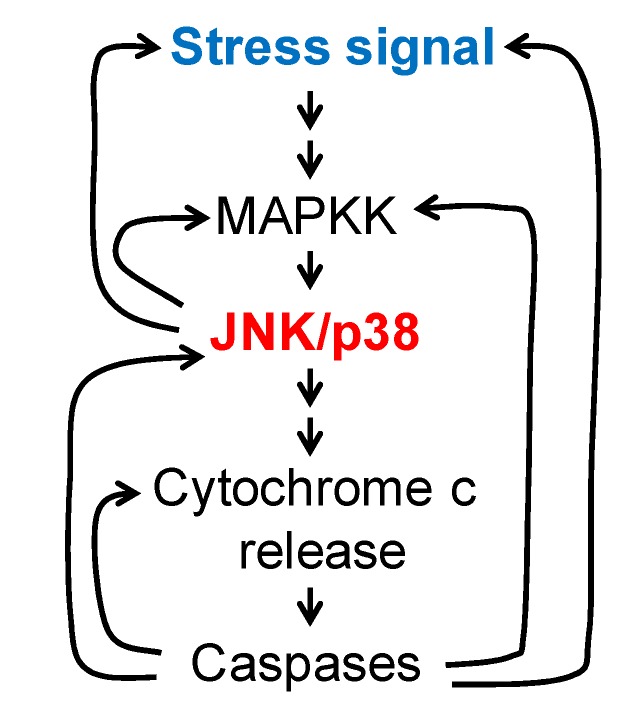
MAPK (mitogen-activated protein kinase) signaling pathways regulate a variety of biological processes through multiple cellular mechanisms. In most of these processes, such as apoptosis, MAPKs have a dual role since they can act as activators or inhibitors, depending on the cell type and the stimulus. In this review, we present the main pro- and anti-apoptotic mechanisms regulated by MAPKs, as well as the crosstalk observed between some MAPKs. We also describe the basic signaling properties of MAPKs (ultrasensitivity, hysteresis, digital response), and the presence of different positive feedback loops in apoptosis. We provide a simple guide to predict MAPKs’ behavior, based on the intensity and duration of the stimulus. Finally, we consider the role of MAPKs in osmostress-induced apoptosis by using Xenopus oocytes as a cell model. As we will see, apoptosis is plagued with multiple positive feedback loops. We hope this review will help to understand how MAPK signaling pathways engage irreversible cellular decisions.
Overview
The claims and statistics of this paper haven’t been checked yet.
Free: it reads the open-access text and checks the first 5 claims that cite a source we can check. Create a free account to check every claim.
Integrity signals
Registry
Cites
Statistics
Figures
Verification
Claims the paper makes
The claims and statistics of this paper haven’t been checked yet.
Free: it reads the open-access text and checks the first 5 claims that cite a source we can check. Create a free account to check every claim.
Claims other papers make about this one
Each is checked against this paper’s own text: does it say what the citing paper says it does?
The source backs part of the claim, not all of it — or backs it for a different population, condition or comparison.
In the citing paper
“In previous studies, the MAPK signaling pathway is acknowledged for its pivotal role in regulating the proliferation and differentiation of inflammatory cells [54]”
From Picroside II suppresses chondrocyte pyroptosis through MAPK/NF-κB/NLRP3 signaling pathway alleviates osteoarthritis (2024) · cites this paper as [54]
Experimental — accuracy not yet measuredThe source backs part of the claim, not all of it — or backs it for a different population, condition or comparison.
In the citing paper
“and it also plays an instrumental role in cartilage differentiation and degradation.”
From Picroside II suppresses chondrocyte pyroptosis through MAPK/NF-κB/NLRP3 signaling pathway alleviates osteoarthritis (2024) · cites this paper as [54]
Experimental — accuracy not yet measuredThe cited source says what the claim attributes to it.
In the citing paper
“In addition, the JNK and p38 MAPK cascades result in increased expression of proapoptotic proteins and decreased expression of antiapoptotic proteins through a variety of transcription factors, e.g., activator protein-1 (AP-1) and p53 [168].”
From RhoA Signaling in Neurodegenerative Diseases (2022) · cites this paper as [168]
Self-check
Percentages, sums and reported differences re-computed from the paper’s own numbers.
The self-check needs the paper’s full text.
Citations
Cites
The Release of Cytochrome c from Mitochondria: A Primary Site for Bcl-2 Regulation of Apoptosis
Kluck, R. M., Bossy-Wetzel, E., Green, D. R., & Newmeyer, D. D. (1997) · Science · doi:10.1126/science.275.5303.1132 · Cited by 4,714 · cited 2×
“apoptotic pathway and the role of cytochrome c release in caspase activation [133,134].”
BackgroundMethodThe BCL-2 protein family: opposing activities that mediate cell death
Youle, R. J., & Strasser, A. (2008) · Nature Reviews Molecular Cell Biology · doi:10.1038/nrm2308 · Cited by 4,679 · cited 1×
“The C-terminal truncated form of Bid (tBid) translocates to mitochondria and induces the release of cytochrome c, which in turn induces further caspase activation (caspase-9 and the effector caspases-3, -6, and -7) through the intrinsic pathway [31].”
BackgroundSignal transduction by the JNK group of MAP kinases
Davis, R. J. (2000) · Cell · doi:10.1016/s0092-8674(00)00116-1 · Cited by 4,237 · cited 3×
“ASK1 (apoptosis signal-regulating kinase 1) is a MAP kinase kinase kinase (MAP3K) of JNK and p38 MAPK, which is preferentially activated by ROS (reviewed in [127]).”
BackgroundInfluentialSeger, R., & Krebs, E. G. (1995) · The FASEB Journal · doi:10.1096/fasebj.9.9.7601337 · Cited by 3,602 · cited 2×
“ERK1/2 activation is widely associated with anti-apoptotic functions by controlling cell proliferation and differentiation [11,66].”
BackgroundInfluentialDérijard, B., Hibi, M., Wu, I.-H., Barrett, T., Su, B., Deng, T., Karin, M., & Davis, R. J. (1994) · Cell · doi:10.1016/0092-8674(94)90380-8 · Cited by 3,188 · cited 1×
“For example, c-Jun can be phosphorylated by JNK [17] and p38 [18], and the activated c-Jun can autoregulate its own expression in a positive regulatory loop through a c-Jun/AP-1 enhancer element in its promoter [19].”
BackgroundAP-1 as a regulator of cell life and death
Shaulian, E., & Karin, M. (2002) · Nature Cell Biology · doi:10.1038/ncb0502-e131 · Cited by 2,961 · cited 1×
“AP-1 regulates a wide range of cellular processes, including cell proliferation, differentiation, cell survival, and apoptosis [20,21].”
BackgroundSignal integration by JNK and p38 MAPK pathways in cancer development
Wagner, E. F., & Nebreda, Á. R. (2009) · Nature Reviews Cancer · doi:10.1038/nrc2694 · Cited by 2,586 · cited 1×
“The stress-activated JNKs and p38 MAPKs play key roles in balancing cell survival and death in response to both extracellular and intracellular stresses (reviewed in [12]).”
BackgroundAP-1: a double-edged sword in tumorigenesis
Eferl, R., & Wagner, E. F. (2003) · Nature Reviews Cancer · doi:10.1038/nrc1209 · Cited by 2,242 · cited 1×
“AP-1 regulates a wide range of cellular processes, including cell proliferation, differentiation, cell survival, and apoptosis [20,21].”
BackgroundBoulton, T. G., Nye, S. H., Robbins, D. J., Ip, N. Y., Radzlejewska, E., Morgenbesser, S. D., DePinho, R. A., Panayotatos, N., Cobb, M. H., & Yancopoulos, G. D. (1991) · Cell · doi:10.1016/0092-8674(91)90098-j · Cited by 1,897 · cited 1×
“As most family members are involved in processing signals stimulated by growth factors, the super kinase family was termed “mitogen-activated” protein kinase (MAPK) [4].”
BackgroundDhanasekaran, D. N., & Reddy, E. P. (2008) · Oncogene · doi:10.1038/onc.2008.301 · Cited by 1,525 · cited 1×
“A variety of transcription factors have been reported to be regulated by JNK and p38, which result in increased expression of pro-apoptotic proteins and decreased expression of anti-apoptotic proteins [14,16].”
Background
Cited by
Regulated cell death (RCD) in cancer: key pathways and targeted therapies
Peng, F., Liao, M., Qin, R., Zhu, S., Peng, C., Fu, L., Chen, Y., & Han, B. (2022) · Signal Transduction and Targeted Therapy · doi:10.1038/s41392-022-01110-y · Cited by 832
“MAPK pathway is the main pathway for transmitting signals from the cell membrane to the nucleus, which could be divided into three subtypes: ERK1/2, JNK, and p38 MAPK.237 Among them, ERK1/2 plays a critical role in autophagic regulation in various tumor cells, and ERK1/2 could be phosphorylated and activated to regula…”
BackgroundMustafa, M., Ahmad, R., Tantry, I. Q., Ahmad, W., Siddiqui, S., Alam, M., Abbas, K., Moinuddin, Hassan, M. I., Habib, S., et al. (2024) · Cells · doi:10.3390/cells13221838 · Cited by 595
“While MAPKs can promote cell survival, they also contribute to apoptotic processes, reflecting the complex regulatory networks that govern cellular fate decisions [49]. caspase-3 cascade, eventually causing cell demolition [74].”
Ogrodnik, M. (2021) · Aging Cell · doi:10.1111/acel.13338 · Cited by 349
“Other binary programs include the initiation of the cell cycle, apoptosis, and oocyte maturation, among others as they operate on a basis of unidirectional commitment (Ferrell, 2013; Xiong & Ferrell, 2003; Yue & Lopez, 2020).”
MAPK/ERK Signaling Pathway in Hepatocellular Carcinoma
Moon, H., & Ro, S. W. (2021) · Cancers · doi:10.3390/cancers13123026 · Cited by 326
“The MAPK/ERK signaling pathway promotes survival by inhibiting the activati of pro-apoptotic BCL-2 family proteins such as BAX and BIM and inducing the expression f nti-apoptotic members of the BCL-2 family, such as CL-2, BCL-XL, and MCL-1 [11].”
BackgroundApoptosis in Alzheimer’s disease: Insight into the signaling pathways and therapeutic avenues
Kumari, S., Dhapola, R., & Reddy, D. H. (2023) · Apoptosis · doi:10.1007/s10495-023-01848-y · Cited by 324
“Regardless of the number, the BCL-2 family as a whole is distinguished by the expression of these domains [38, 39].”
BackgroundThe role of oxidative stress in ovarian aging: a review
Yan, F., Zhao, Q., Li, Y., Zheng, Z., Kong, X., Shu, C., Liu, Y., & Shi, Y. (2022) · Journal of Ovarian Research · doi:10.1186/s13048-022-01032-x · Cited by 289
Wang, Y., Cheng, H., Wang, T., Zhang, K., Zhang, Y., & Kang, X. (2023) · Cell Proliferation · doi:10.1111/cpr.13448 · Cited by 225
“As a classical intracellular signalling pathway, the AMP-activated pro- tein kinase (AMPK) signalling pathway plays an important role in regu- lating cell proliferation, apoptosis, autophagy and differentiation under pathophysiological conditions.123 In the resting state, AMPK is bound to ATP in an inactive state.124…”
BackgroundYang, Z., Zhang, Q., Yu, L., Zhu, J., Cao, Y., & Gao, X. (2021) · Journal of Ethnopharmacology · doi:10.1016/j.jep.2020.113249 · Cited by 228
Nguyen, D. D., Luo, L.-J., Yang, C.-J., & Lai, J.-Y. (2023) · ACS Nano · doi:10.1021/acsnano.2c05824 · Cited by 213
Anticancer Activity of Propolis and Its Compounds
Forma, E., & Bryś, M. (2021) · Nutrients · doi:10.3390/nu13082594 · Cited by 188
E3 ligases and deubiquitinating enzymes regulating the MAPK signaling pathway in cancers
Park, H.-B., & Baek, K.-H. (2022) · Biochimica et Biophysica Acta (BBA) - Reviews on Cancer · doi:10.1016/j.bbcan.2022.188736 · Cited by 177
Liao, C., Jin, Y., Li, Y., & Tjong, S. C. (2020) · International Journal of Molecular Sciences · doi:10.3390/ijms21176305 · Cited by 160
“The activation of p38MAPK and JNK has been related to apoptotic cell death [129].”
BackgroundMitochondrial‐Endoplasmic Reticulum Communication‐Mediated Oxidative Stress and Autophagy
Liu, X., Hussain, R., Mehmood, K., Tang, Z., Zhang, H., & Li, Y. (2022) · BioMed Research International · doi:10.1155/2022/6459585 · Cited by 161
“Extracellular signal-regulated kinases generally play an important role in cell growth and di ff erentiation [18], while the redox-sensitive JNK and p38MAPK signal pathways are closely related to stress responses such as in fl ammation and apoptosis [19].”
Umer, S. M., Solangi, M., Khan, K. M., & Saleem, R. S. Z. (2022) · Molecules · doi:10.3390/molecules27217586 · Cited by 179
Therapeutic potential of plant-derived extracellular vesicles as nanocarriers for exogenous miRNAs
Hazas, M. L. D. L., Tomé‐Carneiro, J., del Pozo‐Acebo, L., del Saz‐Lara, A., Chapado, L. A., Balaguer, L., Rojo, E., Espín, J. C., Crespo, M. C., Moreno, D. A., et al. (2023) · Pharmacological Research · doi:10.1016/j.phrs.2023.106999 · Cited by 159
Heusch, G., Andreadou, I., Bell, R., Bertero, E., Bøtker, H. E., Davidson, S. M., Downey, J. M., Eaton, P., Ferdinandy, P., Gersh, B. J., et al. (2023) · Redox Biology · doi:10.1016/j.redox.2023.102894 · Cited by 144
Michalak, K. P., & Michalak, A. Z. (2025) · Frontiers in Immunology · doi:10.3389/fimmu.2025.1558263 · Cited by 156
Curcumin: Modulator of Key Molecular Signaling Pathways in Hormone-Independent Breast Cancer
Farghadani, R., & Naidu, R. (2021) · Cancers · doi:10.3390/cancers13143427 · Cited by 148
A natural products solution to diabetic nephropathy therapy
Hu, Q., Jiang, L., Qi, Y., Zeng, J., Ma, X., & Zhao, Y. (2022) · Pharmacology & Therapeutics · doi:10.1016/j.pharmthera.2022.108314 · Cited by 150
Habtemariam, S. (2023) · Biomedicines · doi:10.3390/biomedicines11020545 · Cited by 155
Mechanically reinforced injectable bioactive nanocomposite hydrogels for in-situ bone regeneration
Yu, X., Wang, X., Li, D., Sheng, R., Qian, Y., Zhu, R., Wang, X., & Lin, K. (2021) · Chemical Engineering Journal · doi:10.1016/j.cej.2021.132799 · Cited by 134
RAS signaling in carcinogenesis, cancer therapy and resistance mechanisms
Yang, X., & Wu, H. K. (2024) · Journal of Hematology & Oncology · doi:10.1186/s13045-024-01631-9 · Cited by 146
The Role of PI3K/AKT and MAPK Signaling Pathways in Erythropoietin Signalization
Tóthová, Z., Šemeláková, M., Solárová, Z., Tomc, J., Debeljak, N., & Solár, P. (2021) · International Journal of Molecular Sciences · doi:10.3390/ijms22147682 · Cited by 138
“In mammals, MAPK proteins can be divided into several subgroups including extracellular signal-regulated kinases 1 & 2 (ERK1/2), p38 MAP kinases, and c-Jun amino-terminal kinases (JNK), and the family of ERK5 proteins and atypical ERK3, 4, 7, and 8 [27] (Figure 1).”
BackgroundNavigating the ERK1/2 MAPK Cascade
Martín-Vega, A., & Cobb, M. H. (2023) · Biomolecules · doi:10.3390/biom13101555 · Cited by 144
Yarmohammadi, F., Rezaee, R., Hayes, A. W., & Karimi, G. (2020) · Pharmacological Research · doi:10.1016/j.phrs.2020.105383 · Cited by 129
Stress Relief Techniques: p38 MAPK Determines the Balance of Cell Cycle and Apoptosis Pathways
Whitaker, R. H., & Cook, J. G. (2021) · Biomolecules · doi:10.3390/biom11101444 · Cited by 133
“Connections between apoptosis and all three MAPK pathways have been reviewed in [97,98].”
BackgroundZhang, Y., Zhang, N., Xing, J., Sun, Y., Xu, J., Shen, C., Cheng, L., Wang, Y., & Wang, X. (2024) · Biomaterials · doi:10.1016/j.biomaterials.2024.122675 · Cited by 127
Hepatocellular carcinoma: signaling pathways, targeted therapy, and immunotherapy
Luo, X., He, X., Zhang, X., Zhao, X., Zhang, Y., Shi, Y., & Hua, S. (2024) · MedComm · doi:10.1002/mco2.474 · Cited by 136
“84,85 RAS proteins with GTPase activity are activated by upstream RTK, and the activated RAS binds to the N-terminal domain of RAF to activate RAF, which binds to downstream MEK proteins to activate MEK, and then further activated the phosphorylation of the downstream substrate ERK.”
Sphingolipids as a Culprit of Mitochondrial Dysfunction in Insulin Resistance and Type 2 Diabetes
Roszczyc-Owsiejczuk, K., & Zabielski, P. (2021) · Frontiers in Endocrinology · doi:10.3389/fendo.2021.635175 · Cited by 124
Tang, Y., Han, Y., Zhao, J., Lv, Y., Fan, C., Zheng, L., Zhang, Z., Liu, Z., Li, C., & Lin, Y. (2023) · Nano-Micro Letters · doi:10.1007/s40820-023-01059-9 · Cited by 115
“JNK and P38 are essential proteins in the MAPK pathway, and the stressactivated JNK and p38 MAPK play vital roles in balancing cell survival and death in response to oxidative stress [43].”
BackgroundRhoA Signaling in Neurodegenerative Diseases
Schmidt, S. I., Blaabjerg, M., Freude, K., & Meyer, M. (2022) · Cells · doi:10.3390/cells11091520 · Cited by 110
Liu, S., Li, Z., Lan, S., Hao, H., Baz, A. A., Yan, X., Gao, P., Chen, S., & Chu, Y. (2024) · International Journal of Molecular Sciences · doi:10.3390/ijms25020824 · Cited by 131
“Apoptosis is a fi nely regulated process of programmed cell death that plays a crucial role in the maintenance of physiological functions in organisms, as well as in interactions between pathogens and hosts [63–66].”
BackgroundZhang, Z., Yang, Z., Wang, S., Wang, X., & Mao, J. (2024) · Biomedicine & Pharmacotherapy · doi:10.1016/j.biopha.2024.116413 · Cited by 118
Pharmacological Potential of Betulin as a Multitarget Compound
Adepoju, F. O., Duru, K. C., Li, E., Kovaleva, E. G., & Tsurkan, M. V. (2023) · Biomolecules · doi:10.3390/biom13071105 · Cited by 117
Cheng, M., Li, T., Hu, E., Yan, Q., Li, H., Wang, Y., Luo, J., & Tang, T. (2023) · Journal of Ethnopharmacology · doi:10.1016/j.jep.2023.117123 · Cited by 117
Luteolin: a flavonoid with a multifaceted anticancer potential
Prasher, P., Sharma, M., Singh, S. K., Gulati, M., Chellappan, D. K., Zacconi, F. C. M., Rubis, G. D., Gupta, G., Sharifi‐Rad, J., Cho, W. C. S., et al. (2022) · Cancer Cell International · doi:10.1186/s12935-022-02808-3 · Cited by 104
“Luteolin is further known to raise the level of reduced glutathione and upregulated the expression of glutathione synthetase which is a potent antioxidant [8] (Furthermore, it has been observed that luteolin induces apoptosis in human colon cancer cells by activating mitogen-activated protein kinase signaling pathway…”
BackgroundFrom nature to therapy: Luteolin's potential as an immune system modulator in inflammatory disorders
Hussain, M. S., Gupta, G., Goyal, A., Thapa, R., Almalki, W. H., Kazmi, I., Alzarea, S. I., Fuloria, S., Meenakshi, D. U., Jakhmola, V., et al. (2023) · Journal of Biochemical and Molecular Toxicology · doi:10.1002/jbt.23482 · Cited by 107
The Angiotensin AT2 Receptor: From a Binding Site to a Novel Therapeutic Target
Steckelings, U. M., Widdop, R. E., Sturrock, E. D., Lubbe, L., Hussain, T., Kaschina, E., Unger, T., Hallberg, A., Carey, R. M., & Sumners, C. (2022) · Pharmacological Reviews · doi:10.1124/pharmrev.120.000281 · Cited by 97
BDNF Therapeutic Mechanisms in Neuropsychiatric Disorders
Bazzari, A. H., & Bazzari, F. H. (2022) · International Journal of Molecular Sciences · doi:10.3390/ijms23158417 · Cited by 106
“Certain other MAPK subtypes mainly produce pro-apoptotic effects such as C-Jun N-terminal kinase (JNK) and p38-MAPK; however, the different MAPKs show complex interactions and exhibit the ability to promote opposing cellular actions depending on the type, intensity, and duration of cellular stimuli [77].”
BackgroundLai, W., Zhang, J., Sun, J., Min, T., Bai, Y., He, J., Cao, H., Che, Q., Guo, J., & Su, Z. (2024) · International Journal of Biological Macromolecules · doi:10.1016/j.ijbiomac.2024.134809 · Cited by 114
Rana, J. N., Gul, K., & Mumtaz, S. (2025) · International Journal of Molecular Sciences · doi:10.3390/ijms26157381 · Cited by 91
Toxicity, biodegradation, and nutritional intervention mechanism of zearalenone
Cai, P., Liu, S., Tu, Y., & Shan, T. (2023) · The Science of The Total Environment · doi:10.1016/j.scitotenv.2023.168648 · Cited by 89
Rehfeldt, S. C. H., Laufer, S., & Goettert, M. I. (2021) · International Journal of Molecular Sciences · doi:10.3390/ijms22073701 · Cited by 89
“The pharmacological inhibition of the MAPK pathway is a common research method used to understand mechanisms of cellular functions and fundamental processes [25,26].”
Fang, S., Sun, S. Y., Cai, H., Zou, X., Wang, S., Hao, X., Wan, X. H., Tian, J., Li, Z., He, Z., et al. (2021) · Theranostics · doi:10.7150/thno.62797 · Cited by 87
“However, recent studies have reported the mitochondrial as the junction of the apoptotic pathway, with caspase9 also capable of inducing caspase8 activation [66].”
NRF2 Regulation Processes as a Source of Potential Drug Targets against Neurodegenerative Diseases
Cores, Á., Piquero, M., Villacampa, M., Leon, R. M., & Menéndez, J. C. (2020) · Biomolecules · doi:10.3390/biom10060904 · Cited by 91
Orai1 Inhibitors as Potential Treatments for Pulmonary Arterial Hypertension
Masson, B., Ribeuz, H. L., Sabourin, J., Laubry, L., Woodhouse, E., Foster, R., Ruchon, Y., Dutheil, M., Boët, A., Ghigna, M., et al. (2022) · Circulation Research · doi:10.1161/circresaha.122.321041 · Cited by 87
DEP2: an upgraded comprehensive analysis toolkit for quantitative proteomics data
Feng, Z., Fang, P., Zheng, H., & Zhang, X. (2023) · Bioinformatics · doi:10.1093/bioinformatics/btad526 · Cited by 83
Alasmari, A. F., Alharbi, M., Alqahtani, F., Alasmari, F. F., Alswayyed, M., Alzarea, S. I., AL‐Alallah, I. A., Alghamdi, A., Hakami, H. M., Alyousef, M. K., et al. (2021) · Antioxidants · doi:10.3390/antiox10121998 · Cited by 93
“Therefore, MAPK signaling pathways may modulate gene expression and apoptotic cascades [15,16].”
BackgroundDong, B. (2023) · The Science of The Total Environment · doi:10.1016/j.scitotenv.2023.168264 · Cited by 84
Yan, F., Wang, L., Zhao, L., Wang, C., Lu, Q., & Liu, R. (2023) · Food and Chemical Toxicology · doi:10.1016/j.fct.2023.113696 · Cited by 79
Zhou, R., Ying, J., Qiu, X., Yu, L., Yue, Y., Liu, Q., Shi, J., Li, X., Qu, Y., & Mu, D. (2022) · Chinese Medical Journal · doi:10.1097/cm9.0000000000002010 · Cited by 82
“Their effect on PANoptosis is closely regulated by the degree and duration of stimulation.([52]) Through transcription-dependent or -independent mechanisms, MAPKs integrate signals in a cell-specific manner and”
BackgroundResultLatest research progress on anticancer effect of baicalin and its aglycone baicalein
Wang, L., Feng, T., Su, Z., Pi, C., Wei, Y., & Zhao, L. (2022) · Archives of Pharmacal Research · doi:10.1007/s12272-022-01397-z · Cited by 80
“Mitogen-activated protein kinase (MAPK) cascade plays a pivotal role in cell proliferation, differentiation, and apoptosis through three typical MAPK subgroups such as extracellular-regulated kinase (ERK), C-Jun N-terminal kinase (JNK) and p38 (Yue and López 2020).”
BackgroundYi, C., Song, M., Sun, L., Si, L., Yu, D., Li, B., Lü, P., Wang, W., & Wang, X. (2022) · Oxidative Medicine and Cellular Longevity · doi:10.1155/2022/3267450 · Cited by 77
“Studies have confirmed that the MAPK signalling pathway plays a vital role in the process of cell biological reactions such as cell proliferation, differentiation, transformation, and apoptosis [34, 35].”
BackgroundSingh, K. M., Jha, A. B., Dubey, R. S., & Sharma, P. (2025) · Environmental Science Nano · doi:10.1039/d5en00174a · Cited by 105
Abate, M., Pagano, C., Masullo, M., Citro, M., Pisanti, S., Piacente, S., & Bifulco, M. (2022) · Pharmaceuticals · doi:10.3390/ph15010084 · Cited by 89
“Furthermore, mangostanin (10 μM) pre-treatment prevented the reduction of the total form of proteins, such as the caspases 3 and 9 and mitochondrial protein Bcl-XL involved in the induction of apoptosis [35], so preserving vitality.”
BackgroundMottaghi, S., & Abbaszadeh, H. (2021) · Phytotherapy Research · doi:10.1002/ptr.7270 · Cited by 77
“Several proapoptotic and anti-apoptotic Bcl-2 family proteins have been reported to be regulated by JNK and/or p38 MAPK cascades at a transcriptional and/or post-transcriptional level (Yue & L opez, 2020).”
BackgroundCurcumin and its Analogs and Carriers: Potential Therapeutic Strategies for Human Osteosarcoma
Lu, K., Lu, P. W., Lu, E. W.-H., Lin, C., & Yang, S. (2023) · International Journal of Biological Sciences · doi:10.7150/ijbs.80590 · Cited by 77
“In the transmission of the apoptotic pathway, stress-inducible molecules, such as MAPKs)/extracellular signal-regulated protein kinase (ERK), c-Jun N-terminal kinase (JNK), and p38, as well as phosphoinositide 3-kinase (PI3K)/Akt are involved [45-47].”
Hormesis and health: molecular mechanisms and the key role of polyphenols
Perrone, P., & D’Angelo, S. (2025) · Food Chemistry Advances · doi:10.1016/j.focha.2025.101030 · Cited by 75
Mottaghi, S., & Abbaszadeh, H. (2021) · Nutrition and Cancer · doi:10.1080/01635581.2021.1931364 · Cited by 70
Cancer chemoprevention: signaling pathways and strategic approaches
Ren, J., Yan, G., Yang, L., Kong, L., Guan, Y., Sun, H., Liu, C., Liu, L., Han, Y., & Wang, X. (2025) · Signal Transduction and Targeted Therapy · doi:10.1038/s41392-025-02167-1 · Cited by 84
Research progress on multiple cell death pathways of podocytes in diabetic kidney disease
Yang, C., Zhang, Z., Liu, J., Chen, P., Li, J., Shu, H., Chu, Y., & Li, L. (2023) · Molecular Medicine · doi:10.1186/s10020-023-00732-4 · Cited by 73
“Therefore, MAPK signaling pathway has certain specificity in the process of apoptosis (Yue and López 2020).”
BackgroundApoptosis and eryptosis: similarities and differences
Tkachenko, A. S. (2023) · APOPTOSIS · doi:10.1007/s10495-023-01915-4 · Cited by 71
“Compelling evidence suggests that p38 MAPK regulates cell cycle / apoptosis in mammalian cells [240, 241]. p38 MAPK is known to induce apoptosis via Bcl-2 inactivation through phosphorylation and further ubiquitination [241], phosphorylation of pro-apoptotic BimEL [242], or p53 phosphorylation…”
Adverse Outcome Pathways for Chronic Copper Toxicity to Fish and Amphibians
Brix, K. V., Boeck, G. D., Baken, S., & Fort, D. J. (2022) · Environmental Toxicology and Chemistry · doi:10.1002/etc.5483 · Cited by 69
“…specifics of these interactions are dependent on a variety of factors, including the concentration of ROS, the tissue, whether a stressor (e.g., Cu) directly interacts with these pathways in addition to generating ROS, and the general oxidative status of the tissue or organism (Yue & Lopez, 2020).”
BackgroundOu, L., Wu, Z., Hu, X., Huang, J., Yi, Z., Gong, Z., Li, H., Peng, K., Shu, C., & Koole, L. H. (2023) · Acta Biomaterialia · doi:10.1016/j.actbio.2023.12.021 · Cited by 65
Xu, H., Yu, S., Lin, C., Dong, D., Xiao, J., Ye, Y., & Wang, M. (2024) · Phytomedicine · doi:10.1016/j.phymed.2024.155409 · Cited by 64
ERK pathway agonism for cancer therapy: evidence, insights, and a target discovery framework
Timofeev, O. N., Giron, P., Lawo, S., Pichler, M., & Noeparast, A. (2024) · npj Precision Oncology · doi:10.1038/s41698-024-00554-5 · Cited by 76
“The ERK-induced cell apoptosis can involve extrinsic or intrinsic apoptotic pathways 60,97,99 .”
BackgroundPark, J.-E., & Han, J.-S. (2024) · Nutrients · doi:10.3390/nu16020294 · Cited by 70
“The activation of AP-1 is often a result of MAPK pathway regulation, particularly through the phosphorylation of c-Jun by JNK and c-Fos expression by ERK1/2 [10].”
BackgroundNatural Products Modulate Cell Apoptosis: A Promising Way for the Treatment of Ulcerative Colitis
Liu, C., Zeng, Y., Wen, Y., Huang, X., & Liu, Y. (2022) · Frontiers in Pharmacology · doi:10.3389/fphar.2022.806148 · Cited by 70
Bello, S. F., Xu, H., Guo, L., Li, K., Zheng, M., Xu, Y., Zhang, S., Jebessa, E., Abdalla, B. A., Zhu, W., et al. (2021) · Poultry Science · doi:10.1016/j.psj.2021.101310 · Cited by 67
Zhuang, Z., Liu, M., Luo, J., Zhang, X., Dai, Z., Zhang, B., Chen, H., Xue, J., He, M., Xu, H., et al. (2022) · Experimental Neurology · doi:10.1016/j.expneurol.2022.114182 · Cited by 61
Sarg, N. H., Zaher, D. M., Jayab, N. N. A., Mostafa, S. H., Ismail, H. H., & Omar, H. A. (2024) · Biochemical Pharmacology · doi:10.1016/j.bcp.2024.116307 · Cited by 70
Injury-induced MAPK activation triggers body axis formation in Hydra by default Wnt signaling
Tursch, A., Bartsch, N., Mercker, M., Schlüter, J., Lommel, M., Marciniak-Czochra, A. K., Özbek, S., & Holstein, T. W. (2022) · Proceedings of the National Academy of Sciences · doi:10.1073/pnas.2204122119 · Cited by 62
Iksen, I., Witayateeraporn, W., Hardianti, B., & Pongrakhananon, V. (2024) · Phytotherapy Research · doi:10.1002/ptr.8157 · Cited by 61
Parthenolide and Its Soluble Analogues: Multitasking Compounds with Antitumor Properties
Carlisi, D., Lauricella, M., D’Anneo, A., Blasio, A. D., Celesia, A., Pratelli, G., Notaro, A., Calvaruso, G., Giuliano, M., & Emanuele, S. (2022) · Biomedicines · doi:10.3390/biomedicines10020514 · Cited by 60
“The c-Jun N-terminal kinase (JNK) and the p38 kinase are members of the MAPK family that are involved in the response to cell stress and induction of apoptosis [99,100].”
BackgroundKim, N. Y., Mohan, C. D., Sethi, G., & Ahn, K. S. (2024) · Journal of Cellular Biochemistry · doi:10.1002/jcb.30537 · Cited by 59
Methylglyoxal Formation—Metabolic Routes and Consequences
Vašková, J., Sabolová, G., Pudelský, J., Palenčár, D., & Mičková, H. (2025) · Antioxidants · doi:10.3390/antiox14020212 · Cited by 71
“JNK, a member of the mitogen-activated protein kinase (MAPK) family, regulates cellular responses to stress, including inflammation, oxidative stress, and apoptosis [176,177].”
Ikram, M. A., Jo, M. H., Choe, K., Khan, A., Ahmad, S., Saeed, K. M., Kim, M. W., & Kim, M. (2021) · Cells · doi:10.3390/cells10102719 · Cited by 56
“The JNK and p38 MAPK are upregulated in response to various stressors [62]. counteragingwise As the vital genes in neuronal survival and death, we evaluated the expression of MAPKs, which showed that the expression of MAP kinases was significantly restored with the administration of cycloastragenol…”
RetractedRehfeldt, S. C. H., Silva, J., Alves, C., Pintéus, S., Pedrosa, R., Laufer, S., & Goettert, M. I. (2022) · International Journal of Molecular Sciences · doi:10.3390/ijms23062914 · Cited by 61
“On the other hand, p53 can trigger the MOMP as well in a transcription-independent manner by activating pro-apoptotic Bcl-2 proteins (Bax or Bak) or by inactivating antiapoptotic Bcl-2 proteins (Bcl-2 and Bcl-X1) [62,63].”
BackgroundMechanisms of Atrial Fibrillation in Obstructive Sleep Apnoea
Saleeb-Mousa, J., Nathanael, D., Coney, A. M., Kalla, M., Brain, K. L., & Holmes, A. P. (2023) · Cells · doi:10.3390/cells12121661 · Cited by 60
“The role of MAPK/ERK signalling is well-established in apoptosis and fibrosis [52,53].”
BackgroundXiang, Q., Cheng, Z., Wang, J., Feng, X., Hua, W., Luo, R., Wang, B., Liao, Z., Ma, L., Li, G., et al. (2020) · Oxidative Medicine and Cellular Longevity · doi:10.1155/2020/6685043 · Cited by 63
“MAPK is comprised of three chief subgroups: p38-MAPK, extracellular signal-regulated kinase (ERK), and c-Jun N-terminal kinase (JNK) [67].”
Purpurin suppresses atopic dermatitis via TNF-α/IFN-γ-induced inflammation in HaCaT cells
Oh, J., Kim, S., Kwon, O., Kim, J., Oh, S., Han, S., Park, J., & Ahn, K. (2022) · International Journal of Immunopathology and Pharmacology · doi:10.1177/03946320221111135 · Cited by 54
“TheMAPK signaling pathway adjusts several cellular processes, including gene expression, cell proliferation, cell death, and survival.(28) TNF-α/IFN-γ treatment activates major MAPK factors, such as p38, JNK, and ERK, in HaCaT cells.”
BackgroundAutophagy in hepatic ischemia–reperfusion injury
Mao, B., Yuan, W., Wu, F., Yan, Y., & Wang, B. (2023) · Cell Death Discovery · doi:10.1038/s41420-023-01387-0 · Cited by 59
Hamidi, A. A., Khalili‐Tanha, G., Navaei, Z. N., & Moghbeli, M. (2022) · Cancer Cell International · doi:10.1186/s12935-022-02501-5 · Cited by 53
“Among them JNK and p38 MAPK are activated by chemical, physical, and biological stimuli while ERK1/2 are activated by cell growth factors [67].”
BackgroundZhong, L., Qin, Y., Liu, M., Sun, J., Tang, H., Zeng, Y., Zhang, J., Wang, W., Liang, G., & Zhao, X. (2023) · Phytomedicine · doi:10.1016/j.phymed.2023.154714 · Cited by 55
The NF-κB Pathway: a Focus on Inflammatory Responses in Spinal Cord Injury
Ding, Y., & Chen, Q. (2023) · Molecular Neurobiology · doi:10.1007/s12035-023-03411-x · Cited by 57
“MAPK signaling pathways regulate a variety of biological processes through different cellular mechanisms [139].”
BackgroundZhao, Q., Han, B., Peng, C. Y., Zhang, N., Huang, W., He, G., & Li, J. (2024) · Medicinal Research Reviews · doi:10.1002/med.22039 · Cited by 57
“170,171 Since MAPKs show a dual function in apoptosis (proapoptotic or antiapoptotic), 172 MAPK ‐ associated signaling pathways may serve as an efficient target for cancer therapy.”
Xie, L., Xue, F., Cheng, C., Sui, W., Zhang, J., Meng, L., Lu, Y., Xiong, W., Bu, P., Xu, F., et al. (2024) · Signal Transduction and Targeted Therapy · doi:10.1038/s41392-024-01977-z · Cited by 59
“55 Taken together, JNK, P38 MAPK and ERK can be activated individually or in combination during the process of apoptosis induced by many anticancer drugs such as vincristine and paclitaxel.”
Singh, D. V., & Shukla, G. (2024) · Inflammopharmacology · doi:10.1007/s10787-024-01596-8 · Cited by 58
“The hTERT (telomerase catalytic subunit gene) is phosphorylated through ERK and transcriptionally activated by the transcription factor of Ets, and aids in the evasion of senescence (Maurer et al. 2011; Yue and López 2020).”
Hassanin, S. O., Hegab, A. M. M., Mekky, R. H., Said, M. A., Khalil, M. G., Hamza, A. A., & Amin, A. (2024) · Marine Drugs · doi:10.3390/md22070328 · Cited by 56
Liu, F., Yang, Z., Li, J., Wu, T., Li, X., Zhao, L., Wang, W., Yu, W., Zhang, G., & Xu, Y. (2024) · Molecular Medicine · doi:10.1186/s10020-024-01020-5 · Cited by 53
Anticancer Activity of Bitter Melon-Derived Vesicles Extract against Breast Cancer
Feng, T., Wan, Y., Dai, B., & Liu, Y. (2023) · Cells · doi:10.3390/cells12060824 · Cited by 49
“The upregulation of JUN, an important molecule related to the MAPK signaling pathway [29,30], was a potential molecular mechanism of ROS production.”
BackgroundKabir, S. R., Islam, F., & Asaduzzaman, A. K. M. (2022) · Scientific Reports · doi:10.1038/s41598-022-12974-z · Cited by 48
The dual role of microRNA (miR)-20b in cancers: Friend or foe?
İlhan, A., Golestani, S., Shafagh, S.-G., Asadi, F., Daneshdoust, D., Al-Naqeeb, B. Z. T., Nemati, M. M., Khalatbari, F., & Yaseri, A. F. (2023) · Cell Communication and Signaling · doi:10.1186/s12964-022-01019-7 · Cited by 50
Role of chemotherapeutic drugs in immunomodulation of cancer
Mukherjee, O., Rakshit, S., Shanmugam, G., & Sarkar, K. (2023) · Current Research in Immunology · doi:10.1016/j.crimmu.2023.100068 · Cited by 51
Chakraborty, J., Chakraborty, S., Chakraborty, S., & Narayan, M. (2023) · Biochimica et Biophysica Acta (BBA) - Gene Regulatory Mechanisms · doi:10.1016/j.bbagrm.2023.194988 · Cited by 53
c-Jun N-Terminal Kinase Inhibitors as Potential Leads for New Therapeutics for Alzheimer’s Diseases
Rehfeldt, S. C. H., Majolo, F., Goettert, M. I., & Laufer, S. (2020) · International Journal of Molecular Sciences · doi:10.3390/ijms21249677 · Cited by 52
“In 1994, JNK1 isoform was isolated from a fetal brain cDNA library [45], while a second isoform, JNK2, was isolated from HeLa [75] and Jurkat [76] cDNA libraries.”
BackgroundInfluentialPore-forming toxins in infection and immunity
Verma, P., Gandhi, S., Lata, K., & Chattopadhyay, K. (2021) · Biochemical Society Transactions · doi:10.1042/bst20200836 · Cited by 49
Magnano, S., Barroeta, P. H., Duffy, R., O’Sullivan, J., & Zisterer, D. M. (2021) · Toxicology and Applied Pharmacology · doi:10.1016/j.taap.2021.115646 · Cited by 48
Hou, J., He, Z., Liu, T., Chen, D., Wang, B., Wen, Q., & Zheng, X. (2022) · Frontiers in Oncology · doi:10.3389/fonc.2022.755053 · Cited by 59
“Mitogenactivated protein kinase (MAPK) signaling pathway functions as one of most potent oncogenic pathways, in which many proteins have been recognized as potential targets regulating both programmed cell death and cell proliferation in tumor cells [reviewed in (37, 38)].”
BackgroundChen, Q., Hou, Y., Li, D., Ding, Z., Xu, X., Hao, B., Xia, Q., Li, M., & Fan, L. (2022) · Annals of Translational Medicine · doi:10.21037/atm-22-1298 · Cited by 47
Metadata
- Authors
- Yue, J., & López, J. M.
- Affiliations
- Soochow University (CN)
- Universitat Autònoma de Barcelona (ES)
- Corresponding author
- López, José M.
- Venue
- International Journal of Molecular Sciences
- Publisher
- MDPI AG
- Published
- 2020-03-28
- Volume
- 21
- Issue
- 7
- Pages
- 2346
- ISSN
- 1422-0067 (ISSN-L)
- PMC
- PMC7177758
- OpenAlex
- W3013726226
- Semantic Scholar
- 0ec8eda064d63bdd78cee4f60dcac40c53ab451a
- Cited by
- 1,245
- References
- 158
- Citations by year
- 2026: 163 · 2025: 269 · 2024: 250 · 2023: 216 · 2022: 192 · 2021: 134 · 2020: 16
- FWCI
- 13.35
- Type
- journal article
- Language
- en
- Open access
- gold
- dx.doi.org
- Licence
- Locations
- International Journal of Molecular Sciences (publishedVersion, cc-by)
- PubMed Central (publishedVersion, cc-by)
- PubMed (publishedVersion)
- Dipòsit Digital de Documents de la UAB (Universitat Autònoma de Barcelona) (submittedVersion, cc-by)
- DOAJ (DOAJ: Directory of Open Access Journals) (submittedVersion, cc-by-sa)
- Funders
- Spanish Ministerio de Economía y Competitividad (BFU2010-15978)
- Topics
- Life Sciences › Biochemistry, Genetics and Molecular Biology › Molecular Biology › Cell death mechanisms and regulation
- Life Sciences › Biochemistry, Genetics and Molecular Biology › Molecular Biology › Protein Kinase Regulation and GTPase Signaling
- Life Sciences › Biochemistry, Genetics and Molecular Biology › Molecular Biology › Protein Tyrosine Phosphatases
- Keywords
- MAPK signaling, apoptosis, anti-apoptotic mechanisms, ultrasensitivity, hysteresis, positive feedback loop, Xenopus oocytes, cell fate determination
- MeSH terms
- Animals, Enzyme Activation, Humans, Osmotic Pressure, Apoptosis, Mitogen-Activated Protein Kinases, MAP Kinase Signaling System
About these checks
Registry, retraction, Cites and statistics results are computed, not judged, with one exception: a printed reference that no index lists is read once by a model before it counts as a citation error. Claims are extracted by a model and kept only when their quote appears verbatim in the text; each cited source is then checked, with a model’s help, for whether it says what the claim relies on. Those verdicts can be wrong — read the claim’s quote and the cited source before relying on one.
Statistics and arithmetic are recomputed, not judged.
Confidence bands are shown only for fields calibrated on our annotated test set. None is calibrated yet, so no band is shown.
What counts as a claim ›How we measure confidence ›How we check this ›
Are you an author, or do you see a problem with this page? Request a review
Data sources
Bibliographic data: Semantic Scholar, OpenAlex, Crossref.
Contains information from the Semantic Scholar Academic Graph Datasets, made available under the ODC Attribution License (ODC-BY 1.0).
Semantic Scholar’s data is described in: Kinney, R., et al. (2023). The Semantic Scholar Open Data Platform. arXiv:2301.10140.
