

Understanding MAPK Signaling Pathways in Apoptosis
Open accessThe DOI matches its Crossref record; 157 of the 158 references it cites were found in a registry or an index.
Abstract
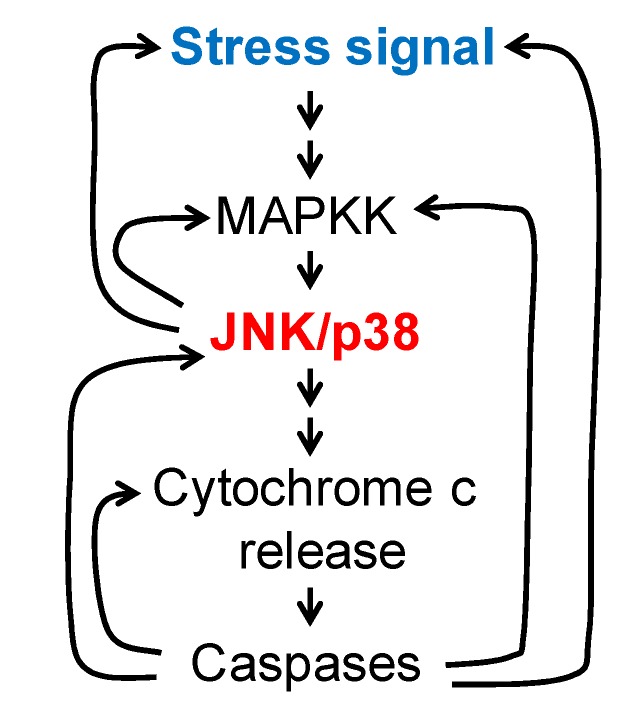
MAPK (mitogen-activated protein kinase) signaling pathways regulate a variety of biological processes through multiple cellular mechanisms. In most of these processes, such as apoptosis, MAPKs have a dual role since they can act as activators or inhibitors, depending on the cell type and the stimulus. In this review, we present the main pro- and anti-apoptotic mechanisms regulated by MAPKs, as well as the crosstalk observed between some MAPKs. We also describe the basic signaling properties of MAPKs (ultrasensitivity, hysteresis, digital response), and the presence of different positive feedback loops in apoptosis. We provide a simple guide to predict MAPKs’ behavior, based on the intensity and duration of the stimulus. Finally, we consider the role of MAPKs in osmostress-induced apoptosis by using Xenopus oocytes as a cell model. As we will see, apoptosis is plagued with multiple positive feedback loops. We hope this review will help to understand how MAPK signaling pathways engage irreversible cellular decisions.
Overview
The claims and statistics of this paper haven’t been checked yet.
Free: it reads the open-access text and checks the first 5 claims that cite a source we can check. Create a free account to check every claim.
Integrity signals
Registry
Cites
Statistics
Figures
Verification
Claims the paper makes
The claims and statistics of this paper haven’t been checked yet.
Free: it reads the open-access text and checks the first 5 claims that cite a source we can check. Create a free account to check every claim.
Claims other papers make about this one
Each is checked against this paper’s own text: does it say what the citing paper says it does?
The source backs part of the claim, not all of it — or backs it for a different population, condition or comparison.
In the citing paper
“In previous studies, the MAPK signaling pathway is acknowledged for its pivotal role in regulating the proliferation and differentiation of inflammatory cells [54]”
From Picroside II suppresses chondrocyte pyroptosis through MAPK/NF-κB/NLRP3 signaling pathway alleviates osteoarthritis (2024) · cites this paper as [54]
Experimental — accuracy not yet measuredThe source backs part of the claim, not all of it — or backs it for a different population, condition or comparison.
In the citing paper
“and it also plays an instrumental role in cartilage differentiation and degradation.”
From Picroside II suppresses chondrocyte pyroptosis through MAPK/NF-κB/NLRP3 signaling pathway alleviates osteoarthritis (2024) · cites this paper as [54]
Experimental — accuracy not yet measuredThe cited source says what the claim attributes to it.
In the citing paper
“In addition, the JNK and p38 MAPK cascades result in increased expression of proapoptotic proteins and decreased expression of antiapoptotic proteins through a variety of transcription factors, e.g., activator protein-1 (AP-1) and p53 [168].”
From RhoA Signaling in Neurodegenerative Diseases (2022) · cites this paper as [168]
Self-check
Percentages, sums and reported differences re-computed from the paper’s own numbers.
The self-check needs the paper’s full text.
Citations
Cites
The Release of Cytochrome c from Mitochondria: A Primary Site for Bcl-2 Regulation of Apoptosis
Kluck, R. M., Bossy-Wetzel, E., Green, D. R., & Newmeyer, D. D. (1997) · Science · doi:10.1126/science.275.5303.1132 · Cited by 4,714 · cited 2×
“apoptotic pathway and the role of cytochrome c release in caspase activation [133,134].”
BackgroundMethodThe BCL-2 protein family: opposing activities that mediate cell death
Youle, R. J., & Strasser, A. (2008) · Nature Reviews Molecular Cell Biology · doi:10.1038/nrm2308 · Cited by 4,679 · cited 1×
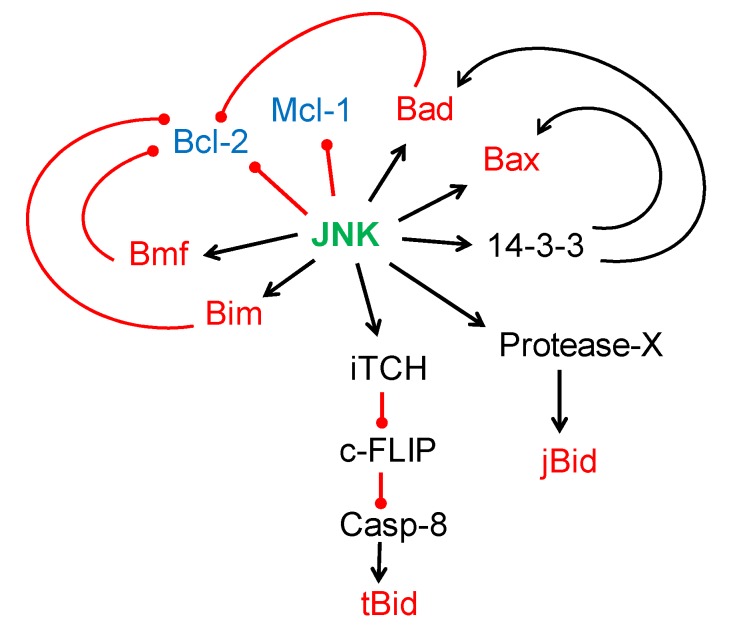
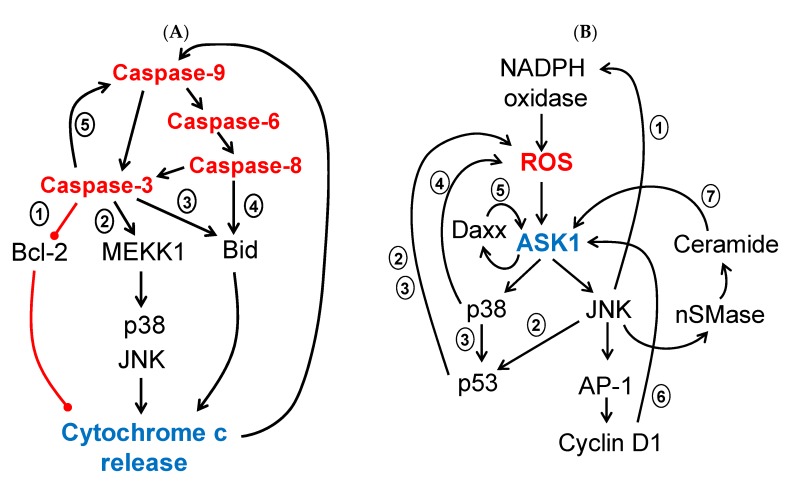
“The C-terminal truncated form of Bid (tBid) translocates to mitochondria and induces the release of cytochrome c, which in turn induces further caspase activation (caspase-9 and the effector caspases-3, -6, and -7) through the intrinsic pathway [31].”
BackgroundSignal transduction by the JNK group of MAP kinases
Davis, R. J. (2000) · Cell · doi:10.1016/s0092-8674(00)00116-1 · Cited by 4,237 · cited 3×
“ASK1 (apoptosis signal-regulating kinase 1) is a MAP kinase kinase kinase (MAP3K) of JNK and p38 MAPK, which is preferentially activated by ROS (reviewed in [127]).”
BackgroundInfluentialSeger, R., & Krebs, E. G. (1995) · The FASEB Journal · doi:10.1096/fasebj.9.9.7601337 · Cited by 3,602 · cited 2×
“ERK1/2 activation is widely associated with anti-apoptotic functions by controlling cell proliferation and differentiation [11,66].”
BackgroundInfluentialDérijard, B., Hibi, M., Wu, I.-H., Barrett, T., Su, B., Deng, T., Karin, M., & Davis, R. J. (1994) · Cell · doi:10.1016/0092-8674(94)90380-8 · Cited by 3,188 · cited 1×
“For example, c-Jun can be phosphorylated by JNK [17] and p38 [18], and the activated c-Jun can autoregulate its own expression in a positive regulatory loop through a c-Jun/AP-1 enhancer element in its promoter [19].”
BackgroundAP-1 as a regulator of cell life and death
Shaulian, E., & Karin, M. (2002) · Nature Cell Biology · doi:10.1038/ncb0502-e131 · Cited by 2,961 · cited 1×
“AP-1 regulates a wide range of cellular processes, including cell proliferation, differentiation, cell survival, and apoptosis [20,21].”
BackgroundSignal integration by JNK and p38 MAPK pathways in cancer development
Wagner, E. F., & Nebreda, Á. R. (2009) · Nature Reviews Cancer · doi:10.1038/nrc2694 · Cited by 2,586 · cited 1×
“The stress-activated JNKs and p38 MAPKs play key roles in balancing cell survival and death in response to both extracellular and intracellular stresses (reviewed in [12]).”
BackgroundAP-1: a double-edged sword in tumorigenesis
Eferl, R., & Wagner, E. F. (2003) · Nature Reviews Cancer · doi:10.1038/nrc1209 · Cited by 2,242 · cited 1×
“AP-1 regulates a wide range of cellular processes, including cell proliferation, differentiation, cell survival, and apoptosis [20,21].”
BackgroundBoulton, T. G., Nye, S. H., Robbins, D. J., Ip, N. Y., Radzlejewska, E., Morgenbesser, S. D., DePinho, R. A., Panayotatos, N., Cobb, M. H., & Yancopoulos, G. D. (1991) · Cell · doi:10.1016/0092-8674(91)90098-j · Cited by 1,897 · cited 1×
“As most family members are involved in processing signals stimulated by growth factors, the super kinase family was termed “mitogen-activated” protein kinase (MAPK) [4].”
BackgroundDhanasekaran, D. N., & Reddy, E. P. (2008) · Oncogene · doi:10.1038/onc.2008.301 · Cited by 1,525 · cited 1×
“A variety of transcription factors have been reported to be regulated by JNK and p38, which result in increased expression of pro-apoptotic proteins and decreased expression of anti-apoptotic proteins [14,16].”
Background
Cited by
Items 701–800 of 1,001
Şenkuytu, E., Davarcı, D., Mesci, S., & Yazgan, B. (2024) · Journal of Molecular Structure · doi:10.1016/j.molstruc.2024.138418 · Cited by 5
Chen, M., Zhou, H., Shen, J., Wei, M., Chen, Z.-Y., Chen, X., Fan, H., Zhang, J., & Zhu, J. (2024) · Journal of Pharmacological Sciences · doi:10.1016/j.jphs.2024.08.003 · Cited by 5
Su, J., Zhou, F., Hu, M., Xu, Q., Huang, Y., Chen, S., Zhou, H., & Chen, H. (2024) · Journal of Neurophysiology · doi:10.1152/jn.00210.2024 · Cited by 5
Anti-inflammatory effects and mechanism of triterpene alcohols from camellia oil
Li, Y., Zhou, S., Qiang, J., Cao, Y., Huijun, Y., Gao, Y., Li, Q., & Yu, X. (2024) · Food Science and Human Wellness · doi:10.26599/fshw.2024.9250290 · Cited by 5
Demirel, M. A., Şumlu, E., Özercan, İ. H., Şahin, K., Tuzcu, M., Bay, V., Kurşun, Ö. E. D., Uludağ, M. O., & Akar, F. (2024) · Scientific Reports · doi:10.1038/s41598-024-76211-5 · Cited by 5
Herath, H. M. U. L., Park, M., Piao, M. J., Kang, K. A., Fernando, P. D. S. M., Senavirathna, H. M. M. M., Kim, H.-S., Chae, S., Kim, Y. R., & Hyun, J. W. (2024) · Toxicology in Vitro · doi:10.1016/j.tiv.2024.106002 · Cited by 5
Alsfouk, B. A. A., Al-Kuraishy, H. M., Albuhadily, A. K., Al-Gareeb, A. I., Abdelaziz, A. M., Alexiou, A. T., Papadakis, M., Alruwaili, M., & Batiha, G. E. (2025) · Brain Research Bulletin · doi:10.1016/j.brainresbull.2025.111189 · Cited by 5
“MAPK pathway is involved in the regulation of cell proliferation, differentiation, migration, and apoptosis (Yue and L ´ opez, 2020; Khoshkhoo et al., 2023; Al-kuraishy et al., 2022a; Mou-barak et al., 2021; Al-Kuraishy et al., 2018, 2021; Al-kuraishy et al., 2021a).”
Integration analysis of miRNA-mRNA uncovers the mechanisms of ochratoxin A-induced hepatotoxicity
Luo, Z., Jin, R., Pan, F., Guo, R., Li, M., Zhang, S., Shi, J., Zheng, J., Wang, H., Yang, X., et al. (2025) · Ecotoxicology and Environmental Safety · doi:10.1016/j.ecoenv.2025.118039 · Cited by 5
Chu, Z., Chen, Y., Xie, D., Song, C., Lin, Y., Qin, T., Zhai, Z., Cao, Z., Xu, Y., & Sun, T. (2025) · Journal of Ethnopharmacology · doi:10.1016/j.jep.2025.119879 · Cited by 5
Exploring Flavonoids as Regulators of MMP ‐2 and MMP ‐9 in Cancer Pathogenesis
Vo, H. V. T., Patton, G. N., Kim, S. J., Kim, N., & Lee, H. J. (2025) · Chemical Biology & Drug Design · doi:10.1111/cbdd.70145 · Cited by 7
Murata, K., Fujita, N., & Takahashi, R. (2022) · BMC Complementary Medicine and Therapies · doi:10.1186/s12906-022-03574-5 · Cited by 5
“Oxidative stress activates the MAPK family, which is a key component of the signaling pathways regulating various intracellular processes, including apoptosis and release of in ammatory cytokines [15].”
BackgroundAnticarin β Inhibits Human Glioma Progression by Suppressing Cancer Stemness via STAT3
Zhang, M., Dai, Z., Zhao, X., Gan, W., & Lai, R. (2021) · Frontiers in Oncology · doi:10.3389/fonc.2021.715673 · Cited by 8
“Persistent activation of JNK, p38, and ERK1/2 induce apoptosis (24, 25, 45, 46).”
BackgroundRole of mTOR pathway in modulation of radiation induced bystander effects
Verma, N., & Tiku, A. B. (2021) · International Journal of Radiation Biology · doi:10.1080/09553002.2022.2013567 · Cited by 5
Lan, S., Yang, X., Li, T., Yang, T., & Rong, L. (2022) · Journal of Craniofacial Surgery · doi:10.1097/scs.0000000000008425 · Cited by 5
“MAPK is involved in mediating cell apoptosis.(37,38) Three subfamilies of MAPK have been identified in mammalian cells: ERK, P38, and JNK.”
BackgroundAli, Z., & Hermawan, A. (2022) · INDONESIAN JOURNAL OF PHARMACY · doi:10.22146/ijp.2346 · Cited by 6
“Several cellular functions, including proliferation, differentiation, and apoptosis, are controlled by the RAS, p38/MAPK, and p53 pathways (Yue et al., 2020).”
BackgroundInfluentialChristodoulou, C., Mavrommatis, A., Simoni, M., Righi, F., Prandi, B., Tedeschi, T., Sforza, S., & Tsiplakou, E. (2022) · animal · doi:10.1016/j.animal.2022.100621 · Cited by 5
Ge, Y., Zhang, F., Liu, Y., Jiang, C., Gao, P., Tan, N. S., Zhang, S., Shen, Y., Zhou, Q., Zhou, X., et al. (2025) · bioRxiv (Cold Spring Harbor Laboratory) · doi:10.1101/2025.08.23.671949 · Cited by 8
“The moderate scores are due to the source database descriptions, which emphasize cell survival aspects of MAPK signaling and do not extensively detail its connection to apoptosis 42,58,59 .”
Leenutaphong, P., Tancharoen, S., Nararatwanchai, T., Phruksaniyom, C., Sarikaphuti, A., Palungwachira, P., & Chaichalotornkul, S. (2022) · Natural Product Communications · doi:10.1177/1934578x221107970 · Cited by 4
“One major event in apoptosis is characterized by a feedback loop involving cytochrome c release, which induces caspase 9 activation, caspase 3 cleavage, leading to subsequent proteolysis of Bcl-2 and resulting in more cytochrome c release causing cleavage of various downstream caspases.(22) Bcl-2 is an antiapoptotic p…”
BackgroundUnraveling TGF-β1’s Role in Mediating Fibrosis and Cell Death in Feline Kidney Cells
Intachat, C., Chuammitri, P., Sornpet, B., Patchanee, P., Manachai, N., & Piyarungsri, K. (2025) · Animals · doi:10.3390/ani15020257 · Cited by 4
Abouzed, D. E. E., Bafail, D. A., Refaie, S. M., Aboelez, M. O., Elsayed, A. A., Mallasiy, L. O., Bayoumy, N. M. K., & Hagar, H. (2025) · Naunyn-Schmiedeberg s Archives of Pharmacology · doi:10.1007/s00210-025-03820-w · Cited by 4
“Hepatic IR injury can be improved by specifically inhibiting the JNK pathway, which can stop the action of apoptosis in liver cells (Yue and López 2020).”
Yang, J., Gu, Y., Wang, T., Zhang, J., Zhang, X., & Yu, F. (2025) · Current Pharmaceutical Design · doi:10.2174/0113816128335289241218161938 · Cited by 4
Lin, Z., Liang, S., Wei, Y., Cai, Z., Zhang, G., & Ling, Q. (2025) · Journal of Thermal Biology · doi:10.1016/j.jtherbio.2025.104073 · Cited by 5
Moore, L. L., Jaboin, J. J., Brown, M. L., & Houchen, C. W. (2025) · Cancers · doi:10.3390/cancers17122050 · Cited by 4
Singh, A., Kumari, K., Tandon, S., Kaur, T., & Tandon, C. (2025) · Urolithiasis · doi:10.1007/s00240-025-01794-1 · Cited by 4
Guo, D., Zhao, Y., Sun, X., Zheng, Y., & Huang, B. (2025) · International Journal of Biological Macromolecules · doi:10.1016/j.ijbiomac.2025.146564 · Cited by 7
Li, Y., Su, R., Wang, K., Wang, J., & Zhang, D. (2025) · BMC Plant Biology · doi:10.1186/s12870-025-07195-1 · Cited by 4
“This pathway plays a pivotal role in regulating gene expression, metabolism, motility, cell division, apoptosis, and survival, conferring resistance to various environmental stimuli (heat, cold, drought, salinity, etc.) and pathogen attacks [2–6].”
Abdulmalek, S. A., Mahmoud, F. A., Awad, D., Saleh, A. M., Elkady, A. I., Ghareeb, D. A., & Balbaa, M. (2025) · Discover Oncology · doi:10.1007/s12672-025-03714-6 · Cited by 4
“It was reported that p38-MAPK is implicated in the apoptotic signaling pathway, whereas ERK is frequently connected with cell survival and growth [74].”
Pan, X., Zhao, Y. C., Huang, W., Wu, J., Liang, J., Xie, Y., Chen, Y., & Zhao, W. (2025) · Archives of Dermatological Research · doi:10.1007/s00403-025-04417-2 · Cited by 4
Lin, F., Luo, Z., Wu, Q., Lv, L., Chen, Z., He, Y., Yuan, H., Zhao, Y., & Nie, S. (2025) · European Journal of Medicinal Chemistry · doi:10.1016/j.ejmech.2025.118464 · Cited by 5
Mafe, A. N., Bappa, L. D., Sharifi‐Rad, J., Setzer, W. N., & Călina, D. C. (2025) · Archiv der Pharmazie · doi:10.1002/ardp.70170 · Cited by 4
Ghosh, D., Panda, B., Singha, P. S., & Ghosh, R. (2025) · MGM Journal of Medical Sciences · doi:10.4103/mgmj.mgmj_278_25 · Cited by 4
Xie, W., Yang, T., Mo, F., Meng, W., Xu, L., Liang, J., Liu, C., & Zhong, Y. (2026) · Journal of Agricultural and Food Chemistry · doi:10.1021/acs.jafc.5c11938 · Cited by 4
Sahu, M., & Jain, U. (2026) · Critical Reviews in Oncology/Hematology · doi:10.1016/j.critrevonc.2026.105204 · Cited by 4
MECHANISMS OF ACTION AND SIGNALING PATHWAYS INVOLVED IN ABIOTIC STRESS ELICITATION
HAMMAD, M., SHAFIQ, M., Batool, A., & SHERAZI, S. (2026) · Bulletin of Biological and Allied Sciences Research · doi:10.64013/bbasr.v2026i1.116 · Cited by 4
“Notably, MAPK signaling is closely linked to ROS and antioxidant defenses: overexpression of certain MAPKKKs increases activities of antioxidant enzymes and improves tolerance(Yue and López, 2020).”
Mendonce, K. C., Srinivasan, M., Palani, N., Nithya, T. G., Ramar, R. K., Annamalai, S. K., Monisha, P., & Rajadesingu, S. (2026) · Chemistry & Biodiversity · doi:10.1002/cbdv.202502983 · Cited by 4
The concept of UV radiation hormesis: evidence, mechanisms and implications
Trela-Makowej, A., Olbińska, E., Orzechowska, A., & Szymańska, R. (2026) · Biological reviews/Biological reviews of the Cambridge Philosophical Society · doi:10.1002/brv.70159 · Cited by 5
Şahin, M. Z. (2026) · Immuno · doi:10.3390/immuno6020020 · Cited by 4
Alshammari, F., Elmorsy, E. M., Aldaghmi, A. S., Alaajam, F., Shams, A. S., Elshopakey, G. E., Fawzy, M. S., & Hosny, N. (2026) · Biomolecules · doi:10.3390/biom16040517 · Cited by 4
“Stress-activated kinases, including p38 MAPK, JNK, and ERK, further amplify inflammatory and apoptotic responses, underscoring the tight interplay between oxidative stress, inflammation, and cell death in MTX-induced kidney injury [10,11].”
Zhu, X., Wang, K., Duan, X., Pang, X., Du, X., Han, Z., Li, W., Chen, S., Jin, H., Chen, Z., et al. (2026) · Journal of Plant Physiology · doi:10.1016/j.jplph.2026.154799 · Cited by 4
Fang, Y., Zhang, X., Dai, C., & Hao, Z. (2026) · Antioxidants · doi:10.3390/antiox15050635 · Cited by 4
“The dimerization of activated p53 and p73 facilitates the expression of pro-apoptotic genes puma and Bax [138].”
Kuznetsova, A. V. (2022) · Russian Journal of Developmental Biology · doi:10.1134/s1062360422060054 · Cited by 4
“Depending on the type of cells and the stimulus, MAPK can act as activators or inhibitors of cellular responses (Yue and Lopez, 2020).”
BackgroundWang, R., Deng, Y., Zhang, Y., Li, X., Gooneratne, R., & Li, J. (2024) · Food & Function · doi:10.1039/d3fo04213h · Cited by 4
Wójcik, M., Zmarzły, N., Derkacz, A., Kulpok-Bagiński, T., Blek, N., & Grabarek, B. O. (2024) · Cell Cycle · doi:10.1080/15384101.2024.2320508 · Cited by 4
“MAPKs can be divided into three groups: extracellular signal-regulated kinases (ERKs), c-Jun N-terminal kinases (JNKs), and p38 MAPKs [13].”
BackgroundAzad, I., Anand, P., Ahmad, N. S., Hassan, F., Faiyyaz, M., & Akhter, Y. (2024) · Chemical Physics · doi:10.1016/j.chemphys.2024.112243 · Cited by 4
Lou, Y., Xu, B., Huang, K., Li, X., Jin, H., Ding, L., Ning, S., & Chen, X. (2024) · Biochemical Pharmacology · doi:10.1016/j.bcp.2024.116414 · Cited by 5
Liu, D., Tang, F., Zhang, L., Wan, F., Xu, L.-Y., Zhang, J., Zhao, X.-L., Ao, H., & Peng, C. (2024) · Frontiers in Pharmacology · doi:10.3389/fphar.2024.1421551 · Cited by 4
“The seemingly contradictory expression pattern of p38 and JNK could be explained by the fact that speci fi c inhibition of p38 MAPK could activate JNK expression (Muniyappa and Das, 2008; Yue and López, 2020).”
BackgroundLncRNAs modulating tooth development and alveolar resorption: Systematic review
Aol, L., Zhou, X., Hao, H., Nie, J., Zhang, W., Yao, D., Su, L., & Xue, W. (2024) · Heliyon · doi:10.1016/j.heliyon.2024.e39895 · Cited by 4
Won, Y., Kim, H. H., Jeong, S.-H., Bhosale, P. B., Abusaliya, A., Heo, J.-D., Seong, J. K., Ahn, M., Kim, H. J., & Kim, G. S. (2025) · International Journal of Molecular Sciences · doi:10.3390/ijms26062390 · Cited by 4
“MAPK has six subclasses in mammals, which are extracellular signal-regulated kinase (ERK) 1/2, ERK3/4, ERK5, ERK7/8, Jun N-terminal kinase (JNK) 1/2/3, and p38 MAPK [31].”
InfluentialMechanistic insights into proteasome inhibitor MG132 induced apoptosis in melanoma A375 cells
Xu, M. J., Zhang, Z., He, X., Zhang, P., Zhang, H., Xia, Y., Zhou, J., Liu, J., Ye, X., & Liu, J. (2025) · Scientific Reports · doi:10.1038/s41598-025-99151-0 · Cited by 6
Skolnick, J., Srinivasan, B., Skolnick, S., Edelman, B., & Zhou, H. (2025) · Journal of Chemical Information and Modeling · doi:10.1021/acs.jcim.5c00462 · Cited by 6
Cellular and molecular mechanisms of arenobufagin in cancer therapy: a systematic review
Wang, S.-J., Wang, P., Ding, H.-L., Qi, Y., Song, Y., & Mu, X.-N. (2025) · Discover Oncology · doi:10.1007/s12672-025-03052-7 · Cited by 4
Sarkar, M., Sharma, H., Singh, P. P., Ranu, R., Sharma, R. D., Agrawal, U., & Pal, R. (2022) · iScience · doi:10.1016/j.isci.2022.104527 · Cited by 4
Savvidou, S., Panteli, N., Dotas, V., Symeon, G. K., Galamatis, D., Panitsidis, I., Voutsinou, E., Tatidou, C., Kumar, P., Antonopoulou, E., et al. (2023) · Foods · doi:10.3390/foods12203870 · Cited by 4
“…in cyclodextrin or in an aqueous form, exerted anti-apoptotic effects in the two examined tissues, as indicated by the elevated Bcl-2/Bad ratio, MAPKs activation in the breast may suggest involvement in the transcriptional and post-translational regulation of anti-apoptotic proteins [75].”
BackgroundHorat, M. F., Şenol, Ş. P., Bahceli, O., Temiz-Reşitoğlu, M., Şahan-Fırat, S., Sevim, S., & Tunçtan, B. (2023) · Cellular and Molecular Biology · doi:10.14715/cmb/2023.69.10.2 · Cited by 4
Chaga mushroom extract suppresses oral cancer cell growth via inhibition of energy metabolism
Yeo, D., Yun, Y. G., Shin, S., Dashnyam, K., Khurelbaatar, A., Lee, J. H., & Kim, H. (2024) · Scientific Reports · doi:10.1038/s41598-024-61125-z · Cited by 5
Rehman, S., & Storey, K. B. (2024) · Metabolites · doi:10.3390/metabo14070387 · Cited by 4
Insulin mitigates acute ischemia–induced atrial fibrillation and sinoatrial node dysfunction ex vivo
Qiu, H., Li, F., Prachyl, H., Patino-Guerrero, A., Rubart, M., & Zhu, W. (2024) · JCI Insight · doi:10.1172/jci.insight.185961 · Cited by 4
“KEGG analysis revealed that insulin prevented I/R-mediated changes in the expression of genes in the MAPK and PI3K/AKT pathways (Supplemental Figures 6 and 7), which are crucial for regulating cell apoptosis and stress response (51).”
Trans-kingdom Regulation of Programmed Cell Death in Plants
Banerjee, S., Tiwari, A. K., & Tiwari, B. S. (2025) · Journal of Plant Growth Regulation · doi:10.1007/s00344-025-11633-7 · Cited by 4
“Of note, scientists observed the dual role of these three prototypical MAPKs in PCD as they can function as pro-apoptotic as well as anti-apoptotic depending on the stimuli, cell types, and specific experimental conditions (Yue and López 2020).”
Yao, G., Zhang, J., Zhang, L., Zhao, H., Wu, S., Yang, H., & Yu, J. (2025) · PeerJ · doi:10.7717/peerj.19397 · Cited by 4
“The observed reductions in MAPK levels are consistent with previous studies demonstrating alleviation of colitis ( Yue & López, 2020 ; Zheng et al., 2024b ).”
CARD9 mediates glucose-stimulated insulin secretion in pancreatic beta cells
Gamage, S., Hali, M., & Kowluru, A. (2021) · Biochemical Pharmacology · doi:10.1016/j.bcp.2021.114670 · Cited by 5
Wang, L., Chen, Y., Wei, L., & He, J. (2021) · International Journal of Stem Cells · doi:10.15283/ijsc21093 · Cited by 4
“ERK and p38 signaling pathways interconnect closely at multiple levels (37, 38).”
Xu, J., Gu, X., Xie, Y., He, R., Xu, J., Xiong, L., Peng, X., & Yang, G. (2022) · Parasites & Vectors · doi:10.1186/s13071-022-05240-8 · Cited by 4
Li, X., Bai, Y., Li, J., Chen, Z., Ma, Y., Shi, B., Han, X., Luo, Y., Hu, J., Wang, J., et al. (2022) · Frontiers in Genetics · doi:10.3389/fgene.2022.994806 · Cited by 4
“The MAPK signaling pathway can control biological processes via various cellular mechanisms involving the activation/inhibition of related factors (Yue and Lopez, 2020).”
BackgroundNikiforov, V. S., & Akleyev, А. V. (2022) · Biology Bulletin · doi:10.1134/s1062359022060103 · Cited by 4
Lin, C.-Y., Zhang, Y., Li, B.-Z., Shu, M.-A., & Xu, W. (2023) · Developmental & Comparative Immunology · doi:10.1016/j.dci.2023.104755 · Cited by 4
Gao, Y., Li, M., Yang, X. Y., Wang, J., & Zheng, N. (2023) · Ecotoxicology and Environmental Safety · doi:10.1016/j.ecoenv.2023.115428 · Cited by 5
Zong, X., Ding, Q., Liu, X., Liu, Q., Song, S., Yan, X., & Zhang, Y. (2023) · Physiological Research · doi:10.33549/physiolres.935092 · Cited by 4
Liu, L., Yang, Y., Wang, Y., Qiu, T., Li, X., Lin, J., Wang, J., Wang, X., An, Y., Zhong, X., et al. (2024) · Chemical Engineering Journal · doi:10.1016/j.cej.2024.154566 · Cited by 4
Dong, G., Gui, Z., Yuan, Y. X., Li, Y., & Du, D. (2024) · Agronomy · doi:10.3390/agronomy14112613 · Cited by 4
Qu, F., Zeng, X., Liu, Z., Guo, M., Zhang, X., Cao, S., Zhou, Y., He, Z., Tang, J., Mao, Z., et al. (2022) · Frontiers in Immunology · doi:10.3389/fimmu.2022.981995 · Cited by 5
Shen, Z., Cao, C., & Xia, X. (2023) · Journal of Insect Science · doi:10.1093/jisesa/iead065 · Cited by 3
“Mitogen-activated protein kinase (MAPK) is a group of evolutionarily conserved serine/threonine protein kinases that are activated by a series of extracellular stimuli and mediate signal transduction from the cell membrane to the nucleus (Yue and López 2020), moreover, the increased of insect hormone levels can activa…”
BackgroundLim, J. X., Abdullah, M. N. H., Lim, V., Lee, H. K., & Yong, Y. K. (2023) · Current Materials Science · doi:10.2174/2666145417666230918115854 · Cited by 3
Chen, Y., Li, R., Xu, H., & Guo, L. (2024) · Translational Gastroenterology and Hepatology · doi:10.21037/tgh-23-66 · Cited by 4
“This pathway can reduce the occurrence of cell death by inducing the expression of anti-apoptotic protein BCL-2 and inhibiting the activation of pro-apoptotic protein BAX (12,14).”
Resveratrol Inhibits Nasopharyngeal Carcinoma (NPC) by Targeting the MAPK Signaling Pathway
Yi, Y., Zhou, B., Man, T., Xu, Z., Hong, T., Li, J., & Sun, Z. (2024) · Anti-Cancer Agents in Medicinal Chemistry · doi:10.2174/0118715206319761240705115109 · Cited by 4
Wu, Z., Jiyin, G., Wang, X., Wang, C., Zhang, C., Li, X., Zhang, J., & Sun, Y. (2024) · Ecotoxicology and Environmental Safety · doi:10.1016/j.ecoenv.2024.117072 · Cited by 3
Shi, B., Zhu, C., Wang, X., Qi, Y., Hu, J., Liu, X., Wang, J., Hao, Z., Zhao, Z., & Zhang, X. (2024) · International Journal of Molecular Sciences · doi:10.3390/ijms251810151 · Cited by 3
“The MAPK signaling pathway can control biological processes through various cellular mechanisms involving activation/inhibition of related factors [91].”
BackgroundNguyen, Q. N. S., Yoo, K., Pham, T. T. T., Selvaraj, B., Vu, H. T., Le, T. T., Lee, H., Tran, Q. L., Thương, P. T., Pae, A. N., et al. (2024) · International Journal of Molecular Sciences · doi:10.3390/ijms252212153 · Cited by 3
“The oxidative stress-mediated activation of the MAPK pathway is linked to the activation of cell death [20].”
Bday, J., Souid, M., Pires, V., Gabbouj, S., Véjux, A., Lizard, G., & Hassen, E. (2025) · Journal of Biochemical and Molecular Toxicology · doi:10.1002/jbt.70130 · Cited by 4
“Aberrant activation of these pathways inhibits proapoptotic factors and autophagy processes and promotes antiapoptotic factors, causing a strong defect in cell proliferation and survival control, eventually promoting tumorigenesis, metastasis, and resistance to therapy [57 – 59].”
Liu, X., Shi, J., Wu, M., Gao, J., Zhang, Y., Guo, W., & Zhang, S. (2025) · The FASEB Journal · doi:10.1096/fj.202402239rr · Cited by 3
“17 These routes can be triggered by a range of external signals, including growth factors, stress indicators, and inflammatory cytokines.”
Upregulation of the MAP2K4 gene triggers endothelial-mesenchymal transition in COVID-19
Yilmaz, E., Yilmaz, D., Yildiz, C. G., & Çaçan, E. (2025) · Molecular Biology Reports · doi:10.1007/s11033-025-10289-6 · Cited by 3
Riaz, M., Liu, X., Yin, F., & Yan, L. (2025) · Journal of Plant Diseases and Protection · doi:10.1007/s10343-025-01128-6 · Cited by 3
“Transcriptional stress responses often involve Ca signaling, ROS production, apoptosis, protein degradation, and MAPK cascades (Kumar et al. 2020b; Yue and López 2020).”
Liu, Y., Wang, X., Zhang, M., Cheng, D., Zhu, Z., Ge, L., & Cheng, X. (2025) · Frontiers in Cardiovascular Medicine · doi:10.3389/fcvm.2025.1561963 · Cited by 4
“Activated JNK then phosphorylates c-Jun in the nucleus to alter gene expression or directly regulate mitochondrial proteins to control apoptosis (36, 37).”
de Abrantes, R. A., de Sousa, N. F., Farias, A. P. G. M., Duarte, S. S., Abreu, L. S., Velozo, E. S., da Silva, M. S., da Silva, P. R., Tavares, J. F., Gonçalves, J. C. R., et al. (2025) · Current Pharmaceutical Design · doi:10.2174/0113816128357765250603105759 · Cited by 4
Li, X., Yu, Q., Chen, L., Yu, D., Ai, Q., Xu, X., Meng, Z., Chen, F., Zhao, X., Wei, J., et al. (2025) · International Immunopharmacology · doi:10.1016/j.intimp.2025.115156 · Cited by 3
Karaosmanoğlu, O., Berber, H., Sivas, H., & Uysal, Ü. D. (2025) · Cell Biochemistry and Biophysics · doi:10.1007/s12013-025-01826-y · Cited by 3
“It is a well-established fact that the activation of MAPK signalling pathways is an adaptation mechanism of cells under unfavourable conditions, such as oxidative stress or DNA damage, leading to apoptosis [7, 9].”
Cytoprotective effect of prostacyclin on hepatic ischemia-reperfusion injury
Mouratidou, C., Pavlidis, T., Katsanos, G., Papaioannou, M., Niti, A., Kotoulas, S., Tsoulfas, G., Mouloudi, E. K., Galanis, I. N., & Pavlidis, T. (2025) · World Journal of Methodology · doi:10.5662/wjm.v15.i4.104472 · Cited by 4
Xu, Q., Wu, D., Tan, J., Khan, F. A., Pandupuspitasari, N. S., & Huang, C. (2025) · Drug Design Development and Therapy · doi:10.2147/dddt.s511521 · Cited by 4
“The formation of the p53-p73 dimer promotes the transcriptional activation of numerous pro-apoptotic genes, including but not limited to puma and bax 45,46 (Figure 1).”
Ding, C., Guo, J., Wang, C., & Li, H. (2025) · Fitoterapia · doi:10.1016/j.fitote.2025.106819 · Cited by 3
So, S. H. S., Jiang, W., Li, Y., Hold, G. L., Goodrick, K., Min, A., Bourke, M. J., El-Omar, E. M., Jiang, X., & Yim, H. C. H. (2025) · eGastroenterology · doi:10.1136/egastro-2025-100194 · Cited by 4
Souresh, V., Srikayalsamyukktha, M., Harini, M., Saravanan, Y., & Saravanakumar, R. (2025) · The Protein Journal · doi:10.1007/s10930-025-10289-2 · Cited by 3
“…of 2,794.8 Da and exhibits a neutral net surface charge at physiological pH. Cyclic peptide P6 elevates intracellular calcium (Ca 2+ ) levels and oxidative stress, which lowers the potential of the mitochondrial membrane and the release of apoptosis-inducing factors, including cytochrome C [56].”
InfluentialAl-Khayyat, W., Laframboise, T., Dougherty, J., Mendonca, M. S., Boreham, D. R., Tai, T. C., Thome, C., & Tharmalingam, S. (2025) · Frontiers in Cell and Developmental Biology · doi:10.3389/fcell.2025.1659986 · Cited by 3
“Unlike cFOS, which is transiently expressed, FRA1 is stabilized under persistent MAPK/ERK signaling and exhibits context-dependent roles in cancer (Yue and Lopez, 2020; He et al., 2022).”
Meng, K., Shi, L., Fang, X., Yang, J., Ding, Y. H., Cao, Z., & Li, S. (2025) · Cell Communication and Signaling · doi:10.1186/s12964-025-02470-y · Cited by 3
“The mitogen-activated protein kinase (MAPK) signaling cascade serves as a critical regulator of diverse cellular processes, including immune responses and programmed cell death, through its control of gene transcription [106, 107].”
Ceramide synthase 4 interferes with replication of influenza virus but is downregulated by infection
Jung, K. I., Xia, C., McKenna, S., He, Y., Vijayamahantesh, V., Wolf, J. J., & Hahm, B. (2025) · Journal of Virology · doi:10.1128/jvi.01563-25 · Cited by 3
Song, Y., Du, Y., Li, W., Fan, Y., Zhang, Y., Shen, H., Cheng, L., Wang, J., Deng, F., & Tang, B. H. (2025) · Scientific Reports · doi:10.1038/s41598-025-23009-8 · Cited by 3
Banerjee, S., Samanta, A., Ghosh, S., Das, S., & Maitra, S. (2025) · Molecular Neurobiology · doi:10.1007/s12035-025-05471-7 · Cited by 4
“Neuronal apoptosis and neuroinflammation are hallmarks of neurodegenerative conditions [37–41].”
Azadbakht, A. A., Mashayekhi‐Sardoo, H., & Baghcheghi, Y. (2025) · Neurochemical Research · doi:10.1007/s11064-025-04619-0 · Cited by 6
Ragavendran, C. (2025) · International Journal of Advanced Science and Engineering · doi:10.29294/ijase.12.2.2025.5446-5487 · Cited by 5
Contreras, E. J., Nagarajan, A., Bromberg, B. H., Villegas, M. P., & Kaplan, D. L. (2026) · Food Research International · doi:10.1016/j.foodres.2026.118368 · Cited by 4
Targeting the Akt–EphA2 axis and cell–cell adhesion enhances anoikis sensitivity in cancer cells
Vivante, A. G., Dwivedi, N., Sheetz, M. P., & Nir, G. (2026) · Scientific Reports · doi:10.1038/s41598-026-37327-y · Cited by 4
Sekhar, P. S., Fahma, A., Gopalakrishnan, A. P., Subair, S., Dcunha, L., Mahin, A., Ummar, S., Shivamurthy, P. B., Chakraborty, S., & Raju, R. (2026) · OMICS A Journal of Integrative Biology · doi:10.1177/15578100261419491 · Cited by 3
“Meanwhile, MAP4K4 is related to stress responses by activating MAPK pathways (Yue and López, 2020).”
Metadata
- Authors
- Yue, J., & López, J. M.
- Affiliations
- Soochow University (CN)
- Universitat Autònoma de Barcelona (ES)
- Corresponding author
- López, José M.
- Venue
- International Journal of Molecular Sciences
- Publisher
- MDPI AG
- Published
- 2020-03-28
- Volume
- 21
- Issue
- 7
- Pages
- 2346
- ISSN
- 1422-0067 (ISSN-L)
- PMC
- PMC7177758
- OpenAlex
- W3013726226
- Semantic Scholar
- 0ec8eda064d63bdd78cee4f60dcac40c53ab451a
- Cited by
- 1,245
- References
- 158
- Citations by year
- 2026: 163 · 2025: 269 · 2024: 250 · 2023: 216 · 2022: 192 · 2021: 134 · 2020: 16
- FWCI
- 13.35
- Type
- journal article
- Language
- en
- Open access
- gold
- dx.doi.org
- Licence
- Locations
- International Journal of Molecular Sciences (publishedVersion, cc-by)
- PubMed Central (publishedVersion, cc-by)
- PubMed (publishedVersion)
- Dipòsit Digital de Documents de la UAB (Universitat Autònoma de Barcelona) (submittedVersion, cc-by)
- DOAJ (DOAJ: Directory of Open Access Journals) (submittedVersion, cc-by-sa)
- Funders
- Spanish Ministerio de Economía y Competitividad (BFU2010-15978)
- Topics
- Life Sciences › Biochemistry, Genetics and Molecular Biology › Molecular Biology › Cell death mechanisms and regulation
- Life Sciences › Biochemistry, Genetics and Molecular Biology › Molecular Biology › Protein Kinase Regulation and GTPase Signaling
- Life Sciences › Biochemistry, Genetics and Molecular Biology › Molecular Biology › Protein Tyrosine Phosphatases
- Keywords
- MAPK signaling, apoptosis, anti-apoptotic mechanisms, ultrasensitivity, hysteresis, positive feedback loop, Xenopus oocytes, cell fate determination
- MeSH terms
- Animals, Enzyme Activation, Humans, Osmotic Pressure, Apoptosis, Mitogen-Activated Protein Kinases, MAP Kinase Signaling System
About these checks
Registry, retraction, Cites and statistics results are computed, not judged, with one exception: a printed reference that no index lists is read once by a model before it counts as a citation error. Claims are extracted by a model and kept only when their quote appears verbatim in the text; each cited source is then checked, with a model’s help, for whether it says what the claim relies on. Those verdicts can be wrong — read the claim’s quote and the cited source before relying on one.
Statistics and arithmetic are recomputed, not judged.
Confidence bands are shown only for fields calibrated on our annotated test set. None is calibrated yet, so no band is shown.
What counts as a claim ›How we measure confidence ›How we check this ›
Are you an author, or do you see a problem with this page? Request a review
Data sources
Bibliographic data: Semantic Scholar, OpenAlex, Crossref.
Contains information from the Semantic Scholar Academic Graph Datasets, made available under the ODC Attribution License (ODC-BY 1.0).
Semantic Scholar’s data is described in: Kinney, R., et al. (2023). The Semantic Scholar Open Data Platform. arXiv:2301.10140.
