

Understanding MAPK Signaling Pathways in Apoptosis
Open accessThe DOI matches its Crossref record; 157 of the 158 references it cites were found in a registry or an index.
Abstract
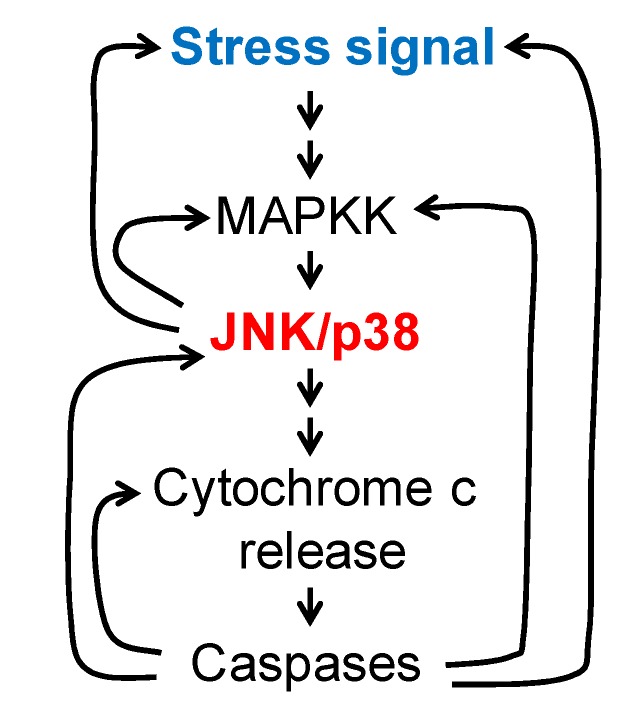
MAPK (mitogen-activated protein kinase) signaling pathways regulate a variety of biological processes through multiple cellular mechanisms. In most of these processes, such as apoptosis, MAPKs have a dual role since they can act as activators or inhibitors, depending on the cell type and the stimulus. In this review, we present the main pro- and anti-apoptotic mechanisms regulated by MAPKs, as well as the crosstalk observed between some MAPKs. We also describe the basic signaling properties of MAPKs (ultrasensitivity, hysteresis, digital response), and the presence of different positive feedback loops in apoptosis. We provide a simple guide to predict MAPKs’ behavior, based on the intensity and duration of the stimulus. Finally, we consider the role of MAPKs in osmostress-induced apoptosis by using Xenopus oocytes as a cell model. As we will see, apoptosis is plagued with multiple positive feedback loops. We hope this review will help to understand how MAPK signaling pathways engage irreversible cellular decisions.
Overview
The claims and statistics of this paper haven’t been checked yet.
Free: it reads the open-access text and checks the first 5 claims that cite a source we can check. Create a free account to check every claim.
Integrity signals
Registry
Cites
Statistics
Figures
Verification
Claims the paper makes
The claims and statistics of this paper haven’t been checked yet.
Free: it reads the open-access text and checks the first 5 claims that cite a source we can check. Create a free account to check every claim.
Claims other papers make about this one
Each is checked against this paper’s own text: does it say what the citing paper says it does?
The source backs part of the claim, not all of it — or backs it for a different population, condition or comparison.
In the citing paper
“In previous studies, the MAPK signaling pathway is acknowledged for its pivotal role in regulating the proliferation and differentiation of inflammatory cells [54]”
From Picroside II suppresses chondrocyte pyroptosis through MAPK/NF-κB/NLRP3 signaling pathway alleviates osteoarthritis (2024) · cites this paper as [54]
Experimental — accuracy not yet measuredThe source backs part of the claim, not all of it — or backs it for a different population, condition or comparison.
In the citing paper
“and it also plays an instrumental role in cartilage differentiation and degradation.”
From Picroside II suppresses chondrocyte pyroptosis through MAPK/NF-κB/NLRP3 signaling pathway alleviates osteoarthritis (2024) · cites this paper as [54]
Experimental — accuracy not yet measuredThe cited source says what the claim attributes to it.
In the citing paper
“In addition, the JNK and p38 MAPK cascades result in increased expression of proapoptotic proteins and decreased expression of antiapoptotic proteins through a variety of transcription factors, e.g., activator protein-1 (AP-1) and p53 [168].”
From RhoA Signaling in Neurodegenerative Diseases (2022) · cites this paper as [168]
Self-check
Percentages, sums and reported differences re-computed from the paper’s own numbers.
The self-check needs the paper’s full text.
Citations
Cites
The Release of Cytochrome c from Mitochondria: A Primary Site for Bcl-2 Regulation of Apoptosis
Kluck, R. M., Bossy-Wetzel, E., Green, D. R., & Newmeyer, D. D. (1997) · Science · doi:10.1126/science.275.5303.1132 · Cited by 4,714 · cited 2×
“apoptotic pathway and the role of cytochrome c release in caspase activation [133,134].”
BackgroundMethodThe BCL-2 protein family: opposing activities that mediate cell death
Youle, R. J., & Strasser, A. (2008) · Nature Reviews Molecular Cell Biology · doi:10.1038/nrm2308 · Cited by 4,679 · cited 1×
“The C-terminal truncated form of Bid (tBid) translocates to mitochondria and induces the release of cytochrome c, which in turn induces further caspase activation (caspase-9 and the effector caspases-3, -6, and -7) through the intrinsic pathway [31].”
BackgroundSignal transduction by the JNK group of MAP kinases
Davis, R. J. (2000) · Cell · doi:10.1016/s0092-8674(00)00116-1 · Cited by 4,237 · cited 3×
“ASK1 (apoptosis signal-regulating kinase 1) is a MAP kinase kinase kinase (MAP3K) of JNK and p38 MAPK, which is preferentially activated by ROS (reviewed in [127]).”
BackgroundInfluentialSeger, R., & Krebs, E. G. (1995) · The FASEB Journal · doi:10.1096/fasebj.9.9.7601337 · Cited by 3,602 · cited 2×
“ERK1/2 activation is widely associated with anti-apoptotic functions by controlling cell proliferation and differentiation [11,66].”
BackgroundInfluentialDérijard, B., Hibi, M., Wu, I.-H., Barrett, T., Su, B., Deng, T., Karin, M., & Davis, R. J. (1994) · Cell · doi:10.1016/0092-8674(94)90380-8 · Cited by 3,188 · cited 1×
“For example, c-Jun can be phosphorylated by JNK [17] and p38 [18], and the activated c-Jun can autoregulate its own expression in a positive regulatory loop through a c-Jun/AP-1 enhancer element in its promoter [19].”
BackgroundAP-1 as a regulator of cell life and death
Shaulian, E., & Karin, M. (2002) · Nature Cell Biology · doi:10.1038/ncb0502-e131 · Cited by 2,961 · cited 1×
“AP-1 regulates a wide range of cellular processes, including cell proliferation, differentiation, cell survival, and apoptosis [20,21].”
BackgroundSignal integration by JNK and p38 MAPK pathways in cancer development
Wagner, E. F., & Nebreda, Á. R. (2009) · Nature Reviews Cancer · doi:10.1038/nrc2694 · Cited by 2,586 · cited 1×
“The stress-activated JNKs and p38 MAPKs play key roles in balancing cell survival and death in response to both extracellular and intracellular stresses (reviewed in [12]).”
BackgroundAP-1: a double-edged sword in tumorigenesis
Eferl, R., & Wagner, E. F. (2003) · Nature Reviews Cancer · doi:10.1038/nrc1209 · Cited by 2,242 · cited 1×
“AP-1 regulates a wide range of cellular processes, including cell proliferation, differentiation, cell survival, and apoptosis [20,21].”
BackgroundBoulton, T. G., Nye, S. H., Robbins, D. J., Ip, N. Y., Radzlejewska, E., Morgenbesser, S. D., DePinho, R. A., Panayotatos, N., Cobb, M. H., & Yancopoulos, G. D. (1991) · Cell · doi:10.1016/0092-8674(91)90098-j · Cited by 1,897 · cited 1×
“As most family members are involved in processing signals stimulated by growth factors, the super kinase family was termed “mitogen-activated” protein kinase (MAPK) [4].”
BackgroundDhanasekaran, D. N., & Reddy, E. P. (2008) · Oncogene · doi:10.1038/onc.2008.301 · Cited by 1,525 · cited 1×
“A variety of transcription factors have been reported to be regulated by JNK and p38, which result in increased expression of pro-apoptotic proteins and decreased expression of anti-apoptotic proteins [14,16].”
Background
Cited by
Items 101–200 of 1,001
Wang, S., Zhang, K., Song, X.-T., Huang, Q., Lin, S., Deng, S., Qi, M.-Y., Yang, Y., Lu, Q., Zhao, D., et al. (2023) · Cells · doi:10.3390/cells12131769 · Cited by 49
Li, Y., Zhang, Y., Feng, R., Zheng, P., Huang, H., Zhou, S., Ji, W., Huang, F., Liu, H., & Zhang, G. (2022) · Ecotoxicology and Environmental Safety · doi:10.1016/j.ecoenv.2022.113345 · Cited by 47
Liu, K., Sun, T., Luan, Y., Chen, Y., Song, J., Ling, L., Yuan, P., Li, R., Cui, K., Ruan, Y., et al. (2021) · Andrology · doi:10.1111/andr.13119 · Cited by 47
Impact of Pesticide Residues on the Gut-Microbiota–Blood–Brain Barrier Axis: A Narrative Review
Diwan, M. A., Lahimer, M., Bach, V., Gosselet, F., Khorsi‐Cauet, H., & Candela, P. (2023) · International Journal of Molecular Sciences · doi:10.3390/ijms24076147 · Cited by 48
Carbon dioxide and MAPK signalling: towards therapy for inflammation
Gałgańska, H., Jarmuszkiewicz, W., & Gałgański, Ł. (2023) · Cell Communication and Signaling · doi:10.1186/s12964-023-01306-x · Cited by 49
“…the phosphorylation of BIM EL by ERK1/2, thereby preventing homo-oligomerization of BAX, a proapoptotic member of the BCL-2 family responsible for the permeabilization of the mitochondrial outer membrane; loss of potential across the inner mitochondrial membrane and cytochrome c release [181, 183].”
BackgroundGarofalo, M., Payros, D., Taieb, F. E., Oswald, É., Nougayrède, J., & Oswald, I. P. (2023) · Critical Reviews in Food Science and Nutrition · doi:10.1080/10408398.2023.2271101 · Cited by 47
“Both JNK and p38 have also been shown to regulate the intrinsic apoptotic pathway by promoting the release of Bcl2-associated X protein (Bax) and its translocation to the mitochondria (Yue and López 2020).”
Insulin Resistance and Inflammation
Gusev, E., Sarapultsev, A., & Zhuravleva, Y. A. (2026) · International Journal of Molecular Sciences · doi:10.3390/ijms27031237 · Cited by 59
Nonylphenol Induces Apoptosis through ROS/JNK Signaling in a Spermatogonia Cell Line
Park, H.-J., Lee, R., Yoo, H., Hong, K., & Song, H. (2020) · International Journal of Molecular Sciences · doi:10.3390/ijms22010307 · Cited by 47
“Both JNK and p38 MAPK cascades mediate apoptotic processes, and several Bcl-2 family proteins are under the control of JNK and/or p38 MAPK cascades at transcriptional and/or post-transcriptional levels [70,71].”
BackgroundThe functional role of p38 MAPK pathway in malignant brain tumors
Grave, N., Scheffel, T. B., Cruz, F. F., Rockenbach, L., Goettert, M. I., Laufer, S., & Morrone, F. B. (2022) · Frontiers in Pharmacology · doi:10.3389/fphar.2022.975197 · Cited by 48
Lai, W., Zhou, S., Bai, Y., Che, Q., Cao, H., Guo, J., & Su, Z. (2024) · Current Research in Food Science · doi:10.1016/j.crfs.2024.100699 · Cited by 45
“Among them, p38 MAPK and JNK are the most important in regulating cell apoptosis, ameliorating oxidative stress and inflammatory response, while ERK cascade mainly deals with cell growth factor-stimulated signal transduction (Yue and L ´ opez, 2020).”
BackgroundYe, S., Li, S., Ma, Y., Hu, D., & Xiao, F. (2021) · Ecotoxicology and Environmental Safety · doi:10.1016/j.ecoenv.2021.112779 · Cited by 44
Nagarajan, M., Maadurshni, G. B., Tharani, G. K., Udhayakumar, I., Kumar, G., Mani, K. P., Sivasubramanian, J., & Manivannan, J. (2021) · Chemico-Biological Interactions · doi:10.1016/j.cbi.2021.109719 · Cited by 44
Sea urchins: an update on their pharmacological properties
Moreno-García, D. M., Salas-Rojas, M., Fernández‐Martínez, E., López-Cuellar, M. D. R., Sosa-Gutierrez, C. G., Peláez-Acero, A., Rivero-Pérez, N., Zaragoza-Bastida, A., & Ojeda-Ramírez, D. (2022) · PeerJ · doi:10.7717/peerj.13606 · Cited by 53
Mechanosensitive Ion Channel PIEZO1 Signaling in the Hall-Marks of Cancer: Structure and Functions
Zhao, F., Zhang, L., Wei, M., Duan, W., Wu, S., & Kasim, V. (2022) · Cancers · doi:10.3390/cancers14194955 · Cited by 48
“MAPK is a major component of numerous signal transduction cascades that transmit upstream signals to downstream response molecules by sequential phosphorylation [71].”
BackgroundZarch, S. M. A., Nia, A. H. S., Nouri, M., Mousavinasab, F., Najafi, S., Bagheri‐Mohammadi, S., Aghaei-Zarch, F., Toolabi, A., Rasoulzadeh, H., Ghanavi, J., et al. (2023) · Biomedicine & Pharmacotherapy · doi:10.1016/j.biopha.2023.115054 · Cited by 46
Thallium’s Threat to Aquatic Life: Stage-Specific Toxicity in Zebrafish Embryos and Larvae
Liu, J., Yan, G., Huo, Z., Mo, Y., Wen, Y., Liu, W., Zhou, H., Yan, B., & Lin, Z. (2024) · Environment & Health · doi:10.1021/envhealth.3c00196 · Cited by 44
Ramli, N. Z., Yahaya, M. F., Tooyama, I., & Damanhuri, H. A. (2020) · Antioxidants · doi:10.3390/antiox9101019 · Cited by 49
Venkataraman, B., Almarzooqi, S. S., Raj, V., Alhassani, A., Alhassani, A. S., Ahmed, K. J., Subramanian, V. S., Ojha, S. K., Attoub, S., Adrian, T. E., et al. (2021) · Nutrients · doi:10.3390/nu13041343 · Cited by 47
“Mitogens activate the ERKs, whereas JNK and p38 are activated by inflammatory stimuli and stress [33].”
BackgroundRanjbary, A. G., Saleh, G. K., Azimi, M., Karimian, F., Mehrzad, J., & Zohdi, J. (2022) · Biological Trace Element Research · doi:10.1007/s12011-022-03229-z · Cited by 45
Fan, S., Xiao, G., Ni, J., Zhao, Y., Du, H., Liang, Y., Lv, M., He, S., Fan, G., & Zhu, Y. (2023) · Biomedicine & Pharmacotherapy · doi:10.1016/j.biopha.2023.114642 · Cited by 43
Zhao, W., Fan, C.-L., Hu, X., Ban, X.-X., Wan, H., He, Y., Zhāng, Q., & Xiong, K. (2023) · Cellular and Molecular Neurobiology · doi:10.1007/s10571-023-01373-1 · Cited by 48
“Mitogen-activated protein kinase (MAPK) signaling has a dual role in apoptosis, possibly as an activator or inhibitor (Yue and López 2020).”
BackgroundQuercetin and Nano-Derivatives: Potential and Challenges in Cancer Therapy
Li, X., Qi, L., Zhang, X., Wei, C., Yu, B., & Pei, T.-L. (2025) · International Journal of Nanomedicine · doi:10.2147/ijn.s509877 · Cited by 49
“96,97 This pathway plays a role in promoting cell proliferation through the phosphorylation of mTORC1, ULK1, and autophagy-related proteins.”
Perioperative Intravenous Lidocaine and Metastatic Cancer Recurrence - A Narrative Review
Wall, T. P., & Buggy, D. J. (2021) · Frontiers in Oncology · doi:10.3389/fonc.2021.688896 · Cited by 46
“MAPK pathways also play a role in apoptosis, where highly complex MAPK signalling may have either a proor anti-apoptotic effect depending on the cell type and stimulus involved (98).”
BackgroundHsu, W.-H., Hua, W.-J., Qiu, W.-L., Tseng, A.-J., Cheng, J. H.-C., & Lin, T. (2021) · International Journal of Biological Macromolecules · doi:10.1016/j.ijbiomac.2021.10.146 · Cited by 42
Hairi, H. A., Jayusman, P. A., & Shuid, A. N. (2023) · Biomedicines · doi:10.3390/biomedicines11051453 · Cited by 46
The clinical anti-inflammatory effects and underlying mechanisms of silymarin
Zhao, Y., Zhou, Y., Gong, T., Liu, Z., Yang, W., Xiong, Y., Xiao, D., Cifuentes, A., Ibáñez, E., & Lu, W. (2024) · iScience · doi:10.1016/j.isci.2024.111109 · Cited by 41
“52 Previous study demonstrated that exposure to D-galactosamine/LPS elevates NF-k B and p38 expression in mice, suggesting the activation of inflammatory pathways.”
BackgroundTurtoi, M., Anghelache, M., Bucătariu, S., Deleanu, M., Voicu, G., Safciuc, F., Mânduțeanu, I., Fundueanu, G., Simionescu, M., & Călin, M. (2021) · International Journal of Biological Macromolecules · doi:10.1016/j.ijbiomac.2021.06.174 · Cited by 41
Chai, J., Yang, W., Gao, Y., Guo, R., Peng, Q., Abdel-Rahman, M. A., & Xu, X. (2021) · Journal of Natural Products · doi:10.1021/acs.jnatprod.1c00963 · Cited by 44
Mechanism of mesenchymal stem cells and exosomes in the treatment of age-related diseases
Li, J., Huang, Y., Sun, H., & Yang, L. (2023) · Frontiers in Immunology · doi:10.3389/fimmu.2023.1181308 · Cited by 42
“The most common are ERK1/2, JNK(1–3), and p38(a, b, g, and d) families (88).”
BackgroundPathophysiological Roles of Stress-Activated Protein Kinases in Pulmonary Fibrosis
Kasuya, Y., Kim, J., Hatano, M., Tatsumi, K., & Matsuda, S. (2021) · International Journal of Molecular Sciences · doi:10.3390/ijms22116041 · Cited by 42
“The stress-activated protein kinase (SAPK) group of mitogen-activated protein kinases (MAPKs) are Ser/Thr kinases and include two members of the c-Jun NH2-terminal kinase (JNK) and p38 MAPK families, which are activated in response to environmental stresses such as UV irradiation, oxidative stress, osmolarity shock, i…”
BackgroundFlavones: Six Selected Flavones and Their Related Signaling Pathways That Induce Apoptosis in Cancer
Jeong, S. H., Kim, H. H., Ha, S. E., Park, M. Y., Bhosale, P. B., Abusaliya, A., Park, K., Heo, J., Kim, H. W., & Kim, G. S. (2022) · International Journal of Molecular Sciences · doi:10.3390/ijms231810965 · Cited by 42
Therapeutic Potential of Marine Peptides in Prostate Cancer: Mechanistic Insights
Ahmed, S., Alam, W., Jeandet, P., Aschner, M., Alsharif, K. F., Saso, L., & Khan, H. Z. (2022) · Marine Drugs · doi:10.3390/md20080466 · Cited by 40
Therapeutic Potential of Molecular Hydrogen in Metabolic Diseases from Bench to Bedside
Xie, F., Song, Y., Yang, Y., Jiang, X., Ma, S., Ma, C., Li, J., Zhanghuang, Z., Liu, M., Zhao, P., et al. (2023) · Pharmaceuticals · doi:10.3390/ph16040541 · Cited by 41
“In fact, p53 is considered as a major JNK/p38 MAPK substrate in promoting apoptosis [91], thus the JNK/p38 MAPK/p53 pathway could also be involved in the suppression of apoptosis by H2.”
BackgroundZhou, X., Liao, J., Lei, Z., Yao, H., Zhao, L., Yang, C. C., Zu, Y., & Zhao, Y. (2025) · Journal of Nanobiotechnology · doi:10.1186/s12951-025-03248-7 · Cited by 45
“The mitogen-activated protein kinase (MAPK) signaling pathway is a crucial cellular mechanism that transmits signals from the cell surface to the nucleus in response to stimuli like growth factors, cytokines, and stress [119].”
EGCG Alleviates Oxidative Stress and Inhibits Aflatoxin B1 Biosynthesis via MAPK Signaling Pathway
Xu, D., Peng, S., Guo, R., Yao, L., Mo, H., Li, H., Song, H., & Hu, L. (2021) · Toxins · doi:10.3390/toxins13100693 · Cited by 40
“They harmonize miscellaneous cellular processes, including development, signal transduction, and secondary metabolism [38,39].”
BackgroundDing, H., Ding, J., Liu, Q., Lin, J., He, M., Wu, X., Chen, X., Xiao, C., Ren, T., Zhu, Y., et al. (2021) · Chemical Engineering Journal · doi:10.1016/j.cej.2021.133511 · Cited by 39
Park, J., Hong, T., An, G., Park, H., Song, G., & Lim, W. (2022) · The Science of The Total Environment · doi:10.1016/j.scitotenv.2022.160761 · Cited by 40
The Effect of Enteric-Derived Lipopolysaccharides on Obesity
Wang, K., Lai, W., Min, T., Wei, J., Bai, Y., Cao, H., Guo, J., & Su, Z. (2024) · International Journal of Molecular Sciences · doi:10.3390/ijms25084305 · Cited by 43
“So crosstalk between gut flora, obesity, and LPS is a logical scenario.”
BackgroundOmega‐3 polyunsaturated fatty acids and Parkinson's disease: A systematic review of animal studies
Alves, B. D. S., Schimith, L. E., da Cunha, A. B., Dora, C. L., & Hort, M. A. (2024) · Journal of Neurochemistry · doi:10.1111/jnc.16154 · Cited by 43
“…proteins are under the control of these protein's cascades at a transcriptional and/or post-transcriptional level (Dhanasekaran & Reddy, 2008 ; Yue & López, 2020 ). ω - 3 PUFAs suppressed the activation of proapoptotic JNK and p38 induced by MPTP, and this inhibition can prevent caspase…”
Subramanian, D., Gopinath, P. M., & Dharmadurai, D. (2024) · Chemosphere · doi:10.1016/j.chemosphere.2024.142986 · Cited by 39
Mukherjee, R., Rana, R., Mehan, S., Khan, Z., Gupta, G. D., Narula, A. S., & Samant, R. (2025) · Molecular Neurobiology · doi:10.1007/s12035-025-04725-8 · Cited by 46
“Each cascade regulates cellular responses [50, 51].”
Singh, N., Gusain, A., Nigam, M., & Mishra, A. P. (2025) · Discover Applied Sciences · doi:10.1007/s42452-025-06800-0 · Cited by 45
“Dysregulation of these pathways is implicated in various pathological conditions, including chronic inflammation, cancer, and neurodegenerative diseases [55].”
Xanthorrhizol, a potential anticancer agent, from Curcuma xanthorrhiza Roxb
Simamora, A., Timotius, K. H., Yerer, M. B., Setiawan, H., & Mun’im, A. (2022) · Phytomedicine · doi:10.1016/j.phymed.2022.154359 · Cited by 46
Zhang, L., Feng, M., Wang, X., Zhang, H., Ding, J., Cheng, Z., & Qian, L. (2021) · International Journal of Molecular Medicine · doi:10.3892/ijmm.2021.4896 · Cited by 37
MicroRNAs as a clue to overcome breast cancer treatment resistance
Garrido‐Cano, I., Pattanayak, B., Adam‐Artigues, A., Lameirinhas, A., Torres‐Ruiz, S., Tormo, E., Cervera, R., & Eroles, P. (2021) · Cancer and Metastasis Reviews · doi:10.1007/s10555-021-09992-0 · Cited by 42
“Several BCL-2 family members are under control of Jun N-terminal Kinase (JNK) and/or p38 MAPK cascades at a transcriptional and/ or post-transcriptional level [82] and several miRNAs regulate apoptosis by modulating those pathways.”
BackgroundMa, D., Wang, Z., He, Z., Wang, Z., Chen, Q., Qin, F., Zeng, M., & Chen, J. (2022) · Food and Chemical Toxicology · doi:10.1016/j.fct.2022.113550 · Cited by 37
Downregulation of miR-21 as a promising strategy to overcome drug resistance in cancer
Akhtarkhavari, T., Bahrami, A. R., & Matin, M. M. (2022) · European Journal of Pharmacology · doi:10.1016/j.ejphar.2022.175233 · Cited by 41
Chalcones and Gastrointestinal Cancers: Experimental Evidence
Michalková, R., Kello, M., Čižmáriková, M., Bardelčíková, A., Mirossay, L., & Mojžíš, J. (2023) · International Journal of Molecular Sciences · doi:10.3390/ijms24065964 · Cited by 38
“In cancer, the aberrant activation of MAPK signaling is often associated with the uncontrolled proliferation of cells and defective apoptosis [85].”
BackgroundLi, L., Lan, Y., Wang, F., & Gao, T. (2023) · Drug Design Development and Therapy · doi:10.2147/dddt.s433591 · Cited by 37
Lu, Q., Zheng, R., Zhu, P., Bian, J., Liu, Z., & Du, J. (2021) · Biomedicine & Pharmacotherapy · doi:10.1016/j.biopha.2021.111361 · Cited by 36
Bai, J., Deng, S., Fu, H., Yang, Q., Ren, F., Zeng, S., Chen, Z., Yang, Y., & Wu, Z. (2023) · The Science of The Total Environment · doi:10.1016/j.scitotenv.2023.166449 · Cited by 40
Yu, H., Huang, X. X., Xie, C. H., Song, J., Zhou, Y., Shi, H., Chen, M., Wu, Y., Ruan, Z., Deng, L., et al. (2023) · Phytotherapy Research · doi:10.1002/ptr.7859 · Cited by 34
Yadav, R. K., Minz, E., & Mehan, S. (2021) · CNS & Neurological Disorders - Drug Targets · doi:10.2174/1871527320666210126113848 · Cited by 35
Muangnoi, C., Phumsuay, R., Jongjitphisut, N., Waikasikorn, P., Sangsawat, M., Rashatasakhon, P., Paraoan, L., & Rojsitthisak, P. (2021) · International Journal of Molecular Sciences · doi:10.3390/ijms22094722 · Cited by 38
“The balance between Bax and Bcl-2 determines whether apoptosis is triggered [63,64].”
BackgroundYu, W., Ilyas, I., Hu, X., Xu, S., & Yu, H. (2022) · Frontiers in Immunology · doi:10.3389/fimmu.2022.1072007 · Cited by 41
“In the aboveprocess, theMAPKcascademediates the activation of several transcription factors, such as NF-kB, and modulates the performance of apoptosis-related proteins, such as caspase-3 (that induces apoptosis) and B-cell lymphoma-2 (Bcl-2) (that prevents apoptosis) (108).”
BackgroundYarmohammadi, F., Barangi, S., Aghaee‐Bakhtiari, S. H., Hosseinzadeh, H., Moosavi, Z. B., Reiter, R. J., Hayes, A. W., Mehri, S., & Karimi, G. (2023) · BioFactors · doi:10.1002/biof.1934 · Cited by 35
“Caspase-3 is activated following Cytc release.(80) Caspase-3 consists of two subunits and its activation is dependent on cleavage by initiator caspases and an autocatalytic mechanism.”
BackgroundInfluentialJNK Cascade-Induced Apoptosis—A Unique Role in GqPCR Signaling
Nadel, G., Maik-Rachline, G., & Seger, R. (2023) · International Journal of Molecular Sciences · doi:10.3390/ijms241713527 · Cited by 36
“, osmotic pressure [14]) can transmit their signals by either physical changes or receptor activation at the plasma membrane [15].”
BackgroundLiu, X., Wang, W., Zhao, H., Wang, Y., Jiang, L., Zhang, E., Feng, Y., Wang, X., Qu, J., Yang, J., et al. (2024) · Comparative Biochemistry and Physiology Part D Genomics and Proteomics · doi:10.1016/j.cbd.2024.101392 · Cited by 41
Mottaghi, S., & Abbaszadeh, H. (2021) · Critical Reviews in Food Science and Nutrition · doi:10.1080/10408398.2021.1913568 · Cited by 35
“The outer membrane of an autophagosome then fuses with the membrane of lysosomes to form an autolysosome, allowing lysosomal enzymes to digest the sequestered cytoplasmic components (Lu et al. 2015; Yun and Lee 2018).”
BackgroundInfluentialSun, W., Choi, H. S., Kim, C. S., Bae, E. H., Kwon, S., & Kim, S. W. (2022) · Frontiers in Pharmacology · doi:10.3389/fphar.2022.807452 · Cited by 41
MicroRNAs and MAPKs: Evidence of These Molecular Interactions in Alzheimer’s Disease
Raffaele, I., Silvestro, S., & Mazzon, E. (2023) · International Journal of Molecular Sciences · doi:10.3390/ijms24054736 · Cited by 35
Lin, S., Qin, H.-Z., Li, Z., Zhu, H., Li, L., & Xu, L. (2022) · Frontiers in Pharmacology · doi:10.3389/fphar.2022.1049117 · Cited by 32
Wang, D., Jia, H., Cao, H., Hou, X., Wang, Q., Lin, J., Liu, J., Yang, L., & Liu, J. (2024) · Advanced Materials · doi:10.1002/adma.202401222 · Cited by 44
Ren, Y., Lv, C., Zhang, J., Zhang, B., Yue, B., Luo, X., Yu, Z., Wang, H., Ren, J., Wang, Z., et al. (2021) · Molecular and Cellular Biochemistry · doi:10.1007/s11010-021-04247-6 · Cited by 34
Mehrbeheshti, N., Esmaili, Z., Ahmadi, M., & Moosavi, M. (2021) · Behavioural Brain Research · doi:10.1016/j.bbr.2021.113615 · Cited by 35
Kang, X., Chen, Y., Xin, X., Liu, M., Ma, Y., Ren, Y., Ji, J., Yu, Q., Qu, L., Wang, S., et al. (2022) · Frontiers in Cell and Developmental Biology · doi:10.3389/fcell.2021.752053 · Cited by 32
“TNF-α has been reported to regulate cell cycle progression in different types of cancer cells (Pusztai et al., 1993; Zhang et al., 2018; Jacobson et al., 2019).”
BackgroundRepurposing autophagy regulators in brain tumors
Petrosyan, E., Fares, J., Cordero, Á., Rashidi, A., Arrieta, V. A., Kanojia, D., & Lesniak, M. S. (2022) · International Journal of Cancer · doi:10.1002/ijc.33965 · Cited by 35
Sclerotiamides C–H, Notoamides from a Marine Gorgonian-Derived Fungus with Cytotoxic Activities
Guo, X., Meng, Q., Liu, J., Wu, J., Jia, H., Liu, D., Gu, Y., Liu, J., Huang, J., Fan, A., et al. (2022) · Journal of Natural Products · doi:10.1021/acs.jnatprod.1c01194 · Cited by 32
Huang, Y.-K., Chang, K., Li, C., Lieu, A., & Lin, C. (2023) · Current Issues in Molecular Biology · doi:10.3390/cimb45040222 · Cited by 36
“The activation of the p38 MAPK pathway augments cellular responses to ROS and participates in regulating apoptosis, inflammation, and other stress responses [52].”
BackgroundWang, X., Jiang, W., Pan, K.-X., Tao, L., & Zhu, Y. (2023) · Bone and Joint Research · doi:10.1302/2046-3758.1211.bjr-2022-0425.r3 · Cited by 32
“50,51 In eukaryotic cells, the MAPK signal cascade is the most conserved and well-studied signal transduction system.”
BackgroundWang, K. (2024) · Frontiers in Pharmacology · doi:10.3389/fphar.2024.1446536 · Cited by 39
“So far, numerous studies have demonstrated that curcumin significantly contributes to regulating the signaling pathways that mediate osteoporosis.”
BackgroundZhao, X., Wang, L., Fu, Y., Yu, F., Li, K., Wang, Y., Guo, Y., Zhou, S., & Yang, W. M. (2025) · ACS Nano · doi:10.1021/acsnano.4c17999 · Cited by 32
Curcumin in human osteosarcoma: From analogs to carriers
Lu, K., Lu, P. W., Lin, C., & Yang, S. (2022) · Drug Discovery Today · doi:10.1016/j.drudis.2022.103437 · Cited by 31
Palanivel, V., Gupta, V., Mirshahvaladi, S., Sharma, S., Gupta, V. B., Chitranshi, N., Mirzaei, M., Graham, S. L., & Basavarajappa, D. K. (2022) · Cells · doi:10.3390/cells11223665 · Cited by 33
“Overactivation of ERK alone is insufficient to promote apoptosis in neurons under stress [78,79]; in addition, other MAPK family kinases such as SAPK/JNK and p38 MAPK also play a critical role in apoptotic signalling [78,80].”
BackgroundMelatonin and Prostate Cancer: Anti-tumor Roles and Therapeutic Application
Megerian, M. F., Kim, J., Badreddine, J., Hong, S. H., Ponsky, L. E., Shin, J. I., & Ghayda, R. A. (2022) · Aging and Disease · doi:10.14336/ad.2022.1010 · Cited by 34
“Previous research has suggested that the c-JUN Nterminal kinase (JNK) and p38 kinase are key MAPKs that can mediate pro-apoptotic processes [120], while extracellular signal-regulated kinase (ERK) is widely associated with anti-apoptotic functions [121].”
BackgroundFalvo, S., Minucci, S., Santillo, A., Senese, R., Chieffi Baccari, G., & Venditti, M. (2023) · Frontiers in Endocrinology · doi:10.3389/fendo.2023.1274035 · Cited by 30
“In addition, it has also been reported that p38/JNK work together to activate the mitochondrial apoptotic pathway, via the stimulated expression of pro-apoptotic genes, such as cytochrome c and Caspase-3 (107, 108).”
BackgroundJeon, S.-J., Jung, G.-H., Choi, E.-Y., Han, E.-J., Lee, J.-H., Han, S., Woo, J., Jung, S., & Jung, J. (2023) · Toxicological Research · doi:10.1007/s43188-023-00206-z · Cited by 35
“Mitogen-activated protein kinases (MAPKs) convert extracellular stimuli into cellular responses in various physiological processes [20].”
Ni, L., Zhu, X., Zhao, Q., Shen, Y., Tao, L., Zhang, J., Lin, H., Zhuge, W., Cho, Y.-C., Cui, R., et al. (2024) · Neoplasia · doi:10.1016/j.neo.2024.100991 · Cited by 34
“Specifically, p38 MAPK and JNK signaling pathways activation plays an essential role in inducing apoptosis in cancer cells under oxidative stress conditions [42,43].”
BackgroundDebnath, I., Ghosh, S., Jha, S. K., Bhunia, S., Nayak, A., Basak, S., Nandi, S., & Bhattacharjee, S. (2025) · BIO Integration · doi:10.15212/bioi-2025-0073 · Cited by 36
“Inhibiting neuronal apoptosis Improving calcium homeostasis, growth factor signalling, and neuroplasticity [236] 5.”
Mafe, A. N., Sharifi‐Rad, J., Călina, D. C., Ogunyemi, A. J., & Abiola, O. T. (2025) · Food Frontiers · doi:10.1002/fft2.70205 · Cited by 36
Hu, W., Gao, W., Miao, J., Xu, Z. C., & Sun, L. (2021) · Peptides · doi:10.1016/j.peptides.2021.170627 · Cited by 31
Chen, Y., Chia, Y., & Huang, B. (2021) · Molecules · doi:10.3390/molecules26175369 · Cited by 31
“Stress-activated JNKs, p38 MAPK, and ERK are double-face kinases in regulating cell death and survival, and this may because of a complex cross-talk network and/or a positive feedback loop exhibiting in cells [102].”
BackgroundMicroRNA regulation of the proliferation and apoptosis of Leydig cells in diabetes
Hu, L., Wei, S., Wu, Y., Li, S., Zhu, P., & Wang, X. (2021) · Molecular Medicine · doi:10.1186/s10020-021-00370-8 · Cited by 33
“2019), and MAPK signalling pathway (Yue and López 2020) were the top-scoring enrichments (Fig.”
BackgroundKim, M. Y., Lee, H., Ji, S. Y., Kim, S. Y., Hwangbo, H., Park, S., Kim, G., Park, C., Leem, S., Hong, S. H., et al. (2021) · Pharmaceutics · doi:10.3390/pharmaceutics13101627 · Cited by 32
Chen, Y.-R., Wang, S., Huang, S., Su, C., Liu, P., Cheng, W., Chuu, C., Chen, J., Bao, B., Lee, C. H., et al. (2022) · Biomedicine & Pharmacotherapy · doi:10.1016/j.biopha.2022.113929 · Cited by 32
Qu, X., Zhang, L., & Wang, L. (2023) · Journal of Agricultural and Food Chemistry · doi:10.1021/acs.jafc.3c06238 · Cited by 38
Zhang, T., Feng, L., Cui, J., Tong, W., Zhao, H. Q., Wu, T., Zhang, P., Wang, X., Gao, Y., Su, J., et al. (2023) · Neurochemical Research · doi:10.1007/s11064-023-04063-y · Cited by 32
“MAPKs activation in response to oxidative stress can dominate cell proliferation, differentiation, and survival to maintain homeostasis of the central nervous system [31, 32, 34, 36, 50].”
Chakraborty, S., Banerjee, M., Jayaraman, G., & Rajeswari, D. (2024) · Chemosphere · doi:10.1016/j.chemosphere.2024.143881 · Cited by 33
Li, T., Lin, C., Zhu, Y., Xu, H., Yin, Y., Wang, C., Tang, X., Song, T., Guo, A., Chen, Y., et al. (2021) · International Journal of Molecular Sciences · doi:10.3390/ijms22126254 · Cited by 34
“Studies have confirmed that the Ras–MAPK signaling pathway affects proliferation, differentiation, and apoptosis by affecting gene transcription and regulation [38,39].”
BackgroundZhou, L., Zhang, C., Yu, Q., Huang, M., Ren, X., Li, Y., Shao, J., & Xu, L. (2021) · Ecotoxicology and Environmental Safety · doi:10.1016/j.ecoenv.2021.112683 · Cited by 32
Kumar, A., Kaur, S., Dhiman, S., Singh, P. P., Bhatia, G., Thakur, S., Tuli, H. S., Sharma, U. K., Kumar, S., Almutary, A. G., et al. (2022) · Molecules · doi:10.3390/molecules27113478 · Cited by 33
“ROS generation activates apoptosis by triggering the mitochondrial-dependent apoptotic pathway and the mitogen-activated protein kinase (MAPK) pathway and induces proapoptotic signals resulting in cell death [57].”
BackgroundLi, X., Ma, J., Guo, L., Dong, C., Zhu, G., Hong, W., Chen, C., Wang, H., & Wu, X. (2022) · Oxidative Medicine and Cellular Longevity · doi:10.1155/2022/3145938 · Cited by 33
“Currently, the 14 MAPK family members that have been identi fi ed played important roles in transforming extracellular stimuli into cellular responses [14].”
Seal, S., Puigvert, J. C., Singh, S., Carpenter, A. E., Spjuth, O., & Bender, A. (2024) · Molecular Biology of the Cell · doi:10.1091/mbc.e23-08-0298 · Cited by 31
“…the case of apoptosis endpoint, the top three enriched processes were ROS, receptor tyrosine kinase (RTK) and mitogen-activated protein kinase (MAPK) pathways (Figure 5), which agrees with the existing literature (Howard et al. , 2003; Redza-Dutordoir and Averill-Bates, 2016; Yue and López, 2020).”
ResultRole of intrinsic apoptosis in environmental exposure health outcomes
Johnson, L., & Sarosiek, K. A. (2023) · Trends in Molecular Medicine · doi:10.1016/j.molmed.2023.11.003 · Cited by 29
Ye, M., Liu, T., Miao, L., Ji, H., Xu, Z., Wang, H., Zhang, J., & Zhu, X. (2024) · Stem Cell Research & Therapy · doi:10.1186/s13287-024-04006-6 · Cited by 28
“Although exceptions exist, p38 MAPK and JNK pathways are generally relative to apoptosis promotion [33].”
BackgroundYang, S., Guo, J., Chen, D., Sun, Z., Pu, L., Sun, G., Yang, M., & Peng, Y. (2024) · ACS Applied Bio Materials · doi:10.1021/acsabm.4c01644 · Cited by 28
Shimizu, T., Fujii, T., & 酒井, 秀. (2020) · Frontiers in Cell and Developmental Biology · doi:10.3389/fcell.2020.597835 · Cited by 28
“Since all MAPKs target and phosphorylate p53 at its different positions (Yue and López, 2020), on the other hand, MAPKs are an upstream signal of p53-mediated regulation.”
BackgroundHisano, K., Yoshida, H., Kawase, S., Mimura, T., Haniu, H., Tsukahara, T., Kurihara, T., Matsuda, Y., Saito, N., & Uemura, T. (2021) · The Journal of Biochemistry · doi:10.1093/jb/mvab046 · Cited by 29
Jung, G.-H., Lee, J.-H., Han, S., Woo, J., Choi, E.-Y., Jeon, S.-J., Han, E.-J., Jung, S., Park, Y., Park, B.-K., et al. (2022) · International Journal of Molecular Sciences · doi:10.3390/ijms232415747 · Cited by 28
“Once activated, a crucial role of the MAPK pathway is to convert extracellular stimuli into various cellular responses, such as differentiation, proliferation, and aging [20].”
BackgroundRNA recording in single bacterial cells using reprogrammed tracrRNAs
Jiao, C., Reckstadt, C., König, F., Homberger, C., Yu, J., Vogel, J., Westermann, A. J., Sharma, C. M., & Beisel, C. L. (2023) · Nature Biotechnology · doi:10.1038/s41587-022-01604-8 · Cited by 30
“As some processes depend on the duration of expression 43 , we evaluated how the timing of transcript expression impacts recording.”
Background
Metadata
- Authors
- Yue, J., & López, J. M.
- Affiliations
- Soochow University (CN)
- Universitat Autònoma de Barcelona (ES)
- Corresponding author
- López, José M.
- Venue
- International Journal of Molecular Sciences
- Publisher
- MDPI AG
- Published
- 2020-03-28
- Volume
- 21
- Issue
- 7
- Pages
- 2346
- ISSN
- 1422-0067 (ISSN-L)
- PMC
- PMC7177758
- OpenAlex
- W3013726226
- Semantic Scholar
- 0ec8eda064d63bdd78cee4f60dcac40c53ab451a
- Cited by
- 1,245
- References
- 158
- Citations by year
- 2026: 163 · 2025: 269 · 2024: 250 · 2023: 216 · 2022: 192 · 2021: 134 · 2020: 16
- FWCI
- 13.35
- Type
- journal article
- Language
- en
- Open access
- gold
- dx.doi.org
- Licence
- Locations
- International Journal of Molecular Sciences (publishedVersion, cc-by)
- PubMed Central (publishedVersion, cc-by)
- PubMed (publishedVersion)
- Dipòsit Digital de Documents de la UAB (Universitat Autònoma de Barcelona) (submittedVersion, cc-by)
- DOAJ (DOAJ: Directory of Open Access Journals) (submittedVersion, cc-by-sa)
- Funders
- Spanish Ministerio de Economía y Competitividad (BFU2010-15978)
- Topics
- Life Sciences › Biochemistry, Genetics and Molecular Biology › Molecular Biology › Cell death mechanisms and regulation
- Life Sciences › Biochemistry, Genetics and Molecular Biology › Molecular Biology › Protein Kinase Regulation and GTPase Signaling
- Life Sciences › Biochemistry, Genetics and Molecular Biology › Molecular Biology › Protein Tyrosine Phosphatases
- Keywords
- MAPK signaling, apoptosis, anti-apoptotic mechanisms, ultrasensitivity, hysteresis, positive feedback loop, Xenopus oocytes, cell fate determination
- MeSH terms
- Animals, Enzyme Activation, Humans, Osmotic Pressure, Apoptosis, Mitogen-Activated Protein Kinases, MAP Kinase Signaling System
About these checks
Registry, retraction, Cites and statistics results are computed, not judged, with one exception: a printed reference that no index lists is read once by a model before it counts as a citation error. Claims are extracted by a model and kept only when their quote appears verbatim in the text; each cited source is then checked, with a model’s help, for whether it says what the claim relies on. Those verdicts can be wrong — read the claim’s quote and the cited source before relying on one.
Statistics and arithmetic are recomputed, not judged.
Confidence bands are shown only for fields calibrated on our annotated test set. None is calibrated yet, so no band is shown.
What counts as a claim ›How we measure confidence ›How we check this ›
Are you an author, or do you see a problem with this page? Request a review
Data sources
Bibliographic data: Semantic Scholar, OpenAlex, Crossref.
Contains information from the Semantic Scholar Academic Graph Datasets, made available under the ODC Attribution License (ODC-BY 1.0).
Semantic Scholar’s data is described in: Kinney, R., et al. (2023). The Semantic Scholar Open Data Platform. arXiv:2301.10140.
