

The DOI matches its Crossref record; 97 of the 97 references it cites were found in a registry or an index.
Microglia and Neuroinflammation: What Place for P2RY12?
Open accessAbstract
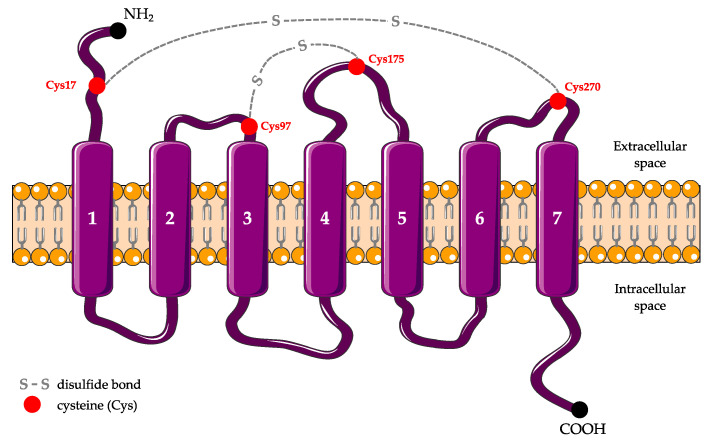
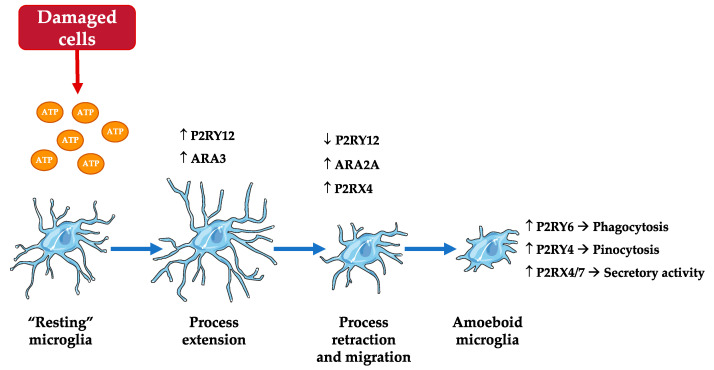
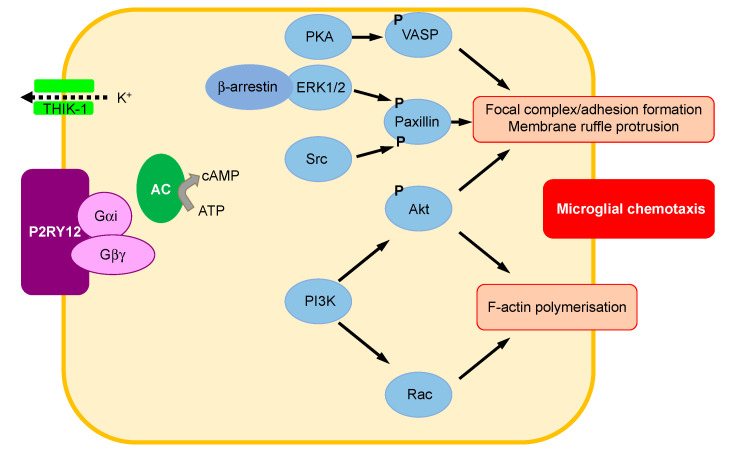
Microglia are immune brain cells involved in neuroinflammation. They express a lot of proteins on their surface such as receptors that can be activated by mediators released in the microglial environment. Among these receptors, purinergic receptor expression could be modified depending on the activation status of microglia. In this review, we focus on P2Y receptors and more specifically on P2RY12 that is involved in microglial motility and migration, the first step of neuroinflammation process. We describe the purinergic receptor families, P2RY12 structure, expression and physiological functions. The pharmacological and genetic tools for studying this receptor are detailed thereafter. Last but not least, we report the contribution of microglial P2RY12 to neuroinflammation in acute and chronic brain pathologies in order to better understand P2RY12 microglial role.
Overview
The claims and statistics of this paper haven’t been checked yet.
Run the check — free, no account needed. It reads the open-access text and checks the sources it cites.
Integrity signals
Registry
Cites
Statistics
Figures
Verification
Claims the paper makes
The claims and statistics of this paper haven’t been checked yet.
Run the check — free, no account needed. It reads the open-access text and checks the sources it cites.
Claims other papers make about this one
Each is checked against this paper’s own text: does it say what the citing paper says it does?
The check wasn’t confident either way, so it gives no verdict — never disputed.
In the citing paper
“whereas M7 shows high expression of activation marker Tyrobp. 36 , 37 , 38”
From Loss of Inpp5d has disease‐relevant and sex‐specific effects on glial transcriptomes (2024) · cites this paper as [37]
Experimental — accuracy not yet measured
Self-check
Percentages, sums and reported differences re-computed from the paper’s own numbers.
The self-check needs the paper’s full text.
Citations
Cites
Zhang, Y., Chen, K., Sloan, S. A., Bennett, M. L., Scholze, A. R., O'Keeffe, S., Phatnani, H. P., Guarnieri, P., Caneda, C., Ruderisch, N., et al. (2014) · The Journal of Neuroscience · doi:10.1523/jneurosci.1860-14.2014 · Cited by 4,875
Microglia Function in the Central Nervous System During Health and Neurodegeneration
Colonna, M., & Butovsky, O. (2017) · Annual Review of Immunology · doi:10.1146/annurev-immunol-051116-052358 · Cited by 2,894
Identification of a unique TGF-β–dependent molecular and functional signature in microglia
Butovsky, O., Jedrychowski, M. P., Moore, C. S., Cialic, R., Lanser, A. J., Gabriely, G., Koeglsperger, T., Dake, B., Wu, P. M., Doykan, C. E., et al. (2014) · Nature Neuroscience · doi:10.1038/nn.3599 · Cited by 2,543
Burnstock, G. (1972) · Pharmacological Reviews · doi:10.1016/s0031-6997(25)06930-3 · Cited by 1,852
Neuroinflammation: The Devil Is in the Details
DiSabato, D. J., Quan, N., & Godbout, J. P. (2016) · Journal of Neurochemistry · doi:10.1111/jnc.13607 · Cited by 1,640
A polarizing question: do M1 and M2 microglia exist?
Ransohoff, R. M. (2016) · Nature Neuroscience · doi:10.1038/nn.4338 · Cited by 1,573
The P2Y12 receptor regulates microglial activation by extracellular nucleotides
Haynes, S. E., Hollopeter, G., Yang, G., Kurpius, D., Dailey, M. E., Gan, W.-B., & Julius, D. (2006) · Nature Neuroscience · doi:10.1038/nn1805 · Cited by 1,542
Microglia in physiology and disease
Wolf, S. A., Boddeke, H. W. G. M., & Kettenmann, H. (2017) · Annual Review of Physiology · doi:10.1146/annurev-physiol-022516-034406 · Cited by 1,426
Heterogeneity of Microglial Activation in the Innate Immune Response in the Brain
Colton, C. A. (2009) · Journal of Neuroimmune Pharmacology · doi:10.1007/s11481-009-9164-4 · Cited by 916
Inflammasomes in neuroinflammatory and neurodegenerative diseases
Voet, S., Srinivasan, S., Lamkanfi, M., & van Loo, G. (2019) · EMBO Molecular Medicine · doi:10.15252/emmm.201810248 · Cited by 761
Cited by
Sorted by citations
Tissue macrophages: origin, heterogenity, biological functions, diseases and therapeutic targets
Guan, F., Wang, R., Yi, Z., Luo, P., Liu, W., Xie, Y., Liu, Z., Xia, Z., Zhang, H., & Cheng, Q. (2025) · Signal Transduction and Targeted Therapy · doi:10.1038/s41392-025-02124-y · Cited by 371
Beyond Activation: Characterizing Microglial Functional Phenotypes
Lier, J., Streit, W. J., & Bechmann, I. (2021) · Cells · doi:10.3390/cells10092236 · Cited by 274
“As shown in studies using single-cell RNA sequencing in Alzheimer’s disease and other neurodegenerative conditions, P2RY12 is one of the proteins marking the transition from homeostatic microglia to disease-associated microglia by the downregulation of gene expression [55,61].”
BackgroundResultHuman Microglia Show Unique Transcriptional Changes in Alzheimer's Disease
Prater, K. E., Green, K. J., Mamde, S., Sun, W., Cochoit, A., Smith, C. L., Chiou, K. L., Heath, L., Rose, S. E., Wiley, J., et al. (2023) · Nature Aging · doi:10.1038/s43587-023-00424-y · Cited by 164
Retinal microglia: Functions and diseases
Fan, W., Huang, W., Chen, J., Li, N., Mao, L., & Hou, S. (2022) · Immunology · doi:10.1111/imm.13479 · Cited by 139
Unravelling cell type-specific responses to Parkinson’s Disease at single cell resolution
Martirosyan, A., Ansari, R. A., Pestana, F., Hebestreit, K., Gasparyan, H. A., Aleksanyan, R., Hnatova, S., Poovathingal, S. K., Marneffe, C., Thal, D. R., et al. (2024) · Molecular Neurodegeneration · doi:10.1186/s13024-023-00699-0 · Cited by 145
Metadata
- Authors
- Gómez Morillas, A., Besson, V. C., & Lerouet, D.
- Affiliations
- UMR-S1144–Optimisation Thérapeutique en Neuropsychopharmacologie (OTeN), Faculté de Pharmacie de Paris, 4 Avenue de l’Observatoire, Université de Paris, 75006 Paris, France
- Université Paris Cité (FR)
- Corresponding author
- Lerouet, Dominique
- Venue
- International Journal of Molecular Sciences
- Publisher
- MDPI AG
- Published
- 2021-02-06
- Volume
- 22
- Issue
- 4
- Pages
- 1636
- ISSN
- 1422-0067 (ISSN-L)
- PMC
- PMC7915979
- OpenAlex
- W3126430294
- Cited by
- 214
- References
- 96
- Citations by year
- 2026: 36 · 2025: 50 · 2024: 72 · 2023: 32 · 2022: 18 · 2021: 6
- FWCI
- 5.93
- Type
- journal article
- Language
- en
- Open access
- gold
- doi.org
- Licence
- Locations
- International Journal of Molecular Sciences (publishedVersion, cc-by)
- PubMed Central (publishedVersion, cc-by)
- PubMed (publishedVersion)
- DOAJ (DOAJ: Directory of Open Access Journals) (submittedVersion, cc-by-sa)
- Funders
- Fondation des Gueules Cassées
- Topics
- Life Sciences › Biochemistry, Genetics and Molecular Biology › Physiology › Adenosine and Purinergic Signaling
- Life Sciences › Neuroscience › Neurology › Neuroinflammation and Neurodegeneration Mechanisms
- Health Sciences › Medicine › Physiology (medical) › Pain Mechanisms and Treatments
- Keywords
- microglia, neuroinflammation, P2Y12 receptor, P2Y receptors, purinergic receptors, microglial motility, microglial migration, pharmacological tools, genetic instruments
- MeSH terms
- Brain, Brain Diseases, Cell Movement, Humans, Inflammation, Lymphocyte Activation, Signal Transduction, Microglia, Receptors, Purinergic P2Y12
About these checks
Registry, retraction, Cites and statistics results are computed, not judged, with one exception: a printed reference that no index lists is read once by a model before it counts as a citation error. Claims are extracted by a model and kept only when their quote appears verbatim in the text; each cited source is then checked, with a model’s help, for whether it says what the claim relies on. Those verdicts can be wrong — read the claim’s quote and the cited source before relying on one.
Statistics and arithmetic are recomputed, not judged.
Confidence bands are shown only for fields calibrated on our annotated test set. None is calibrated yet, so no band is shown.
What counts as a claim ›How we measure confidence ›How we check this ›
Are you an author, or do you see a problem with this page? Request a review
