

Genetic Regulation of Physiological Reproductive Lifespan and Female Fertility
Open accessThe DOI matches its Crossref record; 92 of the 92 references it cites were found in a registry or an index.
Abstract
There is substantial genetic variation for common traits associated with reproductive lifespan and for common diseases influencing female fertility. Progress in high-throughput sequencing and genome-wide association studies (GWAS) have transformed our understanding of common genetic risk factors for complex traits and diseases influencing reproductive lifespan and fertility. The data emerging from GWAS demonstrate the utility of genetics to explain epidemiological observations, revealing shared biological pathways linking puberty timing, fertility, reproductive ageing and health outcomes. The observations also identify unique genetic risk factors specific to different reproductive diseases impacting on female fertility. Sequencing in patients with primary ovarian insufficiency (POI) have identified mutations in a large number of genes while GWAS have revealed shared genetic risk factors for POI and ovarian ageing. Studies on age at menopause implicate DNA damage/repair genes with implications for follicle health and ageing. In addition to the discovery of individual genes and pathways, the increasingly powerful studies on common genetic risk factors help interpret the underlying relationships and direction of causation in the regulation of reproductive lifespan, fertility and related traits.
Overview
The claims and statistics of this paper haven’t been checked yet.
Free: it reads the open-access text and checks the first 5 claims that cite a source we can check. Create a free account to check every claim.
Integrity signals
Registry
Cites
Statistics
Figures
Verification
Claims the paper makes
The claims and statistics of this paper haven’t been checked yet.
Free: it reads the open-access text and checks the first 5 claims that cite a source we can check. Create a free account to check every claim.
Claims other papers make about this one
Each is checked against this paper’s own text: does it say what the citing paper says it does?
The source backs part of the claim, not all of it — or backs it for a different population, condition or comparison.
In the citing paper
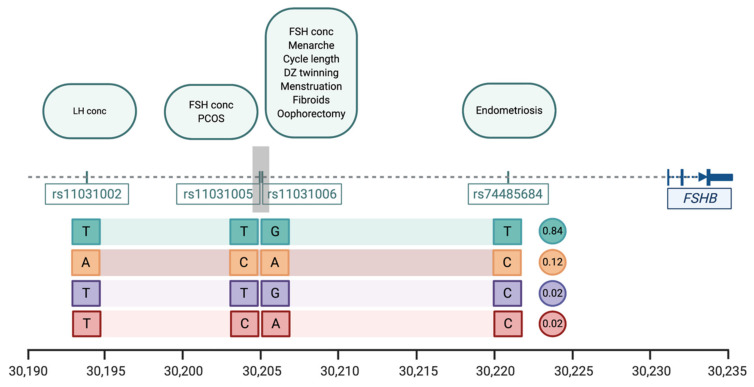
“Of these genes, the FSHB gene is of particular interest, because the haplotype (genetic region) conferring higher endometriosis risk has also been significantly associated with lower serum testosterone, lower luteinizing hormone, heavier menstruations, shorter menstrual cycles, earlier menarche and earlier menopause, all of which characterize the endometriosis phenotype as noted above.30,36”
From Prenatal Origins of Endometriosis Pathology and Pain: Reviewing the Evidence of a Role for Low Testosterone (2023) · cites this paper as [36]
Experimental — accuracy not yet measured
Self-check
Percentages, sums and reported differences re-computed from the paper’s own numbers.
The self-check needs the paper’s full text.
Citations
Cites
Buniello, A., MacArthur, J. A. L., Cerezo, M., Harris, L. W., Hayhurst, J., Malangone, C., McMahon, A., Morales, J., Mountjoy, E., Sollis, E., et al. (2019) · Nucleic Acids Research · doi:10.1093/nar/gky1120 · Cited by 4,000 · cited 2×
“For more detailed coverage of genetic effects on individual traits and diseases, readers are referred to summaries in the GWAS catalog [4] and earlier reviews [2,3,5].”
Background10 Years of GWAS Discovery: Biology, Function, and Translation
Visscher, P. M., Wray, N. R., Zhang, Q., Sklar, P., McCarthy, M. I., Brown, M. A., & Yang, J. (2017) · The American Journal of Human Genetics · doi:10.1016/j.ajhg.2017.06.005 · Cited by 3,719 · cited 3×
“Estimates of between one and two thirds of the heritability for common traits and diseases can be explained by the additive effects of common SNPs (SNPs with minor allele frequencies > 5%) [87].”
BackgroundInfluentialCADD: predicting the deleteriousness of variants throughout the human genome
Rentzsch, P., Witten, D., Cooper, G. M., Shendure, J., & Kircher, M. (2019) · Nucleic Acids Research · doi:10.1093/nar/gky1016 · Cited by 3,534
Heritability in the genomics era — concepts and misconceptions
Visscher, P. M., Hill, W. G., & Wray, N. R. (2008) · Nature Reviews Genetics · doi:10.1038/nrg2322 · Cited by 1,921 · cited 2×
“6 indicates that 60% of the variance in the trait within a population is due to genetic variation between individuals [5].”
BackgroundAssociation analysis identifies 65 new breast cancer risk loci
Michailidou, K., Lindström, S., Dennis, J., Beesley, J., Hui, S., Kar, S., Lemaçon, A., Soucy, P., Glubb, D., Rostamianfar, A., et al. (2017) · Nature · doi:10.1038/nature24284 · Cited by 1,413
Human Estrogen Receptor β-Gene Structure, Chromosomal Localization, and Expression Pattern1
Enmark, E., Pelto-Huikko, M., Grandien, K., Lagercrantz, S., Lagercrantz, J., Fried, G., Nordenskjöld, M., & Gustafsson, J.-A. (1997) · The Journal of Clinical Endocrinology & Metabolism · doi:10.1210/jcem.82.12.4470 · Cited by 1,074
Xue, A., Wu, Y., Zhu, Z., Zhang, F., Kemper, K. E., Zheng, Z., Yengo, L., Lloyd-Jones, L. R., Sidorenko, J., Wu, Y., et al. (2018) · Nature Communications · doi:10.1038/s41467-018-04951-w · Cited by 901
Estrogen Signaling: A Subtle Balance Between ER and ER
Matthews, J. (2003) · Molecular Interventions · doi:10.1124/mi.3.5.281 · Cited by 806
Atsma, F., Bartelink, M.-L. E. L., Grobbee, D. E., & van der Schouw, Y. T. (2006) · Menopause · doi:10.1097/01.gme.0000218683.97338.ea · Cited by 744
Heritability of polycystic ovary syndrome in a Dutch twin-family study
Vink, J. M., Sadrzadeh, S., Lambalk, C. B., & Boomsma, D. I. (2006) · The Journal of Clinical Endocrinology & Metabolism · doi:10.1210/jc.2005-1494 · Cited by 647
Cited by
Endocrine-disrupting chemicals and female reproductive health: a growing concern
Parent, A., Damdimopoulou, P., Johansson, H. K. L., Bouftas, N., Draskau, M. K., Franssen, D., Fudvoye, J., van Duursen, M. B. M., & Svingen, T. (2025) · Nature Reviews Endocrinology · doi:10.1038/s41574-025-01131-x · Cited by 93
Understanding the genetic complexity of puberty timing across the allele frequency spectrum
Kentistou, K. A., Kaisinger, L. R., Stankovic, S., Vaudel, M., de Oliveira, E. M., Messina, A., Walters, R. G., Liu, X., Busch, A. S., Helgason, H., et al. (2024) · Nature Genetics · doi:10.1038/s41588-024-01798-4 · Cited by 85
McGrath, I. M., Montgomery, G. W., & Mortlock, S. (2023) · Human Reproduction Update · doi:10.1093/humupd/dmad009 · Cited by 68
Self-citationGete, D. G., Doust, J. A., Mortlock, S., Montgomery, G. W., & Mishra, G. D. (2023) · American Journal of Obstetrics and Gynecology · doi:10.1016/j.ajog.2023.07.033 · Cited by 50
Self-citationSex Hormone Candidate Gene Polymorphisms Are Associated with Endometriosis
Олегович, Г. И., Айзикович, Б. И., Golovchenko, O., Reshetnikov, E., Churnosova, M., Aristova, I., Ponomarenko, I., & Churnosov, M. I. (2022) · International Journal of Molecular Sciences · doi:10.3390/ijms232213691 · Cited by 36
McGrath, I. M., Montgomery, G. W., & Mortlock, S. (2023) · Human Genetics · doi:10.1007/s00439-023-02582-w · Cited by 38
Self-citationGonzález-Martín, R., Grau-Pérez, M., Sebastián-León, P., Díaz-Gimeno, P., Vidal, C., Téllez-Plaza, M., & Domínguez, F. (2023) · Environmental Research · doi:10.1016/j.envres.2023.116514 · Cited by 27
Benonisdottir, S., Straub, V. J., Kong, A., & Mills, M. C. (2024) · Nature Aging · doi:10.1038/s43587-024-00733-w · Cited by 23
McGrath, I. M., Montgomery, G. W., & Mortlock, S. (2023) · BMC Medicine · doi:10.1186/s12916-023-03184-z · Cited by 25
Self-citationKiewa, J., Mortlock, S., Meltzer-Brody, S. E., Middeldorp, C. M., Wray, N. R., & Byrne, E. M. (2023) · Neuroendocrinology · doi:10.1159/000533413 · Cited by 26
Self-citationStem cell-based therapeutic potential in female ovarian aging and infertility
Cui, X., & Jing, X. (2024) · Journal of Ovarian Research · doi:10.1186/s13048-024-01492-3 · Cited by 25
Crespi, B. J., & Evans, S. F. (2023) · Journal of Pain Research · doi:10.2147/jpr.s389166 · Cited by 17
“Of these genes, the FSHB gene is of particular interest, because the haplotype (genetic region) conferring higher endometriosis risk has also been significantly associated with lower serum testosterone, lower luteinizing hormone, heavier menstruations, shorter menstrual cycles, earlier menarche and earlier menopause,…”
BackgroundОлегович, Г. И. (2023) · RESEARCH RESULTS IN BIOMEDICINE · doi:10.18413/2658-6533-2023-9-1-0-1 · Cited by 21
Insights from genomic studies on the role of sex steroids in the aetiology of endometriosis
Saunders, P. T. K. (2022) · Reproduction and Fertility · doi:10.1530/raf-21-0078 · Cited by 21
Harrath, A. H., Alrezaki, A., Jalouli, M., Aldawood, N., Dahmash, W., Mansour, L. A., Sirotkin, A. V., & Alwasel, S. H. (2022) · Environmental Science and Pollution Research · doi:10.1007/s11356-022-21289-5 · Cited by 15
Chang, C. L. (2023) · International Journal of Molecular Sciences · doi:10.3390/ijms241914751 · Cited by 19
Genetic regulation of ovulation rate and multiple births
Montgomery, G. W. (2024) · Reproduction Fertility and Development · doi:10.1071/rd24083 · Cited by 15
Self-citationFang, H., Dai, L., Zhang, Z., Chen, H., Zheng, Z., Jiang, D., & Wang, W. (2024) · Ecotoxicology and Environmental Safety · doi:10.1016/j.ecoenv.2024.117160 · Cited by 12
Tai, A., Lin, R., Lin, Y.-C., Wang, C., Lin, S., & Imoto, S. (2022) · Human Reproduction · doi:10.1093/humrep/deac136 · Cited by 11
Huang, Z., Chang, X., Wang, L., Liu, J., Heng, C., Khor, C. C., Yuan, J., Koh, W., & Dorajoo, R. (2022) · Human Reproduction · doi:10.1093/humrep/deac075 · Cited by 9
Liu, Z., Li, Z. A., Sun, Y., Zhao, F., Chen, S., Zhao, Y., Zhang, Z., Liao, Z., & Geng, Q. (2024) · Integrative Medicine in Nephrology and Andrology · doi:10.1097/imna-d-24-00022 · Cited by 5
Understanding the genetic complexity of puberty timing across the allele frequency spectrumPreprint
Kentistou, K., Kaisinger, L. R., Stankovic, S., Vaudel, M., de Oliveira, E. M., Messina, A., Walters, R., Liu, X.-X., Busch, A. S., Helgason, H., et al. (2023) · medRxiv · doi:10.1101/2023.06.14.23291322 · Cited by 27
Deng, J., Chen, J., Guo, X., & Xie, C. (2025) · Journal of Clinical Medicine · doi:10.3390/jcm14238512 · Cited by 4
Association of dietary flavonoid intake with reproductive lifespan: a cross-sectional study
Liu, L., Wei, R., Tang, Y., Zhang, X., Zhao, R., & Lü, C. (2025) · European Journal of Nutrition · doi:10.1007/s00394-025-03641-w · Cited by 3
Sakhaei‐far, S., & König, S. (2025) · Livestock Science · doi:10.1016/j.livsci.2025.105855 · Cited by 2
Longitudinal Genome‐Wide Association Study for Female Fertility Traits in German Holstein Cattle
Sakhaei‐far, S., Yin, T., & König, S. (2026) · Animal Genetics · doi:10.1002/age.70078 · Cited by 2
Marla, S., Mortlock, S., Yoon, S., Crawford, J., Andersen, S. B., Mueller, M. D., McKinnon, B. D., Nguyen, Q. H., & Montgomery, G. W. (2023) · Cells · doi:10.3390/cells12131736 · Cited by 2
Self-citationGenetic Predisposition and Pathogenesis in Endometriosis
Rustemagic, A., & Ombasic, A. (2025) · International Journal of Preventive Medicine and Health · doi:10.54105/ijpmh.e1113.05060925 · Cited by 2
The Contribution of Isoflavones in Menopausal Symptomatic as Alternative Treatment Option
Tsikouras, P. N., Chalkidou, A., Iatrakis, G. M., Oikonomou, E., Bothou, Α., Kyriakou, D., Mouchterem, A. C. I., Alexiou, A., Nikolettos, K., Kritsotaki, N., et al. (2024) · IntechOpen eBooks · doi:10.5772/intechopen.114215 · Cited by 3
Special Issue: “Genes and Human Diseases”
Churnosov, M. I. (2024) · International Journal of Molecular Sciences · doi:10.3390/ijms25084455 · Cited by 1
Chen, X., Li, C., Bai, Y., & Li, L. (2025) · International Journal of Women s Health · doi:10.2147/ijwh.s568174 · Cited by 1
Association between puberty timing and metabolic health at young adulthood
Pereira, A., Corvalán, C., & Verónica Mericq, G. (2026) · The Journal of Clinical Endocrinology & Metabolism · doi:10.1210/clinem/dgag138 · Cited by 1
Polymorphism of the FSHB Gene Is Associated with Endometrial Hyperplasia
Churnosov, V., Churnosova, M., Reshetnikov, E., Aristova, I., Tsoy, K., Николаевна, С. И., Polonikov, A., Solodilova, M. A., Churnosov, M. I., & Ponomarenko, I. (2026) · Life · doi:10.3390/life16050782 · Cited by 1
Insights Gained from Genomic Studies on the Role of Sex Steroids in the Aetiology of EndometriosisPreprint
Saunders, P. T. K. (2021) · Preprints.org · doi:10.20944/preprints202107.0045.v1
Misrahi, M. (2021) · Bulletin de l Académie Nationale de Médecine · doi:10.1016/j.banm.2021.05.025
Normal concentrations of steroids and their regulators in blood
Honour, J. W. (2023) · Elsevier eBooks · doi:10.1016/b978-0-12-818124-9.00003-6
McGrath, I. M., Montgomery, G. W., & Mortlock, S. (2023) · Figshare · doi:10.6084/m9.figshare.24741778
Self-citationAn Editorial on the Special Issue “Genetic Basis of Human Diseases”
Churnosov, M. I. (2024) · Life · doi:10.3390/life14060691
Nutraceuticals and Infertility
Sureda, A., Monserrat-Mesquida, M., & Tejada, S. (2024) · Food bioactive ingredients · doi:10.1007/978-3-031-76481-3_10
Association of exposure to organophosphate pesticides with reproductive lifespan
Zhou, X., Yu, W., Xie, J., Huang, S., Zhan, Y., Cao, L., Chen, X., & Li, X. (2026) · BMC Women s Health · doi:10.1186/s12905-026-04455-6
Tsikouras, P., Pagkaki, C., Bothou, Α., Lambrinos, D., Chalkidou, A., Deuteraiou, D., Kritsotaki, N., Oikonomou, E., Kourti, V., Tsikouras, N., et al. (2026) · Obstetrics and gynecology. · doi:10.5772/intechopen.1017694
Liao, J., Qiong, D., Zhuoma, D., Ning, W., Ga, D., Quncuo, S., Jing, J., Li, L., Li, Y., Li, X., et al. (2026) · Medicine · doi:10.1097/md.0000000000050198
Genetic architecture of endometriosis: risk factors, comorbidities and clinical implications
Montgomery, G. W., McGrath, I. M., Overgaard, M. T., Nyegaard, M., & Mortlock, S. (2026) · Human Reproduction Update · doi:10.1093/humupd/dmag023 · Cited by 2
Self-citationChurnosova, M., Reshetnikov, E., Николаевна, С. И., Aristova, I., Tsoy, K., Voronin, M., Abramova, M. Y., Polonikov, A., Solodilova, M., Churnosov, M. I., et al. (2026) · International Journal of Molecular Sciences · doi:10.3390/ijms27188387
Genetics of Premature Ovarian Insufficiency: From Molecular Architecture to Precision Medicine
Sousa, V., Livera, G., & Misrahi, M. (2026) · International Journal of Molecular Sciences · doi:10.3390/ijms27198662
Metadata
- Authors
- McGrath, I. M., Mortlock, S., & Montgomery, G. W.
- Affiliations
- The University of Queensland (AU)
- Corresponding author
- Montgomery, Grant W.
- Venue
- International Journal of Molecular Sciences
- Publisher
- MDPI AG
- Published
- 2021-03-04
- Volume
- 22
- Issue
- 5
- Pages
- 2556
- ISSN
- 1422-0067 (ISSN-L)
- PMC
- PMC7961500
- OpenAlex
- W3133687914
- Cited by
- 45
- References
- 92
- Citations by year
- 2026: 9 · 2025: 6 · 2024: 10 · 2023: 12 · 2022: 6 · 2021: 2
- FWCI
- 1.38
- Type
- journal article
- Language
- en
- Open access
- gold
- doi.org
- Licence
- Locations
- International Journal of Molecular Sciences (publishedVersion, cc-by)
- PubMed Central (publishedVersion, cc-by)
- PubMed (publishedVersion)
- DOAJ (DOAJ: Directory of Open Access Journals) (submittedVersion, cc-by-sa)
- Funders
- National Health and Medical Research Council (GNT1177194)
- Topics
- Health Sciences › Medicine › Reproductive Medicine › Reproductive Biology and Fertility
- Health Sciences › Medicine › Reproductive Medicine › Ovarian function and disorders
- Life Sciences › Biochemistry, Genetics and Molecular Biology › Genetics › Genetic Associations and Epidemiology
- Keywords
- reproductive period, female fertility, primary ovarian insufficiency, ovarian aging, age at menopause, puberty timing, genetic risk factors, reproductive aging, causality
- MeSH terms
- Aging, Female, Fertility, Humans, Luteinizing Hormone, Longevity, Menopause, Reproduction, Risk Factors, Genetic Variation, Polymorphism, Single Nucleotide, Follicle Stimulating Hormone, Human, Genome-Wide Association Study
About these checks
Registry, retraction, Cites and statistics results are computed, not judged, with one exception: a printed reference that no index lists is read once by a model before it counts as a citation error. Claims are extracted by a model and kept only when their quote appears verbatim in the text; each cited source is then checked, with a model’s help, for whether it says what the claim relies on. Those verdicts can be wrong — read the claim’s quote and the cited source before relying on one.
Statistics and arithmetic are recomputed, not judged.
Confidence bands are shown only for fields calibrated on our annotated test set. None is calibrated yet, so no band is shown.
What counts as a claim ›How we measure confidence ›How we check this ›
Are you an author, or do you see a problem with this page? Request a review
Data sources
Bibliographic data: Semantic Scholar, OpenAlex, Crossref.
Contains information from the Semantic Scholar Academic Graph Datasets, made available under the ODC Attribution License (ODC-BY 1.0).
Semantic Scholar’s data is described in: Kinney, R., et al. (2023). The Semantic Scholar Open Data Platform. arXiv:2301.10140.
