

The DOI matches its Crossref record; 121 of the 123 references it cites were found in a registry or an index.
Angiogenesis in Chronic Inflammatory Skin Disorders
Open accessAbstract
Angiogenesis, the growth of new blood vessels from preexisting vessels, is associated with inflammation in various pathological conditions. Well-known angiogenetic factors include vascular endothelial growth factor (VEGF), angiopoietins, platelet-derived growth factor, transforming growth factor-β, and basic fibroblast growth factor. Yes-associated protein 1 (YAP) and transcriptional co-activator with PDZ-binding motif (TAZ) have recently been added to an important angiogenic factor. Accumulating evidence indicates associations between angiogenesis and chronic inflammatory skin diseases. Angiogenesis is deeply involved in the pathogenesis of psoriasis. VEGF, angiopoietins, tumor necrosis factor-a, interleukin-8, and interleukin-17 are unregulated in psoriasis and induce angiogenesis. Angiogenesis may be involved in the pathogenesis of atopic dermatitis, and in particular, mast cells are a major source of VEGF expression. Angiogenesis is an essential process in rosacea, which is induced by LL-37 from a signal cascade by microorganisms, VEGF, and MMP-3 from mast cells. In addition, angiogenesis by increased VEGF has been reported in chronic urticaria and hidradenitis suppurativa. The finding that VEGF is expressed in inflammatory skin lesions indicates that inhibition of angiogenesis is a useful strategy for treatment of chronic, inflammatory skin disorders.
Overview
The claims and statistics of this paper haven’t been checked yet.
Run the check — free, no account needed. It reads the open-access text and checks the sources it cites.
Integrity signals
Registry
Cites
Statistics
Figures
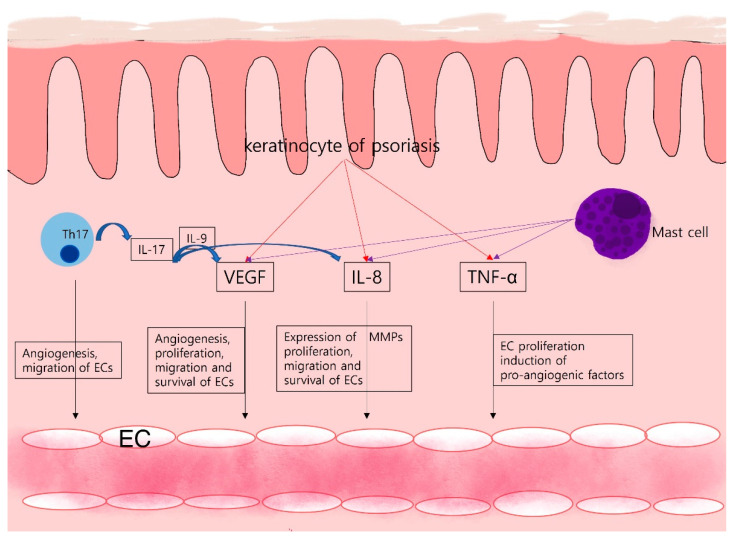
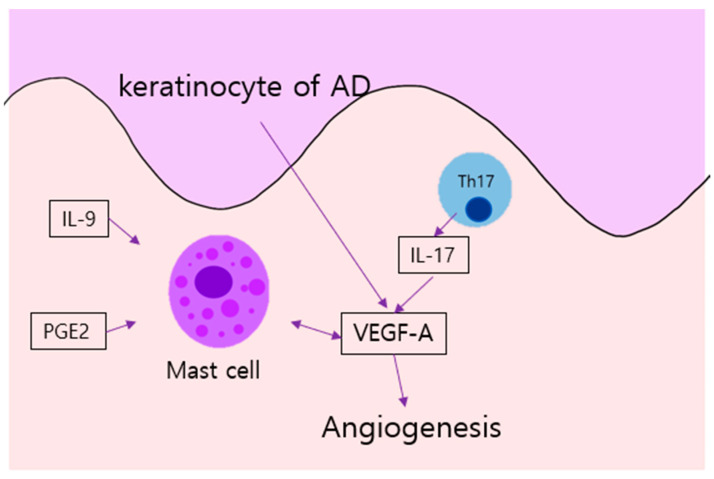
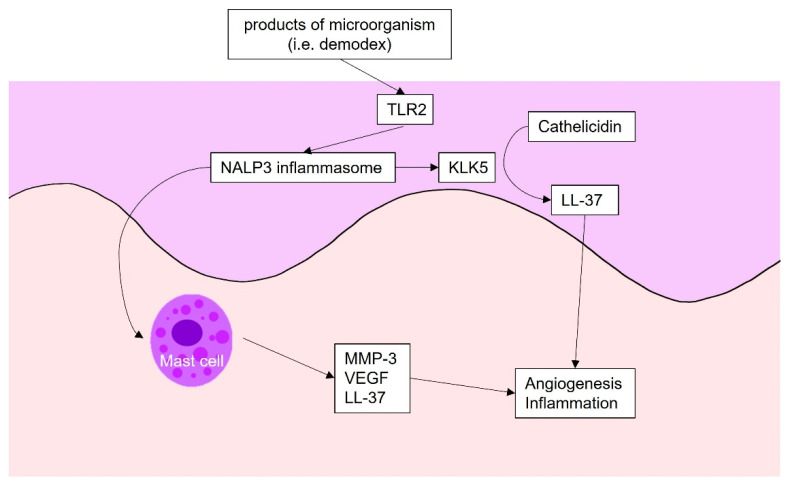
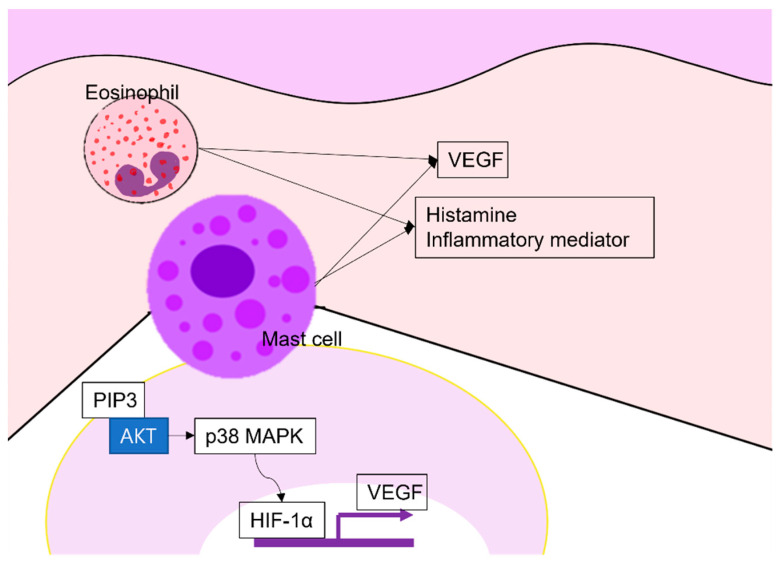
Verification
Claims the paper makes
The claims and statistics of this paper haven’t been checked yet.
Run the check — free, no account needed. It reads the open-access text and checks the sources it cites.
Claims other papers make about this one
Each is checked against this paper’s own text: does it say what the citing paper says it does?
The source backs part of the claim, not all of it — or backs it for a different population, condition or comparison.
In the citing paper
“Increasing real-world evidence also supports the durable efficacy and favorable long-term disease control achieved with selective IL-23 inhibitors [27,28].”
From The Cutaneous Immune Microenvironment in Selected Inflammatory Skin Diseases: Linking Histopathology, Mechanisms, and Targeted Therapy (2026) · cites this paper as [28]
Experimental — accuracy not yet measuredThe source backs part of the claim, not all of it — or backs it for a different population, condition or comparison.
In the citing paper
“Throughout this process, continuous exchange between keratinocytes and immune cells maintains a loop in which IL-23 sustains pathogenic T cells, IL-17 and IL-22 perpetuate epidermal alterations, and TNF-α amplifies inflammation across multiple cell types.”
From The Cutaneous Immune Microenvironment in Selected Inflammatory Skin Diseases: Linking Histopathology, Mechanisms, and Targeted Therapy (2026) · cites this paper as [28]
Experimental — accuracy not yet measuredThe source backs part of the claim, not all of it — or backs it for a different population, condition or comparison.
In the citing paper
“These reflect activation of the IL-23/Th17 axis.”
From The Cutaneous Immune Microenvironment in Selected Inflammatory Skin Diseases: Linking Histopathology, Mechanisms, and Targeted Therapy (2026) · cites this paper as [28]
Experimental — accuracy not yet measuredThe source backs part of the claim, not all of it — or backs it for a different population, condition or comparison.
In the citing paper
“In psoriasis, histopathological findings include acanthosis, parakeratosis, neutrophilic microabscesses, and prominent dermal vascular proliferation.”
From The Cutaneous Immune Microenvironment in Selected Inflammatory Skin Diseases: Linking Histopathology, Mechanisms, and Targeted Therapy (2026) · cites this paper as [28]
Experimental — accuracy not yet measuredThe check wasn’t confident either way, so it gives no verdict — never disputed.
In the citing paper
“In severe or refractory cases, systemic agents such as methotrexate, cyclosporine, and acitretin are used to broadly suppress immune activation and keratinocyte turnover, but their long-term use is limited by toxicity and lack of pathway specificity [28].”
From The Cutaneous Immune Microenvironment in Selected Inflammatory Skin Diseases: Linking Histopathology, Mechanisms, and Targeted Therapy (2026) · cites this paper as [28]
Experimental — accuracy not yet measured
Self-check
Percentages, sums and reported differences re-computed from the paper’s own numbers.
The self-check needs the paper’s full text.
Citations
Cites
Vascular Endothelial Growth Factor Is a Secreted Angiogenic Mitogen
Leung, D. W., Cachianes, G., Kuang, W.-J., Goeddel, D. V., & Ferrara, N. (1989) · Science · doi:10.1126/science.2479986 · Cited by 5,000
Tumor Cells Secrete a Vascular Permeability Factor That Promotes Accumulation of Ascites Fluid
Senger, D. R., Galli, S. J., Dvořàk, A. M., Perruzzi, C. A., Harvey, V. S., & Dvorak, H. F. (1983) · Science · doi:10.1126/science.6823562 · Cited by 3,969
VEGF in signaling and disease: beyond discovery and development
Apte, R. S., Chen, D. S., & Ferrara, N. (2019) · Cell · doi:10.1016/j.cell.2019.01.021 · Cited by 2,721
Isolation of a tumor factor responsible for angiogenesis
Folkman, J., Merler, E., Abernathy, C., & Williams, G. (1971) · The Journal of Experimental Medicine · doi:10.1084/jem.133.2.275 · Cited by 1,663
Identification of the KDR tyrosine kinase as a receptor for vascular endothelial cell growth factor
Terman, B. I., Dougher-Vermazen, M., Carrion, M. E., Dimitrov, D. S., Armellino, D. C., Gospodarowicz, D., & Böhlen, P. (1992) · Biochemical and Biophysical Research Communications · doi:10.1016/0006-291x(92)90483-2 · Cited by 1,519
Control of vascular morphogenesis and homeostasis through the angiopoietin–Tie system
Augustin, H. G., Koh, G. Y., Thurston, G., & Alitalo, K. K. (2009) · Nature Reviews Molecular Cell Biology · doi:10.1038/nrm2639 · Cited by 1,512
Interleukin-17 and Type 17 Helper T Cells
Miossec, P., Korn, T., & Kuchroo, V. K. (2009) · New England Journal of Medicine · doi:10.1056/nejmra0707449 · Cited by 1,409
YAP/TAZ upstream signals and downstream responses
Totaro, A., Panciera, T., & Piccolo, S. (2018) · Nature Cell Biology · doi:10.1038/s41556-018-0142-z · Cited by 1,086
Defective haematopoiesis and vasculogenesis in transforming growth factor-β1 knock out mice
Dickson, M. C., Martin, J. S., Cousins, F. M., Kulkarni, A. B., Karlsson, S., & Akhurst, R. J. (1995) · Development · doi:10.1242/dev.121.6.1845 · Cited by 1,029
Hippo–YAP/TAZ signalling in organ regeneration and regenerative medicine
Moya, I. M., & Halder, G. (2019) · Nature Reviews Molecular Cell Biology · doi:10.1038/s41580-018-0086-y · Cited by 981
Interleukin-17 promotes angiogenesis and tumor growth
Numasaki, M. (2002) · Blood · doi:10.1182/blood-2002-05-1461 · Cited by 831
Alternative Wnt Signaling Activates YAP/TAZ
Park, H. W., Kim, Y. C., Yu, B., Moroishi, T., Mo, J., Plouffe, S. W., Meng, Z., Lin, K. C., Yu, F., Alexander, C. M., et al. (2015) · Cell · doi:10.1016/j.cell.2015.07.013 · Cited by 724
Fagiani, E., & Christofori, G. (2012) · Cancer Letters · doi:10.1016/j.canlet.2012.08.018 · Cited by 702
Detmar, M. J., Brown, L. F., Claffey, K. P., Yeo, K. T., Kocher, O. N., Jackman, R. W., Berse, B., & Dvorak, H. F. (1994) · The Journal of Experimental Medicine · doi:10.1084/jem.180.3.1141 · Cited by 684
Possible Pathogenic Role of Th17 Cells for Atopic Dermatitis
Koga, C., Kabashima, K., Shiraishi, N., Kobayashi, M., & TOKURA, Y. (2008) · Journal of Investigative Dermatology · doi:10.1038/jid.2008.111 · Cited by 680
TGF-β Receptor Type II Deficiency Results in Defects of Yolk Sac Hematopoiesis and Vasculogenesis
Oshima, M., Oshima, H., & Taketo, M. M. (1996) · Developmental Biology · doi:10.1006/dbio.1996.0259 · Cited by 651
Vascularization and Angiogenesis in Tissue Engineering: Beyond Creating Static Networks
Rouwkema, J., & Khademhosseini, A. (2016) · Trends in Biotechnology · doi:10.1016/j.tibtech.2016.03.002 · Cited by 651
YAP and TAZ: a nexus for Hippo signaling and beyond
Hansen, C. G., Moroishi, T., & Guan, K. (2015) · Trends in Cell Biology · doi:10.1016/j.tcb.2015.05.002 · Cited by 594
Meyer, M., Clauss, M. A., Lepple‐Wienhues, A., Waltenberger, J. L., Augustin, H. G., Ziche, M., Lanz, C., Büttner, M., Rziha, H., & Dehio, C. (1999) · The EMBO Journal · doi:10.1093/emboj/18.2.363 · Cited by 515
Goldburg, S. R., Strober, B. E., & Payette, M. J. (2019) · Journal of the American Academy of Dermatology · doi:10.1016/j.jaad.2019.08.090 · Cited by 514
Gallo, R. L., Granstein, R. D., Kang, S., Mannis, M. J., Steinhoff, M. S., Tan, J. K. L., & Thiboutot, D. M. (2017) · Journal of the American Academy of Dermatology · doi:10.1016/j.jaad.2017.08.037 · Cited by 513
Numasaki, M., Watanabe, M., Suzuki, T., Takahashi, H., Nakamura, A., McAllister, F. M., Hishinuma, T., Goto, J., Lotze, M. T., Kolls, J. K., et al. (2005) · The Journal of Immunology · doi:10.4049/jimmunol.175.9.6177 · Cited by 424
Understanding the biology of angiogenesis: Review of the most important molecular mechanisms
Otrock, Z. K., Mahfouz, R. A., Makarem, J. A., & Shamseddine, A. I. (2007) · Blood Cells Molecules and Diseases · doi:10.1016/j.bcmd.2007.04.001 · Cited by 408
YAP/TAZ regulates sprouting angiogenesis and vascular barrier maturation
Kim, J., Kim, Y. H., Kim, J., Park, D. Y., Bae, H., Lee, D. H., Kim, K. H., Hong, S. P., Jang, S. P., Kubota, Y., et al. (2017) · Journal of Clinical Investigation · doi:10.1172/jci93825 · Cited by 406
Significance of Skin Barrier Dysfunction in Atopic Dermatitis
Kim, B. E., & Leung, D. Y. M. (2018) · Allergy, Asthma & Immunology Research · doi:10.4168/aair.2018.10.3.207 · Cited by 393
Angiogenesis drives psoriasis pathogenesis
Heidenreich, R., Röcken, M., & Ghoreschi, K. (2009) · International Journal of Experimental Pathology · doi:10.1111/j.1365-2613.2009.00669.x · Cited by 388
Yamasaki, K., Kanada, K. N., MacLeod, D. T., Borkowski, A. W., Morizane, S., Nakatsuji, T., Cogen, A. L., & Gallo, R. L. (2010) · Journal of Investigative Dermatology · doi:10.1038/jid.2010.351 · Cited by 388
New insights into rosacea pathophysiology: A review of recent findings
Steinhoff, M. S., Schauber, J., & Leyden, J. J. (2013) · Journal of the American Academy of Dermatology · doi:10.1016/j.jaad.2013.04.045 · Cited by 386
Role of Hippo Pathway-YAP/TAZ Signaling in Angiogenesis
Gandhi, T. K. B., & Hong, W. (2019) · Frontiers in Cell and Developmental Biology · doi:10.3389/fcell.2019.00049 · Cited by 363
Fan, R., Kim, N., & Gumbiner, B. M. (2013) · Proceedings of the National Academy of Sciences · doi:10.1073/pnas.1216462110 · Cited by 350
Atopic dermatitis: immune deviation, barrier dysfunction, IgE autoreactivity and new therapies
Furue, M., Chiba, T., Tsuji, G., Ulzii, D., Kido‐Nakahara, M., Nakahara, T., & Kadono, T. (2017) · Allergology International · doi:10.1016/j.alit.2016.12.002 · Cited by 324
Mast Cells Increase Vascular Permeability by Heparin-Initiated Bradykinin Formation In Vivo
Oschatz, C., Maas, C., Lecher, B., Jansen, T., Björkqvist, J., Tradler, T., Sedlmeier, R., Burfeind, P., Cichon, S., Hammerschmidt, S., et al. (2011) · Immunity · doi:10.1016/j.immuni.2011.02.008 · Cited by 272
Therapeutic targeting of angiogenesis molecular pathways in angiogenesis-dependent diseases
Fallah, A., Sadeghinia, A., Kahroba, H., Samadi, A., Heidari, H. R., Bradaran, B., Zeinali, S., & Molavi, O. (2018) · Biomedicine & Pharmacotherapy · doi:10.1016/j.biopha.2018.12.022 · Cited by 261
Yes-associated protein regulates endothelial cell contact-mediated expression of angiopoietin-2
Choi, H.-J., Zhang, H., Park, H., Choi, K.-S., Lee, H., Agrawal, V., Kim, Y., & Kwon, Y. (2015) · Nature Communications · doi:10.1038/ncomms7943 · Cited by 252
Self-citationAutoimmune Theories of Chronic Spontaneous Urticaria
Bracken, S. J., Abraham, S. N., & MacLeod, A. S. (2019) · Frontiers in Immunology · doi:10.3389/fimmu.2019.00627 · Cited by 244
Xu, Y., Stamenkovic, I., & Yu, Q. (2010) · Cancer Research · doi:10.1158/0008-5472.can-09-2505 · Cited by 215
IL-17A in Psoriasis and Beyond: Cardiovascular and Metabolic Implications
von Stebut, E., Boehncke, W., Ghoreschi, K., Gori, T., Kaya, Z., Thaçi, D., & Schäffler, A. (2020) · Frontiers in Immunology · doi:10.3389/fimmu.2019.03096 · Cited by 214
Vascular endothelial growth factors synthesized by human lung mast cells exert angiogenic effects
Detoraki, A., Staiano, R. I., Granata, F., Giannattasio, G., Prevete, N., de Paulis, A., Ribatti, D., Genovese, A., Triggiani, M., & Marone, G. (2009) · Journal of Allergy and Clinical Immunology · doi:10.1016/j.jaci.2009.01.044 · Cited by 210
Current Developments in the Immunology of Psoriasis.
Grän, F., Kerstan, A., Serfling, E., Goebeler, M., & Muhammad, K. (2020) · PubMed Central · Cited by 199
Barrier dysfunction in the skin allergy
Egawa, G., & Kabashima, K. (2017) · Allergology International · doi:10.1016/j.alit.2017.10.002 · Cited by 196
ULTRASTRUCTURE OF THE CAPILLARY LOOPS IN THE DERMAL PAPILLAE OF PSORIASIS
Braverman, I. M., & Yen, A. (1977) · Journal of Investigative Dermatology · doi:10.1111/1523-1747.ep12485169 · Cited by 194
Etiology of epithelial barrier dysfunction in patients with type 2 inflammatory diseases
Schleimer, R. P., & Berdnikovs, S. (2017) · Journal of Allergy and Clinical Immunology · doi:10.1016/j.jaci.2017.04.010 · Cited by 194
Vascular Endothelial Growth Factor-B in Physiology and Disease
Bry, M., Kivelä, R., Leppänen, V., & Alitalo, K. K. (2014) · Physiological Reviews · doi:10.1152/physrev.00028.2013 · Cited by 175
Creamer, D., Sullivan, D. C., Bicknell, R., & Barker, J. N. (2002) · Angiogenesis · doi:10.1023/a:1024515517623 · Cited by 165
A LATS biosensor screen identifies VEGFR as a regulator of the Hippo pathway in angiogenesis
Azad, T., van Rensburg, H. J. J., Lightbody, E. D., Neveu, B., Champagne, A., Ghaffari, A., Kay, V. R., Hao, Y., Shen, H., Yeung, B., et al. (2018) · Nature Communications · doi:10.1038/s41467-018-03278-w · Cited by 160
Doxycycline as an anti‐inflammatory agent: updates in dermatology
Henehan, M., Montuno, M. A., & Benedetto, A. D. (2017) · Journal of the European Academy of Dermatology and Venereology · doi:10.1111/jdv.14345 · Cited by 156
TGF-β Targets the Hippo Pathway Scaffold RASSF1A to Facilitate YAP/SMAD2 Nuclear Translocation
Pefani, D., Paňková, D., Abraham, A., Grawenda, A. M., Vlahov, N., Scrace, S., & Neill, E. O. (2016) · Molecular Cell · doi:10.1016/j.molcel.2016.05.012 · Cited by 145
Lymphangiogenesis and angiogenesis in non‐phymatous rosacea
Gomaa, A. H. A., Yaar, M., Eyada, M., & Bhawan, J. (2007) · Journal of Cutaneous Pathology · doi:10.1111/j.1600-0560.2006.00695.x · Cited by 126
Kay, A. B., Ying, S., Ardelean, E., Młynek, A., Kita, H., Clark, P., & Maurer, M. (2014) · British Journal of Dermatology · doi:10.1111/bjd.12991 · Cited by 126
Structural and mechanistic insights into VEGF receptor 3 ligand binding and activation
Leppänen, V., Tvorogov, D., Kisko, K., Prota, A. E., Jeltsch, M., Anisimov, A., Markovic-Mueller, S., Stuttfeld, E., Goldie, K. N., Ballmer‐Hofer, K., et al. (2013) · Proceedings of the National Academy of Sciences · doi:10.1073/pnas.1301415110 · Cited by 124
Markham, T., Mullan, R. H., Golden‐Mason, L., Rogers, S. C. F., Bresnihan, B., FitzGerald, O., Fearon, U., & Veale, D. J. (2006) · Journal of the American Academy of Dermatology · doi:10.1016/j.jaad.2006.01.038 · Cited by 115
Man, X., Xiao-hong, Y., Cai, S., Yao, Y., & Zheng, M. (2006) · Molecular Medicine · doi:10.2119/2006-00024.man · Cited by 113
Zyxin-Siah2–Lats2 axis mediates cooperation between Hippo and TGF-β signalling pathways
Ma, B., Cheng, H., Gao, R., Mu, C., Chen, L., Wu, S., Chen, Q., & Zhu, Y. (2016) · Nature Communications · doi:10.1038/ncomms11123 · Cited by 111
The WNT antagonist Dickkopf2 promotes angiogenesis in rodent and human endothelial cells
Min, J., Park, H., Choi, H.-J., Kim, Y., Pyun, B. J., Agrawal, V., Song, B., Jeon, J., Maeng, Y. S., Rho, S.-S., et al. (2011) · Journal of Clinical Investigation · doi:10.1172/jci42556 · Cited by 109
The Hippo transducers TAZ and YAP in breast cancer: oncogenic activities and clinical implications
Maugeri‐Saccà, M., Barba, M., Pizzuti, L., Vici, P., Lauro, L. D., Dattilo, R., Vitale, I., Bartucci, M., Mottolese, M., & Maria, R. D. (2015) · Expert Reviews in Molecular Medicine · doi:10.1017/erm.2015.12 · Cited by 94
Structural determinants of vascular endothelial growth factor-D receptor binding and specificity
Leppänen, V., Jeltsch, M., Anisimov, A., Tvorogov, D., Aho, K., Kalkkinen, N., Toivanen, P. I., Ylä‐Herttuala, S., Ballmer‐Hofer, K., & Alitalo, K. K. (2010) · Blood · doi:10.1182/blood-2010-08-301549 · Cited by 91
Dressler, C., Rosumeck, S., Werner, R. N., Magerl, M. A. K., Metz, M., Maurer, M., Nast, A., & Zuberbier, T. (2018) · Allergy · doi:10.1111/all.13414 · Cited by 90
Vascular endothelial growth factor in psoriasis: an indicator of disease severity and control
Nofal, A., Almakhzangy, I., Attwa, E. M., Nassar, A., & Abdalmoati, A. (2009) · Journal of the European Academy of Dermatology and Venereology · doi:10.1111/j.1468-3083.2009.03181.x · Cited by 88
Artemisinin, a potential option to inhibit inflammation and angiogenesis in rosacea
Yuan, X. Y., Li, J., Li, Y., Deng, Z., Zhou, L., Long, J., Tang, Y., Zuo, Z., Zhang, Y., & Xie, H. (2019) · Biomedicine & Pharmacotherapy · doi:10.1016/j.biopha.2019.109181 · Cited by 87
Scott, B. B., Zaratin, P., Colombo, A., Hansbury, M., Winkler, J. D., & Jackson, J. R. (2002) · PubMed · Cited by 85
Tedeschi, A., Asero, R., Marzano, A. V., Lorini, M., Fanoni, D., Berti, E., & Cugno, M. (2009) · Allergy · doi:10.1111/j.1398-9995.2009.02069.x · Cited by 84
Frew, J. W. (2020) · JAAD International · doi:10.1016/j.jdin.2020.05.005 · Cited by 84
Sismanopoulos, N., Delivanis, D. A., Alysandratos, K., Angelidou, A., Vasiadi, M., Therianou, A., & Theoharides, T. C. (2012) · PLoS ONE · doi:10.1371/journal.pone.0033271 · Cited by 83
Tranexamic acid ameliorates rosacea symptoms through regulating immune response and angiogenesis
Li, Y., Xie, H., Deng, Z., Wang, B., Tang, Y., Zhao, Z., Yuan, X. Y., Zuo, Z., Xu, S., Zhang, Y., et al. (2018) · International Immunopharmacology · doi:10.1016/j.intimp.2018.12.031 · Cited by 82
Increased production of vascular endothelial growth factor in the lesions of atopic dermatitis
Zhang, Y., Matsuo, H., & Morita, E. (2006) · Archives of Dermatological Research · doi:10.1007/s00403-006-0641-9 · Cited by 79
Tsuneki, M., & Madri, J. A. (2014) · Journal of Biological Chemistry · doi:10.1074/jbc.m113.529313 · Cited by 77
Tetracycline Actions Relevant to Rosacea Treatment
Korting, H. C., & Schöllmann, C. (2009) · Skin Pharmacology and Physiology · doi:10.1159/000235550 · Cited by 72
PI3K Positively Regulates YAP and TAZ in Mammary Tumorigenesis Through Multiple Signaling Pathways
Zhao, Y., Montminy, T., Azad, T., Lightbody, E. D., Hao, Y., Sengupta, S., Asselin, É., Nicol, C. J. B., & Yang, X. (2018) · Molecular Cancer Research · doi:10.1158/1541-7786.mcr-17-0593 · Cited by 72
Kim, M., Kim, K., Jung, H. Y., Jo, H., Jeong, S.-W., Lee, J., Kim, C. H., Kim, H., Cho, D.-H., & Park, H. J. (2015) · Experimental Dermatology · doi:10.1111/exd.12745 · Cited by 71
Self-citationPiwnica, D., Rosignoli, C., de Ménonville, S. T., Alvarez, T., Nollet, M. S., Roye, O., Jomard, A., & Aubert, J. (2014) · Journal of Dermatological Science · doi:10.1016/j.jdermsci.2014.04.002 · Cited by 69
Epidermal autonomous VEGFA/Flt1/Nrp1 functions mediate psoriasis-like disease
Benhadou, F., Glitzner, E., Brisebarre, A., Swedlund, B., Song, Y., Dubois, C., Rozzi, M., Paulissen, C., del Mármol, V., Sibilia, M. C., et al. (2020) · Science Advances · doi:10.1126/sciadv.aax5849 · Cited by 64
Videocapillaroscopic alterations in erythematotelangiectatic rosacea
Rosina, P., Zamperetti, M. R., Giovannini, A. A., Chieregato, C., & Girolomoni, G. (2005) · Journal of the American Academy of Dermatology · doi:10.1016/j.jaad.2005.10.009 · Cited by 63
Loffredo, S., Bova, M., Suffritti, C., Borriello, F., Zanichelli, A., Petraroli, A., Varricchi, G., Triggiani, M., Cicardi, M., & Marone, G. (2016) · Allergy · doi:10.1111/all.12862 · Cited by 61
de Moraes, M. S., da Costa, P. E., Batista, W. L., Paschoalin, T., Curcio, M. F., Borges, R. E., Taha, M. O., Fonseca, F. V., Stern, A., & Monteiro, H. P. (2014) · Archives of Biochemistry and Biophysics · doi:10.1016/j.abb.2014.06.011 · Cited by 54
A study of clinicohistopathological correlation in patients of psoriasis and psoriasiform dermatitis
Singal, A., Singh, N., Bhattacharya, S. N., & Mehta, S. (2009) · Indian Journal of Dermatology Venereology and Leprology · doi:10.4103/0378-6323.45241 · Cited by 52
Zhao, J., Ping, J., Wang, Y., Liu, X., Li, N., Hu, Z., & Ming, L. (2020) · Clinical Immunology · doi:10.1016/j.clim.2020.108444 · Cited by 52
Doxycycline's Effect on Ocular Angiogenesis: An In Vivo Analysis
Cox, C. A., Amaral, J., Salloum, R. G., Guédez, L., Reid, T. W., Jaworski, C., John-Aryankalayil, M., Freedman, K. A., Campos, M. M., Martı́nez, A., et al. (2010) · Ophthalmology · doi:10.1016/j.ophtha.2010.01.037 · Cited by 51
Itaya, H., Nasu, S., Yoshida, H., Matsubara, Y., Fujimoto, K., Matsumiya, T., Kimura, H., Satoh, K., & Imaizumi, T. (2000) · Thrombosis and Haemostasis · doi:10.1055/s-0037-1613948 · Cited by 49
Terzuoli, E., Meini, S., Cucchi, P., Catalani, C., Cialdai, C., Maggi, C. A., Giachetti, A., Ziche, M., & Donnini, S. (2014) · PLoS ONE · doi:10.1371/journal.pone.0084358 · Cited by 49
Luengas‐Martinez, A., Hardman, J. A., Paus, R., & Young, H. S. (2020) · Experimental Dermatology · doi:10.1111/exd.14151 · Cited by 45
Angiogenesis, Lymphangiogenesis and Atopic Dermatitis
Genovese, A., Detoraki, A., Granata, F., Galdiero, M. R., Spadaro, G., & Marone, G. (2012) · Chemical immunology/Fortschritte der Allergielehre/Progress in allergy/Chemical immunology and allergy · doi:10.1159/000331883 · Cited by 40
Remission of Psoriasis and Psoriatic Arthritis During Bevacizumab Therapy for Renal Cell Cancer
Datta-Mitra, A., Riar, N. K., & Raychaudhuri, S. P. (2014) · Indian Journal of Dermatology · doi:10.4103/0019-5154.143574 · Cited by 39
Xue, Y., Liu, Y., Bian, X., Zhang, Y., Li, Y., Zhang, Q., & Yin, M. (2020) · The Journal of Dermatology · doi:10.1111/1346-8138.15370 · Cited by 38
Vascular endothelial growth factor gene polymorphisms in patients with rosacea: A case-control study
Hayran, Y., Lay, İ., Mocan, M. C., Bozduman, T., & Evans, S. E. (2019) · Journal of the American Academy of Dermatology · doi:10.1016/j.jaad.2019.03.055 · Cited by 37
Samochocki, Z., Bogaczewicz, J., Sysa‐Jędrzejowska, A., McCauliffe, D. P., Kontny, E., & Woźniacka, A. J. (2015) · International Journal of Dermatology · doi:10.1111/ijd.13132 · Cited by 36
Kuang, Y., Lu, Y., Liu, Y.-K., Liao, L., Zhou, X., Qin, Q., Jia, X., Wu, L., Zhu, W., & Chen, X. (2018) · European Journal of Pharmacology · doi:10.1016/j.ejphar.2018.01.048 · Cited by 36
Hidradenitis suppurativa: an update
Ingram, J. R. (2016) · Clinical Medicine · doi:10.7861/clinmedicine.16-1-70 · Cited by 35
Doxycycline Reduces Scar Thickness and Improves Collagen Architecture
Moore, A. L., desJardins-Park, H. E., Duoto, B. A., Mascharak, S., Murphy, M. P., Irizarry, D., Foster, D. S., Jones, R. E., Barnes, L. A., Marshall, C. D., et al. (2018) · Annals of Surgery · doi:10.1097/sla.0000000000003172 · Cited by 34
Excessive angiogenesis associated with psoriasis as a cause for cardiovascular ischaemia
Malecic, N., & Young, H. S. (2017) · Experimental Dermatology · doi:10.1111/exd.13310 · Cited by 33
Jones, D. R., Banerjee, A., Berger, P. Z., Gross, A., McNish, S., AMDUR, R. L., & Shanmugam, V. K. (2017) · Immunological Investigations · doi:10.1080/08820139.2017.1377227 · Cited by 31
The role of brimonidine tartrate gel in the treatment of rosacea
Jackson, J. M., Knuckles, M. L. F., Minni, J. P., Johnson, S. A., & Belasco, K. T. (2015) · Clinical Cosmetic and Investigational Dermatology · doi:10.2147/ccid.s58920 · Cited by 30
Keshtgarpour, M., & Dudek, A. Z. (2007) · Translational research · doi:10.1016/j.trsl.2007.01.003 · Cited by 30
Papillary tip bleeding or the Auspitz phenomenon: A hero wrongly credited and a misnomer resolved
Holubar, K., & Fatovi-Fereni, S. (2003) · Journal of the American Academy of Dermatology · doi:10.1067/mjd.2003.89 · Cited by 29
Role of Angiogenic Growth Factors in Psoriasis: A Review
Akhtar, T., Wani, W. Y., Kamal, M. A., & Kaur, R. (2018) · Current Drug Metabolism · doi:10.2174/1389200219666180416162942 · Cited by 28
Son, M., Park, J., Oh, S., Choi, J., Shim, M., Kang, D., & Byun, K. (2020) · Experimental Dermatology · doi:10.1111/exd.14115 · Cited by 28
Kim, M., Kim, J., Jeong, S.-W., Jo, H., Woo, Y. R., & Park, H. J. (2017) · Experimental Dermatology · doi:10.1111/exd.13381 · Cited by 27
Self-citationInterleukin‐9 serves as a key link between systemic inflammation and angiogenesis in psoriasis
Satyanarayana, M. H., Priyadarssini, M., Rajappa, M., Munisamy, M., Mohanraj, P. S., Singh, S., & Priyadarshini, G. (2020) · Clinical and Experimental Dermatology · doi:10.1111/ced.14335 · Cited by 26
Lee, J. H., Kim, M., Bae, J. M., Cho, B. K., & Park, H. J. (2015) · Journal of the American Academy of Dermatology · doi:10.1016/j.jaad.2015.05.030 · Cited by 23
Self-citationJunqueira-de-Azevedo, I. L. M., da Silva, M. B., Chudzinski‐Tavassi, A. M., & Ho, P. L. (2004) · Toxicon · doi:10.1016/j.toxicon.2004.07.013 · Cited by 23
Aspirin alleviates skin inflammation and angiogenesis in rosacea
Deng, Z., Xu, S., Peng, Q., Sha, K., Xiao, W., Liu, T., Zhang, Y., Wang, B., Xie, H., Chen, M., et al. (2021) · International Immunopharmacology · doi:10.1016/j.intimp.2021.107558 · Cited by 22
Therapeutic response of rosacea to dobesilate.
Cuevas, P., & Arrazola, J. M. (2005) · PubMed · Cited by 21
Výbohová, D., Adamicová, K., Mellová, Y., & Hešková, G. (2017) · PubMed · doi:10.14670/hh-11-811 · Cited by 21
Overexpressed fibulin‐3 contributes to the pathogenesis of psoriasis by promoting angiogenesis
Wang, X., Sun, X., Qu, X., Li, C., Yang, P., Jia, J., Liu, J.-R., & Zheng, Y. (2018) · Clinical and Experimental Dermatology · doi:10.1111/ced.13720 · Cited by 21
Inhibition of Hippo Signaling Improves Skin Lesions in a Rosacea-Like Mouse Model
Lee, J., Jung, Y., Jeong, S. W., Jeong, G. H., Moon, G.-T., & Kim, M. (2021) · International Journal of Molecular Sciences · doi:10.3390/ijms22020931 · Cited by 20
Self-citationThe effect of adalimumab on the vasculature in psoriatic skin lesions
Hanssen, S. C. A., van der Vleuten, C. J. M., van Erp, P. E. J., Seyger, M. M. B., & van de Kerkhof, P. C. M. (2018) · Journal of Dermatological Treatment · doi:10.1080/09546634.2018.1506082 · Cited by 19
Chen, H., Li, X., & Tang, R. (2015) · American Journal of Therapeutics · doi:10.1097/mjt.0000000000000330 · Cited by 17
Remission of psoriasis during treatment with sorafenib
van Kester, M. S., Luelmo, S. A. C., Vermeer, M. H., Blank, C. U., & van Doorn, R. (2018) · JAAD Case Reports · doi:10.1016/j.jdcr.2018.09.009 · Cited by 17
Hereditary angioedema: Diagnosis and management–a perspective for the dermatologist
Parish, L. C. (2011) · Journal of the American Academy of Dermatology · doi:10.1016/j.jaad.2010.09.715 · Cited by 15
Zou, X., Wu, Z., Huang, J., Liu, P., Qin, X., Chen, L., Zhu, W. P., Zhao, Y., Li, P., Song, J., et al. (2017) · Neurosurgery · doi:10.1093/neuros/nyx633 · Cited by 15
TAZ enhances mammary cell proliferation in 3D culture through transcriptional regulation of IRS1
van Rensburg, H. J. J., Lai, D., Azad, T., Hao, Y., & Yang, X. (2018) · Cellular Signalling · doi:10.1016/j.cellsig.2018.08.012 · Cited by 15
van Aanhold, C. C. L., Bus, P., Zandbergen, M., Bos, M., Berbée, J. F. P., Quint, K. D., BRUIJN, J. A., & Baelde, H. J. (2019) · Journal of Investigative Dermatology · doi:10.1016/j.jid.2019.07.700 · Cited by 15
Vascular Endothelial Growth Factor
Ferrara, N. (2007) · CRC Press eBooks · doi:10.1201/9781420004298.ch2 · Cited by 15
Psoriasis-associated angiogenesis is mediated by EDIL3
Niu, X., Han, Q., Liu, Y., Li, J., Hou, R., Li, J., & Zhang, K. (2020) · Microvascular Research · doi:10.1016/j.mvr.2020.104056 · Cited by 14
Socha, M., Kiciński, P., Feldo, M., Zubilewicz, T., & Pietrzak, A. (2020) · Dermatologic Therapy · doi:10.1111/dth.14727 · Cited by 13
Azad, T., Nouri, K., van Rensburg, H. J. J., Hao, Y., & Yang, X. (2018) · Journal of Visualized Experiments · doi:10.3791/58416 · Cited by 12
In vitro evaluation of rhBMP-2-induced expression of VEGF in human adipose-derived stromal cells.
Yang, Y., Jin, G., Cao, X., Wang, P., Yang, X., & Wu, J. (2015) · Europe PMC (PubMed Central) · Cited by 10
Azad, T., Nouri, K., van Rensburg, H. J. J., Hao, Y., & Yang, X. (2018) · Journal of Visualized Experiments · doi:10.3791/58416-v · Cited by 9
Kato, Y., & Yamamoto, T. (2013) · The Journal of Dermatology · doi:10.1111/1346-8138.12289 · Cited by 6
Erdr1 Attenuates Dermatophagoides farina Body Extract-Induced Atopic Dermatitis in NC/Nga Mice
Kim, K. E., Jung, M. J., Houh, Y., Kim, T. S., Lee, W. J., Yang, Y., Bang, S. I., Kim, C. H., Kim, H., Park, H. J., et al. (2017) · Journal of Investigative Dermatology · doi:10.1016/j.jid.2017.04.018 · Cited by 4
Rusina, T. S., & Snarskaya, E. S. (2020) · Journal of Cosmetic Dermatology · doi:10.1111/jocd.13834 · Cited by 3
Montero‐Vílchez, T., Bueno-Rodríguez, A. M., Salvador‐Rodríguez, L., Arias‐Santiago, S., & Molina‐Leyva, A. (2020) · Dermatologic Therapy · doi:10.1111/dth.13306 · Cited by 2
Cited by
Sorted by citations
Pathological angiogenesis: mechanisms and therapeutic strategies
Dudley, A. C., & Griffioen, A. W. (2023) · Angiogenesis · doi:10.1007/s10456-023-09876-7 · Cited by 571
“Since these processes induce the expression of VEGF, which leads to the expansion of the dermal microvasculature [207, 208], it has been postulated that inhibition of angiogenesis might be a promising treatment approach.”
The Immunology of Psoriasis-Current Concepts in Pathogenesis
Sieminska, I., Pieniawska, M., & Grzywa, T. M. (2024) · Clinical Reviews in Allergy & Immunology · doi:10.1007/s12016-024-08991-7 · Cited by 346
“One of the histological hallmarks of psoriatic skin is increased dermal vascularity [287].”
BackgroundSkin Barrier Function: The Interplay of Physical, Chemical, and Immunologic Properties
Baker, P., Huang, C. Y., Radi, R., Moll, S., Jules, E., & Arbiser, J. L. (2023) · Cells · doi:10.3390/cells12232745 · Cited by 221
Dong, J., Wang, W., Zhou, W., Zhang, S., Li, M., Li, N., Pan, G., Zhang, X., Bai, J., & Zhu, C. (2022) · Biomaterials Research · doi:10.1186/s40824-022-00326-x · Cited by 117
Advances in 3D skin bioprinting for wound healing and disease modeling
Zhang, M., Zhang, C., Li, Z., Fu, X., & Huang, S. (2022) · Regenerative Biomaterials · doi:10.1093/rb/rbac105 · Cited by 118
“Changes of the vascular system also contribute to the development of many skin diseases, especially autoimmune diseases and skin tumors [169, 170].”
Metadata
- Authors
- Lee, H. J., Hong, Y. J., & Kim, M.
- Affiliations
- The Catholic University of Korea Yeouido St. Mary's Hospital (KR)
- Corresponding author
- Kim, Miri
- Venue
- International Journal of Molecular Sciences
- Publisher
- MDPI AG
- Published
- 2021-11-07
- Volume
- 22
- Issue
- 21
- Pages
- 12035
- ISSN
- 1422-0067 (ISSN-L)
- PMC
- PMC8584589
- OpenAlex
- W3212070111
- Semantic Scholar
- 5155b9747bd452bee5fcdea00619444cce1f7eac
- Cited by
- 211
- References
- 123
- Citations by year
- 2026: 31 · 2025: 63 · 2024: 55 · 2023: 43 · 2022: 19
- FWCI
- 3.07
- Type
- journal article
- Language
- en
- Open access
- gold
- doi.org
- Licence
- Locations
- International Journal of Molecular Sciences (publishedVersion, cc-by)
- Europe PMC (PubMed Central) (publishedVersion, other-oa)
- PubMed Central (publishedVersion, cc-by)
- PubMed (publishedVersion)
- DOAJ (DOAJ: Directory of Open Access Journals) (submittedVersion, cc-by-sa)
- Funders
- National Research Foundation of Korea (2018R1D1A1B07044100 and 2019R1F1A1059460)
- Topics
- Life Sciences › Biochemistry, Genetics and Molecular Biology › Molecular Biology › Angiogenesis and VEGF in Cancer
- Health Sciences › Medicine › Dermatology › Dermatology and Skin Diseases
- Health Sciences › Medicine › Oncology › Lymphatic System and Diseases
- Keywords
- angiogenesis, chronic inflammatory skin disease, psoriasis, atopic dermatitis, rosacea, chronic urticaria, hidradenitis suppurativa, vascular endothelial growth factor, angiopoietins, mast cells, YAP/TAZ signaling, angiogenesis inhibition, IL-17, interleukin-8, TNF-α, LL-37, MMP-3
- MeSH terms
- Animals, Chronic Disease, Dermatitis, Dermatitis, Atopic, Humans, Neovascularization, Pathologic, Psoriasis, Rosacea, Vascular Endothelial Growth Factor A, Angiopoietins
About these checks
Registry, retraction, Cites and statistics results are computed, not judged, with one exception: a printed reference that no index lists is read once by a model before it counts as a citation error. Claims are extracted by a model and kept only when their quote appears verbatim in the text; each cited source is then checked, with a model’s help, for whether it says what the claim relies on. Those verdicts can be wrong — read the claim’s quote and the cited source before relying on one.
Statistics and arithmetic are recomputed, not judged.
Confidence bands are shown only for fields calibrated on our annotated test set. None is calibrated yet, so no band is shown.
What counts as a claim ›How we measure confidence ›How we check this ›
Are you an author, or do you see a problem with this page? Request a review
