

The DOI matches its Crossref record; 121 of the 123 references it cites were found in a registry or an index.
Angiogenesis in Chronic Inflammatory Skin Disorders
Open accessAbstract
Angiogenesis, the growth of new blood vessels from preexisting vessels, is associated with inflammation in various pathological conditions. Well-known angiogenetic factors include vascular endothelial growth factor (VEGF), angiopoietins, platelet-derived growth factor, transforming growth factor-β, and basic fibroblast growth factor. Yes-associated protein 1 (YAP) and transcriptional co-activator with PDZ-binding motif (TAZ) have recently been added to an important angiogenic factor. Accumulating evidence indicates associations between angiogenesis and chronic inflammatory skin diseases. Angiogenesis is deeply involved in the pathogenesis of psoriasis. VEGF, angiopoietins, tumor necrosis factor-a, interleukin-8, and interleukin-17 are unregulated in psoriasis and induce angiogenesis. Angiogenesis may be involved in the pathogenesis of atopic dermatitis, and in particular, mast cells are a major source of VEGF expression. Angiogenesis is an essential process in rosacea, which is induced by LL-37 from a signal cascade by microorganisms, VEGF, and MMP-3 from mast cells. In addition, angiogenesis by increased VEGF has been reported in chronic urticaria and hidradenitis suppurativa. The finding that VEGF is expressed in inflammatory skin lesions indicates that inhibition of angiogenesis is a useful strategy for treatment of chronic, inflammatory skin disorders.
Overview
The claims and statistics of this paper haven’t been checked yet.
Run the check — free, no account needed. It reads the open-access text and checks the sources it cites.
Integrity signals
Registry
Cites
Statistics
Figures
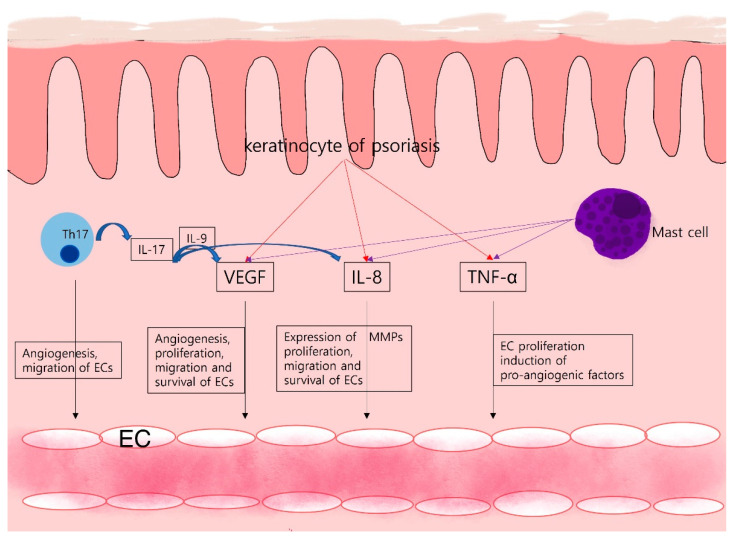
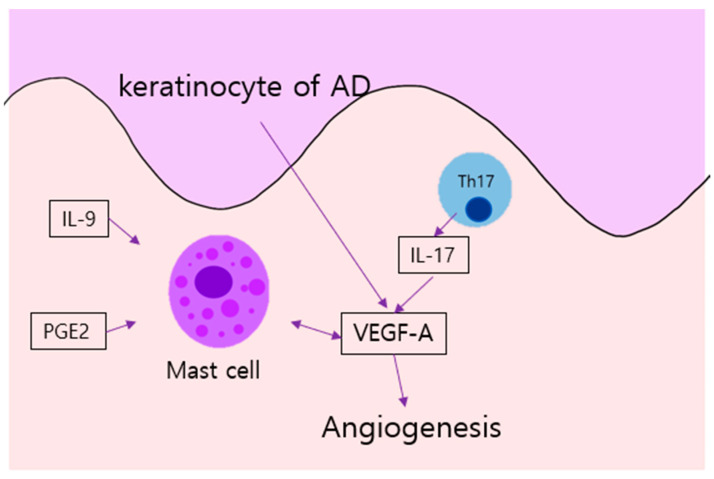
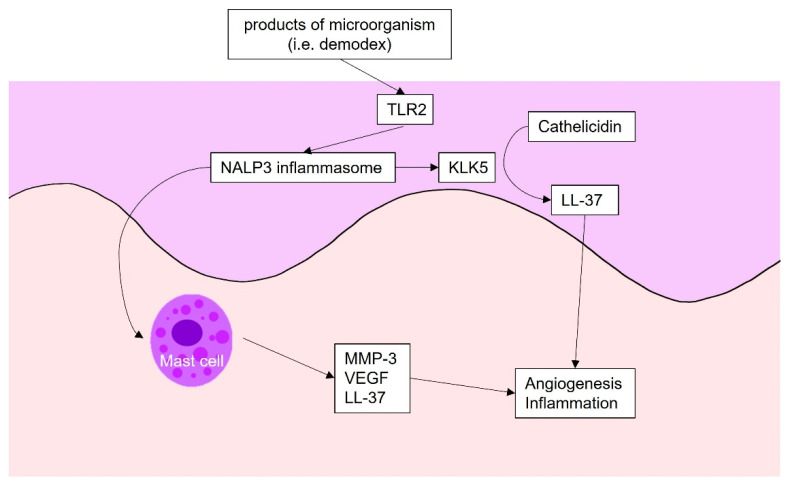
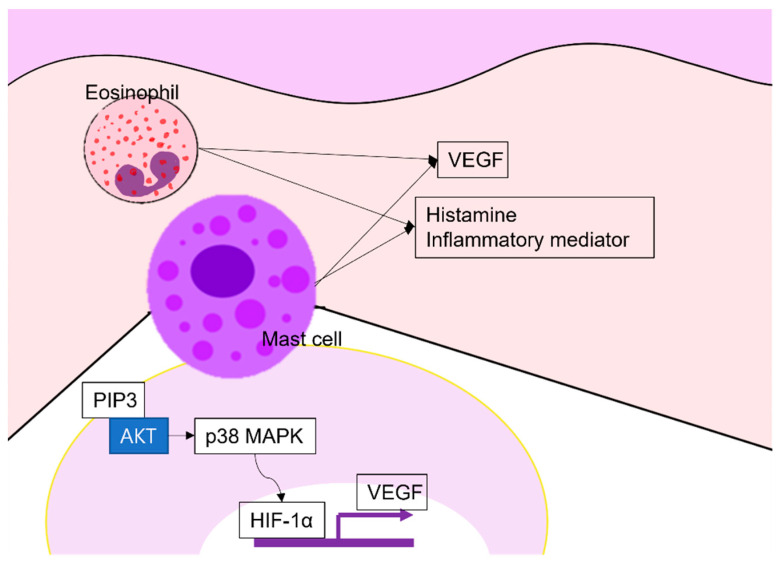
Verification
Claims the paper makes
The claims and statistics of this paper haven’t been checked yet.
Run the check — free, no account needed. It reads the open-access text and checks the sources it cites.
Claims other papers make about this one
Each is checked against this paper’s own text: does it say what the citing paper says it does?
The source backs part of the claim, not all of it — or backs it for a different population, condition or comparison.
In the citing paper
“Increasing real-world evidence also supports the durable efficacy and favorable long-term disease control achieved with selective IL-23 inhibitors [27,28].”
From The Cutaneous Immune Microenvironment in Selected Inflammatory Skin Diseases: Linking Histopathology, Mechanisms, and Targeted Therapy (2026) · cites this paper as [28]
Experimental — accuracy not yet measuredThe source backs part of the claim, not all of it — or backs it for a different population, condition or comparison.
In the citing paper
“Throughout this process, continuous exchange between keratinocytes and immune cells maintains a loop in which IL-23 sustains pathogenic T cells, IL-17 and IL-22 perpetuate epidermal alterations, and TNF-α amplifies inflammation across multiple cell types.”
From The Cutaneous Immune Microenvironment in Selected Inflammatory Skin Diseases: Linking Histopathology, Mechanisms, and Targeted Therapy (2026) · cites this paper as [28]
Experimental — accuracy not yet measuredThe source backs part of the claim, not all of it — or backs it for a different population, condition or comparison.
In the citing paper
“These reflect activation of the IL-23/Th17 axis.”
From The Cutaneous Immune Microenvironment in Selected Inflammatory Skin Diseases: Linking Histopathology, Mechanisms, and Targeted Therapy (2026) · cites this paper as [28]
Experimental — accuracy not yet measuredThe source backs part of the claim, not all of it — or backs it for a different population, condition or comparison.
In the citing paper
“In psoriasis, histopathological findings include acanthosis, parakeratosis, neutrophilic microabscesses, and prominent dermal vascular proliferation.”
From The Cutaneous Immune Microenvironment in Selected Inflammatory Skin Diseases: Linking Histopathology, Mechanisms, and Targeted Therapy (2026) · cites this paper as [28]
Experimental — accuracy not yet measuredThe check wasn’t confident either way, so it gives no verdict — never disputed.
In the citing paper
“In severe or refractory cases, systemic agents such as methotrexate, cyclosporine, and acitretin are used to broadly suppress immune activation and keratinocyte turnover, but their long-term use is limited by toxicity and lack of pathway specificity [28].”
From The Cutaneous Immune Microenvironment in Selected Inflammatory Skin Diseases: Linking Histopathology, Mechanisms, and Targeted Therapy (2026) · cites this paper as [28]
Experimental — accuracy not yet measured
Self-check
Percentages, sums and reported differences re-computed from the paper’s own numbers.
The self-check needs the paper’s full text.
Citations
Cites
Vascular Endothelial Growth Factor Is a Secreted Angiogenic Mitogen
Leung, D. W., Cachianes, G., Kuang, W.-J., Goeddel, D. V., & Ferrara, N. (1989) · Science · doi:10.1126/science.2479986 · Cited by 5,000
Tumor Cells Secrete a Vascular Permeability Factor That Promotes Accumulation of Ascites Fluid
Senger, D. R., Galli, S. J., Dvořàk, A. M., Perruzzi, C. A., Harvey, V. S., & Dvorak, H. F. (1983) · Science · doi:10.1126/science.6823562 · Cited by 3,969
VEGF in signaling and disease: beyond discovery and development
Apte, R. S., Chen, D. S., & Ferrara, N. (2019) · Cell · doi:10.1016/j.cell.2019.01.021 · Cited by 2,721
Isolation of a tumor factor responsible for angiogenesis
Folkman, J., Merler, E., Abernathy, C., & Williams, G. (1971) · The Journal of Experimental Medicine · doi:10.1084/jem.133.2.275 · Cited by 1,663
Identification of the KDR tyrosine kinase as a receptor for vascular endothelial cell growth factor
Terman, B. I., Dougher-Vermazen, M., Carrion, M. E., Dimitrov, D. S., Armellino, D. C., Gospodarowicz, D., & Böhlen, P. (1992) · Biochemical and Biophysical Research Communications · doi:10.1016/0006-291x(92)90483-2 · Cited by 1,519
Control of vascular morphogenesis and homeostasis through the angiopoietin–Tie system
Augustin, H. G., Koh, G. Y., Thurston, G., & Alitalo, K. K. (2009) · Nature Reviews Molecular Cell Biology · doi:10.1038/nrm2639 · Cited by 1,512
Interleukin-17 and Type 17 Helper T Cells
Miossec, P., Korn, T., & Kuchroo, V. K. (2009) · New England Journal of Medicine · doi:10.1056/nejmra0707449 · Cited by 1,409
YAP/TAZ upstream signals and downstream responses
Totaro, A., Panciera, T., & Piccolo, S. (2018) · Nature Cell Biology · doi:10.1038/s41556-018-0142-z · Cited by 1,086
Defective haematopoiesis and vasculogenesis in transforming growth factor-β1 knock out mice
Dickson, M. C., Martin, J. S., Cousins, F. M., Kulkarni, A. B., Karlsson, S., & Akhurst, R. J. (1995) · Development · doi:10.1242/dev.121.6.1845 · Cited by 1,029
Hippo–YAP/TAZ signalling in organ regeneration and regenerative medicine
Moya, I. M., & Halder, G. (2019) · Nature Reviews Molecular Cell Biology · doi:10.1038/s41580-018-0086-y · Cited by 981
Cited by
Sorted by citations
Pathological angiogenesis: mechanisms and therapeutic strategies
Dudley, A. C., & Griffioen, A. W. (2023) · Angiogenesis · doi:10.1007/s10456-023-09876-7 · Cited by 571
“Since these processes induce the expression of VEGF, which leads to the expansion of the dermal microvasculature [207, 208], it has been postulated that inhibition of angiogenesis might be a promising treatment approach.”
The Immunology of Psoriasis-Current Concepts in Pathogenesis
Sieminska, I., Pieniawska, M., & Grzywa, T. M. (2024) · Clinical Reviews in Allergy & Immunology · doi:10.1007/s12016-024-08991-7 · Cited by 346
“One of the histological hallmarks of psoriatic skin is increased dermal vascularity [287].”
BackgroundSkin Barrier Function: The Interplay of Physical, Chemical, and Immunologic Properties
Baker, P., Huang, C. Y., Radi, R., Moll, S., Jules, E., & Arbiser, J. L. (2023) · Cells · doi:10.3390/cells12232745 · Cited by 221
Dong, J., Wang, W., Zhou, W., Zhang, S., Li, M., Li, N., Pan, G., Zhang, X., Bai, J., & Zhu, C. (2022) · Biomaterials Research · doi:10.1186/s40824-022-00326-x · Cited by 117
Advances in 3D skin bioprinting for wound healing and disease modeling
Zhang, M., Zhang, C., Li, Z., Fu, X., & Huang, S. (2022) · Regenerative Biomaterials · doi:10.1093/rb/rbac105 · Cited by 118
“Changes of the vascular system also contribute to the development of many skin diseases, especially autoimmune diseases and skin tumors [169, 170].”
Vitiligo, from Pathogenesis to Therapeutic Advances: State of the Art
Diotallevi, F., Gioacchini, H., SIMONI, E. D., Marani, A., Candelora, M., Paolinelli, M., Molinelli, E., Offidani, A., & Simonetti, O. (2023) · International Journal of Molecular Sciences · doi:10.3390/ijms24054910 · Cited by 102
Emerging Roles of Macrophage Polarization in Osteoarthritis: Mechanisms and Therapeutic Strategies
Yuan, Z. L., Jiang, D., Yang, M., Tao, J., Hu, X., Yang, X., & Zeng, Y. (2024) · Orthopaedic Surgery · doi:10.1111/os.13993 · Cited by 90
Characteristics and pathogenesis of Koebner phenomenon
Zhang, X., Li, L., Jiang, L., Fu, C., Huang, J., Hu, Y., Zhu, L., Zhang, F., Chen, J., & Zeng, Q. (2022) · Experimental Dermatology · doi:10.1111/exd.14709 · Cited by 81
Sun, D., Chang, Q., & Lu, F. (2024) · Journal of Tissue Engineering · doi:10.1177/20417314241265202 · Cited by 78
“64,65 Conversely, inhibiting DNMT1 modulates the Ang-1/NF-κ B signaling pathway to promote angiogenesis and accelerate diabetic wound healing.”
BackgroundEffects of RNA methylation on Tumor angiogenesis and cancer progression
Han, M., Sun, H., Zhou, Q., Liu, J., Hu, J., Yuan, W., & Sun, Z. (2023) · Molecular Cancer · doi:10.1186/s12943-023-01879-8 · Cited by 59
Platelet Rich Plasma in the Repair of Articular Cartilage Injury: A Narrative Review
Liang, Y., Li, J., Wang, Y., He, J., Chen, L., Chu, J., & Wu, H. (2022) · Cartilage · doi:10.1177/19476035221118419 · Cited by 56
Signaling pathways and targeted therapy for rosacea
Yang, F., Wang, L., Song, D., Zhang, L., Wang, X., Du, D., & Jiang, X. L. (2024) · Frontiers in Immunology · doi:10.3389/fimmu.2024.1367994 · Cited by 63
The application and research progress of anti-angiogenesis therapy in tumor immunotherapy
Tu, J., Liang, H., Li, C., Huang, Y., Wang, Z., Chen, X., & Yuan, X. (2023) · Frontiers in Immunology · doi:10.3389/fimmu.2023.1198972 · Cited by 53
“During the regulation of angiogenesis, multiple protein cytokines may act as activators of inflammatory and immune responses at elevated concentrations, thus causing pathological tumor angiogenesis (43, 95).”
BackgroundPoto, R., Loffredo, S., Palestra, F., Marone, G., Patella, V., & Varricchi, G. (2022) · Cells · doi:10.3390/cells11101720 · Cited by 54
“Angiogenesis, a term coined by John Hunter in 1787, is the outgrowth and proliferation of capillaries from pre-existing blood vessels [2,3].”
BackgroundVascularized 3D Human Skin Models in the Forefront of Dermatological Research
Rimal, R., Muduli, S., Desai, P., Marquez, A. B., Möller, M., Platzman, I., Spatz, J., & Singh, S. (2024) · Advanced Healthcare Materials · doi:10.1002/adhm.202303351 · Cited by 46
Targeting DNA methylation and demethylation in diabetic foot ulcers
Deng, J., Wu, X., He, W., Liao, X., Tang, M., & Nie, X. (2023) · Journal of Advanced Research · doi:10.1016/j.jare.2023.01.009 · Cited by 45
Molinelli, E., Gioacchini, H., Sapigni, C., Diotallevi, F., Brisigotti, V., Rizzetto, G., Offidani, A., & Simonetti, O. (2023) · International Journal of Molecular Sciences · doi:10.3390/ijms24098428 · Cited by 34
Tang, S., Hu, H., Li, M., Zhang, K., Wu, Q., Liu, X., Wu, L., Yu, B., & Chen, X. (2024) · Frontiers in Immunology · doi:10.3389/fimmu.2023.1285951 · Cited by 33
Shi, C., Pei, S., Ding, Y., Tao, C., Zhu, Y., Peng, Y., Li, W., & Yi, Y. (2023) · Scientific Reports · doi:10.1038/s41598-023-34418-y · Cited by 32
S100 Proteins in the Pathogenesis of Psoriasis and Atopic Dermatitis
Saito‐Sasaki, N., & Sawada, Y. (2023) · Diagnostics · doi:10.3390/diagnostics13203167 · Cited by 31
“Angiogenesis is an essential component of the pathophysiology of inflammatory skin diseases; vascular alterations occur early in the onset of psoriasis [58].”
BackgroundShen, S., Wang, S., Wang, L., Sun, B., Zhang, Y., Zhang, Y., Jia, R., Yang, W., Chen, X., Cao, K., et al. (2025) · Materials Today Bio · doi:10.1016/j.mtbio.2025.101795 · Cited by 30
“This induces the proliferation and migration of endothelial cells, stimulates neo-vascularization, and enhances the sensitivity of vascular endothelial cells to VEGF, accelerating neovascularization and promoting the occurrence and progression of psoriasis [45].”
Exosomal miRNAs in autoimmune skin diseases
Zhang, R., Wei, Y., Wang, T., Nie, X., Shi, Z., Deng, Y., & Li, D. (2023) · Frontiers in Immunology · doi:10.3389/fimmu.2023.1307455 · Cited by 27
SIMONI, E. D., Candelora, M., Belleggia, S., Molinelli, E., Molinelli, E., Ferretti, G., Ferretti, G., Capodaglio, I., Offidani, A., & Simonetti, O. (2024) · Frontiers in Nutrition · doi:10.3389/fnut.2024.1393673 · Cited by 29
“Keratinocytes and mast cells have been shown to be a major source of vascular endothelial growth factor (VEGF) expression in AD; in fact, VEGF levels are elevated in the serum and skin of patients with AD compared with healthy controls (53–57).”
BackgroundUmehara, Y., Takahashi, M., Yue, H., Trujillo-Páez, J. V., Peng, G., Nguyen, H. L. T., Okumura, K., Ogawa, H., & Niyonsaba, F. (2022) · International Journal of Molecular Sciences · doi:10.3390/ijms23158800 · Cited by 27
“Angiogenesis, which is the formation of new blood vessels, is orchestrated by angiogenic factors and is an important process in development, as well as wound healing [11].”
BackgroundVascular Endothelial Growth Factor A VEGFA Inhibition: An Effective Treatment Strategy for Psoriasis
Chen, Y., Tai, Z., Zhu, C., Qin, Y., Zhu, Q., & Chen, Z. (2023) · International Journal of Molecular Sciences · doi:10.3390/ijms25010059 · Cited by 29
Laschke, M. W., Gu, Y. J., & Menger, M. D. (2022) · Frontiers in Physiology · doi:10.3389/fphys.2022.981161 · Cited by 25
“, 2021) and chronic inflammatory skin disorders (Lee et al., 2021).”
BackgroundLoss of TET2 impairs endothelial angiogenesis via downregulating STAT3 target genes
Shi, Y., Li, B., Huang, X., Kou, W., Zhai, M., Zeng, Y., You, S., Yu, Q., Zhao, Y., Zhuang, J., et al. (2023) · Cell & Bioscience · doi:10.1186/s13578-023-00960-5 · Cited by 24
Lee, Y. J., Yassa, C., Park, S.-H., Song, S. W., Jung, W. H., Lee, Y. W., Kang, H., & Kim, J. E. (2023) · International Journal of Molecular Sciences · doi:10.3390/ijms24076171 · Cited by 26
“Increased VEGF could promote the development of erythema by angiogenesis and the influx of inflammatory cells [50].”
BackgroundUnveiling the angiogenic effects of cannabinoids: Enhancers or inhibitors?
Maia, J., Fonseca, B. M., Teixeira, N. A. A., & Correia‐da‐Silva, G. (2023) · Biochemical Pharmacology · doi:10.1016/j.bcp.2023.115686 · Cited by 24
Photobiomodulation for melasma treatment: Integrative review and state of the art
Galache, T. R., Sena, M. M., Tassinary, J. A. F., & Pavani, C. (2023) · Photodermatology Photoimmunology & Photomedicine · doi:10.1111/phpp.12935 · Cited by 24
“50,51 55 In one of these studies, half of the patients with phototype IV presented postinflammatory hyperchromia after treatment.”
BackgroundShen, S., Yan, G., Cao, Y., Zeng, Q., Zhao, J., Wang, X., & Wang, P. (2022) · Biomedicine & Pharmacotherapy · doi:10.1016/j.biopha.2022.114091 · Cited by 23
Advances in the Pathogenesis and Treatment of Rosacea: A Phenotype-Based Therapeutic Approach
Galluccio, G., D’Onghia, M., Malvaso, D., Lazzeri, L., Cinotti, É., Rubegni, G., Rubegni, P., & Calabrese, L. (2024) · Cosmetics · doi:10.3390/cosmetics11010011 · Cited by 30
Applications of Engineered Skin Tissue for Cosmetic Component and Toxicology Detection
Wang, M., Zhang, L., Hao, H., Yan, M., & Zhu, Z. (2024) · Cell Transplantation · doi:10.1177/09636897241235464 · Cited by 23
“Vascular growth factors play an important role in all stages of wound healing, such as vascular endothelial growth factor (VEGF), platelet-derived growth factor (PDGF), basic fibroblast growth factor (bFGF), TGF, angio-poietin, and many other growth factors 117 .”
BackgroundKokai, D., Stanić, B., Tesic, B., Nenadov, D. S., Pogrmic‐Majkic, K., Nedeljković, S. F., & Andric, N. L. (2022) · Chemico-Biological Interactions · doi:10.1016/j.cbi.2022.110174 · Cited by 20
Guo, Y.-C., Gan, H., Xu, S., Zeng, G., Xiao, L., Ding, Z., Zhu, J., Xiong, X., & Fu, Z. (2023) · Drug Design Development and Therapy · doi:10.2147/dddt.s417954 · Cited by 19
“Angiogenesis is a significant aspect of psoriasis, and VEGFA is a crucial component of angiogenesis.(25) We therefore sliced the dorsal skin of each mice group at the conclusion of the experiment to investigate the distribution of blood vessels.”
BackgroundMetformin: A Potential Treatment for Acne, Hidradenitis Suppurativa and Rosacea
Cho, M., Woo, Y. R., Cho, S. H., Lee, J. D., & Kim, H. S. (2023) · Acta Dermato Venereologica · doi:10.2340/actadv.v103.18392 · Cited by 21
“However, excessive angiogenesis may play a role in various cutaneous diseases, including psoriasis, atopic dermatitis, rosacea, haemangiomas, melanoma, and non-melanoma skin cancer (32–34).”
In situ forming PLA and PLGA implants for the parenteral administration of Cannabidiol
Lozza, I., Martín‐Sabroso, C., Torres‐Suárez, A. I., & Fraguas‐Sánchez, A. I. (2024) · International Journal of Pharmaceutics · doi:10.1016/j.ijpharm.2024.124468 · Cited by 19
Lenalidomide attenuates IMQ-induced inflammation in a mouse model of psoriasis
Jia, H.-Y., Qiu, H.-Y., Zhang, M., Hou, J., Zhou, M., & Wu, Y. (2022) · Biomedicine & Pharmacotherapy · doi:10.1016/j.biopha.2022.113883 · Cited by 18
Yang, X., & Cai, M. (2023) · Clinical Cosmetic and Investigational Dermatology · doi:10.2147/ccid.s413237 · Cited by 22
“44 IL-17 not only directly promotes angiogenesis and expansion but also stimulates the production of TNF-α, IL-1β, and IL-6, and coordinates with IL-1β and TNF-α to upregulate other angiogenic factors, such as vascular endothelial growth factor and IL-8.”
BackgroundZhang, C., Jin, H., Kang, Y., Wu, Y., Zheng, R., Zhang, Z., Xu, H., Cai, W., Gao, X., Liu, H., et al. (2024) · The FASEB Journal · doi:10.1096/fj.202400006r · Cited by 17
“29 Moreover, these findings suggest that IL- 17A-neutralizing antibodies may inhibit LL- 37-induced angiogenesis in mice with rosacea-like conditions.”
Design Strategies and Application Potential of Multifunctional Hydrogels for Promoting Angiogenesis
Wang, M., Chen, J., Luo, Y., Feng, M., Yang, Q., Tang, Y., Tang, Z., Xiao, W., Zheng, Y., & Li, L. (2024) · International Journal of Nanomedicine · doi:10.2147/ijn.s495971 · Cited by 17
The value of sonographic microvascular imaging in the diagnosis of lipedema
Kempa, S., Tessmann, V., Prantl, L., Schmid, S. A., Müller, M., Jung, E. M., & Tews, H. C. (2023) · Clinical Hemorheology and Microcirculation · doi:10.3233/ch-238103 · Cited by 16
The Role of Fibroblasts in Chronic Inflammatory and Proliferative Skin Diseases
Zang, R., Xu, C., Fan, Z., Wang, Q., Guo, Z., Liu, L., Cui, B., Huang, Y., & Yang, J. (2025) · Experimental Dermatology · doi:10.1111/exd.70066 · Cited by 15
“Although psoriasis is mainly driven by T-cells, its pathophysiology is greatly influenced by the dermal papillary vasculature, with the alkaline fibroblast factor in the dermis being one of the crucial angiogenic factors [46, 47].”
A state-of-the-art systematic review of cancer in hidradenitis suppurativa
Rached, N. A., Rüth, J., Gambichler, T., Ocker, L., & Bechara, F. G. (2024) · Annals of Medicine · doi:10.1080/07853890.2024.2382372 · Cited by 15
Treponema pallidum membrane protein Tp47 promotes angiogenesis through ROS ‐induced autophagy
Li, W., Xie, L., Li, Q., Xu, Q., Lin, L., Liu, L., & Yang, T. (2022) · Journal of the European Academy of Dermatology and Venereology · doi:10.1111/jdv.18728 · Cited by 15
“However, excessive angiogenesis contributes to a number of pathologies, ranging from atherosclerosis, aneurysm and chronic inflammatory skin disorders.(28,29) In addition, pathological angiogenesis has been shown to be an important mode of transmission of various pathogens into the blood.”
BackgroundAgamia, N., Sorror, O. A., Sayed, N. M. E., Ghazala, R. A., Echy, S. M., Moussa, D. H., & Melnik, B. C. (2023) · Archives of Dermatological Research · doi:10.1007/s00403-023-02594-6 · Cited by 14
“Enhanced vascular endothelial growth factor (VEGF) expression has been reported in psoriasis and HS [59].”
BackgroundIL‐21 promoting angiogenesis contributes to the development of psoriasis
Han, D., Li, F., Zhao, Y., Wang, B., Wang, J., Liu, B., Mou, K., Meng, L., Zheng, Y., Lu, S., et al. (2023) · The FASEB Journal · doi:10.1096/fj.202201709rrrr · Cited by 13
Wu, X., Song, J., Zhang, Y., Kuai, L., Liu, C., Ma, X., Li, B., Zhang, Z., & Luo, Y. (2024) · International Immunopharmacology · doi:10.1016/j.intimp.2024.112244 · Cited by 13
Kpeli, G. W., Conrad, K. M., Bralower, W., Byrne, C. E., Boué, S. M., Burow, M. E., & Mondrinos, M. J. (2024) · Advanced Biology · doi:10.1002/adbi.202300480 · Cited by 13
Gomułka, K., & Mędrala, W. (2022) · International Journal of Molecular Sciences · doi:10.3390/ijms23179631 · Cited by 13
CLEC14A facilitates angiogenesis and alleviates inflammation in diabetic wound healing
Liao, Y., Wu, N., Guo, L., & Yang, D. (2024) · Life Sciences · doi:10.1016/j.lfs.2024.123176 · Cited by 12
Gomułka, K., Wójcik, E., & Szepietowski, J. C. (2022) · Biomedicines · doi:10.3390/biomedicines10123109 · Cited by 12
“[37] described that the VEGF concentrations correlated with the severity of AD as expressed by the SCORAD index.”
BackgroundDini, V., Iannone, M., Michelucci, A., Margiotta, F. M., Granieri, G., Salvia, G., Oranges, T., Janowska, A., Morganti, R., & Romanelli, M. (2023) · Diagnostics · doi:10.3390/diagnostics13172721 · Cited by 12
“Studies have shown that angiogenesis is increased in the lesional skin of individuals with AD, and the increased blood vessel density and vascular permeability contribute to skin redness and edema observed in AD flare-ups [41].”
BackgroundChen, H.-W., Liu, F., Kuo, H., Tang, S.-H., Niu, G., Zhang, M. M., Tsou, L. K., Sung, P., & Wen, Z. (2024) · Biomedicine & Pharmacotherapy · doi:10.1016/j.biopha.2024.116279 · Cited by 12
Angiogenesis and full thickness wound repair in a cell sheet-based vascularized skin substitute
Mauroux, A., Gofflo, S., Breugnot, J., Malbouyres, M., Atlas, Y., Ardidie‐Robouant, C., Marchand, L., Monnot, C., Germain, S., Bordes, S., et al. (2024) · Acta Biomaterialia · doi:10.1016/j.actbio.2024.08.023 · Cited by 12
Noh, M., Kim, Y., Zhang, H., Kim, H., Bae, C., Lee, S., & Kwon, Y. (2022) · European Journal of Pharmacology · doi:10.1016/j.ejphar.2022.175427 · Cited by 12
Interaction Between Blood Vasculatures and Lymphatic Vasculatures During Inflammation
Wang, S.-S., Zhu, X.-X., Wu, X., Zhang, W.-W., Ding, Y.-D., Jin, S., & Zhang, P. (2023) · Journal of Inflammation Research · doi:10.2147/jir.s414891 · Cited by 11
“In addition, transforming growth factor (TGF)-β and platelet-derived growth factor (PDGF) have an effect on angiogenesis.(5) In inflamed tissues, lymphatic vessels are responsible for transporting soluble antigens and antigen-presenting cells to lymph nodes (LNs).”
BackgroundInfluentialDermoscopic features of nail psoriasis: a systematic review
Rachadi, H., & Chiheb, S. (2024) · International Journal of Dermatology · doi:10.1111/ijd.17138 · Cited by 11
Role of interleukins in dermatology: Exploring the immune mechanisms in skin diseases
Prados‐Carmona, Á., Navarro‐Triviño, F. J., Ruíz‐Villaverde, R., & Corell, A. (2024) · JEADV Clinical Practice · doi:10.1002/jvc2.537 · Cited by 13
Zhang, B., Mei, J., Liao, Q., Zhou, S. Y., Huang, H., Liu, H., Xu, X., Yu, Y., Wu, C., Wang, W., et al. (2024) · British Journal of Dermatology · doi:10.1093/bjd/ljae459 · Cited by 11
Unique Cell Subpopulations and Disease Progression Markers in Canines with Atopic Dermatitis
Sparling, B. A. T. E., Moss, N., Kaur, G., Clark, D. L., Hawkins, R. D., & Drechsler, Y. (2022) · The Journal of Immunology · doi:10.4049/jimmunol.2200304 · Cited by 13
The role of skin barrier and immune abnormalities in the pathogenesis of Rosacea
Chen, L.-X.-Y., & Hao, P. (2025) · Clinical and Experimental Medicine · doi:10.1007/s10238-025-01859-w · Cited by 11
“Moreover, VEGF can interact with inflammatory mediators such as TNF-α and IL-1β, thereby exacerbating both the inflammatory response and vascular changes [97, 100–102].”
Epigenetic Modifications and the Role of Medical Lasers in Enhancing Skin Regeneration
Haykal, D., Will, F., Cartier, H., & Dahan, S. (2025) · Journal of Cosmetic Dermatology · doi:10.1111/jocd.16780 · Cited by 12
Sharifi, S., Katamanin, O. M., & Jafferany, M. (2025) · Archives of Dermatological Research · doi:10.1007/s00403-025-03982-w · Cited by 10
Prados‐Carmona, Á., Husein‐ElAhmed, H., Navarro‐Triviño, F. J., & Ruíz‐Villaverde, R. (2025) · Clinical Reviews in Allergy & Immunology · doi:10.1007/s12016-025-09075-w · Cited by 10
“Prolonged activation can lead to neuronal sensitization and chronic itch conditions, often exacerbating disease severity [53].”
MMP-9 Levels in the Gingival Crevicular Fluid of Chilean Rosacea Patients
Fernández, J., Jiménez, C., Benadof, D., Morales, P., Astorga, J., Cáceres, F. T., Hernández, M., Fernández, A., V, & Valenzuela, F. (2022) · International Journal of Molecular Sciences · doi:10.3390/ijms23179858 · Cited by 10
“Since rosacea shares specific inflammation mechanisms with psoriasis and atopic dermatitis [37,38], we hypothesized that rosacea might also modify the protein composition in the GCF.”
BackgroundTreating rosacea with botulism toxin: Protocol for a systematic review and meta‐analysis
He, G., Yang, Q., Wu, J. S., Huang, Y., Zheng, H., & Cheng, H. (2023) · Journal of Cosmetic Dermatology · doi:10.1111/jocd.15962 · Cited by 10
“47 In animal experiments, studies have shown that botulinum toxin can inhibit TLR2-mediated inflammation, 48 and reduce erythema induced by LL- 37-induced inflammation.”
BackgroundZheng, Y., Chen, X., Xu, F., Cui, Y.-Z., Wang, Z., Zhou, Y., Fu, N.-C., Yang, X.-Y., Chen, X., Zheng, M., et al. (2023) · Journal of Investigative Dermatology · doi:10.1016/j.jid.2023.09.270 · Cited by 9
Yang, X., Feng, Z., & Cai, M. (2024) · Journal of Inflammation Research · doi:10.2147/jir.s468773 · Cited by 9
“9,10 Moreover, IL-17 enhances the activation of neurons in the inner frontal cortex, contributing to the development of anxiety and depression.”
BackgroundPsoriasis and Lupus Erythematosus—Similarities and Differences between Two Autoimmune Diseases
Fijałkowska, A., Wojtania, J., Woźniacka, A. J., & Robak, E. (2024) · Journal of Clinical Medicine · doi:10.3390/jcm13154361 · Cited by 9
“Skin biopsy specimens obtained from active psoriatic lesions have indicated higher expression of VEGF-A compared to healthy skin of Ps patients and the skin of healthy people [121].”
BackgroundInfluentialvan der Mescht, M. A., Steel, H. C., Anderson, R., & Rossouw, T. M. (2025) · Frontiers in Cellular and Infection Microbiology · doi:10.3389/fcimb.2024.1458195 · Cited by 9
Inflammatory factors collaboratively link Helicobacter pylori-induced gastritis to gastric cancer
Zhang, M., Su, A., Song, H., Zhang, S., Deng, Y., Jing, W., Guo, J., Zhan, W., Ma, Y., & Hu, M. (2025) · Frontiers in Immunology · doi:10.3389/fimmu.2025.1628543 · Cited by 15
Wang, X., Meng, L., Zhang, J., Zou, L., Jia, Z., Han, X., Zhao, L., Song, M., Zhang, Z., Zong, J., et al. (2023) · Heliyon · doi:10.1016/j.heliyon.2023.e23003 · Cited by 8
“A biological process known as Angiogenesis occurs when smooth muscle and endothelial cells migrate, proliferate, and sprout on top of pre-existing vessels to form new capillaries [4].”
He, K., Wang, Z., Liu, M., Du, W., Yin, T., Bai, R., Duan, Q., Wang, Y., Lei, H., & Zheng, Y. (2024) · Current Pharmaceutical Design · doi:10.2174/0113816128288527240108110844 · Cited by 8
Pereira, L., & Valado, A. (2024) · doi:10.37349/eaa.2024.00035 · Cited by 9
Yi, B., Yu, L., Yang, Y., Guimarães, C. F., Xu, R., Thambi, T., Zhou, B., Zhou, Q., & Reis, R. L. (2025) · Asian Journal of Pharmaceutical Sciences · doi:10.1016/j.ajps.2025.101057 · Cited by 9
“Furthermore, angiogenesis plays a critical role in accelerating wound healing, as it facilitates the transport of nutrients and metabolism necessary for cellular and ECM reconstruction [ 63 ].”
The Role of Persistent Inflammation in the Pathogenesis of Infected Nonunion: A Narrative Review
Liu, T., Li, F., Yan, Y., Gao, S., Zhou, D., Jiang, X., Song, C., Fu, Z., & Liu, Z. (2025) · Immunity Inflammation and Disease · doi:10.1002/iid3.70260 · Cited by 9
Li, L., Shucheng, H., Fu, L., Pei, B., Xu, W., & Jiang, X. L. (2023) · Experimental Dermatology · doi:10.1111/exd.14836 · Cited by 8
Malheiro, F., Ângelo‐Dias, M., Lopes, T., Martins, C. G., & Borrego, L. M. (2024) · Journal of Clinical Medicine · doi:10.3390/jcm13082287 · Cited by 7
“The inhibition of VEGF receptor signaling is also used to treat inflammatory diseases in which angiogenesis plays a significant role, such as rheumatoid arthritis and psoriasis [32,33].”
BackgroundTirpáková, Z., Demčišáková, Z., Luptáková, L., Hurnikova, J., Čoma, M., Urban, L., Gál, P., Medvecký, Ľ., & Petrovová, E. (2024) · Veterinary Research Communications · doi:10.1007/s11259-024-10574-y · Cited by 8
“While uncontrolled angiogenesis is linked to various pathological conditions, the physiologi - cal, well-controlled angiogenesis is vital for wound-healing and regeneration (Lee et al. 2021).”
Role of Yes-Associated Protein in Psoriasis and Skin Tumor Pathogenesis
Jia, J., Wang, Y., Mo, X., & Chen, D. (2022) · Journal of Personalized Medicine · doi:10.3390/jpm12060978 · Cited by 7
“The main pathological feature of psoriasis is the painful expansion of superficial dermal vessels with a clinical manifestation, such as the Auspitz sign [47].”
BackgroundThe role of macrophages in rosacea: implications for targeted therapies
Liu, Y., Zhou, Y., Chu, C., & Jiang, X. L. (2023) · Frontiers in Immunology · doi:10.3389/fimmu.2023.1211953 · Cited by 6
“Macrophages are believed to play a role in both angiogenesis (formation of new blood vessels) and vasodilation (widening of existing vessels) in the skin (46), leading to the characteristic redness and flushing of rosacea (47).”
BackgroundThe Role of Bile Acid in Immune‐Mediated Skin Diseases
Ma, H., Li, R., Qu, B., Liu, Y., Li, P., & Zhao, J. (2025) · Experimental Dermatology · doi:10.1111/exd.70108 · Cited by 8
Extracellular vesicles from keratinocytes and other skin‐related cells in psoriasis: A review
Qi, F., & Jin, H. (2024) · Experimental Dermatology · doi:10.1111/exd.15001 · Cited by 6
“45 Several angiogenic mediators, including vascular endothelial growth factor, are highly expressed during psoriasis development.”
BackgroundLiu, W., Wang, Y., Zhang, Y., Zhou, M., Gu, H., Lü, M., & Xia, Y. (2024) · Journal of Dermatological Science · doi:10.1016/j.jdermsci.2024.02.007 · Cited by 6
Chen, S., Hu, H., Wu, J., Dong, M., Zhang, Y., Zhu, Q., Wang, Z., Sun, Y. K., & Gao, X. (2024) · International Immunopharmacology · doi:10.1016/j.intimp.2024.113910 · Cited by 6
Paeoniflorin Attenuates Limb Ischemia by Promoting Angiogenesis Through ERα/ROCK-2 Pathway
Li, M., Wang, Q., Zhu, S., Sun, W., Ren, X., Xu, Z., Li, X., Wang, S., Liu, Q., Chen, L., et al. (2025) · Pharmaceuticals · doi:10.3390/ph18020272 · Cited by 6
“Excessive angiogenesis can maintain chronic inflammation [8,9].”
Lu, C., Yang, B., Liu, Y., Liu, W., Yan, J., Guo, C., Song, T., & Wang, X. (2025) · ACS Omega · doi:10.1021/acsomega.4c10795 · Cited by 7
RasGRP1 influences imiquimod-induced psoriatic inflammation via T-cell activation in mice
Mao, Y., Ge, H., Chen, W., Wang, Y., Liu, H., Li, Z. Y., Bai, Y., Wang, D., Yu, Y., Zhen, Q., et al. (2023) · International Immunopharmacology · doi:10.1016/j.intimp.2023.110590 · Cited by 6
Qing, Y., Wu, J., Xu, B., Xu, Z., Ye, S., Wang, Y., Zhao, B., Sun, H., & Wu, N. (2025) · Inflammation · doi:10.1007/s10753-025-02278-5 · Cited by 5
“Angiogenesis plays a crucial role in the development of rosacea [27].”
Zhuang, W., Zhang, Q., Kong, Q., Hui, Y., Shen, J., Zhang, C., Sang, H., & Ye, Q. (2025) · Clinical Cosmetic and Investigational Dermatology · doi:10.2147/ccid.s541106 · Cited by 6
Lu, Y., Xu, F., Qi, F., & Pan, Y. (2026) · Biomolecules · doi:10.3390/biom16030414 · Cited by 5
“IL-17 works together with TNF-α to create a synergistic effect in increased production of VEGF, GM-CSF and CXCL8 by fibroblasts and keratinocytes during angiogenesis [62].”
An overview of stem cells and cell products involved in trauma injury
Saeedi, P., Nilchiani, L. S., Zand, B., Hajimirghasemi, M., & Halabian, R. (2025) · Regenerative Therapy · doi:10.1016/j.reth.2025.02.011 · Cited by 5
Research progress of siVEGF complex and their application in antiangiogenic therapy
Wang, Y., Wei, Y., Chen, L., Yang, Y., Fan, J., Yu, W., Zhou, S., & Yu, S. (2023) · International Journal of Pharmaceutics · doi:10.1016/j.ijpharm.2023.123251 · Cited by 5
Circulating VEGF and inflammatory bowel disease: a bidirectional mendelian randomization
Lin, H., & Cao, B. (2024) · Frontiers in Genetics · doi:10.3389/fgene.2024.1282471 · Cited by 5
Elmoselhi, A. B. (2023) · International Journal of Molecular Sciences · doi:10.3390/ijms24065412 · Cited by 5
“Interestingly, the inhibition of angiogenesis may therefore be an effective therapeutic approach to treating inflammatory skin disorders [11].”
BackgroundLi, D., Chen, J., An, J., Gu, Y., Dong, Z., Gao, X., Zhang, X., & Zhang, Y. (2025) · International Immunopharmacology · doi:10.1016/j.intimp.2025.115079 · Cited by 4
Identification of STAT3 and BIRC5 as anoikis-related biomarkers in psoriasis
Bai, W., Wang, K., Wu, S., Zhou, X., Liu, L., Liu, M., & Chen, C. (2025) · Scientific Reports · doi:10.1038/s41598-025-13992-3 · Cited by 4
“Perivascular inflammatory cells release inflammatory mediators to promote vasodilation and neovascularization 40 .”
Antisense molecules: A promising new therapy for atopic dermatitis
Xue, J., & Yao, Z. (2025) · Acta Pharmaceutica Sinica B · doi:10.1016/j.apsb.2025.09.008 · Cited by 5
“Recent studies have emphasized the role of vascular endothelial growth factor in AD by promoting angiogenesis 124 .”
Ferreira, T., Faustino‐Rocha, A. I., Gaspar, V. M., Medeiros, R., Mano, J. F., & Oliveira, P. A. (2024) · Veterinary World · doi:10.14202/vetworld.2024.1052-1072 · Cited by 4
“In addition, PGE2 activates the vascular endothelial growth factor (VEGF) pathway that induces angiogenesis and favors cellular proliferation, tumor growth, and metastasis [74].”
Background
Metadata
- Authors
- Lee, H. J., Hong, Y. J., & Kim, M.
- Affiliations
- The Catholic University of Korea Yeouido St. Mary's Hospital (KR)
- Corresponding author
- Kim, Miri
- Venue
- International Journal of Molecular Sciences
- Publisher
- MDPI AG
- Published
- 2021-11-07
- Volume
- 22
- Issue
- 21
- Pages
- 12035
- ISSN
- 1422-0067 (ISSN-L)
- PMC
- PMC8584589
- OpenAlex
- W3212070111
- Semantic Scholar
- 5155b9747bd452bee5fcdea00619444cce1f7eac
- Cited by
- 211
- References
- 123
- Citations by year
- 2026: 31 · 2025: 63 · 2024: 55 · 2023: 43 · 2022: 19
- FWCI
- 3.07
- Type
- journal article
- Language
- en
- Open access
- gold
- doi.org
- Licence
- Locations
- International Journal of Molecular Sciences (publishedVersion, cc-by)
- Europe PMC (PubMed Central) (publishedVersion, other-oa)
- PubMed Central (publishedVersion, cc-by)
- PubMed (publishedVersion)
- DOAJ (DOAJ: Directory of Open Access Journals) (submittedVersion, cc-by-sa)
- Funders
- National Research Foundation of Korea (2018R1D1A1B07044100 and 2019R1F1A1059460)
- Topics
- Life Sciences › Biochemistry, Genetics and Molecular Biology › Molecular Biology › Angiogenesis and VEGF in Cancer
- Health Sciences › Medicine › Dermatology › Dermatology and Skin Diseases
- Health Sciences › Medicine › Oncology › Lymphatic System and Diseases
- Keywords
- angiogenesis, chronic inflammatory skin disease, psoriasis, atopic dermatitis, rosacea, chronic urticaria, hidradenitis suppurativa, vascular endothelial growth factor, angiopoietins, mast cells, YAP/TAZ signaling, angiogenesis inhibition, IL-17, interleukin-8, TNF-α, LL-37, MMP-3
- MeSH terms
- Animals, Chronic Disease, Dermatitis, Dermatitis, Atopic, Humans, Neovascularization, Pathologic, Psoriasis, Rosacea, Vascular Endothelial Growth Factor A, Angiopoietins
About these checks
Registry, retraction, Cites and statistics results are computed, not judged, with one exception: a printed reference that no index lists is read once by a model before it counts as a citation error. Claims are extracted by a model and kept only when their quote appears verbatim in the text; each cited source is then checked, with a model’s help, for whether it says what the claim relies on. Those verdicts can be wrong — read the claim’s quote and the cited source before relying on one.
Statistics and arithmetic are recomputed, not judged.
Confidence bands are shown only for fields calibrated on our annotated test set. None is calibrated yet, so no band is shown.
What counts as a claim ›How we measure confidence ›How we check this ›
Are you an author, or do you see a problem with this page? Request a review
