

Practical Use of Immortalized Cells in Medicine: Current Advances and Future Perspectives
Open accessThe DOI matches its Crossref record; 124 of the 129 references it cites were found in a registry or an index, and 4 are not checked yet.
Abstract
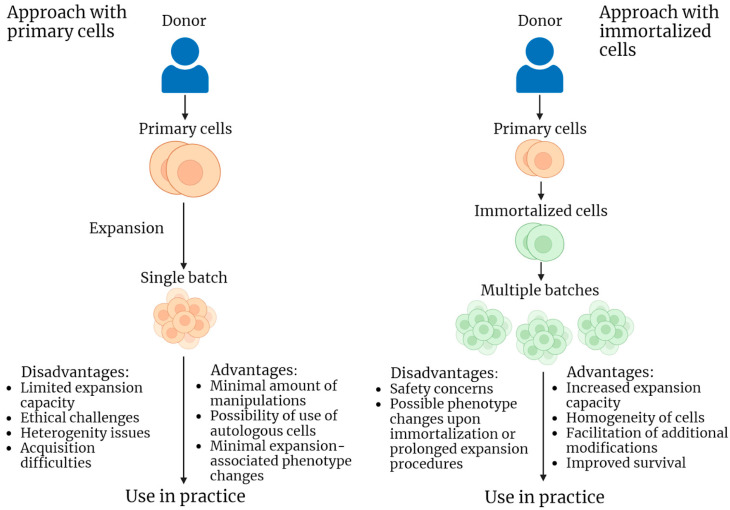
In modern science, immortalized cells are not only a convenient tool in fundamental research, but they are also increasingly used in practical medicine. This happens due to their advantages compared to the primary cells, such as the possibility to produce larger amounts of cells and to use them for longer periods of time, the convenience of genetic modification, the absence of donor-to-donor variability when comparing the results of different experiments, etc. On the other hand, immortalization comes with drawbacks: possibilities of malignant transformation and/or major phenotype change due to genetic modification itself or upon long-term cultivation appear. At first glance, such issues are huge hurdles in the way of immortalized cells translation into medicine. However, there are certain ways to overcome such barriers that we describe in this review. We determined four major areas of usage of immortalized cells for practical medicinal purposes, and each has its own means to negate the drawbacks associated with immortalization. Moreover, here we describe specific fields of application of immortalized cells in which these problems are of much lesser concern, for example, in some cases where the possibility of malignant growth is not there at all. In general, we can conclude that immortalized cells have their niches in certain areas of practical medicine where they can successfully compete with other therapeutic approaches, and more preclinical and clinical trials with them should be expected.
Overview
The claims and statistics of this paper haven’t been checked yet.
Free: it reads the open-access text and checks the first 5 claims that cite a source we can check. Create a free account to check every claim.
Integrity signals
Registry
Cites
Statistics
Figures
Verification
Claims the paper makes
The claims and statistics of this paper haven’t been checked yet.
Free: it reads the open-access text and checks the first 5 claims that cite a source we can check. Create a free account to check every claim.
Claims other papers make about this one
Each is checked against this paper’s own text: does it say what the citing paper says it does?
The source backs part of the claim, not all of it — or backs it for a different population, condition or comparison.
In the citing paper
“Despite these limitations, immortalized cell lines can still offer practical experimental advantages over primary cells in selected studies of specific drug classes and target pathways, particularly when reproducible, scalable, and high-throughputcompatible models are required (Eglen et al. 2008;Voloshin et al. 2023).”
From Primary cell cultures versus immortalized cell lines: critical comparative insights into biological fidelity and translational applications (2026) · cites this paper as Voloshin et al. 2023
Experimental — accuracy not yet measured
Self-check
Percentages, sums and reported differences re-computed from the paper’s own numbers.
The self-check needs the paper’s full text.
Citations
Cites
1 retracted
Knight, R. J., Emma Board-Davies, Brown, H. L., Clayton, A., Davis, T., Karatas, B., Burston, J. J., Tabi, Z., Falcón‐Pérez, J. M., Paisey, S. J., et al. (2022) · Stem Cells Translational Medicine · doi:10.1093/stcltm/szac037 · Cited by 25 · cited 1×
“The extracellular vesicles from these immortalized cells have also demonstrated a positive effect on scar-free wound healing in a mouse model [96].”
BackgroundRetractedExtension of Life-Span by Introduction of Telomerase into Normal Human Cells
Bodnar, A. G., Ouellette, M., Frolkis, M., Holt, S. E., Chiu, C.-P., Morin, G. B., Harley, C. B., Shay, J. W., Lichtsteiner, S., & Wright, W. E. (1998) · Science · doi:10.1126/science.279.5349.349 · Cited by 4,975
Tight control of gene expression in mammalian cells by tetracycline-responsive promoters.
Gossen, M., & Bujard, H. (1992) · Proceedings of the National Academy of Sciences · doi:10.1073/pnas.89.12.5547 · Cited by 4,943
Dang, C. V. (2012) · Cell · doi:10.1016/j.cell.2012.03.003 · Cited by 3,390 · cited 2×
“In almost all cell models, immortalization is achieved by increasing the activity of proteins with proven oncogenic properties: hTERT [26], Myc family proteins [27], viral proteins E6 and E7 of the human papillomavirus [28], and SV40 virus antigens [29].”
BackgroundTranscriptional Activation by Tetracyclines in Mammalian Cells
Gossen, M., Freundlieb, S., Bender, G., Müller, G., Hillen, W., & Bujard, H. (1995) · Science · doi:10.1126/science.7792603 · Cited by 2,488
Site-specific DNA recombination in mammalian cells by the Cre recombinase of bacteriophage P1.
Sauer, B., & Henderson, N. (1988) · Proceedings of the National Academy of Sciences · doi:10.1073/pnas.85.14.5166 · Cited by 1,213
Transcriptional regulation and transformation by Myc proteins
Adhikary, S., & Eilers, M. (2005) · Nature Reviews Molecular Cell Biology · doi:10.1038/nrm1703 · Cited by 1,131
Simonsen, J. L., Rosada, C., Serakinci, N., Justesen, J., Stenderup, K., Rattan, S. I. S., Jensen, T. G., & Kassem, M. (2002) · Nature Biotechnology · doi:10.1038/nbt0602-592 · Cited by 805
Littlewood, T. D., Hancock, D. C., Danielian, P. S., Parker, M. G., & Evan, G. I. (1995) · Nucleic Acids Research · doi:10.1093/nar/23.10.1686 · Cited by 781
Hayflick, his limit, and cellular ageing
Shay, J. W., & Wright, W. E. (2000) · Nature Reviews Molecular Cell Biology · doi:10.1038/35036093 · Cited by 764 · cited 1×
“When the telomeres are fully shortened, any further proliferation is impossible [8,9].”
Background
Cited by
Macrophage variants in laboratory research: most are well done, but some are RAW
Herb, M., Schatz, V., Hadrian, K., Hos, D., Holoborodko, B., Jantsch, J., & Brigo, N. (2024) · Frontiers in Cellular and Infection Microbiology · doi:10.3389/fcimb.2024.1457323 · Cited by 75
“(II) The cells can be cultivated in almost limitless quantities, (III) they can be stored frozen for a long time, and (IV) they are easily replaced if lost due to e. g. contamination (Kaur and Dufour, 2012; Voloshin et al., 2023; Weiskirchen et al., 2023).”
Exosome Source Matters: A Comprehensive Review from the Perspective of Diverse Cellular Origins
Chen, Y., Qi, W., Wang, Z., & Niu, F. (2025) · Pharmaceutics · doi:10.3390/pharmaceutics17020147 · Cited by 61
“Though more scalable, immortalized BMSC lines may differ phenotypically and functionally from their primary counterparts, raising concerns about their translational relevance [66].”
Yamaguchi, N., Horio, E., Sonoda, J., Yamagishi, M., Miyakawa, S., Murakami, F., Hasegawa, H., Katahira, Y., Mizoguchi, I., Fujii, Y., et al. (2024) · International Journal of Molecular Sciences · doi:10.3390/ijms252413562 · Cited by 54
Precision exosome engineering for enhanced wound healing and scar revision
Liu, C., Chen, C., Cheng, K., Gao, A. S., Li, Q., Atala, A., & Zhang, Y. (2025) · Journal of Translational Medicine · doi:10.1186/s12967-025-06578-0 · Cited by 38
“[76] To date, no study has completely illustrated the mutations or altered properties.”
Évora, A., Garcia, G., Rubi, A., Vitis, E. D., Matos, A. T., Vaz, A. R., Gervaso, F., Gigli, G., Polini, A., & Brites, D. M. T. O. (2025) · Frontiers in Pharmacology · doi:10.3389/fphar.2025.1474012 · Cited by 35
The roles of patient‐derived xenograft models and artificial intelligence toward precision medicine
Babu, J. V., ArulJothi, K. N., Mythili, V. M. R., Singh, S. K., Prasher, P., Gupta, G., Dua, K., Rakshith, H. S., Kaliappan, K., & Anand, K. (2024) · MedComm · doi:10.1002/mco2.745 · Cited by 32
“132 However, this model system has been underwhelming in its ability to evaluate the heterogeneity in a patient’s tumor or to successfully identify novel therapeutics.”
BackgroundKadekar, D., Udrea, A. C., Bak, S. Y., Christensen, N., Gibbs, K., Shen, C., & Bernardeau, M. (2024) · Microorganisms · doi:10.3390/microorganisms12040839 · Cited by 22
“…pathogen– host cell interactions in the context of NE and suggest that it could be useful for the screening of probiotics and development of approaches for the prevention of NE, in the same way that human cell line models have proved invaluable for the development of human medicines [69].”
BackgroundStarting a synthetic biological intelligence lab from scratch
Tanveer, M. S., Patel, D., Schweiger, H. E., Abu-Bonsrah, K. D., Watmuff, B., Azadi, A., Pryshchep, S., Narayanan, K., Puleo, C., Natarajan, K., et al. (2025) · Patterns · doi:10.1016/j.patter.2025.101232 · Cited by 20
Insights into human muscle biology from human primary skeletal muscle cell culture
Francis, T., Soendenbroe, C., Lazarus, N. R., Mackey, A. L., & Harridge, S. D. R. (2025) · Journal of Muscle Research and Cell Motility · doi:10.1007/s10974-025-09696-w · Cited by 12
“These include an increase in possible genetic abnormalities due to long-term culture, reduced physiological relevance, reduced cell population heterogeneity and altered gene expression and cellular processes (Voloshin et al. 2023).”
The HepG2 Cell Line as a Model for Studying Metabolic Dysfunction-Associated Steatotic Liver Disease
Kotlyarova, A., Iskrina, A., & Kotlyarov, S. (2026) · International journal of molecular sciences · doi:10.3390/ijms27083399 · Cited by 10
Study Models for Chlamydia trachomatis Infection of the Female Reproductive Tract
Kim, J., Ślęczkowska, M., Nobre, B., & Wieringa, P. A. (2025) · Microorganisms · doi:10.3390/microorganisms13030553 · Cited by 11
“These cell lines are favored for their improved survival, low-cost maintenance, ease of handling, and genetic homogeneity, ensuring reproducible and consistent experimental setups over time [89,97].”
Primak, A. L., Shkarina, L. N., Illarionova, M. E., Plyushchii, I. V., Zakharova, A. V., Va, T., & Karagyaur, M. N. (2025) · Biochemistry (Moscow) · doi:10.1134/s0006297925601698 · Cited by 7
Self-citationShoeibi, S., Green, E., Wei, H., Gou, W., Strange, C., & Wang, H. (2024) · Journal of Cellular and Molecular Medicine · doi:10.1111/jcmm.70093 · Cited by 7
“55 While most studies have focused on using immortalized cell lines in vitro, 24,25,27,56 examples demonstrate their effective use in vivo in rats and humans.”
BackgroundApplying 3D cultures and high-throughput technologies to study host-pathogen interactions
Martinis, E. C. P. D., Alves, V. F., Pereira, M. G., Andrade, L. N., Abichabki, N. D. L. M., Abramova, A., Dannborg, M., & Bengtsson‐Palme, J. (2025) · Frontiers in Immunology · doi:10.3389/fimmu.2025.1488699 · Cited by 6
Origin of chromosome 12 trisomy surge in human induced pluripotent stem cells
Narożna, M., Latham, M. C., & Gorbsky, G. J. (2025) · The Journal of Cell Biology · doi:10.1083/jcb.202501231 · Cited by 6
Cantor, E., Shen, F., Jiang, G., Philips, S., & Schneider, B. P. (2024) · Scientific Reports · doi:10.1038/s41598-024-69280-z · Cited by 5
Zhang, X., Wang, Y., Han, J., Zhao, W., Zhang, W., Li, X., Chen, J., Song, W., & Wang, L. (2025) · Advanced Biology · doi:10.1002/adbi.202400512 · Cited by 6
Multi-omics analysis of thermogenic lipolysis in brown adipocytes
Anagho-Mattanovich, M., Anagho, H. A., Argemi‐Muntadas, L., Nielsen, M. L., Gao, Q., & Möritz, T. (2025) · iScience · doi:10.1016/j.isci.2025.113382 · Cited by 5
Rahm, K. K., Kinghorn, B. S., Moody, M. J., Stone, B. C., Strong, K., Kim, B. S., Chang, Y. J., Sleight, S., Nitz, A. A., Hansen, D. V., et al. (2025) · Frontiers in Bioinformatics · doi:10.3389/fbinf.2025.1681811 · Cited by 5
“Thus, we can see that the HMC3 cell line exhibits a heterogenous profile, and it may be most appropriately classified as an astrocyte-derived line according to its gene expression profile (Voloshin et al., 2023).”
Hartness, E. M., Shevalye, H., Skeie, J. M., Eggleston, T., Field, M. G., Schmidt, G. A., Phruttiwanichakun, P., Salem, A. K., & Greiner, M. A. (2025) · Investigative Ophthalmology & Visual Science · doi:10.1167/iovs.66.4.23 · Cited by 5
“47,48 However, previous studies have demonstrated that these cells recapitulate key characteristics of human CECs (e.g., hexagonal monolayer mosaic, abundant collegan IV, native tight junction protein expression) 49 and several prior studies have demonstrated that immortalized cell lines function…”
Gürdal, M., Ercan, G., Selver, Ö. B., Aberdam, D., & Zeugolis, D. I. (2024) · Life · doi:10.3390/life14121552 · Cited by 5
“As collagen solubility assessment is performed by visual examination of the solutions (prior to and following centrifugation), it is regarded as a qualitative technique;”
Zhang, Y., Xu, C., Huang, Y., Tan, D., Luo, W., Zhang, Y., & Tan, Y. (2024) · Animal Models and Experimental Medicine · doi:10.1002/ame2.12513 · Cited by 5
Himwaba, M., Jarnda, K. V., Dweh, M. T., Liu, X., Xiang, Y., Zou, X., Lv, H., Li, T., Tu, X., & Wang, J. (2025) · Ageing Research Reviews · doi:10.1016/j.arr.2025.102953 · Cited by 4
Osteoblastic cell responses to zoledronate treatment in-vitro: A systematic review
Florez-Martin, M., Radu, A.-M., Shakib, K., & Jell, G. (2026) · Bone · doi:10.1016/j.bone.2026.117796 · Cited by 4
Zhou, J., Li, N., Liu, R., Kabanov, A. V., Polacheck, W. J., Nguyen, J., & Cao, Y. (2026) · Journal of Controlled Release · doi:10.1016/j.jconrel.2026.115157 · Cited by 4
Innate Immune Response Against Batai Virus, Bunyamwera Virus, and Their Reassortants
Zöller, D. D. J. A., Säurich, J., Metzger, J., Jung, K., Lepenies, B., & Becker, S. C. (2024) · Viruses · doi:10.3390/v16121833 · Cited by 4
Exosomes derived from hTERT-immortalized cells delay cellular senescence of human fibroblasts
Liu, Y., Sheng, Z., & Sun, L. (2024) · Experimental Gerontology · doi:10.1016/j.exger.2024.112508 · Cited by 4
Станиславович, Д. С., Primak, A. L., Basalova, N. A., Kalinina, N., Monakova, A., Дмитриевич, Б. К., Velichko, A., Illarionova, M. E., Grigorieva, O., Akopyan, Z. A., et al. (2025) · International Journal of Molecular Sciences · doi:10.3390/ijms26146697 · Cited by 5
“The neuroprotective activity of the secretomes of the obtained iMSC cultures in different combinations, with different contents of neuroprotective and angiogenic molecules (without any concentration procedure), was evaluated in the previously described ICH model in rats [33].”
InfluentialSelf-citationFundamental and Practical Perspectives in Regenerative Medicine
Макаревич, П. И., & Va, T. (2024) · International Journal of Molecular Sciences · doi:10.3390/ijms252111508 · Cited by 4
“The spectrum of this research area is covered in a review by Voloshin et al. [14] which indicates the range from MSCs or adult stem cells to mature tissue elements [15,16], highlighting the efficacy of telomerase-driven immortalization for this task.”
BackgroundForced polarisation of microglia by IL-13 is modified by inflammatory and microenvironmental context
Aiyegbusi, E. D., Reynolds, J. R., O'Carroll, R., Colbert, R., Carew, C., & Dooley, D. (2025) · Inflammation Research · doi:10.1007/s00011-025-02089-2 · Cited by 3
“In this study, we utilised two stable, complementary microglial models: immortalised BV2 cells, valued for their reproducibility and homogeneity [32, 33] and miPSC derived microglia, which retain the capacity to acquire CNS specific cues [34 ].”
Ranamalla, S. R., Porfire, A., Licărete, E., Tefas, L., Parvathaneni, R. P., Varghese, O. P., Sesărman, A., Focşan, M., Tudoran, L. B., Tomuță, I., et al. (2025) · International Journal of Pharmaceutics · doi:10.1016/j.ijpharm.2025.126532 · Cited by 3
Lee, J., Lee, D. Y., Mariano, E., Park, J. W., Namkung, S., Choi, S. Y., Lee, W. J., Shin, Y. W., Bok, C. H., Venter, C., et al. (2026) · Food Science of Animal Resources · doi:10.1007/s44463-025-00035-8 · Cited by 4
“Due to their robust growth characteristics, transformed cells are widely used in research involving cell and tissue engineering, drug screen - ing, and cellular differentiation (Maqsood et al., 2013; Voloshin et al., 2023).”
Aiyegbusi, E. D., Stefano, J. D., & Dooley, D. (2026) · Advanced Healthcare Materials · doi:10.1002/adhm.202504508 · Cited by 3
“Nonetheless, they may lack key phenotypic traits observed in vivo [242].”
Primak, A. L., Kalinina, N., Никитична, С. М., Usachev, V., Chechekhin, V. I., Vigovskiy, M. A., Сергеевна, Ч. Е., Сергеевич, В. Н., Kulebyakin, K. Y., Kulebyakina, M., et al. (2025) · Регенерация органов и тканей. · doi:10.60043/2949-5938-2024-2-24-45 · Cited by 3
Self-citationMatthews, I., Mehra, P., Suárez‐Calvet, X., Piñol‐Jurado, P., Cox, D., Justian, V., Carrasco‐Rozas, A., Laidler, Z., Bowey, A. J., Rushton, P. R. P., et al. (2025) · Frontiers in Cell and Developmental Biology · doi:10.3389/fcell.2025.1505697 · Cited by 3
Baugh, L. M., Vigneau, S., Sridhar, S., Boswell, S. A., Pilitsis, G., Bradley, J., Allen, O., Rand, L. M., Riccardi, A., Roach, K., et al. (2025) · bioRxiv (Cold Spring Harbor Laboratory) · doi:10.1101/2025.06.03.657593 · Cited by 3
“While immortalized cell lines are widely used in high-throughput drug screening due to their ease of culture and scalability, they often fail to accurately represent in vivo human biology (Voloshin et al., 2023) .”
Suali, L., Chia, Y., Rustin, C., Lem, F. F., Ching, X. J., Mansur, M. A. B., Henry, Z. A., Chan, M. K. S., Wong, M. B. F., & Pan, S. Y. (2026) · Biotechnic & Histochemistry · doi:10.1080/10520295.2026.2714776 · Cited by 2
“They offer practical advantages, including indefinite proliferation, ease of maintenance, cost efficiency, and reproducibility (Voloshin et al. 2023; Chalak et al. 2024).”
Bioenergetic Shifts in Humpback Whale Fibroblasts Upon Chemical Exposure
Hosen, M. H. A., Whitworth, D. J., Leusch, F. D. L., Yuen, K. Y., & Nash, S. B. (2024) · Environmental Science & Technology · doi:10.1021/acs.est.3c10595 · Cited by 2
Lee, S.-W., Lim, Y.-J., Kim, H.-Y., Kim, W., Park, W.-T., Ma, M.-J., Lee, J. H., Seo, M., Kim, Y. I., Park, S., et al. (2025) · World Journal of Stem Cells · doi:10.4252/wjsc.v17.i1.98777 · Cited by 2
Safety and Regenerative Properties of Immortalized Human Mesenchymal Stromal Cell Secretome
Karagyaur, M. N., Primak, A. L., Basalova, N. A., Monakova, A., Tolstoluzhinskaya, A., Kulebyakina, M., Сергеевна, Ч. Е., Никитична, С. М., Grigorieva, O., Chechekhin, V. I., et al. (2025) · International Journal of Molecular Sciences · doi:10.3390/ijms26199322 · Cited by 2
“The higher proliferative activity of an immortalized cell culture makes it possible to obtain more producer cells, and therefore larger volumes of secretome with low or no batch-to-batch variability [42,46,47].”
Self-citationGithaka, J. M. (2026) · Critical Reviews in Oncology/Hematology · doi:10.1016/j.critrevonc.2026.105258 · Cited by 2
Exploring the Antimicrobial Potential of Vanadium‐Based MXenes for Biomedical Applications
Rosato, R., Rosenkranz, A., Perini, G., Santarelli, G., Augello, A., Zambrano-Mera, D. F., Cervantes, I., Plebani, N. A., Cometto, F. P., Spirito, M. D., et al. (2026) · MicrobiologyOpen · doi:10.1002/mbo3.70309 · Cited by 2
Merrick, B. A., Brooks, A. M., Foley, J. F., Martin, N. P., Fannin, R. D., Gladwell, W., & Gerrish, K. (2025) · International Journal of Molecular Sciences · doi:10.3390/ijms26083607 · Cited by 1
“Epithelial cell immortalization involves a complex process of selection for continued cell division bypassing senescence barriers while maintaining cell-of-origin gene expression, biochemical functions, and contact inhibition [98].”
Gürdal, M., Baysal, K., Durak, İ., & Selver, Ö. B. (2025) · Experimental Eye Research · doi:10.1016/j.exer.2025.110392 · Cited by 1
Zhang, C., Hao, W., Yang, Y., Li, J., Zhang, Q., Chang, S., Yang, K., & He, X. (2025) · Scientific Reports · doi:10.1038/s41598-025-15144-z · Cited by 1
“Its fundamental principle is to add conditional control elements upstream of the target gene, then introduce them into the target cells to construct conditionally immortalized cell lines 27,28 .”
Cellular models of chronic diseases: From bench to bedside
Tiwari, K. (2025) · Elsevier eBooks · doi:10.1016/b978-0-443-33877-9.00015-x · Cited by 1
Davies, E. C., Maker, G. L., Musgrave, I., & Lodge, S. (2025) · FEBS Open Bio · doi:10.1002/2211-5463.70170 · Cited by 1
“Immortalised cell lines such as the HepG2 and Caco-2 cells used in this study are frequently used to model cytotoxicity [72 – 75], with benefits including their genetic homogeneity, ease of maintenance, cost-effectiveness and avoidance of the Hayflick limit facing primary cells [76,77].”
Proteomics and Bioinformatics Profiles of Human Mesothelial Cell Line MeT-5A
Watkin, R., Kazanjian, A. A., Damicis, J. R., & Yohannes, E. (2026) · Proteomes · doi:10.3390/proteomes14010002 · Cited by 1
Natalello, G., Lorenzis, E. D., D’Agostino, M. A., Langella, P., Bréban, M., Cherbuy, C., & Bazin, T. (2026) · Autoimmunity Reviews · doi:10.1016/j.autrev.2026.104038 · Cited by 1
Musarò, D., Greco, M., Lanza, M., Damato, M., & Maffia, M. (2026) · International Journal of Molecular Sciences · doi:10.3390/ijms27072993 · Cited by 1
Bang, I. J., Kim, M.-S., Han, Y., Kim, G. E., Lim, J. E., Park, J. Y., Yoo, J., Jang, Y. S., 이, 범., Kwak, M., et al. (2026) · Toxicological Research · doi:10.1007/s43188-026-00372-w · Cited by 1
“…24/48/96-channel chips [27, 40] Typical applications ALI differentiation, surfactant studies, viral infection, inflammation models Migration, angiogenesis, tumor invasion, immune cell tracking [31, 39, 40] epithelial cell lines and stem cell-derived epithelium serve as complementary models [63].”
Nikitina, Y., Kazakova, A., Leonteva, A. A., Sergeevichev, D., Bogachek, M. V., Vladimirov, S., Vasileva, N. S., Richter, V. A., & Nushtaeva, A. A. (2026) · Frontiers in Bioengineering and Biotechnology · doi:10.3389/fbioe.2026.1852454 · Cited by 1
“Additionally, only one glioma line (U87MG) was used, which carries a homozygous PTEN mutation (Voloshin et al., 2023).”
Фисенко, Н. В., Суббот, А. М., Yusef, Y., Osipyan, G. A., Panova, A. D., & Agliamutdinov, R. R. (2024) · Бюллетень Восточно-Сибирского научного центра Сибирского отделения Российской академии медицинских наук · doi:10.29413/abs.2024-9.2.4
Ferreira, T. D. A. S. (2024) · Digital Library of Theses and Dissertations (Universidade de São Paulo) · doi:10.11606/d.42.2024.tde-09052025-093318
Tayebi, T., Kasravi, M., Naderi, A., Nooshin, B. J., & Niknejad, H. (2025) · International Journal of Biological Macromolecules · doi:10.1016/j.ijbiomac.2025.144744
Hydrogen Sulfide Suppresses Keratinocyte Migration in Scratch AssayPreprint
Chen, A., & Krishna, V. B. (2025) · bioRxiv (Cold Spring Harbor Laboratory) · doi:10.1101/2025.08.13.670126
Thenrajan, R. S., Shunmugaperumal, T., & Reddy, K. (2025) · Ars Pharmaceutica (Internet) · doi:10.30827/ars.v66i4.34110
Mixing vs. layering: How to make an in vivo like skin model
Kardosh, A. V., Revokatova, D. P., Bikmulina, P., Efremov, Y. M., Fayzullin, A. L., Kosheleva, N. V., Kotova, S., Svistunov, A. А., Shpichka, A. I., & Timashev, P. S. (2025) · Biomaterials Advances · doi:10.1016/j.bioadv.2025.214582
Steinacker, V. C. (2025) · Online Publication Service of Würzburg University (Würzburg University) · doi:10.25972/opus-40006
Johansson, Y. (2024) · DiVA (Stockholm University)
Egert, J. (2025) · publish.UP (University of Potsdam) · doi:10.25932/publishup-68443
Tong, F., Hoare, M. P., Grundy, L. J., Gallo, F., Müller, K. H., Smith, E. S. J., & Kumita, J. R. (2026) · FEBS Journal · doi:10.1111/febs.70695
Brault, A. L., Dickinson, T. A., Banker, M. E., Sommese, R. F., & Vincent, F. (2026) · SLAS DISCOVERY · doi:10.1016/j.slasd.2026.100305
Etude in vitro de la toxicité pulmonaire des émissions de tabac chauffé et de cigarette électronique
Zarcone, G. (2023) · theses.fr (ABES) · doi:10.70675/44f4c29ez2433z432dzab2fz55aca699c866
Bao, S., Huang, Z., Liao, B., Zhang, D., Sun, Y., Ding, X., Su, H., Xu, J., Li, H., & Gong, L. (2026) · Tissue and Cell · doi:10.1016/j.tice.2026.103519
Single-cell transcriptomics of host-parasite interactions
Panagiotou, A. (2024) · theses.fr (ABES) · doi:10.70675/fc6b9dbbze70ez434azaacaz52d536deab48
Lin, Y.-W., Tseng, W., Huang, C. B.-X., Chen, J., Huang, S.-H., Fan, C., & Hsueh, Y. (2026) · Materials Today Advances · doi:10.1016/j.mtadv.2026.100779
Addition of PRG4 to Optimize the Anti-Adhesive Properties of Tissue Barrier Seprafilm®
Marks, A. J., Elsaid, K. A., Zhang, L. X., Lin, T., Baird, J., Schmidt, T. A., & Jay, G. D. (2026) · Annals of Biomedical Engineering · doi:10.1007/s10439-026-04120-x
Uccelli, A., Cenciarini, M., Colombo, V., Zamboni, C., Valentino, D., Harder, Y., Arrigoni, C., Moretti, M., & Bersini, S. (2026) · Scientific Reports · doi:10.1038/s41598-026-49055-4
“Despite this need, most currently available models of vasculature are based on a limited repertoire of cell types, often derived from pooled sources, neonatal donors or from immortalized cell lines 12–15 —factors that compromise physiological relevance and translational value 9,10,16–19 .”
The impact of cannabigerol exposure on human endometrial stromal cells decidualization
Alves, P., Brighton, P. J., Seng-Kong, C., Nebot, M. T., Amaral, C., Fonseca, B. M., Teixeira, N. A. A., Brosens, J. J., & Correia‐da‐Silva, G. (2026) · Toxicology · doi:10.1016/j.tox.2026.154492
Primak, A. L., Kalinina, N. I., Никитична, С. М., Usachev, V., Chechekhin, V. I., Vigovskiy, M. A., Сергеевна, Ч. Е., Сергеевич, В. Н., Kulebyakin, K. Y., Kulebyakina, M., et al. (2026) · Cell and Tissue Biology · doi:10.1134/s1990519x26070035
“…tissues—i.e., primary cell cultures—are characterized by several features: limited proliferative capacity, rapid culture senescence accompanied by a loss of characteristic properties, and pronounced heterogeneity in the properties of cultures obtained from different donors (Voloshin et al., 2023).”
Self-citationBuilding Disease Models for Endometriosis: iPSCs as Game-Changers
Kahar, K. H., E-Anjum, B., Nordin, F., Ng, A. M.-H., Aziz, N. H. A., Idris, I. M., Tye, G. J., & Zaman, W. S. W. K. (2026) · International Journal of Molecular Sciences · doi:10.3390/ijms27125614
Chen, Y., Xiao, H., Xu, W., Xiao, Z., Jia, F., Ren, Y., & Liu, Q. (2026) · Cytotechnology · doi:10.1007/s10616-026-01016-5
“To address these challenges, cell immortalization technology provides a promising strategy to generate stable and long-lasting MSCs sources (Voloshin et al. 2023).”
Molinari, A., Moccia, V., Babbucci, M., Peruzza, L., Negrisolo, E., Centelleghe, C., Mazzariol, S., & Zappulli, V. (2026) · Animals · doi:10.3390/ani16132037
“On the other hand, electroporation requires special equipment and more optimization, despite it being much more effective and useful to engineer hard-to-transfect cells, which could be a translatable characteristic to CpBCs, given their high resistance to pathogen entry [21,22,32–34].”
Aldersey, J. E., Lange, M. D., Beck, B. H., & Abernathy, J. W. (2026) · Comparative Immunology Reports · doi:10.1016/j.cirep.2026.200302
“Ultimately, these are transformed cell lines and have likely lost some characteristics of in vivo B cells including their ability to react appropriately to stimulation and prolonged passage could have led to chromosomal abnormality and or mutations that could lead to loss of function [60,61].”
Tavares, N. T., Liu, M. Y., Henrique, R., Jerónimo, C., Weiss, R. S., & Lobo, J. (2026) · Therapeutic Advances in Medical Oncology · doi:10.1177/17588359261446794
Lymphoblastoid cell lines as an in vitro model for preclinical drug evaluation
Kandušer, M., Markovič, T., & Mlinarič‐Raščan, I. (2026) · DiRROS repository (University of Maribor)
Engineered models of skin fibrosis: from biomaterial-free to biomaterial-based in vitro systems
Amaral, S., Presa, R., & Pereira, R. F. (2026) · Biomaterials Science · doi:10.1039/d6bm00232c
Goldschmidt, S. L., Vapniarsky, N., McPherson, J. D., Rivas, I., Ly, C., Morales, A., York, D. S., Rebhun, R. B., & Soltero‐Rivera, M. M. (2026) · PLoS ONE · doi:10.1371/journal.pone.0353197
“Although there is a scientific merit for immortalized cancerous cell lines, regarding their benefits in providing indefinite source of biological material, and reduction of donor-to-donor convenience [51,52], their practical use for development of curative therapies is rather limited [53].”
Salim, M. W., Zhang, W., Collins‐Praino, L. E., Care, A., & Wang, Y. (2026) · Advanced NanoBiomed Research · doi:10.1002/anbr.202500304
Moleküler Mikrobiyolojide Kullanılan Yöntemler
Başer, S., Dabanlioglu, B., Uçar, M., Kaplan, E., Ari, B., Kalaycı, S. E., & Yaman, Z. (2026) · doi:10.38066/hy.xa4mx0aq.hph
In vitro validation of a CRISPR/Cas9 guide RNA targeting COL1A1 gene by cleavage assay
Melo, D. M., Sarquis, S. R., Luz, P. M., Bevitori, R. C. B., Barbosa, Y. D. A., Pagotto, R. F., Trancozo, M., dos Santos, E. D. V. W., & Paula, F. (2026) · Methods · doi:10.1016/j.ymeth.2026.09.004
Krishna, S. G., Kulal, N., Kannan, S., Kumar, U., Singh, A. K., Bhat, S., & Seetharam, R. N. (2026) · Biochimie · doi:10.1016/j.biochi.2026.10.009
Molinari, A., Lucca, C., Vogiatzis, S., Moccia, V., Babbucci, M., Peruzza, L., Negrisolo, E., Trevisan, M., Barzon, L., Centelleghe, C., et al. (2026) · Frontiers in Veterinary Science · doi:10.3389/fvets.2026.1931938
“Additionally, although animal ESCs-like cultures and veterinary iPSCs have been reported, no commercial animal ESCs/iPSCs lines are available, iPSCs have not been derived from NS cells, and animal iPSCs differentiation and organoid technologies remain largely unexplored (35, 47, 83–89).”
Tcypileva, A. S., Floren, D. D., Docshin, P. M., & Malashicheva, A. (2026) · Translational Medicine · doi:10.18705/2311-4495-2026-13-4-399-414
Engineering Functional Skeletal Muscle Tissues from Human Induced Pluripotent Stem Cells
Detwiler, A., Khodabukus, A., & Bursac, N. (2026) · Methods in molecular biology · doi:10.1007/978-1-0716-5396-8_4
Kumar, M., Singh, N., Patel, A. K., Goswami, P., Kumar, S., Kumar, D., & Singh, L. P. (2026) · Tissue Barriers · doi:10.1080/21688370.2026.2758085
Metadata
- Authors
- Voloshin, N., Tyurin-Kuzmin, P., Karagyaur, M., Akopyan, Z., & Kulebyakin, K.
- Affiliations
- Faculty of Medicine, Lomonosov Moscow State University, 119991 Moscow, Russia
- Lomonosov Moscow State University (RU)
- Corresponding author
- Kulebyakin, Konstantin
- Venue
- International Journal of Molecular Sciences
- Publisher
- MDPI AG
- Published
- 2023-08-12
- Volume
- 24
- Issue
- 16
- Pages
- 12716
- ISSN
- 1422-0067 (ISSN-L)
- PMC
- PMC10454025
- OpenAlex
- W4385805909
- Cited by
- 77
- References
- 126
- Citations by year
- 2026: 33 · 2025: 30 · 2024: 14
- FWCI
- 2.03
- Type
- journal article
- Language
- en
- Open access
- gold
- doi.org
- Licence
- Locations
- International Journal of Molecular Sciences (publishedVersion, cc-by)
- PubMed Central (publishedVersion, cc-by)
- PubMed (publishedVersion)
- Funders
- Russian Science Foundation (19-75-30007)
- Topics
- Life Sciences › Biochemistry, Genetics and Molecular Biology › Molecular Biology › Viral Infectious Diseases and Gene Expression in Insects
- Life Sciences › Biochemistry, Genetics and Molecular Biology › Cell Biology › Telomeres, Telomerase, and Senescence
- Life Sciences › Biochemistry, Genetics and Molecular Biology › Molecular Biology › Pluripotent Stem Cells Research
- Keywords
- immortalized cells, cell therapy, malignant transformation, genetic modification, primary cells, clinical translation
- MeSH terms
- Gene Editing, Cell Line, Humans, Medicine, Phenotype, Tissue Donors
About these checks
Registry, retraction, Cites and statistics results are computed, not judged, with one exception: a printed reference that no index lists is read once by a model before it counts as a citation error. Claims are extracted by a model and kept only when their quote appears verbatim in the text; each cited source is then checked, with a model’s help, for whether it says what the claim relies on. Those verdicts can be wrong — read the claim’s quote and the cited source before relying on one.
Statistics and arithmetic are recomputed, not judged.
Confidence bands are shown only for fields calibrated on our annotated test set. None is calibrated yet, so no band is shown.
What counts as a claim ›How we measure confidence ›How we check this ›
Are you an author, or do you see a problem with this page? Request a review
Data sources
Bibliographic data: Semantic Scholar, OpenAlex, Crossref.
Contains information from the Semantic Scholar Academic Graph Datasets, made available under the ODC Attribution License (ODC-BY 1.0).
Semantic Scholar’s data is described in: Kinney, R., et al. (2023). The Semantic Scholar Open Data Platform. arXiv:2301.10140.
