

Magnetic Stimulation as a Therapeutic Approach for Brain Modulation and Repair: Underlying Molecular and Cellular Mechanisms
Open accessThe DOI matches its Crossref record; 146 of the 146 references it cites were found in a registry or an index.
Abstract
Neurological and psychiatric diseases generally have no cure, so innovative non-pharmacological treatments, including non-invasive brain stimulation, are interesting therapeutic tools as they aim to trigger intrinsic neural repair mechanisms. A common brain stimulation technique involves the application of pulsed magnetic fields to affected brain regions. However, investigations of magnetic brain stimulation are complicated by the use of many different stimulation parameters. Magnetic brain stimulation is usually divided into two poorly connected approaches: (1) clinically used high-intensity stimulation (0.5–2 Tesla, T) and (2) experimental or epidemiologically studied low-intensity stimulation (μT–mT). Human tests of both approaches are reported to have beneficial outcomes, but the underlying biology is unclear, and thus optimal stimulation parameters remain ill defined. Here, we aim to bring together what is known about the biology of magnetic brain stimulation from human, animal, and in vitro studies. We identify the common effects of different stimulation protocols; show how different types of pulsed magnetic fields interact with nervous tissue; and describe cellular mechanisms underlying their effects—from intracellular signalling cascades, through synaptic plasticity and the modulation of network activity, to long-term structural changes in neural circuits. Recent advances in magneto-biology show clear mechanisms that may explain low-intensity stimulation effects in the brain. With its large breadth of stimulation parameters, not available to high-intensity stimulation, low-intensity focal magnetic stimulation becomes a potentially powerful treatment tool for human application.
Overview
The claims and statistics of this paper haven’t been checked yet.
Free: it reads the open-access text and checks the first 5 claims that cite a source we can check. Create a free account to check every claim.
Integrity signals
Registry
Cites
Statistics
Figures
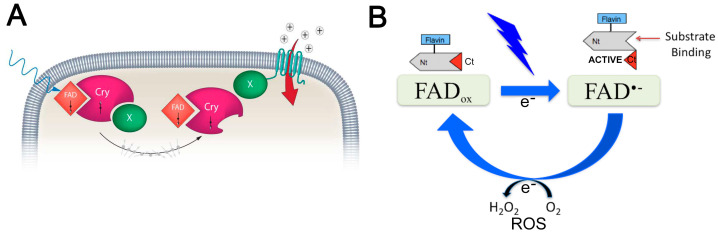
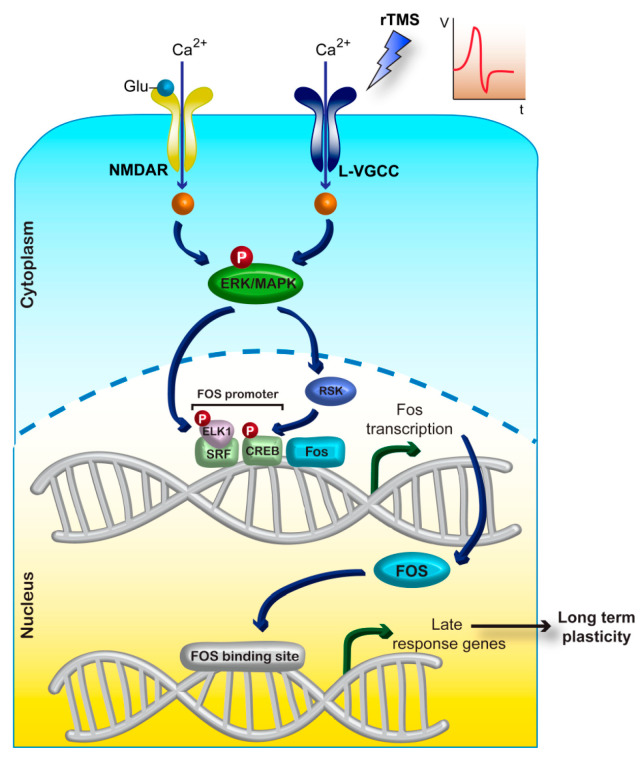
Verification
Claims the paper makes
The claims and statistics of this paper haven’t been checked yet.
Free: it reads the open-access text and checks the first 5 claims that cite a source we can check. Create a free account to check every claim.
Self-check
Percentages, sums and reported differences re-computed from the paper’s own numbers.
The self-check needs the paper’s full text.
Citations
Cites
Calcium's Role in Mechanotransduction during Muscle Development
Benavides Damm, T., & Egli, M. (2014) · Cellular Physiology and Biochemistry · doi:10.1159/000356667 · Cited by 14,502
Rossi, S., Hallett, M., Rossini, P. M., & Pascual-Leone, A. (2009) · Clinical Neurophysiology · doi:10.1016/j.clinph.2009.08.016 · Cited by 5,367 · cited 1×
“Moreover, magnetic stimulation at these lower neuromodulatory intensities has a wider range of possible stimulation parameters [23,24].”
NON-INVASIVE MAGNETIC STIMULATION OF HUMAN MOTOR CORTEX
Barker, A. T., Jalinous, R., & Freeston, I. L. (1985) · The Lancet · doi:10.1016/s0140-6736(85)92413-4 · Cited by 4,460 · cited 1×
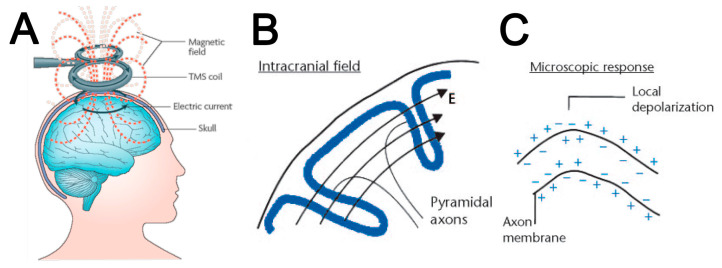
“One approach to extrinsic brain stimulation is the application of pulsed electromagnetic fields to the human brain [1,2] (Figure 1).”
Theta Burst Stimulation of the Human Motor Cortex
Huang, Y.-Z., Edwards, M. J., Rounis, E., Bhatia, K. P., & Rothwell, J. C. (2005) · Neuron · doi:10.1016/j.neuron.2004.12.033 · Cited by 4,158
Domingos da Silveira da Luz, A. C., Pereira Dias, G., do Nascimento Bevilaqua, M. C., Cocks, G., Gardino, P. F., Thuret, S., & Nardi, A. E. (2013) · Neuropsychobiology · doi:10.1159/000353269 · Cited by 3,995
Rossini, P. M., Burke, D., Chen, R., Cohen, L. G., Daskalakis, Z., Di Iorio, R., Di Lazzaro, V., Ferreri, F., Fitzgerald, P. B., George, M. S., et al. (2015) · Clinical Neurophysiology · doi:10.1016/j.clinph.2015.02.001 · Cited by 2,753 · cited 2×
“For clinical high-intensity rTMS, high frequencies ( ≥ 5 Hz) increase cortical excitability, and low frequencies ( ≤ 1 Hz) decrease it [36–38].”
Adult Neurogenesis in the Mammalian Brain: Significant Answers and Significant Questions
Ming, G.-L., & Song, H. (2011) · Neuron · doi:10.1016/j.neuron.2011.05.001 · Cited by 2,651 · cited 1×
“Neurogenesis in the subventricular zone and the hippocampal dentate gyrus subgranular zone is an important part of neural circuit plasticity [134].”
Transcranial Magnetic Stimulation: A Primer
Hallett, M. (2007) · Neuron · doi:10.1016/j.neuron.2007.06.026 · Cited by 1,891 · cited 1×
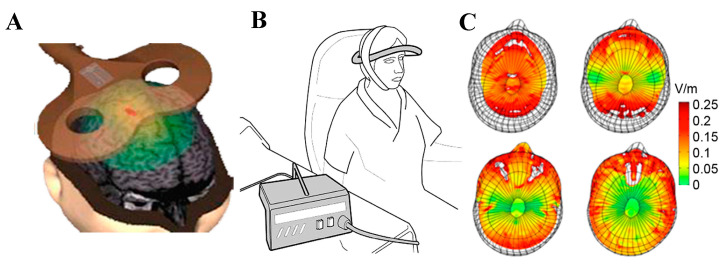
“Coil designs available for clinical TMS are usually either classic round coils or figure-of-eight coils [26,27].”
Calcium and ROS: A mutual interplay
Görlach, A., Bertram, K., Hudecova, S., & Krizanova, O. (2015) · Redox Biology · doi:10.1016/j.redox.2015.08.010 · Cited by 1,546 · cited 1×
“ROS were originally characterised as harmful to cells, but accumulating evidence shows that at physiological concentrations, they participate in signal transduction, Ca 2+ release from intracellular stores, and the fine-tuning of cellular signalling [99].”
Binder (2004) · doi:10.1080/08977190410001723308 · Cited by 1,481 · cited 1×
“The BDNF is widely expressed in the CNS and is essential for normal brain development and function [119] including the induction of LTP through Ca 2+ and IEG expression [120,121].”
Cited by
Antonioni, A., Martorana, A., Santarnecchi, E., Hampel, H. J., & Koch, G. (2025) · Alzheimer s & Dementia · doi:10.1002/alz.70337 · Cited by 35
Yen, C., Valentine, E. P., & Chiang, M. (2024) · Life · doi:10.3390/life14030329 · Cited by 16
“This magnetic field induces electrical currents in the underlying neural tissue, particularly in the cerebral cortex [12,65].”
BackgroundAdvances in magnetic field approaches for non-invasive targeting neuromodulation
Alipour, M., Abdolmaleki, M., Shabanpour, Y., Zali, A., Ashrafi, F., Nohesara, S., & Verdom, B. H. (2025) · Frontiers in Human Neuroscience · doi:10.3389/fnhum.2025.1489940 · Cited by 17
Zhang, Z., Liu, D., Song, W., Li, J., Wang, X., Yin, P., Liu, Y., Xu, M., Li, F., Li, Y., et al. (2025) · CNS Neuroscience & Therapeutics · doi:10.1111/cns.70582 · Cited by 11
“…the coil generates a pulsatile magnetic field that penetrates the scalp and skull [14], modulating cortical excitability depending on the stimulation frequency: high-frequency stimulation ( ≥ 5 Hz) is generally excitatory, whereas low-frequency stimulation ( ≤ 1 Hz) is inhibitory [15, 16].”
Yao, P., Zhou, Q., Ren, B., Li, Y., Bai, Y., & Feng, Z. (2025) · Neuropeptides · doi:10.1016/j.npep.2025.102501 · Cited by 9
Courrèges, M., Hoareau, M., Lévénès, C., & Rahioui, H. (2025) · Journal of Affective Disorders · doi:10.1016/j.jad.2025.119585 · Cited by 10
Thoradit, T., Chabi, M., Aguida, B., Baouz, S., Stierlé, V., Pooam, M., Tousaints, S., Akpovi, C. D., & Ahmad, M. (2024) · Communicative & Integrative Biology · doi:10.1080/19420889.2024.2384874 · Cited by 8
“…also fits very well with past observations of rapid changes in voltage-gated calcium channel (VGCC) activation resulting from RF exposure (see e.g. Pall, 2017), as ROS is a known modulator of intracellular calcium flux [30,31], and is induced in response to many different EMF signals [32,33].”
Zhai, C., Cai, J., Gong, Y., Sui, Y., Bai, Z., Qian, Y., Fei, Y., Wang, T., & Wu, Q. (2025) · Advanced technology in neuroscience . · doi:10.4103/atn.atn-d-24-00031 · Cited by 10
Li, Y., Du, J., Zhou, W., Wang, L., Wang, D., Li, K., Liu, Q., Ma, R., Lei, M., Yu, L., et al. (2025) · Advanced Functional Materials · doi:10.1002/adfm.202421547 · Cited by 6
Lohr, W., Tashli, M., Dong, C., Sundaram, P., & Hadimani, R. L. (2026) · Journal of Neural Engineering · doi:10.1088/1741-2552/ae44cf · Cited by 4
Thörnblom, E., Steinholtz, L., Persson, J., Axelson, H. W., & Bodén, R. (2024) · Journal of Psychiatric Research · doi:10.1016/j.jpsychires.2024.11.055 · Cited by 4
Moncomble, L., Neveu, P., Raimond, C., & Guérout, N. (2025) · Advanced technology in neuroscience . · doi:10.4103/atn.atn-d-24-00021 · Cited by 10
Chiang, M., Yang, Y., & Nicol, C. J. B. (2026) · Life · doi:10.3390/life16020293 · Cited by 4
“Magnetic stimulation has also been associated (in model systems) with modulation of ion channel activity, reductions in reactive oxygen species (ROS), and improvements in mitochondrial function [68,69].”
Rashid-López, R., Macías-García, P., Cruz-Gómez, Á. J., Cano-Cano, F., Sánchez-Fernández, F. L., Sarrias-Arrabal, E., del Marco, À., González-Moraleda, Á., Lozano-Soto, E., Sanmartino, F., et al. (2025) · Neurology and Therapy · doi:10.1007/s40120-025-00865-0 · Cited by 2
Lin, Y., Tao, Y., He, Z., Wang, H., Zheng, Y., & Jin, Y. (2026) · Frontiers in Neurology · doi:10.3389/fneur.2026.1788223 · Cited by 2
“…technique capable of modulating cortical excitability and large-scale brain networks through electromagnetic induction (19–21). rTMS, in particular, can induce lasting neuroplastic effects beyond the stimulation period, which are considered critical for its therapeutic potential (22, 23).”
Zhang, F., Wang, Y., Wang, Q., Sun, C., Jing, Y., Wang, S., Shan, J., Liu, H., & Zhu, Z. (2026) · International Journal of Nanomedicine · doi:10.2147/ijn.s611920 · Cited by 4
A multi-channel implantable micro-magnetic stimulator for synergistic magnetic neuromodulation
Dong, L., Qi, Y., Luan, M.-Y., Liu, Q., Wang, M., Tian, C., & Zheng, Y. (2025) · Brain Research · doi:10.1016/j.brainres.2025.149679 · Cited by 3
Palantzas, A., & Anagnostouli, M. (2026) · Sensors · doi:10.3390/s26051738 · Cited by 1
Ngo, N. L., Asfour, M., Tran, K., Cheung, G., & Mai, T. (2025) · Cureus · doi:10.7759/cureus.77721 · Cited by 1
Xie, Y., Guan, M., Zhang, T., Ma, C., Li, C., Wang, L., Lin, X., Li, Y., Wang, Z., Ma, Z., et al. (2025) · Translational Psychiatry · doi:10.1038/s41398-025-03459-4 · Cited by 1
“Given the critical role of excitatory-inhibitory imbalance in AVH, targeting GABAa receptor activity could enhance rTMS ef fi cacy by stabilizing networks, and may inform personalized treatment protocols based on receptor density.”
Technology-assisted interventions for neuropsychiatric disorders
Fliti, T., Shhaytli, A., Serhal, A., Takesh, Z., & Chokor, M. (2025) · Progress in brain research · doi:10.1016/bs.pbr.2025.08.017 · Cited by 1
Souki, A., Sharifzadeh, S., Brady, K. T., Hanlon, C. A., Jha, M. K., Lim, K. O., Rakesh, G., Young, J. R., Steele, V. R., Tang, V. M., et al. (2026) · Drug and Alcohol Dependence · doi:10.1016/j.drugalcdep.2026.113297 · Cited by 1
Moreles, A. M., Jaime, H. B., Aparicio‐Bautista, D. I., Mondragón‐Rodríguez, S., Overduin, M., & Basurto‐Islas, G. (2025) · Progress in Biomedical Engineering · doi:10.1088/2516-1091/adea02 · Cited by 1
Colella, M., Dolciotti, N., Nardo, L. D., Fontana, S., Salati, S., Cadossi, R., Apollonio, F., & Liberti, M. (2024) · International Conference on Electromagnetics in Advanced Applications (ICEAA) · doi:10.1109/iceaa61917.2024.10701788
Matsoukis, S., Scharinger, J., Covelo, J., Cancino-Fuentes, N., Sanchez-Vives, M. V., Edlinger, G., & Guger, C. (2024) · International Conference on Bioinformatics Research and Applications (ICBRA) · doi:10.1145/3700666.3700702
Assessing Microglial Phagocytosis of Myelin Debris in vitro Under Repeated Magnetic Stimulation
Zhai, C., Cai, J., Du, M., Fei, Y., & Wu, Q. (2025) · Journal of Visualized Experiments · doi:10.3791/67642
Rashid Abdu Rahim López, R. (2024) · RODIN (Universidad de Cádiz)
Fauquier, A., Dufor, T., Morellini, N. M., Doulazmi, M., Mariani, J., Lohof, A. M., & Sherrard, R. M. (2026) · bioRxiv (Cold Spring Harbor Laboratory) · doi:10.64898/2026.03.24.713842
“Moreover, the very great difference in transcriptomic modifications induced in aged vs. adult cerebellum confirms previous findings that a circuit’s functional state modifies the way it responds to rTMS, with normal neural circuits being much less reactive than dysfunctional ones 36,42 .”
Self-citationChen, W., Vinit, S., & Vivodtzev, I. (2026) · bioRxiv (Cold Spring Harbor Laboratory) · doi:10.64898/2026.03.31.715726
Deng, W., Wang, S., Zhang, L., Wang, S., Bai, A., Xing, Z., Liang, Y., Zhang, Y. J., Xing, W., & Hao, L. (2026) · Frontiers in Psychiatry · doi:10.3389/fpsyt.2026.1757883
“…that rTMS modulates distal brain networks by precisely targeting speci fi c cortical regions (16), rTMS applies fi nely modulated time-varying magnetic and electric fi elds to evoke neuronal action potentials, which are then transmitted to other cortical regions via synaptic connections (17).”
Dong, L., Wang, J., Liu, Y., Pang, J., Zhou, M., & Zheng, Y. (2026) · European Journal of Neuroscience · doi:10.1111/ejn.70592
“Magnetic stimulation, especially the mode related to LTP/LTD induction, strongly relies on classical pathways such as Ca 2+ , calmodulin-dependent protein kinase II (CaMKII), and protein kinase A (PKA) (Dufor et al. 2023).”
Ren, Z., Lu, B., Qiu, H., Wang, Z., Wang, T., Kang, J., Zou, T., Zhu, H., & Ding, C. (2026) · Brain Sciences · doi:10.3390/brainsci16070673
“Magnetic stimulation exhibits unique value in neuromodulation research due to its advantages, which include non-contact application, strong penetration capability, flexibly adjustable stimulation parameters, and minimal tissue damage [2].”
Yang, Z., Wang, B., Zhao, Z., Shi, W., Jian, D., Tang, Y., Liu, F., Deng, Z., Zhang, Y., Huang, X., et al. (2026) · Journal of the American Academy of Dermatology · doi:10.1016/j.jaad.2026.07.036
Mazhar, N., Khan, M. A., Majeed, A., & Zafar, K. (2026) · Journal of Biomolecules Pathogenesis and Therapeutics · doi:10.68041/jbpt.v2i1/09
“21,22 These mechanisms indicate an inherent capacity threshold on a synaptic level, which indicates that plasticity acts a functional mechanism of adaptation, but not maximum amplification.”
Metadata
- Authors
- Dufor, T., Lohof, A. M., & Sherrard, R. M.
- Affiliations
- University College London (GB)
- Centre National de la Recherche Scientifique (FR)
- Corresponding author
- Sherrard, Rachel M.
- Venue
- International Journal of Molecular Sciences
- Publisher
- MDPI AG
- Published
- 2023-11-17
- Volume
- 24
- Issue
- 22
- Pages
- 16456
- ISSN
- 1422-0067 (ISSN-L)
- PMC
- PMC10671429
- OpenAlex
- W4388762216
- Cited by
- 28
- References
- 146
- Citations by year
- 2026: 7 · 2025: 15 · 2024: 6
- FWCI
- 0.73
- Type
- journal article
- Language
- en
- Open access
- gold
- doi.org
- Licence
- Locations
- International Journal of Molecular Sciences (publishedVersion, cc-by)
- PubMed Central (publishedVersion, cc-by)
- PubMed (publishedVersion)
- HAL (submittedVersion, cc-by)
- Funders
- French Ministère de l’Enseignement supérieur, de la Recherche et de l’Innovation (DEQ20081213987, ANR-19-CE37-0021)
- Fondation de la Recherche Médicale (DEQ20081213987, ANR-19-CE37-0021)
- Agence National de la Recherche (DEQ20081213987, ANR-19-CE37-0021)
- nstitut pour la Recherche sur la Moelle épinière et l’Encephale (DEQ20081213987, ANR-19-CE37-0021)
- Topics
- Life Sciences › Neuroscience › Neurology › Transcranial Magnetic Stimulation Studies
- Life Sciences › Biochemistry, Genetics and Molecular Biology › Biophysics › Electromagnetic Fields and Biological Effects
- Physical Sciences › Engineering › Biomedical Engineering › Ultrasound and Hyperthermia Applications
- Keywords
- transcranial magnetic stimulation, pulsed magnetic field, synaptic plasticity, neuronal network activity, stimulation parameters
- MeSH terms
- Animals, Brain, Humans, Neuronal Plasticity, Transcranial Magnetic Stimulation, Magnetic Phenomena
About these checks
Registry, retraction, Cites and statistics results are computed, not judged, with one exception: a printed reference that no index lists is read once by a model before it counts as a citation error. Claims are extracted by a model and kept only when their quote appears verbatim in the text; each cited source is then checked, with a model’s help, for whether it says what the claim relies on. Those verdicts can be wrong — read the claim’s quote and the cited source before relying on one.
Statistics and arithmetic are recomputed, not judged.
Confidence bands are shown only for fields calibrated on our annotated test set. None is calibrated yet, so no band is shown.
What counts as a claim ›How we measure confidence ›How we check this ›
Are you an author, or do you see a problem with this page? Request a review
Data sources
Bibliographic data: Semantic Scholar, OpenAlex, Crossref.
Contains information from the Semantic Scholar Academic Graph Datasets, made available under the ODC Attribution License (ODC-BY 1.0).
Semantic Scholar’s data is described in: Kinney, R., et al. (2023). The Semantic Scholar Open Data Platform. arXiv:2301.10140.
