

Reference Values for the Rivermead Post-Concussion Symptoms Questionnaire (RPQ) from General Population Samples in the United Kingdom, Italy, and The Netherlands
Open accessThe DOI matches its Crossref record; 49 of the 49 references it cites were found in a registry or an index.
Abstract
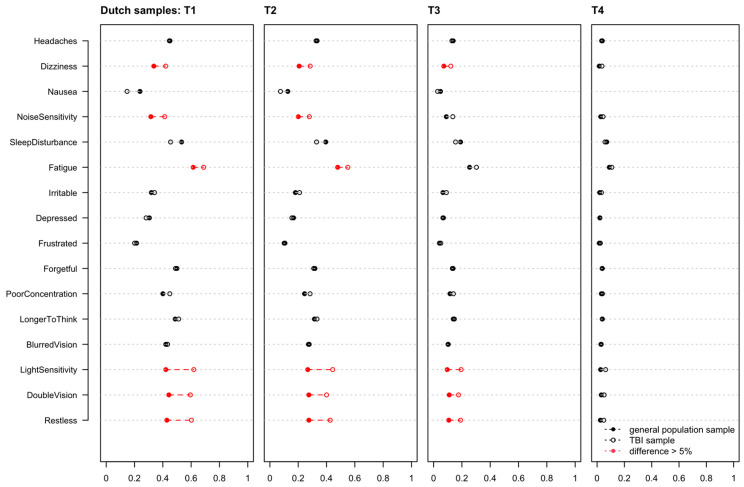
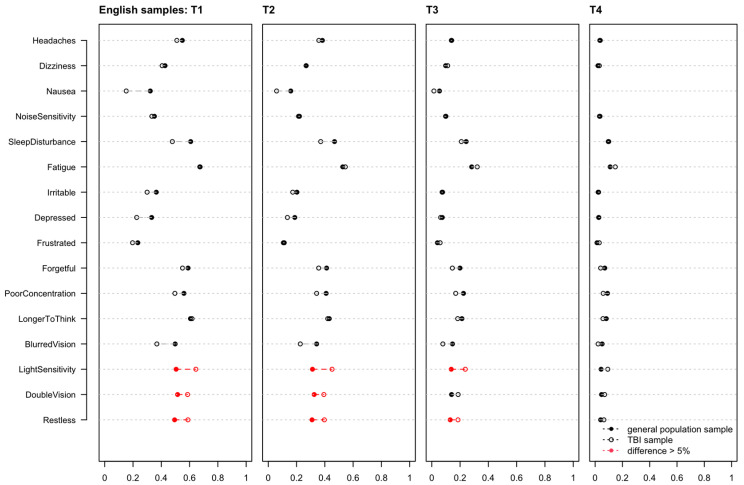
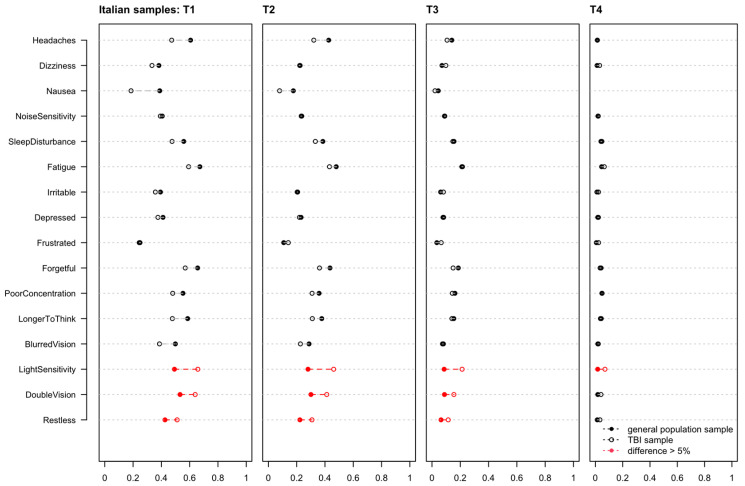
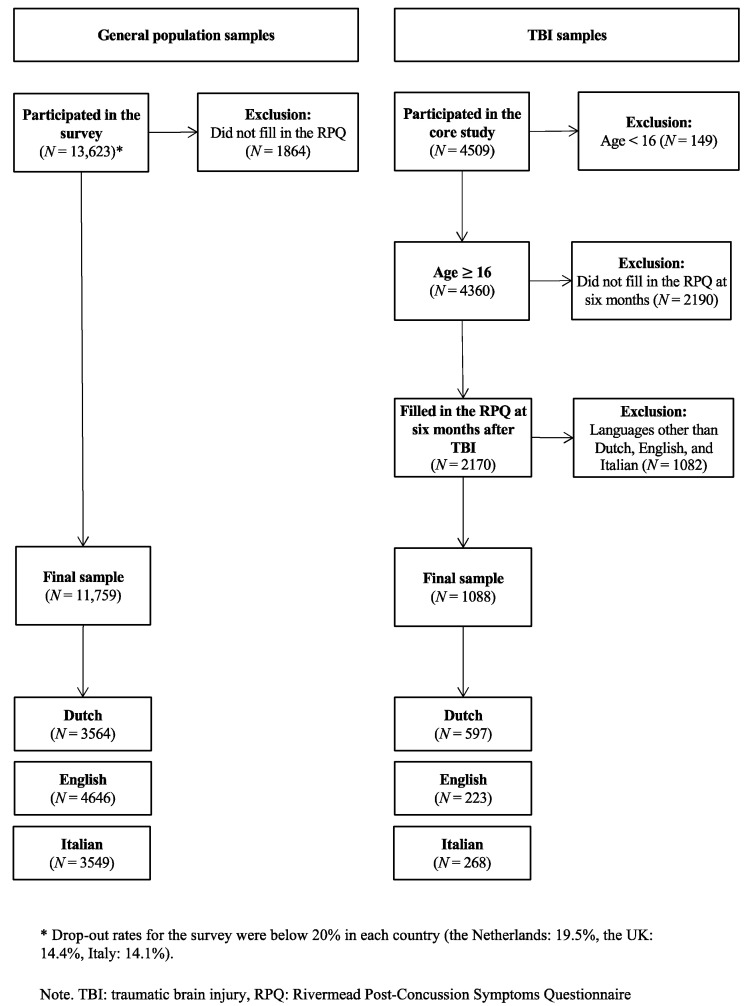
After traumatic brain injury (TBI), individuals may experience short- or long-term health burdens, often referred to as post-concussion symptoms (PCS). The Rivermead Post-Concussion Symptoms Questionnaire (RPQ) is one of the commonly used instruments to assess self-reported PCS. To date, no reference values for RPQ have been provided, although they are crucial for clinical practice when evaluating a patient’s health status relative to a comparable healthy population. Therefore, the aim of this study is to provide reference values for the United Kingdom, the Netherlands, and Italy. A total of 11,759 individuals (50.3% women) from representative general population samples participated in an online survey (4646 individuals from the UK, 3564 from the Netherlands, and 3549 from Italy). The factorial structure of the RPQ was examined using confirmatory factor analysis (CFA), and results from the general population samples were compared with those from respective TBI samples recruited within the international CENTER-TBI study using multigroup CFA. Reference values were stratified by sex, health status, age, and education using percentiles. The three-factorial model outperformed the one-factorial structure. The general population samples were largely comparable to the corresponding TBI samples, except for items such as dizziness, vision, and sensory sensitivity, which can be considered more TBI-specific. Because of the significant differences between the general population samples, we provided reference values for the total score and for the somatic, emotional, and cognitive scales for each country separately. The reference values provided can now be used in clinical practice and research. Future studies should obtain stratified reference values for other countries and languages to improve accuracy in the diagnosis and treatment of symptom burden after TBI.
Overview
The claims and statistics of this paper haven’t been checked yet.
Free: it reads the open-access text and checks the first 5 claims that cite a source we can check. Create a free account to check every claim.
Integrity signals
Registry
Cites
Statistics
Figures
Verification
Claims the paper makes
The claims and statistics of this paper haven’t been checked yet.
Free: it reads the open-access text and checks the first 5 claims that cite a source we can check. Create a free account to check every claim.
Claims other papers make about this one
Each is checked against this paper’s own text: does it say what the citing paper says it does?
The source backs part of the claim, not all of it — or backs it for a different population, condition or comparison.
In the citing paper
“Three out of 4 participants' RPQ scores decreased from clinically relevant to non-relevant levels (31) from baseline (T0) compared to after intervention (T2) and follow-up (T3).”
From Intensive exposure therapy for individuals with persistent concussion symptoms following concussion: a replicated single-case experimental design (SCED) study. (2025) · cites this paper as [31]
Experimental — accuracy not yet measuredThe cited source says what the claim attributes to it.
In the citing paper
“One participant experienced high, but not clinically relevant scores as per the guidelines (31), at T0 and their scores decreased at T2, and at T3 there was an absence of symptoms.”
Self-check
Percentages, sums and reported differences re-computed from the paper’s own numbers.
The self-check needs the paper’s full text.
Citations
Cites
Hu, L., & Bentler, P. M. (1999) · Structural Equation Modeling A Multidisciplinary Journal · doi:10.1080/10705519909540118 · Cited by 108,788 · cited 2×
“95) [33,34], the root mean square error of approximation (RMSEA; excellent fit at 0.”
Backgroundlavaan : An R Package for Structural Equation Modeling
Rosseel, Y. (2012) · Journal of Statistical Software · doi:10.18637/jss.v048.i02 · Cited by 27,955 · cited 1×
“[43] and packages table1 [44] for descriptive analyses, psych [45] for psychometric properties, and lavaan [46] for the CFA and MI testing.”
MethodComparative fit indexes in structural models.
Bentler, P. M. (1990) · Psychological Bulletin · doi:10.1037/0033-2909.107.2.238 · Cited by 25,266 · cited 1×
“95) [32,33], the Tucker–Lewis index (TLI; ≥0.”
Significance tests and goodness of fit in the analysis of covariance structures.
Bentler, P. M., & Bonett, D. G. (1980) · Psychological Bulletin · doi:10.1037//0033-2909.88.3.588 · Cited by 19,023 · cited 1×
“95) [33,34], the root mean square error of approximation (RMSEA; excellent fit at 0.”
BackgroundEvaluating Goodness-of-Fit Indexes for Testing Measurement Invariance
Cheung, G. W., & Rensvold, R. B. (2002) · Structural Equation Modeling: A Multidisciplinary Journal · doi:10.1207/s15328007sem0902_5 · Cited by 16,280 · cited 1×
“01 [41], models were considered equivalent.”
ASSESSMENT OF COMA AND IMPAIRED CONSCIOUSNESS
Teasdale, G., & Jennett, B. (1974) · The Lancet · doi:10.1016/s0140-6736(74)91639-0 · Cited by 13,215 · cited 3×
“4 Chronic health complaints are provided for the general population samples, information on TBI severity (GCS; mild ≥ 13, moderate/severe ≤ 12) is reported for the TBI samples.”
BackgroundMethodQuality criteria were proposed for measurement properties of health status questionnaires
Terwee, C. B., Bot, S. D. M., de Boer, M. R., van der Windt, D. A. W. M., Knol, D. L., Dekker, J., Bouter, L. M., & de Vet, H. C. W. (2007) · Journal of Clinical Epidemiology · doi:10.1016/j.jclinepi.2006.03.012 · Cited by 10,764 · cited 1×
“95 indicating good to excellent internal consistency [19]), split-half reliability (odd vs.”
BackgroundFamily history of subarachnoid haemorrhage: supplemental value of scrutinizing all relatives.
Greebe, P., Bromberg, J. E., Rinkel, G. J., Algra, A., & van Gijn, J. (1997) · Journal of Neurology, Neurosurgery & Psychiatry · doi:10.1136/jnnp.62.3.273 · Cited by 4,139
psych: Procedures for Personality and Psychological Research
Revelle, W. (2017) · Cited by 3,321
Traumatic brain injury: integrated approaches to improve prevention, clinical care, and research
Maas, A. I. R., Menon, D. K., Adelson, P. D., Andelic, N., Bell, M. J., Belli, A., Bragge, P., Brazinova, A., Büki, A., Chesnut, R. M., et al. (2017) · The Lancet Neurology · doi:10.1016/s1474-4422(17)30371-x · Cited by 2,609 · cited 3×
“Even after mild traumatic brain injury (scores of 13–15 on the Glasgow Coma Scale; GCS [4]), which accounts for the majority of all TBI cases [2], individuals do not fully recover to their premorbid level of functioning and report being bothered by a range of health problems [5].”
BackgroundSelf-citation
Research works printed but not linked: 2
- Brown T.A. Confirmatory Factor Analysis for Applied Research 2nd ed. Methodology in the Social Sciences The Guilford Press New York, NY, USA London, UK 2015 978-1-4625-1779-4
- Steiger J.H. Statistically Based Tests for the Number of Common Factors Proceedings of the the Annual Meeting of the Psychometric Society Iowa City, IA, USA 1980
Cited by
Zeldovich, M., Bockhop, F., Čović, A., Mueller, I., Polinder, S., Mikolić, A., van der Vlegel, M., von Steinbüchel, N., Åkerlund, C. A. I., Amrein, K., et al. (2023) · Journal of Patient-Reported Outcomes · doi:10.1186/s41687-023-00632-5 · Cited by 16
Self-citationRecovery Trajectories of Patients with Mild Traumatic Brain Injury
King, S., Winkens, I., Wijenberg, M., Schepers, J., Stapert, S. Z., Verbunt, J., Rijkeboer, M. M., van der Naalt, J., & Heugten, C. M. V. (2025) · Journal of Neurotrauma · doi:10.1089/neu.2024.0610 · Cited by 11
King, S., Stapert, S. Z., Winkens, I., van der Naalt, J., van Heugten, C. M., & Rijkeboer, M. M. (2024) · Journal of Head Trauma Rehabilitation · doi:10.1097/htr.0000000000000942 · Cited by 9
Zeldovich, M., Krol, L., Timmermann, D., Krenz, U., Arango‐Lasprilla, J. C., Gioia, G. A., Brockmann, K., Koerte, I. K., Buchheim, A., Roediger, M., et al. (2023) · Frontiers in Neurology · doi:10.3389/fneur.2023.1266828 · Cited by 9
Self-citationEggertsen, P. P., Palmfeldt, J., Pedersen, A. R., Frederiksen, O.-V., Olsen, R. K. J., & Nielsen, J. F. (2024) · Journal of the Neurological Sciences · doi:10.1016/j.jns.2024.123016 · Cited by 11
Jobin, K., Wang, M., du Plessis, S., Silverberg, N. D., & Debert, C. T. (2023) · Neurorehabilitation · doi:10.3233/nre-237002 · Cited by 9
mTBI Biological Biomarkers as Predictors of Postconcussion Syndrome—Review
Stępniewska, E., Kałas, M., Świderska, J., & Siemiński, M. (2024) · Brain Sciences · doi:10.3390/brainsci14050513 · Cited by 7
Mollica, A., Cash, R. F. H., Leochico, C. F. D., Giacobbe, P., Sewell, I. J., Zalesky, A., Rabin, J. S., Goubran, M., Graham, S. J., Davidson, B., et al. (2025) · Nature Mental Health · doi:10.1038/s44220-025-00503-6 · Cited by 7
“The RPQ is a diagnostic tool commonly used to diagnose PSaC and includes somatic, affective, cognitive and behavioral components, with higher scores reflecting higher symptom burden 50,98 .”
Hecker, L., King, S., Stapert, S. Z., Geusgens, C. A. V., den Hollander, M., Fleischeuer, B., & Heugten, C. M. V. (2024) · Journal of Head Trauma Rehabilitation · doi:10.1097/htr.0000000000001023 · Cited by 8
Dizziness-Related Disability One Year after a Mild-to-Moderate TBI—A Follow-Up Study
Kleffelgård, I., Anđelić, N., Bruusgaard, K. A., Langhammer, B., Tamber, A.-L., & Søberg, H. L. (2023) · Journal of Clinical Medicine · doi:10.3390/jcm12165192 · Cited by 5
King, S., Winkens, I., van der Naalt, J., van Heugten, C. M., & Rijkeboer, M. M. (2025) · Brain Injury · doi:10.1080/02699052.2025.2544624 · Cited by 2
Nesterovskiy, Y. E. (2025) · Meditsinskiy sovet = Medical Council · doi:10.21518/ms2025-305 · Cited by 3
Single-Item Screening for Depression in Adults (50+) with History of Traumatic Brain Injury
Rolin, S. N., & Davis, J. J. (2025) · Archives of Clinical Neuropsychology · doi:10.1093/arclin/acaf023 · Cited by 2
Zeldovich, M., Bockhop, F., Čović, A., Mueller, I., Polinder, S., Mikolić, A., van der Vlegel, M., & von Steinbüchel, N. (2023) · Research Square · doi:10.21203/rs.3.rs-2886101/v1 · Cited by 4
Self-citationKerala Brain Injury Questionnaire: Feasibility, Reliability, and Validation Study
Ambrose, A. F., Adhikari, D., Kumar, V. G. P., Sigamani, A., Weiss, E. F., Jin, Y., Wang, C., Ayers, E. I., & Verghese, J. (2025) · Neurology India · doi:10.4103/neurol-india.neurol-india-d-24-00864 · Cited by 1
Gastrointestinal Symptoms After Sport-Related Concussion in Irish Athletes
Finnegan, E., Daly, E., Hunzinger, K. J., & Ryan, L. (2026) · Nutrients · doi:10.3390/nu18060914 · Cited by 1
“Post-concussion symptoms were assessed using the 16-item RPQ, a validated measure of somatic, emotional, and cognitive symptoms (Supplementary Table S3) [30,32].”
Rolin, S. N., & Davis, J. J. (2026) · Archives of Clinical Neuropsychology · doi:10.1093/arclin/acag037 · Cited by 1
Experience of mTBI-like symptoms in a sample without brain injury in Aotearoa/New Zealand
Chua, J., & Theadom, A. (2024) · Brain Impairment · doi:10.1071/ib23070
Characterizing supplement use and dietary behaviors in adults with acquired brain injury
Vergeer, M. H., Mercier, L. J., McIntosh, S. J., Boucher, C., Madden, R. F., Shearer, J., & Debert, C. T. (2024) · Brain Injury · doi:10.1080/02699052.2024.2436594
Scerrati, A., Lippa, L., Zeldovich, M., Boutte, A. M., & Rostami, E. (2024) · Frontiers research topics · doi:10.3389/978-2-8325-5828-7
Tuborgh, A. H., Svendsen, S. W., Elklit, A., Hunter, J., Jensen, J. S., Ørnbøl, E., Schröder, A., Nielsen, J. F., Thastum, M. M., Næss‐Schmidt, E. T., et al. (2025) · Scandinavian Journal of Psychology · doi:10.1111/sjop.13094
“Gender and age-related reference values, based on data from three European countries (UK, Italy, the Netherlands), have recently been published to differentiate be-tween typical symptom variations and those indicating clinically relevant PCS (Zeldovich et al. 2022).”
Chaurasiya, A., Ranjan, J. K., Pandey, N., & Asthana, H. S. (2025) · Archives of Clinical Neuropsychology · doi:10.1093/arclin/acaf039
Snell, D. L., Faulkner, J. W., Williman, J. A., Silverberg, N. D., Theadom, A., Surgenor, L. J., & Siegert, R. J. (2025) · Brain Impairment · doi:10.1071/ib24074
King, S. (2025) · Research Publications (Maastricht University) · doi:10.26481/dis.20251006sk
Early team based neuro-rehabilitation after mild traumatic brain injury: a pilot study
Lindström, A.-C., Sunnerhagen, K. S., & Nordeman, L. (2025) · Journal of Rehabilitation Medicine – Clinical Communications · doi:10.2340/jrm-cc.v8.44355
“Even though participants in this study showed improvements in their ratings, their scores remained lower than reference values from the general population (mean 14.7, median 12.0) (23).”
InfluentialAbrar, K., Goldstein, B. M., Frank, J. B., & Zakzanis, K. K. (2025) · Archives of Clinical Neuropsychology · doi:10.1093/arclin/acaf108
Zeldovich, M., Bockhop, F., Čović, A., Mueller, I., Polinder, S., Mikolić, A., van der Vlegel, M., & von Steinbüchel, N. (2024) · Figshare · doi:10.6084/m9.figshare.26615755
Self-citationZeldovich, M., Bockhop, F., Čović, A., Mueller, I., Polinder, S., Mikolić, A., van der Vlegel, M., & von Steinbüchel, N. (2024) · Figshare · doi:10.6084/m9.figshare.26615758
Self-citationZeldovich, M., Bockhop, F., Čović, A., Mueller, I., Polinder, S., Mikolić, A., van der Vlegel, M., & von Steinbüchel, N. (2024) · Figshare · doi:10.6084/m9.figshare.26615761
Self-citationHicks, S. D., Harding, B. A., Olympia, R. P., Loeffert, J. R., Onks, C. A., Mannix, R., Levine, D. A., & Yeates, K. O. (2026) · Journal of Neuropsychology · doi:10.1111/jnp.70031
“In addition, burden and severity thresholds vary across different symptom questionnaires because of differences in the number and content of items, as well as their response scales (e.g. 4 vs. 6-point Likert) (Karaliute et al., 2021; Zeldovich et al., 2022).”
Winkelmann, Z. K., Phan, C. J., Tavakoli, A. S., Yeargin, S. W., Harrison, A. T., & Kay, J. (2026) · Journal of Athletic Training · doi:10.4085/1062-6050-0578.25
Matthews, R., Verma, A., Calvert, D. D., Lemoine, N. P., Marucci, J., Etheredge, S. N., Zura, R., Spielmann, G., & Johannsen, N. M. (2026) · Sports · doi:10.3390/sports14040133
Cain, G., Beh, O., & Sullivan, K. A. (2026) · Journal of Clinical and Experimental Neuropsychology · doi:10.1080/13803395.2026.2664548
“The RPQ has excellent reliability (Cronbach’s alpha > .90) and validity in mTBI populations (Zeldovich et al., 2022) and was employed to maintain consistency with other FAM-PPCS studies (Amin et al., 2024; Anderson & Fitzgerald, 2020; Hecker et al., 2025; Snell et al., 2023).”
Gentile, C. P., & Grady, M. F. (2026) · Neurologic Clinics · doi:10.1016/j.ncl.2026.03.006
Finnegan, E., Daly, E., Hunzinger, K. J., & Ryan, L. (2026) · Nutrients · doi:10.3390/nu18111740
“General post-concussion symptoms were measured using two validated instruments: the RPQ [34,35] and the SCAT-6 symptom checklist [1], which assess somatic, emotional, and cognitive domains (Supplementary Tables S2 and S3).”
Pelo, R. M., Laforge, G., Martindale, C., Fino, P. C., Dibble, L. E., Petron, D. J., Kutcher, J., & Cortez, M. M. (2026) · Journal of Neurotrauma · doi:10.1177/08977151261467598
An experimental study of resilience and its effect on simulated persistent postconcussion symptoms
Beh, O., Cain, G., & Sullivan, K. A. (2026) · Brain Impairment · doi:10.1071/ib26016
Hellemose, L. A. A., Thastum, M. M., Stabel, H. H., Odgaard, L., Rask, C. U., Silverberg, N. D., Skandsen, T., Rytter, H. M., Nygaard, C., Eggertsen, P. P., et al. (2026) · EClinicalMedicine · doi:10.1016/j.eclinm.2026.104243
“16”
Oculomotor rehabilitation after concussion in adults (ORCA): a feasibility study
Biscardi, M., Bayley, M. T., Thorpe, K., Quaid, P., Colantonio, A., & Mollayeva, T. (2026) · Frontiers in Neuroscience · doi:10.3389/fnins.2026.1898653
Nygaard, C., Kothari, S. F., Schytz, H. W., Odgaard, L., Pedersen, C. B., Skandsen, T., Lauridsen, A. S. M., Nicolaisen, A. B., Thastum, M. M., Stabel, H. H., et al. (2026) · Headache The Journal of Head and Face Pain · doi:10.1111/head.70263
Metadata
- Authors
- Zeldovich, M., Bockhop, F., Covic, A., Cunitz, K., Polinder, S., Haagsma, J. A., von Steinbuechel, N., & on behalf of the CENTER-TBI Participants and Investigators
- Affiliations
- Universitätsmedizin Göttingen (DE)
- Institute of Medical Psychology and Medical Sociology, University Medical Center Göttingen, Waldweg 37A, 37073 Göttingen, Germany
- Erasmus MC (NL)
- Corresponding author
- Zeldovich, Marina
- Venue
- Journal of Clinical Medicine
- Publisher
- MDPI AG
- Published
- 2022-08-09
- Volume
- 11
- Issue
- 16
- Pages
- 4658
- ISSN
- 2077-0383 (ISSN-L)
- PMC
- PMC9410233
- OpenAlex
- W4293678684
- Cited by
- 36
- References
- 49
- Citations by year
- 2026: 9 · 2025: 11 · 2024: 10 · 2023: 6
- FWCI
- 4.87
- Type
- journal article
- Language
- en
- Open access
- gold
- doi.org
- Licence
- Locations
- Journal of Clinical Medicine (publishedVersion, cc-by)
- PubMed Central (publishedVersion, cc-by)
- PubMed (publishedVersion)
- EUR Research Repository (Erasmus University Rotterdam) (publishedVersion, cc-by)
- EUR Research Repository (Erasmus University Rotterdam) (submittedVersion, cc-by)
- DOAJ (DOAJ: Directory of Open Access Journals) (submittedVersion, cc-by-sa)
- GoeScholar The Publication Server of the Georg-August-Universität Göttingen (Georg-August-Universität Göttingen) (submittedVersion, cc-by)
- Funders
- the European Union 7th Framework programme (602150)
- the Hannelore Kohl Stiftung (602150)
- OneMind (602150)
- Integra LifeSciences Corporation (602150)
- Topics
- Health Sciences › Medicine › Clinical Neurology › Traumatic Brain Injury Research
- Health Sciences › Medicine › Clinical Neurology › Traumatic Brain Injury and Neurovascular Disturbances
- Health Sciences › Medicine › Clinical Neurology › Long-Term Effects of COVID-19
- Keywords
- Rivermead Post-Concussion Symptoms Questionnaire, post-concussion symptoms, traumatic brain injury, reference values, general population, percentile scores, factor structure, somatic symptoms, emotional symptoms, cognitive symptoms, dizziness, sensory sensitivity, CENTER-TBI study, cross-national comparison
About these checks
Registry, retraction, Cites and statistics results are computed, not judged, with one exception: a printed reference that no index lists is read once by a model before it counts as a citation error. Claims are extracted by a model and kept only when their quote appears verbatim in the text; each cited source is then checked, with a model’s help, for whether it says what the claim relies on. Those verdicts can be wrong — read the claim’s quote and the cited source before relying on one.
Statistics and arithmetic are recomputed, not judged.
Confidence bands are shown only for fields calibrated on our annotated test set. None is calibrated yet, so no band is shown.
What counts as a claim ›How we measure confidence ›How we check this ›
Are you an author, or do you see a problem with this page? Request a review
Data sources
Bibliographic data: Semantic Scholar, OpenAlex, Crossref.
Contains information from the Semantic Scholar Academic Graph Datasets, made available under the ODC Attribution License (ODC-BY 1.0).
Semantic Scholar’s data is described in: Kinney, R., et al. (2023). The Semantic Scholar Open Data Platform. arXiv:2301.10140.
