

Parents’ Knowledge of the Impact of Cystic Fibrosis on the Quality of Life of Children and Adolescents Suffering from This Disease as an Element of Patient Safety
Open accessThe DOI matches its Crossref record; 21 of the 24 references it cites were found in a registry or an index; 4 of the 26 sources its claims cite were checked for support.
Abstract
Parental perspective on the health, safety, and quality of life in children and adolescents with cystic fibrosis (CF). Aim of the study: Assessment of the impact of a chronic disease such as cystic fibrosis (CF) on the quality of life and safety of children and adolescents as perceived by parents/caretakers. Methods: The study was conducted at the Department of Lung Diseases of the Institute of Mother and Child, a branch of the Cystic Fibrosis Centre Children of Warsaw SZPZOZ in Dziekanów Leśny, the largest pediatric CF center in Poland, and in the Rodzinamuko group on Facebook. A total of 139 parents participated in the study. The study was conducted using the diagnostic survey method with the use of the Kid- & Kiddo-KINDLR questionnaire for examining the quality of life of children and adolescents and a demographic questionnaire. Results: The perception of cystic fibrosis (CF) as a chronic disease varies based on parental residence and professional status. The well-being of children and adolescents with CF is tied to their parents’ employment, particularly regarding schooling. Social interactions are influenced by the level of parental education. The quality of life in children and adolescents with CF is age-dependent, with younger children exhibiting higher quality of life. This age–quality of life relationship extends to physical well-being, emotional well-being, and school-related aspects. Furthermore, the emotional dimension of quality of life is affected by the child’s age at the time of diagnosis. Conclusions: The Kid- & Kiddo-KINDLR QoL Questionnaire for children with cystic fibrosis is a good tool to measure parental knowledge. The study shows the need for the whole family to understand and be aware of the impact of CF on family life. Parents may be tired or may misunderstand or miscommunicate the medical team’s instructions, which may affect both family life and patient safety. To ensure patient safety, parents should work with healthcare professionals at hospitals or clinics but also at home. They should also account for the family as a whole, not just for the problems of the child with CF.
Overview
CoChat Summary
## TL;DR
This parent-reported survey of 139 parents of children with cystic fibrosis (CF) found generally good quality-of-life scores, with the highest mean in family life and the lowest in self-esteem. The study also found that younger age and earlier diagnosis were associated with better perceived quality of life, and that parents’ residence, work situation, and education were linked to some perceptions of the child’s well-being.
## Key findings
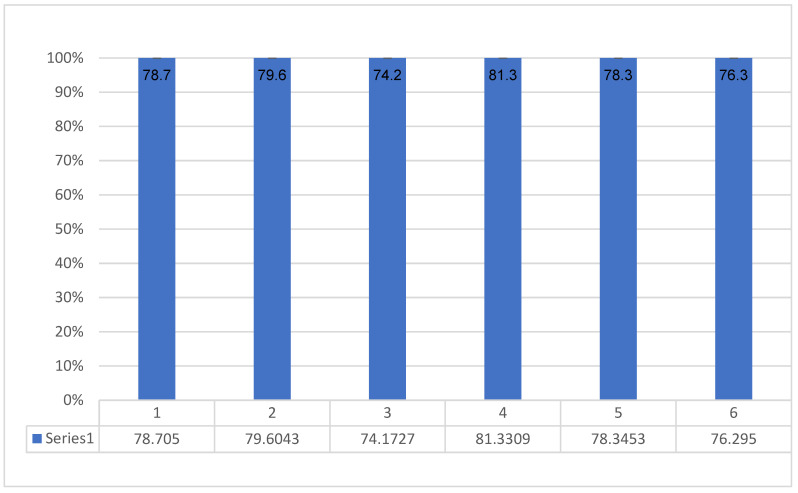
- The overall mean quality-of-life score for children with CF was 78.17/100 (SD = 10.26); by subscale, the highest mean was family (81.3, SD = 10.7) and the lowest was self-esteem (74.2, SD = 14.5).
- Age mattered: younger children were rated higher on overall quality of life (rho = −0.279; p < 0.01), physical well-being (rho = −0.165; p = 0.052), self-esteem (rho = −0.251; p < 0.01), emotional well-being (rho = −0.298; p < 0.01), and school functioning (rho = −0.354; p < 0.01).
- Later diagnosis was associated with worse parent-rated health/quality of life, especially emotional well-being (rho = −0.155; p = 0.069) and self-esteem (rho = −0.168; p < 0.05); the paper also reports a negative correlation for overall health assessment (rho = −0.207; p < 0.05).
- Parental factors were associated with some ratings: parents who had resigned from work rated school quality of life higher than working parents (M = 78.8 vs 73.4; U = 1586.5; p < 0.05), and parental education was associated with differences in social interactions and other subscales (e.g., higher education parents rated social interactions lower, M = 75.46).
## Methods
- The study used a diagnostic survey design with the parent version of the Kid- & Kiddo-KINDLR questionnaire plus an author-made demographic/clinical questionnaire.
- Sample: 139 parents/caretakers of children with CF, with child age 7–17 years; data were collected from 6 July to 1 December 2021 at a CF treatment center in Poland, and some responses were obtained via the Rodzinamuko Facebook group.
- Analysis used SPSS 23.0 and Excel; the main tests were Mann–Whitney U, Spearman’s rho, and chi-square, with significance at p < 0.05.
## Limitations
- The paper explicitly states that no control group was taken into account.
- The text suggests a limitation that the study is parent-reported only (no child self-report is described); this is evident from the methods and results.
- The paper also notes that the sample was drawn from one treatment center plus a Facebook group, which makes broader representativeness uncertain; this is evident from the text, though the paper says the group was representative of the Polish CF population.
Model-written summary. Check it against the paper before relying on it.
Integrity signals
Registry
Cites
Statistics
Figures
Verification
Claims the paper makes
4 Valid · 0 Not valid · 21 Not checked · 65 Own results and interpretations
Every source the paper cites for this claim was checked and supports it.
In the paper
“According to Conway et al., this significantly affects patient safety, and such a treatment team should comprise consultants, a clinical nurse, a microbiologist, a physiotherapist, a dietician, a pharmacist, a clinical psychologist, a social worker, a clinical geneticist, and other healthcare professionals, all of whom should be experienced in the care of patients with CF [4].”
§ Parents’ Knowledge of the Impact of Cystic Fibrosis on the Quality of Life of Children and Adolescents Suffering from This Disease as an Element of Patient Safety > 1. Introduction
What the sources say
- Supportedcites [4] Conway S. Balfour-Lynn I.M. De Rijcke K. Drevinek P. Foweraker J. Havermans T. Heijerman H. Lannefors L. Lindblad A. Macek M. European Cystic Fibrosis Society Standards of Care: Framework for the Cystic Fibrosis Centre J. Cyst. Fibros. 2014 13 (Suppl. 1) 3 22 10.1016/j.jcf.2014.03.009 24856776 PMC7105239 source
The Introduction says that adequate resources and infrastructure enable the multidisciplinary team to provide a safe, high-quality service, and warns that inadequate resources risk uncoordinated, substandard care. The multidisciplinary-team section lists the specified specialists and requires them to be experienced in CF care. (LLM, conf=0.86)
boostedstates a cause- Asserted: passes — The authors put it forward as true.
- Checkable: passes — It can be checked against evidence.
- Load-bearing: unclear — It is unclear whether the paper’s conclusions depend on it.
- Based: passes — The paper gives a reason why it holds.
- Supported
A result the paper reports from its own data — it cites no other source for it, so there is none to check. The quote shows it is in the paper.
In the paper
“A slightly higher score was recorded for emotional well-being, with 79.6 points (SD = 13.2).”
§ Parents’ Knowledge of the Impact of Cystic Fibrosis on the Quality of Life of Children and Adolescents Suffering from This Disease as an Element of Patient Safety > 4. Results
plain- Asserted: passes — The authors put it forward as true.
- Checkable: passes — It can be checked against evidence.
- Load-bearing: unclear — It is unclear whether the paper’s conclusions depend on it.
- Based: passes — The paper gives a reason why it holds.
- Rests on an assumption not shown here.
A result the paper reports from its own data — it cites no other source for it, so there is none to check. The quote shows it is in the paper.
In the paper
“The well-being of children and adolescents with CF is tied to their parents’ employment, particularly regarding schooling.”
§ Parents’ Knowledge of the Impact of Cystic Fibrosis on the Quality of Life of Children and Adolescents Suffering from This Disease as an Element of Patient Safety > Abstract Parental perspective on the health, safety, and quality of life in children and adolescents with cystic fibrosis (CF). Aim of the study: Assessment of the impact of a chronic disease such as cystic fibrosis (CF) on the quality of life and safety of children and adolescents as perceived by parents/caretakers. Methods: The study was conducted at the Department of Lung Diseases of the Institute of Mother and Child, a branch of the Cystic Fibrosis Centre Children of Warsaw SZPZOZ in Dziekanów Leśny, the largest pediatric CF center in Poland, and in the Rodzinamuko group on Facebook. A total of 139 parents participated in the study. The study was conducted using the diagnostic survey method with the use of the Kid- & Kiddo-KINDLR questionnaire for examining the quality of life of children and adolescents and a demographic questionnaire. Results: The perception of cystic fibrosis (CF) as a chronic disease varies based on parental residence and professional status. The well-being of children and adolescents with CF is tied to their parents’ employment, particularly regarding schooling. Social interactions are influenced by the level of parental education. The quality of life in children and adolescents with CF is age-dependent, with younger children exhibiting higher quality of life. This age–quality of life relationship extends to physical well-being, emotional well-being, and school-related aspects. Furthermore, the emotional dimension of quality of life is affected by the child’s age at the time of diagnosis. Conclusions: The Kid- & Kiddo-KINDLR QoL Questionnaire for children with cystic fibrosis is a good tool to measure parental knowledge. The study shows the need for the whole family to understand and be aware of the impact of CF on family life. Parents may be tired or may misunderstand or miscommunicate the medical team’s instructions, which may affect both family life and patient safety. To ensure patient safety, parents should work with healthcare professionals at hospitals or clinics but also at home. They should also account for the family as a whole, not just for the problems of the child with CF.
plainstates an association- Asserted: passes — The authors put it forward as true.
- Checkable: passes — It can be checked against evidence.
- Load-bearing: unclear — It is unclear whether the paper’s conclusions depend on it.
- Based: passes — The paper gives a reason why it holds.
- Rests on an assumption not shown here.
A result the paper reports from its own data — it cites no other source for it, so there is none to check. The quote shows it is in the paper.
In the paper
“The quality of life in children and adolescents with CF is age-dependent, with younger children exhibiting higher quality of life.”
§ Parents’ Knowledge of the Impact of Cystic Fibrosis on the Quality of Life of Children and Adolescents Suffering from This Disease as an Element of Patient Safety > Abstract Parental perspective on the health, safety, and quality of life in children and adolescents with cystic fibrosis (CF). Aim of the study: Assessment of the impact of a chronic disease such as cystic fibrosis (CF) on the quality of life and safety of children and adolescents as perceived by parents/caretakers. Methods: The study was conducted at the Department of Lung Diseases of the Institute of Mother and Child, a branch of the Cystic Fibrosis Centre Children of Warsaw SZPZOZ in Dziekanów Leśny, the largest pediatric CF center in Poland, and in the Rodzinamuko group on Facebook. A total of 139 parents participated in the study. The study was conducted using the diagnostic survey method with the use of the Kid- & Kiddo-KINDLR questionnaire for examining the quality of life of children and adolescents and a demographic questionnaire. Results: The perception of cystic fibrosis (CF) as a chronic disease varies based on parental residence and professional status. The well-being of children and adolescents with CF is tied to their parents’ employment, particularly regarding schooling. Social interactions are influenced by the level of parental education. The quality of life in children and adolescents with CF is age-dependent, with younger children exhibiting higher quality of life. This age–quality of life relationship extends to physical well-being, emotional well-being, and school-related aspects. Furthermore, the emotional dimension of quality of life is affected by the child’s age at the time of diagnosis. Conclusions: The Kid- & Kiddo-KINDLR QoL Questionnaire for children with cystic fibrosis is a good tool to measure parental knowledge. The study shows the need for the whole family to understand and be aware of the impact of CF on family life. Parents may be tired or may misunderstand or miscommunicate the medical team’s instructions, which may affect both family life and patient safety. To ensure patient safety, parents should work with healthcare professionals at hospitals or clinics but also at home. They should also account for the family as a whole, not just for the problems of the child with CF.
plainstates an association- Asserted: passes — The authors put it forward as true.
- Checkable: passes — It can be checked against evidence.
- Load-bearing: unclear — It is unclear whether the paper’s conclusions depend on it.
- Based: passes — The paper gives a reason why it holds.
- Rests on an assumption not shown here.
A result the paper reports from its own data — it cites no other source for it, so there is none to check. The quote shows it is in the paper.
In the paper
“On the school scale, the average score was 76.3 points (SD = 14.4) (Figure 1).”
§ Parents’ Knowledge of the Impact of Cystic Fibrosis on the Quality of Life of Children and Adolescents Suffering from This Disease as an Element of Patient Safety > 4. Results
plain- Asserted: passes — The authors put it forward as true.
- Checkable: passes — It can be checked against evidence.
- Load-bearing: unclear — It is unclear whether the paper’s conclusions depend on it.
- Based: passes — The paper gives a reason why it holds.
- Rests on an assumption not shown here.
35 more claims
Create a free account to see all 90 claims and to verify the 11 references still open.
- Probably not a substantial claim. 26
- It may state two separate claims as one. 33
Statistics that don’t add up
Each reported p-value recomputed from its test statistic and degrees of freedom, each partial η² from its F, and each ratio, mean difference or B printed with a p checked against its own confidence interval.
Rated major: it would touch a result — a value a result rests on, reported and recomputed p-values on opposite sides of the significance level, two passages that conflict with no sign which is right, or a cited work retracted before this paper was published.
In the paper
“χ2(2) = 5355; p = 0.069”
§ Parents’ Knowledge of the Impact of Cystic Fibrosis on the Quality of Life of Children and Adolescents Suffering from This Disease as an Element of Patient Safety > 4. Results
Reported p = .069 · recomputed p < .001
Statistics recomputed
Every reported test result, recomputed from its test statistic and degrees of freedom. A result shows as not adding up only once an independent check has confirmed it.
- Doesn’t add upχ²(2) = 5355reported p = .069 · recomputed p < .001The two fall on opposite sides of .05
“χ2(2) = 5355, p = .069”
- Consistentχ²(1) = 0.546reported p > .05 · recomputed p = .460
“χ2(1) = 0.546, p > .05”
- Consistentχ²(2) = 4.532reported p > .05 · recomputed p = .104
“χ2(2) = 4.532, p > .05”
- Consistentχ²(4) = 9661reported p < .05 · recomputed p < .001
“χ2(4) = 9661, p < .05”
Self-check
Percentages, sums and reported differences re-computed from the paper’s own numbers.
Each contradiction between two passages listed here was confirmed by an independent check.
Rated major: it would touch a result — a value a result rests on, reported and recomputed p-values on opposite sides of the significance level, two passages that conflict with no sign which is right, or a cited work retracted before this paper was published.
In the paper
§ Parents’ Knowledge of the Impact of Cystic Fibrosis on the Quality of Life of Children and Adolescents Suffering from This Disease as an Element of Patient Safety > 4. Results
“There was a negative, very weak correlation between the age of diagnosis and the child’s emotional well-being (rho = −0.155; p = 0.069).”
§ Parents’ Knowledge of the Impact of Cystic Fibrosis on the Quality of Life of Children and Adolescents Suffering from This Disease as an Element of Patient Safety > 5. Discussion
“Our research confirmed the assumption that the quality of life in the emotional dimension depends on the age of the child diagnosed with CF. The analysis of the results show that the later CF was diagnosed in children, the worse their parents assessed their health and vice versa.”
Citations
Cites
Ravens-Sieberer, U., & Bullinger, M. (1998) · Quality of Life Research · doi:10.1023/a:1008853819715 · Cited by 1,096 · cited 1×
“The questionnaire was developed by a team led by Professor Ulrike Ravens-Sieberer, PhD in philosophy, from the University Medical Centre Hamburg-Eppendorf, and its use was approved by its authors [6,7].”
MethodThe future of cystic fibrosis care: a global perspective
Bell, S. C., Mall, M. A., Gutierrez, H., Macek, M., Madge, S., Davies, J. C., Burgel, P.-R., Tullis, E., Castaños, C., Castellani, C., et al. (2020) · The Lancet Respiratory Medicine · doi:10.1016/s2213-2600(19)30337-6 · Cited by 974 · cited 1×
“) pointed to various challenges related to the changing landscape of cystic fibrosis care and the possibilities for progress in its treatment, with particular emphasis on advances in CFTR-modulating therapies to address the underlying CF defect [29].”
BackgroundPsychometric properties of the KINDL-R questionnaire: results of the BELLA study
the BELLA Study Group, Bullinger, M., Brütt, A. L., Erhart, M., & Ravens-Sieberer, U. (2008) · European Child & Adolescent Psychiatry · doi:10.1007/s00787-008-1014-z · Cited by 272 · cited 1×
“transform all scales so that the values range from 0 to 100, with higher values indicating a better quality of life [9].”
BackgroundEuropean Cystic Fibrosis Society Standards of Care: Framework for the Cystic Fibrosis Centre
Conway, S., Balfour-Lynn, I. M., De Rijcke, K., Drevinek, P., Foweraker, J., Havermans, T., Heijerman, H., Lannefors, L., Lindblad, A., Macek, M., et al. (2014) · Journal of Cystic Fibrosis · doi:10.1016/j.jcf.2014.03.009 · Cited by 232 · cited 1×
“, this significantly affects patient safety, and such a treatment team should comprise consultants, a clinical nurse, a microbiologist, a physiotherapist, a dietician, a pharmacist, a clinical psychologist, a social worker, a clinical geneticist, and other healthcare professionals, all of whom should be experienced in…”
BackgroundSelf-citationIMPACT OF CYSTIC FIBROSIS ON FAMILY FUNCTIONING
Turk, J. (1964) · Pediatrics · doi:10.1542/peds.34.1.67 · Cited by 94 · cited 1×
“As she is so tired and busy, she may misunderstand or misinterpret what the doctor is telling her and may not be able to tell her husband or children what they need to know to participate in family activities and care for the child with CF [12], which may have a significant impact on patient safety.”
BackgroundParents of children with cystic fibrosis: how they hope, cope and despair
Wong, M. G., & Heriot, S. A. (2008) · Child: Care, Health and Development · doi:10.1111/j.1365-2214.2007.00804.x · Cited by 91 · cited 1×
“The active participation of at least one of the parents in the treatment of their child is not only related to resignation from professional work but also, as noted by Wong Heriot and, negatively affects the mental state of the caregiver burdened with fear for the future of the child, considering the fact that, despit…”
BackgroundCoffey, M. J., Whitaker, V., Gentin, N., Junek, R., Shalhoub, C., Nightingale, S., Hilton, J., Wiley, V., Wilcken, B., Gaskin, K. J., et al. (2017) · The Journal of Pediatrics · doi:10.1016/j.jpeds.2016.10.045 · Cited by 73 · cited 1×
“In the era of neonatal examinations, they also pointed to worse health status before diagnosis and worse results of vital parameters after diagnosis [27].”
BackgroundHegarty, M., MacDonald, J., Watter, P., & Wilson, C. (2009) · Child: Care, Health and Development · doi:10.1111/j.1365-2214.2008.00900.x · Cited by 71
School students with chronic illness have unmet academic, social, and emotional school needs.
Lum, A., Wakefield, C. E., Donnan, B., Burns, M. A., Fardell, J. E., Jaffe, A., Kasparian, N. A., Kennedy, S. E., Leach, S. T., Lemberg, D. A., et al. (2019) · School Psychology · doi:10.1037/spq0000311 · Cited by 69 · cited 1×
“These researchers also proved that parents of students with chronic diseases more often reported moderately strong emotional stress in their children and that their children have low social trust compared to parents of healthy students [25].”
BackgroundHavermans, T., Vreys, M., Proesmans, M., & Boeck, C. D. (2006) · Child Care Health and Development · doi:10.1111/j.1365-2214.2006.00564.x · Cited by 68
Research works printed but not linked: 4
- Kukielczak A. Rozwój zainteresowania w naukach medycznych badaniami nad jakością życia Przegląd Epidemiol. 2012 66 540 541 23230728
- Ravens-Sieberer U. Bullinger M. News from the KINDL-Questionnaire—A new version for adolescents Qual. Life Res. 1998 7 653 9691720
- Majkowicz M. Metodologiczne podstawy oceny jakości życia Med. Paliatywna W Prakt. 2017 11 78 83
- Act of November 6, 2008 on Patients’ Rights and the Patients’ Rights Ombudsman (Journal of Laws of 2017, Item 1318) Available online: https://isap.sejm.gov.pl/isap.nsf/DocDetails.xsp?id=WDU20170001318 (accessed on 1 July 2023)
Cited by
Gümüş, İ., Karakul, A., & Düzkaya, D. S. (2026) · Journal of Pediatric Nursing · doi:10.1016/j.pedn.2026.06.032 · Cited by 1
Ali, E. A., Mohamed, H. R., & Kunswa, M. A. (2024) · Egyptian Journal of Health Care · doi:10.21608/ejhc.2024.352621 · Cited by 1
“In this regard Dykowska et al., (2023), mentioned that, “there is a need to raise community awareness about CF through education.”
BackgroundClinical Disorders in Cystic Fibrosis That Affect Emergency Procedures—A Case Report and Review
Jarzynka, S., Dobrosz, M., Jaworski, S., Jóżwicki, K., Wierzba, S., Barbarska, O., & Minkiewicz-Zochniak, A. (2025) · Journal of Clinical Medicine · doi:10.3390/jcm14093187
“Life expectancy is a fundamental indicator used to assess the effectiveness and quality of medical, paramedical, and even family-based pre-hospital care in patients with cystic fibrosis [83,84].”
Dyspnea-related kinesiophobia as a barrier on cystic fibrosis: The role of children and parents
Fidanoğlu, V., Selçuk, Z., Saka, S., et al. (2025) · Respiratory Medicine · doi:10.1016/j.rmed.2025.108364
Metadata
- Authors
- Dykowska, G., Śmigrocka, E., Borawska-Kowalczyk, U., Sands, D., Sienkiewicz, Z., Leńczuk-Gruba, A., Gorczyca, D., & Głowacka, M.
- Affiliations
- Medical University of Warsaw (PL)
- Instytut Matki i Dziecka (PL)
- Uczelnia Łazarskiego (PL)
- Mazovian University in Płock (PL)
- Corresponding author
- Dykowska, Grażyna
- ORCID
- Venue
- Journal of Clinical Medicine
- Publisher
- MDPI AG
- Published
- 2023-08-10
- Volume
- 12
- Issue
- 16
- Pages
- 5214
- ISSN
- 2077-0383 (ISSN-L)
- PMC
- PMC10456040
- OpenAlex
- W4385741403
- Semantic Scholar
- 4db4ede4d691d368fdc2c5929ccedc550044c764
- Cited by
- 4
- References
- 24
- Citations by year
- 2026: 1 · 2025: 2 · 2024: 1
- FWCI
- 0.73
- Type
- journal article
- Language
- en
- Open access
- gold
- doi.org
- Licence
- Locations
- Journal of Clinical Medicine (publishedVersion, cc-by)
- PubMed Central (publishedVersion, cc-by)
- PubMed (publishedVersion)
- Topics
- Health Sciences › Medicine › Pulmonary and Respiratory Medicine › Cystic Fibrosis Research Advances
- Health Sciences › Nursing › Research and Theory › Nursing care and research
- Social Sciences › Psychology › Clinical Psychology › Family and Disability Support Research
- Keywords
- cystic fibrosis, quality of life, children and adolescents, parental knowledge, patient safety, parental attitudes, family life, parental employment, emotional well-being, patient-provider communication
About these checks
Registry, retraction, Cites and statistics results are computed, not judged, with one exception: a printed reference that no index lists is read once by a model before it counts as a citation error. Claims are extracted by a model and kept only when their quote appears verbatim in the text; each cited source is then checked, with a model’s help, for whether it says what the claim relies on. Those verdicts can be wrong — read the claim’s quote and the cited source before relying on one.
The claim verdicts this report counts are experimental: their accuracy is not yet measured.
A language model drew the claims from the paper on 2026-10-10, under version 3 of the claim definition (model deepseek-v4.1-flash, prompt extract-v3).
A second model labelled each claim on 2026-10-10 (model jev-1.13-20260917, definition revision gold-guideline-v0.2).
Cited sources are checked with a language model’s help (gpt-6-sol).
Statistics and arithmetic are recomputed, not judged.
Confidence bands are shown only for fields calibrated on our annotated test set. None is calibrated yet, so no band is shown.
What counts as a claim ›How we measure confidence ›How we check this ›
Are you an author, or do you see a problem with this page? Request a review
How to cite
Cite CoChat for the checks on this page, and the paper for its own findings.
- This page
- CoChat. (2026). Citation check: Parents’ Knowledge of the Impact of Cystic Fibrosis on the Quality of Life of Children and Adolescents Suffering from This Disease as an Element of Patient Safety. https://app.cochat.ai/papers/10.3390/jcm12165214
- The paper
- Dykowska, G., Śmigrocka, E., Borawska-Kowalczyk, U., Sands, D., Sienkiewicz, Z., Leńczuk-Gruba, A., Gorczyca, D., & Głowacka, M. (2023). Parents’ Knowledge of the Impact of Cystic Fibrosis on the Quality of Life of Children and Adolescents Suffering from This Disease as an Element of Patient Safety. Journal of Clinical Medicine. https://doi.org/10.3390/jcm12165214
Data sources
Bibliographic data: Semantic Scholar, OpenAlex, Crossref.
Contains information from the Semantic Scholar Academic Graph Datasets, made available under the ODC Attribution License (ODC-BY 1.0).
Semantic Scholar’s data is described in: Kinney, R., et al. (2023). The Semantic Scholar Open Data Platform. arXiv:2301.10140.
