

The DOI matches its Crossref record.
Revisiting Latex-Fruit Syndrome after 30 Years of Research: A Comprehensive Literature Review and Description of Two Cases
Abstract
Thirty years have passed since the concept of latex-fruit syndrome (LFS) was first introduced. Since then, this phenomenon, characterized by cross-reactivity between natural latex rubber allergens and certain fruit allergens, has been extensively studied. This literature review sought to determine the prevalence of LFS in latex-allergic patients, identify the most common cross-reactions with fruit allergens in individuals with LFS, and understand the clinical manifestations of this syndrome. An extensive literature search was carried out using PubMed and Scopus databases, while applying the Preferred Reporting Items for Systematic Reviews and Meta-Analysis methodology. The analysis of original studies revealed a wide variation in LFS prevalence (4–88%) influenced by diverse diagnostic tools, different geographical regions, and the size of study populations. Our findings indicate that the most prevalent allergenic fruits in patients with LFS are banana, avocado, kiwifruit, and papaya. After evaluating the symptoms of the fruit hypersensitivity of patients with LFS, the clinical manifestation of hypersensitivity constituted 73% of systemic allergy symptoms and only 27% of reported symptoms described the localized allergy. Furthermore, the clinical picture of latex-fruit syndrome is illustrated through two cases, one typical and one with an unusual presentation. Their clinical features were assessed and contrasted utilizing different anaphylaxis severity grading criteria. To properly manage LFS, it is essential to establish standardized diagnostic criteria and severity grading systems, as these are crucial for accurate diagnosis and effective treatment.
Overview
The claims and statistics of this paper haven’t been checked yet.
Run the check — free, no account needed. It reads the open-access text and checks the sources it cites.
Integrity signals
Registry
Cites
Statistics
Figures
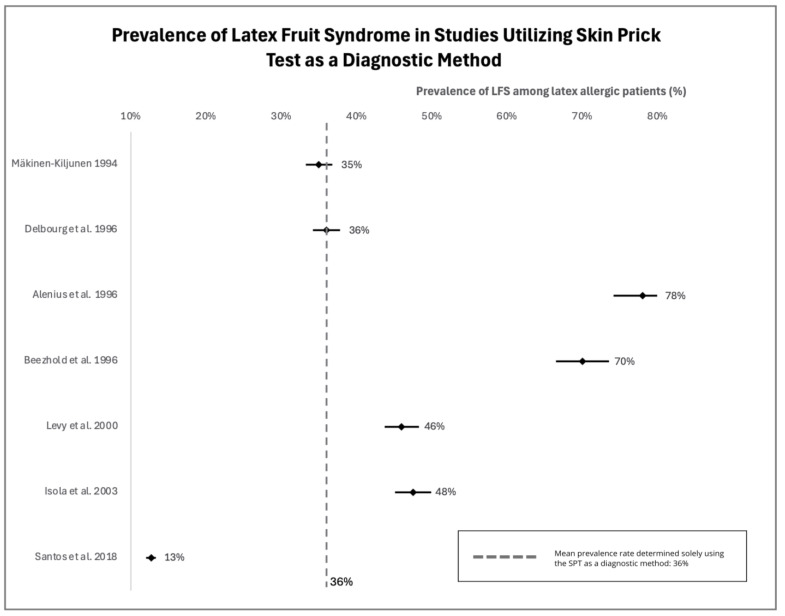
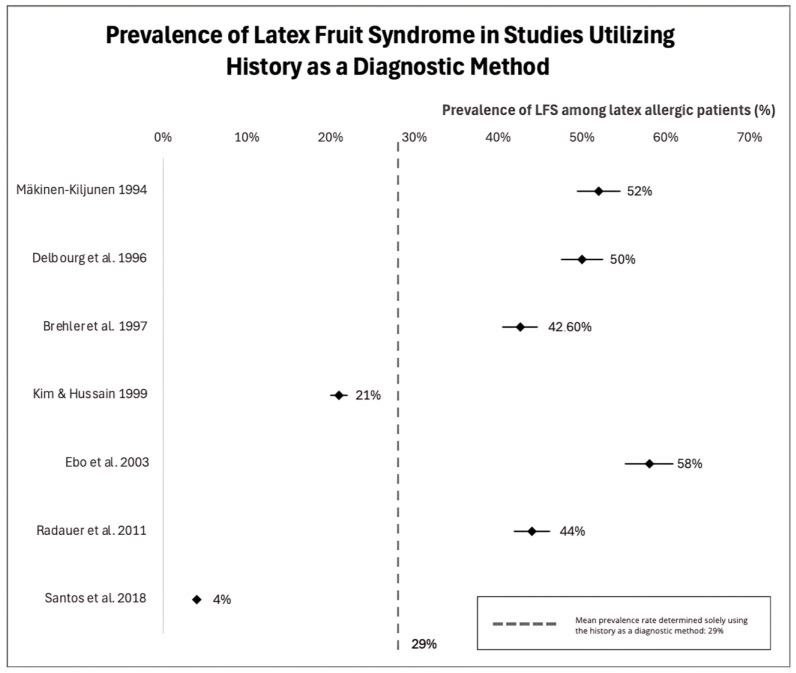
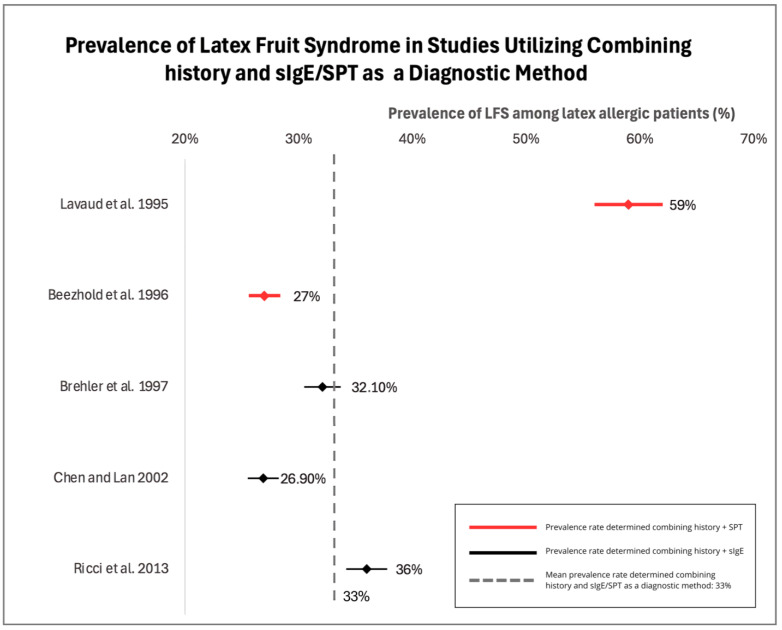
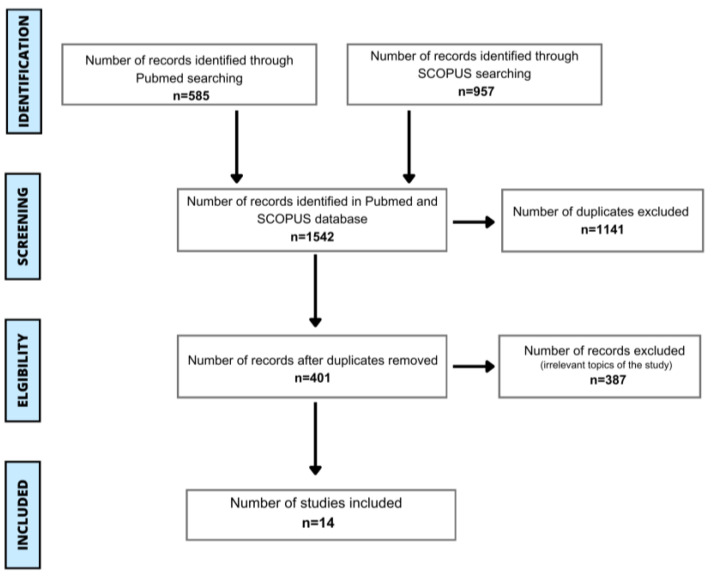
Verification
Claims the paper makes
The claims and statistics of this paper haven’t been checked yet.
Run the check — free, no account needed. It reads the open-access text and checks the sources it cites.
Claims other papers make about this one
Each is checked against this paper’s own text: does it say what the citing paper says it does?
In the citing paper
“β-1,3-glucanases are also involved in latex-banana (or latex-fruit) syndrome, a cross-reactivity phenomenon where individuals allergic to latex may react to foods like bananas, avocados, and kiwis due to shared allergenic proteins [183].”
From Pollen–Food Allergy Syndrome: Allergens, Clinical Insights, Diagnostic and Therapeutic Challenges (2024) · cites this paper as [183]
Self-check
Percentages, sums and reported differences re-computed from the paper’s own numbers.
The self-check needs the paper’s full text.
Citations
Cites
No references could be resolved yet.
Research works printed but not linked: 62
- Blanco, 1994, Latex allergy: Clinical features and cross-reactivity with fruits, Ann. Allergy, 73, 4
- Chen, 2002, Latex allergy and latex-fruit syndrome among medical workers in Taiwan, J. Formos. Med. Assoc., 101, 9
- Parisi, 2021, Update on latex allergy: New insights into an old problem, World Allergy Organ. J., 14, 100569, 10.1016/j.waojou.2021.100569 · DOI
- Wu, 2016, Current prevalence rate of latex allergy: Why it remains a problem?, J. Occup. Health, 58, 2, 10.1539/joh.15-0275-RA · DOI
- Nguyen, K., and Kohli, A. (2023, July 13). Latex Allergy. StatPearls. July 2022, Available online: https://www.ncbi.nlm.nih.gov/books/NBK545164/.
- Nucera, 2020, Latex allergy: Current status and future perspectives, J. Asthma Allergy, 13, 385, 10.2147/JAA.S242058 · DOI
- Hoffmann-Sommergruber, K., Hilger, C., Santos, A., De Las Vecillas, L., and Dramburg, S. (2022). Molecular Allergology User’s Guide 2.0, John Wiley & Sons.
- 2018, Spina bifida [Spina bifida], Radiologe, 58, 659, 10.1007/s00117-018-0401-9 · DOI
- Šutovský, J. (2021). Surgical Treatment of Neural Tube Defects. Spina Bifida and Craniosynostosis—New Perspectives and Clinical Applications, IntechOpen. · DOI
- Ebo, 2020, Hevea latex-associated allergies: Piecing together the puzzle of the latex IgE reactivity profile, Expert Rev. Mol. Diagn., 20, 4, 10.1080/14737159.2020.1730817 · DOI
- Gracz-Bernaciak, J., Mazur, O., and Nawrot, R. (2021). Functional Studies of Plant Latex as a Rich Source of Bioactive Compounds: Focus on Proteins and Alkaloids. Int. J. Mol. Sci., 22. · DOI
- Matricardi, 2016, EAACI Molecular Allergology User’s Guide, Pediatr. Allergy Immunol., 27, 1, 10.1111/pai.12563 · DOI · Paper page
- Yeang, 1996, The 14.6 kd rubber elongation factor (Hev b 1) and 24 kd (Hev b 3) rubber particle proteins are recognized by IgE from patients with spina bifida and latex allergy, J. Allergy Clin. Immunol., 98, 628, 10.1016/S0091-6749(96)70097-0 · DOI
- Barre, 2009, Mapping of IgE-binding epitopes on the major latex allergen Hev b 2 and the cross-reacting 1,3beta-glucanase fruit allergens as a molecular basis for the latex-fruit syndrome, Mol. Immunol., 46, 1595, 10.1016/j.molimm.2008.12.007 · DOI
- Malik, 2008, A molecular and in silico characterization of Hev b 4, a glycosylated latex allergen, Int. J. Biol. Macromol., 42, 185, 10.1016/j.ijbiomac.2007.11.004 · DOI
- Lehto, 2007, Hev b 6.01 and Hev b 5 induce pro-inflammatory cytokines and chemokines from peripheral blood mononuclear cells in latex allergy, Clin. Exp. Allergy, 37, 133, 10.1111/j.1365-2222.2006.02622.x · DOI
- Yeang, 2004, Hev b 5 and Hev b 13 as allergen markers to estimate the allergenic potency of latex gloves, J. Allergy Clin. Immunol., 114, 593, 10.1016/j.jaci.2004.05.039 · DOI
- Chen, 1998, Identification of hevein (Hev b 6.02) in Hevea latex as a major cross-reacting allergen with avocado fruit in patients with latex allergy, J. Allergy Clin. Immunol., 102, 3, 10.1016/S0091-6749(98)70138-1 · DOI
- Yagami, 2009, Hev b 6.02 Is the Most Important Allergen in Health Care Workers Sensitized Occupationally by Natural Rubber Latex Gloves, Allergol. Int., 58, 347, 10.2332/allergolint.08-OA-0046 · DOI
- Rozynek, 2004, Characterization of B- and T-cell responses and HLA-DR4 binding motifs of the latex allergen Hev b 6.01 (prohevein) and its post-transcriptionally formed proteins Hev b 6.02 and Hev b 6.03, Allergy, 59, 724, 10.1111/j.1398-9995.2004.00475.x · DOI
- Wagner, 2001, Hev b 7 is a Hevea brasiliensis protein associated with latex allergy in children with spina bifida, J. Allergy Clin. Immunol., 108, 621, 10.1067/mai.2001.118289 · DOI
- Ganglberger, 2001, Hev b 8, the Hevea brasiliensis latex profilin, is a cross-reactive allergen of latex, plant foods and pollen, Int. Arch. Allergy Immunol., 125, 216, 10.1159/000053819 · DOI
- Wagner, 2000, Hev b 9, an enolase and a new cross-reactive allergen from hevea latex and molds. Purification, characterization, cloning and expression, Eur. J. Biochem., 267, 7006, 10.1046/j.1432-1327.2000.01801.x · DOI
- Wagner, 2001, Identification of a Hevea brasiliensis latex manganese superoxide dismutase (Hev b 10) as a cross-reactive allergen, Int. Arch. Allergy Immunol., 125, 120, 10.1159/000053805 · DOI
- Radauer, 2002, Cloning and molecular characterization of the Hevea brasiliensis allergen Hev b 11, a class I chitinase, Clin. Exp. Allergy, 32, 455, 10.1046/j.1365-2222.2002.01312.x · DOI
- Barre, A., Van Damme, E.J.M., Simplicien, M., Benoist, H., and Rougé, P. (2020). Are Dietary Lectins Relevant Allergens in Plant Food Allergy?. Foods, 9. · DOI
- Beezhold, 2003, Lipid transfer protein from Hevea brasiliensis (Hev b 12), a cross-reactive latex protein, Ann. Allergy Asthma Immunol., 90, 439, 10.1016/S1081-1206(10)61830-3 · DOI
- Teixeira, 2012, Oral treatment with Hev b 13 prevents experimental arthritis in mice, Clin. Exp. Immunol., 168, 285, 10.1111/j.1365-2249.2012.04582.x · DOI
- Rihs, 2015, The new latex allergen Hev b 15: IgE-binding properties of a recombinant serine protease inhibitor, J. Investig. Allergol. Clin. Immunol., 25, 160
- Blanco, 2003, Latex-fruit syndrome, Curr. Allergy Asthma Rep., 3, 1, 10.1007/s11882-003-0012-y · DOI
- Posch, 1999, Class I endochitinase containing a hevein domain is the causative allergen in latex-associated avocado allergy, Clin. Exp. Allergy, 29, 667, 10.1046/j.1365-2222.1999.00502.x · DOI
- Schmidt, 2002, Evaluation of patatin as a major cross-reactive allergen in latex-induced potato allergy, Ann. Allergy Asthma Immunol., 89, 6, 10.1016/S1081-1206(10)62110-2 · DOI
- Kespohl, 2007, Natural rubber latex and chestnut allergy: Cross-reactivity or co-sensitization?, Allergy, 62, 1277, 10.1111/j.1398-9995.2007.01489.x · DOI
- Rihs, 2006, Relevance of the recombinant lipid transfer protein of Hevea brasiliensis: IgE-binding reactivity in fruit-allergic adults, Ann. Allergy Asthma Immunol., 97, 643, 10.1016/S1081-1206(10)61094-0 · DOI
- Blanco, 2004, Genetic basis of the latex-fruit syndrome: Association with HLA class II alleles in a Spanish population, J. Allergy Clin. Immunol., 114, 1070, 10.1016/j.jaci.2004.06.022 · DOI
- Moher, D., Liberati, A., Tetzlaff, J., Altman, D.G., and PRISMA Group (2009). Preferred reporting items for systematic reviews and meta-analyses: The PRISMA statement. PLoS Med., 6. · DOI · Paper page
- Ebo, 2003, The prevalence and diagnostic value of specific IgE antibodies to inhalant, animal and plant food, and ficus allergens in patients with natural rubber latex allergy, Acta Clin. Belg., 58, 3, 10.1179/acb.2003.58.3.006 · DOI
- Brehler, 1997, Latex-fruit syndrome: Frequency of cross-reacting IgE antibodies, Allergy, 52, 404, 10.1111/j.1398-9995.1997.tb01019.x · DOI
- Mikkola, 1998, Hevein-like protein domains as a possible cause for allergen cross-reactivity between latex and banana, J. Allergy Clin. Immunol., 102, 1005, 10.1016/S0091-6749(98)70339-2 · DOI
- Oliveira, 2018, Skin hypersensitivity to banana and risk for latex-fruit syndrome in healthcare professionals, Mundo da Saude, 42, 1
- 1994, Banana allergy in patients with immediate-type hypersensitivity to natural rubber latex: Characterization of cross-reacting antibodies and allergens, J. Allergy Clin. Immunol., 93, 990, 10.1016/S0091-6749(94)70046-X · DOI
- Ricci, 2013, Latex-fruit syndrome in Italian children and adolescents with natural rubber latex allergy, Int. J. Immunopathol. Pharmacol., 26, 263, 10.1177/039463201302600129 · DOI
- Lavaud, 1995, Allergy to latex, avocado pear, and banana: Evidence for a 30 kD antigen in immunoblotting, J. Allergy Clin. Immunol., 95, 2, 10.1016/S0091-6749(95)70318-7 · DOI
- Delbourg, 1996, Hypersensitivity to banana in latex-allergic patients. Identification of two major banana allergens of 33 and 37 kD. Ann, Allergy Asthma Immunol., 76, 4
- Alenius, 1996, Crossreactivity between allergens in natural rubber latex and banana studied by immunoblot inhibition, Clin. Exp. Allergy, 26, 3, 10.1111/j.1365-2222.1996.tb00101.x · DOI
- Beezhold, 1996, Latex allergy can induce clinical reactions to specific foods, Clin. Exp. Allergy, 26, 4, 10.1111/j.1365-2222.1996.tb00557.x · DOI
- KT, 1999, Prevalence of food allergy in 137 latex-allergic patients, Allergy Asthma Proc., 20, 95, 10.2500/108854199778612572 · DOI
- Levy, 2000, Allergic sensitization and clinical reactions to latex, food and pollen in adult patients, Clin. Exp. Allergy, 30, 2, 10.1046/j.1365-2222.2000.00751.x · DOI
- Isola, 2003, Latex allergy and fruit cross-reaction in subjects who are nonatopic, Allergy Asthma Proc., 24, 193
- Radauer, 2011, Latex-allergic patients sensitized to the major allergen hevein and hevein-like domains of class I chitinases show no increased frequency of latex-associated plant food allergy, Mol. Immunol., 48, 600, 10.1016/j.molimm.2010.10.019 · DOI
- Ledesma, 2014, Anaphylactic reaction to bell pepper (Capsicum annuum) in a patient with a latex-fruit syndrome, Allergol. Immunopathol., 42, 263, 10.1016/j.aller.2012.12.006 · DOI
- Pereira, 2007, Turnip and zucchini: New foods in the latex-fruit syndrome, Allergy, 62, 452, 10.1111/j.1398-9995.2006.01313.x · DOI
- Jalil, 2021, Jackfruit Anaphylaxis in a Latex Allergic Non-Healthcare Worker, Allergy Rhinol., 12, 21526567211009195, 10.1177/21526567211009195 · DOI
- Sanchez, 2013, Syndrome latex-fruit: Report of a case with cassava anaphylaxis, Clin. Transl. Allergy, 3, P155, 10.1186/2045-7022-3-S3-P155 · DOI
- Leoni, C., Volpicella, M., Dileo, M.C.G., Gattulli, B.A.R., and Ceci, L.R. (2019). Chitinases as food allergens. Molecules, 24. · DOI
- Turner, 2024, Updated grading system for systemic allergic reactions: Joint Statement of the World Allergy Organization Anaphylaxis Committee and Allergen Immunotherapy Committee, World Allergy Organ. J., 17, 100876, 10.1016/j.waojou.2024.100876 · DOI
- Ring, 1999, Anaphylaxis and anaphylactoid reactions: Classification and pathophysiology, Clin. Rev. Allergy Immunol., 17, 4, 10.1007/BF02737644 · DOI
- Blazowski, 2019, A severity grading system of food-induced acute allergic reactions to avoid the delay of epinephrine administration, Ann. Allergy Asthma Immunol., 127, 4
- Mueller, 1966, Diagnosis and treatment of insect sensitivity, J. Asthma, 3, 331, 10.3109/02770906609106941 · DOI
- Sampson, 2003, Anaphylaxis and emergency treatment, Pediatrics, 111, 1601, 10.1542/peds.111.S3.1601 · DOI
- Cox, 2017, World Allergy Organization Systemic Allergic Reaction Grading System: Is a Modification Needed?, J. Allergy Clin. Immunol. Pract., 5, 1, 10.1016/j.jaip.2016.11.009 · DOI
- Dribin, 2021, Severity grading system for acute allergic reactions: A multidisciplinary Delphi study, J. Allergy Clin. Immunol., 148, 173, 10.1016/j.jaci.2021.01.003 · DOI
Cited by
Sorted by citations
Pollen–Food Allergy Syndrome: Allergens, Clinical Insights, Diagnostic and Therapeutic Challenges
Haidar, L., Bănărescu, C. F., Uța, C., Moldovan, S. I., Zimbru, E.-L., Zimbru, R.-I., Ciurariu, E., Georgescu, M., & Panaitescu, C. (2024) · Applied Sciences · doi:10.3390/app15010066 · Cited by 21
Metadata
- Authors
- Gromek, W., Kołdej, N., Świtała, S., Majsiak, E., & Kurowski, M.
- Venue
- Journal of Clinical Medicine
- Publisher
- MDPI AG
- Published
- 2024-07-19
- Volume
- 13
- Issue
- 14
- Pages
- 4222
- ISSN
- 2077-0383
- PMC
- PMC11278189
- Cited by
- 21
- References
- 0
- Language
- en
About these checks
Registry, retraction, Cites and statistics results are computed, not judged, with one exception: a printed reference that no index lists is read once by a model before it counts as a citation error. Claims are extracted by a model and kept only when their quote appears verbatim in the text; each cited source is then checked, with a model’s help, for whether it says what the claim relies on. Those verdicts can be wrong — read the claim’s quote and the cited source before relying on one.
Statistics and arithmetic are recomputed, not judged.
Confidence bands are shown only for fields calibrated on our annotated test set. None is calibrated yet, so no band is shown.
What counts as a claim ›How we measure confidence ›How we check this ›
Are you an author, or do you see a problem with this page? Request a review
How to cite
Cite CoChat for the checks on this page, and the paper for its own findings.
- This page
- CoChat. (2026). Citation check: Revisiting Latex-Fruit Syndrome after 30 Years of Research: A Comprehensive Literature Review and Description of Two Cases. https://app.cochat.ai/papers/10.3390/jcm13144222
- The paper
- Gromek, W., Kołdej, N., Świtała, S., Majsiak, E., & Kurowski, M. (2024). Revisiting Latex-Fruit Syndrome after 30 Years of Research: A Comprehensive Literature Review and Description of Two Cases. Journal of Clinical Medicine. https://doi.org/10.3390/jcm13144222
