

The DOI matches its Crossref record; 51 of the 52 references it cites were found in a registry or an index, and 1 are not checked yet.
Immunology of Stress: A Review Article
Open accessAbstract
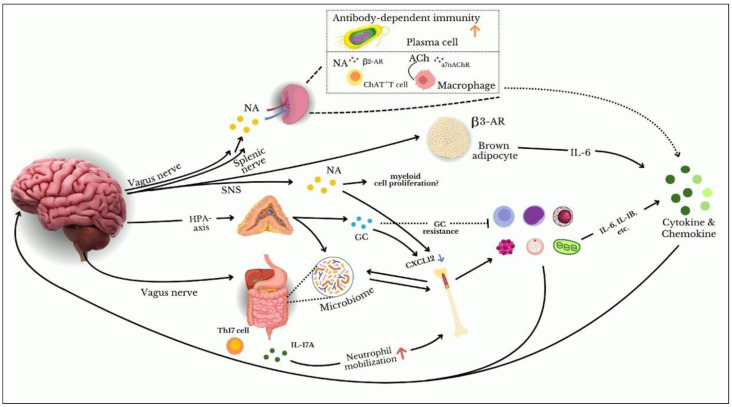
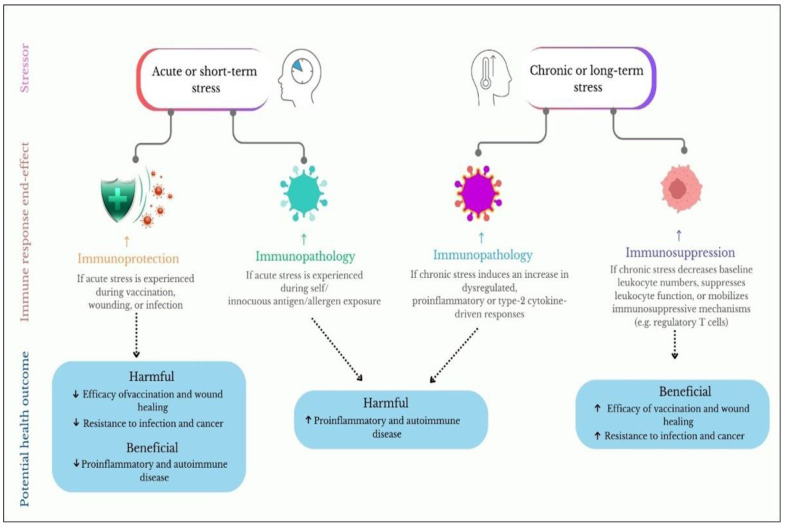
Stress significantly impacts the immune system, affecting susceptibility to illness and overall health. This review examines the intricate relationship between stress and the immune system, offering insights having practical implications for health and disease prevention. Stress can significantly trigger molecular and immune modulation, affecting the distribution and trafficking of immune cells in various organs and altering their composition in the blood. The review delves into two key pathways connecting stress and immunity: the hypothalamic–pituitary–adrenal (HPA) axis and the sympathetic nervous system. Stress activates the neuroendocrine system and triggers microglia in the brain, releasing stress hormones and neurotransmitters that modulate the function and movement of immune cells. Acute stress can temporarily strengthen immunity and promote protection during infection; in contrast, chronic stress dysregulates or inhibits immune functions. Chronic stress causes an increase in cortisol levels through the HPA axis, ultimately suppressing the immune response. Recognizing stress triggers and implementing effective stress management techniques can significantly impact individuals’ well-being. This review indicates that immune cells express genes differentially in response to stress, suggesting individual variabilities in the immune response against stress. This underscores the need for a personalized approach to stress management. This review also highlights the potential link between chronic stress and autoimmune disorders and warrants further investigation.
Overview
The claims and statistics of this paper haven’t been checked yet.
Run the check — free, no account needed. It reads the open-access text and checks the sources it cites.
Integrity signals
Registry
Cites
Statistics
Figures
Verification
Claims the paper makes
The claims and statistics of this paper haven’t been checked yet.
Run the check — free, no account needed. It reads the open-access text and checks the sources it cites.
Claims other papers make about this one
Each is checked against this paper’s own text: does it say what the citing paper says it does?
The source backs part of the claim, not all of it — or backs it for a different population, condition or comparison.
In the citing paper
“Recent studies indicate that chronic psychological or physiological stress can exacerbate RA through neuro–immune–bone axis pathways [76]”
From Interorgan Communications in Skeletal Pathophysiology: From Molecular Pathways to Multidisciplinary Therapies (2026) · cites this paper as [76]
Experimental — accuracy not yet measured
Self-check
Percentages, sums and reported differences re-computed from the paper’s own numbers.
The self-check needs the paper’s full text.
Citations
Cites
Neutrophil Extracellular Traps Kill Bacteria
Brinkmann, V., Reichard, U., Goosmann, C., Fauler, B., Uhlemann, Y., Weiss, D. S., Weinrauch, Y., & Zychlinsky, A. (2004) · Science · doi:10.1126/science.1092385 · Cited by 10,268
Macrophage activation and polarization: nomenclature and experimental guidelines
Murray, P. J., Allen, J. E., Biswas, S. K., Fisher, E. A., Gilroy, D. W., Goerdt, S., Gordon, S., Hamilton, J. A., Ivashkiv, L. B., Lawrence, T., et al. (2014) · Immunity · doi:10.1016/j.immuni.2014.06.008 · Cited by 6,337
Psychological stress and the human immune system: a meta-analytic study of 30 Years of inquiry
Segerstrom, S. C., & Miller, G. E. (2004) · Psychological Bulletin · doi:10.1037/0033-2909.130.4.601 · Cited by 3,334
Psychological Stress and Disease
Cohen, S., Janicki-Deverts, D., & Miller, G. E. (2007) · JAMA · doi:10.1001/jama.298.14.1685 · Cited by 3,168
MURPHY, K. M. M., & Weaver, C. T. (2016) · W.W. Norton eBooks · doi:10.1201/9781315533247 · Cited by 2,262
Slavich, G. M., & Irwin, M. R. (2014) · Psychological Bulletin · doi:10.1037/a0035302 · Cited by 2,206
Regulation of the Hypothalamic‐Pituitary‐Adrenocortical Stress Response
Herman, J. P., McKlveen, J. M., Ghosal, S., Kopp, B., Wulsin, A., Makinson, R., Scheimann, J., & Myers, B. (2016) · Comprehensive Physiology · doi:10.1002/cphy.c150015 · Cited by 1,819
Effects of stress on immune function: The good, the bad, and the beautiful
Dhabhar, F. S. (2014) · Immunologic Research · doi:10.1007/s12026-014-8517-0 · Cited by 1,343
Decisions About Dendritic Cells: Past, Present, and Future
Steinman, R. M. (2012) · Annual Review of Immunology · doi:10.1146/annurev-immunol-100311-102839 · Cited by 1,319
Mast cells in the development of adaptive immune responses
Galli, S. J., Nakae, S., & Tsai, M. M. (2005) · Nature Immunology · doi:10.1038/ni1158 · Cited by 1,280
Research works printed but not linked: 1
- Figueiredo, 2018, Stress and the Immune System: The Role of the HPA Axis, Curr. Neuropharmacol., 16, 1
Cited by
Sorted by citations
Neuro-immune cross-talk in cancer
Amit, M., Eichwald, T., Roger, A., Anderson, J. L., Chang, A., Vermeer, P. D., Dixon, K. O., Scheff, N. N., & Talbot, S. (2025) · Nature reviews. Cancer · doi:10.1038/s41568-025-00831-w · Cited by 120
Balakin, E. I., Yurku, K. A., Ivanov, M., Izotov, A., Игоревна, Н. В., & Pustovoit, V. I. (2025) · Biology · doi:10.3390/biology14010076 · Cited by 61
Xu, J., Wang, Q., Anikeeva, O., Zhu, P., Bi, P., & Huang, C. (2025) · BMJ · doi:10.1136/bmj-2025-084675 · Cited by 50
Carollo, C., Sorce, A., Cirafici, E., Ciuppa, M. E., Mulè, G., & Caimi, G. (2025) · International Journal of Molecular Sciences · doi:10.3390/ijms26178256 · Cited by 37
The gut–brain connection: microbes’ influence on mental health and psychological disorders
Ataei, P., Kalantari, H., Bodnar, T. S., & Turner, R. J. (2026) · Frontiers in Microbiomes · doi:10.3389/frmbi.2025.1701608 · Cited by 33
“…proin fl ammatory cytokines (e.g., IL-6 and TNF-a ) and dampens T-cell activity in the short term, chronic cortisol elevation may impair immune cell responsiveness and promote a shift toward Th2 dominance, reducing cellular immunity and increasing susceptibility to infections (Alotiby, 2024).”
Lee, S.-C., Tsai, P., Yu, K., & Chan, T. (2025) · Healthcare · doi:10.3390/healthcare13080952 · Cited by 26
“Acute stress can strengthen immunity and promote protection during infection; however, chronic stress causes cortisol increase and dysregulates or inhibits immune function [11].”
Steroid hormone regulation of immunometabolism and inflammation
Smith, L. C., Ramar, M., Riley, G., Mathias, C. B., & Lee, J.-Y. (2025) · Frontiers in Immunology · doi:10.3389/fimmu.2025.1654034 · Cited by 28
“Environmental factors such as stress are also known to affect susceptibility to illness by modulating the immune system, sometimes in a sexually dimorphic manner (reviewed in 5 and 6).”
The healing power of nature. Biophilic design applied to healthcare facilities
Miola, L., Boldrini, A., & Pazzaglia, F. (2025) · Current Opinion in Psychology · doi:10.1016/j.copsyc.2025.102049 · Cited by 23
The brain-skin connection: A narrative review of neuroendocrine and immune pathways
Tan, C. C., Soh, K. V., Wang, E., & Choi, E. C.-E. (2025) · JAAD International · doi:10.1016/j.jdin.2025.10.008 · Cited by 18
“It increases blood levels of pro-inflammatory cytokines and reduces anti-inflammatory cytokines via HPA and sympathetic nervous system activation, 61,90 shifts T-helper balance towards Th2 dominance, and impairs immune cell maturation and wound healing.”
Psychological Stress and Male Infertility: Oxidative Stress as the Common Downstream Pathway
Kaltsas, A., Papaharitou, S., Dimitriadis, F., Chrisofos, M., & Sofikitis, N. (2026) · Biomedicines · doi:10.3390/biomedicines14020259 · Cited by 18
“Although acute stress may transiently suppress selected immune functions, chronic stress is more consistently associated with persistent, low-grade inflammatory activity [50,51].”
Chatzaki, C., & Tsiknakis, M. (2025) · Sensors · doi:10.3390/s25237108 · Cited by 17
“Stress suppresses the immune system, making individuals more susceptible to infections and increasing inflammation, which is linked to autoimmune diseases and chronic conditions such as arthritis [17].”
Vandenabeele, R., Joosen, M. C. W., & van Dam, A. (2025) · Frontiers in Psychology · doi:10.3389/fpsyg.2025.1712340 · Cited by 17
“…or clinical burnout (Chrousos and Gold, 1992; Lupien et al., 1998; Lupien et al., 2009; Ganzel et al., 2010; Ganzel and Morris, 2011; Golkar et al., 2014; McEwen, 2017; Epel et al., 2018; Godoy et al., 2018; Bayes et al., 2021; Roberts and Karatsoreos, 2021; Pihlaja et al., 2022; Alotiby, 2024).”
Chronic stress and the IL-10-mediated immunoregulatory loop in the pathogenesis of periodontitis
Скрипник, М. І., Spahr, A., Berkovsky, S., Yatsenko, T., Xu, C., Zuieva, O. A., Osada, T., Takahashi, S., Hattori, N., Takahashi, K., et al. (2025) · Clinical Science · doi:10.1042/cs20256843 · Cited by 18
Arvind, A., Sreelekshmi, S., & Dubey, N. (2025) · Cellular and Molecular Neurobiology · doi:10.1007/s10571-025-01549-x · Cited by 19
“Elevated cortisol levels suppress immune function by downregulating inflammatory signalling pathways (Alotiby 2024).”
Wang, H., Wang, Z., Yu, J., & Jin, J. (2026) · Frontiers in Public Health · doi:10.3389/fpubh.2025.1703158 · Cited by 15
Impact of Social Vulnerability and Allostatic Load on Postoperative Outcomes
Khalil, M., Woldesenbet, S., King, J., Shaw, S., Rashid, Z., Altaf, A., Zindani, S., Obeng‐Gyasi, S., & Pawlik, T. M. (2025) · Annals of Surgical Oncology · doi:10.1245/s10434-025-18144-5 · Cited by 12
“26,27 Of note, these responses are essential for meeting the demands of immediate stress.”
Yaseen, S., Morgan, R., Yaseen, R., Zohd, J., Salhab, A., Amer, J., & Hanani, A. A. (2025) · Scientific Reports · doi:10.1038/s41598-025-01869-4 · Cited by 10
“The results revealed significant stress-related increases in the levels of circulating interleukin (IL)-1β, IL-6, IL-10, and tumor necrosis factor (TNF), but not in the levels of IL-1ra, IL-2, interferon-γ, or C-reactive protein 20 .”
Reis, J. C., Travado, L., & Antoni, M. H. (2025) · International Journal of Clinical and Health Psychology · doi:10.1016/j.ijchp.2025.100615 · Cited by 10
“Ongoing efforts aim to further refine and adapt these approaches to maximize accessibility and uptake, considering factors such as disease severity and socio-demographic characteristics (Walsh et al., 2023, 2024)”
Nelles, P., Singewald, N., Sperner‐Unterweger, B., & Hüfner, K. (2025) · Medical Hypotheses · doi:10.1016/j.mehy.2025.111580 · Cited by 8
A Two-Way Street: Oral Health and Systemic Diseases
Dumitrescu, R., Bălean, O., Bolchis, V., & Jumanca, D. E. (2025) · Dentistry · doi:10.5772/intechopen.1009210 · Cited by 8
Macrophages at the Crossroads of Chronic Stress and Cancer
Momčilović, S., Milošević, M. S., Kočović, D. M., Marković, D. C., Zdravković, D., & Vignjević, S. (2025) · International Journal of Molecular Sciences · doi:10.3390/ijms26146838 · Cited by 8
“However, over time, the responsiveness of macrophages to glucocorticoids diminishes [33] and, subsequently, leads to a stress-induced glucocorticoid resistance in these cells [41].”
Kang, H., 邵天瑞, Shi, Y., Wang, S., Xiong, H., Jin, X., & Ren, J. (2026) · Frontiers in Neuroscience · doi:10.3389/fnins.2026.1814098 · Cited by 8
“The relationship between chronic stress and cytokine responses is dynamic and multifaceted (Alotiby, 2024).”
Gaber, H. G., Younis, N. A., & Saleh, S. Y. (2025) · BMC Veterinary Research · doi:10.1186/s12917-025-04717-9 · Cited by 8
“This could indicate the intricate relationship between stress and the immune system and ensure that the immune system is being overactivated, potentially leading to chronic immune exhaustion, which is proud with the finding of [8].”
InfluentialHabits and vulnerability or resilience to stress – Impact on depressive disorders
Bertollo, A. G., Capitanio, M. Z., Schuh, L. A., Pradella, N., & Ignácio, Z. M. (2025) · Behavioural Brain Research · doi:10.1016/j.bbr.2025.115630 · Cited by 10
Nawaz, S., & Tharwat, M. (2026) · Frontiers in Veterinary Science · doi:10.3389/fvets.2025.1732337 · Cited by 7
Kumar, S., D’Souza, L. C., Shaikh, F., Rathor, P., Ch, R., & Sharma, A. (2025) · Environmental Pollution · doi:10.1016/j.envpol.2025.125860 · Cited by 6
Multimodal assessment of acute stress dynamics using an aversive video paradigm (AVP)
Roy, S., Fan, Y., Mosayebi-Samani, M., Claus, M., Mutlu, N., Kleinsorge, T., & Nitsche, M. A. (2025) · International Journal of Clinical and Health Psychology · doi:10.1016/j.ijchp.2025.100607 · Cited by 6
“…physiological changes in multiple organs, including the cardiac system (Levine, 2022) , endocrine secretion (Russell & Lightman, 2019), brain oscillations and activation (Hermans et al., 2014; Katmah et al., 2021), the immune system (Alotiby, 2024), and cognition and behavior (Lupien et al., 2007).”
Ogundipe, E., & Obeng-Gyasi, E. (2025) · Toxics · doi:10.3390/toxics13110935 · Cited by 7
“These findings highlight the complexity of direct exposure– outcome relationships and emphasize the importance of distinguishing mediation from effect modification when interpreting BKMR-CMA results [53,54].”
Chang, Y.-L., Lin, G., Lin, S., Huang, R., Kuo, P., Chang, N. N.-S., & Tsai, K. (2025) · World Journal of Clinical Cases · doi:10.12998/wjcc.v13.i23.105762 · Cited by 6
“When activated, the HPA axis initiates the release of corticotropin-releasing hormone from the hypothalamus, which in turn stimulates the anterior pituitary to secrete adrenocorticotropic hormone (ACTH)[6,8,56].”
Kim, E. J., Kim, K. H., & Nam, Y. K. (2025) · International Journal of Molecular Sciences · doi:10.3390/ijms26167934 · Cited by 5
“At higher bacterial loads, HPX expression decreased or became inhibited, particularly in the spleen, suggesting an exhaustion-like response under over-whelming stress [14,43,44].”
Social Determinants of Health and Pediatric Long COVID in the US
Rhee, K. E., Thaweethai, T., Pant, D., Stein, C. R., Salisbury, A. L., Kinser, P. A., Kleinman, L. C., Gallagher, R., Warburton, D., Mohandas, S., et al. (2026) · Archives of Pediatrics and Adolescent Medicine · doi:10.1001/jamapediatrics.2025.5485 · Cited by 5
Sharma, A., & Singh, T. G. (2026) · Molecular and Cellular Neuroscience · doi:10.1016/j.mcn.2026.104097 · Cited by 5
Sitompul, J., Rahma, M. N., Afandi, F., Elamin, K. M., Mohammed, A., & Wathoni, N. (2026) · International Journal of Nanomedicine · doi:10.2147/ijn.s598705 · Cited by 7
“10 Additionally, lifestyle-related factors, such as obesity, exacerbate long-term inflammation by creating an imbalance in adipokines and activating immune cells, eventually leading to insulin resistance and metabolic diseases.”
Mind–Body Integration in Brain Health
Maderthaner, L., & Edwards, M. J. (2025) · Clinical and Translational Neuroscience · doi:10.3390/ctn9030037 · Cited by 4
Probiotics as a Treatment of Chronic Stress Associated Abnormalities
Agarwal, V., Chaudhary, R., & Gupta, A. (2025) · Probiotics and Antimicrobial Proteins · doi:10.1007/s12602-025-10553-y · Cited by 4
Daliu, P., Bogdan, I. G., Roșca, O., Aelenei, A. L., Sîrbu, I., Bica, M. C., Licker, M., Hogea, E., & Muntean, D. (2025) · Diseases · doi:10.3390/diseases13050145 · Cited by 4
“Severity scores—APACHE II, CURB-65, and NEWS—were all significantly higher in these patients, underscoring how secondary infections intensify physiological stress and contribute to more complicated clinical courses [30].”
Albalawi, A. A. (2025) · Nutrition and Health · doi:10.1177/02601060251363647 · Cited by 4
“In addition, high levels of cortisol can weaken immune function, increase in fl ammation, and play a role in the development of neuropsychiatric disorders such as anxiety, depression, and cognitive impairment (Alotiby, 2024; Yeager et al., 2018).”
Gellatly, D., Lei, Y., Neale, A., Smith, L., Edgar, E., Bloomfield, B., Elliot, B., Wenger, I. I., & Thompson, S. (2025) · Animals · doi:10.3390/ani15192788 · Cited by 4
“At feedlot entry, the acute phase response primes the body to defend against potential injury or infection [54].”
Makyeyeva, L., Belenichev, I. F., Aliyeva, O. G., Frolov, O., Petakh, P., & Kamyshnyi, O. (2025) · Frontiers in Immunology · doi:10.3389/fimmu.2025.1656214 · Cited by 4
“Emerging evidence highlights the systemic interplay between chronic stress, immune dysregulation, and metabolic disturbances mediated by transcriptional and microbial mechanisms (133, 134).”
Pedrinelli, V., Rimoldi, B., Conti, L., Bordacchini, A., Parrini, L., Betti, L., Giannaccini, G., Dell’Oste, V., & Carmassi, C. (2025) · International Journal of Molecular Sciences · doi:10.3390/ijms262411835 · Cited by 4
“Allostasis processes involve sympathetic and neuroendocrine branches intertwined with the activity of the immune system [27–32].”
Ba, M., Huang, D., Yang, T., Xuan, S., Zhang, W., Qi, D., Pei, X., Lu, D., Huang, S., Yang, J., et al. (2025) · Investigative Ophthalmology & Visual Science · doi:10.1167/iovs.66.15.53 · Cited by 4
“66,67 72–76 Histological evidence of lipid droplet depletion suggests localized lipolytic imbalance, which may compromise acinar cell integrity.”
Xuan, S., Yang, T., Ba, M., Zhang, W., Yang, J., Pei, X., Qi, D., Lu, D., Huang, S., & Li, Z. (2025) · Investigative Ophthalmology & Visual Science · doi:10.1167/iovs.66.15.50 · Cited by 4
“60–65 Metyrapone partially restored immune-gene expression, aligning with glucocorticoid receptor– dependent modulation of immune rhythmicity via known interactions between the core clock machinery (e.g., BMAL1 ) and inflammatory regulators such as NF-κ B. 56 Disruption of immune circadian rhythms…”
Shkvarok, A. K., & Bushman, Y. (2025) · Ukrainian Scientific Medical Youth Journal · doi:10.32345/usmyj.3(157).2025.64-71 · Cited by 3
Memoli, H., Albertini, M., Grader, I., Provoost, L. R., Filipe, J., Piotti, P., Scarpa, P., Stefanovski, D., Pirrone, F., & Siracusa, C. (2025) · Frontiers in Aging Neuroscience · doi:10.3389/fnagi.2025.1703764 · Cited by 3
“This, in turn, accelerates the aging process (De La Fuente, 2008) by contributing to chronic anxiety and stress, and various diseases, including metabolic disorders (Alotiby, 2024).”
Alhamawi, R. M., Halawani, F. A., Hakeem, S. F., Alslimi, H. A., Alhamawi, E. M., Aljohani, A. M., Mohammed, I., Zahid, H., & Almutawif, Y. A. (2025) · Frontiers in Immunology · doi:10.3389/fimmu.2025.1698155 · Cited by 3
“Cortisol is a glucocorticoid hormone produced by the adrenal cortex, which is known as an immunosuppressive agent (38).”
Surrogate skin-to-skin care: the “donor milk” of kangaroo mother care
Nitzan, I., Phillips, R. M., White, R. D., Rüdiger, M., & Rogers, E. E. (2025) · Journal of Perinatology · doi:10.1038/s41372-025-02538-0 · Cited by 3
“In addition, psychological stress has been shown to alter the immune response in children and adults [19, 20].”
Sabry, M. O., Seleem, M. M., Ebrahim, Y. M., Hussien, S. G., Ahmed, R., Hassan, H. E., Bahr, A., Alsadany, M. A., El-Shiekh, R. A., & Ali, D. E. (2025) · Revista Brasileira de Farmacognosia · doi:10.1007/s43450-025-00729-6 · Cited by 2
“…to stress can result in a biphasic response of immune activation followed by subsequent suppression, prolonged exposure to cortisol due to the sustained activation of the HPA axis induces immune system dysregulation and immunosuppression (Dhabhar 2009, 2014; Alotiby 2024; Engler-Chiurazzi 2024).”
Konflik Bioetika dalam Fenomena Adu Ayam: Analisis Kesejahteraan Hewan dan Nilai Etik Lokal
Rohim, R., Musthofa, M. H., Noerdin, I., & Cahyanto, T. (2025) · Switch Jurnal Sains dan Teknologi Informasi · doi:10.62951/switch.v3i6.715 · Cited by 3
Nutritional modulation of biochemical pathways in stress response: A comprehensive review
Gometi, S. A., Ikpahwore, D. O., Evuen, U. F., Omo-Okoroh, M. O., Otovbo, E. J., Okwuenu, P. C., Isoje, A. O., & Onosakponome, I. (2026) · Food and Humanity · doi:10.1016/j.foohum.2026.101017 · Cited by 3
Redefining surgical oncology: active immune microenvironment modulation beyond tumor resection
谭家雄, Zhang, Y., Wang, J., Xia, Y., Pan, Y., & Zhao, Q. (2026) · International Immunopharmacology · doi:10.1016/j.intimp.2026.116521 · Cited by 3
The impact of urban stress factors on mental health: a review of foreign studies
Kiyanenko, I. K. (2026) · Clinical Psychology and Special Education · doi:10.17759/cpse.2026150101 · Cited by 3
Borakowska, D. R., Podgórski, R., & Łuszczki, E. (2026) · Frontiers in Endocrinology · doi:10.3389/fendo.2026.1860059 · Cited by 3
Alotiby, A. A. (2025) · Cureus · doi:10.7759/cureus.77317 · Cited by 3
Self-citationSabbag, T., Kritman, M., & Akirav, I. (2025) · Cells · doi:10.3390/cells14120938 · Cited by 3
“…induces low-grade inflammation, contributing to persistent inflammatory processes and neuroimmune alterations [9,75–77], whereas acute stress rapidly affects the immune system and inflammatory response by altering immunological pathways and enhancing the synthesis of inflammatory cytokines [78–80].”
Nechita, P., Oroian, B. A., MD, P. S., Schipor, P. D., Enache, A.-L., & Popa, M. V. (2025) · Bulletin of Integrative Psychiatry · doi:10.36219/bpi.2025.2.02 · Cited by 3
Undelikwo, G., Oni, T. O., Zekeng, L. A., Agbo, F., Jajere, F., Oshagbami, S., Anenih, J. O., Anya, S., Koubagnine, T., Uthman, I., et al. (2025) · Conflict and Health · doi:10.1186/s13031-025-00706-9 · Cited by 3
“Chronic stress, commonly seen in individuals with depression and PTSD, elevates cortisol levels, which in turn suppresses immune function and compromises the body’s ability to resist infections [51, 52].”
Kim, G.-H., Lee, K., Choi, H.-S., Han, J. S., & Kim, S. (2025) · Animals · doi:10.3390/ani15060889 · Cited by 3
“Prolonged exposure to elevated cortisol levels due to chronic stress can impair immune function and exacerbate inflammation, contributing to various diseases, such as chronic obstructive pulmonary disease, inflammatory bowel disease, and metabolic disorders [3–5].”
RetractedRisk Factors for Chronic Pain in Women: The Role of Violence Exposure in a Case–Control Study
Uvelli, A., Pugliese, E., & Ferretti, F. (2025) · Life · doi:10.3390/life15060976 · Cited by 3
Schmitt, A., Andrews, N., Yasuda, K., Hodge, M., & Ryznar, R. J. (2025) · International Journal of Molecular Sciences · doi:10.3390/ijms26093945 · Cited by 2
“However, chronic and traumatic stress can lead to the dysregulation of the HPA axis through glucocorticoid resistance [6,7], and shift the immune response into a chronic state of inflammation [8–10].”
Assessment of the adaptogenic properties of herbal tea based on pine needles and microstrobiles
Zhamsaranova, S. D., Ширеторова, В. Г., Аркадьевна, Э. С., Тыхеев, А. А., & Лебедева, С. Н. (2025) · Food systems · doi:10.21323/2618-9771-2025-8-1-124-133 · Cited by 2
Enhancing Survival Following High-Risk Surgery by Modulating Actionable Items within the Pathobiome
Zaborina, O. Y., Zaborin, A., Keskey, R. C., & Alverdy, J. C. (2025) · IntechOpen eBooks · doi:10.5772/intechopen.1010335 · Cited by 2
Hematological Changes and Immunomodulation of Neutrophil and Monocyte Populations in Shelter Dogs
Kulka, M., Szopa, I. M., & Klockiewicz, M. (2025) · Animals · doi:10.3390/ani15131988 · Cited by 3
“Numerous studies have shown that stress modifies the production of inflammatory cytokines and modulates the immune responses [5,6].”
Varlı, M., Tan, H. Y., Lee, C., Lee, J., Lee, J. Y., Kim, J.-H., Lee, S., Kim, H., & Nam, S. (2025) · Marine Drugs · doi:10.3390/md23070292 · Cited by 2
“Cortisol, an endogenously secreted glucocorticoid, is involved in stress responses, immune modulation, and metabolic balance [19].”
Mapping genomic regions affecting resilience traits in a large dairy farm of Holstein cows
Punturiero, C., Delledonne, A., Ferrari, C., Bagnato, A., & Strillacci, M. G. (2025) · Frontiers in Animal Science · doi:10.3389/fanim.2025.1627086 · Cited by 2
Impact of physical and psychological stressors on tumor growth and immune responses in breast cancer
Dees, K. J., Kabir, K., Bahani, R., Beskow, C., Blalock, M., Burton, E., Kranzlein, J., Pierson, D., Rice, S. D., Williams, M., et al. (2025) · Comprehensive Psychoneuroendocrinology · doi:10.1016/j.cpnec.2025.100322 · Cited by 2
Krefting, F., Hölsken, S., Sondermann, W., & Schedlowski, M. (2025) · Clinical Immunology · doi:10.1016/j.clim.2025.110611 · Cited by 2
Hagström, D., Sundström, A. E., Hakelind, C., Nordin, S., & Nordin, M. (2025) · Stress and Health · doi:10.1002/smi.70119 · Cited by 2
“…possible explanation for the fact that anxious tension and gastrointestinal problems were the strongest predictors of burnout is that both stress (Alotiby 2024) and gastrointestinal problems (Layunta et al. 2024) are associated with the immune response and a suppressed immune response is…”
Research Hotspots and Emerging Trends of Schizophrenia and Immune Response: A Bibliometric Analysis
Zhang, Y. (2025) · Brain and Behavior · doi:10.1002/brb3.71054 · Cited by 2
“Lastly, the interplay between stress and neuroinflammation represents an increasingly important area of research, as environmental stressors are known to activate inflammatory pathways, exacerbate oxidative stress, and worsen clinical outcomes in schizophrenia (Alotiby 2024; Ravi et al. 2021).”
Comparative Characterization of High-Grade Glioma Models in Rats: Its Importance for Neurobiology
Kudelkina, V. V., Bulava, A., Gorkin, A. G., Venerina, Y. A., & Alexandrov, Y. I. (2025) · Clinical and Translational Neuroscience · doi:10.3390/ctn9040058 · Cited by 2
Mazon, C., Betters, R. K., Salmeron-Ceballos, G., Tomaziefski, A., Coffman, C. N., Simonson, R., & Tunc‐Ozcan, E. (2026) · IBRO Neuroscience Reports · doi:10.1016/j.ibneur.2026.01.003 · Cited by 2
“Stress further amplifies these sex-specific responses by increasing microglial reactivity (Schramm & Waisman, 2022) and elevating pro-inflammatory cytokine production (Alotiby, 2024), which in turn can alter synaptic remodeling, neurotransmitter dynamics, and circuit excitability.”
Targeting immunometabolism in cancer through pharmacological and lifestyle interventions
Tan, R. J. Y., Liu, Y., Chen, W., Liang, Y., & Ling, G. S. (2026) · PLoS Biology · doi:10.1371/journal.pbio.3003617 · Cited by 2
“Indeed, it is known that low glucose availability triggers the secretion of cortisol via the HPA axis as a stress response mechanism [114], and that elevated cortisol correlates with poor immune activation and function [115].”
Dera, A. A., Alqahtani, L. M., & Alghamdi, A. (2025) · King Khalid University journal of health sciences. · doi:10.4103/kkujhs.kkujhs_18_25 · Cited by 2
Su, W., Ai, Z., Liu, J., Yang, B., Du, T., & Zhang, R. (2026) · Building and Environment · doi:10.1016/j.buildenv.2026.114436 · Cited by 2
El‐Raghi, A. A., Fawzy, M. S., Elmorsy, E. M., Doghaither, H. A. A., Al-Ghafari, A. B., Hassan, M. S., Gad, A. M. A., Abourashed, N. M., & Abdelhady, D. (2026) · Italian Journal of Animal Science · doi:10.1080/1828051x.2026.2639681 · Cited by 2
Circadian misalignment in PCOS: role of sleep and light
Samaddar, S., Ghosh, S., Kumar, A., Yadav, P., Yadav, M., & Dahiya, R. (2026) · Biological Rhythm Research · doi:10.1080/09291016.2026.2651558 · Cited by 2
“Its effect on immune function and mood control should be considered seriously, and supplementation should be closely monitored to avoid any adverse effects (Alotiby 2024).”
Zheng, M., Sun, S., & Lv, B. (2026) · Journal of International Medical Research · doi:10.1177/03000605261447130 · Cited by 2
“13,14 The pathogenesis of IBS involves multiple interrelated mechanisms, with key contributing factors including visceral hypersensitivity, low-grade inflammation, impaired intestinal barrier function, gastro-intestinal motility disorders, psychological disturbances, brain–gut axis (BGA)…”
Domestic Violence Law and Maqāṣid al-Syarī’ah in Protecting Families from Psychological Violence
Nasyiah, I., Nasrulloh, M., Humairoh, Z., Fakhruddin, F., & Saidon, R. (2026) · Unnes Law Journal · doi:10.15294/ulj.v12i1.48249 · Cited by 2
Valiente-Gómez, A., Bücker, J., Fontana-McNally, M., Gatto, D. L., Guinart, D., Moreno‐Alcázar, A., Rodriguez, C. C., Gil, C. D. C., Padberg, F., Pardina-Torner, H., et al. (2026) · EClinicalMedicine · doi:10.1016/j.eclinm.2026.103987 · Cited by 2
Zhou, H., Wang, X., & Sha, S. (2026) · Frontiers in Systems Neuroscience · doi:10.3389/fnsys.2026.1829622 · Cited by 2
“…promoting inflammatory factors, activating natural killer cells and macrophages, and recruiting white blood cells via corticosterone and adrenaline (Alotiby, 2004), whereas chronic stress impairs immune function, inhibits lymphocyte proliferation, disrupts cytokine balance, and, through prolonged…”
Nys, L. D. (2026) · Journal of Geriatric Oncology · doi:10.1016/j.jgo.2026.102854 · Cited by 2
Gan, D., Qin, L., & Xiao, G. (2026) · Research · doi:10.34133/research.1319 · Cited by 1
“Recent studies indicate that chronic psychological or physiological stress can exacerbate RA through neuro–immune– bone axis pathways [ 76 ].”
Andong, F. A., Okoye, K. C., Nnachi, I. A., Attamah, G. N., Odo, U. U., Mayowa, E. S., Agina, O. A., Ekere, S. O., Ngonadi, J. U., Nwanozie, P. O., et al. (2025) · Avian Biology Research · doi:10.1177/17581559251345277 · Cited by 1
Complex war trauma in an adolescent: diagnosis and rehabilitation (clinical case)
Kabantseva, A. V., Панченко, О. А., Tsapro, N. P., & Serdyuk, I. A. (2025) · CHILD`S HEALTH · doi:10.22141/2224-0551.20.6.2025.1897 · Cited by 1
Mishra, S., & Mohanty, B. (2025) · Nutrire · doi:10.1186/s41110-025-00369-9 · Cited by 1
“In our study, LPS enhanced the pro-oxidants (LPx) and decreased the antioxidants (SOD, CAT) levels in immune organs (spleen and thymus) as observed in others [72, 73].”
Chakma, J., Choravada, D. R., & Champati, A. (2025) · Cogent Food & Agriculture · doi:10.1080/23311932.2025.2573872 · Cited by 1
“…2009). these enzymes include superoxide dismutase (sOd), catalase (cAt), and Glutathione Peroxidase (GPx) (ighodaro & Akinloye, 2018; Jomova et al., 2024). the expression of antioxidant enzyme genes is regulated by transcription factors, primarily nrf2 (ngo & duennwald, 2022). under normal…”
Stocker, A., Giangreco, B., Revet, A., Alameda, L., Bui, É., Bürgin, D., Clemens, V., Cortese, S., Schechter, D. S., Schmid, M., et al. (2025) · Neuroscience & Biobehavioral Reviews · doi:10.1016/j.neubiorev.2025.106393 · Cited by 1
Luo, Z., Huang, Y., Tang, L., Gao, Q., Hou, G., Shao, J., & Shen, Y. (2025) · Behavioural Brain Research · doi:10.1016/j.bbr.2025.115921 · Cited by 1
Botia, M., Muñoz-Prieto, A., Ortín-Bustillo, A., Maslov, D. R., Rubić, I., Fuentes, P., Jiménez-Caparrós, F. J., Hernández-Gómez, J. L., Avellaneda, A., Cerón, J. M. C., et al. (2026) · Animal Welfare · doi:10.1017/awf.2025.10055 · Cited by 1
“This is consistent with evidence that stress induces the release of hormones and neuro-transmitters that modulate the function and movement of immune cells (Alotiby 2024).”
Coulter, J. E. (2026) · The Design Journal · doi:10.1080/14606925.2026.2625752 · Cited by 1
“To adapt to stress the body produces cortisol until the body’s resources have been depleted and it moves to exhaustion stage (McFarlane, 2024). ongoing and un-managed stress significantly impacts the immune system, affecting susceptibility to illness and overall health (Alotiby, 2024).”
Stress as a factor in female reproductive health disorders
Adamyan, L. V., Avetisyan, J. S., Osipova, A. A., Pivazyan, L. G., Mailova, K. S., & Saakyan, S. V. (2026) · Russian Journal of Human Reproduction · doi:10.17116/repro20263201111 · Cited by 1
Mityuryayeva-Kornijko, I. O., Klets, T., Burlaka, I. A., Коротич, Т. І., & Odayskyi, O. M. (2026) · Eastern Ukrainian Medical Journal · doi:10.21272/eumj.2026;14(1);126-137 · Cited by 1
Inorganic biomaterials as immunomodulators: dual strategies for activation and suppression
Si, X., Lu, Y., & Zha, Z. (2026) · Science China Materials · doi:10.1007/s40843-025-4001-x · Cited by 1
ЕКСПЕРИМЕНТАЛЬНЕ ДОСЛІДЖЕННЯ ВПЛИВУ ГОРМОНІВ СТРЕСУ НА НЕСПЕЦИФІЧНУ ПРОТИПУХЛИННУ ІМУННУ ВІДПОВІДЬ
Gogol, S., Федосова, Н. І., & Чехун, В. Ф. (2026) · Oncology · doi:10.15407/oncology.2026.01.031 · Cited by 1
“…відомо, глюкокортикоїди мають подвійний вплив на імунну відповідь: у коротко-строкові терміни вони посилюють активність імунних клітин (зокрема ПКК та Мф) та сприя-ють виробленню ними прозапальних цитокінів; тривалий вплив призводить до порушення імунної регуляції та розвитку імуносупресії [17–19].”
Risk Factors for Secondary Immunodeficiency in the Aged
Lang, A., Grammatikos, A. P., Ballow, M. C., Otani, I. M., & Barmettler, S. (2026) · The Journal of Allergy and Clinical Immunology In Practice · doi:10.1016/j.jaip.2026.05.022 · Cited by 3
Xu, Y., He, P., Kang, X., Liu, P., & Xu, C. (2026) · Frontiers in Neurology · doi:10.3389/fneur.2026.1784930 · Cited by 1
“First, psychological stress, immune-stress responses, motivation, adherence, sleep, behavioral activation, and caregiver or social-support indicators should be recorded, because stress-related immune pathways may influence both recovery capacity and biomarker interpretation (38).”
Papachristodoulou, E., Kakoullis, L., Christophi, C. A., Derk, C. T., Chatzittofis, A., Alexopoulos, P., Καρανικόλας, Μ., Velissaris, D., & Parperis, K. M. (2026) · Rheumatology International · doi:10.1007/s00296-026-06183-4 · Cited by 1
“Chronic psychological stress activates neuroendocrine stress pathways, primarily the hypothalamic-pituitary-adrenal axis (HPA) and the sympathetic nervous system, resulting in alterations in cortisol and catecholamine signaling that influence immune regulation [ 5].”
Babayeva, Z., Babayeva, A., & Miller, A. H. (2026) · Shusha Scientific Journal · doi:10.66366/ssj.2026.66 · Cited by 1
Olia, J. B. H., Nikanfar, M., Avci, Ç. B., Khalilnezhad, A., Shahriyari, E., & Nourazarian, A. (2025) · Brain Research · doi:10.1016/j.brainres.2025.149826 · Cited by 1
Russu, E.-A., Popa, L. G., Burcea, A., Bohîlțea, L. C., Bogdan-Andreescu, C. F., Banateanu, A. M., Poalelungi, C.-V., & Albu, C.-C. (2025) · Romanian Journal of Oral Rehabilitation · doi:10.62610/rjor.2025.2.17.51 · Cited by 1
Jaimes, M. S. V., Chaimano, S., Lin, S., Chang, Y., Yang, C.-T., Hsieh, S., Goh, J. O. S., Chu, Y.-W., & Tsai, M. (2025) · Psychoneuroendocrinology · doi:10.1016/j.psyneuen.2025.107624 · Cited by 1
Metadata
- Authors
- Alotiby, A.
- Affiliations
- Umm al-Qura University (SA)
- Corresponding author
- Alotiby, Amna
- ORCID
- Alotiby, Amna
- Venue
- Journal of Clinical Medicine
- Publisher
- MDPI AG
- Published
- 2024-10-25
- Volume
- 13
- Issue
- 21
- Pages
- 6394
- ISSN
- 2077-0383 (ISSN-L)
- PMC
- PMC11546738
- OpenAlex
- W4403749058
- Cited by
- 253
- References
- 51
- Citations by year
- 2026: 145 · 2025: 108
- FWCI
- 9.71
- Type
- journal article
- Language
- en
- Open access
- gold
- doi.org
- Licence
- Locations
- Journal of Clinical Medicine (publishedVersion, cc-by)
- PubMed Central (publishedVersion, cc-by)
- PubMed (publishedVersion)
- Topics
- Life Sciences › Neuroscience › Behavioral Neuroscience › Stress Responses and Cortisol
- Life Sciences › Biochemistry, Genetics and Molecular Biology › Cancer Research › Cancer, Stress, Anesthesia, and Immune Response
- Life Sciences › Neuroscience › Neurology › Vagus Nerve Stimulation Research
- Keywords
- stress, immune system, hypothalamic-pituitary-adrenal axis, sympathetic nervous system, cortisol, chronic stress, acute stress, immune cell trafficking, neuroendocrine-immune interaction, microglia, stress hormones, stress management, autoimmune disease, immune gene expression
About these checks
Registry, retraction, Cites and statistics results are computed, not judged, with one exception: a printed reference that no index lists is read once by a model before it counts as a citation error. Claims are extracted by a model and kept only when their quote appears verbatim in the text; each cited source is then checked, with a model’s help, for whether it says what the claim relies on. Those verdicts can be wrong — read the claim’s quote and the cited source before relying on one.
Statistics and arithmetic are recomputed, not judged.
Confidence bands are shown only for fields calibrated on our annotated test set. None is calibrated yet, so no band is shown.
What counts as a claim ›How we measure confidence ›How we check this ›
Are you an author, or do you see a problem with this page? Request a review
