

The DOI matches its Crossref record; 51 of the 52 references it cites were found in a registry or an index, and 1 are not checked yet.
Immunology of Stress: A Review Article
Open accessAbstract
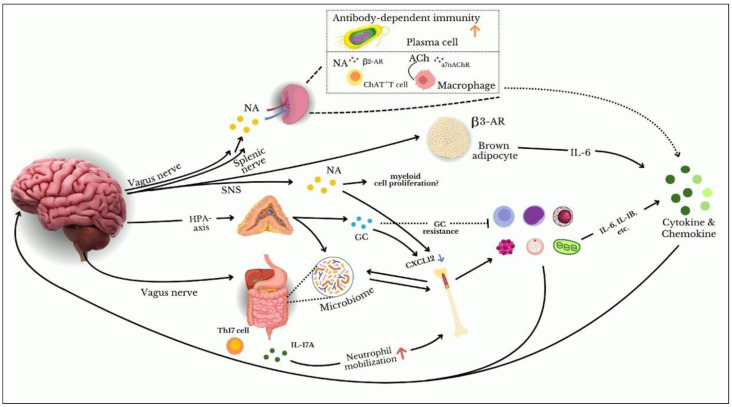
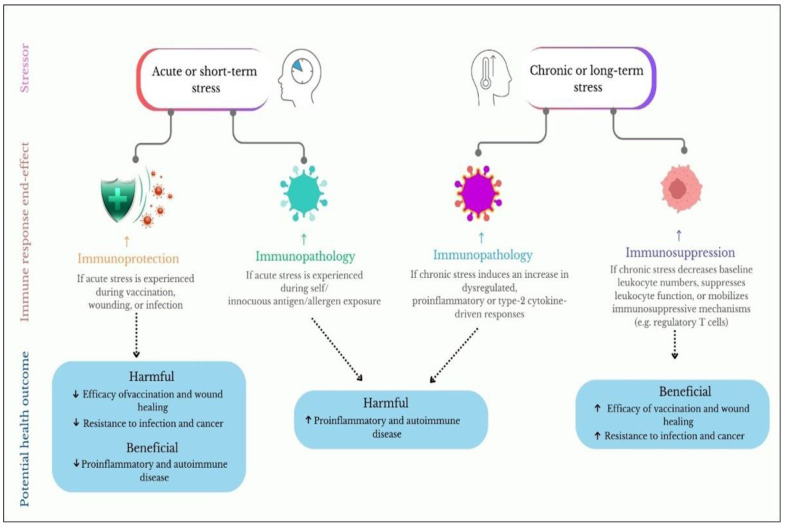
Stress significantly impacts the immune system, affecting susceptibility to illness and overall health. This review examines the intricate relationship between stress and the immune system, offering insights having practical implications for health and disease prevention. Stress can significantly trigger molecular and immune modulation, affecting the distribution and trafficking of immune cells in various organs and altering their composition in the blood. The review delves into two key pathways connecting stress and immunity: the hypothalamic–pituitary–adrenal (HPA) axis and the sympathetic nervous system. Stress activates the neuroendocrine system and triggers microglia in the brain, releasing stress hormones and neurotransmitters that modulate the function and movement of immune cells. Acute stress can temporarily strengthen immunity and promote protection during infection; in contrast, chronic stress dysregulates or inhibits immune functions. Chronic stress causes an increase in cortisol levels through the HPA axis, ultimately suppressing the immune response. Recognizing stress triggers and implementing effective stress management techniques can significantly impact individuals’ well-being. This review indicates that immune cells express genes differentially in response to stress, suggesting individual variabilities in the immune response against stress. This underscores the need for a personalized approach to stress management. This review also highlights the potential link between chronic stress and autoimmune disorders and warrants further investigation.
Overview
The claims and statistics of this paper haven’t been checked yet.
Run the check — free, no account needed. It reads the open-access text and checks the sources it cites.
Integrity signals
Registry
Cites
Statistics
Figures
Verification
Claims the paper makes
The claims and statistics of this paper haven’t been checked yet.
Run the check — free, no account needed. It reads the open-access text and checks the sources it cites.
Claims other papers make about this one
Each is checked against this paper’s own text: does it say what the citing paper says it does?
The source backs part of the claim, not all of it — or backs it for a different population, condition or comparison.
In the citing paper
“Recent studies indicate that chronic psychological or physiological stress can exacerbate RA through neuro–immune–bone axis pathways [76]”
From Interorgan Communications in Skeletal Pathophysiology: From Molecular Pathways to Multidisciplinary Therapies (2026) · cites this paper as [76]
Experimental — accuracy not yet measured
Self-check
Percentages, sums and reported differences re-computed from the paper’s own numbers.
The self-check needs the paper’s full text.
Citations
Cites
Neutrophil Extracellular Traps Kill Bacteria
Brinkmann, V., Reichard, U., Goosmann, C., Fauler, B., Uhlemann, Y., Weiss, D. S., Weinrauch, Y., & Zychlinsky, A. (2004) · Science · doi:10.1126/science.1092385 · Cited by 10,268
Macrophage activation and polarization: nomenclature and experimental guidelines
Murray, P. J., Allen, J. E., Biswas, S. K., Fisher, E. A., Gilroy, D. W., Goerdt, S., Gordon, S., Hamilton, J. A., Ivashkiv, L. B., Lawrence, T., et al. (2014) · Immunity · doi:10.1016/j.immuni.2014.06.008 · Cited by 6,337
Psychological stress and the human immune system: a meta-analytic study of 30 Years of inquiry
Segerstrom, S. C., & Miller, G. E. (2004) · Psychological Bulletin · doi:10.1037/0033-2909.130.4.601 · Cited by 3,334
Psychological Stress and Disease
Cohen, S., Janicki-Deverts, D., & Miller, G. E. (2007) · JAMA · doi:10.1001/jama.298.14.1685 · Cited by 3,168
MURPHY, K. M. M., & Weaver, C. T. (2016) · W.W. Norton eBooks · doi:10.1201/9781315533247 · Cited by 2,262
Slavich, G. M., & Irwin, M. R. (2014) · Psychological Bulletin · doi:10.1037/a0035302 · Cited by 2,206
Regulation of the Hypothalamic‐Pituitary‐Adrenocortical Stress Response
Herman, J. P., McKlveen, J. M., Ghosal, S., Kopp, B., Wulsin, A., Makinson, R., Scheimann, J., & Myers, B. (2016) · Comprehensive Physiology · doi:10.1002/cphy.c150015 · Cited by 1,819
Effects of stress on immune function: The good, the bad, and the beautiful
Dhabhar, F. S. (2014) · Immunologic Research · doi:10.1007/s12026-014-8517-0 · Cited by 1,343
Decisions About Dendritic Cells: Past, Present, and Future
Steinman, R. M. (2012) · Annual Review of Immunology · doi:10.1146/annurev-immunol-100311-102839 · Cited by 1,319
Mast cells in the development of adaptive immune responses
Galli, S. J., Nakae, S., & Tsai, M. M. (2005) · Nature Immunology · doi:10.1038/ni1158 · Cited by 1,280
Research works printed but not linked: 1
- Figueiredo, 2018, Stress and the Immune System: The Role of the HPA Axis, Curr. Neuropharmacol., 16, 1
Cited by
Sorted by citations
Items 201–300 of 300
Schubert, C. (2026) · Organisationsberatung Supervision Coaching · doi:10.1007/s11613-026-01000-0
The Role of Rhodiola rosea in Immunity through a Functional Nutrition Lens
Ranjan, S., Borah, A., Kulkarni, S., Pradhan, M., & Pradhan, M. (2026) · International Journal of Research and Review · doi:10.52403/ijrr.20260407
Ye, W., Wang, T., Yang, M., Zhang, X., Zeng, S., Lei, L., Xu, Y., & Li, Y. (2026) · Translational Oncology · doi:10.1016/j.tranon.2026.102781
“Moderate acute stress promotes immune activation, whereas excessive physical stress — such as high-intensity overtraining — can actively exacerbate immunosuppression and chronic inflammation [43].”
Seo, J. H., Cho, I.-H., Huh, H.-J., & Nam, Y.-J. (2026) · IntechOpen eBooks · doi:10.5772/intechopen.1015062
Psychological Assessment of Patients With Apical Periodontitis and Caries: A Case–Control Study
Gaeta, C., Tavakkoli, A., Carmellini, P., Cuomo, A., Fagiolini, A. M., Grandini, S., Malvicini, G., & Marruganti, C. (2026) · International Endodontic Journal · doi:10.1111/iej.70168
Lautenschläger, L. M., Barreira, L. M. C., Labode, J., Schipke, J., Albrecht, A., & Mühlfeld, C. (2026) · IBRO Neuroscience Reports · doi:10.1016/j.ibneur.2026.04.014
“This systemic increase in proinflammatory cytokines, then modulates a multitude of different tissue systems such as gut, liver, skin, lung and brain (Yu et al., 2026; Alotiby, 2024; Haykin and Rolls, 2021).”
Njoga, E. O., Kperegbeyi, J. I., Onwumere-Idolor, O. S., Imonikebe, U. G., Anyaoha, C. O., Majesty-Alukagberie, L. O., Ugwunwarua, J. C., Onah, N. E., & Oguttu, J. W. (2026) · Veterinary Sciences · doi:10.3390/vetsci13050439
Achwandi, M., & Khusniyah, Z. (2026) · INTERNATIONAL JOURNAL OF NURSING AND MIDWIFERY SCIENCE (IJNMS) · doi:10.29082/ijnms/2026/vol10/iss1/814
“While these responses are adaptive in acute conditions, prolonged activation may negatively affect hemodynamic stability, increase myocardial oxygen demand, and contribute to complications, thereby worsening patient outcomes (Alotiby, 2024).”
Stress and health: A typological approach to stressors
Maltseva, K. (2026) · Актуальні проблеми філософії та соціології · doi:10.32782/apfs.v058.2.2026.6
Lazebnik, T., & Aharonson, V. (2026) · Medical Sciences · doi:10.3390/medsci14020245
“Prolific research focused on elucidating the molecular mechanisms through which chronic stress facilitates tumor occurrence and progression, with immune suppression being identified as a key mechanism [30].”
ВПЛИВ СТРЕСУ НА ПОРУШЕННЯ ВІДТВОРНОЇ ФУНКЦІЇ ОРГАНІЗМУ В УМОВАХ ВІЙНИ
Стравський, Я., Стецько, В., Матлага, Д., & Максимук, Г. (2026) · Перспективи та інновації науки · doi:10.52058/2786-4952-2026-4(62)-2960-2974
The impact of various environmental influences on autoimmune diseases: A narrative review
Sijimol, S., Krishnamoorthy, A., Mohan, K., Jagannath, S., Senthamarai, S., & Sivasankari, S. (2026) · IP Indian Journal of Immunology and Respiratory Medicine · doi:10.18231/j.ijirm.15382.1775711462
Gilardini, F., Sabatucci, A., Cifani, C., Segura‐Garcìa, C., Pucci, M., Rania, M., & D’Addario, C. (2026) · Frontiers in Cell and Developmental Biology · doi:10.3389/fcell.2026.1761785
“Stress hormones can affect immune function, inflammation, and tissue physiology in ways that could influence microbial communities (Bailey et al., 2011; Alotiby, 2024).”
Chumakov, R. K., & Suprovych, T. M. (2026) · Scientific and Technical Bulletin оf State Scientific Research Control Institute of Veterinary Medical Products and Fodder Additives аnd Institute of Animal Biology · doi:10.36359/scivp.2026-27-1.05
Metabolic profile in military personnel with inflammatory bowel disease
Stoikevych, M. V., Кленіна, І. А., Tarasova, T. S., & Петішко, О. П. (2026) · GASTROENTEROLOGY · doi:10.22141/2308-2097.60.2.2026.726
Діденко, В. І., Bocharov, G. I., Tatarchuk, О. М., Меланіч, С. Л., & Yagmur, V. B. (2026) · GASTROENTEROLOGY · doi:10.22141/2308-2097.60.2.2026.720
Honcharenko, V., & Соколенко, С. В. (2026) · Research Notes Biology Research (Nizhyn Mykola Gogol State University) · doi:10.31654/2786-8478-2026-bn-2-102-113
Lifestyle Behaviors and Physical Activity as Modifiable Determinants of Chronic Disease
Ciupak, K., Garbacki, K., Dudek, B., Popek, L., Błażukiewicz, J., Dudek, K., Kowalczyk, N., Kowalewski, P., & Kuchta, E. (2026) · Quality in Sport · doi:10.12775/qs.2026.56.72424
Karakütük, E., & Canbolat, E. (2026) · İzmir Katip Çelebi Üniversitesi Sağlık Bilimleri Fakültesi Dergisi · doi:10.61399/ikcusbfd.1636975
Karmakar, P. C., Al-Arafat, T., Liu, C., Katsube, T., & Wang, B. (2026) · Dose-Response · doi:10.1177/15593258261444920
“246 Persistent stress also promotes ROS accumulation and antioxidant depletion, exacerbating tissue damage and compromising recovery following irradiation.”
Manley, L., & McCoyd, J. L. M. (2026) · Journal of Health Psychology · doi:10.1177/13591053261454340
Relationship between inflammation, depression, and immune surveillance in oral cancer
Sathish, S., Srivastava, S., & Khan, T. (2026) · World Journal of Clinical Cases · doi:10.12998/wjcc.122106
Neiman, M., Seppälä, K., Lamatsch, D. K., & Seppälä, O. (2026) · bioRxiv (Cold Spring Harbor Laboratory) · doi:10.64898/2026.06.02.729540
Ahmadian-Moghadam, S., Roshan‐Milani, S., & Saboory, E. (2026) · Translational Psychiatry · doi:10.1038/s41398-026-04151-x
“…systems that support survival and effective functioning, chronic or intense stress can result in prolonged activation of these systems — particularly the HPA axis and immune pathways — leading to dysregulation and increased vulnerability to physical and mental health disorders over time [35, 36].”
Parveen, & Kaur, I. (2026) · Applied Nanoscience · doi:10.1007/s13204-026-03146-w
“Sustained ele - vation of cortisol levels disrupts immune homeostasis and has been strongly linked to the progression of chronic con - ditions such as diabetes, cardiovascular diseases, asthma, autoimmune disorders, and cancer (Alotiby 2024; Levine 2022 ; Ortiz et al. 2019 ).”
Yamuna, T., Nanditha, S., Chandrasekaran, B., Muthu, K., Chitra, N., & Raghu, P. (2026) · Journal of Academy of Dental Education · doi:10.25259/jade_62_2025
He, J., Hei, Y., Li, L., Xia, X., Mai, Z., & Chen, X. (2026) · The Journal of Headache and Pain · doi:10.1186/s10194-026-02422-y
“Although cortisol classically suppresses inflammatory transcriptional programs, chronic or repeated HPA-axis activation can become maladaptive, such that pro-inflammatory mediators may persist despite elevated cortisol [45, 46].”
Mityuryayeva-Kornijko, I. O., Klets, T., & Odayskyi, O. M. (2026) · Ukrainian journal of Perinatology and Pediatrics · doi:10.15574/pp.2026.1(105).8090
Dang, A. T. N., Do, D. T., Pham, T. T. K., Dang, A. T. N., Duong, K. N., & Nguyen, H. T. (2026) · Tropical Animal Science Journal · doi:10.5398/tasj.2026.49.4.354
ОГЛЯД СТРЕСОВИХ ЧИННИКІВ У РОБОТІ КЛІНІЧНОГО ПСИХОЛОГА
Волкова, Н. (2026) · Перспективи та інновації науки · doi:10.52058/2786-4952-2026-5(63)-2462-2472
Younis, E. M., Rahman, A. N. A., Khamis, T., Abdel‐Warith, A. A., Davies, S. J., Shamlol, F. S., Younis, N. A., Ibrahim, R. E., & Elshopakey, G. E. (2026) · Research in Veterinary Science · doi:10.1016/j.rvsc.2026.106307
Grunsted, P., Xu, C., Janitz, A., Reese, J., Campbell, J., Santiago-Rodriguez, T. M., Cregeen, S. J., Petrosino, J. F., & Hwang, J. (2026) · Frontiers in Microbiomes · doi:10.3389/frmbi.2026.1832151
“Emerging evidence suggests that chronic stress and traumatic exposures can disrupt various physiological systems, including immune and metabolic pathways, which are closely linked with the body ’ s microbial communities (Belkaid and Hand, 2014; Xiong et al., 2023; Alotiby, 2024).”
Smith, M. D., Prestwood, J., Highland, K. B., Nealeigh, M. D., Lindsay, T., & Knuf, K. M. (2026) · Antimicrobial Stewardship & Healthcare Epidemiology · doi:10.1017/ash.2026.10426
“19 Increased oxygen content seems to be protective in prevention of SSI 20 and at least one historic randomized controlled trial of participants undergoing upper abdominal surgery with EA showed improved tissue oxygenation.”
Chronic Disease and Stress Among Transgender and Gender-Diverse People
Streed, C. G., & Poteat, T. (2026) · Nursing Clinics of North America · doi:10.1016/j.cnur.2026.04.005
Piscopo, N., Carlo, E. D., Cerrone, A., Vecchio, D., Napoletano, M., Campione, A., Ambra, C. D., D’Occhio, M. J., Esposito, M., Cotticelli, A., et al. (2026) · Veterinary Sciences · doi:10.3390/vetsci13070612
“The immunosuppressive effect of chronic stress is well documented in humans [19] but is under-investigated in buffalo [31].”
Stress as an interdisciplinary problem in the clinic of immuno-dependent diseases
Максимова, А. В., & Tataurshchikova, N. S. (2026) · Journal of Adaptive Medical Immunology and Public Health Issues · doi:10.17116/immunology2026201171
PSYCHO-VISCERAL EXPERIENCE OF WAR TRAUMA
Панченко, О. А. (2026) · Scientific Notes of Ostroh Academy National University Psychology Series · doi:10.25264/2415-7384-2026-21-20-29
Cumulative trauma exposure and cardiac autonomic stress reactivity in healthy adults
Schneider, M., Eder, V., Rominger, C., & Schwerdtfeger, A. R. (2026) · European Journal of Psychotraumatology · doi:10.1080/20008066.2026.2686575
“Stressors, both acute and chronic, can profoundly affect an individual’s health through their impact on physiological stress regulatory systems (Alotiby, 2024).”
da Costa, M. G., dos Santos, A. S., Bohn, A. L. L., Saturnino, B. C. D. C., de Aguiar, G. B., Jacobs, G. B., Danilevicz, C. K., Varela, A. P. M., Teixeira, T. F., Roehe, P. M., et al. (2026) · Developmental Neurobiology · doi:10.1002/dneu.70053
“Viral infections can dysregulate the HPA axis, resulting in the chronicity of high cortisol levels, present in some mood disorders, as well as an insufficient stress response (Alotiby 2024 ; George et al. 2025 ).”
Chronic stress and its impact on the immune system, vulnerability to infections and cancers
Bahrami, M., & Makoui, M. H. (2025) · Journal of Health Research and Development · doi:10.66224/jhrd.3.4.12
Luo, Q., Xu, J., Luo, G., & Luo, T. (2026) · Psycho-Oncologie · doi:10.18282/po5865
Sianturi, E. I., Modokh, M. A., Soltief, S. N., Latifah, E., & Barus, A. A. (2026) · Journal of the International Association of Providers of AIDS Care (JIAPAC) · doi:10.1177/23259582261469420
“Prolonged stress not only damages the body 24 but also suppresses the immune system, increasing vulnerability to other illnesses.”
Lim, S. J., Joung, J. Y., Jang, J. H., Kim, J. H., Li, J., & Oh, N. S. (2026) · Food Bioscience · doi:10.1016/j.fbio.2026.109541
Dionisio, L. D. (2026) · Pinelatinoamericana · doi:10.67068/d4hpbs13
Xu, M., & Chen, S. (2026) · Behavioral Sciences · doi:10.3390/bs16081266
“Immune responses may also be altered by stress, aggravating autoimmune conditions and delaying healing processes (Alotiby, 2024; Nunez et al., 2025).”
Bonilla, M. C., Lassnig, S., Wendt, M., Hennig‐Pauka, I., Mörgelin, M., von Köckritz‐Blickwede, M., & de Buhr, N. (2026) · Medical Microbiology and Immunology · doi:10.1007/s00430-026-00881-3
“Under stress con - ditions, their dysregulated release can impair pathogen clearance, alter cytokine profiles, and compromise barrier defenses[2, 10, 11 ].”
Nejad, A. S. M., Shahin-jafari, A., Abdel-Moneim, A. S., Karam, H., Ataei, B., & Ali, S. (2026) · Majallah-i dānishgāh-i ̒ulum-i pizishkī-i Kirmān. · doi:10.34172/jkmu.4195
“Chronic stress can also induce the release of pro-inflammatory cytokines like IL-6 and TNF-α, which, in a persistent state, can lead to a state of chronic low-grade inflammation, thereby impairing the body’s ability to mount an effective immune response to vaccines (18).”
Maulida, F. N., & Yarsiska, N. (2026) · International Journal of Health Engineering and Technology · doi:10.55227/ijhet.v5i2.969
Edukasi Manajemen Stres dan Kesehatan Reproduksi di SMK Farmasi Cendekia Farma Husada Lampung
Widianingsih, M., Zahra, N. P. N., Aisyah, S. C., Tajdidah, S. M., Rahma, S., & Wulandari, S. A. (2026) · Jurnal Pengabdian Masyarakat Bhinneka · doi:10.58266/jpmb.v4i4.1268
Jancic, P., Kovac, I., Demirtas, H. E., Knežević, N. N., & Lubinsky, G. T. (2026) · Biomolecules · doi:10.3390/biom16081183
“During acute stress, cortisol plays a role in limiting excessive inflammatory response activation through suppression of pro-inflammatory cytokines (IL-1 β , IL-6, and TNF-α ) and an increase in the anti-inflammatory cytokine IL-10 [47,48].”
Tongpon, S., Panyain, N., Ongnok, B., Charoennitiwat, V., Suksuwan, P., Sukwattananipaat, P., Pewla-Oo, S., Chaisiri, K., Thaenkham, U., Ratnarathorn, N., et al. (2026) · Scientific Reports · doi:10.1038/s41598-026-66137-5
Shared Risk Factor Approach in Oral-Systemic Diseases
Javaid, M. M., Mujtaba, H., Hassan, N. U., Shoaib, M., & Ahmad, S. (2026) · Advances in computational intelligence and robotics book series · doi:10.4018/979-8-3373-8402-3.ch004
Application of artificial intelligence in geriatric infection: recent advances and prospects
Liang, P., Tan, Z., Liang, B., Xu, Y., Wang, T., Zhang, Z., & Cai, Y. (2026) · Frontiers in Cellular and Infection Microbiology · doi:10.3389/fcimb.2026.1887322
“Pneumonia remains a leading cause of mortality and morbidity among the elderly population worldwide, pneumonia accounts for approximately 90% of infection-related deaths in individuals aged 65 and over (GBD 2021 Lower Respiratory Infections and Antimicrobial Resistance Collaborators, 2024).”
Woźniak, T., Filipiak, Z. M., Sokołowska, A., Masłowski, M., Wabiszczewicz, Ł., Golińska, M., Wasilewska, N., Nowak, A., Kita, N., & Dudziak, P. M. (2026) · Pharmacotherapy in Psychiatry and Neurology · doi:10.17219/fpn/219223
Rapid regulation of plasmacytoid dendritic cells after gravitational changes in parabolic flightPreprint
Okkasian, M., Nienhaus, F., Lang, A., Binnebößel, S., Zöhner, C., Elster, C., Pfeiler, S., Boshoven, L., Georgy, J., Gastl, M., et al. (2026) · Research Square · doi:10.21203/rs.3.rs-10232702/v1
Reclaiming wholeness: Ayurveda, colonization, and the healing of medicine
Patel, S. (2026) · Elsevier eBooks · doi:10.1016/b978-0-443-44998-7.00017-x
Kočović, D. M., Momčilović, S., & Svetozarević, T. (2026) · International Journal of Molecular Sciences · doi:10.3390/ijms27167242
“This mechanism has been increasingly implicated in stress-related cardio-vascular pathology [3,39,60].”
InfluentialCarbonell-Colomer, M., Brotóns, E. B., Giráldez, C. A. M., Cerón, J. M. C., Martínez-Subiela, S., & Botía-González, M. (2026) · Frontiers in Psychiatry · doi:10.3389/fpsyt.2026.1872039
“In recent years, research in behavioral medicine has increasingly focused on understanding how chronic and acute exposure to stress affects health outcomes (39).”
Mityuryayeva-Kornijko, I. O., Klets, T., & Odayskyi, O. M. (2026) · Modern pediatrics Ukraine · doi:10.15574/sp.2026.3(155).6574
Booker, C. L., Liang, Y., Meadows, A., Cranshaw, O., Dearman, A., Dilkes, E., Hignell, B., Malih, A., Navyte, G., & Meena Kumari, B. (2026) · SSM - Population Health · doi:10.1016/j.ssmph.2026.101962
“Additionally, inflammatory responses have been associated with allostatic load and overall health (Alotiby, 2024; Chen et al., 2018; Yang et al., 2026).”
Satilmis, H., Verheye, E., Faict, S., Heestermans, R., Becker, A. D., Vanderkerken, K., Bruyne, E. D., Menu, E., Sloan, E. K., & Veirman, K. D. (2026) · Cancer Letters · doi:10.1016/j.canlet.2026.218802
Yang, Y. J., Kim, M. J., Kim, H. H., Heo, J. W., Chun, J. L., Shin, E., Kim, K. S., Kim, H., Jeong, E. J., Lee, D., et al. (2026) · Animals · doi:10.3390/ani16172679
“Although these parameters are not individually specific to stress, their coordinated changes suggest that the stress response extended beyond the endocrine system and involved multiple physiological processes [32].”
Dielemans, D. A. M., Huizer, K., van der Pluijm, M., Thijssen, A., van Beveren, N. J. M., & de Haan, L. (2026) · Schizophrenia Research · doi:10.1016/j.schres.2026.08.022
Stress and microbiocenosis of the female reproductive tract
Tutova, A. V., Op, L., Kaluzhnova, E. P., Chadyuk, M. K., Kozarenko, O. N., Калашникова, И. В., Nagorny, A. V., & Селиванова, А. В. (2026) · Obstetrics Gynecology and Reproduction · doi:10.17749/2313-7347/ob.gyn.rep.2026.808
Shachar, E. K., Haas, R., Rodríguez, V. E., Lester, J., Siavoshi, M. A., Kwan, L. C., Niell‐Swiller, M., Spellman, P. T., Boutros, P. C., Chang, V. Y., et al. (2026) · medRxiv · doi:10.64898/2026.08.26.26361226
Kim, Y.-K. (2026) · Korean Journal of Human Ecology · doi:10.5934/kjhe.2026.35.4.645
Pratisara, R. Z., Qosimah, D., Widyaputri, T., Adam, M. A., Azmai, M. N. A., & Mamun, M. A. A. (2026) · Open Veterinary Journal · doi:10.5455/ovj.2026.v16.i9.6
Pirard, L., Khudyakov, J. I., Martin, M., Vanoost, L., Warnant, A., Decloux, D., Baily, T., Crocker, D. E., Eppe, G., Scholl, G., et al. (2026) · Environmental Science & Technology · doi:10.1021/acs.est.6c05765
The Science of the Surgical Stress Response
Pearcey, S. M., & Wagner, V. D. (2026) · Clinics in Perioperative Nursing Care · doi:10.1016/j.pernc.2026.05.001
Effects of Caffeine and Cortisol on NK Cell Function
Wang, L. (2026) · Oxford Journal of Student Scholarship · doi:10.65161/recvvtimxi9jfpeoz
Alharthi, S. S., Omar, S. M., Alharbi, H. Y., Alwabili, A., & Adam, I. (2026) · Journal of Clinical Medicine · doi:10.3390/jcm15176909
“Sustained psychological stress and HPA axis hyperactivation induce a pro-thrombotic, low-grade inflammatory state [10,15].”
Mycobiota and antifungal activity of some plant components of the flora of Azerbaijan.
Bakhshaliyeva, K. F., Muradov, P. Z., Nagıyeva, R. Z., Khalilova, D. T., Shirinova, S. A., İsgenderova, A. K., MAMMADOVA, F. R., Maharramli, N. S., Aliyeva, M. B., & Jafarli, S. İ. (2026) · Journal of biological research. · doi:10.70264/jbr.v1.3.2026.1
Resveratrol as a Neuroprotective Bridge from Blue Zone Longevity to Alzheimer's Prevention
Liu, R. (2026) · Theoretical and Natural Science · doi:10.54254/2753-8818/2026.36488
Kim, Y., Kim, J., & Yang, J.-H. (2026) · Annals of Occupational and Environmental Medicine · doi:10.35371/aoem.2026.38.e29
“24-26”
Collinet, A. C. T., Kuipers, M. F., Laurila, R., Remy, M. L., Prevaes, É., van Oudheusden, M. P., Pittens, C. A. C. M., de Vries, S., Verduijn, M., de Groot, N. M. S., et al. (2026) · European Journal of Preventive Cardiology · doi:10.1093/eurjpc/zwag483
Cortisol levels during paediatric endoscopic surgery: results of a pilot study
Nasirov, M., Vivek, K., & Saxena, A. K. (2026) · Journal of Pediatric Endoscopic Surgery · doi:10.1007/s42804-026-00320-3
Prediction models for infection after kidney transplantation: a systematic review
Zhao, X., Zhang, Y., Tang, H., Long, J., Dong, H., Kuang, G., & Song, J. (2026) · Frontiers in Medicine · doi:10.3389/fmed.2026.1916764
“Chronic psychological stress elevates glucocorticoid levels via the hypothalamic-pituitary-adrenal axis and the sympatho-adreno-medullary system, thereby suppressing cellular immune function (68).”
SCIENCE OF STRESS AND ITS COPING MECHANISMS
Panebi, U. G. O., & Hamilton‐Ekeke, J. (2026) · Journal of Educational Research and Development · doi:10.67203/jerd.2026.dv6p68pv
Hagos, B. T., Weldemedhn, S. G., Geto, R. G., Wordofa, K. D., Meshesha, G. A., Abera, A. A., Kebede, E. M., Amare, K., & Berhe, B. M. (2026) · IDCases · doi:10.1016/j.idcr.2026.e02780
“…blunted in this patient, a phenomenon supported by psychoneuroimmunological evidence linking chronic systemic disease to HPA axis suppression [7], modern frameworks on stress vulnerability and cortisol hypo-responses to acute stress [17], and data demonstrated specifically in leprosy cohorts…”
Antigen presentation and its evolution in teleost fishes
Wong‐Benito, V., Chen, Y., & Dixon, B. (2026) · Fish physiology · doi:10.1016/bs.fp.2026.08.005
Bihorac, J., & Hadamitzky, M. (2026) · NeuroImmunoModulation · doi:10.1159/nim/adxag008
Hasan, A., Asfour, A. A. R., Qaba, H., AL-Sharabi, A. A., ASFOOR, A., Sarhan ONDOKUZ MAYIS UNIVERSITY MOHAMMED, Al-Adhreai, A., Güner, S., & Saeedy, M. A. (2026) · Molecular Neurobiology · doi:10.1007/s12035-026-06173-4
“…and thalamus, mast cells engage with adjacent neurons and astrocytes under normal physiological conditions to help modulate the release of neuroendocrine mediators such as CRH and neuropeptide Y, processes that play a role in regulating circadian rhythms, appetite, and the stress response [98].”
Pallett, S. J. C., Woolley, S., Wadda, K., Hemingway, R., Walsh, N. P., Moore, L. S. P., O’Shea, M. K., & Macallan, D. C. (2026) · BMJ Immunology · doi:10.1136/bmjimm-2025-000015
Samalia, P. D., Chen, S. S. L., Lu, L. M., Sims, J. L., Lindsay, K., & Niederer, R. L. (2026) · Journal of Personalized Medicine · doi:10.3390/jpm16100511
“Sleep, psychological stress and circadian disruption influence immune homeostasis through interactions among the hypothalamic–pituitary–adrenal axis (HPA), sympathetic nervous system and immune system [21–27].”
Sari, A. M., Fauzi, M., Dharmawan, Y., & Fitriani, B. N. (2026) · Contagion Scientific Periodical Journal of Public Health and Coastal Health · doi:10.30829/contagion.v8i3.29314
“This stress can weaken the adaptive immune response, increasing susceptibility to infection (Ali et al., 2025; Alotiby, 2024; Morrone et al., 2020).”
Inhibition of Adrenergic Receptors Reduces Genital HSV-1 Clinical Recurrences in Guinea Pigs
Green, J. C., Moore, G. A., Irwin, M. D., Joyce, J. D., & Bertke, A. S. (2026) · Viruses · doi:10.3390/v18101081
“Chronic stress, characterized by prolonged elevation of cortisol, causes immune suppression [22] but also directly reactivates latent HSV-1 in cultured neurons [10].”
Mastrofini, G. F., Romersi, R. F., Lombardi, M. G., Persaud, K. T., Ryan, M. M., Hirsch, K. R., Fraley, A. L., Dawes, J. J., Stray-Gundersen, S. O., Hardin, J. W., et al. (2026) · Journal of the International Society of Sports Nutrition · doi:10.1080/15502783.2026.2740227
“Both chronic stress and poor sleep are associated with decrements in health, well-being, and daily occupational performance [4,5].”
Uncu, Y. M. G., & Leydis, M. R. (2026) · Frontiers in Psychology · doi:10.3389/fpsyg.2026.1884838
“…axis, cortisol reactivity and recovery, sleep quality and fatigue, pain, inflammatory and neuroimmune signaling, metabolic state, sensory load, and the calibration of stress-response systems (Agorastos et al., 2023; Alotiby, 2024; Herman et al., 2012; James et al., 2023; Khalsa et al., 2018).”
Meta-Inflammation in Type 2 Diabetes Mellitus: Theoretical, Methodological, and Clinical Aspects
Zhuravleva, Y. A., & Gusev, E. (2026) · International Journal of Molecular Sciences · doi:10.3390/ijms27198891
Algül, N. I. E., Erzurum, M., Felekoğlu, M. A., Özerdem, M. E., Özbeyaz, N. B., & Algül, E. (2026) · Angiology · doi:10.1177/00033197261494019
Mogharebi, R. S., & Sabet, M. (2026) · Journal of Cognition Behavior Learning · doi:10.61838/jcbl.387
Darras, G., Desmet, M., Schoutens, W., Debeer, D., Lamont, A. E., Bhattacharya, J., & Annemans, L. (2026) · Frontiers in Psychology · doi:10.3389/fpsyg.2026.1765017
“…functioning in complex and multifactorial ways, including increased inflammation, dysregulation of the hypothalamic–pituitary–adrenal (HPA) axis and nervous system, and changes in the microbiome (Marwaha et al., 2025; Warren et al., 2024; Morys et al., 2024; Alotiby, 2024; Nunez et al., 2025).”
Immune regulation of dormancy and metastatic progression in breast cancer
Sabol, H. M., & Borriello, L. (2026) · npj Breast Cancer · doi:10.1038/s41523-026-01077-x
ПСИХОЛОГИЧЕСКИЙ СТРЕСС И ИММУННАЯ СИСТЕМА ЧЕЛОВЕКА: ОБЗОР СОВРЕМЕННЫХ ИССЛЕДОВАНИЙ
Коршубаева, Р. Х. (2026) · Buxoro xalqaro universiteti ilmiy axborotnomasi · doi:10.67780/buxoro-xalqaro-universiteti-ilmiy-axborotnomasi.2026.f461bab7
Міщенко, В. П., & Міщенко, В. В. (2026) · Reproductive Endocrinology · doi:10.18370/2309-4117.2026.85.16-24
Petrushko, M. P., Klyushnikov, Y. V., Панасовський, М. Л., Klimukhina, O. I., & Yurchuk, T. O. (2026) · Eastern Ukrainian Medical Journal · doi:10.21272/eumj.2026;14(3);856-863
Guo, D., Wang, C., Yang, N., & Liu, Y. (2026) · Current Issues in Molecular Biology · doi:10.3390/cimb48111135
Valovatsky, E., Patel, Z., & Jain, P. (2026) · NeuroImmune Pharmacology and Therapeutics · doi:10.1515/nipt-2026-0023
“An individual’s allostatic load is comprised of the alterations in metabolic demand, hormonal and immune signaling, and the changes in emotional and cognitive processing that underlie the development of adaptive behaviors for responding to future encounter of similar stressors [25].”
Гейн, С. В., & Ibatullin, M. V. (2026) · Russian Journal of Immunology · doi:10.46235/1028-7221-17411-tro
Sadurska, G., Psiuk, M., Prusaczyk-Świerzewska, A., Hunek, O., Gajewska, K., Januszewska, N., Matuszewski, P., Ziółkowska, J., Kleparska, A., & Smędowski, I. (2026) · Quality in Sport · doi:10.12775/qs.2026.78.76475
Metadata
- Authors
- Alotiby, A.
- Affiliations
- Umm al-Qura University (SA)
- Corresponding author
- Alotiby, Amna
- ORCID
- Alotiby, Amna
- Venue
- Journal of Clinical Medicine
- Publisher
- MDPI AG
- Published
- 2024-10-25
- Volume
- 13
- Issue
- 21
- Pages
- 6394
- ISSN
- 2077-0383 (ISSN-L)
- PMC
- PMC11546738
- OpenAlex
- W4403749058
- Cited by
- 253
- References
- 51
- Citations by year
- 2026: 145 · 2025: 108
- FWCI
- 9.71
- Type
- journal article
- Language
- en
- Open access
- gold
- doi.org
- Licence
- Locations
- Journal of Clinical Medicine (publishedVersion, cc-by)
- PubMed Central (publishedVersion, cc-by)
- PubMed (publishedVersion)
- Topics
- Life Sciences › Neuroscience › Behavioral Neuroscience › Stress Responses and Cortisol
- Life Sciences › Biochemistry, Genetics and Molecular Biology › Cancer Research › Cancer, Stress, Anesthesia, and Immune Response
- Life Sciences › Neuroscience › Neurology › Vagus Nerve Stimulation Research
- Keywords
- stress, immune system, hypothalamic-pituitary-adrenal axis, sympathetic nervous system, cortisol, chronic stress, acute stress, immune cell trafficking, neuroendocrine-immune interaction, microglia, stress hormones, stress management, autoimmune disease, immune gene expression
About these checks
Registry, retraction, Cites and statistics results are computed, not judged, with one exception: a printed reference that no index lists is read once by a model before it counts as a citation error. Claims are extracted by a model and kept only when their quote appears verbatim in the text; each cited source is then checked, with a model’s help, for whether it says what the claim relies on. Those verdicts can be wrong — read the claim’s quote and the cited source before relying on one.
Statistics and arithmetic are recomputed, not judged.
Confidence bands are shown only for fields calibrated on our annotated test set. None is calibrated yet, so no band is shown.
What counts as a claim ›How we measure confidence ›How we check this ›
Are you an author, or do you see a problem with this page? Request a review
