

The DOI matches its Crossref record; 52 of the 53 references it cites were found in a registry or an index.
The Use of Thermal Techniques for the Characterization and Selection of Natural Biomaterials
Open accessAbstract
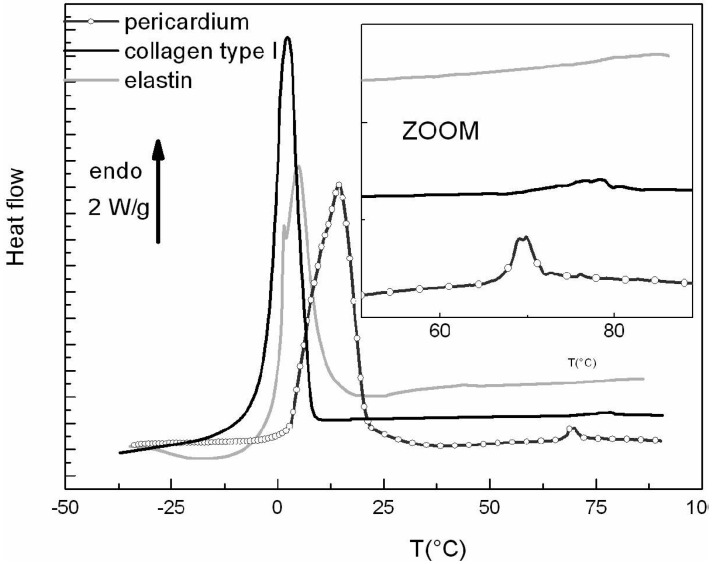
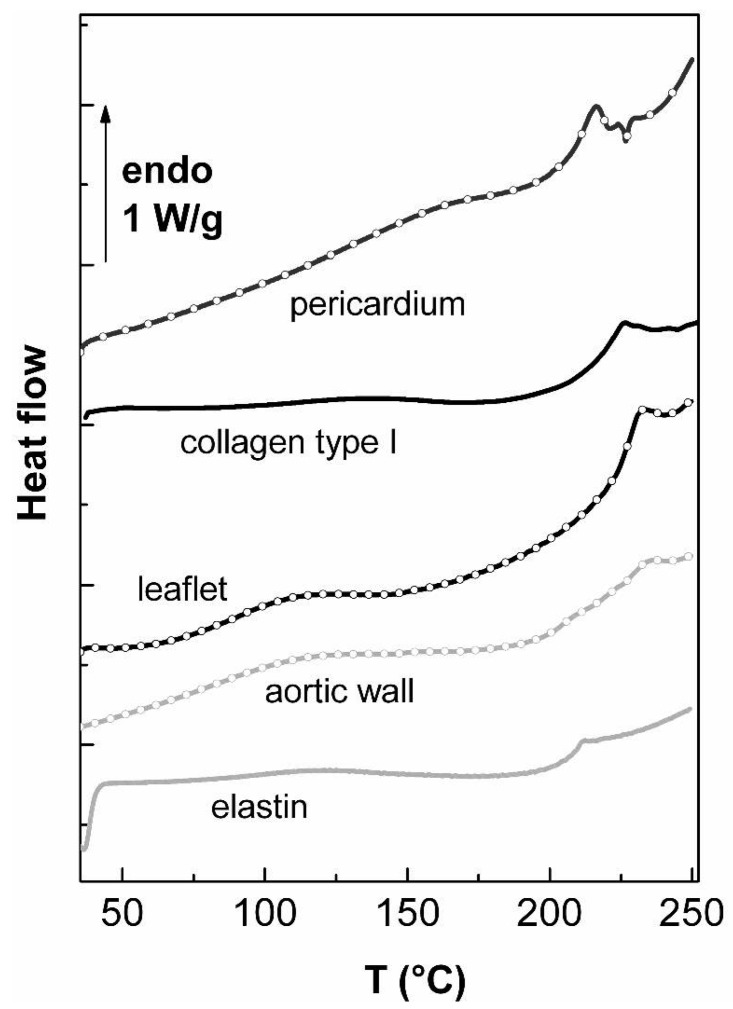
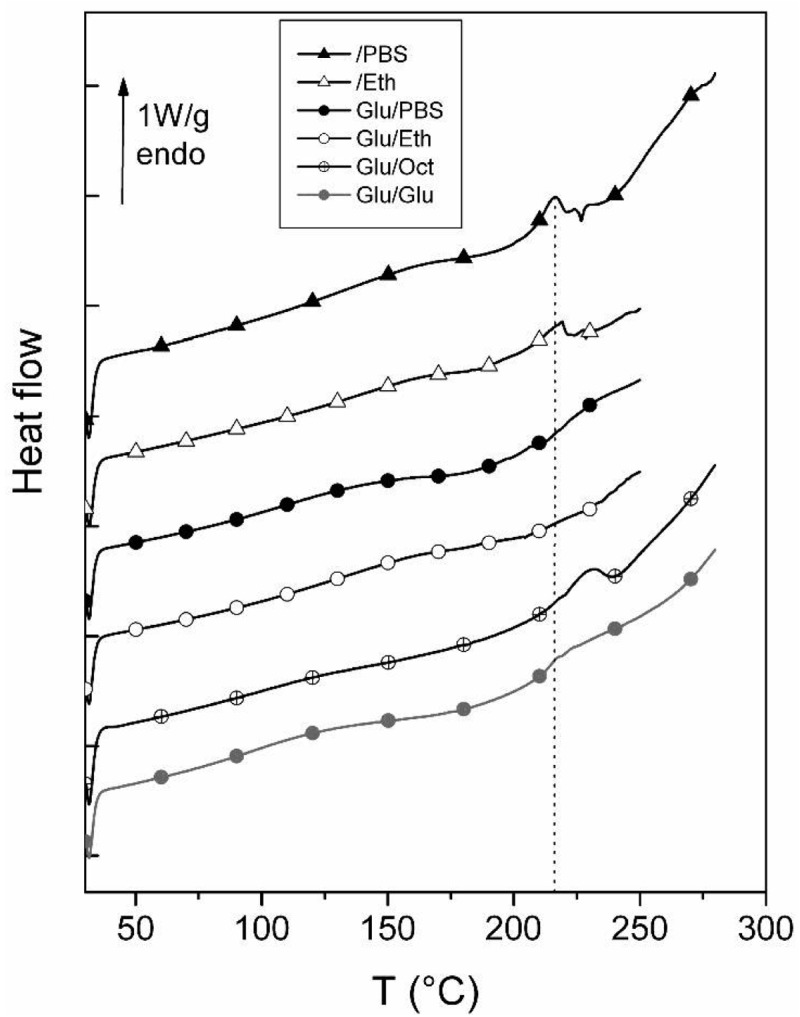
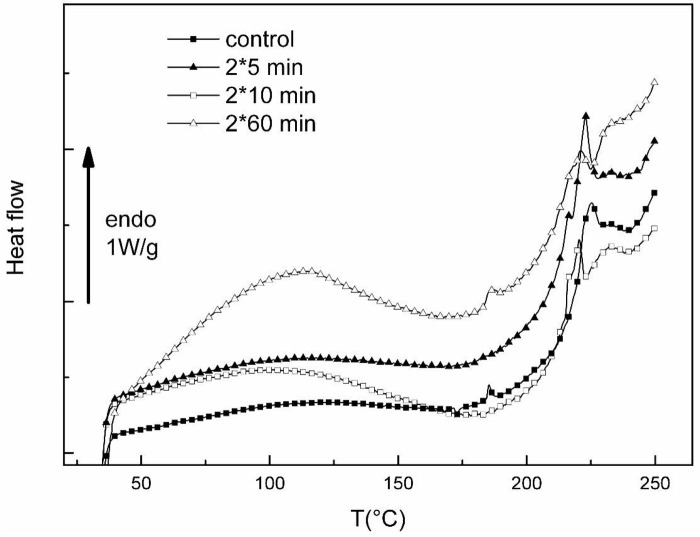
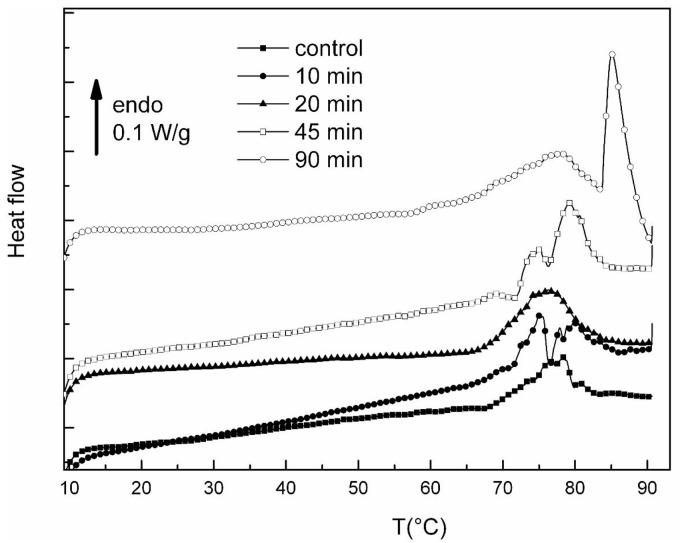
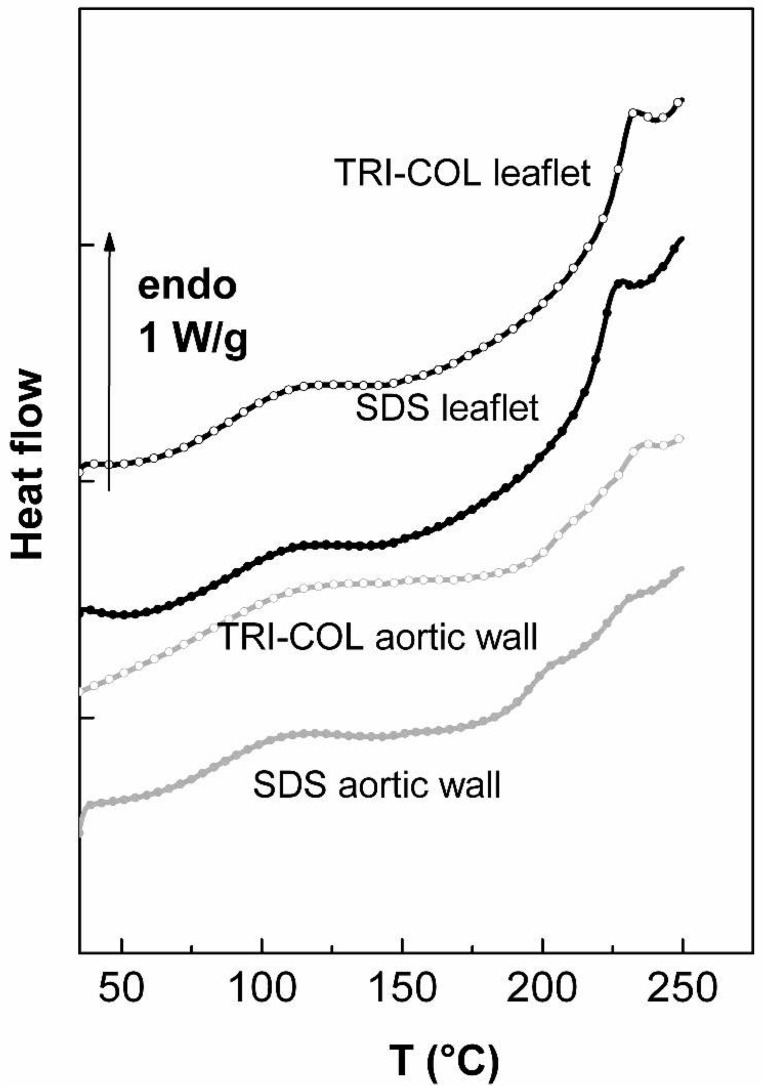
In this paper we explore the ability of thermal analysis to check elastin and collagen integrity in different biomaterial applications. Differential Scanning Calorimetry (DSC) has been used to analyze the first and second order transitions of the biological macromolecules in the hydrated and dehydrated state. First, we report the characterization of control cardiovascular tissues such as pericardium, aortic wall and valvular leaflet. Their thermal properties are compared to pure elastin and pure collagen. Second, we present results obtained on two collagen rich tissues: pericardia with different chemical treatments and collagen with physical treatments. Finally, more complex cardiovascular tissues composed of elastin and collagen are analyzed and the effect of detergent treatment on the physical structure of collagen and elastin is brought to the fore.
Overview
The claims and statistics of this paper haven’t been checked yet.
Run the check — free, no account needed. It reads the open-access text and checks the sources it cites.
Integrity signals
Registry
Cites
Statistics
Figures
Verification
Claims the paper makes
The claims and statistics of this paper haven’t been checked yet.
Run the check — free, no account needed. It reads the open-access text and checks the sources it cites.
Claims other papers make about this one
Each is checked against this paper’s own text: does it say what the citing paper says it does?
The source backs part of the claim, not all of it — or backs it for a different population, condition or comparison.
In the citing paper
“This behavior is consistent with the chemical modification of amino acid residues involved in stabilizing the triple-helical structure, leading to decreased cooperativity during thermal denaturation and enhanced molecular mobility [42].”
From Montmorillonite-reinforced methacrylated collagen/methacrylated silk fibroin hydrogel-based inks: rheological and physicochemical characterization for bone scaffold applications (2026) · cites this paper as [42]
Experimental — accuracy not yet measured
Self-check
Percentages, sums and reported differences re-computed from the paper’s own numbers.
The self-check needs the paper’s full text.
Citations
Cites
Stability of proteins. Proteins which do not present a single cooperative system.
Privalov, P. L. (1982) · PubMed · Cited by 1,035
Desmet, T., Morent, R., Geyter, N. D., Leys, C., Schacht, E. H., & Dubruel, P. (2009) · Biomacromolecules · doi:10.1021/bm900186s · Cited by 692
Elastin: molecular description and function
Debelle, L., & Tamburro, A. M. (1999) · The International Journal of Biochemistry & Cell Biology · doi:10.1016/s1357-2725(98)00098-3 · Cited by 545
Carboxypeptidase A: A Protein and an Enzyme
Quiocho, F. A., & Lipscomb, W. N. (1971) · Advances in protein chemistry · doi:10.1016/s0065-3233(08)60278-8 · Cited by 400
The Structure Of Collagen And Gelatin
Harrington, W. F., & von Hippel, P. H. (1962) · Advances in protein chemistry · doi:10.1016/s0065-3233(08)60028-5 · Cited by 400
Chemically modified collagen: A natural biomaterial for tissue replacement
Nimni, M. E., Cheung, D. T., Strates, B. S., Kodama, M., & Sheikh, K. (1987) · Journal of Biomedical Materials Research · doi:10.1002/jbm.820210606 · Cited by 393
Courtman, D. W., Pereira, C. A., Kashef, V., McComb, D., Lee, J. M., & Wilson, G. J. (1994) · Journal of Biomedical Materials Research · doi:10.1002/jbm.820280602 · Cited by 322
The elastic properties of elastin
Hoeve, C. A. J., & Flory, P. J. (1974) · Biopolymers · doi:10.1002/bip.1974.360130404 · Cited by 313
Heart Valve Tissue Engineering
Veselý, I. (2005) · Circulation Research · doi:10.1161/01.res.0000185326.04010.9f · Cited by 309
Gas Plasma: Medical Uses and Developments in Wound Care
Lloyd, G., Friedman, G., Jafri, S., Schultz, G., Fridman, A., & Harding, K. G. (2010) · Plasma Processes and Polymers · doi:10.1002/ppap.200900097 · Cited by 301
Research works printed but not linked: 2
- Comper, 1996, Arterial Wall, Extracellular Matrix, 1, 175
- Ward, A.G., and Courts, A. (1977). The Science and Technology of Gelatin, Academic Press.
Cited by
Sorted by citations
Chitosan and gelatin-based electrospun fibers for bone tissue engineering
Sruthi, R., Balagangadharan, K., & Selvamurugan, N. (2019) · International Journal of Biological Macromolecules · doi:10.1016/j.ijbiomac.2019.04.115 · Cited by 236
Design of Boron Nitride/Gelatin Electrospun Nanofibers for Bone Tissue Engineering
Nagarajan, S., Belaid, H., Pochat‐Bohatier, C., Teyssier, C., Iatsunskyi, I., Coy, E. L., Balme, S., Cornu, D., Miele, P., Kalkura, N. S., et al. (2017) · ACS Applied Materials & Interfaces · doi:10.1021/acsami.7b13199 · Cited by 167
Tavakoli, J., Elliott, D. M., & Costi, J. J. (2017) · Acta Biomaterialia · doi:10.1016/j.actbio.2017.05.036 · Cited by 86
Supercritical Carbon Dioxide–Based Sterilization of Decellularized Heart Valves
Hennessy, R. S., Jana, S., Tefft, B. J., Helder, M. R. K., Young, M. D., Hennessy, R. R., Stoyles, N. J., & Lerman, A. (2017) · JACC Basic to Translational Science · doi:10.1016/j.jacbts.2016.08.009 · Cited by 86
Holmes, R., Kirk, S. T., Tronci, G., Yang, X., & Wood, D. J. (2017) · Materials Science and Engineering C · doi:10.1016/j.msec.2017.03.267 · Cited by 78
Graphene-like BN/gelatin nanobiocomposites for gas barrier applications
Biscarat, J., Bechelany, M., Pochat‐Bohatier, C., & Miele, P. (2014) · Nanoscale · doi:10.1039/c4nr05268d · Cited by 69
An insight on type I collagen from horse tendon for the manufacture of implantable devices
Salvatore, L., Gallo, N., Aiello, D., Lunetti, P., Barca, A., Blasi, L., Madaghiele, M., Bettini, S., Giancane, G., Hasan, M. N., et al. (2020) · International Journal of Biological Macromolecules · doi:10.1016/j.ijbiomac.2020.03.082 · Cited by 67
Iswariya, S., Velswamy, P., & Sivagnanam, U. T. (2017) · Journal of Polymers and the Environment · doi:10.1007/s10924-017-1107-1 · Cited by 62
Ramya, K. R., Thangam, R., & Madhan, B. (2019) · Process Biochemistry · doi:10.1016/j.procbio.2019.11.015 · Cited by 58
Inactivation of Gram-positive biofilms by low-temperature plasma jet at atmospheric pressure
Marchal, F., Robert, H., Merbahi, N., Fontagné‐Faucher, C., Yousfi, M., Marcato-Romain, C.-E., Eichwald, O., Rondel, C., & Gabriel, B. (2012) · Journal of Physics D Applied Physics · doi:10.1088/0022-3727/45/34/345202 · Cited by 57
Self-citationJeong, W., Kim, M. K., & Kang, H.-W. (2021) · Journal of Tissue Engineering · doi:10.1177/2041731421997091 · Cited by 53
Strategies for Fabricating Protein Films for Biomaterial Applications
Gopalakrishnan, S., Xu, J., Zhong, F., & Rotello, V. M. (2020) · Advanced Sustainable Systems · doi:10.1002/adsu.202000167 · Cited by 52
Plumbagin caged silver nanoparticle stabilized collagen scaffold for wound dressing
Duraipandy, N., Lakra, R., Srivatsan, K. V., Ramamoorthy, U., Korrapati, P. S., & Kiran, M. S. (2014) · Journal of Materials Chemistry B · doi:10.1039/c4tb01791a · Cited by 50
Bak, S. Y., Lee, S. W., Choi, C., & Kim, H. W. (2018) · Materials · doi:10.3390/ma11122518 · Cited by 45
Silva, K. D., Kumar, P., van Vuuren, S. F., Pillay, V., & Choonara, Y. E. (2021) · ACS Omega · doi:10.1021/acsomega.1c01903 · Cited by 48
Carşote, C., & Badea, E. (2019) · Heritage Science · doi:10.1186/s40494-019-0292-8 · Cited by 40
Fernández-Cervantes, I., Rodríguez‐Fuentes, N., León-Deniz, L. V., Alcántara-Quintana, L. E., Cervantes‐Uc, J. M., Kao, W. A. H., Cerón-Espinosa, J. D., Cauich‐Rodríguez, J. V., & Castaño, V. M. (2020) · Materials Science and Engineering C · doi:10.1016/j.msec.2020.110748 · Cited by 39
Burial-induced deterioration in leather: a FTIR-ATR, DSC, TG/DTG, MHT and SEM study
Vyskočilová, G., Carşote, C., Ševčík, R., & Badea, E. (2022) · Heritage Science · doi:10.1186/s40494-021-00638-6 · Cited by 38
Jaganathan, S. K., Mani, M., Ismail, A. F., & Manikandan, A. (2017) · Polymers · doi:10.3390/polym9050163 · Cited by 35
Formulation and Characterization of a SIS-Based Photocrosslinkable Bioink
Serna, J. A., Florez, S. L., Nio, V. A. T., Briceño, J. C., Muñoz-Camargo, C., & Cruz, J. C. (2019) · Polymers · doi:10.3390/polym11030569 · Cited by 34
Radial variation in biochemical composition of the bovine caudal intervertebral disc
Bezci, S. E., Werbner, B., Zhou, M., Malollari, K. G., Dorlhiac, G., Carraro, C., Streets, A., & O’Connell, G. D. (2019) · JOR Spine · doi:10.1002/jsp2.1065 · Cited by 31
Mammalian Pericardium‐Based Bioprosthetic Materials in Xenotransplantation and Tissue Engineering
Grebenik, E. A., Gafarova, E. R., Istranov, L. P., Istranova, E. V., Ma, X., Xu, J., Guo, W., Atala, A., & Timashev, P. S. (2020) · Biotechnology Journal · doi:10.1002/biot.201900334 · Cited by 30
Preparation of dense gelatin membranes by combining temperature induced gelation and dry-casting
Biscarat, J., Charmette, C., Sánchez, J., & Pochat‐Bohatier, C. (2014) · Journal of Membrane Science · doi:10.1016/j.memsci.2014.09.004 · Cited by 29
Somasekhar, L., & Griffiths, L. G. (2023) · Stem Cells Translational Medicine · doi:10.1093/stcltm/szad046 · Cited by 28
Differential scanning calorimetry (DSC) of nanoencapsulated food ingredients
Gharanjig, H., Gharanjig, K., Hosseinnezhad, M., & Jafari, S. M. (2020) · Elsevier eBooks · doi:10.1016/b978-0-12-815667-4.00010-9 · Cited by 28
Thermal and vibrational characterization of human skin
Tang, R., Samouillan, V., Dandurand, J., Colette Lacabanne, A., Nadal-Wollbold, F., Casas, C., & Schmitt, A.-M. (2016) · Journal of Thermal Analysis and Calorimetry · doi:10.1007/s10973-016-5384-z · Cited by 28
Self-citationExtraction and Characterization of Collagen from Sea Cucumber Flesh
IPB, Alhana, A., Suptijah, P., & Tarman, K. (2015) · Jurnal Pengolahan Hasil Perikanan Indonesia · doi:10.17844/jphpi.2015.18.2.150 · Cited by 27
Bertoni, S., Tedesco, D., Bartolini, M., Prata, C., Passerini, N., & Albertini, B. (2020) · Molecular Pharmaceutics · doi:10.1021/acs.molpharmaceut.0c00666 · Cited by 26
Zhuravleva, I. Y., Karpova, E. V., Oparina, L. A., Poveschenko, O. V., Суровцева, М. А., Titov, A. T., Ksenofontov, A. L., Vasilieva, M. B., Kuznetsova, E. V., Bogachev-Prokophiev, A. V., et al. (2020) · Materials Science and Engineering C · doi:10.1016/j.msec.2020.111473 · Cited by 26
Pamfil, D., Schick, C. H., & Vasile, C. (2014) · Industrial & Engineering Chemistry Research · doi:10.1021/ie5016848 · Cited by 26
Gouardères, S., Ober, C., Doumard, L., Dandurand, J., Vicendo, P., Fourquaux, I., Golberg, A., Samouillan, V., & Gibot, L. (2021) · Journal of Investigative Dermatology · doi:10.1016/j.jid.2021.09.025 · Cited by 25
Self-citationAnaya‐Mancipe, J. M., Dias, M. L., & Thiré, R. M. D. S. M. (2022) · Polymer-Plastics Technology and Materials · doi:10.1080/25740881.2022.2029887 · Cited by 24
Pérez-Nava, A., Espino-Saldaña, Á. E., Pereida‐Jaramillo, E., Hernández‐Vargas, J., Martínez‐Torres, A., Vazquez-Lepe, M. O., Mota-Morales, J. D., Frontana‐Uribe, B. A., & González‐Campos, J. B. (2022) · Process Biochemistry · doi:10.1016/j.procbio.2022.12.022 · Cited by 23
Protection by desiccation‐tolerance proteins probed at the residue level
Crilly, C. J., Brom, J. A. N., Warmuth, O. A., Esterly, H. J., & Pielak, G. J. (2021) · Protein Science · doi:10.1002/pro.4231 · Cited by 23
Zhang, L., Gopalakrishnan, S., Li, K., Wang, L., Han, Y., & Rotello, V. M. (2020) · ACS Applied Materials & Interfaces · doi:10.1021/acsami.9b18256 · Cited by 22
Tang, R., Samouillan, V., Dandurand, J., Colette Lacabanne, A., Lacoste-Ferré, M.-H., Bogdanowicz, P., Bianchi, P. I., Villaret, A., & Nadal-Wollbold, F. (2017) · Skin Research and Technology · doi:10.1111/srt.12373 · Cited by 21
Self-citationGallo, N., Natali, M. L., Curci, C., Picerno, A., Gallone, A., Vulpi, M., Vitarelli, A., Ditonno, P., Cascione, M., Sallustio, F., et al. (2021) · Materials · doi:10.3390/ma14247648 · Cited by 20
Electrically conducting collagen and collagen–mineral composites for current stimulation
Kumar, M., & Freund, M. S. (2015) · RSC Advances · doi:10.1039/c5ra07500a · Cited by 19
Delgado-Rangel, L. H., Hernández‐Vargas, J., Becerra-González, M., Martínez‐Torres, A., Prokhorov, E., & González‐Campos, J. B. (2019) · Fibers and Polymers · doi:10.1007/s12221-019-9341-x · Cited by 18
Mani, M. P., Jaganathan, S. K., Khudzari, A. Z. M., & Prabhakaran, P. (2018) · Polymer Testing · doi:10.1016/j.polymertesting.2018.11.014 · Cited by 18
Jaganathan, S. K., Mani, M. P., Prabhakaran, P., Supriyanto, E., & Ismail, A. F. (2019) · International Journal of Polymer Analysis and Characterization · doi:10.1080/1023666x.2019.1602919 · Cited by 18
Covalent functionalization of decellularized tissues accelerates endothelialization
Sasso, E. D., Zamuner, A., Filippi, A., Romanato, F., Palmosi, T., Vedovelli, L., Gregori, D., Ribelles, J. L. G., Russo, T., Gloria, A., et al. (2021) · Bioactive Materials · doi:10.1016/j.bioactmat.2021.04.003 · Cited by 18
Biscarat, J., Charmette, C., Masquelez, N., Sánchez, J., & Pochat‐Bohatier, C. (2014) · Journal of Polymer Science Part B Polymer Physics · doi:10.1002/polb.23628 · Cited by 17
Examination of radio‐opacity enhancing additives in shape memory polyurethane foams
Weems, A. C., Raymond, J. E., Wacker, K. T., Gustafson, T. P., Keller, B. K., Wooley, K. L., & Maitland, D. J. (2015) · Journal of Applied Polymer Science · doi:10.1002/app.42054 · Cited by 16
Ghousifam, N., Mortazavian, H., Bhowmick, R., Vasquez, Y., Blum, F. D., & Gappa‐Fahlenkamp, H. (2016) · International Journal of Biological Macromolecules · doi:10.1016/j.ijbiomac.2016.12.072 · Cited by 16
Mota, J. A., das Chagas, R. A., Vieira, E. F. S., & Cestari, A. R. (2012) · Journal of Hazardous Materials · doi:10.1016/j.jhazmat.2012.06.010 · Cited by 16
Differences in the energetics of collagen denaturation in connective tissue from two muscles
Latorre, M. E., Velazquez, D. E., & Purslow, P. P. (2018) · International Journal of Biological Macromolecules · doi:10.1016/j.ijbiomac.2018.02.132 · Cited by 15
Nistor, M. T., Pamfil, D., Schick, C. H., & Vasile, C. (2014) · Thermochimica Acta · doi:10.1016/j.tca.2014.05.020 · Cited by 14
Non-enzymatic glycation of annulus fibrosus alters tissue-level failure mechanics in tension
Werbner, B., Lee, M. H., Lee, A., Yang, L. C., Habib, M., Fields, A. J., & O’Connell, G. D. (2021) · Journal of the mechanical behavior of biomedical materials/Journal of mechanical behavior of biomedical materials · doi:10.1016/j.jmbbm.2021.104992 · Cited by 13
Gas permeability properties of gelatin/polyetheramine blend membranes made without organic solvent
Biscarat, J., Charmette, C., Sánchez, J., & Pochat‐Bohatier, C. (2014) · Separation and Purification Technology · doi:10.1016/j.seppur.2014.11.042 · Cited by 13
Velazquez, D. E., & Latorre, M. E. (2019) · International Journal of Biological Macromolecules · doi:10.1016/j.ijbiomac.2019.06.092 · Cited by 13
Artificial extracellular matrix delivers TGFb1 regulating myofibroblast differentiation
Cheng, W., Xu, R., Li, D., Bortolini, C., He, J., Dong, M., Besenbacher, F., Huang, Y., & Chen, M. (2016) · RSC Advances · doi:10.1039/c5ra26164c · Cited by 13
Processing and characterization of α-elastin electrospun membranes
Araujo, J., Padrão, J., Silva, J. P., Dourado, F. O. Q., Correia, D. M., Botelho, G., Ribelles, J. L. G., Lanceros-Méndez, S., & Sencadas, V. (2013) · Applied Physics A · doi:10.1007/s00339-013-7984-9 · Cited by 12
Andonegi, M., Correia, D. M., Pereira, N. M., Fernandes, M. M., Costa, C. M., Lanceros-Méndez, S., de la Caba, K., & Guerrero, P. (2023) · European Polymer Journal · doi:10.1016/j.eurpolymj.2023.112494 · Cited by 11
Moise, V., Vasilca, S., Baltac, A. S., Pintilie, C., Vîrgolici, M., Cutrubinis, M., Kamerzan, C., Dragan, D., Ene, M., Albota, F., et al. (2019) · Radiation Physics and Chemistry · doi:10.1016/j.radphyschem.2019.108658 · Cited by 11
Fallahiarezoudar, E., Ahmadipourroudposht, M., Idris, A., Yusof, N. M., Marvibaigi, M., & Irfan, M. (2016) · Journal of Materials Science · doi:10.1007/s10853-016-0087-1 · Cited by 11
Jaganathan, S. K., Mani, M. P., Rathanasamy, R., & Prabhakaran, P. (2018) · Journal of Industrial Textiles · doi:10.1177/1528083718808787 · Cited by 12
A Collagen Basketweave from the Giant Squid Mantle as a Robust Scaffold for Tissue Engineering
Frolova, A., Анатольевна, А. Н., Novikov, I. A., Maslakova, А. А., Gafarova, E. R., Efremov, Y. M., Bikmulina, P., Elagin, V. V., Istranova, E. V., Kurkov, A. V., et al. (2021) · Marine Drugs · doi:10.3390/md19120679 · Cited by 11
Gelled graphite/gelatin composites for latent heat cold storage
Vitorino, N., Abrantes, J. C. C., & Frade, J. R. (2013) · Applied Energy · doi:10.1016/j.apenergy.2012.12.014 · Cited by 11
Şengör, M., Özgün, A., Çorapçıoğlu, G., İpekoğlu, M., Gari̇pcan, B., Ersoy, N., & Altıntaş, S. (2018) · Journal of Applied Polymer Science · doi:10.1002/app.46582 · Cited by 11
Amaro, A. B., Samouillan, V., Jorge, E., Dandurand, J., Nasarre, L., de Gonzalo‐Calvo, D., Bornachea, O., Amorós-Figueras, G., Colette Lacabanne, A., Viladés, D., et al. (2018) · Journal of Cellular and Molecular Medicine · doi:10.1111/jcmm.13699 · Cited by 11
Self-citationNisperos, M. J., Bacosa, H. P., Lumancas, G., Arellano, F. M., Aron, J., Baclayon, L., Bantilan, Z. C., Labares, M. J., & Bual, R. P. (2023) · Biomimetics · doi:10.3390/biomimetics8020217 · Cited by 10
Crocco, E. I., Muzy, G. D. S. C., Schöwe, N. M., Albuquerque, M. S., Barros, M. D., & Buck, H. S. (2017) · Journal of the American Academy of Dermatology · doi:10.1016/j.jaad.2017.12.041 · Cited by 10
Cyclical strain improves artificial equine tendon constructs in vitro
Atkinson, F., Evans, R., Guest, J. E., Bavin, E. P., Cacador, D., Holland, C., & Guest, D. J. (2020) · Journal of Tissue Engineering and Regenerative Medicine · doi:10.1002/term.3030 · Cited by 10
Vibrational heat capacity of collagen and collagen–water
Pyda, M., Zawada, P., Drogoń, A., Skotnicki, M., & Cebe, P. (2019) · Journal of Thermal Analysis and Calorimetry · doi:10.1007/s10973-019-08697-5 · Cited by 9
Brum, I. D. S., Elias, C. N., Nascimento, A. L. R., de Andrade, C. B. V., de Biasi, R. S., & de Carvalho, J. J. (2021) · Polymers · doi:10.3390/polym13234135 · Cited by 9
Mota, J. A., Silva, E. S., Vieira, E. F. S., Sussuchi, E. M., & Cestari, A. R. (2013) · Journal of environmental chemical engineering · doi:10.1016/j.jece.2013.06.013 · Cited by 9
Louis, M. J., Balakrishnan, A., Joseph, A., Shanmughan, P., Maliakel, B. P., & Krishnakumar, I. M. (2023) · ACS Omega · doi:10.1021/acsomega.3c02530 · Cited by 8
Low-cost gelatin/collagen scaffolds for bacterial growth in bioreactors for biotechnology
Pompa-Monroy, D. A., Vera‐Graziano, R., Dastager, S. G., Pérez-González, G. L., Bogdanchikova, N., Iglesias, A. L., & Villarreal-Gómez, L. J. (2025) · Applied Microbiology and Biotechnology · doi:10.1007/s00253-025-13491-5 · Cited by 8
Bovine jugular vein conduit: What affects its elastomechanical properties and thermostability?
Zhuravleva, I. Y., Karpova, E. V., Dokuchaeva, A. A., Kuznetsova, E. V., Vladimirov, S. V., Ksenofontov, A. L., & Nichay, N. R. (2021) · Journal of Biomedical Materials Research Part A · doi:10.1002/jbm.a.37296 · Cited by 8
Stevanović, M. M., Filipović, N., Kuzmanović, M., Tomić, N., Ušjak, D., Milenković, M., Zheng, K., Stampfl, J., & Boccaccini, A. R. (2022) · Journal of Biomaterials Applications · doi:10.1177/08853282211073731 · Cited by 7
Biodegradable and biocompatible collagen-based hybrid materials for force sensing applications
Andonegi, M., Meira, R. M., Correia, D. M., Pereira, N. M., Costa, C. M., Lanceros-Méndez, S., de la Caba, K., & Guerrero, P. (2023) · International Journal of Biological Macromolecules · doi:10.1016/j.ijbiomac.2023.128486 · Cited by 7
Effect of the Electric Field on the Biomineralization of Collagen
Ortiz, F., Díaz‐Barrios, A., López-Cabaña, Z. E., & González, G. (2023) · Polymers · doi:10.3390/polym15143121 · Cited by 7
Terzi, A., Gallo, N., Sibillano, T., Altamura, D., Masi, A., Lassandro, R., Sannino, A., Salvatore, L., Bunk, O., Giannini, C., et al. (2023) · Materials · doi:10.3390/ma16134753 · Cited by 6
Sánchez-Cardona, Y., Cuartas‐Gómez, E., Echeverri-Cuartas, C. E., Arévalo-Enríquez, K., López, M. E. L., & Moreno‐Castellanos, N. (2025) · International Journal of Biological Macromolecules · doi:10.1016/j.ijbiomac.2025.140800 · Cited by 6
Thermal Degradation and Morphological Characteristics of Bone Products
Miculescu, F., Maidaniuc, A., Stan, G. E., Miculescu, M., Voicu, Ș. I., & Ciocan, L. T. (2015) · Wiley eBooks · doi:10.1002/9781119117711.ch16 · Cited by 5
Abad-Contreras, D. E., Martínez-Ortiz, A. C., Martínez-López, V., Laparra-Escareño, H., Martinez-Garcia, F. D., Pérez‐Calixto, D., Vázquez‐Victorio, G., Robles, O. A. S., Rosas‐Vargas, H., Barba, M. C. P., et al. (2024) · Tissue and Cell · doi:10.1016/j.tice.2024.102686 · Cited by 4
Thermal characterization of antimicrobial peptide stigmurin employing thermal analytical techniques
Porto, D. L., Leite, G. Q., da Silva, A. R. R., Souto, A. L., Gomes, A. P. B., de Souza, F. S., Macêdo, R. O., Araújo, R. M., Cavalheiro, É. T. G., Fernandes‐Pedrosa, M. D. F., et al. (2019) · Journal of Thermal Analysis and Calorimetry · doi:10.1007/s10973-019-08737-0 · Cited by 4
Marzec, E., & Pietrucha, K. (2018) · Colloids and Surfaces B Biointerfaces · doi:10.1016/j.colsurfb.2018.07.069 · Cited by 4
DSC and histological analysis of decellularized porcine biograft
Fazekas, G., Jancsó, G., & Lôrinczy, D. (2020) · Journal of Thermal Analysis and Calorimetry · doi:10.1007/s10973-020-10050-0 · Cited by 3
Pipis, N., Stewart, K. A., Tabatabaei, M., Williams, L. N., & Allen, J. B. (2024) · ACS Omega · doi:10.1021/acsomega.4c04104 · Cited by 3
Evaluation of physicochemical properties of Nile tilapia skin collagen extracted in acid médium
Costa, F. T. D. P. C. E., de Oliveira, T. P., Droval, A. A., Marques, L. L. M., Fuchs, R. H. B., & Cardoso, F. A. R. (2022) · Brazilian Journal of Biology · doi:10.1590/1519-6984.255440 · Cited by 3
Nofita, R., Agustin, R., & Fajrin, M. I. (2023) · Jurnal Sains Farmasi & Klinis · doi:10.25077/jsfk.10.1.89-99.2023 · Cited by 3
Mbele, M., Jay, T., Khumalo, N. P., & Bayat, A. (2026) · Frontiers in Bioengineering and Biotechnology · doi:10.3389/fbioe.2026.1839855 · Cited by 2
Formation of a modified collagenic biomaterial using deep eutectic solvents
Wise, W. R., Bevan, F., Davis, S. J., Prasad, K., & Abbott, A. P. (2023) · SN Applied Sciences · doi:10.1007/s42452-023-05460-2 · Cited by 1
Aydoğan‐Gemici, M., Çay, B., Rahim, S. C., & Ahi, Z. B. (2025) · Food and Bioproducts Processing · doi:10.1016/j.fbp.2025.10.020 · Cited by 1
dos Anjos, F. S. C., Silva, E. S., Andrade, M. A. S., Vieira, E. F. D. S., & Cestari, A. R. (2018) · Matéria (Rio de Janeiro) · doi:10.1590/s1517-707620180004.0553 · Cited by 1
Thermal and vibrational biomarkers of porcine oral mucosa
Ober, C., Samouillan, V., Lacoste-Ferré, M.-H., Dandurand, J., & Colette Lacabanne, A. (2020) · Journal of Thermal Analysis and Calorimetry · doi:10.1007/s10973-020-09655-2 · Cited by 1
Self-citationAntunes, B. S. L., Pedrini, F., Komatsu, D., Asami, J., Dicko, C., & Duek, E. A. R. (2026) · International Journal of Biological Macromolecules · doi:10.1016/j.ijbiomac.2026.154129
Santos, R. H. T., Oliveira, Í. M., Vieira, E. F. D. S., & Cestari, A. R. (2018) · Matéria (Rio de Janeiro) · doi:10.1590/s1517-707620180004.0590
Characterization of NiO nanoparticles prepared using gelatin and a low-cost synthesis
Nikolić, V. N., Gilić, M., & Spasojević, V. (2019) · Vojnotehnicki glasnik · doi:10.5937/vojtehg67-18535
Biophysical methods to characterize cardiovascular tissues
Samouillan, V., Dandurand, J., Colette Lacabanne, A., Spina, M., Amaro, A. B., & Llorente‐Cortés, V. (2018) · Journal of Cardiology Case Reports · doi:10.15761/jccr.1000103
Self-citationBioengineering The Fracture Callus: Bone Repair Through Fracture Mimetics
Vas, W. J. (2019) · UCL Discovery (University College London)
Development of sterilisation strategies for decellularised peripheral nerve grafts
Holland, J. D. R. (2019) · White Rose eTheses Online (University of Leeds, The University of Sheffield, University of York)
A biophysical analysis of a streamlined production of pancreatic scaffolds
Reis-Braga, C., Haniel, J., Lopes, F. R., Soares, B. M., Cruz, R. D. C., Huebner, R., & da Silva, S. N. (2020) · Materials Letters · doi:10.1016/j.matlet.2020.129086
Mani, M. P., Faudzi, A. A. M., Mohamaddan, S., Ismail, A. F., Rathanasamy, R., Manikandan, A., & Jaganathan, S. K. (2022) · Frontiers in Materials · doi:10.3389/fmats.2022.827009
Thermal Difference Spectra (TDS)
Arunachalam, K., & Sreeja, P. S. (2025) · Springer protocols handbooks/Springer protocols · doi:10.1007/978-1-0716-4518-5_50
Fish Scale Collagen-based Biomaterials for the Removal of Synthetic Dyes
Arce, J. M., Lerma, T. A., Tatis, L. R. A., García-Quintero, A., Palencia, M., s.a.s, M., s.a.s., P., & del Valle, U. (2021) · Journal of Science with Technological Applications · doi:10.34294/j.jsta.21.11.74
Bantilan, Z. C., Labares, M. J., Alimasag, J., Valle, K. D. D., Barlisan, C. L., Eleccion, E., & Bual, R. P. (2025) · Applied Biosciences · doi:10.3390/applbiosci4030043
Comparative Structural and Functional Analysis of Micronized Collagen-Based Scaffolds
Dempsey, S. G., Smith, M. J., Danford, A., Wilson, A., Konar, S., Nursalim, Y., Veale, R. W. F., Yong, H., Taghavi, N., Yates, X., et al. (2025) · Tissue Engineering Part A · doi:10.1177/19373341251396168
Metadata
- Authors
- Samouillan, V., Delaunay, F., Dandurand, J., Merbahi, N., Gardou, J.-P., Yousfi, M., Gandaglia, A., Spina, M., & Lacabanne, C.
- Affiliations
- Centre National de la Recherche Scientifique (FR)
- University of Padua (IT)
- Physique des Polymères, Institut Carnot CIRIMAT UMR5085, Université Paul Sabatier, 118 route de Narbonne, Bat 3R1B2, 31062 Toulouse Cedex, France
- Corresponding author
- Samouillan, Valérie
- ORCID
- Venue
- Journal of Functional Biomaterials
- Publisher
- MDPI AG
- Published
- 2011-09-13
- Volume
- 2
- Issue
- 3
- Pages
- 230-248
- ISSN
- 2079-4983 (ISSN-L)
- PMC
- PMC4030942
- OpenAlex
- W1978595130
- Cited by
- 111
- References
- 53
- Citations by year
- 2026: 6 · 2025: 8 · 2024: 3 · 2023: 9 · 2022: 7 · 2021: 11 · 2020: 12 · 2019: 14 · 2018: 10 · 2017: 9 · 2016: 4 · 2015: 5 · 2014: 8 · 2013: 3 · 2012: 2
- FWCI
- 1.71
- Type
- journal article
- Language
- en
- Open access
- gold
- doi.org
- Licence
- Locations
- Journal of Functional Biomaterials (publishedVersion, cc-by)
- Europe PMC (PubMed Central) (publishedVersion, cc-by)
- PubMed Central (publishedVersion, cc-by)
- PubMed (publishedVersion)
- Open Archive Toulouse Archive Ouverte (University of Toulouse) (acceptedVersion, other-oa)
- HAL (submittedVersion, other-oa)
- HAL (submittedVersion)
- DOAJ (DOAJ: Directory of Open Access Journals) (submittedVersion, cc-by-sa)
- Topics
- Physical Sciences › Materials Science › Biomaterials › Collagen: Extraction and Characterization
- Physical Sciences › Engineering › Biomedical Engineering › Elasticity and Material Modeling
- Physical Sciences › Materials Science › Biomaterials › Hydrogels: synthesis, properties, applications
- Keywords
- elastin, collagen, thermal analysis, differential scanning calorimetry, cardiovascular tissue, pericardium, aortic wall, collagen denaturation, detergent treatment, biomaterial selection, biomaterial characterization
About these checks
Registry, retraction, Cites and statistics results are computed, not judged, with one exception: a printed reference that no index lists is read once by a model before it counts as a citation error. Claims are extracted by a model and kept only when their quote appears verbatim in the text; each cited source is then checked, with a model’s help, for whether it says what the claim relies on. Those verdicts can be wrong — read the claim’s quote and the cited source before relying on one.
Statistics and arithmetic are recomputed, not judged.
Confidence bands are shown only for fields calibrated on our annotated test set. None is calibrated yet, so no band is shown.
What counts as a claim ›How we measure confidence ›How we check this ›
Are you an author, or do you see a problem with this page? Request a review
