

Fintech and Financial Health in Vietnam during the COVID-19 Pandemic: In-Depth Descriptive Analysis
Open accessThe DOI matches its Crossref record; 51 of the 51 references it cites were found in a registry or an index.
Abstract
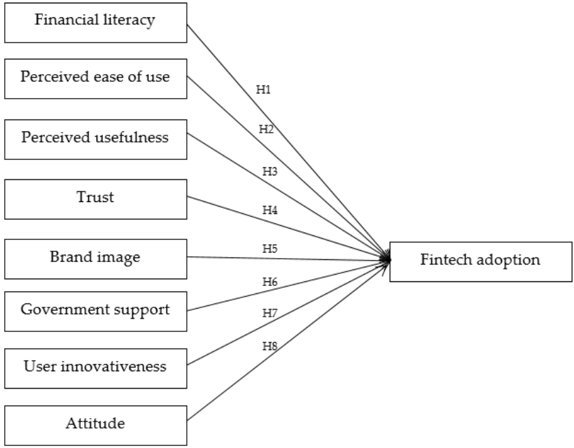
The growing popularity of smartphones and the proliferation of technology have accelerated the development of the digital payment industry. Fintech enables customers to access financial services more efficiently and faster than traditional business, especially during the COVID-19 pandemic due to health protocols, including restrictions on physical contact. This study investigates financial literacy, fintech adoption, and the impact of the COVID-19 crisis on the financial health of consumers in Vietnam. The relatively higher level of the unbanked population in Vietnam and the lower level of adult financial literacy compared with the ASEAN region motivated this study. Based on judgment sampling, participants were approached using the mall intercept technique, and those familiar with fintech were selected for the research interview. Thirty participants were interviewed and were given a survey form to be filled online using their mobile phones. Data analysis was conducted using IBM SPSS software version 23. Perceived ease of use, perceived usefulness, trust, brand image, government support, user innovativeness, and attitude are found to be significantly correlated with fintech adoption in Vietnam, while financial literacy was found to be not significantly correlated with fintech adoption. Furthermore, further analysis using multiple linear regression revealed user innovativeness and attitude have a positive impact towards fintech adoption, and in contrast, financial literacy showed significant negative impact on fintech. This inverse relationship could indicate that in Vietnam, fintech may play a role of bringing financial inclusion where people with lower financial literacy are able to use technology for financial transactions, which was previously inaccessible to them. This could also mean that Vietnamese with higher financial literacy do not see fintech as an important tool for their financial transactions, as they may already have strong access to traditional financial facilities. This research contributes to knowledge in the field of Fintech adoption in Vietnam at the time of the COVID-19 outbreak. To foster greater financial inclusivity and access for the Vietnamese consumers, policy makers could promote the development of fintech business infrastructure and regulatory sandboxes to foster fintech startups.
Overview
The claims and statistics of this paper haven’t been checked yet.
Free: it reads the open-access text and checks the first 5 claims that cite a source we can check. Create a free account to check every claim.
Integrity signals
Registry
Cites
Statistics
Figures
Verification
Claims the paper makes
The claims and statistics of this paper haven’t been checked yet.
Free: it reads the open-access text and checks the first 5 claims that cite a source we can check. Create a free account to check every claim.
Claims other papers make about this one
Each is checked against this paper’s own text: does it say what the citing paper says it does?
The source backs part of the claim, not all of it — or backs it for a different population, condition or comparison.
In the citing paper
“The previous study has revealed that PEU has a positive impact on Fintech adoption [25-27].”
From Fintech Adoption Drivers for Innovation for SMEs in Indonesia (2022) · cites this paper as [25]
Experimental — accuracy not yet measured
Self-check
Percentages, sums and reported differences re-computed from the paper’s own numbers.
The self-check needs the paper’s full text.
Citations
Cites
Perceived usefulness, perceived ease of use, and user acceptance of information technology
Davis, F. D. (1989) · MIS Quarterly · doi:10.2307/249008 · Cited by 68,483 · cited 10×
“The EY report (EY 2019) states that 87 out of 100 residents in China and India have adopted fintech, followed by Russia and South Africa at 82%. The development of fintech is also driven by the convenience provided by fintech compared with traditional financial services. First, registration can be performed online and…”
BackgroundInfluentialLu, J., Yao, J. E., & Yu, C.-S. (2005) · The Journal of Strategic Information Systems · doi:10.1016/j.jsis.2005.07.003 · Cited by 1,457 · cited 1×
“Lu et al. (2005) depict User Innovativeness (UI) as the extent to which someone is willing to experiment with new technology.”
BackgroundThe Evolution of Fintech: A New Post-Crisis Paradigm?
Arner, D. W., Barberis, J. N., & Buckley, R. P. (2015) · SSRN Electronic Journal · doi:10.2139/ssrn.2676553 · Cited by 1,412 · cited 1×
“Arner et al. (2015) define fintech as a combination of financial services and information technology.”
BackgroundDeterminants of user acceptance of Internet banking: an empirical study
Wang, Y.-S., Wang, Y.-M., Lin, H.-H., & Tang, T.-I. (2003) · International Journal of Service Industry Management · doi:10.1108/09564230310500192 · Cited by 1,358 · cited 1×
“Previous studies integrated PEU with fintech adoption by Cheng et al. (2006), Wang et al. (2003), and Hu et al. (2019).”
Financial literacy and the need for financial education: evidence and implications
Lusardi, A. (2019) · Swiss Journal of Economics and Statistics · doi:10.1186/s41937-019-0027-5 · Cited by 1,135 · cited 3×
“Fin ncial litera y is a basic knowledge of finance that covers several aspects of finance such as numeracy, compound interest, inflation, and risk diversification (Lusardi 2019).”
BackgroundInitial trust and online buyer behaviour
Chen, Y.-H., & Barnes, S. (2007) · Industrial Management & Data Systems · doi:10.1108/02635570710719034 · Cited by 841
Adoption of internet banking: An empirical study in Hong Kong
Cheng, T. C. E., Lam, D. Y. C., & Yeung, A. C. L. (2006) · Decision Support Systems · doi:10.1016/j.dss.2006.01.002 · Cited by 806 · cited 5×
“Previous studies integrated PEU with fintech adoption by Cheng et al. (2006), Wang et al. (2003), and Hu et al. (2019). The results of these studies explain that PEU has a significant relationship with technology adoption. The manifestation of trust in technology adoption is described by Kim and Prabhakar (2002) as a…”
MethodResultInfluentialHa, H.-Y., & Perks, H. (2005) · Journal of Consumer Behaviour · doi:10.1002/cb.29 · Cited by 750 · cited 1×
“The studies by Ha and Perks (2005), Ruparelia et al. (2010), and Hu et al. (2019) explain that brand image has a significant relationship to fintech adoption.”
BackgroundThe Real Impact of Improved Access to Finance: Evidence from Mexico
BRUHN, M., & LOVE, I. (2014) · The Journal of Finance · doi:10.1111/jofi.12091 · Cited by 728 · cited 2×
“Bruhn and Love (2014) explain that public access o the formal fi ancial sector has a positive correlatio fi creation, economic growth, and reducing poverty levels.”
BackgroundA solution to minimum sample size for regressions
Jenkins, D. G., & Quintana-Ascencio, P. F. (2020) · PLOS ONE · doi:10.1371/journal.pone.0229345 · Cited by 665 · cited 1×
“Warner (2008) suggests a minimum sample size of 20 and Jenkins and Quintana-Ascencio (2020) posit that a sample size of 25 is sufficient for regression.”
Background
Research works printed but not linked: 6
- 4. Avornyo, Philip, Jiaming Fang, Ransford Okoe Odai, and Joshua Ben Vondee. 2019. Factors Affecting Continuous Intention of Mobile Banking in Tema and Kumasi. International Journal of Business and Science 10: 3. [CrossRef
- 5. Barefoot, Jo Ann. 2020. Digitizing Finance: Fintech as a Solution for Consumer Financial Health and Inclusion. M-RCBG Associate Working Paper Series No. 149. Cambridge, UK: Harvard Kennedy School.
- 15. Chuang, Li-Min, Chun-Chu Liu, and Hsiao-Kuang Kao. 2015. The Adoption of Fintech Service: TAM Perspective. International Journal of Management and Administrative Sciences 3: 1-15.
- 43. Korynski, Piotr. 2019. The Contribution of the Fintech Sector to Financial Inclusion and Health: A Review of Opportunities and Challenges. Microfinance Centre. Available online: https://mfc.org.pl/the-contribution-of-the-fintech-sector-to-financial- inclusion-and-health-a-review-of-opportunities-and-challenges/ (accessed on 18 January 2022).
- 51. Maurer, Bill. 2011. Mobile Money: Communication, Consumption and Change in the Payment Space. Journal of Development Studies 4: 589-604.
- 61. Riyadh, Al Nahian, Deborah Bunker, and Fethi Rabhi. 2010. Barriers to E-finance Adoption in Small Medium Sized Enterprises (SMES) in Bangladesh. Paper presented at 5th Conference on Qualitative Research in IT, Brisbane, Australia, November 29-30.
Cited by
Danladi, S., Prasad, M. S. V., Modibbo, U. M., Ahmadi, S. A., & Ghasemi, P. (2023) · Sustainability · doi:10.3390/su151713039 · Cited by 179
Fintech Adoption Drivers for Innovation for SMEs in Indonesia
Nugraha, D. P., Setiawan, B., Nathan, R. J., & Fekete-Farkas, M. (2022) · Journal of Open Innovation: Technology, Market, and Complexity · doi:10.3390/joitmc8040208 · Cited by 188
“The previous study has revealed that PEU has a positive impact on Fintech adoption [25–27].”
Self-citationPattnaik, D., Ray, S., & Raman, R. (2023) · Heliyon · doi:10.1016/j.heliyon.2023.e23492 · Cited by 270
Alkhwaldi, A. F., Alharasis, E. E., Shehadeh, M., Abu-AlSondos, I. A., Oudat, M. S., & Bani Atta, A. A. (2022) · Sustainability · doi:10.3390/su141912616 · Cited by 142
Digital Financial Literacy and Its Impact on Financial Decision-Making of Women: Evidence from India
Mishra, D., Agarwal, N., Sharahiley, S. M., & Kandpal, V. (2024) · Journal of risk and financial management · doi:10.3390/jrfm17100468 · Cited by 246
Fintech Innovations in the Financial Service Industry
Anifa, M., Ramakrishnan, S., Joghee, S., Kabiraj, S., & Bishnoi, M. M. (2022) · Journal of risk and financial management · doi:10.3390/jrfm15070287 · Cited by 205
“In addition, Choi and Park (2019) stated that the level of uncertainties in mobile payments can be reduced by abiding by the stringent framework of Payment Directive Service, which results in decentralization in the payment network.”
BackgroundSetiawan, B., Phan, T. D., Medina, J., Wieriks, M., Nathan, R. J., & Fekete‐Farkas, M. (2023) · Journal of Financial Services Marketing · doi:10.1057/s41264-023-00217-9 · Cited by 156
“Previous research that integrated attitude with behavior intention to adopt Fintech was conducted by Akinware and Kyari (2022), Setiawan et al. (2021), and Nathan et al. (2022) revealed attitude significantly correlated with Fintech adoption.”
BackgroundResultInfluentialSelf-citationDigital Financial Inclusion: COVID-19 Impacts and Opportunities
Dluhopolskyi, O. V., Пахненко, О., Lyeonov, S., Semenog, A., Аrtyukhova, N., Cholewa-Wiktor, M., & Jastrzębski, W. (2023) · Sustainability · doi:10.3390/su15032383 · Cited by 107
“…pandemic, FinTech contributed to the financial inclusion of people with a lower financial literacy, while residents of Vietnam with a higher financial literacy already had access to traditional financial facilities and did not consider FinTech as an important tool for their financial transactions [29].”
BackgroundAdoption Factors of FinTech: Evidence from an Emerging Economy Country-Wide Representative Sample
Mahmud, K., Joarder, M. M. A., & Muheymin-Us-Sakib, K. (2022) · International Journal of Financial Studies · doi:10.3390/ijfs11010009 · Cited by 68
“Across jurisdictions, customer experience and trust played a vital role (Amofah and Chai 2022; Cham et al. 2018; Nathan et al. 2022; Salman and Aziz 2015; Kim et al. 2015).”
BackgroundFintech literacy and digital entrepreneurial intention: Mediator and Moderator Effect
Nguyen, T. T., Dao, T. T., Tran, T. B., Nguyen, H. T. T., Le, L. T., & Pham, N. T. T. (2024) · International Journal of Information Management Data Insights · doi:10.1016/j.jjimei.2024.100222 · Cited by 114
Mapping the Sustainable Human-Resource Challenges in Southeast Asia’s FinTech Sector
Wu, A.-C., & Kao, D.-D. (2022) · Journal of risk and financial management · doi:10.3390/jrfm15070307 · Cited by 107
Bhutto, S. A., Jamal, Y., & Ullah, S. (2023) · Heliyon · doi:10.1016/j.heliyon.2023.e13967 · Cited by 31
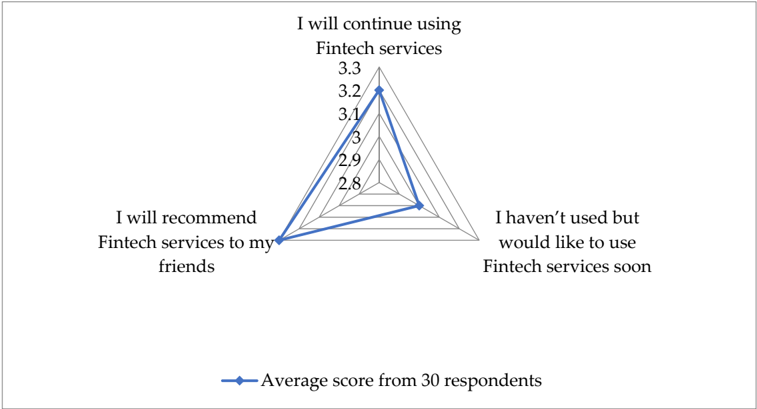
“FA FA1 I will continue using fintech services [69,70]”
MethodAdoption and use of digital financial services: A meta analysis of barriers and facilitators
das Neves, C. P. P. C., Oliveira, T., Santini, F. D. O., & Gutman, L. F. D. (2023) · International Journal of Information Management Data Insights · doi:10.1016/j.jjimei.2023.100201 · Cited by 135
Alkhwaldi, A. F. (2024) · International Journal of Law and Management · doi:10.1108/ijlma-11-2023-0249 · Cited by 94
FINANCIAL INCLUSION THROUGH TECHNOLOGY: A REVIEW OF TRENDS IN EMERGING MARKETS
Falaiye, T., Elufioye, O. A., Awonuga, K. F., Ibeh, C. V., Olatoye, F. O., & Mhlongo, N. Z. (2024) · International Journal of Management & Entrepreneurship Research · doi:10.51594/ijmer.v6i2.776 · Cited by 92
Widyastuti, M., Ferdinand, D. Y. Y., & Hermanto, Y. B. (2023) · Journal of risk and financial management · doi:10.3390/jrfm16010052 · Cited by 125
“Financial literacy is the level of personal expertise in understanding the basics of a financial subject (Nathan et al. 2022).”
BackgroundFactors Influencing Fintech Adoption for Women in the post-Covid-19 Pandemic
Igamo, A. M., Rachmat, R. A., Siregar, M. I., Gariba, M. I., Cherono, V., Wahyuni, A. S., & Setiawan, B. (2024) · Journal of Open Innovation: Technology, Market and Complexity · doi:10.1016/j.joitmc.2024.100236 · Cited by 59
Self-citationCustomer Fintech Readiness (CFR): Assessing customer readiness for fintech in Bangladesh
Mahmud, K., Joarder, M. M. A., & Sakib, K. M. (2023) · Journal of Open Innovation Technology Market and Complexity · doi:10.1016/j.joitmc.2023.100032 · Cited by 64
Zhang, Y., & Fan, L. (2024) · International Journal of Bank Marketing · doi:10.1108/ijbm-09-2023-0531 · Cited by 76
Adoption factors in digital lending services offered by FinTech lenders
Adamek, J., & Solarz, M. (2023) · Oeconomia Copernicana · doi:10.24136/oc.2023.005 · Cited by 65
Hassan, M. S., Islam, M. A., Abdullah, A., & Nasir, H. (2024) · Journal of Financial Services Marketing · doi:10.1057/s41264-024-00268-6 · Cited by 69
“In a study done in Vietnam, PI was employed as a positive predictive variable, and the variable positively impacted the adoption of fintech (Nathan et al. 2022).”
Alkadi, R. S., & Abed, S. S. (2023) · Journal of theoretical and applied electronic commerce research · doi:10.3390/jtaer18040093 · Cited by 70
“…and Kim [80] Gu tt man-Ken-ney et al. [16] Aalders [15]; Bakri and Ya-haya [82]; Da tt a [60]; DawnBur-ton [45]; Johnson et al. [48]; Nathan et al. [32]; Tan [18] Alwi [8]; Ngo and Nguyen ([39]; Singh et al. [31]; Wang [76] Bommer et al. [4]; Gomber et al. [23]; Pat-tama tt a and Dabadghao [49];…”
BackgroundGafoor, A., & Amilan, S. (2024) · International Journal of Social Economics · doi:10.1108/ijse-08-2023-0596 · Cited by 63
Marhadi, M., Fathoni, A. F., Setiawan, B., Pratiwi, D., Hayati, R., Boros, A., & Anggraini, N. (2024) · Journal of Open Innovation Technology Market and Complexity · doi:10.1016/j.joitmc.2024.100301 · Cited by 90
Self-citationWidyastuti, M., & Hermanto, Y. B. (2022) · Cogent Economics & Finance · doi:10.1080/23322039.2022.2087647 · Cited by 28
“Nathan et al. (2022) Perceived ease of use, usefulness, trust, brand image, government support, user innovativeness, and attitude are significantly correlated with FinTech adoption in Vietnam, while financial literacy was not significantly correlated with FinTech adoption. Indrawati (2021) The finding that digital fin…”
BackgroundInfluentialAkhtar, M. N., Salman, A., Ghafoor, K. A., & Kamran, M. (2024) · Heliyon · doi:10.1016/j.heliyon.2024.e39521 · Cited by 57
Fintech in the time of COVID-19: Conceptual Overview
Universitas Internasional Batam, B., Candy, C., Robin, R., Universitas Internasional Batam, B., Sativa, E., Universitas Internasional Batam, B., Septiana, S., Universitas Internasional Batam, B., Can, H., Universitas Internasional Batam, B., et al. (2022) · Jurnal Akuntansi Keuangan dan Manajemen · doi:10.35912/jakman.v3i3.1115 · Cited by 36
The COVID_19 Pandemic’s Effects on Fintech in Banking Sector
Al-Khawaja, H. A., Yamin, I. Y., & Alshehadeh, A. R. (2023) · Review of Economics and Finance · doi:10.55365/1923.x2023.21.30 · Cited by 34
Zaimović, A., Omanovic, A., Dedović, L., & Zaimović, T. (2025) · Future Business Journal · doi:10.1186/s43093-025-00432-x · Cited by 67
“This substantiates previous findings in the literature on the impact of financial literacy on fin-tech adoption [31, 32, 59], while simultaneously contra-dicting the results of Nathan et al. [46].”
Basri, S., & Hawaldar, I. T. (2022) · Cogent Economics & Finance · doi:10.1080/23322039.2022.2127482 · Cited by 26
“Gender has been included as a moderating variable due to its significance in prior studies on technology adoption (Nathan et al., 2022; Singh et al., 2021; S. Singh et al., 2020; Venkatesh & Morris, 2000; Venkatesh et al., 2012).”
BackgroundMethodResultInfluentialVietnam Fintech Industry and Government Support: A Role of Fintech Entrepreneurial Intention
Trang, P. T. M. (2023) · Public Organization Review · doi:10.1007/s11115-023-00708-2 · Cited by 27
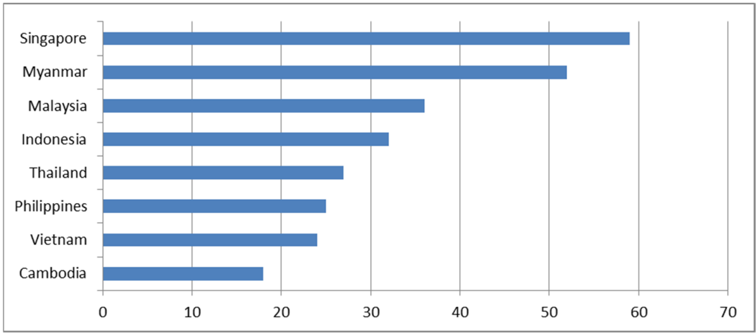
“The Vietnam Fintech market is growing but it is the country with the lowest number of Fintech startups compared to five ASIAN countries including Singapore, Indonesia, Malaysia, Thailand and Philippines (Nathan et al., 2022).”
InfluentialCorrelation networks in economics and finance: A review of methodologies and bibliometric analysis
Esmalifalak, H., & Moradi‐Motlagh, A. (2024) · Journal of Economic Surveys · doi:10.1111/joes.12655 · Cited by 25
A systematic literature review of digital startup business dynamics and policy interventions
Sudaryana, S. H., Wirjodirdjo, B., & Windharto, A. (2024) · Cogent Business & Management · doi:10.1080/23311975.2024.2440636 · Cited by 36
“Financial inclusion and market outreach are addressed by r. J. nathan et al. (2022) and Magaji usman and sun (2023) calling for policies fostering fintech infrastructure and digital platform utilization for startups. similarly, Z. Yang et al. (2019) and Kaur and Bharti (2020) highlight the…”
Bakhshi, P., Agrawal, R., Mendon, S., Frank, D., Spulbar, C. M., Birău, R., & Filip, R. D. (2024) · Verslas teorija ir praktika · doi:10.3846/btp.2024.19208 · Cited by 33
“Amofah and Chai, 2022; Cham et al., 2018; Nathan et al., 2022; Salman and Abd Aziz, 2015; Kim et al., 2015; Hu et al., 2019; Slazus and Bick, 2022; Haqqi and Suzianti, 2020.”
BackgroundJose, J., & Ghosh, N. (2025) · DECISION · doi:10.1007/s40622-025-00426-2 · Cited by 25
“In a study conducted in Vietnam, Nathan et al. (2022) found that financial literacy was not significantly correlated with fintech adoption and showed a negative impact.”
Trust and financial inclusion: A literature review with reference to the digital transformation
Aracil, E., Fernández-Méndez, L., Roch-Dupré, D., & Fuertes, F. J. (2025) · Heliyon · doi:10.1016/j.heliyon.2025.e44128 · Cited by 12
Treu, J. (2023) · International Journal of Economics and Finance · doi:10.5539/ijef.v16n2p1 · Cited by 27
“For Vietnam, Nathan, Setiawan, and Quynh (2022) and Morgan and Trinh (2020) show that higher financial literacy is positively related to both awareness and acceptance of fintech products.”
BackgroundYulianto, M. A., & Rita, M. R. (2023) · EKUITAS (Jurnal Ekonomi dan Keuangan) · doi:10.24034/j25485024.y2023.v7.i2.5260 · Cited by 55
Solarz, M., & Adamek, J. (2023) · Annales Universitatis Mariae Curie-Skłodowska sectio H Oeconomia · doi:10.17951/h.2023.57.1.197-218 · Cited by 20
Unveiling the Future of FinTech: Exploring the Behavioral Intentions Behind FinTech Adoption
Kurucz, A., Vinkóczi, T., Tamás, B., & Idziak, E. (2025) · Journal of Risk and Financial Management · doi:10.3390/jrfm18100546 · Cited by 9
Entrepreneurial Risk and Digital Financial Inclusion: A Cross‐Country Analysis
Konou, C. M. (2023) · Economic Papers A journal of applied economics and policy · doi:10.1111/1759-3441.12399 · Cited by 15
Impact of financial inclusion on healthcare access: evidence from developing countries
Malak, N., & Arshad, A. (2024) · Journal of economic and administrative sciences. · doi:10.1108/jeas-02-2024-0057 · Cited by 12
Teknologi Finansial, Literasi Keuangan, dan Keputusan Investasi Produk Reksa Dana di Indonesia
Kusumahadi, T. A., & Utami, N. (2022) · Jurnal Manajemen Maranatha · doi:10.28932/jmm.v21i2.4631 · Cited by 9
Satiti, N. R., Yin, T. S., & Pitchay, A. A. (2024) · International Journal of Academic Research in Economics and Management Sciences · doi:10.6007/ijarems/v13-i2/21797 · Cited by 18
Panait, M. C., Apostu, S. A., Gigauri, I., Confetto, M. G., & Palazzo, M. (2024) · Risks · doi:10.3390/risks12110178 · Cited by 18
Shahen, A. M., & Sharaf, M. F. (2026) · Journal of theoretical and applied electronic commerce research · doi:10.3390/jtaer21040108 · Cited by 15
Factors Influencing Consumer Interactions With FinTech Services
Aloumi, D., Malik, S., Alkhaldi, A. N., & de Pablos, P. O. (2024) · Advances in finance, accounting, and economics book series · doi:10.4018/979-8-3693-5673-9.ch010 · Cited by 11
Saleem, S., Zeb, S., Ullah, S., Rashid, A., & Magazzino, C. (2026) · The Japanese Political Economy · doi:10.1080/2329194x.2026.2614065 · Cited by 11
“For example, Setiawan et al. (2024) and Nathan, Setiawan, and Quynh (2022) show that FA can also succeed among people with limited literacy.”
Role of Financial Literacy and Saving Habits on Fintech Adoption post Covid-19
Nugraha, D. P., Setiawan, B., Emilda, E., Masyhuri, M., Quynh, M. N., Nathan, R. J., Fekete‐Farkas, M., & Hágen, I. Z. (2024) · ETIKONOMI · doi:10.15408/etk.v23i1.37856 · Cited by 29
“In contrast, Nathan et al. (2022) found that financial literacy does not substantially affect fintech adoption rates, as individuals using Fintech do not consider financial knowledge an essential factor in adopting digital payments.”
BackgroundSelf-citationWhat Drives Individuals to Adopt Fintech: Extended TAM Model with Gender as Moderating Variable
Setiawan, B., Pandu, N. D., Ahmed, A. M., Emilda, E., & Nathan, R. J. (2023) · JURNAL MINDS Manajemen Ide dan Inspirasi · doi:10.24252/minds.v10i1.35081 · Cited by 23
Self-citationFintech and household participation in risky financial markets: evidence from China
Zhang, Y., Xu, J., & Chen, D. (2026) · Financial Innovation · doi:10.1186/s40854-025-00845-1 · Cited by 9
“…visiting bank branches and consulting financial advisors), valuing personal interactions and trust-based relationships (Seay et al. 2016), and are less likely to adopt fintech alternatives because of concerns about security and trust (Mehrban et al. 2020; Panos and Wilson 2020; Nathan et al. 2022).”
Mhlanga, D. (2023) · Sustainable development goals series · doi:10.1007/978-3-031-37776-1_7 · Cited by 7
Winanti, W., & Fernando, E. (2024) · Journal of Information Systems Engineering and Business Intelligence · doi:10.20473/jisebi.10.1.126-138 · Cited by 30
Exploring the adoption of mobile payments: a hybrid literature review and future research agenda
Angel-Rodriguez, P., & Pascual, J. A. (2026) · Future Business Journal · doi:10.1186/s43093-025-00712-6 · Cited by 10
Determinants of FinTech service utilization and access factors: case of Palestine
Habash, N., Tuffaha, M., & Jum’a, L. (2025) · Journal of Science and Technology Policy Management · doi:10.1108/jstpm-02-2024-0057 · Cited by 8
Hung, D. T., & Khoi, T. D. M. (2025) · Decision Science Letters · doi:10.5267/j.dsl.2025.8.002 · Cited by 4
“…plays a crucial role in the digital era, contributing to economic growth (Song & Appiah-Otoo, 2022), promoting consumer spending (Yang & Zhang, 2022), enhancing financial well-being (Nathan et al., 2022), reducing poverty (Appiah-Otoo & Song, 2021), and lowering carbon emissions (Qin et al., 2022).”
Impact of self-efficacy and mediating factors on Fintech adoption in the VUCA era
Chinh, N. T., Anh, K. T., Đức, D. N., Quốc, C. P. K., & Linh, L. D. (2024) · Journal of Eastern European and Central Asian Research (JEECAR) · doi:10.15549/jeecar.v11i4.1740 · Cited by 13
“To explain this difference, it can be seen that this research was conducted in the context of Fintech booming in Vietnam, and it is not only the playground of banks or large businesses but has become a startup trend (Nathan et al., 2022; Ngo & Nguyen, 2022).”
MethodRole of mindfulness in merchant’s adoption of mobile payments in an unorganized sector
Srivastava, A., Rai, N., Mishra, V., & Madupalli, R. K. (2025) · Journal of Business and Industrial Marketing · doi:10.1108/jbim-11-2023-0661 · Cited by 7
Digital Financial Inclusion: Covid-19 Pandemic as a Catalyst for Adoption
Siddika, A., Al Mamun, A. S., & Bakar, R. (2023) · Journal of System and Management Sciences · doi:10.33168/jsms.2023.0506 · Cited by 17
Adoption of financial literacy: Systematic literature review and proposal of a theoretical model
Gallegos, A., Valencia-Arías, A., Zavala, L. A. R., Rodríguez-Correa, P. A., Rojas, E. M., & Rodríguez, L. D. R. C. (2025) · Journal of Infrastructure Policy and Development · doi:10.24294/jipd9840 · Cited by 9
Ảnh hưởng hệ sinh thái Fintech đến dự định khởi nghiệp kinh doanh số của sinh viên Việt Nam
Thu, T. N., Thu, T. Đ., Thu, H. N. T., Bảo, T. T., Ngọc, L. L. T., & Thảo, N. P. T. (2024) · Tạp chí Kinh tế và Phát triển · doi:10.33301/jed.vi.1562 · Cited by 2
Impact of Information Quality and Customer Interaction on Fintech Adoption: A Conceptual Framework
Sinulingga, N. A. B., Ginting, P., Sembiring, B. K. F., & Silalahi, A. S. (2024) · Contributions to management science · doi:10.1007/978-3-031-67531-7_58 · Cited by 4
Fintech-Enabled Telemedicine: Global Healthcare Advancement
Askari, S., Ghofrani, A., & Taherdoost, H. (2024) · Advances in finance, accounting, and economics book series · doi:10.4018/979-8-3693-1561-3.ch012 · Cited by 7
PERAN FINANCIAL TECHNOLOGY SEBAGAI MEDIATOR PADA PENGARUH LITERASI KEUANGAN TERHADAP KINERJA UMKM
Damayanti, A., & Mardiana, M. (2023) · Akuntansi Dewantara · doi:10.30738/ad.v7i2.14855 · Cited by 2
The Philippines in ASEAN financial literacy research: insights from a bibliometric review
Sarsale, M. S. (2025) · Future Business Journal · doi:10.1186/s43093-025-00549-z · Cited by 7
“The green cluster captures themes concerning financial literacy’s behavioral and psychological dimension, whereas the red captures regional studies and specific demographic analyses, including research by Nathan et al. [25].”
al., D. K. A. K. M. E. (2023) · Russian Law Journal · doi:10.52783/rlj.v11i3s.2188 · Cited by 5
A Literature Review on the Development of Fintech in Southeast Asia
Truong, N. H. (2024) · Advances in finance, accounting, and economics book series · doi:10.4018/979-8-3693-1561-3.ch003 · Cited by 9
Le, H. A., Do, P. T., Vu, T. H., Nguyen, H. L., Trinh, N. T. A., & Tran, T. B. H. (2022) · Annals of Computer Science and Information Systems · doi:10.15439/2022m3710 · Cited by 2
Gendered Perception towards Financial Literacy and Fintech Security Risk: A Multi Method Analysis
Payeng, A., & Baruah, D. (2023) · MANTHAN Journal of Commerce and Management · doi:10.17492/jpi.manthan.v10i2.1022308 · Cited by 1
Al-Sarraji, J. S., Altameemi, A. F., Al-Slehat, Z. A. F., Al-Oshaibat, S. D., & Almanaseer, S. R. (2024) · Finance: Theory and Practice · doi:10.26794/2587-5671-2024-28-5-223-238 · Cited by 3
Rouhana, R., & Sayegh, M. M. (2024) · Studies in big data · doi:10.1007/978-3-031-71213-5_21 · Cited by 1
The Moderating Role of Digital Financial Literacy on FinTech Adoption: A Case Study of ShopeePay
Sulistiyani, E., Izzati, B. M., & Purwita, A. W. (2024) · International Conference on Vocational Education and Electrical Engineering (ICVEE) · doi:10.1109/icvee63912.2024.10823820 · Cited by 2
The effect of financial literacy and fintech usage on income levels: a study in Vietnam
Trang, P. T. M., & Nguyen, L. D. (2025) · Journal of Electronic Business & Digital Economics · doi:10.1108/jebde-03-2025-0019 · Cited by 1
The Influence of Fintech on the Economic Growth of Some Developing Countries
Risky, M., Hidayat, A., Liliana, L., Gustriani, G., & Shodrokova, X. (2025) · APUNTES DEL CENES · doi:10.19053/uptc.01203053.v44.n80.2025.18342 · Cited by 4
Irawan, I., Fadhlihi, A., Diwasya, I. R., & Astuti, S. (2026) · Academia Open · doi:10.21070/acopen.11.2026.13046 · Cited by 10
Exploring FinTech adoption: A systematic literature review on user acceptance
Bhowal, P., & Shil, P. (2026) · Telematics and Informatics Reports · doi:10.1016/j.teler.2026.100343 · Cited by 4
Impact of Fintech M&As on US and EU acquirers’ market performance: evidence from COVID-19
Kassamany, T., Naïmy, V. Y., & Dagher, G. (2026) · Humanities and Social Sciences Communications · doi:10.1057/s41599-026-08186-9 · Cited by 1
AI Decision Support System Adoption in Dental Education: An Empirical PLS-SEM Study
Son, L. N. (2026) · Annals of dental specialty · doi:10.51847/saegs2axxf · Cited by 1
Identifikasi Faktor-Faktor Pendorong Adopsi Fintech pada UMKM di Priangan Timur
Putra, A. S. (2022) · JPEK (Jurnal Pendidikan Ekonomi dan Kewirausahaan) · doi:10.29408/jpek.v6i2.7035 · Cited by 2
Ảnh hưởng của kiến thức tài chính kỹ thuật số đến quyết định sử dụng dịch vụ công nghệ tài chính
Minh, T. P. T. (2024) · Tạp chí Kinh tế và Phát triển · doi:10.33301/jed.vi.1456 · Cited by 1
Green and Sustainable Payment Systems for Advancing U.S. Climate Goals
Kantheti, P. R., & Bvuma, S. (2024) · International Journal of Scientific Research in Computer Science Engineering and Information Technology · doi:10.32628/cseit2410612454 · Cited by 1
Arakelyan, G. A. (2024) · Проблемы социально-экономического развития поиски перспективы решения · doi:10.61546/25792679-2024.2.11-ag-24 · Cited by 1
Financial Capability and Financial Well-Being for a Sustainable Society
Kandpal, V., Chandra, D., Dalei, N. N., & Handoo, J. (2023) · Circular economy and sustainability · doi:10.1007/978-3-031-22723-3_5
Effect of Digital Credit on the Financial Health of Youth Borrowers in Kibera, Nairobi County
Wachira, M. W., Kihara, A., & Okech, T. C. (2023) · Science Journal of Business and Management · doi:10.11648/j.sjbm.20231101.15
Nandrajog, A. B., Kakkar, L., & Singla, L. (2024) · Advances in computer and electrical engineering book series · doi:10.4018/979-8-3693-4111-7.ch002
QRIS Adoption by MSMEs in the UTAUT Perspective
Wahyuningsih, W., & Avrianto, A. (2023) · Business Innovation & Entrepreneurship Journal · doi:10.35899/biej.v5i4.679 · Cited by 5
Nandrajog, A. B., Singla, L., & Kakkar, L. (2025) · Advances in hospitality, tourism and the services industry (AHTSI) book series · doi:10.4018/979-8-3693-7447-4.ch025
From Theory to Practice: The Evolution of Financial Literacy ResearchPreprint
Lino, B. E. D. O., Nascimento, D. L. D. M., Guillén-Pujadas, M., & Forte, D. (2025) · SSRN Electronic Journal · doi:10.2139/ssrn.5778503
Extending the Technology Acceptance Model: Investigating Fintech Adoption Among SMEs in Indonesia
Fahlevi, E. R., Suryantoro, R., Sahlan, M., & Tamara, D. (2025) · International Conference on Information Management and Technology (ICIMTech) · doi:10.1109/icimtech67074.2025.11265052 · Cited by 1
“Additionally, service quality and transaction satisfaction enhance user trust and confidence, key drivers of sustained Fintech engagement [13].”
Musyaffi, A. M., Monoarfa, T. A., Sobirov, B. B., Khairunnisa, H., Izwandi, H. S. C., & Maychella, M. S. (2025) · International Conference on Electrical, Computer, Communications and Mechatronics Engineering (ICECCME) · doi:10.1109/iceccme64568.2025.11277908
“As noted by Nathan et al. [38], improved financial literacy can foster greater public trust in formal financial systems, thereby accelerating the adoption of FinTech products.”
Application of blockchain technology in Fintech for green and sustainable finance in Vietnam
Huy, D. H., Chau, T. T. X., & Tuan, D. C. (2025) · Tạp chí Công nghiệp Kinh tế và Quản lý · doi:10.62831/202508015
Kumar, P. V., Honnali, P., Bai, T. A., Manjula, M., Subashini, R., & Herbert, M. T. J. (2026) · Studies in systems, decision and control · doi:10.1007/978-3-031-99470-8_15
Suryani, U., Harahap, K., Mayndarto, E. C., Hamzah, Z. Z., Rahman, R. S., & Setyawati, D. M. (2026) · Studies in computational intelligence · doi:10.1007/978-3-032-23897-9_35
A qualitative study on the use of the unified payments interface (UPI) by urban poor households
Neelam, K., Rastogi, S., & Gautam, R. S. (2026) · Qualitative Research in Financial Markets · doi:10.1108/qrfm-11-2024-0340
Treu, J. (2026) · Springer eBooks · doi:10.1007/978-3-658-50855-5_6
DETERMINANTS OF PATIENT CHOICE IN DENTAL SERVICES: THE ROLE OF REPUTATION AND PERCEIVED RISK
Nguyen, T. N. (2025) · Annals of dental specialty · doi:10.51847/dtgbey7c7v
Financial literacy and trust in digital health payment adoption
Ha, V. T. Y., Diep, B. H., Quang, H. T., & Ghi, T. N. (2026) · Journal Of Advanced Pharmacy Education And Research · doi:10.51847/fybonz9hac
Zelie, E. M., Beyene, T. T., & Gualu, A. K. (2026) · Journal of the International Council for Small Business · doi:10.1080/26437015.2026.2716776
A hybrid SEM–ANN approach to fintech lending adoption: Insights from Generation Z
Ramayanti, R., Rachmawati, N. A., Setyawati, A., Azhar, Z., & Azman, N. H. N. (2026) · Social Sciences & Humanities Open · doi:10.1016/j.ssaho.2026.103591 · Cited by 1
Investigating the Impact of Fintech Adoption on SME Financing: A Study from an Emerging Market
Khan, S. N., Supti, R. A., & Jilhajj, K. (2026) · International Journal of Financial Studies · doi:10.3390/ijfs14090238
Metadata
- Authors
- Nathan, R. J., Setiawan, B., & Quynh, M. N.
- Affiliations
- Multimedia University (MY)
- Magyar Agrár- és Élettudományi Egyetem (HU)
- Department of Planning and General Affairs, Vietnam Chamber of Commerce and Industry, Hanoi 10000, Vietnam
- Corresponding author
- Nathan, Robert Jeyakumar
- Setiawan, Budi
- Venue
- Journal of Risk and Financial Management
- Publisher
- MDPI AG
- Published
- 2022-03-06
- Volume
- 15
- Issue
- 3
- Pages
- 125
- ISSN
- 1911-8066 (ISSN-L)
- 1911-8074
- OpenAlex
- W4221044666
- Cited by
- 103
- References
- 51
- Citations by year
- 2026: 19 · 2025: 16 · 2024: 31 · 2023: 26 · 2022: 11
- FWCI
- 20.19
- Type
- journal article
- Language
- en
- Open access
- hybrid
- doi.org
- Licence
- Locations
- Journal of risk and financial management (publishedVersion, cc-by)
- Siti Hasmah Digital Library-MMU Institutiona Repository (Multimedia University) (acceptedVersion)
- RePEc: Research Papers in Economics (submittedVersion)
- Econstor (Econstor) (submittedVersion, cc-by)
- Funders
- Multimedia University
- Ministry of Higher Education, Malaysia (FRGS/1/)
- Topics
- Social Sciences › Business, Management and Accounting › Management Information Systems › FinTech, Crowdfunding, Digital Finance
- Social Sciences › Decision Sciences › Information Systems and Management › Technology Adoption and User Behaviour
- Social Sciences › Business, Management and Accounting › Accounting › Financial Literacy and Behavior
- Keywords
- fintech adoption, financial literacy, financial well-being, COVID-19 pandemic, financial inclusion, digital payments, unbanked populations, perceived ease of use, perceived usefulness, trust in fintech, user innovativeness, consumer attitudes, Vietnam
About these checks
Registry, retraction, Cites and statistics results are computed, not judged, with one exception: a printed reference that no index lists is read once by a model before it counts as a citation error. Claims are extracted by a model and kept only when their quote appears verbatim in the text; each cited source is then checked, with a model’s help, for whether it says what the claim relies on. Those verdicts can be wrong — read the claim’s quote and the cited source before relying on one.
Statistics and arithmetic are recomputed, not judged.
Confidence bands are shown only for fields calibrated on our annotated test set. None is calibrated yet, so no band is shown.
What counts as a claim ›How we measure confidence ›How we check this ›
Are you an author, or do you see a problem with this page? Request a review
Data sources
Bibliographic data: Semantic Scholar, OpenAlex, Crossref.
Contains information from the Semantic Scholar Academic Graph Datasets, made available under the ODC Attribution License (ODC-BY 1.0).
Semantic Scholar’s data is described in: Kinney, R., et al. (2023). The Semantic Scholar Open Data Platform. arXiv:2301.10140.
