

Effects of Biofuel Crop Switchgrass (Panicum virgatum) Cultivation on Soil Carbon Sequestration and Greenhouse Gas Emissions: A Review
Open accessThe DOI matches its Crossref record; 72 of the 72 references it cites were found in a registry or an index; 25 of the 96 sources its claims cite were checked for support.
Abstract
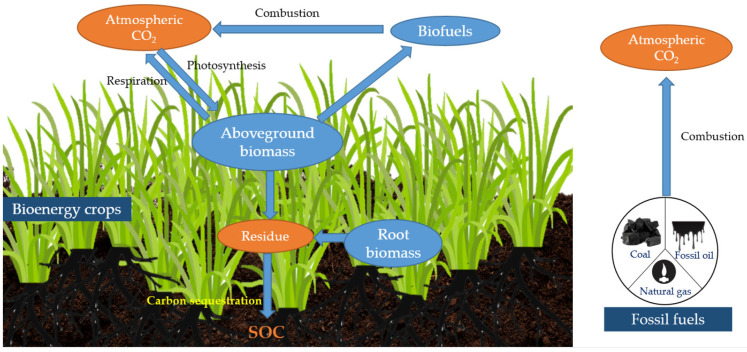
Under the macroenvironmental background of global warming, all countries are working to limit climate change. Internationally, biofuel plants are considered to have great potential in carbon neutralization. Several countries have begun using biofuel crops as energy sources to neutralize carbon emissions. Switchgrass (Panicum virgatum) is considered a resource-efficient low-input crop that produces bioenergy. In this paper, we reviewed the effects of switchgrass cultivation on carbon sequestration and greenhouse gas (GHG) emissions. Moreover, the future application and research of switchgrass are discussed and prospected. Switchgrass has huge aboveground and underground biomass, manifesting its huge carbon sequestration potential. The net change of soil surface 30 cm soil organic carbon in 15 years is predicted to be 6.49 Mg ha−1, significantly higher than that of other crops. In addition, its net ecosystem CO2 exchange is about −485 to −118 g C m−2 yr−1, which greatly affects the annual CO2 flux of the cultivation environment. Nitrogen (N) fertilizer is the main source of N2O emission in the switchgrass field. Nitrogen addition increases the yield of switchgrass and also increases the N2O flux of switchgrass soil. It is necessary to formulate the most appropriate N fertilizer application strategy. CH4 emissions are also an important indicator of carbon debt. The effects of switchgrass cultivation on CH4 emissions may be significant but are often ignored. Future studies on GHG emissions by switchgrass should also focus on CH4. In conclusion, as a biofuel crop, switchgrass can well balance the effects of climate change. It is necessary to conduct studies of switchgrass globally with the long-term dimension of climate change effects.
Overview
CoChat Summary
TL;DR
This review synthesizes published evidence on how switchgrass cultivation affects soil carbon sequestration and greenhouse gas emissions, concluding that switchgrass generally has positive climate-mitigation potential through soil organic carbon (SOC) accumulation and net ecosystem CO2 exchange (NEE). It also emphasizes that N2O and CH4 emissions require better management and long-term measurement.
Key findings
- Switchgrass is predicted to increase SOC in the surface 30 cm by 6.49 Mg ha−1 over 15 years, and one four-year measurement reported 9.45 Mg ha−1 SOC production; compared with adjacent fallow, switchgrass increased SOC by 44.8% at 0–15 cm and 28.2% at 15–30 cm.
- Switchgrass NEE is reported as about −485 to −118 g C m−2 yr−1; one comparison gave switchgrass NEE of −336 ± 40 g C m−2 versus corn at 64 ± 41 g C m−2, while mature-field measurements ranged from a first-year source of 106 ± 45 g C m−2 to a second-year sink of −59 ± 45 g C m−2.
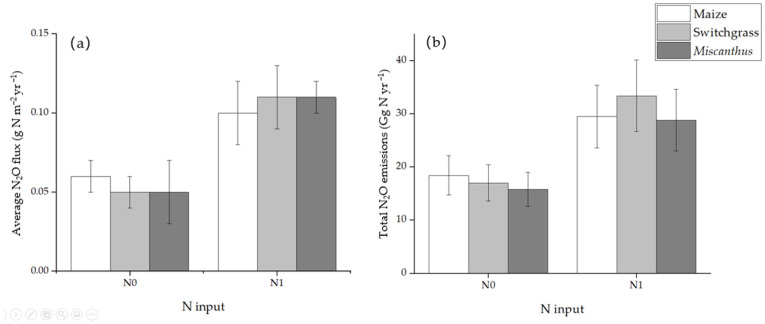
- Nitrogen fertilizer is the main source of N2O emission in switchgrass fields; N addition increases yield but also increases N2O flux, with reported N2O fluxes of about 0.05–0.11 g N m−2 per year and an optimal N application of about 100 kg N ha−1 from a meta-analysis across 39 sites in 19 US states.
- Switchgrass planting reduced annual CH4 consumption by 39–47% compared with unplanted plots, and the review argues CH4 is an important but often ignored carbon debt in switchgrass GHG budgets.
Methods
- This is a narrative review, not a primary experimental study; it synthesizes published literature on switchgrass cultivation, SOC, NEE, CH4 flux, N2O emission, and use on degraded land.
- The cited evidence includes studies of varying duration and location, such as four-year NEE measurements, a 10-year degraded-land study, and a meta-analysis of switchgrass at 39 sites in 19 US states.
- The main analysis is thematic synthesis of reported findings and discussion of future research needs; no new systematic search protocol or formal meta-analysis by the authors is described.
Limitations
- The paper states that long-term measurement is required to assess SOC dynamics, that CH4 emissions from switchgrass are understudied and often ignored, and that more effective N-fertilizer strategies are needed to reduce N2O emissions.
- The paper notes that short-term studies can show switchgrass acting as a carbon source rather than a sink, so duration and stand age affect conclusions.
- Evident from the text: as a review, it does not provide new empirical data, and it does not report a systematic search strategy or inclusion criteria for the cited literature.
Model-written summary. Check it against the paper before relying on it.
Integrity signals
Registry
Cites
Statistics
Figures
Verification
Claims the paper makes
23 Valid · 2 Not valid · 59 Not checked · 17 Own results and interpretations
The cited sources support only part of this claim — read each source’s verdict below.
In the paper
“Zeri et al. [30] found that switchgrass has a stronger carbon sink capacity at the initial establishment stage than Miscanthus × giganteus (giant miscanthus, a sterile hybrid of Miscanthus sinensis and Miscanthus sacchariflorus).”
§ Effects of Biofuel Crop Switchgrass (Panicum virgatum) Cultivation on Soil Carbon Sequestration and Greenhouse Gas Emissions: A Review > 3. Net Ecosystem CO2 Exchange of Switchgrass
What the sources say
- Partly supportedcites [30] Zeri M. Anderson-Teixeira K. Hickman G. Masters M. DeLucia E. Bernacchi C.J. Carbon exchange by establishing biofuel crops in Central Illinois Agr. Ecosyst. Environ. 2011 144 319 329 10.1016/j.agee.2011.09.006 sourceExperimental — accuracy not yet measured
Section 3.3 (Annual fluxes of CO2; page unavailable) reports greater carbon uptake by switchgrass than miscanthus in 2009, an early establishment year. But miscanthus had the highest cumulative net uptake in 2010, while switchgrass may still have been establishing. The source therefore supports the comparison for 2009, not as a general claim about the establishment stage. (LLM, conf=0.86)
plain- Asserted: passes — The authors put it forward as true.
- Checkable: passes — It can be checked against evidence.
- Load-bearing: unclear — It is unclear whether the paper’s conclusions depend on it.
- Based: passes — The paper gives a reason why it holds.
- Partly supported
The cited sources support only part of this claim — read each source’s verdict below.
In the paper
“Although the effects of switchgrass soil management measures on soil carbon sequestration did not have a significant effect in the study of Ma et al. [16], some studies have shown that fertilizer management measures and harvesting methods have essential effects on switchgrass carbon sequestration [22,23,24,25].”
§ Effects of Biofuel Crop Switchgrass (Panicum virgatum) Cultivation on Soil Carbon Sequestration and Greenhouse Gas Emissions: A Review > 2. Carbon Sequestration by Switchgrass
What the sources say
- Partly supportedcites [22] Follett R.F. Vogel K.P. Varvel G.E. Mitchell R.B. Kimble J. Soil carbon sequestration by switchgrass and no-till maize grown for bioenergy Bioenergy Res. 2012 5 866 875 10.1007/s12155-012-9198-y sourceExperimental — accuracy not yet measured
The Changes in Soil C section reports greater soil-carbon increases in fertilized switchgrass plots than in unfertilized plots. It also says harvest-treatment effects on soil-carbon change were not statistically significant when averaged over nitrogen rates. The study tested harvest timing, so it does not establish that harvesting methods had an essential effect on switchgrass carbon sequestration. (LLM, conf=0.90)
- Not checked — no full text of the sourcecites [23] Lee D.K. Owens V.N. Doolittle J.J. Switchgrass and soil carbon sequestration response to ammonium nitrate, manure, and harvest frequency on conservation reserve program land Agron. J. 2007 99 462 468 10.2134/agronj2006.0152 source
- Not checked — no full text of the sourcecites [24] Mulkey V.R. Owens V.N. Lee D.K. Management of switchgrass-dominated conservation reserve program lands for biomass production in South Dakota Crop Sci. 2006 46 712 720 10.2135/cropsci2005.04-0007 source
- Not checked — no full text of the sourcecites [25] Al-Kaisi M.M. Grote J.B. Cropping systems effects on improving soil carbon stocks of exposed subsoil Soil Sci. Soc. Am. J. 2007 71 1381 1388 10.2136/sssaj2006.0200 source
plainstates a cause- Asserted: passes — The authors put it forward as true.
- Checkable: passes — It can be checked against evidence.
- Load-bearing: passes — The paper’s conclusions depend on it.
- Based: passes — The paper gives a reason why it holds.
- Partly supported
The cited sources support only part of this claim — read each source’s verdict below.
In the paper
“A meta-analysis from Wullschleger et al. [51] of switchgrass at 39 sites in 19 states of the United States found that the optimal N application amount of switchgrass was about 100 kg N ha−1.”
§ Effects of Biofuel Crop Switchgrass (Panicum virgatum) Cultivation on Soil Carbon Sequestration and Greenhouse Gas Emissions: A Review > 5. N2O Emission from Switchgrass Soil > 5.1. N2O Emission of Switchgrass Soil with N Addition
What the sources say
- Partly supportedcites [51] Wullschleger S.D. Davis E.B. Borsuk M.E. Gunderson C.A. Lynd L.R. Biomass production in switchgrass across the United States: Database description and determinants of yield Agron. J. 2010 102 1158 1168 10.2134/agronj2010.0087 sourceExperimental — accuracy not yet measured
The Biomass Yield, Cultivar Selection, and Crop Management Factors section reports a possible optimum near 100 kg N ha−1 for lowland switchgrass and yields responding up to approximately that rate for upland switchgrass. It describes the evidence as variable and does not establish 100 kg N ha−1 as a general optimum. The same section says the database covered 39 sites across 17 states, not 19. (LLM, conf=0.90)
plain- Asserted: passes — The authors put it forward as true.
- Checkable: passes — It can be checked against evidence.
- Load-bearing: unclear — It is unclear whether the paper’s conclusions depend on it.
- Based: passes — The paper gives a reason why it holds.
- Partly supported
Every source the paper cites for this claim was checked and supports it.
In the paper
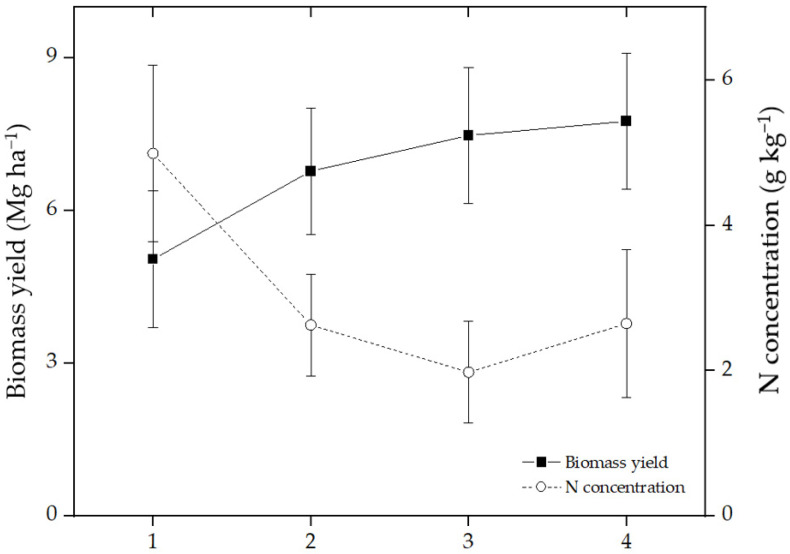
“Hong et al. [20] found that the biomass of switchgrass fields across locations in the USA increased significantly in the first three years after the establishment (Figure 2).”
§ Effects of Biofuel Crop Switchgrass (Panicum virgatum) Cultivation on Soil Carbon Sequestration and Greenhouse Gas Emissions: A Review > 2. Carbon Sequestration by Switchgrass
What the sources say
- Supportedcites [20] Hong C.O. Owens V.N. Bransby D. Farris R. Fike J. Heaton E. Kim S. Mayton H. Mitchell R. Viands D. Switchgrass response to nitrogen fertilizer across diverse environments in the USA: A regional feedstock partnership report Bioenergy Res. 2014 7 777 788 10.1007/s12155-014-9484-y source
The Biomass Production section states that average biomass yield across locations and nitrogen rates increased significantly from years 1 through 3 after establishment. The Fig. 1 caption identifies these as the first, second, and third years after establishment. (LLM, conf=0.94)
plainstates a cause- Asserted: passes — The authors put it forward as true.
- Checkable: passes — It can be checked against evidence.
- Load-bearing: unclear — It is unclear whether the paper’s conclusions depend on it.
- Based: passes — The paper gives a reason why it holds.
- Supported
Every source the paper cites for this claim was checked and supports it.
In the paper
“According to a four-year measurement, after four growing seasons, the SOC produced by switchgrass is 9.45 Mg ha−1 [18].”
§ Effects of Biofuel Crop Switchgrass (Panicum virgatum) Cultivation on Soil Carbon Sequestration and Greenhouse Gas Emissions: A Review > 2. Carbon Sequestration by Switchgrass
What the sources say
- Supportedcites [18] Di Virgilio N. Facini O. Nocentini A. Nardino M. Rossi F. Monti A. Four-year measurement of net ecosystem gas exchange of switchgrass in a Mediterranean climate after long-term arable land use Glob. Chang. Biol. Bioenergy 2019 11 466 482 10.1111/gcbb.12523 source
Section 3.4 states that, after four growing seasons, switchgrass-derived SOC was calculated at 9.45 Mg/ha; the Discussion repeats this figure. This is switchgrass-derived SOC, not the net increase in SOC, which the Discussion reports as 0.52 Mg/ha. (LLM, conf=0.94)
plain- Asserted: passes — The authors put it forward as true.
- Checkable: passes — It can be checked against evidence.
- Load-bearing: unclear — It is unclear whether the paper’s conclusions depend on it.
- Based: passes — The paper gives a reason why it holds.
- Supported
48 more claims · 12 with their cited sources checked
Create a free account to see all 101 claims and to verify the 7 references still open.
- Probably not a substantial claim. 22
- It may state two separate claims as one. 31
- The quote only partly states this claim. 2
Citations
Cites
Archaea predominate among ammonia-oxidizing prokaryotes in soils
Leininger, S., Urich, T., Schloter, M., Schwark, L., Qi, J., Nicol, G. W., Prosser, J. I., Schuster, S. C., & Schleper, C. (2006) · Nature · doi:10.1038/nature04983 · Cited by 2,497 · cited 1×
“AOA are more abundant than AOB in agricultural soil [56].”
Salt, D. E., Smith, R. D., & Raskin, I. (1998) · Annual Review of Plant Physiology and Plant Molecular Biology · doi:10.1146/annurev.arplant.49.1.643 · Cited by 2,085
(2006) · OSTI OAI (U.S. Department of Energy Office of Scientific and Technical Information) · Cited by 1,982
Development of switchgrass (Panicum virgatum) as a bioenergy feedstock in the United States
McLaughlin, S. B., & Adams Kszos, L. (2005) · Biomass and Bioenergy · doi:10.1016/j.biombioe.2004.05.006 · Cited by 1,091 · cited 2×
“So far, switchgras has been used in various for s of biofuel conversion rocesses, incl i g cell l sic et l r cti , biogas, and direct combustion [11,12].”
Testing a Conceptual Model of Soil Emissions of Nitrous and Nitric Oxides
DAVIDSON, E. A., KELLER, M., ERICKSON, H. E., VERCHOT, L. V., & VELDKAMP, E. (2000) · BioScience · doi:10.1641/0006-3568(2000)050[0667:tacmos]2.0.co;2 · Cited by 975 · cited 1×
“A study has shown that N2O is emitted optimally in the WFPS range of 70–80% [63].”
Nitrogen as a regulatory factor of methane oxidation in soils and sediments
Bodelier, P. L. E., & Laanbroek, H. J. (2004) · FEMS Microbiology Ecology · doi:10.1016/s0168-6496(03)00304-0 · Cited by 829
A global inventory of the soil CH4 sink
Dutaur, L., & Verchot, L. V. (2007) · Global Biogeochemical Cycles · doi:10.1029/2006gb002734 · Cited by 535 · cited 1×
“Some studies [38,39] have shown that forest and grassland soils are the primary consumers of CH4 thanks to methane oxidation bacteria in soils.”
Schaufler, G., Kitzler, B., Schindlbacher, A., Skiba, U., Sutton, M. A., & Zechmeister‐Boltenstern, S. (2010) · European Journal of Soil Science · doi:10.1111/j.1365-2389.2010.01277.x · Cited by 472 · cited 1×
“In addition, changes in soil oxygen concentration caused by soil temperature also make soil denitrification extremely sensitive to increasing temperature [64].”
Bioenergy crops and carbon sequestration
Lemus, R., & Lal, R. (2005) · Critical Reviews in Plant Sciences · doi:10.1080/07352680590910393 · Cited by 455 · cited 2×
“As a biofuel source, switchgrass has a lower demand for fertilizers and pesticides, which allows switchgrass to p oduce go yi lds on the land of the best part of soil type [13].”
Greater than 99% consensus on human caused climate change in the peer-reviewed scientific literature
Lynas, M., Houlton, B. Z., & Perry, S. (2021) · Environmental Research Letters · doi:10.1088/1748-9326/ac2966 · Cited by 423
Changes in soil organic carbon under biofuel crops
ANDERSON‐TEIXEIRA, K. J., DAVIS, S. C., MASTERS, M. D., & DELUCIA, E. H. (2009) · GCB Bioenergy · doi:10.1111/j.1757-1707.2008.01001.x · Cited by 391
Ussiri, D. A. N., & Lal, R. (2009) · Soil and Tillage Research · doi:10.1016/j.still.2008.11.008 · Cited by 324 · cited 1×
“Soil and plant carbon sequestration is a practical way to mitigate CO2 emissions [14,15].”
Wullschleger, S. D., Davis, E. B., Borsuk, M. E., Gunderson, C. A., & Lynd, L. R. (2010) · Agronomy Journal · doi:10.2134/agronj2010.0087 · Cited by 289 · cited 2×
“[51] of switchgrass at 39 sites in 19 state of the United States found that the optimal N application amount of switchgrass was about 100 kg N ha−1.”
Wei, W., Isobe, K., Nishizawa, T., Zhu, L., Shiratori, Y., Ohte, N., Koba, K., Otsuka, S., & Senoo, K. (2015) · The ISME Journal · doi:10.1038/ismej.2015.9 · Cited by 275
Agricultural non-CO2 emission reduction potential in the context of the 1.5 °C target
Frank, S., Havlík, P., Stehfest, E., van Meijl, H., Witzke, P., Pérez-Domínguez, I., van Dijk, M., Doelman, J. C., Fellmann, T., Koopman, J. F. L., et al. (2019) · Nature Climate Change · doi:10.1038/s41558-018-0358-8 · Cited by 272
David, K., & Ragauskas, A. J. (2010) · Energy & Environmental Science · doi:10.1039/b926617h · Cited by 235 · cited 1×
“Cellulose, hemicellulose, and pectin can be decomposed into glucose or other sugars by enzymes and then bio-ethanol can be produced by yeast fermentation [74].”
Soil carbon under switchgrass stands and cultivated cropland
Liebig, M. A., Johnson, H. A., Hanson, J. D., & Frank, A. B. (2005) · Biomass and Bioenergy · doi:10.1016/j.biombioe.2004.11.004 · Cited by 225 · cited 2×
“[17] found that the cumulative rate of C was 1.”
Carbon sequestration in perennial bioenergy, annual corn and uncultivated systems in southern Quebec
Zan, C. S., Fyles, J. W., Girouard, P., & Samson, R. A. (2001) · Agriculture, Ecosystems & Environment · doi:10.1016/s0167-8809(00)00273-5 · Cited by 218 · cited 1×
“[26] showed that switchgrass has a biomass 4–5 times that of maize and can store 2.”
Porter, C. L. (1966) · Ecology · doi:10.2307/1935646 · Cited by 217 · cited 2×
“In general, lowland types, which can grow up to more than 3 m, have larger biomass than upland types [9].”
Management Strategies to Mitigate N2O Emissions in Agriculture
Hassan, M. U., Aamer, M., Mahmood, A., Awan, M. I., Barbanti, L., Seleiman, M. F., Bakhsh, G., Alkharabsheh, H. M., Babur, E., Shao, J., et al. (2022) · Life · doi:10.3390/life12030439 · Cited by 199 · cited 1×
“Microbial Mechanism of N2O Emission from Switchgrass Field Soil microbial activities related to N2O emission mainly include nitrification and denitrification [54].”
Cultivar × Environment Interactions in Switchgrass
Casler, M. D., & Boe, A. R. (2003) · Crop Science · doi:10.2135/cropsci2003.2226 · Cited by 189 · cited 1×
“Switchgrass is a perennial plant that needs to be managed, and switchgrass production can be affected by changes in temperature and precipitation space [60].”
Lee, D. K., Owens, V. N., & Doolittle, J. J. (2007) · Agronomy Journal · doi:10.2134/agronj2006.0152 · Cited by 181 · cited 1×
“The application of NH4NO3 and manure can effectively increase switchgrass’s soil carbon sequestration, especially at soil depths of 30–90 cm [23].”
Kucharik, C. J., Brye, K. R., Norman, J. M., Foley, J. A., Gower, S. T., & Bundy, L. G. (2001) · Ecosystems · doi:10.1007/s10021-001-0007-2 · Cited by 178 · cited 1×
“Soil and plant carbon sequestration is a practical way to mitigate CO2 emissions [14,15].”
Mulkey, V. R., Owens, V. N., & Lee, D. K. (2006) · Crop Science · doi:10.2135/cropsci2005.04-0007 · Cited by 173 · cited 1×
“On the Conservation Reserve Program (CRP) land dominated by switchgrass in South Dakota, there is no benefit if the N applied exceeds 56 kg ha−1 [24].”
Soil management impacts on soil carbon sequestration by switchgrass
Ma, Z., Wood, C. W., & Bransby, D. I. (2000) · Biomass and Bioenergy · doi:10.1016/s0961-9534(00)00013-1 · Cited by 166 · cited 3×
“[16] studied the effects of soil management measures, including nitrogen (N) application, row spacing, and harvest frequency, on carbon sequestration in switchgrass fields established for 2–3 years.”
InfluentialRobertson, G. P., & Grace, P. R. (2004) · Tropical Agriculture in Transition — Opportunities for Mitigating Greenhouse Gas Emissions? · doi:10.1007/978-94-017-3604-6_3 · Cited by 164
Soil carbon sequestration by switchgrass and no-till maize grown for bioenergy
Follett, R. F., Vogel, K. P., Varvel, G. E., Mitchell, R. B., & Kimble, J. (2012) · BioEnergy Research · doi:10.1007/s12155-012-9198-y · Cited by 146
Carbon exchange by establishing biofuel crops in Central Illinois
Zeri, M., Anderson-Teixeira, K., Hickman, G., Masters, M., DeLucia, E., & Bernacchi, C. J. (2011) · Agriculture, Ecosystems & Environment · doi:10.1016/j.agee.2011.09.006 · Cited by 140 · cited 2×
“[30] found that switchgrass has a stronger carbon sink capacity at the initial establishment stage than Miscanthus × giganteus (giant miscanthus, a sterile hybrid of Miscanthus sinensis and Miscanthus sacchariflorus).”
A review of carbon and nitrogen balances in switchgrass grown for energy
Bransby, D. I., McLaughlin, S. B., & Parrish, D. J. (1998) · Biomass and Bioenergy · doi:10.1016/s0961-9534(97)10074-5 · Cited by 136
Lu, X., Li, Y., Wang, H., Singh, B. P., Hu, S., Luo, Y., Li, J., Xiao, Y., Cai, X., & Li, Y. (2019) · Agricultural and Forest Meteorology · doi:10.1016/j.agrformet.2019.03.001 · Cited by 111 · cited 1×
“The leading cause of global warming is the increase in greenhouse gases produced by human activities [1,2]; the main greenhouse gases are carbon dioxide (CO2), nitrous oxide (N2O), and methane (CH4) [3].”
Self-citationHandbook of Bioenergy Crop Plants
(2012) · doi:10.1201/b11711 · Cited by 107
N2O Release from Agro-biofuel Production Negates Global Warming Reduction by Replacing Fossil Fuels
Crutzen, P. J., Mosier, A. R., Smith, K. A., & Winiwarter, W. (2016) · SpringerBriefs on Pioneers in Science and Practice · doi:10.1007/978-3-319-27460-7_12 · Cited by 90
Effect of Land Use on Methane Flux from Soil
Chan, A. S. K., & Parkin, T. B. (2001) · Journal of Environmental Quality · doi:10.2134/jeq2001.303786x · Cited by 89 · cited 1×
“However, some agronomic and fertilization measures reduce the function of CH4 oxidation in soils [40].”
Nitrogen fertilization challenges the climate benefit of cellulosic biofuels
Ruan, L., Bhardwaj, A. K., Hamilton, S. K., & Robertson, G. P. (2016) · Environmental Research Letters · doi:10.1088/1748-9326/11/6/064007 · Cited by 85 · cited 1×
“[49] demonstrated that applying N fertilizer to mature switchgrass had little effect on yield but increased N2O emissions (Table 4).”
Oates, L. G., Duncan, D. S., Gelfand, I., Millar, N., Robertson, G. P., & Jackson, R. D. (2016) · GCB Bioenergy · doi:10.1111/gcbb.12268 · Cited by 76 · cited 1×
“[53], perennial systems produce much lower N2O emissions per unit of ground than annual cropping systems.”
Omonode, R. A., & Vyn, T. J. (2006) · Agriculture, Ecosystems & Environment · doi:10.1016/j.agee.2006.03.031 · Cited by 75
Cropping systems effects on improving soil carbon stocks of exposed subsoil
Al-Kaisi, M. M., & Grote, J. B. (2007) · Soil Science Society of America Journal · doi:10.2136/sssaj2006.0200 · Cited by 71
Short-term effects of nitrogen on methane oxidation in soils
Tlustos, P., Willison, T. W., Baker, J. C., Murphy, D. V., Pavlikova, D., Goulding, K. W. T., & Powlson, D. S. (1998) · Biology and Fertility of Soils · doi:10.1007/s003740050464 · Cited by 70 · cited 1×
“Some studies [38,39] have shown that forest and grassland soils are the primary consumers of CH4 thanks to methane oxidation bacteria in soils.”
Nikièma, P., Rothstein, D. E., Min, D.-H., & Kapp, C. J. (2011) · Biomass and Bioenergy · doi:10.1016/j.biombioe.2011.08.006 · Cited by 70
Carbon dioxide and water fluxes from switchgrass managed for bioenergy production
Skinner, R. H., & Adler, P. R. (2010) · Agriculture, Ecosystems & Environment · doi:10.1016/j.agee.2010.05.008 · Cited by 68
Hong, C. O., Owens, V. N., Bransby, D., Farris, R., Fike, J., Heaton, E., Kim, S., Mayton, H., Mitchell, R., & Viands, D. (2014) · BioEnergy Research · doi:10.1007/s12155-014-9484-y · Cited by 68 · cited 1×
“[20] found that the biomass of switchgrass fields across locations in the USA increased significantly in the first three years after the establishment (Figure 2).”
Balsamo, R. A., Kelly, W. J., Satrio, J. A., Ruiz-Felix, M. N., Fetterman, M., Wynn, R., & Hagel, K. (2015) · International Journal of Phytoremediation · doi:10.1080/15226514.2014.922918 · Cited by 66 · cited 2×
“Switchgrass can accelerate the degradation of atrazine and other herbicides, can absorb toxic trace metals in soil, and has good agronomic characteristics and high biomass [69,70].”
The capacity of switchgrass ( Panicum virgatum ) to degrade atrazine in a phytoremediation setting
Murphy, I. J., & Coats, J. R. (2011) · Environmental Toxicology and Chemistry · doi:10.1002/etc.437 · Cited by 59
Seasonal variability in net ecosystem carbon dioxide exchange over a young switchgrass stand
Wagle, P., & Kakani, V. G. (2014) · GCB Bioenergy · doi:10.1111/gcbb.12049 · Cited by 55
Duran, B. E. L., Duncan, D. S., Oates, L. G., Kucharik, C. J., & Jackson, R. D. (2016) · PLOS ONE · doi:10.1371/journal.pone.0151919 · Cited by 53 · cited 1×
“[52] showed that, compared with the mixed planting of switchgrass and local perennial grasses, the single planting of switchgrass increased N2O emissions and the potential nitrate–nitrogen leaching capacity of fertilized switchgrass plots.”
Climatic and genetic controls of yields of switchgrass, a model bioenergy species
Tulbure, M. G., Wimberly, M. C., Boe, A., & Owens, V. N. (2012) · Agriculture, Ecosystems & Environment · doi:10.1016/j.agee.2011.10.017 · Cited by 52 · cited 1×
“[27] used RF (Random Forest packet in R) to analyze the effects of multiple factors such as fertilizer, genetics, and precipitation on yield.”
Slessarev, E. W., Nuccio, E. E., McFarlane, K. J., Ramon, C. E., Saha, M., Firestone, M. K., & Pett‐Ridge, J. (2020) · GCB Bioenergy · doi:10.1111/gcbb.12729 · Cited by 51 · cited 1×
“[65] conducted a 10-year (2008–2018) study on degraded land after sandstorms in the United States to assess the impact of switchgrass on the deep organic carbon storage of the three marginal soils.”
Evapotranspiration and ecosystem water use efficiency of switchgrass and high biomass sorghum
Wagle, P., Kakani, V. G., & Huhnke, R. L. (2016) · Agronomy Journal · doi:10.2134/agronj2015.0149 · Cited by 49
Eichelmann, E., Wagner-Riddle, C., Warland, J., Deen, B., & Voroney, P. (2016) · Agriculture, Ecosystems & Environment · doi:10.1016/j.agee.2016.07.007 · Cited by 47 · cited 2×
“Guelph, ON, Canada 2014 Switchgrass −336 ± 40 [31] Corn 64 ± 41”
Spatial forecasting of switchgrass productivity under current and future climate change scenarios
Behrman, K. D., Kiniry, J. R., Winchell, M., Juenger, T. E., & Keitt, T. H. (2013) · Ecological Applications · doi:10.1890/12-0436.1 · Cited by 45 · cited 1×
“[61] estimated the productivity of current and future switchgrass in the central and eastern United States.”
Zhang, Z., Zhang, R., Cescatti, A., Wohlfahrt, G., Buchmann, N., Zhu, J., Chen, G., Moyano, F. E., Pumpanen, J., Hirano, T., et al. (2017) · Scientific Reports · doi:10.1038/s41598-017-03386-5 · Cited by 45
Zenone, T., Gelfand, I., Chen, J., Hamilton, S. K., & Robertson, G. P. (2013) · Agricultural and Forest Meteorology · doi:10.1016/j.agrformet.2013.07.015 · Cited by 44 · cited 1×
“[37], the switchgrass field did not exist as a carbon sink but produced CO2 emissions.”
Growing season greenhouse gas flux from switchgrass in the northern great plains
Schmer, M. R., Liebig, M. A., Hendrickson, J. R., Tanaka, D. L., & Phillips, R. L. (2012) · Biomass and Bioenergy · doi:10.1016/j.biombioe.2012.05.026 · Cited by 38 · cited 2×
“[48] etermined the greenho se gas fluxes of switchgrass during the growi g season in the Great Plains north of Mantan and found that the application of N f rtiliz r affected the N2O flux during the growing eason but did not affect the flux of CO2 and CH4.”
Wagle, P., Kakani, V. G., & Huhnke, R. L. (2015) · Agricultural and Forest Meteorology · doi:10.1016/j.agrformet.2015.03.015 · Cited by 36
Qin, Z., Zhuang, Q., & Zhu, X. (2015) · GCB Bioenergy · doi:10.1111/gcbb.12106 · Cited by 28 · cited 1×
“[44] estimated the potential greenhouse gas emissions of the bioenergy ecosystem using the biogeochemical model AgTEM, a generic agroecosystem model with vegetation specific parameters characterizing specific crop structures and processes [45].”
Wang, Q., Gu, M., Ma, X., Zhang, H., Wang, Y., Cui, J., Gao, W., & Gui, J. (2015) · Environmental Science and Pollution Research · doi:10.1007/s11356-015-4878-8 · Cited by 28 · cited 1×
“A study showed that switchgrass has medium tolerance to Cd and that a low concentration of Cd (100–175 μM) promoted the growth of switchgrass [71].”
Wile, A., Burton, D. L., Sharifi, M., Lynch, D., Main, M., & Papadopoulos, Y. A. (2014) · Canadian Journal of Soil Science · doi:10.4141/cjss2013-058 · Cited by 25
Soil organic matter and biological activity under long-term contamination with copper
Zamulina, I. V., Gorovtsov, A. V., Minkina, T. M., Mandzhieva, S. S., Burachevskaya, M. V., & Bauer, T. V. (2022) · Environmental Geochemistry and Health · doi:10.1007/s10653-021-01044-4 · Cited by 25
Thompson, K. A., Deen, B., & Dunfield, K. E. (2018) · Applied Soil Ecology · doi:10.1016/j.apsoil.2018.06.005 · Cited by 24 · cited 1×
“The expression of nirS and nosZ genes in the N application area was significantly higher than that in the non-nitrogen application area, indicating that fertilization in these systems may change the denitrification activity and may lead to related nitrogen loss, without yield return [59].”
Carbon dioxide exchange dynamics over a mature switchgrass stand
Eichelmann, E., Wagner‐Riddle, C., Warland, J., Deen, B., & Voroney, P. (2016) · GCB Bioenergy · doi:10.1111/gcbb.12259 · Cited by 23
News: Sunflowers remove radionuclides from water in ongoing phytoremediation field tests
Cooney, C. M. (1996) · Environmental Science & Technology · doi:10.1021/es962219c · Cited by 22
Evaluation of Chelating Agents Used in Phytoextraction by Switchgrass of Lead Contaminated Soil
Hart, G., Koether, M., McElroy, T., & Greipsson, S. (2022) · Plants · doi:10.3390/plants11081012 · Cited by 19 · cited 1×
“When NTA (nitrogenous acid) and APG (aluminum polyglucoside) were applied together, the Pb concentration in switchgrass leaves was more than doubled [73].”
Pannu, M. W., Meinhardt, K. A., Bertagnolli, A., Fransen, S. C., Stahl, D. A., & Strand, S. E. (2019) · Environmental Microbiology Reports · doi:10.1111/1758-2229.12790 · Cited by 17 · cited 2×
“[57] showed that intercropping alfalfa (70:30, switchgrass: alfalfa) reduced dry matter yield but increased N2O flux.”
McGowan, A. R., Min, D., Williams, J. R., & Rice, C. W. (2018) · Journal of Environmental Quality · doi:10.2134/jeq2017.06.0226 · Cited by 17 · cited 2×
“[50] applie diff rent l vels of N treatment to switchgrass.”
Bates, C. T., Escalas, A., Kuang, J., Hale, L., Wang, Y., Herman, D., Nuccio, E. E., Wan, X., Bhattacharyya, A., Fu, Y., et al. (2022) · The ISME Journal · doi:10.1038/s41396-021-00916-y · Cited by 17 · cited 4×
“They found that when the marginal land was converted into switchgrass land, the Shannon index increased significantly over time and the community composition changed [28].”
InfluentialQin, Z., Zhuang, Q., & Zhu, X. (2013) · GCB Bioenergy · doi:10.1111/gcbb.12107 · Cited by 16
Di Virgilio, N., Facini, O., Nocentini, A., Nardino, M., Rossi, F., & Monti, A. (2019) · GCB Bioenergy · doi:10.1111/gcbb.12523 · Cited by 9 · cited 3×
“[18] conducted studies on a newly established switchgrass field.”
InfluentialGreipsson, S., McElroy, T., & Koether, M. (2022) · Journal of Plant Nutrition · doi:10.1080/01904167.2022.2068433 · Cited by 8 · cited 1×
“The study showed that plants receiving high nitrogen had significantly the largest leaf dry mass and the highest Pb concentration [72].”
The influence of alfalfa‐switchgrass intercropping on microbial community structure and function
Cha, G., Meinhardt, K. A., Orellana, L. H., Hatt, J. K., Pannu, M. W., Stahl, D. A., & Konstantinidis, K. T. (2021) · Environmental Microbiology · doi:10.1111/1462-2920.15785 · Cited by 7
Duncan, D. S., Oates, L. G., Gelfand, I., Millar, N., Robertson, G. P., & Jackson, R. D. (2019) · GCB Bioenergy · doi:10.1111/gcbb.12572 · Cited by 6
Sutradhar, A. K., Miller, E. C., Arnall, D. B., Dunn, B. L., Girma, K., & Raun, W. R. (2017) · Journal of Plant Nutrition · doi:10.1080/01904167.2017.1346669 · Cited by 5 · cited 1×
“and hemicellulose concentration of switchgrass [42].”
GÖNÜLAL, E., SOYLU, S., & ŞAHİN, M. (2021) · Turkish Journal Of Field Crops · doi:10.17557/tjfc.758010 · Cited by 5 · cited 2×
“The til ers of the upland ecotype are usual y shorter and bet er adapted to cold and dry habitats [10].”
Research works printed but not linked: 2
- Forster P. Storelvmo T. Chapter 7: The Earths energy budget, climate feedbacks, and climate sensitivity Climate Change 2021: The Physical Science Basis Masson-Delmotte V. Zhai P. Pirani A. Connors S.L. Cambridge University Press Cambridge, Britain 2021 923 1025 Available online: https://www.ipcc.ch/report/ar6/wg1/downloads/report/IPCC_AR6_WGI_Chapter07.pdf (accessed on 8 July 2022)
- McCarthy J.J. Canziani O.F. Leary N.A. Dokken D.J. White K.S. Climate Change 2001: Impacts, Adaptation, and Vulnerability: Contribution of Working Group II to the Third Assessment Report of the Intergovernmental Panel on Climate Change Cambridge University Press Cambridge, UK 2001 75 913
Cited by
Crop Rotation and Diversification in China: Enhancing Sustainable Agriculture and Resilience
Zou, Y., Liu, Z., Chen, Y. J., Wang, Y., & Feng, S. (2024) · Agriculture · doi:10.3390/agriculture14091465 · Cited by 159
Frazier, R., Vivas, K. A., Azuaje, I., Vera, R. E., Pifano, A., Forfora, N., Jameel, H., Ford, E., Pawlak, J. J., Venditti, R. A., et al. (2024) · Journal of Bioresources and Bioproducts · doi:10.1016/j.jobab.2024.01.001 · Cited by 66
DeHaan, L. R., Anderson, J. A., Bajgain, P., Basche, A., Cattani, D. J., Crain, J. L., Crews, T. E., David, C., Duchêne, O., Gutknecht, J., et al. (2023) · The Science of The Total Environment · doi:10.1016/j.scitotenv.2023.164975 · Cited by 48
Vera, R. E., Vivas, K. A., Urdaneta, F., Franco, J., Sun, R., Forfora, N., Frazier, R., Gongora, S., Saloni, D. E., Fenn, L., et al. (2023) · Journal of Cleaner Production · doi:10.1016/j.jclepro.2023.139394 · Cited by 33
Fan, X., Khanna, M., Lee, Y. S., Kent, J., Shi, R., Guest, J. S., & Lee, D. (2024) · Environmental Science & Technology · doi:10.1021/acs.est.4c01949 · Cited by 25
Metadata
- Authors
- Bai, J., Luo, L., Li, A., Lai, X., Zhang, X., Yu, Y., Wang, H., Wu, N., & Zhang, L.
- Affiliations
- Jiangxi Agricultural University (CN)
- National Innovation Alliance of <i>Choerospondias axillaris</i>, Nanchang 330045, China
- Corresponding author
- Wu, Nansheng
- Zhang, Ling
- Venue
- Life
- Publisher
- MDPI AG
- Published
- 2022-12-14
- Volume
- 12
- Issue
- 12
- Pages
- 2105
- ISSN
- 2075-1729 (ISSN-L)
- PMC
- PMC9781985
- OpenAlex
- W4312196135
- Semantic Scholar
- 0775bc4007716d61f38434f7253140c2d55ef08c
- Cited by
- 24
- References
- 72
- Citations by year
- 2026: 6 · 2025: 7 · 2024: 7 · 2023: 4
- FWCI
- 0.62
- Type
- journal article
- Language
- en
- Open access
- gold
- doi.org
- Licence
- Locations
- Life (publishedVersion, cc-by)
- PubMed Central (publishedVersion, cc-by)
- PubMed (publishedVersion)
- DOAJ (DOAJ: Directory of Open Access Journals) (submittedVersion, cc-by-sa)
- Topics
- Life Sciences › Agricultural and Biological Sciences › Agronomy and Crop Science › Bioenergy crop production and management
- Life Sciences › Agricultural and Biological Sciences › Soil Science › Soil Carbon and Nitrogen Dynamics
- Life Sciences › Agricultural and Biological Sciences › Agronomy and Crop Science › Agronomic Practices and Intercropping Systems
- Keywords
- switchgrass, energy crops, soil carbon sequestration, greenhouse gas emissions, soil organic carbon, net ecosystem exchange, nitrous oxide emissions, methane emissions, nitrogen fertilization, carbon debt, bioenergy, climate change mitigation
About these checks
Registry, retraction, Cites and statistics results are computed, not judged, with one exception: a printed reference that no index lists is read once by a model before it counts as a citation error. Claims are extracted by a model and kept only when their quote appears verbatim in the text; each cited source is then checked, with a model’s help, for whether it says what the claim relies on. Those verdicts can be wrong — read the claim’s quote and the cited source before relying on one.
The claim verdicts this report counts are experimental: their accuracy is not yet measured.
A language model drew the claims from the paper on 2026-10-10, under version 3 of the claim definition (model deepseek-v4.1-flash, prompt extract-v3).
A second model labelled each claim on 2026-10-10 (model jev-1.13-20260917, definition revision gold-guideline-v0.2).
Cited sources are checked with a language model’s help (gpt-6-sol).
Statistics and arithmetic are recomputed, not judged.
Confidence bands are shown only for fields calibrated on our annotated test set. None is calibrated yet, so no band is shown.
What counts as a claim ›How we measure confidence ›How we check this ›
Are you an author, or do you see a problem with this page? Request a review
Data sources
Bibliographic data: Semantic Scholar, OpenAlex, Crossref.
Contains information from the Semantic Scholar Academic Graph Datasets, made available under the ODC Attribution License (ODC-BY 1.0).
Semantic Scholar’s data is described in: Kinney, R., et al. (2023). The Semantic Scholar Open Data Platform. arXiv:2301.10140.
