

The DOI matches its Crossref record; 168 of the 174 references it cites were found in a registry or an index; none of the 141 sources its claims cite is checked for support yet.
Cell Immortality: In Vitro Effective Techniques to Achieve and Investigate Its Applications and Challenges
Open accessAbstract
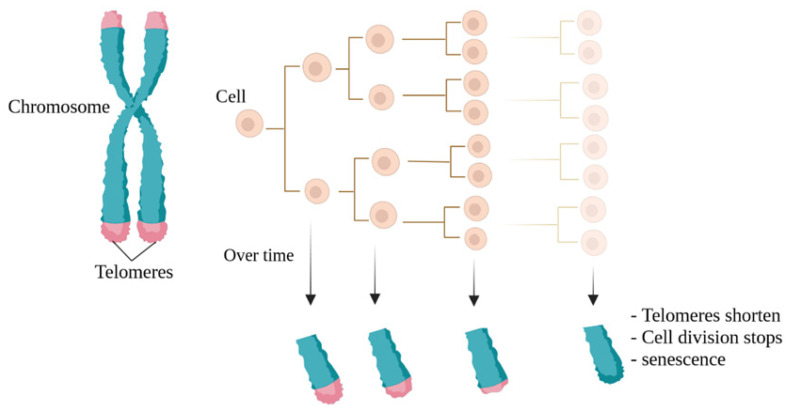
Cells are very important to researchers due to their use in various biological studies in in vitro and in vivo settings. This importance stems from the short lifespan of most cells under laboratory conditions, which can pose significant challenges, such as the difficulties associated with extraction from the source tissue, ethical concerns about separating cells from human or animal models, limited cell passage ability, and variation in results due to differences in the source of the obtained cells, among other issues. In general, cells in laboratory conditions can divide into a limited number, known as the Hayflick limit, due to telomere erosion at the end of each cellular cycle. Given this problem, researchers require cell lines that do not enter the senescence phase after a limited number of divisions. This can allow for more stable studies over time, prevent the laborious work associated with cell separation and repeated cultivation, and save time and money in research projects. The aim of this review is to summarize the function and effect of immortalization techniques, various methods, their advantages and disadvantages, and ultimately the application of immortalization and cell line production in various research fields.
Overview
CoChat Summary
Written by AI from the paper’s full text.
TL;DR
This review summarizes in vitro techniques for cell immortalization, including viral oncoproteins, oncogene overexpression, hTERT, chemical/radiation exposure, and CRISPR/Cas9, and discusses applications and challenges. It concludes that immortalized cell lines are valuable but carry risks such as genomic instability, phenotypic drift, and contamination.
Key findings
- Cells normally face the Hayflick limit after approximately 60 population doublings due to telomere shortening; immortalized lines bypass senescence, with HeLa being the first successful human cell immortalization and having active telomerase.
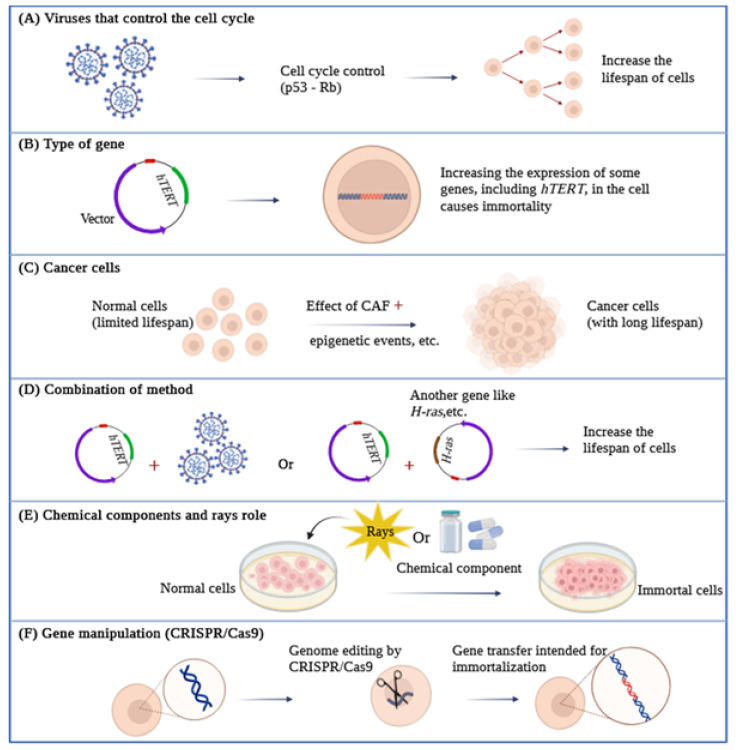
- Major immortalization methods include viral oncoproteins (SV40 large/small T antigen, HPV E6/E7, HTLV Tax1/Tax2, adenovirus 12S E1A, EBV), overexpression of genes such as HOX/TLX1, Lhx2, c-Myc, CDK4, and hTERT, cancer-associated fibroblasts, combined methods, chemical/radiation exposure, and CRISPR/Cas9 gene editing.
- hTERT overexpression is presented as a safer approach because hTERT is not an oncogene; hTERT-immortalized cells can retain normal cell cycle control, active p53 and pRb checkpoints, contact inhibition, growth factor dependence, and stable karyotypes.
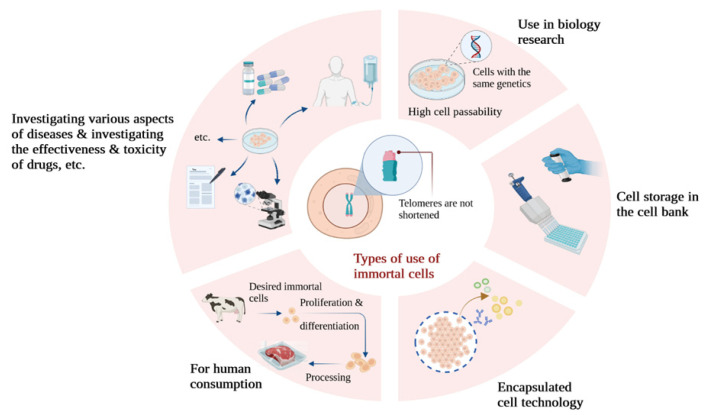
- Applications include vaccine development, drug testing, antibody production, gene function studies, artificial tissues, therapeutic proteins, regenerative medicine, and cultured meat; challenges include cell line misidentification, with one 2011 study finding 37 of 122 head and neck cancer cell lines (30%) misidentified and analyses suggesting at least 15% of cell lines are misidentified or contaminated.
Methods
- Design: narrative review of in vitro cell immortalization techniques, their advantages and disadvantages, and applications.
- Data or sample: no experimental sample or primary data are reported; the paper synthesizes published literature and cited studies.
- Main analysis: descriptive/thematic synthesis of immortalization mechanisms, including viral oncoproteins, gene overexpression, cancer cells, combined methods, chemical/radiation exposure, and CRISPR/Cas9.
Limitations
- The paper states that cell lines may not fully mirror primary cells because genetic manipulation can alter phenotype, inherent functions, and responses to stimuli; repeated cultivation can cause genetic drift and heterogeneity, and contamination by other cell lines or mycoplasma can persist undetected and alter gene expression and cellular behavior.
- The paper states that viral oncoprotein methods inactivate p53 and Rb, can lead to genomic instability, polyploidy, and altered chromosome numbers, and are not considered safe or risk-free; p53 loss is observed in about half of human malignant cancers.
- Evident from the text: as a narrative review, no systematic search strategy, inclusion/exclusion criteria, or quantitative synthesis is described, and no primary experimental validation is reported.
Model-written summary. Check it against the paper before relying on it.
Integrity signals
Registry
Cites
Statistics
Figures
Verification
Claims the paper makes
47 Check pending · 37 No full text of the sources · 16 Own interpretation · 5 Not checked yet
A claim is checked only against the cited paper’s full text, never its abstract, and none is available for its sources.
In the paper
“The immortalized NTera2 (NT2) cell line has undergone a thorough examination for its potential in brain grafting. Notably, these cells have been safely employed in clinical trials focused on treating brain injuries [36,37].”
§ Cell Immortality: In Vitro Effective Techniques to Achieve and Investigate Its Applications and Challenges > 2. The Application of Immortalized Cell Lines
What the sources say
- Not checked — no full text of the sourcecites [36] Richardson, 2007, Ectopic telomerase expression inhibits neuronal differentiation of NT2 neural progenitor cells, Neurosci. Lett. source
- Not checked — no full text of the sourcecites [37] Hara, 2008, Neural progenitor NT2N cell lines from teratocarcinoma for transplantation therapy in stroke, Prog. Neurobiol. source
plain- Asserted: passes — The authors put it forward as true.
- Checkable: passes — It can be checked against evidence.
- Load-bearing: unclear — It is unclear whether the paper’s conclusions depend on it.
- Based: passes — The paper gives a reason why it holds.
In the paper
“Types 1 and 2 encode for the Tax1 and Tax2 proteins, respectively, which are necessary for the infection of human T-cells by the associated viruses.”
§ Cell Immortality: In Vitro Effective Techniques to Achieve and Investigate Its Applications and Challenges > 4. Immortality and a Review of Its Techniques > 4.1. Viral Genes Can Control the Cell Cycle
What the sources say
- Check pendingcites [79] Sieburg, 2004, Human T-cell leukemia virus type 1 (HTLV-1) and HTLV-2 tax oncoproteins modulate cell cycle progression and apoptosis, J. Virol. source
plainstates a cause- Asserted: passes — The authors put it forward as true.
- Checkable: passes — It can be checked against evidence.
- Load-bearing: unclear — It is unclear whether the paper’s conclusions depend on it.
- Based: passes — The paper gives a reason why it holds.
In the paper
“Conversely, pre-adipocytes showed aberrant differentiation after immortalization with the SV40 T antigen. In fact, the ability of the SV40 T antigen to block the transcription factor p300/cAMP-response element-binding protein (CBP), which is essential for adipocyte differentiation, inhibits pre-adipocyte differentiation [71].”
§ Cell Immortality: In Vitro Effective Techniques to Achieve and Investigate Its Applications and Challenges > 4. Immortality and a Review of Its Techniques > 4.1. Viral Genes Can Control the Cell Cycle
What the sources say
- Not checked — no full text of the sourcecites [71] Darimont, 2003, Immortalization of human preadipocytes, Biochimie source
plainstates a cause- Asserted: passes — The authors put it forward as true.
- Checkable: passes — It can be checked against evidence.
- Load-bearing: unclear — It is unclear whether the paper’s conclusions depend on it.
- Based: passes — The paper gives a reason why it holds.
In the paper
“For example, they have used immortalized cell lines as model systems for studying neuronal development and performance recovery in neurological disease models, such as Huntington’s disease [28,29].”
§ Cell Immortality: In Vitro Effective Techniques to Achieve and Investigate Its Applications and Challenges > 2. The Application of Immortalized Cell Lines
What the sources say
- Not checked — no full text of the sourcecites [28] Geller, 1991, Applications of immortalized cells in basic and clinical neurology, J. Cell Biochem. source
- Check pendingcites [29] Yoon, 2020, Implantation of the clinical-grade human neural stem cell line, CTX0E03, rescues the behavioral and pathological deficits in the quinolinic acid-lesioned rodent model of Huntington’s disease, Stem Cells source
plain- Asserted: passes — The authors put it forward as true.
- Checkable: passes — It can be checked against evidence.
- Load-bearing: unclear — It is unclear whether the paper’s conclusions depend on it.
- Based: passes — The paper gives a reason why it holds.
In the paper
“It has been shown that EBNA-2 is genetically essential for B cell immortalization by EBV.”
§ Cell Immortality: In Vitro Effective Techniques to Achieve and Investigate Its Applications and Challenges > 4. Immortality and a Review of Its Techniques > 4.1. Viral Genes Can Control the Cell Cycle
What the sources say
- Not checked — no full text of the sourcecites [87] Middleton, 1991, Immortalizing genes of Epstein-Barr virus, Adv. Virus Res. source
boostedstates a cause- Asserted: passes — The authors put it forward as true.
- Checkable: passes — It can be checked against evidence.
- Load-bearing: unclear — It is unclear whether the paper’s conclusions depend on it.
- Based: passes — The paper gives a reason why it holds.
- Probably not a substantial claim. 16
- It may state two separate claims as one. 45
Create a free account to see these claims.
Create a free account to see these assumptions.
44 more claims
Create a free account to see all 105 claims and to verify the 66 references still open.
Self-check
Percentages, sums and reported differences re-computed from the paper’s own numbers.
Each contradiction between two passages listed here was confirmed by an independent check.
Rated minor: it would not touch a result — a value no result rests on, a p-value that stays on the same side of the significance level, or a conflict that is clerical, resolved elsewhere in the paper, or outside its own findings.
In the paper
§ Cell Immortality: In Vitro Effective Techniques to Achieve and Investigate Its Applications and Challenges > 2. The Application of Immortalized Cell Lines
“non-immortalized human lung epithelial cells created by hTERT overexpression without the use of viral oncogenes have been used to investigate various aspects of lung cancer”
§ Cell Immortality: In Vitro Effective Techniques to Achieve and Investigate Its Applications and Challenges > References
“34. Sato M. Shay J.W. Minna J.D. Immortalized normal human lung epithelial cell models for studying lung cancer biology”
Rated minor: it would not touch a result — a value no result rests on, a p-value that stays on the same side of the significance level, or a conflict that is clerical, resolved elsewhere in the paper, or outside its own findings.
In the paper
§ Cell Immortality: In Vitro Effective Techniques to Achieve and Investigate Its Applications and Challenges > 1. Introduction
“In the late 1950s, George Otto Gey, head of tissue culture research at Johns Hopkins, initiated the process of immortalization and established a non-aging cell line called HeLa, derived from a rare adenocarcinoma found in the cervix of a young woman named Henrietta Lacks.”
§ Cell Immortality: In Vitro Effective Techniques to Achieve and Investigate Its Applications and Challenges > 1. Introduction
“Major discoveries have been made using this cell line, including the development of the polio vaccine in 1953 [25]”
Citations
Cites
The serial cultivation of human diploid cell strains
Hayflick, L., & Moorhead, P. S. (1961) · Experimental Cell Research · doi:10.1016/0014-4827(61)90192-6 · Cited by 8,508
The new frontier of genome engineering with CRISPR-Cas9
Doudna, J. A., & Charpentier, E. (2014) · Science · doi:10.1126/science.1258096 · Cited by 7,062
The limited in vitro lifetime of human diploid cell strains
Hayflick, L. (1965) · Experimental Cell Research · doi:10.1016/0014-4827(65)90211-9 · Cited by 5,876
Telomeres shorten during ageing of human fibroblasts
Harley, C. B., Futcher, A. B., & Greider, C. W. (1990) · Nature · doi:10.1038/345458a0 · Cited by 5,750
The biology and function of fibroblasts in cancer
Kalluri, R. (2016) · Nature Reviews Cancer · doi:10.1038/nrc.2016.73 · Cited by 4,366
The E6 oncoprotein encoded by human papillomavirus types 16 and 18 promotes the degradation of p53
Scheffner, M., Werness, B. A., Huibregtse, J. M., Levine, A. J., & Howley, P. M. (1990) · Cell · doi:10.1016/0092-8674(90)90409-8 · Cited by 3,995
Identification of a specific telomere terminal transferase activity in tetrahymena extracts
Greider, C. W., & Blackburn, E. H. (1985) · Cell · doi:10.1016/0092-8674(85)90170-9 · Cited by 3,400
The human papilloma virus-16 E7-oncoprotein is able to bind to the retinoblastoma gene product
Dyson, N., Howley, P. M., Münger, K., & Harlow, E. (1989) · Science · doi:10.1126/science.2537532 · Cited by 3,017
The RNA Component of Human Telomerase
Feng, J., Funk, W. D., Wang, S.-S., Weinrich, S. L., Avilion, A. A., Chiu, C.-P., Adams, R. R., Chang, E., Allsopp, R. C., Yu, J., et al. (1995) · Science · doi:10.1126/science.7544491 · Cited by 2,227
Counter, C. M., Avilion, A. A., LeFeuvre, C. E., Stewart, N. G., Greider, C. W., Harley, C. B., & Bacchetti, S. (1992) · The EMBO Journal · doi:10.1002/j.1460-2075.1992.tb05245.x · Cited by 2,096 · cited 1×
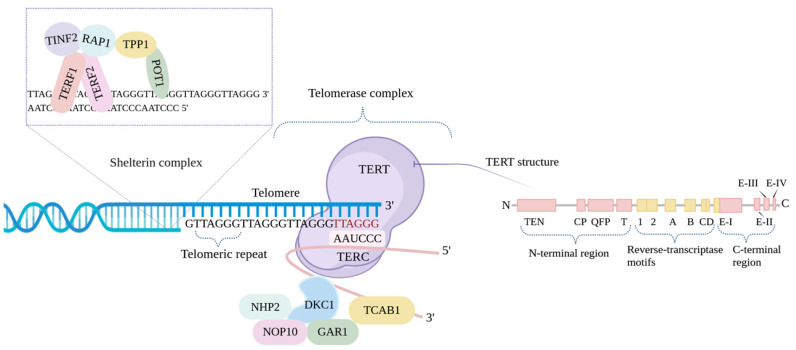
“…in the telomerase enzyme, which had recently been discovered in the single-cell Life 2024 , 14 , 417 6 of 22 Several reports confirmed the decrease in average telomere length with cell division in fibroblasts [6,57,58] and with age in somatic blood and colon cells [59], but not in germ cells.”
Background
Research works printed but not linked: 4
- Kulshreshtha, A., and Agrawal, A. (2020). RNA-Based Regulation in Human Health and Disease, Elsevier.
- Cooke, H.J., and Smith, B. (2019). Cold Spring Harbor Symposia on Quantitative Biology, Cold Spring Harbor Laboratory Press.
- Depcrynski, A.N., Sachs, P.C., Elmore, L.W., and Holt, S.E. (2009). Telomeres and Telomerase in Cancer, Humana Press.
- Earle, 1943, Production of malignancy in vitro, J. Natl. Cancer Inst., 4, 165
Cited by
Macrophage variants in laboratory research: most are well done, but some are RAW
Herb, M., Schatz, V., Hadrian, K., Hos, D., Holoborodko, B., Jantsch, J., & Brigo, N. (2024) · Frontiers in Cellular and Infection Microbiology · doi:10.3389/fcimb.2024.1457323 · Cited by 68
Sánchez‐Díez, M., Romero-Jiménez, P., Alegría‐Aravena, N., Gavira-O’Neill, C. E., Vicente-García, E., Quiroz‐Troncoso, J., González‐Martos, R., Ramírez‐Castillejo, C., & Pastor, J. M. (2025) · Pharmaceutics · doi:10.3390/pharmaceutics17020247 · Cited by 68
Yamaguchi, N., Horio, E., Sonoda, J., Yamagishi, M., Miyakawa, S., Murakami, F., Hasegawa, H., Katahira, Y., Mizoguchi, I., Fujii, Y., et al. (2024) · International Journal of Molecular Sciences · doi:10.3390/ijms252413562 · Cited by 50
Sun, C., Zhu, J., Sun, X., Zhang, Z., Sun, Y., Jin, Y., & Wu, T. (2025) · Journal of Advanced Research · doi:10.1016/j.jare.2025.12.032 · Cited by 32
Research progress on interferon and cellular senescence
Wang, D., Chen, K., Wang, Z., Wu, H., & Li, Y. (2024) · The FASEB Journal · doi:10.1096/fj.202400808rr · Cited by 23
Brancolini, A., Bobbili, M. R., Pultar, M., Mazidi, Z., Wieser, M., Gamauf, J., Roefs, M. T., Corso, G., Nivarthi, H., Arteaga, M. B., et al. (2026) · Journal of Biotechnology · doi:10.1016/j.jbiotec.2026.03.010 · Cited by 12
Talib, W. H., Abed, I., Raad, D., Alomari, R. K., Jamal, A., Jabbar, R., Alhasan, E. O., Alshaeri, H. K., Alasmari, M. M., & Law, D. S. N. (2024) · Foods · doi:10.3390/foods13172687 · Cited by 11
Application of synthetic biology in the cultured meat production
Yin, Z., Liu, F., Zhang, Z., Zhou, J., Li, J., Chen, J., Du, G., & Zhao, X. (2025) · Trends in Food Science & Technology · doi:10.1016/j.tifs.2025.105363 · Cited by 10
Salinas-Parra, N., Torrealba, D., Ahumada, A., Figueroa, C., & Gallardo, J. A. (2025) · Fish & Shellfish Immunology · doi:10.1016/j.fsi.2025.110625 · Cited by 6
Nakamura, A., Tanaka, Y., Amano, T., Takebayashi, A., Takahashi, A., Hanada, T., Yoneoka, Y., Tsuji, S., & Murakami, T. (2025) · Scientific Reports · doi:10.1038/s41598-025-86586-8 · Cited by 6
He, Z., Cole, K. D., & He, H. (2025) · Tissue and Cell · doi:10.1016/j.tice.2025.102908 · Cited by 5
Gürdal, M., Ercan, G., Selver, Ö. B., Aberdam, D., & Zeugolis, D. I. (2024) · Life · doi:10.3390/life14121552 · Cited by 5
Saccharomyces cerevisiae as a model for mammalian diseases
Sattlegger, E., & Schiemann, A. H. (2026) · FEMS Yeast Research · doi:10.1093/femsyr/foag013 · Cited by 4
Engineering biomimetic scaffolds for cultivated meats
Zhang, L., Shang, Y., Gan, J., Wu, Z., & Zhao, Y. (2025) · Biomedical Technology · doi:10.1016/j.bmt.2025.100113 · Cited by 4
Study on immortalization of Mongolian sheep fibroblast cells
Liu, B., Wang, S. C., Meng, F., Wu, B., Zhang, Y., & Cao, J. (2025) · Animal Biotechnology · doi:10.1080/10495398.2025.2459915 · Cited by 3
Organ-on-a-Chip and Lab-on-a-Chip Technologies in Cardiac Tissue Engineering
Marazzi, D., Trovalusci, F., Nardo, P. D., & Carotenuto, F. (2025) · Biomimetics · doi:10.3390/biomimetics11010018 · Cited by 3
Zhou, J., Li, N., Liu, R., Kabanov, A. V., Polacheck, W. J., Nguyen, J., & Cao, Y. (2026) · Journal of Controlled Release · doi:10.1016/j.jconrel.2026.115157 · Cited by 3
Scelza, M. Z., Tavares, S., Scelza, P., Ramos, G. S., Aboud, L. R. D. L., Piasecki, L., Leite, P. E. C., da Silva, J. P. C., Soares‐Lima, S. C., & Alves, G. G. (2024) · Clinical Oral Investigations · doi:10.1007/s00784-024-05743-x · Cited by 3
Zheng, X., Jiang, G.-J., & Fan, T. (2025) · Current Eye Research · doi:10.1080/02713683.2025.2497330 · Cited by 3
Fundamental and Practical Perspectives in Regenerative Medicine
Макаревич, П. И., & Va, T. (2024) · International Journal of Molecular Sciences · doi:10.3390/ijms252111508 · Cited by 3
Suali, L., Chia, Y., Rustin, C., Lem, F. F., Ching, X. J., Mansur, M. A. B., Henry, Z. A., Chan, M. K. S., Wong, M. B. F., & Pan, S. Y. (2026) · Biotechnic & Histochemistry · doi:10.1080/10520295.2026.2714776 · Cited by 2
“They offer practical advantages, including indefinite proliferation, ease of maintenance, cost efficiency, and reproducibility (Voloshin et al. 2023; Chalak et al. 2024).”
Tang, P.-C., Um, S. Y., Mayfield, A. B., Bracho, O. R., Castillo, C. D., Dinh, C. T., Dykxhoorn, D. M., & Liu, X. Z. (2025) · Stem Cell Research & Therapy · doi:10.1186/s13287-025-04281-x · Cited by 2
(2025) · International Journal of Veterinary Science · doi:10.47278/journal.ijvs/2025.044 · Cited by 2
Safety and Regenerative Properties of Immortalized Human Mesenchymal Stromal Cell Secretome
Karagyaur, M. N., Primak, A. L., Basalova, N. A., Monakova, A., Tolstoluzhinskaya, A., Kulebyakina, M., Сергеевна, Ч. Е., Никитична, С. М., Grigorieva, O., Chechekhin, V. I., et al. (2025) · International Journal of Molecular Sciences · doi:10.3390/ijms26199322 · Cited by 2
Hepatoblastoma Cell Lines: Past, Present and Future
Prochownik, E. V., Henchy, C., & Wang, H. (2025) · Cells · doi:10.3390/cells14242013 · Cited by 2
Conditionally Reprogrammed Cells as Preclinical Model for Rare Cancers
Krawczyk, E. (2025) · Cancers · doi:10.3390/cancers17172834 · Cited by 1
Alcohol alters blood-testis barrier function in an in vitro model
Edenfield, R. C., Potter, S. B., Crow, K. M. S., Cho, I. K., Easley, K. F., Lara, N. D. L. E. M., Waters, E. S., Hedges, J. C., Lo, J. O.-T., Dobrinski, I., et al. (2025) · F&S Science · doi:10.1016/j.xfss.2025.07.005 · Cited by 1
Zhang, C., Hao, W., Yang, Y., Li, J., Zhang, Q., Chang, S., Yang, K., & He, X. (2025) · Scientific Reports · doi:10.1038/s41598-025-15144-z · Cited by 1
In-vivo, In-vitro, and Ex-vivo Experimental Models for Nose‐to‐brain Drug Delivery
Butola, M., & Nainwal, N. (2025) · Drug Delivery Letters · doi:10.2174/0122103031378584250829054818 · Cited by 1
Telomerase biosensors: A promising approach in cancer diagnostics
Khalifezadeh, M., Masoumi, S., Najafi, K., Tabean, M., & Mobed, A. (2025) · Clinica Chimica Acta · doi:10.1016/j.cca.2025.120668 · Cited by 1
Klymenko, Y., Kersey, J. L., Quigley, H. D., & Hawkins, S. M. (2025) · Biology of Reproduction · doi:10.1093/biolre/ioaf255 · Cited by 1
Ashrafi, E., & Elliott, J. A. W. (2025) · Cryobiology · doi:10.1016/j.cryobiol.2025.105563 · Cited by 1
Natural Compounds Derived from Chilean Species and Their Cytotoxic Potential Against Cancer
Köning, T., & Calaf, G. M. (2026) · Cancers · doi:10.3390/cancers18040656 · Cited by 1
Isolation, validation, and long-term culture of mouse ear fibroblasts
Barnes, K. L., Davis, N. M., Flores, B. J. E., Cataldo, K. M., Bertges, E. H., & Knoll, L. J. (2026) · Biology Open · doi:10.1242/bio.062483 · Cited by 1
Chowdhury, L. N. S., Pung, Y. F., Pung, S., Ong, C. E., Kong, C., & Pan, Y. (2025) · Precision Nanomedicine · doi:10.33218/001c.129234 · Cited by 1
Qu, C., & Holm, C. K. (2025) · Cells · doi:10.3390/cells14070479 · Cited by 1
Jimenez, C. R., Gatti, B. S., Presuto, L. M., Corrêa, P. S., de Alencar, S. M., & Louvandini, H. (2025) · doi:10.17504/protocols.io.q26g75ze3lwz/v1
Cellular models of chronic diseases: From bench to bedside
Tiwari, K. (2025) · Elsevier eBooks · doi:10.1016/b978-0-443-33877-9.00015-x
NOVEL INSIGHT INTO CELLULAR AGING IN HUMANS: A LITERATURE REVIEW
Chukhnina, E., Казачков, Е. Л., Kazachkova, E. A., & Евгеньевна, В. Е. (2025) · Laboratornaya i klinicheskaya meditsina Farmatsiya · doi:10.14489/lcmp.2025.02.pp.073-081
Ortiz‐Arrabal, O. (2024) · Institutional Repository of the University of Granada (University of Granada)
SCF complex: Master regulator of metabolic adaptations in cancer cells
Bandaru, N., Bhatt, S., Dudhe, P. B., & Gambhire, M. S. (2025) · Elsevier eBooks · doi:10.1016/b978-0-443-33459-7.00007-7
Proteomics and Bioinformatics Profiles of Human Mesothelial Cell Line MeT-5A
Watkin, R., Kazanjian, A. A., Damicis, J. R., & Yohannes, E. (2026) · Proteomes · doi:10.3390/proteomes14010002
Ghaemi, F., Zadeh, A. N., Yekani, F., Malekzadeh, M., Hesaraki, M., & Rajabi, S. (2025) · International journal of basic science in medicine · doi:10.34172/ijbsm.48719
Self-citationGraffmann, N., Hokamp, R., Loerch, C., Fromme, M., Wruck, W., Strnad, P., & Adjaye, J. (2026) · Stem Cell Research & Therapy · doi:10.1186/s13287-026-05365-y
Brault, A. L., Dickinson, T. A., Banker, M. E., Sommese, R. F., & Vincent, F. (2026) · SLAS DISCOVERY · doi:10.1016/j.slasd.2026.100305
Proteome dynamics during establishment of California grunion (Leuresthes tenuis) cell lines
Corona, M. M., Li, J., & Kültz, D. (2026) · BMC Biology · doi:10.1186/s12915-026-02577-9
IFNL3 reduces replication of CIRDC-associated viruses in canine airway epithelial cells
Sharma, S., Berríos-Vázquez, G., Baldwin, K., Maes, R., & Hussey, G. S. (2026) · Virus Research · doi:10.1016/j.virusres.2026.199742
The impact of cannabigerol exposure on human endometrial stromal cells decidualization
Alves, P., Brighton, P. J., Seng-Kong, C., Nebot, M. T., Amaral, C., Fonseca, B. M., Teixeira, N. A. A., Brosens, J. J., & Correia‐da‐Silva, G. (2026) · Toxicology · doi:10.1016/j.tox.2026.154492
Cultures Through Time: Forging a Xeno-Free Future for Cell Culture-Based Virology
Kaulsay, A., Abdullah, N. S., & Adnan, N. A. A. (2026) · Vaccines · doi:10.3390/vaccines14060476
Blue Light‐Mediated Nitric Oxide‐Releasing Formulation for the Multimodal Treatment of Acne Vulgaris
Johnson, C. R., Picciotti, S. L., Ramrattan, T. D., Nogler, M. E., Bucci, M. P., Reinhard, S. J., Schaefer, C. J., Wallet, S. M., & Schoenfisch, M. H. (2026) · Advanced Healthcare Materials · doi:10.1002/adhm.71395
Molinari, A., Moccia, V., Babbucci, M., Peruzza, L., Negrisolo, E., Centelleghe, C., Mazzariol, S., & Zappulli, V. (2026) · Animals · doi:10.3390/ani16132037
Liang, B.-Y., Liu, H., Yang, J., Zhang, P., Li, Y.-M., Li, Y., Fang, C.-Y., Xiang, P., & Hu, Z.-L. (2026) · Ecotoxicology and Environmental Safety · doi:10.1016/j.ecoenv.2026.120523
Cell Lines and Culture Systems
Badal, S. (2026) · Springer eBooks · doi:10.1007/978-3-032-28873-8_4
Zhang, W. (2026) · Springer eBooks · doi:10.1007/978-3-032-32096-4_2
In vitro synthesis of milk components
Tomažič, M. (2026) · Repository of the University of Ljubljana (University of Ljubljana)
Ανάλυση δεδομένων της συνδυαστικής δράσης ακτινοβολιών στη βιόσφαιρα
Parousis-Paraskevas, O. (2026) · DSpace - NTUA (National Technical University of Athens) · doi:10.26240/heal.ntua.33568
From Primary Cells to Organoids: Expanding the Biological Relevance of In Vitro Cellular Models
Deng, F., Wang, Y., Castellano, L. A., & Zhao, C. (2026) · Cells · doi:10.3390/cells15191741
Magni, P., Norata, G. D., & Klinaku, F. T. (2025) · Archivio Istituzionale della Ricerca (Universita Degli Studi Di Milano)
Amangeldina, A., Zhumina, A. G., Zeinidenov, A., Aimukhanov, А. К., Shakeyev, K. T., Sagyngali, U. K., & Shestakov, D. (2026) · Fundamental and Experimental Biology · doi:10.31489/2026feb3/127-136
Coward, E., Fleming, J. W., Rimington, R. P., Lewis, M. P., & Capel, A. J. (2026) · SSRN Electronic Journal · doi:10.2139/ssrn.7570158
Molinari, A., Lucca, C., Vogiatzis, S., Moccia, V., Babbucci, M., Peruzza, L., Negrisolo, E., Trevisan, M., Barzon, L., Centelleghe, C., et al. (2026) · Frontiers in Veterinary Science · doi:10.3389/fvets.2026.1931938
Ibanez-Rios, M. I., Batardière, M., Dianati, E., Serwe, G., Kanagasingam, S., Archambault-Marsan, A., Thibault, P., Therrien, M., Trinh, V. Q., & Knapp, D. J. H. F. (2026) · bioRxiv (Cold Spring Harbor Laboratory) · doi:10.64898/2026.10.07.757165
Tcypileva, A. S., Floren, D. D., Docshin, P. M., & Malashicheva, A. (2026) · Translational Medicine · doi:10.18705/2311-4495-2026-13-4-399-414
Hammad, M., Chatzimentor, I., Stefanidou, V., Koidis, P. T., Apatzidou, D. A., & Layrolle, P. (2026) · Current Oral Health Reports · doi:10.1007/s40496-026-00442-w
Preclinical Models of Uveal Melanoma: Strengths, Limitations, and Translational Utility
Chen, Y., Abdouh, M., & Burnier, J. V. (2026) · Pigment Cell & Melanoma Research · doi:10.1111/pcmr.70142
Metadata
- Authors
- Chalak, M., Hesaraki, M., Mirbahari, S. N., Yeganeh, M., Abdi, S., Rajabi, S., & Hemmatzadeh, F.
- Affiliations
- University of Science and Culture (IR)
- Royan Institute (IR)
- University of Tehran (IR)
- Adelaide University (AU)
- Corresponding author
- Rajabi, Sarah
- Hemmatzadeh, Farhid
- Venue
- Life
- Publisher
- MDPI AG
- Published
- 2024-03-21
- Volume
- 14
- Issue
- 3
- Pages
- 417
- ISSN
- 2075-1729 (ISSN-L)
- PMC
- PMC10971253
- OpenAlex
- W4393039470
- Cited by
- 66
- References
- 174
- Citations by year
- 2026: 28 · 2025: 29 · 2024: 9
- FWCI
- 2.71
- Type
- journal article
- Language
- en
- Open access
- gold
- doi.org
- Licence
- Locations
- Life (publishedVersion, cc-by)
- PubMed Central (publishedVersion, cc-by)
- PubMed (publishedVersion)
- DOAJ (DOAJ: Directory of Open Access Journals) (submittedVersion, cc-by-sa)
- Funders
- University of Adelaide
- Topics
- Life Sciences › Biochemistry, Genetics and Molecular Biology › Cell Biology › Telomeres, Telomerase, and Senescence
- Life Sciences › Biochemistry, Genetics and Molecular Biology › Aging › Genetics, Aging, and Longevity in Model Organisms
- Life Sciences › Biochemistry, Genetics and Molecular Biology › Molecular Biology › Pluripotent Stem Cells Research
- Keywords
- cell immortalization, cellular senescence, Hayflick limit, telomere shortening, cell lines, in vitro cell culture, subculture
About these checks
Registry, retraction, Cites and statistics results are computed, not judged, with one exception: a printed reference that no index lists is read once by a model before it counts as a citation error. Claims are extracted by a model and kept only when their quote appears verbatim in the text; each cited source is then checked, with a model’s help, for whether it says what the claim relies on. Those verdicts can be wrong — read the claim’s quote and the cited source before relying on one.
A language model drew the claims from the paper on 2026-11-12, under version 3 of the claim definition (model deepseek-v4.1-flash, prompt extract-v3).
A second model labelled each claim on 2026-11-12 (model jev-1.13-20260917, definition revision gold-guideline-v0.2).
Statistics and arithmetic are recomputed, not judged.
Confidence bands are shown only for fields calibrated on our annotated test set. None is calibrated yet, so no band is shown.
What counts as a claim ›How we measure confidence ›How we check this ›
Are you an author, or do you see a problem with this page? Request a review
