

Modes of Fatty Acid Desaturation in Cyanobacteria: An Update
Open accessThe DOI matches its Crossref record; 54 of the 56 references it cites were found in a registry or an index.
Abstract
Fatty acid composition of individual species of cyanobacteria is conserved and it may be used as a phylogenetic marker. The previously proposed classification system was based solely on biochemical data. Today, new genomic data are available, which support a need to update a previously postulated FA-based classification of cyanobacteria. These changes are necessary in order to adjust and synchronize biochemical, physiological and genomic data, which may help to establish an adequate comprehensive taxonomic system for cyanobacteria in the future. Here, we propose an update to the classification system of cyanobacteria based on their fatty acid composition.
Overview
The claims and statistics of this paper haven’t been checked yet.
Free: it reads the open-access text and checks the first 5 claims that cite a source we can check. Create a free account to check every claim.
Integrity signals
Registry
Cites
Statistics
Figures
Verification
Claims the paper makes
The claims and statistics of this paper haven’t been checked yet.
Free: it reads the open-access text and checks the first 5 claims that cite a source we can check. Create a free account to check every claim.
Claims other papers make about this one
Each is checked against this paper’s own text: does it say what the citing paper says it does?
The check wasn’t confident either way, so it gives no verdict — never disputed.
In the citing paper
“Therefore, true Spirulina species should be attributed to Group 2 cyanobacteria, according to FA-based classification [50,51].”
From Spirulina/Arthrospira/Limnospira—Three Names of the Single Organism (2024) · cites this paper as [51]
Experimental — accuracy not yet measured
Self-check
Percentages, sums and reported differences re-computed from the paper’s own numbers.
The self-check needs the paper’s full text.
Citations
Cites
Kaneko, T., Sato, S., Kotani, H., Tanaka, A., Asamizu, E., Nakamura, Y., Miyajima, N., Hirosawa, M., Sugiura, M., Sasamoto, S., et al. (1996) · DNA Research · doi:10.1093/dnares/3.3.185 · Cited by 2,432 · cited 1×
“Genome sequencing [44] together with gene expression analysis [45] demonstrated the presence and expression of genes for Δ6-, ∆9-, ∆12-, and ∆15(ω3)-desaturases in Synechocystis sp.”
BackgroundKaneko, T., Sato, S., Kotani, H., Tanaka, A., Asamizu, E., Nakamura, Y., Miyajima, N., Hirosawa, M., Sugiura, M., Sasamoto, S., et al. (1996) · DNA Research · doi:10.1093/dnares/3.3.109 · Cited by 2,132 · cited 1×
“Genome sequencing [44] together with gene expression analysis [45] demonstrated the presence and expression of genes for Δ6-, ∆9-, ∆12-, and ∆15(ω3)-desaturases in Synechocystis sp.”
BackgroundMicrofossils of the early Archean apex chert: New evidence of the antiquity of life
Schopf, J. W. (1993) · Science · doi:10.1126/science.260.5108.640 · Cited by 1,363 · cited 2×
“Cyanobacteria (formerly—blue-green algae) are considered as one of the most ancient groups of living organisms on Earth [1].”
BackgroundInfluentialMembrane fluidity and its roles in the perception of environmental signals
Los, D. A., & Murata, N. (2004) · Biochimica et Biophysica Acta (BBA) - Biomembranes · doi:10.1016/j.bbamem.2004.08.002 · Cited by 1,020 · cited 2×
“Thermophilic unicellular species usually have monoenoic FAs, whereas mesophilic or psychrophilic unicellular species produce polyunsaturated FAs, which help them to survive at low temperatures by adjusting the membrane fluidity [7].”
BackgroundSelf-citationKaneko, T. (2001) · DNA Research · doi:10.1093/dnares/8.5.205 · Cited by 696 · cited 1×
“Genome sequencing of these species confirmed the presence of genes for the specific ∆9-, ∆12-, and ∆15-desaturases [24,32–34].”
BackgroundStructure and expression of fatty acid desaturases
Los, D. A., & Murata, N. (1998) · Biochimica et Biophysica Acta (BBA) - Lipids and Lipid Metabolism · doi:10.1016/s0005-2760(98)00091-5 · Cited by 558 · cited 1×
“The extent of unsaturation is, in turn, determined by the activity of fatty acid desaturases, the enzymes that introduce double bonds into specific positions of fatty-acyl chains of lipids [6].”
BackgroundSelf-citationBiogeochemical tracers of the marine cyanobacterium Trichodesmium
Carpenter, E. J., Harvey, H. R., Fry, B., & Capone, D. G. (1997) · Deep Sea Research Part I: Oceanographic Research Papers · doi:10.1016/s0967-0637(96)00091-x · Cited by 326 · cited 2×
“Anabaena were studied [23].”
BLANK, C. E., & SÁNCHEZ‐BARACALDO, P. (2010) · Geobiology · doi:10.1111/j.1472-4669.2009.00220.x · Cited by 298 · cited 2×
“Such species are called the relict cyanobacteria [2,4].”
BackgroundAn overview of the genome of Nostoc punctiforme, a multicellular, symbiotic cyanobacterium
Meeks, J. C., Elhai, J., Thiel, T., Potts, M., Larimer, F., Lamerdin, J., Predki, P., & Atlas, R. (2001) · Photosynthesis Research · doi:10.1023/a:1013840025518 · Cited by 285 · cited 1×
“Genome sequencing of these species confirmed the presence of genes for the specific ∆9-, ∆12-, and ∆15-desaturases [24,32–34].”
BackgroundHonda, D., Yokota, A., & Sugiyama, J. (1999) · Journal of Molecular Evolution · doi:10.1007/pl00006517 · Cited by 258
Cited by
Suitability of Phytosterols Alongside Fatty Acids as Chemotaxonomic Biomarkers for Phytoplankton
Taipale, S. J., Hiltunen, M., Vuorio, K., & Peltomaa, E. (2016) · Frontiers in Plant Science · doi:10.3389/fpls.2016.00212 · Cited by 114
Cyanofuels: biofuels from cyanobacteria. Reality and perspectives
Sarsekeyeva, F. K., Zayadan, B. K., Usserbayeva, A. A., Bedbenov, V. S., Sinetova, M. A., & Los, D. A. (2015) · Photosynthesis Research · doi:10.1007/s11120-015-0103-3 · Cited by 117
“Cyanobacterial FAs are mainly represented by C16 and C18 species with 0–3 double bonds: 16:0, 16:1, 18:1, 18:2, 18:3 (Murata et al. 1992; Los and Mironov 2015).”
BackgroundSelf-citationPlant monounsaturated fatty acids: Diversity, biosynthesis, functions and uses
Kazaz, S., Miray, R., Lepiniec, L., & Baud, S. (2021) · Progress in Lipid Research · doi:10.1016/j.plipres.2021.101138 · Cited by 87
Thermoacclimation and genome adaptation of the membrane lipidome in marine Synechococcus
Pittera, J., Jouhet, J., Breton, S., Garczarek, L., Partensky, F., Maréchal, É., Nguyen, N. A., Doré, H., Ratin, M., Pitt, F. D., et al. (2017) · Environmental Microbiology · doi:10.1111/1462-2920.13985 · Cited by 65
“103 Cyanobacterial acyl desaturases have been extensively studied mostly in freshwater model organisms 104 (Sato and Wada, 2009; Los and Mironov, 2015).”
BackgroundInfluentialSantos-Merino, M., Garcillán-Barcia, M. P., & de la Cruz, F. (2018) · Biotechnology for Biofuels · doi:10.1186/s13068-018-1243-4 · Cited by 56
“Abbreviations FA: fatty acid; Se7942: Synechococcus elongatus PCC 7942; Ss7002: Synechococcus sp. PCC 7002; ALA: alpha‑linolenic acid; FAS: fatty acid synthase; fab: fatty acid biosynthesis; ACP: acyl‑carrier protein; MCAT : malonyl‑CoA ACP transac‑ ylase; NS1: neutral site 1; KAS: β‑ketoacyl‑ACP synthase; wt: wild ty…”
BackgroundInfluentialSpirulina/Arthrospira/Limnospira—Three Names of the Single Organism
Sinetova, M. A., Kupriyanova, E. V., & Los, D. A. (2024) · Foods · doi:10.3390/foods13172762 · Cited by 51
“Therefore Therefore, true Spirulina species should be attributed to Group 2 cyanobacteria, according to FA-based classification [50,51].”
BackgroundInfluentialSelf-citationSinetova, M. A., Bolatkhan, K., Sidorov, R. A., Mironov, K. S., Skrypnik, A. N., Kupriyanova, E. V., Zayadan, B. K., Shumskaya, M. A., & Los, D. A. (2017) · FEMS Microbiology Letters · doi:10.1093/femsle/fnx027 · Cited by 58
Self-citationCobos, M., Pérez, S., Braga, J., Vargas-Arana, G., Ramos, L. F., Paredes, J. D., Maddox, J. D., Marapara, J. L., & Castro, J. C. (2020) · World Journal of Microbiology and Biotechnology · doi:10.1007/s11274-020-02896-1 · Cited by 67
Zakar, T., Herman, É., Vajravel, S., Kovács, L., Knoppová, J., Komenda, J., Domonkos, I., Kis, M., Gombos, Z., & Laczkó‐Dobos, H. (2017) · Biochimica et Biophysica Acta (BBA) - Bioenergetics · doi:10.1016/j.bbabio.2017.02.002 · Cited by 44
“Desaturases are enzymes responsible for introducing double bonds at specific sites of the fatty acyl chains, increasing their unsaturation level (Los and Murata 1998; Los and Mironov 2015).”
Bolatkhan, K., Sadvakasova, A. K., Zayadan, B. K., Kakimova, A. B., Sarsekeyeva, F. K., Kossalbayev, B. D., Bozieva, A. M., Alwasel, S. H., & Allakhverdiev, S. I. (2020) · Journal of Biotechnology · doi:10.1016/j.jbiotec.2020.10.010 · Cited by 43
Wang, L., Chen, L., Yang, S., & Tan, X. (2020) · Frontiers in Microbiology · doi:10.3389/fmicb.2020.00634 · Cited by 42
Sadvakasova, A. K., Akmukhanova, N. R., Bolatkhan, K., Zayadan, B. K., Usserbayeva, A. A., Bauenova, M. O., Akhmetkaliyeva, A. E., & Allakhverdiev, S. I. (2019) · International Journal of Hydrogen Energy · doi:10.1016/j.ijhydene.2019.01.093 · Cited by 35
Taipale, S., Peltomaa, E., & Salmi, P. (2020) · Biomolecules · doi:10.3390/biom10040559 · Cited by 36
“Even though cyanobacteria and freshwater green algae cannot synthesize EPA or DHA, some cyanobacteria strains and all green algae can synthesize ALA and stearidonic acid (SDA, 18:4ω3) [16,18] and can contribute much or all their FA.”
BackgroundMethodIncorporation, fate, and turnover of free fatty acids in cyanobacteria
Kahn, A., Oliveira, P., Cuau, M., & Leão, P. N. (2023) · FEMS Microbiology Reviews · doi:10.1093/femsre/fuad015 · Cited by 38
“Desaturation of cyanobacterial FAs has been previously reviewed (Los and Mironov 2015).”
BackgroundPotential of cyanobacteria in the conversion of wastewater to biofuels
Sadvakasova, A. K., Kossalbayev, B. D., Zayadan, B. K., Kirbayeva, D. K., Alwasel, S. H., & Allakhverdiev, S. I. (2021) · World Journal of Microbiology and Biotechnology · doi:10.1007/s11274-021-03107-1 · Cited by 39
PEROXIREDOXIN Q stimulates the activity of the chloroplast 16:1Δ3trans FATTY ACID DESATURASE4
Horn, P. J., Smith, M. D., Clark, T. R., Froehlich, J. E., & Benning, C. (2019) · The Plant Journal · doi:10.1111/tpj.14657 · Cited by 36
Multiple bacterial partners in symbiosis with the nudibranch mollusk Rostanga alisae
Zhukova, N. V., Елисейкина, М. Г., Balakirev, E. S., & Ayala, F. J. (2022) · Scientific Reports · doi:10.1038/s41598-021-03973-7 · Cited by 29
Ren, L., Lu, Z., Xia, X., Peng, Y., Gong, S., Song, X., Jeppesen, E., Han, B., & Wu, Q. L. (2022) · Water Research · doi:10.1016/j.watres.2022.118298 · Cited by 30
Strandberg, U., Hiltunen, M., Rissanen, N., Taipale, S. J., Akkanen, J., & Kankaala, P. (2020) · Ecosphere · doi:10.1002/ecs2.3189 · Cited by 27
“Cyanobacteria do not contain any EPA or DHA but may contain C18 PUFA (Los and Mironov 2015), thus maintaining some level of PUFA production (Strandberg et al. 2015b).”
BackgroundSamylina, O. S., Sinetova, M. A., Kupriyanova, E. V., Starikov, A., Sukhacheva, M. V., Dziuba, M. V., & Tourova, T. P. (2021) · FEMS Microbiology Ecology · doi:10.1093/femsec/fiab104 · Cited by 28
Third-Generation Biofuel: Algal Biofuels as a Sustainable Energy Source
Gajraj, R. S., Singh, G. P., & Kumar, A. (2018) · Springer eBooks · doi:10.1007/978-81-322-3763-1_17 · Cited by 37
Phytoplankton group identification with chemotaxonomic biomarkers: In combination they do better
Peltomaa, E., Asikainen, H., Blomster, J., Pakkanen, H. K., Rigaud, C., Salmi, P., & Taipale, S. J. (2023) · Phytochemistry · doi:10.1016/j.phytochem.2023.113624 · Cited by 25
“…profiles of cyanobacteria have previously been classified into four different categories based on their omega-3 ( ω -3) or omega-6 ( ω -6) polyunsaturated fatty acids (PUFAs), i.e. linoleic acid (LIN), α -linolenic acid (ALA), 18:3 ω 6, or stearidonic acid (SDA) content (Los and Mironov, 2015).”
Amor, F. B., Barkallah, M., Elleuch, F., Gargouch, N., Dammak, M., Baréa, B., Villeneuve, P., Abdelkafi, S., & Fendri, I. (2017) · International Journal of Biological Macromolecules · doi:10.1016/j.ijbiomac.2017.07.139 · Cited by 24
Syrpas, M., Bukauskaitė, J., Paškauskas, R., Bašinskienė, L., & Venskutonis, P. R. (2018) · Algal Research · doi:10.1016/j.algal.2018.08.006 · Cited by 22
Cañavate, J. P., Armada, I., & Hachero‐Cruzado, I. (2017) · Microbial Ecology · doi:10.1007/s00248-017-0983-1 · Cited by 21
“No reference to this enzyme is provided in recent reviews on FA desaturases [67, 68] although Dolch and Marechal [69] described its absence in P.”
BackgroundYoshino, T., Kakunaka, N., Yue, L., Ito, Y., Maeda, Y., Nomaguchi, T., Matsunaga, T., & Tanaka, T. (2017) · Applied Microbiology and Biotechnology · doi:10.1007/s00253-017-8407-1 · Cited by 20
Wittenborn, A. K., Schmale, O., & Thiel, V. (2020) · PLoS ONE · doi:10.1371/journal.pone.0234110 · Cited by 20
“In productive surface waters, cyanobacteria and algae are probably the main producers [26–28].”
Yuorieva, N. O., Sinetova, M. A., Messineva, E. M., Куличенко, И. Е., Fomenkov, A. A., Vysotskaya, O. N., Osipova, E., Baikalova, A., Prudnikova, O. N., Титова, М. В., et al. (2023) · Biology · doi:10.3390/biology12060838 · Cited by 18
“Information on the FA composition and the set of desaturases revealed from genomic data was further used to develop the biochemical classification system for cyanobacteria [215].”
MethodBrtB is an O-alkylating enzyme that generates fatty acid-bartoloside esters
Reis, J. P. A., Figueiredo, S. A. C., Sousa, M. L., & Leão, P. N. (2020) · Nature Communications · doi:10.1038/s41467-020-15302-z · Cited by 19
Poole, L. B., Parsonage, D., Sergeant, S., Miller, L. R., Lee, J., Furdui, C. M., & Chilton, F. H. (2020) · Biotechnology for Biofuels · doi:10.1186/s13068-020-01719-7 · Cited by 17
Santana‐Sánchez, A., Lynch, F., Sirin, S., & Allahverdiyeva, Y. (2021) · Physiologia Plantarum · doi:10.1111/ppl.13443 · Cited by 16
Lowered nutritional quality of prey decrease the growth and biomolecule content of rainbow trout fry
Taipale, S. J., Pulkkinen, K., Keva, O., Kainz, M. J., & Nykänen, H. (2022) · Comparative Biochemistry and Physiology Part B Biochemistry and Molecular Biology · doi:10.1016/j.cbpb.2022.110767 · Cited by 17
Synechococcus elongatus PCC 7942 as a Platform for Bioproduction of Omega-3 Fatty Acids
Santos‐Merino, M., Gutiérrez-Lanza, R., Nogales, J., García, J. L., & de la Cruz, F. (2022) · Life · doi:10.3390/life12060810 · Cited by 18
“Short-chain omega-3 FAs, ALA, and SDA are naturally synthesized in cyanobacteria [22].”
BackgroundInfluentialKarageorgou, D., Patel, A., Rova, U., Christakopoulos, P., Katapodis, P., & Μάτσακας, Λ. (2022) · Microorganisms · doi:10.3390/microorganisms10091756 · Cited by 17
“58% w/w lipid content under different nitrogen sources and C/N ratios [32], while Hematococcus pluvialis and Neochloris oleoabundans could enhance their lipid contents from 15% to 33% w/w and from 23% to 37% w/w, respectively, by changing the nitrogen content [35,36].”
BackgroundNitnaware, K. M., Raskar, K. B., Agarwal, G., Montes, R. A. C., Chopra, R., López-Arredondo, D. L., Nikam, T. D., & Patil, G. (2021) · Molecular Phylogenetics and Evolution · doi:10.1016/j.ympev.2021.107272 · Cited by 13
Ouhsassi, M., Khay, E. O., Bouyahya, A., Ouahrani, A. E., Harsal, A. E., & Abrini, J. (2020) · Applied Water Science · doi:10.1007/s13201-020-01270-8 · Cited by 15
“2017), which is generally used as a phylogenetic marker to characterize different species of cyanobacteria (Los and Mironov 2015).”
BackgroundFathabad, S. G., Arumanayagam, A. S., Tabatabai, B., Chen, H., Lu, J., & Sitther, V. (2019) · Applied Biochemistry and Biotechnology · doi:10.1007/s12010-019-03055-5 · Cited by 13
Molecular cloning and functional analysis of a plastidial ω3 desaturase from Emiliania huxleyi
Sun, K., Meesapyodsuk, D., & Qiu, X. K. (2024) · Frontiers in Microbiology · doi:10.3389/fmicb.2024.1381097 · Cited by 13
“…to meet the dynamic requirement of cellular membrane fluidity in cyanobacteria, algae and plants (Sakamoto and Bryant, 1997; Degenkolbe et al., 2012; Román et al., 2012; Los et al., 2013; Los and Mironov, 2015; Nalley et al., 2018; Willette et al., 2018; Degraeve-Guilbault et al., 2021).”
BackgroundZeman-Kuhnert, S., Heim, C., Öztoprak, M., & Thiel, V. (2023) · Organic Geochemistry · doi:10.1016/j.orggeochem.2023.104555 · Cited by 10
Boutarfa, S., Senoussi, M. M., González‐Silvera, D., López‐Jiménez, J. Á., & Aboal, M. (2022) · Biocatalysis and Agricultural Biotechnology · doi:10.1016/j.bcab.2022.102373 · Cited by 11
Godde, J. S., Baichoo, S., Mungloo-Dilmohamud, Z., & Jaufeerally‐Fakim, Y. (2018) · Microbiological Research · doi:10.1016/j.micres.2018.03.005 · Cited by 12
Photosystem I oligomerization affects lipid composition in Synechocystis sp. PCC 6803
Kovács, T., Szalontai, B., Kłodawska, K., Vladkova, R. S., Malec, P., Gombos, Z., & Laczkó‐Dobos, H. (2019) · Biochimica et Biophysica Acta (BBA) - Molecular and Cell Biology of Lipids · doi:10.1016/j.bbalip.2019.06.013 · Cited by 10
Cyanobacteria-derived small molecules: a new class of drugs
Wani, A. K., Akhtar, N., Datta, B., Pandey, J., & Mannan, M. A.-U. (2021) · Elsevier eBooks · doi:10.1016/b978-0-12-824523-1.00003-1 · Cited by 15
Solanki, H., Pierdet, M., Thomas, O., & Zubia, M. (2020) · Metabolites · doi:10.3390/metabo10050215 · Cited by 9
“Fatty acids are commonly found in cyanobacteria and C14, C16, and C18 derivatives have been identified as key chemical markers enabling the distribution of species into five main groups depending on their fatty acid profiles [49].”
BackgroundKaushik, M. S., & Mishra, A. K. (2018) · Physiologia Plantarum · doi:10.1111/ppl.12806 · Cited by 8
Chemotaxonomic Profiling Through NMR 1
Iglesias, M. J., Soengas, R. G., Martins, C. B., Correia, M. J., Ferreira, J. D., Santos, L. M., & Ortiz, F. L. (2019) · Journal of Phycology · doi:10.1111/jpy.12959 · Cited by 8
“In S. obscurum ACOI 573, the major fatty acid with the highest degree of unsaturation was ALA so that this strain was classified in group 3a (Los and Mironov 2015).”
BackgroundMethodResultInfluentialDraft Genome Sequence of Cyanobacterium sp. Strain IPPAS B-1200 with a Unique Fatty Acid Composition
Starikov, A., Usserbayeva, A. A., Sinetova, M. A., Sarsekeyeva, F. K., Zayadan, B. K., Устинова, В. В., Kupriyanova, E. V., Los, D. A., & Mironov, K. S. (2016) · Genome Announcements · doi:10.1128/genomea.01306-16 · Cited by 7
“strain IPPAS B-1200 is an atypical representative of cyanobacteria of group 1 that containing only monounsaturated fatty acids in both the sn-1 and sn-2 positions of membrane lipids (8).”
BackgroundSelf-citationLee, C., Love, G. D., Jahnke, L. L., Kubo, M. D. Y., & Marais, D. J. D. (2021) · Organic Geochemistry · doi:10.1016/j.orggeochem.2021.104196 · Cited by 9
Hassan, N., Anesio, A. M., Rafiq, M., Holtvoeth, J., Bull, I. D., Williamson, C. J., & Hasan, F. (2019) · Extremophiles · doi:10.1007/s00792-019-01141-4 · Cited by 7
Alteration of essential fatty acids in secondary consumers across a gradient of cyanobacteria
Gearhart, T. A., Ritchie, K., Nathan, E., Stockwell, J. D., & Kraft, J. (2016) · Hydrobiologia · doi:10.1007/s10750-016-2864-x · Cited by 7
Panes, V. A., Kitazumi, A., Butler, M., Baoas, R. D., & Reyes, B. G. D. L. (2017) · Acta Horticulturae · doi:10.17660/actahortic.2017.1158.7 · Cited by 6
Mustapha, O., Khay, E. O., Laghdach, A. E., Abdelouahab, F. B., Ouahrani, A. E., Mohamed, I., & Jamal, A. (2021) · African Journal of Environmental Science and Technology · doi:10.5897/ajest2020.2967 · Cited by 6
“The composition of fatty acid is used as a phylogenetic marker for cyanobacteria (Kenyon and Stanier, 1970; Murata et al., 1992; Sarsekeyeva et al., 2014; Los and Mironov, 2015).”
BackgroundKurdrid, P., Phuengcharoen, P., Senachak, J., Saree, S., & Hongsthong, A. (2020) · BMC Molecular and Cell Biology · doi:10.1186/s12860-020-00285-y · Cited by 6
Mahmoud, A. M. A., & El-Karim, M. S. A. (2015) · American Journal of Biochemistry and Molecular Biology · doi:10.3923/ajbmb.2016.15.24 · Cited by 5
Dextro, R. B., Delbaje, E., de Freitas, P. N. N., Geraldes, V., Pinto, E., Long, P. F., & Fiore, M. F. (2023) · Limnology and Oceanography Letters · doi:10.1002/lol2.10337 · Cited by 6
Tang, Q., You, J., Qian, S. S., Jeppesen, E., & Han, B. (2023) · Freshwater Biology · doi:10.1111/fwb.14085 · Cited by 5
Dong, X. W., Zhao, M.-H., Li, C., Xiao, L., Ma, N., Qiao, H., HAN, D., & Xu, Y. (2025) · Journal of Applied Phycology · doi:10.1007/s10811-025-03634-6 · Cited by 4
“Under LT conditions, cells tend to upregulate the activity of temperature-sensitive fatty acid desaturases, thereby promoting the biosynthesis of unsaturated fatty acids such as EPA (Los and Mironov 2015).”
Ye, T., Sun, Y., Chai, Y., Duma, L., & Rossez, Y. (2025) · Biochimica et Biophysica Acta (BBA) - Molecular and Cell Biology of Lipids · doi:10.1016/j.bbalip.2025.159630 · Cited by 4
Retrospectiva y prospectiva del Desarrollo de las generaciones de biocombustibles
Espinoza, G. T. (2021) · Ciencia y Tecnología · doi:10.18682/cyt.vi21.2593 · Cited by 4
From benthic to floating: phytoplankton dynamics in African freshwater lakes and reservoirs
Madzivanzira, T. C., Mungenge, C. P., Dube, T. J., & Dalu, T. (2023) · Elsevier eBooks · doi:10.1016/b978-0-323-95527-0.00012-9 · Cited by 6
Integrating pigment and fatty acid profiles for enhanced estimation of seston community composition
Litmanen, J. J., Perälä, T. A., Vuorio, K. M., Asikainen, H., & Taipale, S. J. (2024) · Ecosphere · doi:10.1002/ecs2.4971 · Cited by 3
Aceituno‐Caicedo, D., Kokilathasan, N., Zhao, Y., & Dittrich, M. (2025) · Environmental Microbiology · doi:10.1111/1462-2920.70180 · Cited by 4
“The genus Synechococcus shows significant variation in fatty acid saturation and composition between species (Los and Mironov 2015).”
InfluentialStarikov, A., Userbaeva, A. A., Lapina, S. S., Mironov, K. S., Maslova, I. P., Pchelkin, V. P., Zayadan, B. K., Sinetova, M. A., & Los, D. A. (2017) · Russian Journal of Plant Physiology · doi:10.1134/s1021443717040148 · Cited by 3
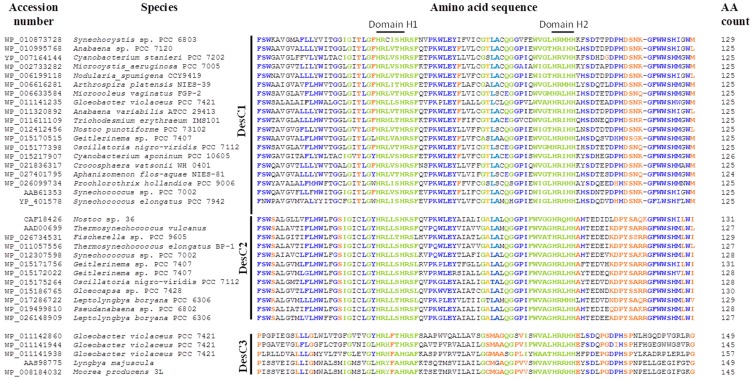
“The primers corresponded to conserved amino acid sequences of the known cyanobacterial Δ9 DesC1 desaturases HDSNKGF(W/L)W and FGEGWWHNNHHA [5].”
Self-citationSharma, R., Jha, S. K., Pal, S., & Shrivastava, J. P. (2022) · Applied Geochemistry · doi:10.1016/j.apgeochem.2022.105489 · Cited by 3
Effendi, D. B., Suzuki, I., Murata, N., & Awai, K. (2023) · Plant and Cell Physiology · doi:10.1093/pcp/pcad153 · Cited by 3
Optimization of Prochlorothrix hollandica cyanobacteria culturing for obtaining myristoleic acid
Lapina, S. S., Maslova, I. P., Pchelkin, V. P., Bedbenov, V. S., Mironov, K. S., Zayadan, B. K., Userbaeva, A. A., Sinetova, M. A., & Los, D. A. (2016) · Russian Journal of Plant Physiology · doi:10.1134/s1021443716040087 · Cited by 3
“C14 FA were not detected in such large numbers in other numerous representatives of the genus Prochlorococcus and in other cyanobacteria (both unicellular and filamentous) [13].”
BackgroundSelf-citationТaxonomy of Cyanobacteria: The Era of Change
Pinevich, A. V., & Averina, S. G. (2024) · Microbiology · doi:10.1134/s0026261724605724 · Cited by 4
“These studies helped to propose classification system subdividing cyanobacteria into several phenotype groups according to fatty acid chain length, double bond number and position, and desaturase types (Cohen et al., 1995; Los and Mironov, 2015).”
Cyanobacterial fatty acids: From biosynthesis to diverse applications
Punchakara, A., Sunny, S., & Agrawal, A. (2025) · Advances in applied microbiology · doi:10.1016/bs.aambs.2024.11.002 · Cited by 2
Kakimova, A. B., Sandybayeva, S. K., Bolatkhan, K., Zayadan, B. K., Toktybay, A. K., & Akhmetova, G. (2025) · ES Energy & Environments · doi:10.30919/esee1394 · Cited by 3
Photobiota of the Tropical Red Sea: Fatty Acid Profile Analysis and Nutritional Quality Assessments
Gozai-Alghamdi, S. A., Aljbour, S. M., Amin, S. A., & Agustí, S. (2025) · Molecules · doi:10.3390/molecules30030621 · Cited by 2
“However, despite the existence of some Synechococcus through literature containing C18-and C20-PUFA, such as EPA [13,80,81], it is generally accepted that the enzymatic capacity of Synechococcus is limited to mostly producing SFA and MUFA [82].”
Lübben, M. K., Heinz, S., Gießler, S., Lehmann, M., Kleinknecht, L., Stockenreiter, M., Ostermeier, M., Stibor, H., & Nickelsen, J. (2025) · Algal Research · doi:10.1016/j.algal.2025.103910 · Cited by 2
Starikov, A., Usserbayeva, A. A., Mironov, K. S., Sidorov, R. A., Zayadan, B. K., Bedbenov, V. S., Sinetova, M. A., & Los, D. A. (2018) · Russian Journal of Plant Physiology · doi:10.1134/s102144371804009x · Cited by 2
“The strain synthesized only monounsaturated FAs and it was assigned to Group 1 according to FAs classification [11].”
Self-citationFathy, W. A., Mohamed, M. Y. A., Alsherif, E. A., Korany, S. M., Sonbol, H. S., Selim, S., Aldailami, D. A., Hassan, A. H. A., & Shaban, A. M. (2025) · Journal of Basic Microbiology · doi:10.1002/jobm.70109 · Cited by 1
Makhutova, O. N., & Shulepina, S. P. (2026) · Environments · doi:10.3390/environments13040183 · Cited by 1
Vishnevskaya, A., Bashilov, A. A., Osipenko, S. V., Kireev, A., Sinetova, M. A., Николаев, Е. Н., & Kostyukevich, Y. (2024) · Biochimie · doi:10.1016/j.biochi.2024.11.015 · Cited by 1
Beneficial potency of algae-based polyunsaturated fatty acids (PUFAs) for cancer therapy
Widyaningrum, D. (2020) · IOP Conference Series Earth and Environmental Science · doi:10.1088/1755-1315/426/1/012175 · Cited by 2
Counting modes of acyl-lipid desaturases
Starikov, A., Sidorov, R. A., & Los, D. A. (2025) · Functional Plant Biology · doi:10.1071/fp24338 · Cited by 1
Self-citationСтариков, А. Ю., Усербаева, А. А., Миронов, К. С., Сидоров, Р. А., Zayadan, B. K., Bedbenov, V. S., Синетова, М. А., & Лось, Д. А. (2018) · Russian Journal of Plant Physiology · doi:10.7868/s0015330318040036
Potencial de cianobactérias cultivadas em meio suplementado com vinhaça para produção de biodiesel
de Souza, W. R. (2018) · Digital Library of Theses and Dissertations (Universidade de São Paulo) · doi:10.11606/d.64.2018.tde-12112018-144217 · Cited by 2
BrtB Is a Novel O-Alkylating Enzyme That Generates Fatty Acid-Bartoloside EstersPreprint
Reis, J. P. A., Figueiredo, S. A. C., & Leão, P. N. (2019) · ChemRxiv · doi:10.26434/chemrxiv.9205997
Zeman-Kuhnert, S. (2022) · eDiss (Georg-August-Universität Göttingen) · doi:10.53846/goediss-9532 · Cited by 1
Degraeve-Guilbault, C. (2017) · theses.fr (ABES) · doi:10.70675/b737f152zc60fz42f2z9875zfd46ea0d165b
Geeta, A., Mukherjee, M., Das, B., Dutta, S., Prusty, A., Ghosh, S., Raha, A. B., Sarkar, M. P., & Tripathy, S. (2024) · Algal Research · doi:10.1016/j.algal.2024.103603
Taxonomy of cyanobacteria: the era of change
Pinevich, A. V., & Averina, S. G. (2024) · Микробиология · doi:10.31857/s0026365624050019
Azlee, N. F., Hamidi, A., Khan, Z., Merican, F., Smykla, J., Alias, S. A., & Omar, W. M. W. (2025) · Pertanika journal of tropical agricultural science · doi:10.47836/pjtas.48.1.11
“Consequently, the buildup of these polyunsaturated fatty acyl chains improves membrane fluidity and helps cyanobacteria sustain cellular activity (Los & Mironov, 2015; Murata & Wada, 1995).”
Poole, L. B., Parsonage, D., Sergeant, S., Miller, L. R., Lee, J., Furdui, C. M., & Chilton, F. H. (2020) · Figshare · doi:10.6084/m9.figshare.12262451
Temraleeva, A. D., Sinetova, M. A., GABRIELYAN, D. A., Витальевна, Д. С., & Kamenev, A. O. (2025) · Biologia et Biotechnologia · doi:10.61847/pbcras.bbt.2025.3.1 · Cited by 1
陈子硕, Das, A. S., Das, A. S., Peisker, H., Gutbrod, K., Hölzl, G., Schaaf, G., & Dörmann, P. (2026) · BMC Plant Biology · doi:10.1186/s12870-026-08797-z
“Therefore, a common response of thermophilic cyanobacteria is the replacement of (mono-)unsaturated with saturated acyl groups, because saturated acyl groups counteract the increased membrane fluidity at high temperatures [34, 35, 41].”
Uchida, Y., Taura, D., Waditee‐Sirisattha, R., & Kageyama, H. (2026) · Journal of Natural Products · doi:10.1021/acs.jnatprod.6c00875
Préskienis, V., Kivilä, E. H., Bogard, M. J., Cheecham-Uhrich, D., Blais, J. M., & Rautio, M. (2026) · Journal of Geophysical Research Biogeosciences · doi:10.1029/2025jg009558
Kesti, P., Kouba, A., Pilecky, M., Taipale, S. J., & Kainz, M. J. (2026) · SSRN Electronic Journal · doi:10.2139/ssrn.7624292
Das, A., Ansari, A. H., Sonker, A., & Ansari, N. G. (2026) · Life Sciences in Space Research · doi:10.1016/j.lssr.2026.10.013
Metadata
- Authors
- Los, D., & Mironov, K.
- Affiliations
- Russian Academy of Sciences (RU)
- Corresponding author
- Los, Dmitry
- Venue
- Life
- Publisher
- MDPI AG
- Published
- 2015-02-16
- Volume
- 5
- Issue
- 1
- Pages
- 554-567
- ISSN
- 2075-1729 (ISSN-L)
- PMC
- PMC4390868
- OpenAlex
- W2054098758
- Cited by
- 93
- References
- 55
- Citations by year
- 2026: 6 · 2025: 9 · 2024: 7 · 2023: 8 · 2022: 8 · 2021: 11 · 2020: 13 · 2019: 7 · 2018: 9 · 2017: 9 · 2016: 4 · 2015: 2
- FWCI
- 3.99
- Type
- journal article
- Language
- en
- Open access
- gold
- doi.org
- Licence
- Locations
- Life (publishedVersion, cc-by)
- Europe PMC (PubMed Central) (publishedVersion, cc-by)
- PubMed Central (publishedVersion, cc-by)
- PubMed (publishedVersion)
- DOAJ (DOAJ: Directory of Open Access Journals) (submittedVersion, cc-by-sa)
- Funders
- Russian Science Foundation (14-24-00020)
- Topics
- Life Sciences › Biochemistry, Genetics and Molecular Biology › Biochemistry › Lipid metabolism and biosynthesis
- Physical Sciences › Environmental Science › Environmental Chemistry › Aquatic Ecosystems and Phytoplankton Dynamics
- Life Sciences › Agricultural and Biological Sciences › Ecology, Evolution, Behavior and Systematics › Protist diversity and phylogeny
- Keywords
- cyanobacteria, fatty acid desaturation, fatty acid composition, cyanobacterial taxonomy, phylogenetic markers, biochemical classification, genomic data
About these checks
Registry, retraction, Cites and statistics results are computed, not judged, with one exception: a printed reference that no index lists is read once by a model before it counts as a citation error. Claims are extracted by a model and kept only when their quote appears verbatim in the text; each cited source is then checked, with a model’s help, for whether it says what the claim relies on. Those verdicts can be wrong — read the claim’s quote and the cited source before relying on one.
Statistics and arithmetic are recomputed, not judged.
Confidence bands are shown only for fields calibrated on our annotated test set. None is calibrated yet, so no band is shown.
What counts as a claim ›How we measure confidence ›How we check this ›
Are you an author, or do you see a problem with this page? Request a review
Data sources
Bibliographic data: Semantic Scholar, OpenAlex, Crossref.
Contains information from the Semantic Scholar Academic Graph Datasets, made available under the ODC Attribution License (ODC-BY 1.0).
Semantic Scholar’s data is described in: Kinney, R., et al. (2023). The Semantic Scholar Open Data Platform. arXiv:2301.10140.
