

Dry/Wet Cycling and the Thermodynamics and Kinetics of Prebiotic Polymer Synthesis
Open accessThe DOI matches its Crossref record; 54 of the 54 references it cites were found in a registry or an index.
Abstract
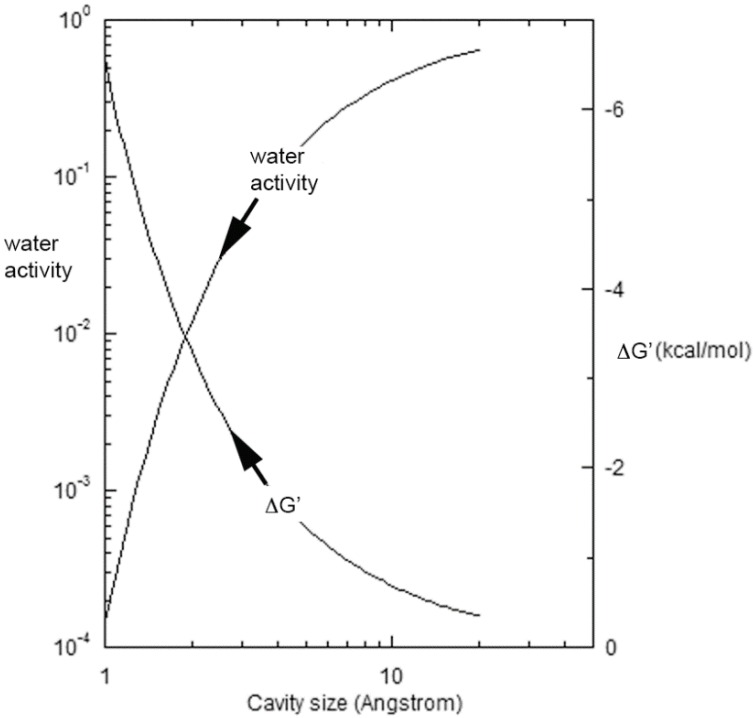
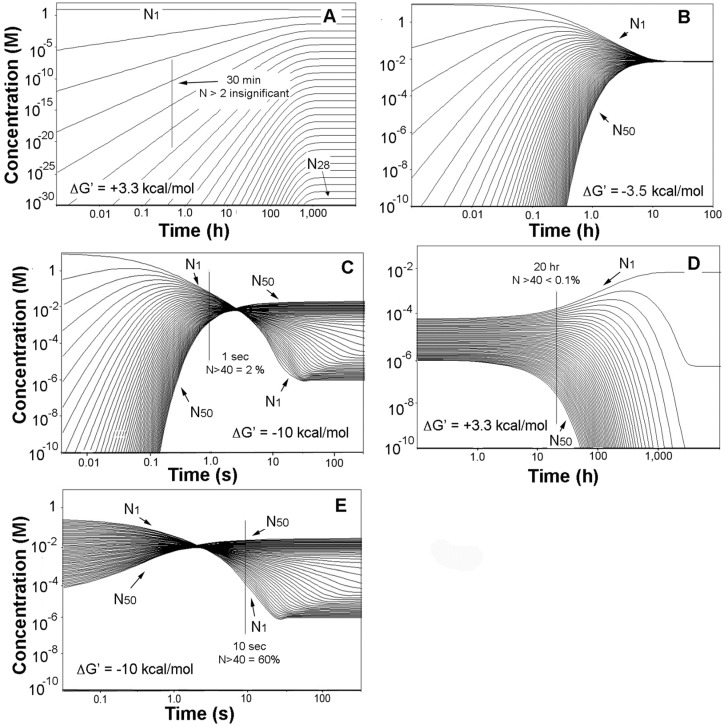
The endoergic nature of protein and nucleic acid assembly in aqueous media presents two questions that are fundamental to the understanding of life’s origins: (i) how did the polymers arise in an aqueous prebiotic world; and (ii) once formed in some manner, how were they sufficiently persistent to engage in further chemistry. We propose here a quantitative resolution of these issues that evolved from recent accounts in which RNA-like polymers were produced in evaporation/rehydration cycles. The equilibrium Nm + Nn ↔ Nm+n + H2O is endoergic by about 3.3 kcal/mol for polynucleotide formation, and the system thus lies far to the left in the starting solutions. Kinetic simulations of the evaporation showed that simple Le Châtelier’s principle shifts were insufficient, but the introduction of oligomer-stabilizing factors of 5–10 kcal/mol both moved the process to the right and respectively boosted and retarded the elongation and hydrolysis rates. Molecular crowding and excluded volume effects in present-day cells yield stabilizing factors of that order, and we argue here that the crowded conditions in the evaporites generate similar effects. Oligomer formation is thus energetically preferred in those settings, but the process is thwarted in each evaporation step as diffusion becomes rate limiting. Rehydration dissipates disordered oligomer clusters in the evaporites, however, and subsequent dry/wet cycling accordingly “ratchets up” the system to an ultimate population of kinetically trappedthermodynamically preferred biopolymers.
Overview
The claims and statistics of this paper haven’t been checked yet.
Free: it reads the open-access text and checks the first 5 claims that cite a source we can check. Create a free account to check every claim.
Integrity signals
Registry
Cites
Statistics
Figures
Verification
Claims the paper makes
The claims and statistics of this paper haven’t been checked yet.
Free: it reads the open-access text and checks the first 5 claims that cite a source we can check. Create a free account to check every claim.
Claims other papers make about this one
Each is checked against this paper’s own text: does it say what the citing paper says it does?
The source backs part of the claim, not all of it — or backs it for a different population, condition or comparison.
In the citing paper
“One example is the requirement for wet–dry cycles for polymerization, mostly discussed in the context of geothermal fields [180], even though wet-dry cycles can also be found in hydrothermal pores [181] and even at the water-air interface [20].”
From The Future of Origin of Life Research: Bridging Decades-Old Divisions (2020) · cites this paper as [180]
Experimental — accuracy not yet measuredThe source backs part of the claim, not all of it — or backs it for a different population, condition or comparison.
In the citing paper
“These include a constant energy and CHNOPS source, heterogeneous or homogeneous catalysts, non-equilibrium conditions and conditions that enable aggregation of molecules to form life’s building blocks and, eventually, polymerization of said building blocks [22,103,152,180].”
From The Future of Origin of Life Research: Bridging Decades-Old Divisions (2020) · cites this paper as [180]
Experimental — accuracy not yet measuredThe cited source says what the claim attributes to it.
In the citing paper
“a surprising amount of chemical energy is introduced by concentrating potential reactants in dilute solutions as they evaporate to form dry films on mineral surfaces (Ross and Deamer, 2016).”
From The Hot Spring Hypothesis for an Origin of Life (2020) · cites this paper as Ross and Deamer, 2016
The cited source says what the claim attributes to it.
In the citing paper
“Wet-dry cycles in fresh water would be abundant in the prebiotic environment as long as volcanic land masses had emerged from the global ocean”
From The Hot Spring Hypothesis for an Origin of Life (2020) · cites this paper as Ross and Deamer, 2016
Self-check
Percentages, sums and reported differences re-computed from the paper’s own numbers.
The self-check needs the paper’s full text.
Citations
Cites
Instability and decay of the primary structure of DNA
Lindahl, T. (1993) · Nature · doi:10.1038/362709a0 · Cited by 5,679
Lorenz, R., Bernhart, S. H., Höner zu Siederdissen, C., Tafer, H., Flamm, C., Stadler, P. F., & Hofacker, I. L. (2011) · Algorithms for Molecular Biology · doi:10.1186/1748-7188-6-26 · Cited by 5,098 · cited 1×
“Helix P18 in Escherichia coli RNase P RNA, for example, is a 20-mer, one of 1012 possible sequences [50], stabilized through base pairing by about 11 kcal/mol [51].”
BackgroundMacromolecular crowding: obvious but underappreciated
Ellis, R. J. (2001) · Trends in Biochemical Sciences · doi:10.1016/s0968-0004(01)01938-7 · Cited by 2,309
A principle of natural self-organization: Part A: Emergence of the hypercycle
Eigen, M., & Schuster, P. (1977) · Naturwissenschaften · doi:10.1007/bf00450633 · Cited by 1,752
The chemical thermodynamics of organic compounds
Stull, D. R., WESTRUM, E. F. J., & Sinke, G. C. (1969) · Medical Entomology and Zoology · Cited by 1,575
Minton, A. P. (2001) · Journal of Biological Chemistry · doi:10.1074/jbc.r100005200 · Cited by 1,474 · cited 1×
“The effects of molecular crowding and excluded volumes in such settings provoke extraordinary thermochemical effects that can enhance association and macromolecular folding rates and equilibria by orders of magnitude [21,22].”
BackgroundImproved free-energy parameters for predictions of RNA duplex stability.
Freier, S. M., Kierzek, R., Jaeger, J. A., Sugimoto, N., Caruthers, M. H., Neilson, T., & Turner, D. H. (1986) · Proceedings of the National Academy of Sciences · doi:10.1073/pnas.83.24.9373 · Cited by 1,470
The Depth of Chemical Time and the Power of Enzymes as Catalysts
Wolfenden, R., & Snider, M. J. (2001) · Accounts of Chemical Research · doi:10.1021/ar000058i · Cited by 930
Improved predictions of secondary structures for RNA.
Jaeger, J. A., Turner, D. H., & Zuker, M. (1989) · Proceedings of the National Academy of Sciences · doi:10.1073/pnas.86.20.7706 · Cited by 817
Effects of Molecular Crowding on the Structures, Interactions, and Functions of Nucleic Acids
Nakano, S.-I., Miyoshi, D., & Sugimoto, N. (2014) · Chemical Reviews · doi:10.1021/cr400113m · Cited by 567
Research works printed but not linked: 4
- Tinoco J.I. Sauer K. Wang J. Physical Chemistry—Principles and Applications in Biological Sciences Prentice Hall Upper Saddle River, New Jersey, USA 1995 141
- Laidler K. Chemical Kinetics 2nd ed. McGraw-Hill New York, NY, USA 1965
- Benson S. Thermochemical Kinetics John Wiley and Sons New York, NY, USA 1998
- Moore J. Pearson R. New S. Kinetics and Mechanism 3rd ed. Wiley New York, NY, USA 1981 358 359
Cited by
The Hot Spring Hypothesis for an Origin of Life
Damer, B., & Deamer, D. (2020) · Astrobiology · doi:10.1089/ast.2019.2045 · Cited by 478
“…abundant in the prebiotic environment as long as volcanic land masses had emerged from the global ocean, and a surprising amount of chemical energy is introduced by concentrating potential reactants in dilute solutions as they evaporate to form dry films on mineral surfaces (Ross and Deamer, 2016).”
BackgroundInfluentialSelf-citationMetals promote sequences of the reverse Krebs cycle
Muchowska, K. B., Varma, S. J., Chevallot-Beroux, E., Lethuillier-Karl, L., Li, G., & Moran, J. (2017) · Nature Ecology & Evolution · doi:10.1038/s41559-017-0311-7 · Cited by 228
A carbonate-rich lake solution to the phosphate problem of the origin of life
Toner, J. D., & Catling, D. C. (2020) · Proceedings of the National Academy of Sciences · doi:10.1073/pnas.1916109117 · Cited by 201
Root of the Tree: The Significance, Evolution, and Origins of the Ribosome
Bowman, J. C., Petrov, A. S., Frenkel-Pinter, M., Penev, P. I., & Williams, L. D. (2020) · Chemical Reviews · doi:10.1021/acs.chemrev.9b00742 · Cited by 197
The Future of Origin of Life Research: Bridging Decades-Old Divisions
Preiner, M., Asche, S., Becker, S., Betts, H. C., Boniface, A., Camprubi, E., Chandru, K., Erastova, V., Garg, S. G., Khawaja, N., et al. (2020) · Life · doi:10.3390/life10030020 · Cited by 140
“One example is the requirement for wet–dry cycles for polymerization, mostly discussed in the context of geothermal fields [180], even though wet-dry cycles can also be found in hydrothermal pores [181] and even at the water-air interface [20].”
BackgroundFrenkel-Pinter, M., Haynes, J. W., C, M., Petrov, A. S., Burcar, B. T., Krishnamurthy, R., Hud, N. V., Leman, L. J., & Williams, L. D. (2019) · Proceedings of the National Academy of Sciences · doi:10.1073/pnas.1904849116 · Cited by 128
Matsuo, M., & Kurihara, K. (2021) · Nature Communications · doi:10.1038/s41467-021-25530-6 · Cited by 124
Fares, H. M., Marras, A. E., Ting, J., Tirrell, M., & Keating, C. D. (2020) · Nature Communications · doi:10.1038/s41467-020-19184-z · Cited by 90
Self-reproducing catalytic micelles as nanoscopic protocell precursors
Kahana, A., & Lancet, D. (2021) · Nature Reviews Chemistry · doi:10.1038/s41570-021-00329-7 · Cited by 90
Can Life Begin on Enceladus? A Perspective from Hydrothermal Chemistry
Deamer, D., & Damer, B. (2017) · Astrobiology · doi:10.1089/ast.2016.1610 · Cited by 76
Self-citationWater and Life: The Medium is the Message
Frenkel-Pinter, M., Rajaei, V., Glass, J. B., Hud, N. V., & Williams, L. D. (2021) · Journal of Molecular Evolution · doi:10.1007/s00239-020-09978-6 · Cited by 71
Van Kranendonk, M. J., Baumgartner, R., Djokic, T., Ota, T., Steller, L., Garbe, U., & Nakamura, E. (2021) · Astrobiology · doi:10.1089/ast.2019.2107 · Cited by 71
“…Mg 2 + ) concentrations that inhibit lipid membrane assembly and protocell formation, and because organic polymer formation requires condensation reactions at sites where wet – dry cycling can take place (‘‘The Water Problem’’) (Mulkidjanian et al. , 2012; Hud et al. , 2013; Ross and Deamer, 2016).”
Lipid vesicles chaperone an encapsulated RNA aptamer
Saha, R., Verbanic, S., & Chen, I. A. (2018) · Nature Communications · doi:10.1038/s41467-018-04783-8 · Cited by 66
Mechanochemical Prebiotic Peptide Bond Formation**
Stolar, T., Grubešić, S., Cindro, N., Meštrović, E., Užarević, K., & Hernández, J. G. (2021) · Angewandte Chemie International Edition · doi:10.1002/anie.202100806 · Cited by 65
The virtual circular genome model for primordial RNA replication
Zhou, L., Ding, D., & Szostak, J. W. (2021) · RNA · doi:10.1261/rna.077693.120 · Cited by 63
“For example, in a shallow pool subject to wet-dry cycles, membranes and oligonucleotides could dry down together, after which wetting would result in the formation of vesicles containing a high concentration of RNA (Ross and Deamer 2016).”
BackgroundProgress in synthesizing protocells
Toparlak, O. D., & Mansy, S. S. (2019) · Experimental Biology and Medicine · doi:10.1177/1535370218816657 · Cited by 58
“Some success has been achieved in pushing these dehydration reactions forward through cycles of drying through heating followed by wetting.(81,82) The presence of lipids facilitates the synthesis of RNA from mononucleotides, presumably by arranging and condensing the nucleotides between the lamellae of lipid membranes…”
BackgroundSustained wet–dry cycling on early Mars
Rapin, W., Dromart, G., Clark, B. C., Schieber, J., Kite, E. S., Kah, L. C., Thompson, L. M., Gasnault, O., Lasue, J., Meslin, P., et al. (2023) · Nature · doi:10.1038/s41586-023-06220-3 · Cited by 76
Membranes and the Origin of Life: A Century of Conjecture
Deamer, D. W. (2016) · Journal of Molecular Evolution · doi:10.1007/s00239-016-9770-8 · Cited by 312
“Ross and Deamer (2016) modeled condensation reactions using Kintecus software and determined that substantial free energy could be provided by the reduction of water activity associated with molecular crowding produced by evaporation.”
BackgroundMethodSelf-citationSimple prebiotic synthesis of high diversity dynamic combinatorial polyester libraries
Chandru, K., Guttenberg, N., Giri, C., Hongo, Y., Butch, C., Mamajanov, I., & Cleaves, H. J. (2018) · Communications Chemistry · doi:10.1038/s42004-018-0031-1 · Cited by 52
“The extreme sequence diversity generated in these αHA DCLs begs three questions: (1) Do these experiments generate the entire possible sequence diversity of these libraries? (2) Can the sequence diversity generated be detected using these analytical methods? and (3) To what extent would uncontrolled oligomerization al…”
BackgroundOrigin of Life on Mars: Suitability and Opportunities
Clark, B. C., Kolb, V. M., Steele, A., House, C. H., Lanza, N., Gasda, P. J., VanBommel, S. J. V., NEWSOM, H. E., & Martínez‐Frías, J. (2021) · Life · doi:10.3390/life11060539 · Cited by 59
Prebiotic Sugar Formation Under Nonaqueous Conditions and Mechanochemical Acceleration
Lamour, S., Pallmann, S., Haas, M., & Trapp, O. (2019) · Life · doi:10.3390/life9020052 · Cited by 45
A Continuous Reaction Network that Produces RNA Precursors
Yi, R., Tran, Q. P., Ali, S., Yoda, I., Adam, Z. R., Cleaves, H. J., & Fahrenbach, A. C. (2020) · Proceedings of the National Academy of Sciences · doi:10.1073/pnas.1922139117 · Cited by 45
Thermal Habitat for RNA Amplification and Accumulation
Salditt, A., Keil, L. M. R., Horning, D. P., Mast, C. B., Joyce, G. F., & Braun, D. (2020) · Physical Review Letters · doi:10.1103/physrevlett.125.048104 · Cited by 44
Taming the Combinatorial Explosion of the Formose Reaction via Recursion within Mineral Environments
(2019) · doi:10.1002/syst.201900014 · Cited by 44
Toward RNA Life on Early Earth: From Atmospheric HCN to Biomolecule Production in Warm Little Ponds
Pearce, B. K. D., Molaverdikhani, K., Pudritz, R. E., Henning, T. K., & Cerrillo, K. E. (2022) · The Astrophysical Journal · doi:10.3847/1538-4357/ac47a1 · Cited by 57
Branscomb, E., & Russell, M. J. (2018) · BioEssays · doi:10.1002/bies.201700179 · Cited by 42
The “Water Problem”(sic), the Illusory Pond and Life’s Submarine Emergence—A Review
Russell, M. J. (2021) · Life · doi:10.3390/life11050429 · Cited by 48
On the Evolutionary History of the Twenty Encoded Amino Acids
Kirschning, A. (2022) · Chemistry - A European Journal · doi:10.1002/chem.202201419 · Cited by 61
Lingam, M., & Loeb, A. (2018) · International Journal of Astrobiology · doi:10.1017/s1473550418000083 · Cited by 43
“…attributes including advanced tool construction, mental time travel, recursive thought processes, and perhaps syntactical–grammatical language (Roth and Dicke, 2005; Suddendorf and Corballis, 2007; Corballis, 2011; Berwick and Chomsky, 2016; Laland, 2017) may constitute evolutionary innovations…”
BackgroundCyclophospholipids Increase Protocellular Stability to Metal Ions
Toparlak, Ö. D., Karki, M., Ortuno, V. E., Krishnamurthy, R., & Mansy, S. S. (2019) · Small · doi:10.1002/smll.201903381 · Cited by 42
Bosak, T., Shuster, D. L., Scheller, E. L., Siljeström, S. M., Zawaski, M. J., Mandon, L., Simon, J. I., Weiss, B. P., Stack, K. M., Mansbach, E. N., et al. (2024) · AGU Advances · doi:10.1029/2024av001241 · Cited by 44
“…et al., 2009; Xu et al., 2021), sulfite oxidized to sulfate (e.g., Green et al., 2021) and concentration that can occur by processes that can also promote the precipitation of Mg/Fe(II) sulfate minerals such as freezing or evaporation (e.g., Menor‐Salván & Marín‐Yaseli, 2012; Ross & Deamer, 2016).”
The Propitious Role of Solar Energetic Particles in the Origin of Life
Lingam, M., Dong, C., Fang, X., Jakosky, B. M., & Loeb, A. (2018) · The Astrophysical Journal · doi:10.3847/1538-4357/aa9fef · Cited by 48
“…cycles and thermal gradients are expected to play an important role on thermodynamic grounds via polymerase chain reactions (Kreysing et al. 2015; Ross & Deamer 2016).4 A wide range of putative environments endowed with operational cycles (and gradients) have been identified on Earth, for e.g.…”
BackgroundImplications of Tides for Life on Exoplanets
Lingam, M., & Loeb, A. (2018) · Astrobiology · doi:10.1089/ast.2017.1718 · Cited by 42
“The importance of dry-wet cycles ( e.g., due to tides) in synthesizing prebiotic polymers has been analyzed from a thermodynamic perspective (Damer and Deamer, 2015; Ross and Deamer, 2016).”
Implications of tides for life on exoplanets
Lingam, M., & Loeb, A. (2017) · arXiv · doi:10.48550/arxiv.1707.04594 · Cited by 37
“The importance of dry-wet cycles ( e.g., due to tides) in synthesizing prebiotic polymers has been analyzed from a thermodynamic perspective (Damer and Deamer, 2015; Ross and Deamer, 2016).”
A Constructive Way to Think about Different Hydrothermal Environments for the Origins of Life
Omran, A. P., & Pasek, M. A. (2020) · Life · doi:10.3390/life10040036 · Cited by 41
“Geyser systems exhibit wet-dry cycling that is arguably the best method for forming biopolymers before life could do it on its own [5,9,10].”
BackgroundInfluentialVisualizing RNA polymers produced by hot wet-dry cycling
Hassenkam, T., & Deamer, D. W. (2022) · Scientific Reports · doi:10.1038/s41598-022-14238-2 · Cited by 41
Self-citationMechanochemistry: Looking back and ahead
Stolar, T., Alić, J., Casali, L., Gugin, N. Y., Baláž, M., Michalchuk∞, A. A. L., & Emmerling, F. (2026) · Chem · doi:10.1016/j.chempr.2025.102880 · Cited by 54
Prebiotic oligomerization and self-assembly of structurally diverse xenobiological monomers
Chandru, K., Jia, T. Z., Mamajanov, I., Bapat, N. V., & Cleaves, H. J. (2020) · Scientific Reports · doi:10.1038/s41598-020-74223-5 · Cited by 35
Liquid Crystal Peptide/DNA Coacervates in the Context of Prebiotic Molecular Evolution
Jia, T. Z., & Fraccia, T. P. (2020) · Crystals · doi:10.3390/cryst10110964 · Cited by 34
Wet–dry cycles cause nucleic acid monomers to polymerize into long chains
Song, X., Šimonis, P., Deamer, D. W., & Zare, R. N. (2024) · Proceedings of the National Academy of Sciences · doi:10.1073/pnas.2412784121 · Cited by 35
“In previous studies, Ross and Deamer ( 6 , 7 ) explored the thermodynamic and kinetic properties of such cycles and concluded that evaporation provides an increasingly significant air/water interface that, as discussed below, emerges as a foundational factor in oligomer growth.”
Self-citationHassenkam, T., Damer, B., Mednick, G., & Deamer, D. W. (2020) · Life · doi:10.3390/life10120321 · Cited by 28
Self-citationMolecular crowding and RNA catalysis
DasGupta, S. (2020) · Organic & Biomolecular Chemistry · doi:10.1039/d0ob01695k · Cited by 31
Cyclophospholipids Enable a Protocellular Life Cycle
Toparlak, Ö. D., Sebastianelli, L., Egas Ortuno, V., Karki, M., Xing, Y., Szostak, J. W., Krishnamurthy, R., & Mansy, S. S. (2023) · ACS Nano · doi:10.1021/acsnano.3c07706 · Cited by 26
“44 68 − 70 Taken together, the emergence of cyclophospholipids may have served as a useful intermediate between abiotic and biotic chemistry. mM Mg 2+ was provided, when indicated, as a complex with citrate from a stock solution that was prepared at least 1 h in advance.”
Jia, T. Z., Bapat, N. V., Verma, A., Mamajanov, I., Cleaves, H. J., & Chandru, K. (2021) · Biomacromolecules · doi:10.1021/acs.biomac.0c01697 · Cited by 26
At the very beginning of life on Earth: the thiol-rich peptide (TRP) world hypothesis
Vallée, Y., Shalayel, I., Ly, K. D., Rao, K. V. R., Paëpe, G. D., Märker, K., & Milet, A. (2017) · The International Journal of Developmental Biology · doi:10.1387/ijdb.170028yv · Cited by 27
From chemical metabolism to life: the origin of the genetic coding process
Danchin, A. (2017) · Beilstein Journal of Organic Chemistry · doi:10.3762/bjoc.13.111 · Cited by 21
Fox, S., Pleyer, H. L., & Strasdeit, H. (2018) · International Journal of Astrobiology · doi:10.1017/s1473550418000010 · Cited by 22
Biological Polymers: Evolution, Function, and Significance
Matange, K., Marland, E., Frenkel‐Pinter, M., & Williams, L. D. (2025) · Accounts of Chemical Research · doi:10.1021/acs.accounts.4c00546 · Cited by 24
Sarkar, S., Dagar, S., & Rajamani, S. (2021) · ChemSystemsChem · doi:10.1002/syst.202100014 · Cited by 19
Geochemical influences on nonenzymatic oligomerization of prebiotically relevant cyclic nucleotides
Dagar, S., Sarkar, S., & Rajamani, S. (2020) · RNA · doi:10.1261/rna.074302.119 · Cited by 20
Deamer, D. W. (2022) · Life · doi:10.3390/life12091429 · Cited by 22
“As a result, polymers accumulate in a steady state away from the thermodynamic equilibrium [24,25].”
BackgroundSelf-citationThe Rise of A Habitable Planet: Four Required Conditions for the Origin of Life in the Universe
Kompanichenko, V. N. (2019) · Geosciences · doi:10.3390/geosciences9020092 · Cited by 20
Macrobiont: Cradle for the Origin of Life and Creation of a Biosphere
Clark, B. C., & Kolb, V. M. (2020) · Life · doi:10.3390/life10110278 · Cited by 19
Potassium at the Origins of Life: Did Biology Emerge from Biotite in Micaceous Clay?
Hansma, H. G. (2022) · Life · doi:10.3390/life12020301 · Cited by 20
“Crowding speeds up the rates of reactions that are diffusion limited [104].”
BackgroundThe Oligomerization of Glucose Under Plausible Prebiotic Conditions
Li, Z., Li, L., McKenna, K. R., Schmidt, M., Pollet, P., Gelbaum, L. T., Fernández, F. M., Krishnamurthy, R., & Liotta, C. L. (2019) · Origins of Life and Evolution of Biospheres · doi:10.1007/s11084-019-09588-3 · Cited by 21
Assembly‐driven protection from hydrolysis as key selective force during chemical evolution
Edri, R., Fisher, S., Menor-Salván, C. A., Williams, L. D., & Frenkel‐Pinter, M. (2023) · FEBS Letters · doi:10.1002/1873-3468.14766 · Cited by 20
“Hydrolysis of biopolymers in aqueous media is sponta-neous [99 – 103] and is thus thermodynamically favorable.”
BackgroundEta-Earth Revisited II: Deriving a Maximum Number of Earth-Like Habitats in the Galactic Disk
Scherf, M., Lammer, H., & Sproß, L. (2024) · Astrobiology · doi:10.1089/ast.2023.0076 · Cited by 19
A material‐based panspermia hypothesis: The potential of polymer gels and membraneless droplets
Sithamparam, M., Satthiyasilan, N., Chen, C., Jia, T. Z., & Chandru, K. (2022) · Biopolymers · doi:10.1002/bip.23486 · Cited by 16
Frenkel‐Pinter, M., Jacobson, K. C., Eskew-Martin, J. C., Forsythe, J. G., Grover, M. A., Williams, L. D., & Hud, N. V. (2022) · Life · doi:10.3390/life12020265 · Cited by 20
Glycine to Oligoglycine via Sequential Trimetaphosphate Activation Steps in Drying Environments
Boigenzahn, H., & Yin, J. (2022) · Origins of Life and Evolution of Biospheres · doi:10.1007/s11084-022-09634-7 · Cited by 17
Clark, B. C., & Kolb, V. M. (2018) · Life · doi:10.3390/life8020012 · Cited by 14
Evolutionary Steps in the Analytics of Primordial Metabolic Evolution
Geisberger, T., Diederich, P., Steiner, T. M., Eisenreich, W., Schmitt‐Kopplin, P., & Huber, C. (2019) · Life · doi:10.3390/life9020050 · Cited by 14
Moreno, A., & Bonduelle, C. V. (2024) · ChemPlusChem · doi:10.1002/cplu.202300492 · Cited by 13
Kauffman, S. A., & Lehman, N. (2023) · Interface Focus · doi:10.1098/rsfs.2023.0009 · Cited by 12
Conjecture and hypothesis: The importance of reality checks
Deamer, D. W. (2017) · Beilstein Journal of Organic Chemistry · doi:10.3762/bjoc.13.60 · Cited by 13
Self-citationAptamer-enabled uptake of small molecule ligands
Auwardt, S. L., Seo, Y., İlgü, M., Ray, J., Feldges, R. R., Shubham, S., Bendickson, L., Levine, H. A., & Nilsen‐Hamilton, M. (2018) · Scientific Reports · doi:10.1038/s41598-018-33887-w · Cited by 11
Temporal nanofluid environments induce prebiotic condensation in water
de Herrera, A. G., Markert, T., & Trixler, F. (2023) · Communications Chemistry · doi:10.1038/s42004-023-00872-y · Cited by 12
“As the entropic part is positive when the activity of water is low 24 , the thermodynamic barrier can be overcome by reducing water activity 29 .”
Hargrave, M., Thompson, S. K., & Deamer, D. W. (2018) · Journal of Molecular Evolution · doi:10.1007/s00239-018-9865-5 · Cited by 11
Self-citationPolarized Radiation and the Emergence of Biological Homochirality on Earth and Beyond
Globus, N., Fedynitch, A., & Blandford, R. D. (2021) · The Astrophysical Journal · doi:10.3847/1538-4357/abe461 · Cited by 13
It is Neither Frankenstein Nor a Submarine Alkaline Vent, It is Just the Second Law
Ross, D. S. (2018) · BioEssays · doi:10.1002/bies.201800149 · Cited by 10
Self-citationDuplex Formation and the Origins of Homochirality
Ross, D. S., & Deamer, D. W. (2022) · Astrobiology · doi:10.1089/ast.2021.0018 · Cited by 10
“…evaporation induce sizable changes in the properties of the aqueous medium and elicit a substantial unfavorable-to-favorable shift in the thermochemistry of phosphate/ribose esterification (Ross and Deamer, 2016, 2019; Nam et al., 2017; Ross 2018; Morasch et al., 2019; Damer and Deamer, 2020).”
Self-citationQualitative Monitoring of Proto-Peptide Condensation by Differential FTIR Spectroscopy
Rezaeerod, K., Heinzmann, H., Torrence, A. V., Patel, J., & Forsythe, J. G. (2024) · ACS Earth and Space Chemistry · doi:10.1021/acsearthspacechem.3c00257 · Cited by 9
Nonenzymatic Template-Directed Primer Extension Using 2′-3′ Cyclic Nucleotides Under Wet-Dry Cycles
Dagar, S., Sarkar, S., & Rajamani, S. (2023) · Origins of Life and Evolution of Biospheres · doi:10.1007/s11084-023-09636-z · Cited by 11
Ying, J., Ding, R., Liu, Y., & Zhao, Y. (2021) · Chinese Journal of Chemistry · doi:10.1002/cjoc.202100120 · Cited by 11
Intrinsic concentration cycles and high ion fluxes in self-assembled precipitate membranes
Ding, Y., Cartwright, J. H. E., & Cardoso, S. S. S. (2019) · Interface Focus · doi:10.1098/rsfs.2019.0064 · Cited by 11
“The thermodynamic challenge to bond formation is overcome in highly concentrated solutions [12,19] such as in a confined environment [20].”
BackgroundChandru, K., Potiszil, C., & Jia, T. Z. (2024) · Life · doi:10.3390/life14091069 · Cited by 11
“…over time through modifications in chemical composition (solid black arrows, (<->)), i.e., changing environmental pressures and/or geochemical reactions, including (but not limited to) thermal-[85] and photo-destruction [86,87], dilution [88], hydrolysis [90], dehydration synthesis [90], etc.”
BackgroundA Polyaddition Model for the Prebiotic Polymerization of RNA and RNA-Like Polymers
Spaeth, A., & Hargrave, M. (2020) · Life · doi:10.3390/life10020012 · Cited by 11
“Additionally, the effect of wet-dry cycling on RNA polymerization has been studied in simulation [15–17] as well as experiment [18–20].”
BackgroundThe Effect of Environment on the Evolution and Proliferation of Protocells of Increasing Complexity
Roy, S., & Sengupta, S. (2022) · Life · doi:10.3390/life12081227 · Cited by 7
“This is because lack of water inside the lamellae results in a kinetic 110 trap [51], concentrating reactants and enhancing the rates of different types of polymerization reactions.”
BackgroundGroundwater-Driven Evolution of Prebiotic Alkaline Lake Environments
Tutolo, B. M., Perrin, R., Lauer, R. M., Bossaer, S., Tosca, N. J., Hutchings, A. M., Sevgen, S., Nightingale, M. J., Ilg, D., Mott, E. B., et al. (2024) · Life · doi:10.3390/life14121624 · Cited by 8
“These lakes would have also been inherently prone to evaporation and wet–dry cycling, which are needed for nucleotide synthesis [9].”
High-Yield Prebiotic Polymerization of 2′,3′-Cyclic Nucleotides under Wet–Dry Cycling
Caimi, F., Langlais, J., Fontana, F., Wunnava, S., Bellini, T., Braun, D., & Fraccia, T. P. (2025) · ACS Central Science · doi:10.1021/acscentsci.5c00488 · Cited by 14
Prebiotic Peptide Synthesis: How Did Longest Peptide Appear?
Yang, Y., Wang, Z., Bai, J., & Qiao, H. (2025) · Journal of Molecular Evolution · doi:10.1007/s00239-025-10237-9 · Cited by 12
“…Basiuk et al. 1990; Bujdák and Rode 1997, 1999a, b; Lambert 2008; Martra et al. 2014; Silva et al. 2020; Samrout et al. 2023a), wet-dry cycles (Ross and Deamer 2016; Higgs 2016; Fox et al. 2019; Campbell et al. 2019), condensing agents (Schwendinger and Rode 1989; Leman et al. 2004; Danger et…”
Riggi, V. S., Watson, E. B., Steele, A., & Rogers, K. L. (2023) · Life · doi:10.3390/life13091899 · Cited by 6
Mulkidjanian, A. Y., Dibrova, D. V., & Bychkov, A. Y. (2025) · Life · doi:10.3390/life15030399 · Cited by 7
Scum of the Earth: A Hypothesis for Prebiotic Multi-Compartmentalised Environments
Walton, C. R., & Shorttle, O. (2021) · Life · doi:10.3390/life11090976 · Cited by 9
Skorda, F., Chieffo, C., & Fiore, M. (2022) · Symmetry · doi:10.3390/sym14102109 · Cited by 6
Mechanochemical Prebiotic Peptide Bond Formation**
Stolar, T., Grubešić, S., Cindro, N., Meštrović, E., Užarević, K., & Hernández, J. G. (2021) · Angewandte Chemie · doi:10.1002/ange.202100806 · Cited by 9
The Origin(s) of LUCA: Computer Simulation of a New Theory
Tang, S., & Gao, M. (2025) · Life · doi:10.3390/life15010075 · Cited by 7
Dujardin, A., Himbert, S., Pudritz, R. E., & Rheinstadter, M. C. (2022) · Life · doi:10.3390/life13010112 · Cited by 7
Thermodynamic Jump from Prebiotic Microsystems to Primary Living Cells
Kompanichenko, V. N. (2020) · Sci · doi:10.3390/sci2010014 · Cited by 5
Egel, R. (2017) · Preprints.org · doi:10.20944/preprints201710.0153.v1 · Cited by 5
Terrestrial Hydrothermal Fields and the Search for Life in the Solar System
Kranendonk, M. J. V., Baumgartner, R. J., Cady, S. L., Campbell, K. A., Damer, B., Deamer, D. W., Djokic, T., Gangidine, A., Ruff, S. W., & Walter, M. R. (2021) · doi:10.3847/25c2cfeb.a3a646ab · Cited by 4
Self-citationSoft Matter Science in Prebiotic Chemistry and the Origins of Life
Li, W., Kee, T. P., & Chandru, K. (2022) · Royal Society of Chemistry eBooks · doi:10.1039/9781839164798-00145 · Cited by 4
Lee, H., Russell, M. J., & Nakamura, R. (2024) · ChemistryEurope · doi:10.1002/ceur.202400038 · Cited by 9
Edri, R., Joshi, M. P., Frenkel‐Pinter, M., Hud, N. V., Keating, C. D., & Leman, L. J. (2025) · Astrobiology · doi:10.1177/15311074251365943 · Cited by 8
“The process best studied is wet – dry cycling as a model of geochemical/ geophysical energy fl ux (Damer and Deamer, 2020; Forsythe et al., 2015; Lahav et al., 1978; Mamajanov, 2019; New and Pohorille, 2000; Ross and Deamer, 2016).”
Skoblikow, N. E., & Zimin, A. A. (2018) · Journal of Molecular Evolution · doi:10.1007/s00239-018-9839-7 · Cited by 4
Mechanical Energy before Chemical Energy at the Origins of Life?
Hansma, H. G. (2020) · Sci · doi:10.3390/sci2040088 · Cited by 6
Lopez, A., Vauchez, A., Ajram, G., Shvetsova, A., Leveau, G., Fiore, M., & Strazewski, P. (2024) · Life · doi:10.3390/life14010108 · Cited by 5
“Trying to enhance the reaction, the same sample was concentrated to reach half of its initial volume through evaporation under argon flow at 60 ◦ C, simulating a terrestrial hydrothermal environment [40].”
MethodMechanical Energy before Chemical Energy at the Origins of Life?
Hansma (2020) · Sci · doi:10.3390/sci2010002 · Cited by 6
Chu, X., Chen, S.-M., Zhao, K., Tian, T., Gao, J., & Zhang, H. (2021) · Life · doi:10.3390/life11080738 · Cited by 4
Origins of Life: Chemistry and EvolutionPreprint
Matange, K., Rajaei, V., Schuster, G. B., Hud, N. V., Capera-Aragones, P., Frenkel‐Pinter, M., & Williams, L. D. (2023) · ChemRxiv · doi:10.26434/chemrxiv-2023-1jrcq · Cited by 3
Metadata
- Authors
- Ross, D., & Deamer, D.
- Affiliations
- SRI International (US)
- University of California, Santa Cruz (US)
- Corresponding author
- Ross, David
- Venue
- Life
- Publisher
- MDPI AG
- Published
- 2016-07-26
- Volume
- 6
- Issue
- 3
- Pages
- 28
- ISSN
- 2075-1729 (ISSN-L)
- PMC
- PMC5041004
- OpenAlex
- W2490072086
- Cited by
- 157
- References
- 53
- Citations by year
- 2026: 11 · 2025: 13 · 2024: 12 · 2023: 18 · 2022: 24 · 2021: 20 · 2020: 20 · 2019: 16 · 2018: 14 · 2017: 7 · 2016: 1
- FWCI
- 6.06
- Type
- journal article
- Language
- en
- Open access
- gold
- doi.org
- Licence
- Locations
- Life (publishedVersion, cc-by)
- Europe PMC (PubMed Central) (publishedVersion, cc-by)
- PubMed Central (publishedVersion, cc-by)
- PubMed (publishedVersion)
- DOAJ (DOAJ: Directory of Open Access Journals) (submittedVersion, cc-by-sa)
- Topics
- Physical Sciences › Physics and Astronomy › Astronomy and Astrophysics › Origins and Evolution of Life
- Life Sciences › Biochemistry, Genetics and Molecular Biology › Molecular Biology › RNA and protein synthesis mechanisms
- Life Sciences › Biochemistry, Genetics and Molecular Biology › Genetics › Evolution and Genetic Dynamics
- Keywords
- wetting-drying cycles, endergonic reactions, macromolecular crowding, excluded volume, diffusion-controlled kinetics, origin of life, kinetic trapping
About these checks
Registry, retraction, Cites and statistics results are computed, not judged, with one exception: a printed reference that no index lists is read once by a model before it counts as a citation error. Claims are extracted by a model and kept only when their quote appears verbatim in the text; each cited source is then checked, with a model’s help, for whether it says what the claim relies on. Those verdicts can be wrong — read the claim’s quote and the cited source before relying on one.
Statistics and arithmetic are recomputed, not judged.
Confidence bands are shown only for fields calibrated on our annotated test set. None is calibrated yet, so no band is shown.
What counts as a claim ›How we measure confidence ›How we check this ›
Are you an author, or do you see a problem with this page? Request a review
Data sources
Bibliographic data: Semantic Scholar, OpenAlex, Crossref.
Contains information from the Semantic Scholar Academic Graph Datasets, made available under the ODC Attribution License (ODC-BY 1.0).
Semantic Scholar’s data is described in: Kinney, R., et al. (2023). The Semantic Scholar Open Data Platform. arXiv:2301.10140.
