

Frozen Accident Pushing 50: Stereochemistry, Expansion, and Chance in the Evolution of the Genetic Code
Open accessPublished version of a preprint
The DOI matches its Crossref record; 96 of the 97 references it cites were found in a registry or an index; 29 of the 126 sources its claims cite were checked for support.
Abstract
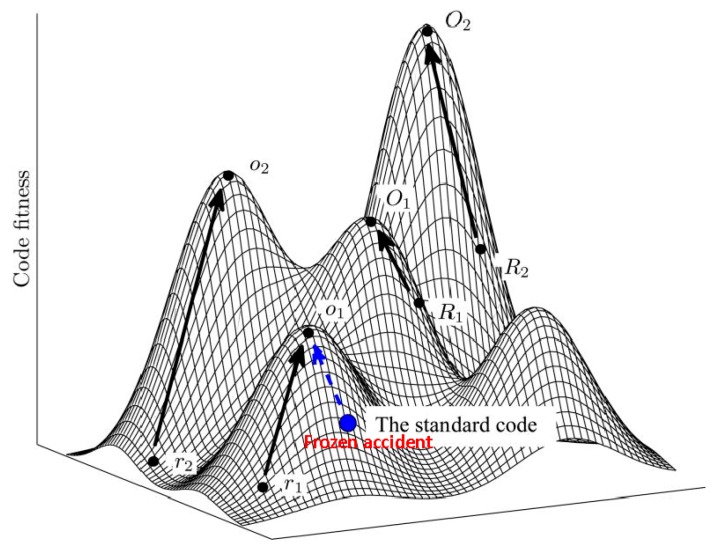
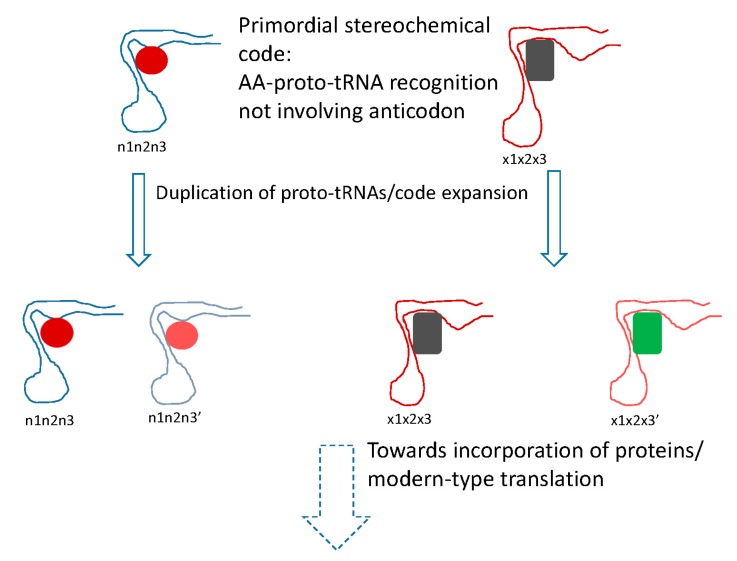
Nearly 50 years ago, Francis Crick propounded the frozen accident scenario for the evolution of the genetic code along with the hypothesis that the early translation system consisted primarily of RNA. Under the frozen accident perspective, the code is universal among modern life forms because any change in codon assignment would be highly deleterious. The frozen accident can be considered the default theory of code evolution because it does not imply any specific interactions between amino acids and the cognate codons or anticodons, or any particular properties of the code. The subsequent 49 years of code studies have elucidated notable features of the standard code, such as high robustness to errors, but failed to develop a compelling explanation for codon assignments. In particular, stereochemical affinity between amino acids and the cognate codons or anticodons does not seem to account for the origin and evolution of the code. Here, I expand Crick’s hypothesis on RNA-only translation system by presenting evidence that this early translation already attained high fidelity that allowed protein evolution. I outline an experimentally testable scenario for the evolution of the code that combines a distinct version of the stereochemical hypothesis, in which amino acids are recognized via unique sites in the tertiary structure of proto-tRNAs, rather than by anticodons, expansion of the code via proto-tRNA duplication, and the frozen accident.
Overview
CoChat Summary
TL;DR
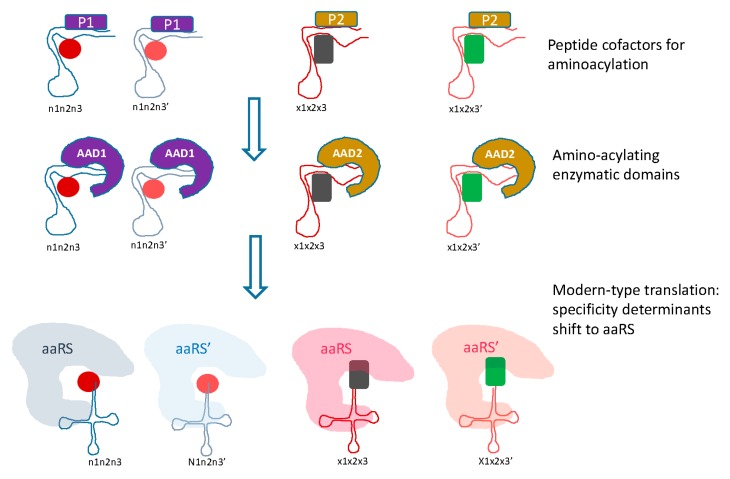
Koonin reviews the frozen accident hypothesis and the three main scenarios for genetic code evolution, concluding that none has compellingly refuted frozen accident. He proposes an experimentally testable model combining a distinct stereochemical hypothesis—amino acid recognition by proto-tRNA tertiary-structure pockets rather than anticodons—with code expansion via proto-tRNA duplication and frozen accident.
Key findings
- The standard genetic code (SGC) is highly robust to error, with the probability of a random permutation reaching the same error minimization reported as below 10−6 and later as 10−7–10−8; however, among >1084 possible codes, billions are more robust, and the SGC is roughly halfway from an average random code to the summit of its local peak.
- Extant code variants are minor: of 23 non-standard code variants in a recent survey, there are 8 cases of stop codon reassignment or acquisition, 8 cases of codon loss, and 10 reassignments from one amino acid to another; there is no evidence these modifications are adaptive, and they likely evolved neutrally.
- Stereochemical affinity between amino acids and cognate codons or anticodons is not compelling: statistically significant affinity has been demonstrated only for five amino acids, and the triplet could be either codon or anticodon; moreover, these results pertain to complex amino acids unlikely to have been available at code emergence.
- The proposed model posits an early RNA-only translation system with high fidelity, amino acid recognition via unique pockets in proto-tRNA tertiary structure, code expansion by proto-tRNA duplication yielding error minimization as a byproduct, and later takeover of aminoacylation specificity by aminoacyl-tRNA synthetases.
Methods
- Design: concept article/review, not a primary experimental or formal modeling study.
- Evidence base: synthesis of comparative genomic analyses of code variants, phylogenetic analyses of aminoacyl-tRNA synthetases, prebiotic chemistry and meteorite amino acid inventories, aptamer experiments, and published simulations of code expansion.
- Main analysis: conceptual integration of these literatures into a proposed evolutionary scenario for the code and translation system.
Limitations
- Stated: the author makes no attempt at a comprehensive review of research on code origin and evolution, or on the origin of life.
- Stated: the proposed scenario is experimentally testable but is not tested in this paper; the author also argues that deciphering the primordial stereochemical code by comparative analysis of modern translation components is largely futile, with the best hope lying in in vitro evolution of aminoacylating ribozymes.
- Evident from the text: the argument is a conceptual synthesis without new experimental data or a new formal model, and its support rests on cited literature and proposed scenarios.
Model-written summary. Check it against the paper before relying on it.
Integrity signals
Registry
Cites
Statistics
Figures
Verification
Claims the paper makes
19 Valid · 2 Not valid · 40 Not checked · 21 Own results and interpretations
At least one cited source doesn’t support this claim or points to a different paper, and none confirmed it — see the verdicts below.
In the paper
“Even a small change in the code has a prohibitive effect on HGT.”
§ Frozen Accident Pushing 50: Stereochemistry, Expansion, and Chance in the Evolution of the Genetic Code > 2. Why the Universal Code?
What the sources say
- Disputedcites [33] Vetsigian K. Woese C. Goldenfeld N. Collective evolution and the genetic code Proc. Natl. Acad. Sci. USA 2006 103 10696 10701 10.1073/pnas.0603780103 16818880 PMC1502294 sourceExperimental — accuracy not yet measured
Our copy states the opposite of the claim: in Section B (p. 3) it says 'Horizontally transferred genes can be useful for the recipient even if the donor has a (somewhat) different code', and in Section B (p. 4) that HGT 'was possible and must have been extensive despite the presence of many different codes', with only a graded requirement of sufficient code similarity whose threshold depends on protein nature and decoding accuracy. The paper's central mechanism is that code differences exert an *attractive* pressure that drives codes toward uniformity via HGT (Section B, p. 4; Introduction, p. 2: 'the more similar the genetic codes are, the greater the intensity of horizontal gene transfer'), and Section F (p. 5) treats the code 'evolvability barrier' as surmountable. So attributing to this source the strong statement that even a small code change prohibits HGT is contrary to what it argues. (LLM, conf=0.82)
Checked by a reasoning model — may be wrong.
plainstates a cause- Asserted: passes — The authors put it forward as true.
- Checkable: passes — It can be checked against evidence.
- Load-bearing: passes — The paper’s conclusions depend on it.
- Based: passes — The paper gives a reason why it holds.
- Disputed
The sources with a verdict support this claim; the rest weren’t checked yet, have no full text we could read, or their verdicts aren’t rated yet.
In the paper
“The structure of the SGC, i.e., the mapping of 64 codons to 20 amino acids and the stop signal, is clearly non-random by multiple criteria [9,10].”
§ Frozen Accident Pushing 50: Stereochemistry, Expansion, and Chance in the Evolution of the Genetic Code > 3. The Three Principal Scenarios of the Code Origin and Evolution: Achievements, Limitations, and Compatibility
What the sources say
- Not checked yetcites [9] Woese C. The Genetic Code Harper & Row New York, NY, USA 1967
- Supportedcites [10] Koonin E.V. Novozhilov A.S. Origin and evolution of the genetic code: The universal enigma IUBMB Life 2009 61 99 111 10.1002/iub.146 19117371 PMC3293468 source
The Abstract states outright that 'the arrangement of the codons in the standard codon table is highly non-random,' and the Introduction calls the amino acid assignment 'manifestly nonrandom' and later 'the manifest non-randomness of its structure.' The paper supports this across several distinct criteria: block structure and the clustering of related codons to same/similar amino acids (Introduction, p. 3), error-minimization/robustness estimates under the polar requirement and refined cost functions (adaptive theory section, p. 4), and correlation with aptamer binding data (stereochemical section, p. 1). The citing sentence's mapping of 64 codons to 20 amino acids plus stop signal mirrors the paper's own framing. (LLM, conf=0.92)
boosted- Asserted: passes — The authors put it forward as true.
- Checkable: passes — It can be checked against evidence.
- Load-bearing: passes — The paper’s conclusions depend on it.
- Based: passes — The paper gives a reason why it holds.
The cited sources support only part of this claim — read each source’s verdict below.
In the paper
“The genetic code is nearly universal in all extant life forms although limited deviations from the SGC have been detected in many groups of organisms, particularly in organelles and parasitic or endosymbiotic bacteria with highly reduced genomes [11,16,17].”
§ Frozen Accident Pushing 50: Stereochemistry, Expansion, and Chance in the Evolution of the Genetic Code > 2. Why the Universal Code?
What the sources say
- Not checked yetcites [11] Sengupta S. Higgs P.G. Pathways of Genetic Code Evolution in Ancient and Modern Organisms J. Mol. Evol. 2015 80 229 243 10.1007/s00239-015-9686-8 26054480 source
- Not checked yetcites [16] Santos M.A. Moura G. Massey S.E. Tuite M.F. Driving change: The evolution of alternative genetic codes Trends Genet. 2004 20 95 102 10.1016/j.tig.2003.12.009 14746991 source
- Partly supportedcites [17] Ling J. O’Donoghue P. Soll D. Genetic code flexibility in microorganisms: Novel mechanisms and impact on physiology Nat. Rev. Microbiol. 2015 13 707 721 10.1038/nrmicro3568 26411296 PMC4712924 sourceExperimental — accuracy not yet measured
The Abstract/introduction of our copy supports the general part of the claim: deviations from the standard genetic code have been revealed 'in various microorganisms, including bacteria, archaea, fungi and viruses' and in 'microbial eukaryotes and their mitochondria', and these variants 'retain many features of the standard code' (i.e. limited deviations); the organelle emphasis is also supported by the Codon reassignment section (yeast, Candida, K. lactis, Ashbya mitochondria) and by the report that stop-codon reassignment is 'widespread in microorganisms' from metagenomic data. What our copy does not support is the specific qualifier that such deviations occur 'particularly' in parasitic or endosymbiotic bacteria with highly reduced genomes: the only related material is the Ambiguous decoding section noting lost/defunct ThrRS, LeuRS and PheRS editing domains in Mycoplasma spp. and yeast mitochondria and a 'statistical proteome' in the intracellular bacterium Mycoplasma mobile, with no mention of genome reduction or of endosymbionts/reduced-genome bacteria as a hotspot of code variation. (LLM, conf=0.72)
plainstates an association- Asserted: passes — The authors put it forward as true.
- Checkable: passes — It can be checked against evidence.
- Load-bearing: unclear — It is unclear whether the paper’s conclusions depend on it.
- Based: passes — The paper gives a reason why it holds.
Every source the paper cites for this claim was checked and supports it.
In the paper
“In particular, stereochemical affinity between amino acids and the cognate codons or anticodons does not seem to account for the origin and evolution of the code.”
- Also stated in: § 3. The Three Principal Scenarios of the Code Origin and Evolution: Achievements, Limitations, and Compatibility · hedged
“However, as discussed elsewhere [10,45], the stereochemical evidence does not appear to be compelling.”
§ Frozen Accident Pushing 50: Stereochemistry, Expansion, and Chance in the Evolution of the Genetic Code > Abstract
What the sources say
- Supportedcites [10] Koonin E.V. Novozhilov A.S. Origin and evolution of the genetic code: The universal enigma IUBMB Life 2009 61 99 111 10.1002/iub.146 19117371 PMC3293468 source
The 'Instead of conclusions' section (p. ~18) states outright that years of experimentation, including aptamer selection, show the code is not based on a straightforward stereochemical correspondence between amino acids and their cognate codons or anticodons, and that such direct interactions 'hardly could have been the principal factor of the code's evolution' — matching the claim's hedge. The dedicated stereochemical-theory section ('tantalizing hints but no conclusive evidence') reinforces this: aptamer experiments 'fail to clinch the case for the stereochemical theory', affinities are weak and statistically contingent, and codon/anticodon enrichment is incoherent. The compromise-scenario discussion likewise notes the stereochemical affinities appear independent of the code's optimized assignments. (LLM, conf=0.92)
- Supportedcites [45] Koonin E.V. Novozhilov A.S. Origin and evolution of the universal genetic code Annu. Rev. Genet. 2017 51 in press 28853922 source
The Stereochemical Theory section states that the authors' earlier arguments 'that the statistical evidence from the aptamer experiments did not provide for direct conclusions about the stereochemical origin of the code' still hold, and that all significant aptamer binding involves late-addition amino acids, so 'This trend does not bode well for the idea that such affinity stands behind the origin of the code.' The same section adds, on the peptide-coding data, that 'it remains questionable whether such weak specificity of amino acid interaction with RNA ... could play a central role in the evolution of the code,' and the coevolution section proposes instead an extinct primordial stereochemical code in which RNA-amino acid interactions did not involve the anticodon or codon. The hedged wording of the claim ('does not seem to') matches the source's own hedging. (LLM, conf=0.90)
hedged- Asserted: passes — The authors put it forward as true.
- Checkable: passes — It can be checked against evidence.
- Load-bearing: passes — The paper’s conclusions depend on it.
- Based: passes — The paper gives a reason why it holds.
- Also stated in: § 3. The Three Principal Scenarios of the Code Origin and Evolution: Achievements, Limitations, and Compatibility · hedged
The cited sources support only part of this claim — read each source’s verdict below.
In the paper
“At least two well-characterized non-canonical amino acids have been co-opted into the code, namely, selenocysteine that is represented in varying sets of proteins in diverse organisms from all three domains of life [18,19], and pyrrolysine, currently detected only in some archaea.”
§ Frozen Accident Pushing 50: Stereochemistry, Expansion, and Chance in the Evolution of the Genetic Code > 2. Why the Universal Code?
What the sources say
- Not checked yetcites [18] Ambrogelly A. Palioura S. Soll D. Natural expansion of the genetic code Nat. Chem. Biol. 2007 3 29 35 10.1038/nchembio847 17173027 source
- Partly supportedcites [19] Mukai T. Englert M. Tripp H.J. Miller C. Ivanova N.N. Rubin E.M. Kyrpides N.C. Soll D. Facile Recoding of Selenocysteine in Nature Angew. Chem. Int. Ed. Engl. 2016 55 5337 5341 10.1002/anie.201511657 26991476 PMC4833512 sourceExperimental — accuracy not yet measured
Our copy supports the selenocysteine half of the claim: the Introduction (Abstract section) calls Sec 'the versatile 21st amino acid' encoded by UGA, 'a stop codon reassigned by a Sec-specific elongation factor and a distinctive RNA structure', and states 'Selenoproteins are present in organisms from all domains of life'. The pyrrolysine half is not supported: three searches (pyrrolysine / 22nd amino acid / PYTS-Methanosarcina-amber codon, plus semantic neighbours) returned no passage in which this paper mentions pyrrolysine or archaeal Pyl at all — its scope is Sec recoding only. So only part of what the citing sentence attributes to this source is in it. (LLM, conf=0.78)
boostedstates a cause- Asserted: passes — The authors put it forward as true.
- Checkable: passes — It can be checked against evidence.
- Load-bearing: unclear — It is unclear whether the paper’s conclusions depend on it.
- Based: passes — The paper gives a reason why it holds.
34 more claims · 10 with their cited sources checked
Create a free account to see all 82 claims and to verify the 97 references still open.
- It may state two separate claims as one. 27
- Probably not a substantial claim. 18
Claims other papers make about this one
Each is checked against this paper’s own text: does it say what the citing paper says it does?
The cited source says what the claim attributes to it.
In the citing paper
“The conclusion that mRNA decoding in the early translation system was performed by RNA molecules that were, conceivably, the evolutionary precursors of modern tRNAs implies a stereochemicalmodelofcodeoriginandevolutiondistinctfromtraditionalmodelsofthistype( Figure 3 ) (42).”
From Origin and Evolution of the Universal Genetic Code (2017) · cites this paper as [42]
Citations
Cites
Molecular Structure of Nucleic Acids: A Structure for Deoxyribose Nucleic Acid
WATSON, J. D., & CRICK, F. H. C. (1953) · Nature · doi:10.1038/171737a0 · Cited by 13,584
Crick, F. (1958) · PubMed · Cited by 2,722
The origin of the genetic code
Crick, F. H. C. (1968) · Journal of Molecular Biology · doi:10.1016/0022-2836(68)90392-6 · Cited by 2,320
Genetical Implications of the Structure of Deoxyribonucleic Acid
WATSON, J. D., & CRICK, F. H. C. (1953) · Nature · doi:10.1038/171964b0 · Cited by 2,197 · cited 1×
“Compared to Crick’s momentous contribution to the understanding of DNA structure and replication [3,4], and then the principles of protein translation [5,6], the code evolution paper might seem to be almost inconsequential.”
BackgroundPhylogenetic Classification and the Universal Tree
Doolittle, W. F. (1999) · Science · doi:10.1126/science.284.5423.2124 · Cited by 1,888
Adding New Chemistries to the Genetic Code
Liu, C. C., & Schultz, P. G. (2010) · Annual Review of Biochemistry · doi:10.1146/annurev.biochem.052308.105824 · Cited by 1,725 · cited 1×
“Notably, new methods of synthetic biology have recently allowed substantial artificial alteration of the code in bacteria [25-28].”
BackgroundNirenberg, M. W., & Matthaei, J. H. (1961) · Proceedings of the National Academy of Sciences · doi:10.1073/pnas.47.10.1588 · Cited by 1,630 · cited 1×
“The genetic code that defines the rules of translation from the 4-letter nucleic acid alphabet to the 20-letter alphabet of proteins is arguably the single central informational invariant of all life forms [6-9].”
BackgroundGeneral Nature of the Genetic Code for Proteins
CRICK, F. H. C., BARNETT, L., BRENNER, S., & WATTS-TOBIN, R. J. (1961) · Nature · doi:10.1038/1921227a0 · Cited by 1,390
Genetical Implications of the Structure of Deoxyribonucleic Acid
Watson, J. D., & Crick, F. H. C. (2017) · Klassische Texte der Wissenschaft · doi:10.1007/978-3-662-47150-0_5 · Cited by 1,297
Horizontal gene transfer in prokaryotes: Quantification and classification
Koonin, E. V., Makarova, K. S., & Aravind, L. (2001) · Annual Review of Microbiology · doi:10.1146/annurev.micro.55.1.709 · Cited by 1,126 · cited 1×
“Given that HGT, even if limited by both physical and selective barriers, remained a key factor of microbial evolution [36-40], and apparently, a condition for long term survival of microbial populations [41, 42], it stands to reason that it played a key role not only in the primordial universalization of the code but…”
BackgroundSelf-citation
Research works printed but not linked: 2
- Yarus M. Life from RNA World: The Ancestor Within Harvard University Press Cambridge, MA, USA 2010
- Koonin E.V. The Logic of Chance: The Nature and Origin of Biological Evolution FT Press Upper Saddle River, NJ, USA 2011
Cited by
Nonenzymatic Metabolic Reactions and Life’s Origins
Muchowska, K. B., Varma, S. J., & Moran, J. (2020) · Chemical Reviews · doi:10.1021/acs.chemrev.0c00191 · Cited by 317
Origin and Evolution of the Universal Genetic Code
Koonin, E. V., & Novozhilov, A. S. (2017) · Annual Review of Genetics · doi:10.1146/annurev-genet-120116-024713 · Cited by 200
Self-citationBłażej, P., Wnętrzak, M., Mackiewicz, D., & Mackiewicz, P. (2018) · PLoS ONE · doi:10.1371/journal.pone.0201715 · Cited by 64
The evolution of the genetic code: Impasses and challenges
Kun, Á., & Radványi, Á. (2017) · Biosystems · doi:10.1016/j.biosystems.2017.10.006 · Cited by 59
“Chance (cf. accident) probably played some or even considerable role in the evolution of the genetic code (Koonin, 2017).”
BackgroundEvolution of Life on Earth: tRNA, Aminoacyl-tRNA Synthetases and the Genetic Code
Lei, L., & Burton, Z. F. (2020) · Life · doi:10.3390/life10030021 · Cited by 56
The optimality of the standard genetic code assessed by an eight-objective evolutionary algorithm
Wnętrzak, M., Błażej, P., Mackiewicz, D., & Mackiewicz, P. (2018) · BMC Evolutionary Biology · doi:10.1186/s12862-018-1304-0 · Cited by 52
Kim, Y., Opron, K., & Burton, Z. F. (2019) · Life · doi:10.3390/life9020037 · Cited by 42
Rooted tRNAomes and evolution of the genetic code
Pak, D., Du, N., Kim, Y., Sun, Y., & Burton, Z. F. (2018) · Transcription · doi:10.1080/21541264.2018.1429837 · Cited by 35
Circular code motifs in the ribosome: a missing link in the evolution of translation?
Dila, G. K., Ripp, R., Mayer, C., Poch, O., Michel, C. J., & Thompson, J. (2019) · RNA · doi:10.1261/rna.072074.119 · Cited by 40
“For example, we have shown previously (Michel et al. 2017) that an X′ circular code exists with 10 trinucleotides capable of coding eight of the 10 hypothesized “early amino acids” (Koonin 2017).”
BackgroundMethodInfluentialA biophysical basis for the emergence of the genetic code in protocells
Harrison, S. A., Palmeira, R. N., Halpern, A., & Lane, N. J. (2022) · Biochimica et Biophysica Acta (BBA) - Bioenergetics · doi:10.1016/j.bbabio.2022.148597 · Cited by 33
Demongeot, J., & Seligmann, H. (2019) · Acta Biotheoretica · doi:10.1007/s10441-019-09356-w · Cited by 31
“Stereo-chemical affinities between amino acids and codons or anticodons don’t explain all codon assignments (Koonin 2017), but these probably determined some of the genetic code’s assignments (Pelc 1965; Pelc and Welton 1966; Yarus and Christian 1989; Yarus et al.”
BackgroundWnętrzak, M., Błażej, P., & Mackiewicz, P. (2019) · Biosystems · doi:10.1016/j.biosystems.2019.04.012 · Cited by 35
Błażej, P., Wnętrzak, M., Mackiewicz, D., Gagat, P., & Mackiewicz, P. (2018) · Journal of Theoretical Biology · doi:10.1016/j.jtbi.2018.12.030 · Cited by 31
A Peptide–Nucleic Acid Replicator Origin for Life
Piette, B. M. A. G., & Heddle, J. G. (2020) · Trends in Ecology & Evolution · doi:10.1016/j.tree.2020.01.001 · Cited by 29
“Such an idea was recently discussed [53].”
Photon Dissipation as the Origin of Information Encoding in RNA and DNA
Morales, J. M., & Michaelian, K. (2020) · Entropy · doi:10.3390/e22090940 · Cited by 24
Brunk, C. F., & Marshall, C. R. (2021) · Life · doi:10.3390/life11070690 · Cited by 23
Frigolé, H. R., Camacho, N., Coma, M. C., Fernández-Lozano, C., García-Lema, J., Rafels-Ybern, À., Canals, A., Coll, M., & de Pouplana, L. R. (2019) · RNA · doi:10.1261/rna.068189.118 · Cited by 34
Giulio, M. D. (2018) · Journal of Theoretical Biology · doi:10.1016/j.jtbi.2018.01.025 · Cited by 21
Treur, J. (2024) · Lecture notes in computer science · doi:10.1007/978-3-031-70819-0_29 · Cited by 32
Asymptotic burnout and homeostatic awakening: a possible solution to the Fermi paradox?
Wong, M. L., & Bartlett, S. (2022) · Journal of The Royal Society Interface · doi:10.1098/rsif.2022.0029 · Cited by 23
Origin of Life: The Point of No Return
Kunnev, D. (2020) · Life · doi:10.3390/life10110269 · Cited by 25
Theories of the origin of the genetic code: Strong corroboration for the coevolution theory
Giulio, M. D. (2024) · Biosystems · doi:10.1016/j.biosystems.2024.105217 · Cited by 20
Kondratyeva, L. G., Dyachkova, M. S., & Galchenko, A. V. (2022) · Biochemistry (Moscow) · doi:10.1134/s0006297922020079 · Cited by 21
Self-similarity and the maximum entropy principle in the genetic code
Kak, S. C. (2023) · Theory in Biosciences · doi:10.1007/s12064-023-00396-y · Cited by 18
“Still another theory shows that there must be a compromise between mutational costs and the increase of genetic variability (Błażej et al. 2015, 2017).”
BackgroundThe influence of different types of translational inaccuracies on the genetic code structure
Błażej, P., Wnętrzak, M., Mackiewicz, D., & Mackiewicz, P. (2019) · BMC Bioinformatics · doi:10.1186/s12859-019-2661-4 · Cited by 17
Modeling Multiple Orders of Adaptivity from a Higher-Order Adaptive Dynamical System Perspective
Treur, J., & Hendrikse, S. C. F. (2025) · Lecture notes in electrical engineering · doi:10.1007/978-981-97-9045-6_1 · Cited by 18
Caldararo, F., & Giulio, M. D. (2022) · Biosystems · doi:10.1016/j.biosystems.2022.104613 · Cited by 20
Michel, C. J., & Thompson, J. (2020) · RNA Biology · doi:10.1080/15476286.2020.1719311 · Cited by 17
Thawing out frozen metabolic accidents
Leister, D. (2019) · BMC Biology · doi:10.1186/s12915-018-0621-5 · Cited by 19
“for the early prokaryotes [10], even small alterations of the code would have had detrimental effects on HGT, genetically isolating the species affected and dooming them to extinction.”
BackgroundEnrichment of Circular Code Motifs in the Genes of the Yeast Saccharomyces cerevisiae
Michel, C. J., Ngoune, V. N., Poch, O., Ripp, R., & Thompson, J. (2017) · Life · doi:10.3390/life7040052 · Cited by 18
“Numerous hypotheses have been formulated concerning the evolution of the ancient genetic codes into the modern standard genetic code (reviewed in [24]).”
BackgroundEvolution at the Origins of Life?
Schoenmakers, L. L. J., Reydon, T. A. C., & Kirschning, A. (2024) · Life · doi:10.3390/life14020175 · Cited by 22
“The default hypothesis to explain how the universal genetic code originated in such a diverse prebiotic chemistry is that it is a “frozen accident”, but other explanations are available [57].”
BackgroundThe Relation Between k-Circularity and Circularity of Codes
Fimmel, E., Michel, C. J., Pirot, F., Sereni, J., Starman, M., & Strüngmann, L. (2020) · Bulletin of Mathematical Biology · doi:10.1007/s11538-020-00770-7 · Cited by 18
“Many hypotheses have been proposed to explain the origin of the genetic code (e.g. reviewed in Koonin 2017; Koonin and Novozhilov 2009), including the frozen accident theory stating that the genetic code was created randomly and stayed frozen ever since, the stereochemical theory based on…”
BackgroundNontriplet feature of genetic code in Euplotes ciliates is a result of neutral evolution
Gaydukova, S., Moldovan, M. A., Vallesi, A., Heaphy, S. M., Atkins, J. F., Gelfand, M. S., & Baranov, P. V. (2023) · Proceedings of the National Academy of Sciences · doi:10.1073/pnas.2221683120 · Cited by 16
“A change in the feature represented by a codon (amino acid or stop) would have sudden and severe consequences on the composition of the entire proteome to which a species would not be able to adapt in a short period of time (95).”
Was Genetic Coding a Frozen Accident?
Jungck, J. R., & Allchin, D. (2023) · The American Biology Teacher · doi:10.1525/abt.2023.85.9.550 · Cited by 13
Footprints of a Singular 22-Nucleotide RNA Ring at the Origin of Life
Demongeot, J., & Henrion‐Caude, A. (2020) · Biology · doi:10.3390/biology9050088 · Cited by 11
Genetic codes optimized as a traveling salesman problem
Attie, O., Sulkow, B., Di, C., & Qiu, W. (2019) · PLoS ONE · doi:10.1371/journal.pone.0224552 · Cited by 13
“Natural selection, in conjunction with chemical processes during early history of life, has been the most frequently argued hypothesis to explain the origin of the highly optimized and nearly universal SGC [26,30,32].”
BackgroundCoding From Binding? Molecular Interactions at the Heart of Translation
Žagrović, B., Adlhart, M., & Kapral, T. H. (2023) · Annual Review of Biophysics · doi:10.1146/annurev-biophys-090622-102329 · Cited by 15
Furukawa, R., Yokobori, S., Sato, R., Kumagawa, T., Nakagawa, M., Katoh, K., & Yamagishi, A. (2022) · Journal of Molecular Evolution · doi:10.1007/s00239-021-10043-z · Cited by 9
“Some researchers have proposed that in the early stages of the history of life, protein or peptide synthesis was established by RNA, i.e., ribozymes (Härtlein and Cusack 1995; Wolf and Koonin 2007; Koonin 2017; Lei and Burton 2020).”
Rosandić, M., & Paar, V. (2023) · Genes · doi:10.3390/genes14122200 · Cited by 9
“Our novel SSyGC table follows the stereochemical theory, which postulates that the structure of the code is determined by a physicochemical affinity between amino acids and codons or anticodons [10–12].”
BackgroundEvolution of the RNA world: From signals to codes
Spirov, A. V. (2023) · Biosystems · doi:10.1016/j.biosystems.2023.105043 · Cited by 8
Rosandić, M., & Paar, V. (2021) · Journal of Theoretical Biology · doi:10.1016/j.jtbi.2021.110748 · Cited by 7
Screening for Primordial RNA–Peptide Interactions Using High-Density Peptide Arrays
Jenne, F., Berezkin, I., Tempel, F., Schmidt, D., Popov, R., & Nesterov‐Mueller, A. (2023) · Life · doi:10.3390/life13030796 · Cited by 6
Agmon, I. (2022) · International Journal of Molecular Sciences · doi:10.3390/ijms232415756 · Cited by 7
“The synthetases of the remaining eleven amino acids, which are mostly late appearing amino acids [23], would add over time and their proto-tRNAs would skip the rudimentary self-aminoacylation stage.”
BackgroundInfluentialThe Combinatorial Fusion Cascade to Generate the Standard Genetic Code
Nesterov‐Mueller, A., & Popov, R. (2021) · Life · doi:10.3390/life11090975 · Cited by 6
“Koonin distinguished three major theories—error minimization, coevolution, and stereochemical—that strive to explain the regularities in the standard genetic code [1].”
BackgroundKozlov, A. P. (2024) · Paleontological Journal · doi:10.1134/s0031030124601312 · Cited by 8
“The concept of a frozen accident continues to be considered in relation to the origin of the genetic code (Ribas de Pouplana et al., 2017; Koonin, 2017).”
On the origin of the genetic code
Seki, M. (2023) · Genes & Genetic Systems · doi:10.1266/ggs.22-00085 · Cited by 4
Origin of Information Encoding in Nucleic Acids through a Dissipation-Replication RelationPreprint
Mejía, J., & Michaelian, K. (2018) · arXiv (Cornell University) · doi:10.48550/arxiv.1804.05939 · Cited by 5
Impact of GC content on de novo gene birth
Roginski, P., Papadopoulos, C., Herman, S., Baumann, A., Grislain, A., & Lopes, A. (2026) · Nature Communications · doi:10.1038/s41467-025-68022-7 · Cited by 8
Situating physiology within evolutionary theory
Gontier, N. (2023) · The Journal of Physiology · doi:10.1113/jp284410 · Cited by 4
“Advances in micro-, meso-and macroevolution research have therefore given way to the recognition that selection can operate on multiple units at different levels of an evolutionary hierarchy (Brandon, 1982; Lewontin, 1970), leading, on the one hand, to research on multilevel selection theory (Gontier, 2010; Okasha, 20…”
InfluentialModels of genetic code structure evolution with variable number of coded labels
Pawlak, K., Wnętrzak, M., Mackiewicz, D., Mackiewicz, P., & Błażej, P. (2021) · Biosystems · doi:10.1016/j.biosystems.2021.104528 · Cited by 4
Combinatorial Fusion Rules to Describe Codon Assignment in the Standard Genetic Code
Nesterov‐Mueller, A., Popov, R., & Seligmann, H. (2020) · Life · doi:10.3390/life11010004 · Cited by 4
Domains of life identified through genetic codes
Giulio, M. D. (2026) · Biosystems · doi:10.1016/j.biosystems.2026.105848 · Cited by 4
A Second-Order Adaptive Network Model for Bonding Based on Subjectively Perceived Homophily
Treur, J. (2025) · Studies in systems, decision and control · doi:10.1007/978-3-031-99968-0_7 · Cited by 11
mRNA context and translation factors determine decoding in alternative nuclear genetic codes
Salman, A., Biziaev, N., Shuvalova, E., & Alkalaeva, E. Z. (2024) · BioEssays · doi:10.1002/bies.202400058 · Cited by 4
“[99] As a result, codon usage may be affected by such modifi-cationsand,inextremecircumstances,mayresultintheaccidentalloss of codons that contain GC.”
BackgroundModel of Genetic Code Structure Evolution under Various Types of Codon Reading
Błażej, P., Pawlak, K., Mackiewicz, D., & Mackiewicz, P. (2022) · International Journal of Molecular Sciences · doi:10.3390/ijms23031690 · Cited by 3
The tri-flow adaptiveness of codes in major evolutionary transitions
Girard, C. (2024) · Biosystems · doi:10.1016/j.biosystems.2024.105133 · Cited by 3
Giulio, M. D. (2023) · Biosystems · doi:10.1016/j.biosystems.2023.104838 · Cited by 2
Trinucleotide k -circular codes II: Biology
Michel, C. J., & Sereni, J. (2022) · Biosystems · doi:10.1016/j.biosystems.2022.104668 · Cited by 5
The Biosynthesis of Proteins for Nano Engines as a Normative Process
Beekman, W., & Jochemsen, H. (2023) · Biosemiotics · doi:10.1007/s12304-023-09540-z · Cited by 2
“Recently a new scenario for code evolution has been suggested (Koonin, 2017) involving a renewed stereochemical model enabling arbitrariness in the relation between codons and amino acids—viz. as a ‘frozen accident’ (cf. Crick, 1968).”
BackgroundThe environment, public health and personalized medicine: Where do we go from here?
Iannaccone, P. M., & Winkle, L. J. V. (2023) · Elsevier eBooks · doi:10.1016/b978-0-12-824010-6.00013-7 · Cited by 1
Salinas, D. G. (2021) · Acta Biotheoretica · doi:10.1007/s10441-021-09427-x · Cited by 2
“The remarkable stability of the standard genetic code, besides being a driving force through the selection pressure, may have been a consequence of the expansion of the genetic code by mean of similar mechanism of codon assignments to physicochemically similar amino acids (Crick 1968; Koonin 2017).”
BackgroundMethodChaos, Order and Systematics in Evolution of the Genetic CodePreprint
Lei, L., & Burton, Z. F. (2020) · Preprints.org · doi:10.20944/preprints202009.0162.v2 · Cited by 2
Mierke, C. T. (2020) · Biological and medical physics, biomedical engineering · doi:10.1007/978-3-030-58532-7_11 · Cited by 1
Genomic Codon Usage is Structurally Consistent with First-Classness Across the Tree of Life
Moore, D. J. H. (2026) · Journal of Molecular Evolution · doi:10.1007/s00239-026-10343-2
Baxter, J. K. (2026) · Studies in History and Philosophy of Science Part A · doi:10.1016/j.shpsa.2026.102204
YAMANOUCHI, K., Moriya, H., & Yokobori, S. (2026) · Journal of Molecular Evolution · doi:10.1007/s00239-026-10332-5 · Cited by 1
“Regarding aminoacylation, it has been hypothesized that, in the RNA world, a limited set of amino acids was recognized and bound by proto-tRNAs (Koonin 2017).”
Crick Diagram in the Light of Epigenetics and Evolution
Kozlov, A. P. (2026) · Russian Journal of Genetics · doi:10.1134/s1022795426700298
“This concept was recently reviewed in [14, 15].”
Protocode mats and living membranes: A new hypothesis for the origin of the standard genetic code
Nesterov‐Mueller, A., & Schmidt, D. (2026) · Biosystems · doi:10.1016/j.biosystems.2026.105849 · Cited by 1
“Pattern-first discovery succeeds when three conditions are jointly met (Koonin, 2017): the phenomenon is universal (cid:0) it applies globally, not locally (Koonin and Novozhilov, 2017); it crosses existing disciplinary boundaries, so that no single field can solve it from within; and (Koonin and…”
Baxter, J. K. (2026) · Biological Theory · doi:10.1007/s13752-026-00537-8 · Cited by 1
As many domains of life as there are genetic codesPreprint
Giulio, M. D. (2026) · SSRN Electronic Journal · doi:10.2139/ssrn.6439500
Treur, J. (2026) · Studies in systems, decision and control · doi:10.1007/978-3-032-16544-2_30
Avoiding Catastrophic Mutations Accurately Predicts Amino Acid to Codon Pairing
Nonacs, P., & Nonacs, T. (2025) · Journal of Molecular Evolution · doi:10.1007/s00239-025-10294-0
“Similarly, W is the consensus 20th amino acid and among the least used in protein synthesis (Koonin 2017).”
Pawlak, K., Błażej, P., Mackiewicz, D., & Mackiewicz, P. (2025) · International Journal of Molecular Sciences · doi:10.3390/ijms26157176
“…the catalytic features of amino acids present in ribozymes, protein folding [52], minimizing disorders in already synthesized proteins [53], and duplications of genes coding for tRNAs and aminoacyl-tRNA synthetases associated with amino acids with similar physicochemical properties [11,15,54–57].”
The Informational Analogy and the Rna WorldPreprint
Herrerías, C. G. (2025) · SSRN Electronic Journal · doi:10.2139/ssrn.5277531
Adl, S. M. (2024) · Elsevier eBooks · doi:10.1016/b978-0-323-95299-6.00004-4
Structure and symmetries of the genetic codes for vertebrate, ascidian and yeast mitochondriaPreprint
Kohli, R. (2023) · bioRxiv (Cold Spring Harbor Laboratory) · doi:10.1101/2023.07.23.548166
The Organization of the Genetic CodePreprint
Kak, S. C. (2022) · doi:10.36227/techrxiv.19224741
Происхождение генетического кода и трансляции в рамках современных концепций происхождения жизни
Кондратьева, Л. Г., Дьячкова, М. С., & Galchenko, A. V. (2022) · Biochemistry (Moscow) · doi:10.31857/s0320972522010043
Caldararo, F., & Giulio, M. D. (2021) · bioRxiv (Cold Spring Harbor Laboratory) · doi:10.1101/2021.08.01.454621
Technological Progress in the Life Sciences
Baxter, J. K. (2021) · Philosophy of engineering and technology · doi:10.1007/978-3-030-70099-7_3
The Origin of the Genetic Code
Ikehara, K. (2021) · Springer eBooks · doi:10.1007/978-3-030-71087-3_7
Chaos, Order and Systematics in Evolution of The Genetic CodePreprint
Lei, L., & Burton, Z. F. (2020) · Preprints.org · doi:10.20944/preprints202009.0162.v1
“Genetic code evolution has also been described as a “frozen accident” that occurred very rapidly and was fixed as the standard code because too many deviations from the code were lethal [88].”
BackgroundMethodInfluentialPhylogeny Recapitulates Learning: Self-Optimization of Genetic CodePreprint
Attie, O., Sulkow, B., Di, C., & Qiu, W. (2018) · bioRxiv (Cold Spring Harbor Laboratory) · doi:10.1101/260877
“While there is no question on the adaptiveness of SGC, the molecular processes that led to its origin remain controversial (Freeland et al., 2000; Goldenfeld et al., 2017; Koonin, 2017).”
Background
Metadata
- Authors
- Koonin, E.
- Affiliations
- National Institutes of Health (US)
- Corresponding author
- Koonin, Eugene
- ORCID
- Koonin, Eugene
- Venue
- Life
- Publisher
- MDPI AG
- Published
- 2017-05-23
- Volume
- 7
- Issue
- 2
- Pages
- 22
- ISSN
- 2075-1729 (ISSN-L)
- PMC
- PMC5492144
- OpenAlex
- W2615184070
- Cited by
- 85
- References
- 97
- Citations by year
- 2026: 10 · 2025: 7 · 2024: 7 · 2023: 13 · 2022: 11 · 2021: 7 · 2020: 13 · 2019: 8 · 2018: 6 · 2017: 3
- FWCI
- 3.35
- Type
- journal article
- Language
- en
- Open access
- gold
- doi.org
- Licence
- Locations
- Life (publishedVersion, cc-by)
- Preprints.org (acceptedVersion, cc-by)
- Europe PMC (PubMed Central) (publishedVersion, cc-by)
- PubMed Central (publishedVersion, cc-by)
- PubMed (publishedVersion)
- Funders
- U.S. National Library of Medicine
- Topics
- Life Sciences › Biochemistry, Genetics and Molecular Biology › Molecular Biology › RNA and protein synthesis mechanisms
- Physical Sciences › Physics and Astronomy › Astronomy and Astrophysics › Origins and Evolution of Life
- Life Sciences › Biochemistry, Genetics and Molecular Biology › Genetics › Evolution and Genetic Dynamics
- Keywords
- origin of the genetic code, codon assignment, anticodon, translation fidelity, amino acid recognition, protein evolution, Francis Crick
About these checks
Registry, retraction, Cites and statistics results are computed, not judged, with one exception: a printed reference that no index lists is read once by a model before it counts as a citation error. Claims are extracted by a model and kept only when their quote appears verbatim in the text; each cited source is then checked, with a model’s help, for whether it says what the claim relies on. Those verdicts can be wrong — read the claim’s quote and the cited source before relying on one.
The claim verdicts this report counts are experimental: their accuracy is not yet measured.
A language model drew the claims from the paper on 2026-10-04, under version 3 of the claim definition (model deepseek-v4.1-flash, prompt extract-v3).
A second model labelled each claim on 2026-10-04 (model jev-1.13-20260917, definition revision gold-guideline-v0.2).
Cited sources are checked with a language model’s help (qwen3.8-omni-flash).
Statistics and arithmetic are recomputed, not judged.
Confidence bands are shown only for fields calibrated on our annotated test set. None is calibrated yet, so no band is shown.
What counts as a claim ›How we measure confidence ›How we check this ›
Are you an author, or do you see a problem with this page? Request a review
Data sources
Bibliographic data: Semantic Scholar, OpenAlex, Crossref.
Contains information from the Semantic Scholar Academic Graph Datasets, made available under the ODC Attribution License (ODC-BY 1.0).
Semantic Scholar’s data is described in: Kinney, R., et al. (2023). The Semantic Scholar Open Data Platform. arXiv:2301.10140.
