

Effects of Low-Molecular-Weight Fucoidan and High Stability Fucoxanthin on Glucose Homeostasis, Lipid Metabolism, and Liver Function in a Mouse Model of Type II Diabetes
Open accessThe DOI matches its Crossref record; 66 of the 66 references it cites were found in a registry or an index.
Abstract
The combined effects of low-molecular-weight fucoidan (LMF) and fucoxanthin (Fx) in terms of antihyperglycemic, antihyperlipidemic, and hepatoprotective activities were investigated in a mouse model of type II diabetes. The intake of LMF, Fx, and LMF + Fx lowered the blood sugar and fasting blood sugar levels, and increased serum adiponectin levels. The significant decrease in urinary sugar was only observed in LMF + Fx supplementation. LMF and Fx had ameliorating effects on the hepatic tissue of db/db mice by increasing hepatic glycogen and antioxidative enzymes, and LMF was more effective than Fx at improving hepatic glucose metabolism. As for glucose and lipid metabolism in the adipose tissue, the expression of insulin receptor substrate (IRS)-1, glucose transporter (GLUT), peroxisome proliferator-activated receptor gamma (PPARγ), and uncoupling protein (UCP)-1 mRNAs in the adipose tissue of diabetic mice was significantly upregulated by Fx and LMF + Fx, and levels of inflammatory adipocytokines, such as adiponectin, tumor necrosis factor-α (TNF-α), and interleukin-6 (IL-6), were significantly modulated only by LMF + Fx supplementation. The efficacy of LMF + Fx supplementation on the decrease in urinary sugar and on glucose and lipid metabolism in the white adipose tissue of db/db mice was better than that of Fx or LMF alone, indicating the occurrence of a synergistic effect of LMF and Fx.
Overview
The claims and statistics of this paper haven’t been checked yet.
Free: it reads the open-access text and checks the first 5 claims that cite a source we can check. Create a free account to check every claim.
Integrity signals
Registry
Cites
Statistics
Figures
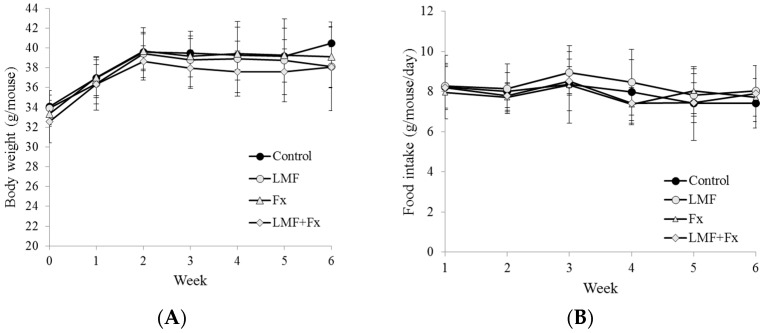
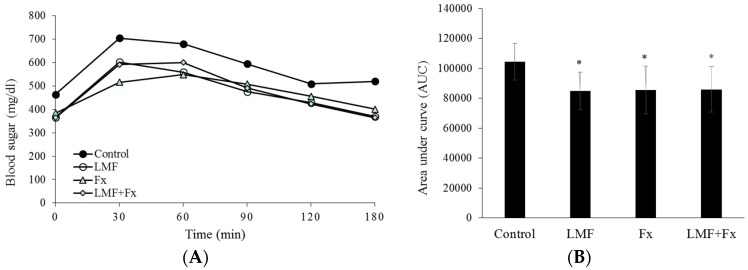
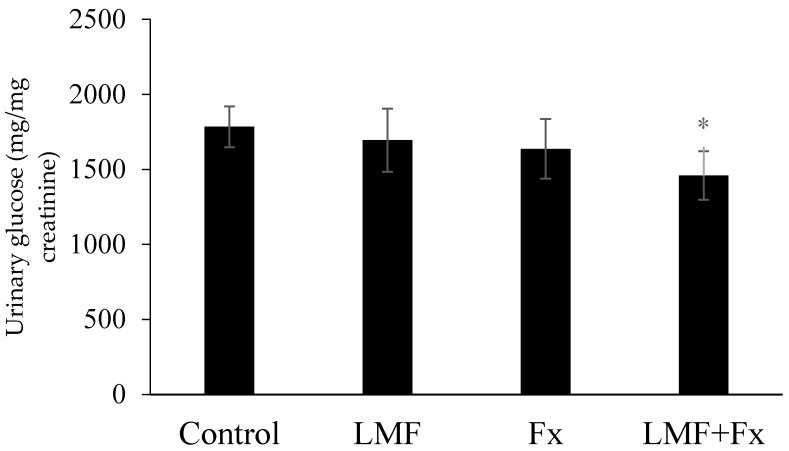
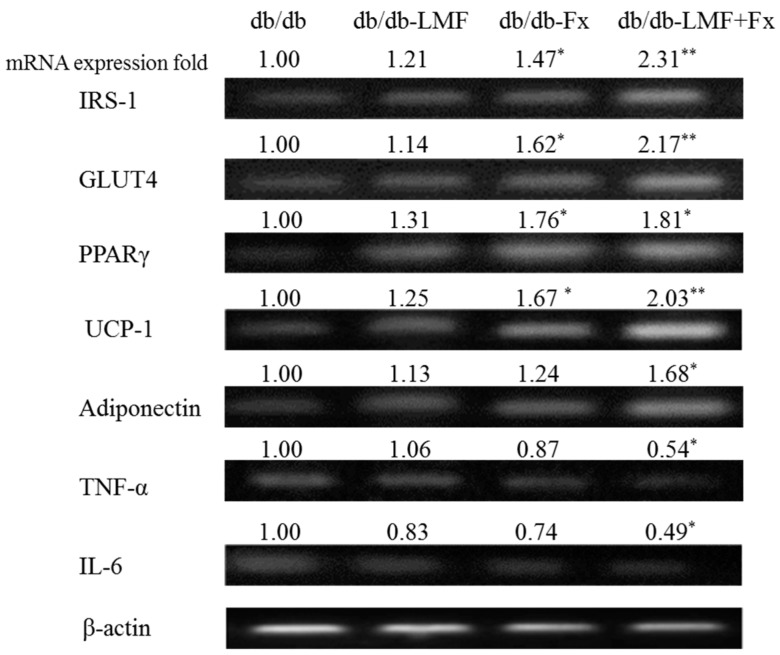
Verification
Claims the paper makes
The claims and statistics of this paper haven’t been checked yet.
Free: it reads the open-access text and checks the first 5 claims that cite a source we can check. Create a free account to check every claim.
Claims other papers make about this one
Each is checked against this paper’s own text: does it say what the citing paper says it does?
The source backs part of the claim, not all of it — or backs it for a different population, condition or comparison.
In the citing paper
“Furthermore, the treatment of diabetic mice with low-molecular-weight fucoidan combined with fucoidan isolated from S. hemiphyllum significantly reduced the TNF-α levels [83].”
From A Review on Fucoidan Structure, Extraction Techniques, and Its Role as an Immunomodulatory Agent (2022) · cites this paper as [83]
Experimental — accuracy not yet measured
Self-check
Percentages, sums and reported differences re-computed from the paper’s own numbers.
The self-check needs the paper’s full text.
Citations
Cites
Matthews, D. R., Hosker, J. P., Rudenski, A. S., Naylor, B. A., Treacher, D. F., & Turner, R. C. (1985) · Diabetologia · doi:10.1007/bf00280883 · Cited by 31,502 · cited 1×
“It was first described under the name HOMA by [62].”
BackgroundToprak, O., Kurt, H., Sarı, Y., Şarkış, C., Us, H., & Kırık, A. (2017) · Kidney and Blood Pressure Research · doi:10.1159/000468530 · Cited by 29,627
Nathan, D. M., Buse, J. B., Davidson, M. B., Ferrannini, E., Holman, R. R., Sherwin, R., & Zinman, B. (2009) · Diabetes Care · doi:10.2337/dc08-9025 · Cited by 3,834
Weyer, C., Funahashi, T., Tanaka, S., Hotta, K., Matsuzawa, Y., Pratley, R. E., & Tataranni, P. A. (2001) · The Journal of Clinical Endocrinology & Metabolism · doi:10.1210/jcem.86.5.7463 · Cited by 3,541
Adiponectin and adiponectin receptors in insulin resistance, diabetes, and the metabolic syndrome
Kadowaki, T. (2006) · Journal of Clinical Investigation · doi:10.1172/jci29126 · Cited by 2,824 · cited 1×
“Adiponectin administration has been shown to be accompanied by lower plasma glucose levels as well as increased insulin sensitivity [37].”
BackgroundChen, H., Charlat, O., Tartaglia, L. A., Woolf, E. A., Weng, X., Ellis, S. J., Lakey, N. D., Culpepper, J., More, K. J., Breitbart, R. E., et al. (1996) · Cell · doi:10.1016/s0092-8674(00)81294-5 · Cited by 2,214 · cited 1×
“Therefore, in this study, we aimed to further investigate the effects of low-molecular-weight fucoidan (LMF), high-stability fucoxanthin (Fx), and the combination of LMF and Fx on glucose homeostasis, lipid metabolism, and liver function in a mouse model of type II diabetes (leptin receptor-deficient db/db mice) [32].”
BackgroundThe estimation of glycogen with the anthrone reagent.
Seifter, S., & Dayton, S. (1950) · PubMed · Cited by 1,445
Petersen, K. F., Dufour, S., Befroy, D., Lehrke, M., Hendler, R. E., & Shulman, G. I. (2005) · Diabetes · doi:10.2337/diabetes.54.3.603 · Cited by 911 · cited 1×
“Diabetes is also associated with diseases, such as nephropathy [2], retinopathy [3], chronic renal failure [4], and cardiomyocyte apoptosis [5].”
BackgroundPeng, J., Yuan, J.-P., Wu, C.-F., & Wang, J.-H. (2011) · Marine Drugs · doi:10.3390/md9101806 · Cited by 820 · cited 1×
“Brown seaweeds are well known for their abundant bioactive substances, such as the sulfated polysaccharide fucoidan [15], the carotenoid fucoxanthin [16], phlorotannin [17], and polyphenolic compounds [18].”
BackgroundEnd-stage renal failure in type 2 diabetes: A medical catastrophe of worldwide dimensions
Ritz, E., Rychlík, I., Locatelli, F., & Halimi, S. (1999) · American Journal of Kidney Diseases · doi:10.1016/s0272-6386(99)70035-1 · Cited by 806 · cited 1×
“Diabetes is also associated with diseases, such as nephropathy [2], retinopathy [3], chronic renal failure [4], and cardiomyocyte apoptosis [5].”
Background
Research works printed but not linked: 1
- Chamundeswaramma K.V. Das P. Rathnamma V.V. Philip G.H. Activity levels of aspartate transaminase (AAT) and alaninetransaminase (ALAT) in freshwater fish Labeo rohita exposed to deltamethrin Ecol. Environ. Conserv. 2010 16 145 148
Cited by
Items 101–113 of 113
Les macroalgues, intérêts nutritionnels et risques associés
Miclo, L. (2023) · Pratiques en nutrition · doi:10.1016/j.pranut.2023.09.003
Lykov, A. P., Gevorgiz, R. G., Zheleznova, S. N., Rachkovskaya, L. N., & Повещенко, О. В. (2024) · Сибирский научный медицинский журнал · doi:10.18699/ssmj20240207
Protective effects of menthol against olanzapine-induced metabolic alterations in female mice
Sodhi, R. K., Kumar, H., Singh, R., Bansal, Y., Kondepudi, K. K., Bishnoi, M., & Kuhad, A. (2024) · European Journal of Pharmacology · doi:10.1016/j.ejphar.2024.177010
Antidiabetic carbohydrates from natural sources
Purewal, J. S., Prajapati, P. S., Doshi, G., & Oza, M. J. (2025) · Elsevier eBooks · doi:10.1016/b978-0-443-30086-8.00005-x
Wei, K., Pan, B., Liu, J., Zhang, W., Su, J., Zhou, H., Dong, Z., Yu, J., Suhong, C., & Lv, G. (2025) · Food Science and Human Wellness · doi:10.26599/fshw.2025.9250527
Zheng, K., Wang, W., Dai, J., Li, J., & Zhao, X. (2025) · Journal of Dietary Supplements · doi:10.1080/19390211.2025.2597495
“Urine composition can reflect physiological changes and serve as a useful source of biomarkers for metabolic processes (Jia et al. 2013), for instance, elevated urine sugar may be due to insulin resistance (Lin et al. 2017, 2020).”
Chen, Y., Li, K., Zhao, H., Hao, Z., Yang, Y., Gao, M., & Zhao, D. (2022) · Figshare · doi:10.6084/m9.figshare.21069576
Self-citationBenefits of Fucoxanthin in the Prevention of Chronic Diseases
Terasaki, M. (2026) · Springer eBooks · doi:10.1007/978-3-032-05253-7_11
Sadhasivam, B., & Saraswathy, N. (2026) · International Journal of Biological Macromolecules · doi:10.1016/j.ijbiomac.2026.151181 · Cited by 2
Watanuki, K., Akiyama, R., Watanabe, S., Adachi, E., & Shimada, M. (2026) · Nutrients · doi:10.3390/nu18071155
Moon, C. Y., Lee, S., Kim, S.-C., & Kang, H. (2026) · Algal Research · doi:10.1016/j.algal.2026.104702
Gopal, R. K., Ganesh, P. S., & Pathoor, N. N. (2026) · Food Hydrocolloids · doi:10.1016/j.foodhyd.2026.113485
Metadata
- Authors
- Lin, H.-T., Tsou, Y.-C., Chen, Y.-T., Lu, W.-J., & Hwang, P.-A.
- Affiliations
- National Taiwan Ocean University (TW)
- Department of Bioscience and Biotechnology, National Taiwan Ocean University, No. 2, Pei-Ning Road, Keelung 202, Taiwan
- Corresponding author
- Hwang, Pai-An
- Venue
- Marine Drugs
- Publisher
- MDPI AG
- Published
- 2017-04-07
- Volume
- 15
- Issue
- 4
- Pages
- 113
- ISSN
- 1660-3397 (ISSN-L)
- PMC
- PMC5408259
- OpenAlex
- W2604894279
- Semantic Scholar
- 5296fef18878231cdeea974e3e4d0d5325654fb3
- Cited by
- 114
- References
- 66
- Citations by year
- 2026: 6 · 2025: 14 · 2024: 9 · 2023: 9 · 2022: 16 · 2021: 15 · 2020: 15 · 2019: 17 · 2018: 11 · 2017: 2
- FWCI
- 14.23
- Type
- journal article
- Language
- en
- Open access
- gold
- doi.org
- Licence
- Locations
- Marine Drugs (publishedVersion, cc-by)
- PubMed Central (publishedVersion, cc-by)
- PubMed (publishedVersion)
- DOAJ (DOAJ: Directory of Open Access Journals) (submittedVersion, cc-by-sa)
- Funders
- National Taiwan Ocean University
- Center of Excellence for the Oceans, National Taiwan Ocean University
- Topics
- Life Sciences › Agricultural and Biological Sciences › Aquatic Science › Seaweed-derived Bioactive Compounds
- Health Sciences › Medicine › Endocrinology, Diabetes and Metabolism › Natural Antidiabetic Agents Studies
- Health Sciences › Medicine › Endocrinology, Diabetes and Metabolism › Adipokines, Inflammation, and Metabolic Diseases
- Keywords
- low molecular weight fucoidan, fucoxanthin, type 2 diabetes, glucose homeostasis, lipid metabolism, hepatoprotection, db/db mice, adiponectin, liver glycogen, antioxidant enzymes, white adipose tissue, IRS-1, PPARγ, UCP1, adipose tissue inflammation, hypoglycemic effect, synergistic effect, seaweed polysaccharides
- MeSH terms
- Adipose Tissue, Animals, Hypolipidemic Agents, Blood Glucose, Diabetes Mellitus, Experimental, Diabetes Mellitus, Type 2, Disease Models, Animal, Glucose, Homeostasis, Hypoglycemic Agents, Insulin, Liver, Molecular Weight, Polysaccharides, Tumor Necrosis Factor-alpha, Interleukin-6, Xanthophylls, PPAR gamma, Lipid Metabolism, Mice
About these checks
Registry, retraction, Cites and statistics results are computed, not judged, with one exception: a printed reference that no index lists is read once by a model before it counts as a citation error. Claims are extracted by a model and kept only when their quote appears verbatim in the text; each cited source is then checked, with a model’s help, for whether it says what the claim relies on. Those verdicts can be wrong — read the claim’s quote and the cited source before relying on one.
Statistics and arithmetic are recomputed, not judged.
Confidence bands are shown only for fields calibrated on our annotated test set. None is calibrated yet, so no band is shown.
What counts as a claim ›How we measure confidence ›How we check this ›
Are you an author, or do you see a problem with this page? Request a review
Data sources
Bibliographic data: Semantic Scholar, OpenAlex, Crossref.
Contains information from the Semantic Scholar Academic Graph Datasets, made available under the ODC Attribution License (ODC-BY 1.0).
Semantic Scholar’s data is described in: Kinney, R., et al. (2023). The Semantic Scholar Open Data Platform. arXiv:2301.10140.
