

Effects of Low-Molecular-Weight Fucoidan and High Stability Fucoxanthin on Glucose Homeostasis, Lipid Metabolism, and Liver Function in a Mouse Model of Type II Diabetes
Open accessThe DOI matches its Crossref record; 66 of the 66 references it cites were found in a registry or an index.
Abstract
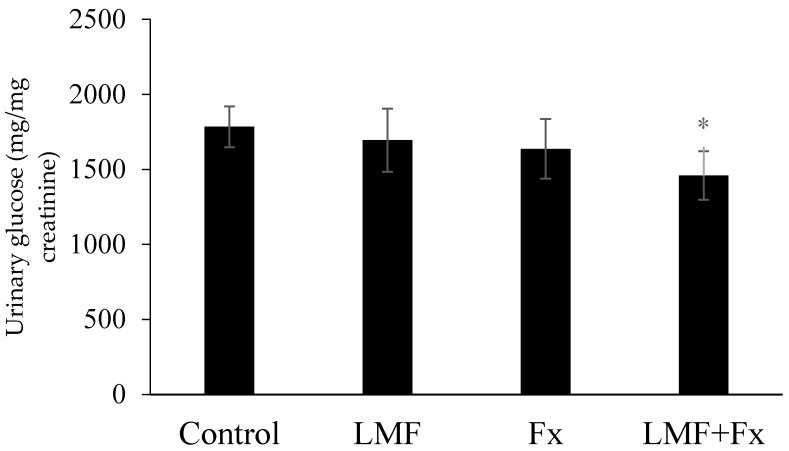
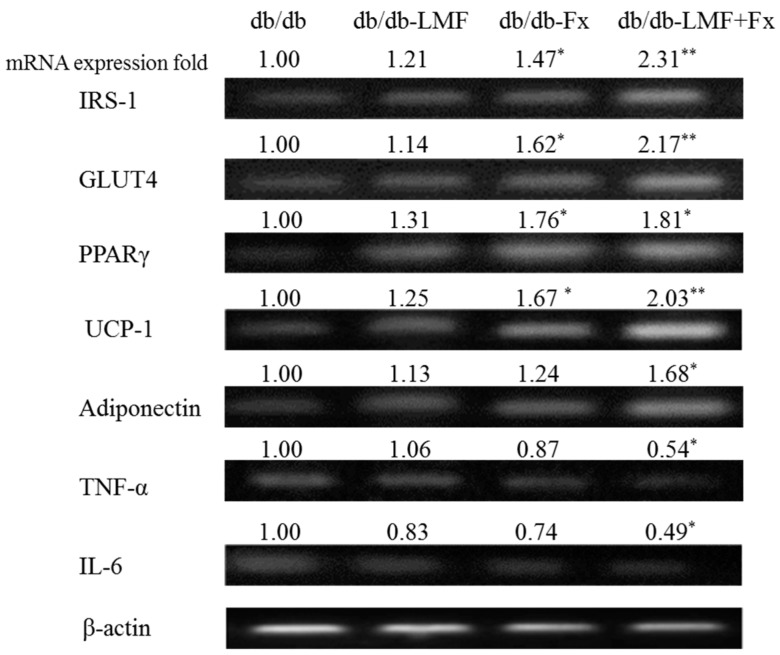
The combined effects of low-molecular-weight fucoidan (LMF) and fucoxanthin (Fx) in terms of antihyperglycemic, antihyperlipidemic, and hepatoprotective activities were investigated in a mouse model of type II diabetes. The intake of LMF, Fx, and LMF + Fx lowered the blood sugar and fasting blood sugar levels, and increased serum adiponectin levels. The significant decrease in urinary sugar was only observed in LMF + Fx supplementation. LMF and Fx had ameliorating effects on the hepatic tissue of db/db mice by increasing hepatic glycogen and antioxidative enzymes, and LMF was more effective than Fx at improving hepatic glucose metabolism. As for glucose and lipid metabolism in the adipose tissue, the expression of insulin receptor substrate (IRS)-1, glucose transporter (GLUT), peroxisome proliferator-activated receptor gamma (PPARγ), and uncoupling protein (UCP)-1 mRNAs in the adipose tissue of diabetic mice was significantly upregulated by Fx and LMF + Fx, and levels of inflammatory adipocytokines, such as adiponectin, tumor necrosis factor-α (TNF-α), and interleukin-6 (IL-6), were significantly modulated only by LMF + Fx supplementation. The efficacy of LMF + Fx supplementation on the decrease in urinary sugar and on glucose and lipid metabolism in the white adipose tissue of db/db mice was better than that of Fx or LMF alone, indicating the occurrence of a synergistic effect of LMF and Fx.
Overview
The claims and statistics of this paper haven’t been checked yet.
Free: it reads the open-access text and checks the first 5 claims that cite a source we can check. Create a free account to check every claim.
Integrity signals
Registry
Cites
Statistics
Figures
Verification
Claims the paper makes
The claims and statistics of this paper haven’t been checked yet.
Free: it reads the open-access text and checks the first 5 claims that cite a source we can check. Create a free account to check every claim.
Claims other papers make about this one
Each is checked against this paper’s own text: does it say what the citing paper says it does?
The source backs part of the claim, not all of it — or backs it for a different population, condition or comparison.
In the citing paper
“Furthermore, the treatment of diabetic mice with low-molecular-weight fucoidan combined with fucoidan isolated from S. hemiphyllum significantly reduced the TNF-α levels [83].”
From A Review on Fucoidan Structure, Extraction Techniques, and Its Role as an Immunomodulatory Agent (2022) · cites this paper as [83]
Experimental — accuracy not yet measured
Self-check
Percentages, sums and reported differences re-computed from the paper’s own numbers.
The self-check needs the paper’s full text.
Citations
Cites
Matthews, D. R., Hosker, J. P., Rudenski, A. S., Naylor, B. A., Treacher, D. F., & Turner, R. C. (1985) · Diabetologia · doi:10.1007/bf00280883 · Cited by 31,502 · cited 1×
“It was first described under the name HOMA by [62].”
BackgroundToprak, O., Kurt, H., Sarı, Y., Şarkış, C., Us, H., & Kırık, A. (2017) · Kidney and Blood Pressure Research · doi:10.1159/000468530 · Cited by 29,627
Nathan, D. M., Buse, J. B., Davidson, M. B., Ferrannini, E., Holman, R. R., Sherwin, R., & Zinman, B. (2009) · Diabetes Care · doi:10.2337/dc08-9025 · Cited by 3,834
Weyer, C., Funahashi, T., Tanaka, S., Hotta, K., Matsuzawa, Y., Pratley, R. E., & Tataranni, P. A. (2001) · The Journal of Clinical Endocrinology & Metabolism · doi:10.1210/jcem.86.5.7463 · Cited by 3,541
Adiponectin and adiponectin receptors in insulin resistance, diabetes, and the metabolic syndrome
Kadowaki, T. (2006) · Journal of Clinical Investigation · doi:10.1172/jci29126 · Cited by 2,824 · cited 1×
“Adiponectin administration has been shown to be accompanied by lower plasma glucose levels as well as increased insulin sensitivity [37].”
BackgroundChen, H., Charlat, O., Tartaglia, L. A., Woolf, E. A., Weng, X., Ellis, S. J., Lakey, N. D., Culpepper, J., More, K. J., Breitbart, R. E., et al. (1996) · Cell · doi:10.1016/s0092-8674(00)81294-5 · Cited by 2,214 · cited 1×
“Therefore, in this study, we aimed to further investigate the effects of low-molecular-weight fucoidan (LMF), high-stability fucoxanthin (Fx), and the combination of LMF and Fx on glucose homeostasis, lipid metabolism, and liver function in a mouse model of type II diabetes (leptin receptor-deficient db/db mice) [32].”
BackgroundThe estimation of glycogen with the anthrone reagent.
Seifter, S., & Dayton, S. (1950) · PubMed · Cited by 1,445
Petersen, K. F., Dufour, S., Befroy, D., Lehrke, M., Hendler, R. E., & Shulman, G. I. (2005) · Diabetes · doi:10.2337/diabetes.54.3.603 · Cited by 911 · cited 1×
“Diabetes is also associated with diseases, such as nephropathy [2], retinopathy [3], chronic renal failure [4], and cardiomyocyte apoptosis [5].”
BackgroundPeng, J., Yuan, J.-P., Wu, C.-F., & Wang, J.-H. (2011) · Marine Drugs · doi:10.3390/md9101806 · Cited by 820 · cited 1×
“Brown seaweeds are well known for their abundant bioactive substances, such as the sulfated polysaccharide fucoidan [15], the carotenoid fucoxanthin [16], phlorotannin [17], and polyphenolic compounds [18].”
BackgroundEnd-stage renal failure in type 2 diabetes: A medical catastrophe of worldwide dimensions
Ritz, E., Rychlík, I., Locatelli, F., & Halimi, S. (1999) · American Journal of Kidney Diseases · doi:10.1016/s0272-6386(99)70035-1 · Cited by 806 · cited 1×
“Diabetes is also associated with diseases, such as nephropathy [2], retinopathy [3], chronic renal failure [4], and cardiomyocyte apoptosis [5].”
BackgroundAle, M. T., Mikkelsen, J. D., & Meyer, A. S. (2011) · Marine Drugs · doi:10.3390/md9102106 · Cited by 779 · cited 1×
“Brown seaweeds are well known for their abundant bioactive substances, such as the sulfated polysaccharide fucoidan [15], the carotenoid fucoxanthin [16], phlorotannin [17], and polyphenolic compounds [18].”
BackgroundRossetti, L., Giaccari, A., & DeFronzo, R. A. (1990) · Diabetes Care · doi:10.2337/diacare.13.6.610 · Cited by 770
Yadav, H., Jain, S., & Sinha, P. R. (2007) · Nutrition · doi:10.1016/j.nut.2006.09.002 · Cited by 587 · cited 1×
“Other studies investigated hypoglycemic extracts from microorganisms, such as brewer’s yeast [11], probiotics [12], Monascus [13], and Ganoderma [14].”
BackgroundTolman, K. G., Fonseca, V., Dalpiaz, A., & Tan, M. H. (2007) · Diabetes Care · doi:10.2337/dc06-1539 · Cited by 525 · cited 1×
“Thus, diabetes is currently the most common cause of liver disease, and liver disease is an important cause of death in people with type II diabetes [31].”
BackgroundAntidiabetic effect of garlic (Allium sativum L.) in normal and streptozotocin-induced diabetic rats
Eidi, A., Eidi, M., & Esmaeili, E. (2006) · Phytomedicine · doi:10.1016/j.phymed.2005.09.010 · Cited by 514 · cited 1×
“Previous studies on the isolation and production of hypoglycemic extracts mainly focused on plants, such as garlic [8], ginger, fenugreek seed [9], and guava [10].”
BackgroundWang, J., Zhang, Q., Zhang, Z., Song, H., & Li, P. (2010) · International Journal of Biological Macromolecules · doi:10.1016/j.ijbiomac.2009.10.015 · Cited by 456 · cited 1×
“Fucoidan has been reported to exhibit antioxidant [19], anticoagulant [19], antiinflammatory [20,21], hypolipidemic [22], and anticancer activities [23].”
BackgroundHofmann, C. (1994) · Endocrinology · doi:10.1210/en.134.1.264 · Cited by 387 · cited 2×
“PPARγ activation has also been shown to inh bit TNF-α expression in the adipose tissue of obese rodents [57].”
BackgroundMitochondrial uncoupling proteins: from mitochondria to the regulation of energy balance
Ricquier, D., & Bouillaud, F. (2000) · The Journal of Physiology · doi:10.1111/j.1469-7793.2000.00003.x · Cited by 385 · cited 1×
“The thermogenic activity of brown adipose tissues is dependent on the level of UCP-1 expression; however, almost all adipose tissues in humans are white adipose tissues [56].”
BackgroundTontonoz, P., Graves, R. A., Budavari, A. I., Erdjument-Bromage, H., Lui, M., Hu, E., Tempst, P., & Spiegelman, B. M. (1994) · Nucleic Acids Research · doi:10.1093/nar/22.25.5628 · Cited by 383
Park, H. Y., Han, M. H., Park, C., Jin, C.-Y., Kim, G.-Y., Choi, I.-W., Kim, N. D., Nam, T.-J., Kwon, T. K., & Choi, Y. H. (2011) · Food and Chemical Toxicology · doi:10.1016/j.fct.2011.04.020 · Cited by 321
Maeda, H., Hosokawa, M., Sashima, T., & Miyashita, K. (2007) · Journal of Agricultural and Food Chemistry · doi:10.1021/jf071569n · Cited by 319 · cited 1×
“Previous studies have shown that fucoxanthin significantly modulates diabetes symptoms by inducing UCP-1 expression in white adipose tissues [55], suggesting that fucoxanthin acts as a metabolic regulator of lipids in white adipose tissues.”
BackgroundPostprandial hyperglycaemia and α-glucosidase inhibitors
Baron, A. D. (1998) · Diabetes Research and Clinical Practice · doi:10.1016/s0168-8227(98)00043-6 · Cited by 300
Maeda (2009) · Molecular Medicine Reports · doi:10.3892/mmr_00000189 · Cited by 289 · cited 5×
“Fucoxanthin, a carotenoid present in the chloroplasts of brown seaweeds, also exhibits strong antiobesity and antidiabetic effects on diet-induced obesity conditions in vivo [26].”
BackgroundMethodInfluentialEnhancement of insulin sensitivity by troglitazone lowers blood pressure in diabetic hypertensives
OGIHARA, T., RAKUGI, H., IKEGAMI, H., MIKAMI, H., & MASUO, K. (1995) · American Journal of Hypertension · doi:10.1016/0895-7061(95)96214-5 · Cited by 274 · cited 1×
“PPARγ is the key regulator of adipocyte differentiation and lipid storage promotion [52], and elevated PPARγ has been reported to improve insulin sensitivity [53].”
BackgroundKelly, L. J., Vicario, P. P., Thompson, G. M., Candelore, M. R., Doebber, T. W., Ventre, J., Wu, M. S., Meurer, R., Forrest, M. J., Conner, M. W., et al. (1998) · Endocrinology · doi:10.1210/endo.139.12.6384 · Cited by 268
Wu, J.-W., Hsieh, C.-L., Wang, H.-Y., & Chen, H.-Y. (2009) · Food Chemistry · doi:10.1016/j.foodchem.2008.07.025 · Cited by 205 · cited 1×
“Previous studies on the isolation and production of hypoglycemic extracts mainly focused on plants, such as garlic [8], ginger, fenugreek seed [9], and guava [10].”
BackgroundHosokawa, M., Miyashita, T., Nishikawa, S., Emi, S., Tsukui, T., Beppu, F., Okada, T., & Miyashita, K. (2010) · Archives of Biochemistry and Biophysics · doi:10.1016/j.abb.2010.05.031 · Cited by 185 · cited 2×
“indicated [58] that fucoxanthin metabolites reduced IL-6 mRNA expression and prevented the downregulation of nitric oxide synthase mRNA expression by TNF-α.”
BackgroundJia, J., Zhang, X., Hu, Y.-S., Wu, Y., Wang, Q.-Z., Li, N.-N., Guo, Q.-C., & Dong, X.-C. (2009) · Food Chemistry · doi:10.1016/j.foodchem.2008.11.043 · Cited by 175 · cited 1×
“Other studies investigated hypoglycemic extracts from microorganisms, such as brewer’s yeast [11], probiotics [12], Monascus [13], and Ganoderma [14].”
BackgroundBasu, A., Basu, R., Shah, P., Vella, A., Johnson, C. M., Jensen, M., Nair, K. S., Schwenk, W. F., & Rizza, R. A. (2001) · Diabetes · doi:10.2337/diabetes.50.6.1351 · Cited by 167 · cited 1×
“In diabetes, less glycogen is stored in the liver, which contributes to postprandial hyperglycemia [42].”
BackgroundPHOTOSYNTHETIC PIGMENTS IN FIFTY‐ONE SPECIES OF MARINE DIATOMS1
Stauber, J. L., & Jeffrey, S. W. (1988) · Journal of Phycology · doi:10.1111/j.1529-8817.1988.tb04230.x · Cited by 166 · cited 1×
“Purification of fucoxanthin was performed using the method of [60], and Fx was a mixture containing about 10.”
MethodVijayakumar, M. V., Singh, S., Chhipa, R. R., & Bhat, M. K. (2005) · British Journal of Pharmacology · doi:10.1038/sj.bjp.0706312 · Cited by 163 · cited 1×
“Previous studies on the isolation and production of hypoglycemic extracts mainly focused on plants, such as garlic [8], ginger, fenugreek seed [9], and guava [10].”
BackgroundAudibert, L., Fauchon, M., Blanc, N., Hauchard, D., & Ar Gall, E. (2010) · Phytochemical Analysis · doi:10.1002/pca.1210 · Cited by 156 · cited 1×
“Brown seaweeds are well known for their abundant bioactive substances, such as the sulfated polysaccharide fucoidan [15], the carotenoid fucoxanthin [16], phlorotannin [17], and polyphenolic compounds [18].”
BackgroundCarvalho, E., Jansson, P., Nagaev, I., Wenthzel, A., & Smith, U. (2001) · The FASEB Journal · doi:10.1096/fsb2fj000435 · Cited by 139 · cited 1×
“People with type II diabetes appear to have low cellular IRS-1 expression in adipose tissues, which is associated with low GLUT4 expression and, therefore, impaired insulin-stimulated glucose transport [51].”
BackgroundHypolipidemic effect of fucoidan from Laminaria japonica in hyperlipidemic rats
Huang, L., Wen, K., Gao, X., & Liu, Y. (2010) · Pharmaceutical Biology · doi:10.3109/13880200903150435 · Cited by 125 · cited 1×
“Fucoidan has been reported to exhibit antioxidant [19], anticoagulant [19], antiinflammatory [20,21], hypolipidemic [22], and anticancer activities [23].”
BackgroundFatty acids and expression of adipokines
Drevon, C. A. (2004) · Biochimica et Biophysica Acta (BBA) - Molecular Basis of Disease · doi:10.1016/j.bbadis.2004.11.019 · Cited by 120 · cited 2×
“A reduced adiponectin level is a characteristic of type II diabetes [36], and the overexpression of TNF‐α and IL‐6 induces insulin resistance in adipose tissues [59].”
BackgroundDiabetic cardiomyopathy: Pathophysiological mechanisms and cardiac dysfuntion
Goyal, B., & Mehta, A. U. (2012) · Human & Experimental Toxicology · doi:10.1177/0960327112450885 · Cited by 118
Importance of Adipocytokines in Obesity-Related Diseases
Matsuzawa, Y., Shimomura, I., Kihara, S., & Funahashi, T. (2003) · Hormone Research in Paediatrics · doi:10.1159/000074502 · Cited by 115 · cited 1×
“These adipokines are reported to alter insulin sensitivity and glucose metabolism in the liver, adipose, and muscle tissues [28].”
BackgroundThe synthesis of BRL 49653 - a novel and potent antihyperglycaemic agent
Cantello, B. C. C., Cawthorne, M. A., Haigh, D., Hindley, R. M., Smith, S. A., & Thurlby, P. L. (1994) · Bioorganic & Medicinal Chemistry Letters · doi:10.1016/s0960-894x(01)80325-5 · Cited by 115
Lee, S., Min, K.-H., Han, J.-S., Lee, D.-H., Park, D.-B., Jung, W., Park, P., Jeon, B.-T., Kim, S., & Jeon, Y. (2011) · Food and Chemical Toxicology · doi:10.1016/j.fct.2011.12.032 · Cited by 112 · cited 5×
“Hepatic enzyme source was prepared as previously described by [34].”
BackgroundMethodInfluentialFucoidan regulate blood glucose homeostasis in C57BL/KSJ m+/+db and C57BL/KSJ db/db mice
Kim, K., Yoon, K., & Lee, B.-Y. (2012) · Fitoterapia · doi:10.1016/j.fitote.2012.04.027 · Cited by 101 · cited 2×
“[38], who reported that blood sugar levels in type II diabetic mice were significantly decreased by fucoidan and that fucoxanthin-rich Undaria pinnatifida lipid extract reduced blood sugar levels in mice with obesity induced by a high-fat diet [26].”
BackgroundHeeba, G. H., & Morsy, M. A. (2015) · Environmental Toxicology and Pharmacology · doi:10.1016/j.etap.2015.10.003 · Cited by 89 · cited 3×
“Heeba and Morsy [44] also reported that rats fed with high‐fat diet would increase their serum AST and ALT levels, but these increases were suppressed by the treatment of fucoidan.”
BackgroundInfluentialHsu, H.-Y., Lin, T.-Y., Wu, Y.-C., Tsao, S.-M., Hwang, P.-A., Shih, Y.-W., & Hsu, J. (2014) · Oncotarget · doi:10.18632/oncotarget.2317 · Cited by 89
Self-citationHu, S., Xia, G., Wang, J., Wang, Y., Li, Z., & Xue, C. (2014) · Journal of Functional Foods · doi:10.1016/j.jff.2014.05.012 · Cited by 86 · cited 1×
“[48] reported that fucoidan improves glucose metabolism via increases in hexokinase and pyruvate kinase activities and reductions in glycogen phosphorylase and glucose-6-phosphatase activities.”
BackgroundCho, S., Yang, H., Jeon, Y., Lee, C. J., Jin, Y., Baek, N., Kim, D., Kang, S., Yoon, M., Yong, H., et al. (2011) · Food Chemistry · doi:10.1016/j.foodchem.2011.08.040 · Cited by 86 · cited 1×
“Brown seaweeds are well known for their abundant bioactive substances, such as the sulfated polysaccharide fucoidan [15], the carotenoid fucoxanthin [16], phlorotannin [17], and polyphenolic compounds [18].”
BackgroundJeong, Y., Kim, Y. D., Jung, Y., Park, D., Lee, D.-S., Ku, S., Li, X., Lü, Y., Chao, G. H., Kim, K., et al. (2013) · Molecular Pharmacology · doi:10.1124/mol.113.085100 · Cited by 82 · cited 5×
“[25] also reported a decrease in the white adipose tissue when db/db mice were treated with a high dose of low‐molecular‐weight fucoidan (500 mg/kg of the body weight) from Undaria pinnatifida.”
BackgroundMethodInfluentialHwang, P., Hung, Y.-L., Phan, N. N., Hieu, B. T. N., Chang, P.-M., Li, K.-L., & Lin, Y. (2015) · Cytotechnology · doi:10.1007/s10616-015-9894-5 · Cited by 74 · cited 1×
“In addition, previous studies demonstrated that fucoidan can improve osteogenic differentiation, and low-molecular-weight fucoidan was found to be more potent than its high-molecular-weight equivalent [24].”
BackgroundSelf-citationToxicological Evaluation of Low Molecular Weight Fucoidan in Vitro and in Vivo
Hwang, P.-A., Yan, M.-D., Lin, H.-T., Li, K.-L., & Lin, Y.-C. (2016) · Marine Drugs · doi:10.3390/md14070121 · Cited by 72
Self-citationGuideline Approach to Therapy in Patients With Newly Diagnosed Type 2 Diabetes
Raz, I. (2013) · Diabetes Care · doi:10.2337/dcs13-2035 · Cited by 71
Hwang, P., Hung, Y.-L., Tsai, Y.-K., Chien, S., & Kong, Z. (2014) · Cytotechnology · doi:10.1007/s10616-014-9745-9 · Cited by 70
Self-citationQi, Y., Chen, X., Chan, C., Li, D., Yuan, C., Yu, F., Lin, M. C.-M., Yew, D. T. W., Kung, H., & Lai, L. (2008) · International Journal of Cancer · doi:10.1002/ijc.23464 · Cited by 66 · cited 2×
“Nonalcoholic fatty liver disease (NAFLD) is a condition in which excessive fat accumulates in the liver of patients who drink no or little alcohol [45]; NAFLD development is closely associated with obesity and type II diabetes mellitus [46].”
BackgroundGlucose Control and Insulin Resistance in Non-Insulin-dependent Diabetes Mellitus
Robert, H. R. (1996) · Annals of Internal Medicine · doi:10.7326/0003-4819-124-1_part_2-199601011-00004 · Cited by 62 · cited 1×
“Insulin plays an important role in fat deposition through the regulation of adipose tissue lipolysis, adipogenesis, lipogenesis, and glucose uptake [49].”
BackgroundLin, H.-T. V., Lu, W.-J., Tsai, G.-J., Chou, C.-T., Hsiao, H.-I., & Hwang, P.-A. (2016) · Process Biochemistry · doi:10.1016/j.procbio.2016.08.024 · Cited by 59 · cited 1×
“Fucoidan has been reported to exhibit antioxidant [19], anticoagulant [19], antiinflammatory [20,21], hypolipidemic [22], and anticancer activities [23].”
BackgroundSelf-citationNew data and new concepts on the role of the liver in glucose homeostasis
Tappy, L., & Minehira, K. (2001) · Current Opinion in Clinical Nutrition and Metabolic Care · doi:10.1097/00075197-200107000-00005 · Cited by 58 · cited 1×
“The liver plays a crucial role in carbohydrate metabolism because it is responsible for balancing blood glucose levels via glycogenesis and glycogenolysis [29].”
BackgroundHenry, R. R., & Genuth, S. (1996) · Annals of Internal Medicine · doi:10.7326/0003-4819-124-1_part_2-199601011-00019 · Cited by 53
Temporal response pattern of biochemical analytes in experimental diabetes
Mori, D. M., Baviera, A. M., De Oliveira Ramalho, L. T., Vendramini, R. C., Brunetti, I. L., & Pepato, M. T. (2003) · Biotechnology and Applied Biochemistry · doi:10.1042/ba20030034 · Cited by 52 · cited 2×
“As a result, AST and ALT levels are elevated to produce alternative glucose precursors to compensate [43].”
BackgroundMetabolically healthy obesity and NAFLD
Targher, G., & Byrne, C. D. (2016) · Nature Reviews Gastroenterology & Hepatology · doi:10.1038/nrgastro.2016.104 · Cited by 50 · cited 4×
“Nonalcoholic fatty liver disease (NAFLD) is a condition in which excessive fat accumulates in the liver of patients who drink no or little alcohol [45]; NAFLD development is closely associated with obesity and type II diabetes mellitus [46].”
BackgroundInfluentialVeilleux, A., Blouin, K., Rhéaume, C., Daris, M., Marette, A., & Tchernof, A. (2009) · Metabolism · doi:10.1016/j.metabol.2008.12.007 · Cited by 48
Investigational anti-hyperglycemic agents: the future of type 2 diabetes therapy?
Majumdar, S. K., & Inzucchi, S. E. (2013) · Endocrine · doi:10.1007/s12020-013-9884-3 · Cited by 41
[Role of the liver in the regulation of glucose metabolism in diabetes and chronic liver disease].
Cotrozzi, G., Raggi, V. C., Relli, P., & Buzzelli, G. (1997) · PubMed · Cited by 34
PHOTOSYNTHETIC PIGMENTS IN FIFTY-ONE SPECIES OF MARINE DIATOMS
Stauber, J. L., & Jeffrey, S. W. (1988) · Journal of Phycology · doi:10.1111/j.1529-8817.1988.tb00074.x · Cited by 33
Wang, W., Zhou, W. P., Wang, B., Zhu, H., Ye, L., & Feng, M. (2013) · Acta Biochimica et Biophysica Sinica · doi:10.1093/abbs/gms100 · Cited by 28 · cited 5×
“Oxidative stress is the crucial pathophysiological mechanism in NAFLD, causing NAFLD to progress to liver cirrhosis [45], and this oxidative stress can be detected by measuring the activity of antioxidative enzymes, such as superoxide dismutase (SOD) and catalase (CAT) [47].”
BackgroundInfluentialCarvalho, E. (2001) · The FASEB Journal · doi:10.1096/fj.00-0435fje · Cited by 25
Inhibitory Effects of Tunisian Marine Algal Extracts on Digestive Lipases
Rebah, F. B., Smaoui, S., Frikha, F., Gargouri, Y., & Miled, N. (2008) · Applied Biochemistry and Biotechnology · doi:10.1007/s12010-008-8167-6 · Cited by 18 · cited 1×
“[40] reported that crude extract from Caulerpa prolifera markedly reduced both dog gastric and human pancreatic lipase activities, but the fractionations of the crude extract reduced the inhibitory rate.”
BackgroundImprovement of insulin resistance by Hon-Chi in fructose-rich chow-fed rats
Su, C.-F., Liu, I.-M., & Cheng, J. (2007) · Food Chemistry · doi:10.1016/j.foodchem.2006.10.070 · Cited by 17 · cited 1×
“Other studies investigated hypoglycemic extracts from microorganisms, such as brewer’s yeast [11], probiotics [12], Monascus [13], and Ganoderma [14].”
BackgroundWu, C.-H., Lin, H. V., Wu, G.-J., Wang, S., & Tsai, G. (2011) · Journal of Bioscience and Bioengineering · doi:10.1016/j.jbiosc.2011.04.012 · Cited by 7 · cited 1×
“Other studies investigated hypoglycemic extracts from microorganisms, such as brewer’s yeast [11], probiotics [12], Monascus [13], and Ganoderma [14].”
BackgroundSelf-citationClinical Implication of 2nd Trimester Glycosuria
Han, B. R., Oh, Y. S., Ahn, K. H., Kim, H. Y., Hong, S., Oh, M., Kim, H., Kim, Y. T., Lee, K. W., & Kim, S. H. (2010) · PERINATOLOGY (구 대한주산의학회잡지) · Cited by 3
Research works printed but not linked: 1
- Chamundeswaramma K.V. Das P. Rathnamma V.V. Philip G.H. Activity levels of aspartate transaminase (AAT) and alaninetransaminase (ALAT) in freshwater fish Labeo rohita exposed to deltamethrin Ecol. Environ. Conserv. 2010 16 145 148
Cited by
Risks and benefits of consuming edible seaweeds
Cherry, P., O’Hara, C., Magee, P. J., McSorley, E. M., & Allsopp, P. J. (2019) · Nutrition Reviews · doi:10.1093/nutrit/nuy066 · Cited by 440
Immunomodulatory and Anti-Inflammatory Effects of Fucoidan: A Review
Apostolova, E., Lukova, P., Baldzhieva, A., Katsarov, P., Nikolova, M., Iliev, I., Peychev, L., Trica, B., Oancea, F., Delattre, C., et al. (2020) · Polymers · doi:10.3390/polym12102338 · Cited by 345
“A combination of LMW fucoidan from Sargassum hemiphyllum and fucoxanthin reduced the levels of TNF-α and IL-6 in diabetic mice [57].”
BackgroundMacroalgae—A Sustainable Source of Chemical Compounds with Biological Activities
Biris-Dorhoi, E.-S., Michiu, D., Pop, C. R., Rotar, A. M., Tofana, M., Pop, O. L., Socaci, S. A., & Farcas, A. C. (2020) · Nutrients · doi:10.3390/nu12103085 · Cited by 309
Seaweed Components as Potential Modulators of the Gut Microbiota
Shannon, E., Conlon, M., & Hayes, M. (2021) · Marine Drugs · doi:10.3390/md19070358 · Cited by 157
“Fucoidans have previously been shown in in vitro studies to have potential for use as anticancer [80], antiviral [81], antioxidant [77], and anti-inflammatory [82] agents; and in vivo as anticoagulants (human trial) [83], anticancer (human trial) [84], antitumour (mouse model) [85], antihyperglycaemic, and antihyperli…”
BackgroundChen, Q., Liu, M., Zhang, P., Fan, S., Huang, J., Yu, S., Zhang, C., & Li, H. (2019) · Nutrition · doi:10.1016/j.nut.2019.03.001 · Cited by 164
Metadata
- Authors
- Lin, H.-T., Tsou, Y.-C., Chen, Y.-T., Lu, W.-J., & Hwang, P.-A.
- Affiliations
- National Taiwan Ocean University (TW)
- Department of Bioscience and Biotechnology, National Taiwan Ocean University, No. 2, Pei-Ning Road, Keelung 202, Taiwan
- Corresponding author
- Hwang, Pai-An
- Venue
- Marine Drugs
- Publisher
- MDPI AG
- Published
- 2017-04-07
- Volume
- 15
- Issue
- 4
- Pages
- 113
- ISSN
- 1660-3397 (ISSN-L)
- PMC
- PMC5408259
- OpenAlex
- W2604894279
- Cited by
- 114
- References
- 66
- Citations by year
- 2026: 6 · 2025: 14 · 2024: 9 · 2023: 9 · 2022: 16 · 2021: 15 · 2020: 15 · 2019: 17 · 2018: 11 · 2017: 2
- FWCI
- 14.23
- Type
- journal article
- Language
- en
- Open access
- gold
- doi.org
- Licence
- Locations
- Marine Drugs (publishedVersion, cc-by)
- PubMed Central (publishedVersion, cc-by)
- PubMed (publishedVersion)
- DOAJ (DOAJ: Directory of Open Access Journals) (submittedVersion, cc-by-sa)
- Funders
- National Taiwan Ocean University
- Center of Excellence for the Oceans, National Taiwan Ocean University
- Topics
- Life Sciences › Agricultural and Biological Sciences › Aquatic Science › Seaweed-derived Bioactive Compounds
- Health Sciences › Medicine › Endocrinology, Diabetes and Metabolism › Natural Antidiabetic Agents Studies
- Health Sciences › Medicine › Endocrinology, Diabetes and Metabolism › Adipokines, Inflammation, and Metabolic Diseases
- Keywords
- low molecular weight fucoidan, fucoxanthin, type 2 diabetes, glucose homeostasis, lipid metabolism, hepatoprotection, db/db mice, adiponectin, liver glycogen, antioxidant enzymes, white adipose tissue, IRS-1, PPARγ, UCP1, adipose tissue inflammation, hypoglycemic effect, synergistic effect, seaweed polysaccharides
- MeSH terms
- Adipose Tissue, Animals, Hypolipidemic Agents, Blood Glucose, Diabetes Mellitus, Experimental, Diabetes Mellitus, Type 2, Disease Models, Animal, Glucose, Homeostasis, Hypoglycemic Agents, Insulin, Liver, Molecular Weight, Polysaccharides, Tumor Necrosis Factor-alpha, Interleukin-6, Xanthophylls, PPAR gamma, Lipid Metabolism, Mice
About these checks
Registry, retraction, Cites and statistics results are computed, not judged, with one exception: a printed reference that no index lists is read once by a model before it counts as a citation error. Claims are extracted by a model and kept only when their quote appears verbatim in the text; each cited source is then checked, with a model’s help, for whether it says what the claim relies on. Those verdicts can be wrong — read the claim’s quote and the cited source before relying on one.
Statistics and arithmetic are recomputed, not judged.
Confidence bands are shown only for fields calibrated on our annotated test set. None is calibrated yet, so no band is shown.
What counts as a claim ›How we measure confidence ›How we check this ›
Are you an author, or do you see a problem with this page? Request a review
Data sources
Bibliographic data: Semantic Scholar, OpenAlex, Crossref.
Contains information from the Semantic Scholar Academic Graph Datasets, made available under the ODC Attribution License (ODC-BY 1.0).
Semantic Scholar’s data is described in: Kinney, R., et al. (2023). The Semantic Scholar Open Data Platform. arXiv:2301.10140.
