

Effects of Low-Molecular-Weight Fucoidan and High Stability Fucoxanthin on Glucose Homeostasis, Lipid Metabolism, and Liver Function in a Mouse Model of Type II Diabetes
Open accessThe DOI matches its Crossref record; 66 of the 66 references it cites were found in a registry or an index.
Abstract
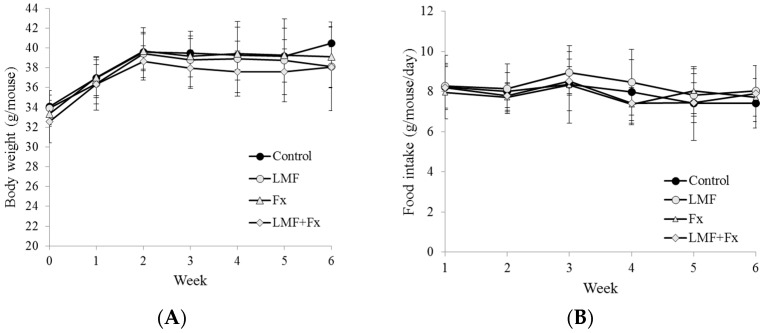
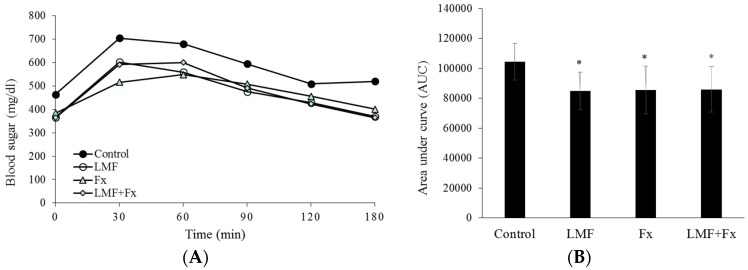
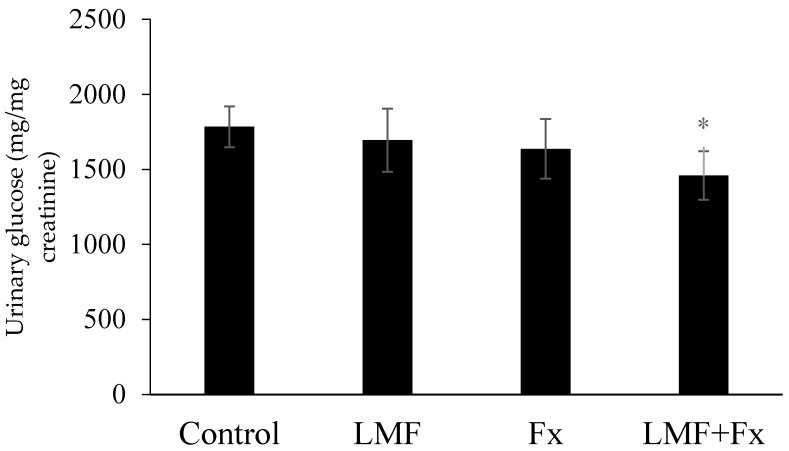
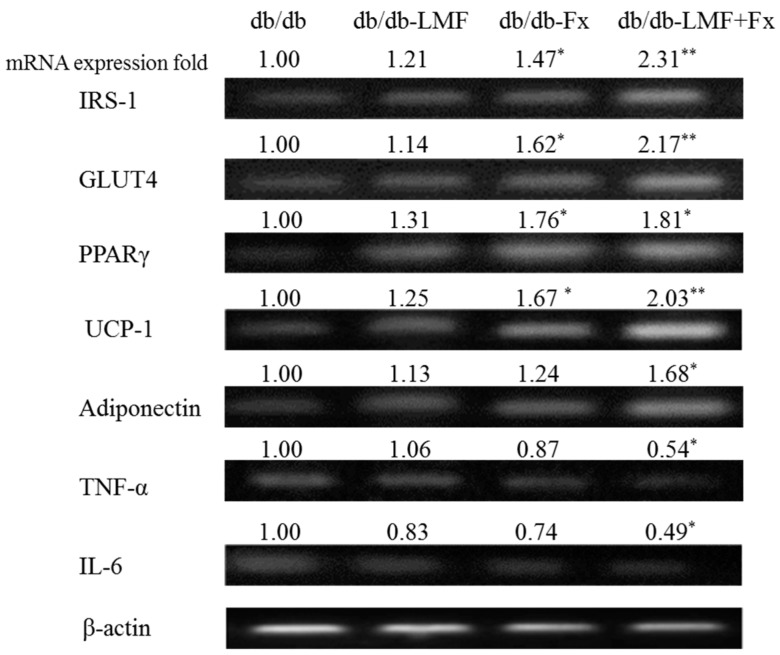
The combined effects of low-molecular-weight fucoidan (LMF) and fucoxanthin (Fx) in terms of antihyperglycemic, antihyperlipidemic, and hepatoprotective activities were investigated in a mouse model of type II diabetes. The intake of LMF, Fx, and LMF + Fx lowered the blood sugar and fasting blood sugar levels, and increased serum adiponectin levels. The significant decrease in urinary sugar was only observed in LMF + Fx supplementation. LMF and Fx had ameliorating effects on the hepatic tissue of db/db mice by increasing hepatic glycogen and antioxidative enzymes, and LMF was more effective than Fx at improving hepatic glucose metabolism. As for glucose and lipid metabolism in the adipose tissue, the expression of insulin receptor substrate (IRS)-1, glucose transporter (GLUT), peroxisome proliferator-activated receptor gamma (PPARγ), and uncoupling protein (UCP)-1 mRNAs in the adipose tissue of diabetic mice was significantly upregulated by Fx and LMF + Fx, and levels of inflammatory adipocytokines, such as adiponectin, tumor necrosis factor-α (TNF-α), and interleukin-6 (IL-6), were significantly modulated only by LMF + Fx supplementation. The efficacy of LMF + Fx supplementation on the decrease in urinary sugar and on glucose and lipid metabolism in the white adipose tissue of db/db mice was better than that of Fx or LMF alone, indicating the occurrence of a synergistic effect of LMF and Fx.
Overview
The claims and statistics of this paper haven’t been checked yet.
Free: it reads the open-access text and checks the first 5 claims that cite a source we can check. Create a free account to check every claim.
Integrity signals
Registry
Cites
Statistics
Figures
Verification
Claims the paper makes
The claims and statistics of this paper haven’t been checked yet.
Free: it reads the open-access text and checks the first 5 claims that cite a source we can check. Create a free account to check every claim.
Claims other papers make about this one
Each is checked against this paper’s own text: does it say what the citing paper says it does?
The source backs part of the claim, not all of it — or backs it for a different population, condition or comparison.
In the citing paper
“Furthermore, the treatment of diabetic mice with low-molecular-weight fucoidan combined with fucoidan isolated from S. hemiphyllum significantly reduced the TNF-α levels [83].”
From A Review on Fucoidan Structure, Extraction Techniques, and Its Role as an Immunomodulatory Agent (2022) · cites this paper as [83]
Experimental — accuracy not yet measured
Self-check
Percentages, sums and reported differences re-computed from the paper’s own numbers.
The self-check needs the paper’s full text.
Citations
Cites
Matthews, D. R., Hosker, J. P., Rudenski, A. S., Naylor, B. A., Treacher, D. F., & Turner, R. C. (1985) · Diabetologia · doi:10.1007/bf00280883 · Cited by 31,502 · cited 1×
“It was first described under the name HOMA by [62].”
BackgroundToprak, O., Kurt, H., Sarı, Y., Şarkış, C., Us, H., & Kırık, A. (2017) · Kidney and Blood Pressure Research · doi:10.1159/000468530 · Cited by 29,627
Nathan, D. M., Buse, J. B., Davidson, M. B., Ferrannini, E., Holman, R. R., Sherwin, R., & Zinman, B. (2009) · Diabetes Care · doi:10.2337/dc08-9025 · Cited by 3,834
Weyer, C., Funahashi, T., Tanaka, S., Hotta, K., Matsuzawa, Y., Pratley, R. E., & Tataranni, P. A. (2001) · The Journal of Clinical Endocrinology & Metabolism · doi:10.1210/jcem.86.5.7463 · Cited by 3,541
Adiponectin and adiponectin receptors in insulin resistance, diabetes, and the metabolic syndrome
Kadowaki, T. (2006) · Journal of Clinical Investigation · doi:10.1172/jci29126 · Cited by 2,824 · cited 1×
“Adiponectin administration has been shown to be accompanied by lower plasma glucose levels as well as increased insulin sensitivity [37].”
BackgroundChen, H., Charlat, O., Tartaglia, L. A., Woolf, E. A., Weng, X., Ellis, S. J., Lakey, N. D., Culpepper, J., More, K. J., Breitbart, R. E., et al. (1996) · Cell · doi:10.1016/s0092-8674(00)81294-5 · Cited by 2,214 · cited 1×
“Therefore, in this study, we aimed to further investigate the effects of low-molecular-weight fucoidan (LMF), high-stability fucoxanthin (Fx), and the combination of LMF and Fx on glucose homeostasis, lipid metabolism, and liver function in a mouse model of type II diabetes (leptin receptor-deficient db/db mice) [32].”
BackgroundThe estimation of glycogen with the anthrone reagent.
Seifter, S., & Dayton, S. (1950) · PubMed · Cited by 1,445
Petersen, K. F., Dufour, S., Befroy, D., Lehrke, M., Hendler, R. E., & Shulman, G. I. (2005) · Diabetes · doi:10.2337/diabetes.54.3.603 · Cited by 911 · cited 1×
“Diabetes is also associated with diseases, such as nephropathy [2], retinopathy [3], chronic renal failure [4], and cardiomyocyte apoptosis [5].”
BackgroundPeng, J., Yuan, J.-P., Wu, C.-F., & Wang, J.-H. (2011) · Marine Drugs · doi:10.3390/md9101806 · Cited by 820 · cited 1×
“Brown seaweeds are well known for their abundant bioactive substances, such as the sulfated polysaccharide fucoidan [15], the carotenoid fucoxanthin [16], phlorotannin [17], and polyphenolic compounds [18].”
BackgroundEnd-stage renal failure in type 2 diabetes: A medical catastrophe of worldwide dimensions
Ritz, E., Rychlík, I., Locatelli, F., & Halimi, S. (1999) · American Journal of Kidney Diseases · doi:10.1016/s0272-6386(99)70035-1 · Cited by 806 · cited 1×
“Diabetes is also associated with diseases, such as nephropathy [2], retinopathy [3], chronic renal failure [4], and cardiomyocyte apoptosis [5].”
Background
Research works printed but not linked: 1
- Chamundeswaramma K.V. Das P. Rathnamma V.V. Philip G.H. Activity levels of aspartate transaminase (AAT) and alaninetransaminase (ALAT) in freshwater fish Labeo rohita exposed to deltamethrin Ecol. Environ. Conserv. 2010 16 145 148
Cited by
Risks and benefits of consuming edible seaweeds
Cherry, P., O’Hara, C., Magee, P. J., McSorley, E. M., & Allsopp, P. J. (2019) · Nutrition Reviews · doi:10.1093/nutrit/nuy066 · Cited by 440
Immunomodulatory and Anti-Inflammatory Effects of Fucoidan: A Review
Apostolova, E., Lukova, P., Baldzhieva, A., Katsarov, P., Nikolova, M., Iliev, I., Peychev, L., Trica, B., Oancea, F., Delattre, C., et al. (2020) · Polymers · doi:10.3390/polym12102338 · Cited by 345
“A combination of LMW fucoidan from Sargassum hemiphyllum and fucoxanthin reduced the levels of TNF-α and IL-6 in diabetic mice [57].”
BackgroundMacroalgae—A Sustainable Source of Chemical Compounds with Biological Activities
Biris-Dorhoi, E.-S., Michiu, D., Pop, C. R., Rotar, A. M., Tofana, M., Pop, O. L., Socaci, S. A., & Farcas, A. C. (2020) · Nutrients · doi:10.3390/nu12103085 · Cited by 309
Seaweed Components as Potential Modulators of the Gut Microbiota
Shannon, E., Conlon, M., & Hayes, M. (2021) · Marine Drugs · doi:10.3390/md19070358 · Cited by 157
“Fucoidans have previously been shown in in vitro studies to have potential for use as anticancer [80], antiviral [81], antioxidant [77], and anti-inflammatory [82] agents; and in vivo as anticoagulants (human trial) [83], anticancer (human trial) [84], antitumour (mouse model) [85], antihyperglycaemic, and antihyperli…”
BackgroundChen, Q., Liu, M., Zhang, P., Fan, S., Huang, J., Yu, S., Zhang, C., & Li, H. (2019) · Nutrition · doi:10.1016/j.nut.2019.03.001 · Cited by 164
Tsai, L.-C., Chen, C.-H., Lin, C.-W., Ho, Y.-C., & Mi, F.-L. (2019) · International Journal of Biological Macromolecules · doi:10.1016/j.ijbiomac.2018.12.182 · Cited by 150
Oliveira, C., Neves, N. M., Reis, R. L., Martins, A. M., & Silva, T. H. (2020) · Carbohydrate Polymers · doi:10.1016/j.carbpol.2020.116131 · Cited by 162
A Review on Fucoidan Structure, Extraction Techniques, and Its Role as an Immunomodulatory Agent
Jayawardena, T. U., Nagahawatta, D. P., Fernando, I. P. S., Kim, Y.-T., Kim, J.-S., Kim, W.-S., Lee, J. S., & Jeon, Y.-J. (2022) · Marine Drugs · doi:10.3390/md20120755 · Cited by 149
Pradhan, B., Patra, S., Nayak, R., Behera, C., Dash, S. R., Nayak, S., Sahu, B. B., Bhutia, S. K., & Jena, M. (2020) · International Journal of Biological Macromolecules · doi:10.1016/j.ijbiomac.2020.09.019 · Cited by 147
Brown Algae as Functional Food Source of Fucoxanthin: A Review
Din, N. A. S., Mohd Alayudin, ‘. S., Sofian-Seng, N.-S., Rahman, H. A., Mohd Razali, N. S., Lim, S. J., & Wan Mustapha, W. A. (2022) · Foods · doi:10.3390/foods11152235 · Cited by 127
Cheng, Y., Luthuli, S., Hou, L., Jiang, H., Chen, P., Zhang, X., Wu, M., & Tong, H. (2019) · International Journal of Biological Macromolecules · doi:10.1016/j.ijbiomac.2019.04.040 · Cited by 141
Saraswati, S., Giriwono, P. E., Iskandriati, D., Tan, C. P., & Andarwulan, N. (2019) · Marine Drugs · doi:10.3390/md17100590 · Cited by 151
Hwang, J., Yadav, D., Lee, P. C., & Jin, J. (2021) · Phytotherapy Research · doi:10.1002/ptr.7348 · Cited by 121
Potential of intensification techniques for the extraction and depolymerization of fucoidan
Flórez-Fernández, N., Torres, M. D., González-Muñoz, M. J., & Domínguez, H. (2018) · Algal Research · doi:10.1016/j.algal.2018.01.002 · Cited by 107
He, J., Chen, L.-X., & Li, H. (2019) · Fitoterapia · doi:10.1016/j.fitote.2019.02.033 · Cited by 109
The Therapeutic Potential of the Anticancer Activity of Fucoidan: Current Advances and Hurdles
Jin, J., Chauhan, P., Arukha, A. P., Chavda, V. K., Dubey, A., & Yadav, D. (2021) · Marine Drugs · doi:10.3390/md19050265 · Cited by 106
Zheng, J., Tian, X., Zhang, W., Zheng, P., Huang, F., Ding, G., & Yang, Z. (2019) · Marine Drugs · doi:10.3390/md17100552 · Cited by 102
“In addition, Fx was shown to improve glycolipid metabolism in type 2 diabetic mice and improve ventricular rhythm and muscle function models in aging mice [28].”
BackgroundZhang, Y., Xu, W., Huang, X., Zhao, Y., Ren, Q., Hong, Z., Huang, M., & Xia, X. (2018) · Journal of Functional Foods · doi:10.1016/j.jff.2018.07.048 · Cited by 99
Shih, P.-H., Shiue, S.-J., Chen, C.-N., Cheng, S.-W., Lin, H.-Y., Wu, L.-W., & Wu, M.-S. (2021) · Marine Drugs · doi:10.3390/md19030148 · Cited by 86
Self-citationChen, Y., Li, K., Zhao, H., Hao, Z., Yang, Y., Gao, M., & Zhao, D. (2022) · Journal of Translational Medicine · doi:10.1186/s12967-022-03623-0 · Cited by 87
Self-citationChang, Y.-H., Chen, Y.-L., Huang, W., & Liou, C. (2017) · Biochemical and Biophysical Research Communications · doi:10.1016/j.bbrc.2017.11.022 · Cited by 85
Self-citationProduction of fucoxanthin by the microalga Tisochrysis lutea: A review of recent developments
Mohamadnia, S., Tavakoli, O., Faramarzi, M. A., & Shamsollahi, Z. (2020) · Aquaculture · doi:10.1016/j.aquaculture.2019.734637 · Cited by 78
Zayed, A., Al-Saedi, D. A., Mensah, E. O., Kanwugu, O. N., Adadi, P., & Ulber, R. (2023) · Marine Drugs · doi:10.3390/md22010029 · Cited by 90
“The 3D X-ray structures of proteins, including TLR4, TNFR, CLEC-2, PIK3, FLT3, HPSE, and HK IV, were obtained from the Protein Data Bank (PDB ID: 3FXI [181], 1EXT [208], 2C6U [209], 3DBS [210], 6JQR [196], 5E9C [200], and 3F9M [211], respectively, accessed on 1 October 2023).”
Dimitrova‐Shumkovska, J., Krstanoski, L., & Veenman, L. (2020) · Marine Drugs · doi:10.3390/md18050242 · Cited by 76
“Blood sugar levels and increased serum adiponectin levels, were lowered by LMWF intake; thus they are relatively effective at improving hepatic glucose metabolism [121].”
BackgroundSim, S.-Y., Shin, Y.-E., & Kim, H.-K. (2019) · Nutrition Research · doi:10.1016/j.nutres.2019.02.002 · Cited by 71
Jia, R., Wu, J., Li, Z., Ou, Z.-R., Zhu, Q., Sun, B., Lin, L., & Zhao, M. (2020) · International Journal of Biological Macromolecules · doi:10.1016/j.ijbiomac.2020.01.111 · Cited by 66
Oliyaei, N., Moosavi‐Nasab, M., Tamaddon, A. M., & Tanideh, N. (2021) · Food Science & Nutrition · doi:10.1002/fsn3.2301 · Cited by 81
“Also, the upregulation of insulin receptor substarte- 1 (IRS- 1) was reported in db/db mice treated with fucoxanthin which is related to the reduction of blood glucose and insulin resistance (Lin et al., 2017).”
BackgroundLu, H.-T., Chang, W.-T., Tsai, M.-L., Chen, C.-H., Chen, W.-Y., & Mi, F.-L. (2019) · Marine Drugs · doi:10.3390/md17040236 · Cited by 63
Algae Food Products as a Healthcare Solution
Tavares, J. O., Cotas, J., Valado, A., & Pereira, L. (2023) · Marine Drugs · doi:10.3390/md21110578 · Cited by 72
“In some studies, they used hazardous algae extracts in phytochemicals as a dietary supplement and observed a reduction in total cholesterol, triglycerides and LDL levels [90–92].”
MethodXu, Y., Xu, J., Ge, K., Tian, Q., Zhao, P., & Guo, Y. (2018) · International Journal of Biological Macromolecules · doi:10.1016/j.ijbiomac.2018.06.054 · Cited by 62
Ye, J., Zheng, J., Tian, X., Xu, B., Yuan, F., Wang, B., Yang, Z., & Huang, F. (2022) · Marine Drugs · doi:10.3390/md20040225 · Cited by 65
“Fucoxanthin, an orange-red carotenoid, can be isolated from brown algae [13].”
BackgroundZhang, Q., Fan, X., Ye, R., Hu, Y., Zheng, T., Shi, R., Cheng, W., Lv, X., Chen, L., & Liang, P. (2020) · Frontiers in Pharmacology · doi:10.3389/fphar.2020.00522 · Cited by 59
Preventive Effects of Fucoidan and Fucoxanthin on Hyperuricemic Rats Induced by Potassium Oxonate
Chau, Y.-T., Chen, H.-Y., Lin, P., & Hsia, S. (2019) · Marine Drugs · doi:10.3390/md17060343 · Cited by 57
“Moreover, the combination of Fc and Fx treatment has been reported to have a role in improving the glucose homeostasis and lipid metabolism in the type II diabetes mouse model [7], as well as in improving the ventricular rhythm and muscular function of the aging mouse model [8].”
BackgroundBrown Algae Potential as a Functional Food against Hypercholesterolemia: Review
André, R., Pacheco, R., Bourbon, M., & Serralheiro, M. L. (2021) · Foods · doi:10.3390/foods10020234 · Cited by 58
“These algae species have been intensively studied not only for their anti-hyperlipidaemic activity [52,53], but also for their antitumorigenic [54,55], anti-diabetic [56,57], antiviral [58], anti-inflammatory [59,60], and antioxidant [48,60] capacities, among others.”
BackgroundHwang, P., Lin, H. V., Lin, H.-Y., & Lo, S.-K. (2019) · Marine Drugs · doi:10.3390/md17030175 · Cited by 54
“Anti-diabetes activity of LMW fucoidan was observed at the dose of 300–600 mg/kg/day in C57BLKS/J Iar-+Leprdb/+Leprdb (db/db) mice [37].”
Self-citationAnti-obesity effects of red seaweed, Plocamium telfairiae , in C57BL/6 mice fed a high-fat diet
Lu, Y., Lee, H.-G., Li, X., Hyun, J., Kim, H., Kim, T. H., Kim, H.-M., Lee, J. J., Kang, M., & Jeon, Y. (2020) · Food & Function · doi:10.1039/c9fo02924a · Cited by 55
Liu, Y., Xu, Z., Huang, H., Xue, Y., Zhang, D., Zhang, Y., Li, W., & Li, X. (2022) · International Journal of Biological Macromolecules · doi:10.1016/j.ijbiomac.2022.01.102 · Cited by 51
Короленко, Т. А., Bgatova, N. P., Ovsyukova, M. V., Shintyapina, A. B., & Větvička, V. (2020) · Molecules · doi:10.3390/molecules25081819 · Cited by 55
Seaweed Exhibits Therapeutic Properties against Chronic Diseases: An Overview
Meinita, M. D. N., Harwanto, D., & Choi, J. (2022) · Applied Sciences · doi:10.3390/app12052638 · Cited by 59
Xu, Y., Zhu, W., Wang, T., Jin, L., Liu, T., Li, X., Guan, Z., Jiang, Z., Meng, X., Wang, J., et al. (2018) · Carbohydrate Polymers · doi:10.1016/j.carbpol.2018.10.097 · Cited by 50
Eilam, Y., Pintel, N., Khattib, H., Shagug, N., Taha, R., & Avni, D. (2022) · International Journal of Molecular Sciences · doi:10.3390/ijms232213667 · Cited by 54
Zhang, Q., Fan, X.-Y., Guo, W.-L., Cao, Y.-J., Lin, Y.-C., Cheng, W.-J., Chen, L.-J., Rao, P.-F., Ni, L., & Lv, X.-C. (2020) · Food & Function · doi:10.1039/d0fo00065e · Cited by 42
Peng, Y., Ren, D., Song, Y., Hu, Y., Wu, L., Wang, Q., He, Y., Zhou, H., Liu, S., & Cong, H. (2019) · International Journal of Biological Macromolecules · doi:10.1016/j.ijbiomac.2019.12.201 · Cited by 45
The Critical Studies of Fucoxanthin Research Trends from 1928 to June 2021: A Bibliometric Review
Khaw, Y. S., Yusoff, F. M., Tan, H. T., Mazli, N. A. I. N., Nazarudin, M. F., Shaharuddin, N. A., & Omar, A. R. (2021) · Marine Drugs · doi:10.3390/md19110606 · Cited by 51
miRNAs as Regulators of Antidiabetic Effects of Fucoidans
Zhao, C., Lai, S., Wu, D., Liu, D., Zou, X., Ismail, A., El-Seedi, H. R., Arroo, R., & Xiao, J. (2019) · eFood · doi:10.2991/efood.k.190822.001 · Cited by 42
“The intake of low-molecular-weight fucoidan and fucoxanthin reduced the FBG levels [45].”
BackgroundSeaweed-derived bioactives as potential energy regulators in obesity and type 2 diabetes
Bermano, G., Stoyanova, T. N., Hennequart, F., & Wainwright, C. L. (2019) · Advances in pharmacology · doi:10.1016/bs.apha.2019.10.002 · Cited by 40
Seaweeds as Nutraceutical Elements and Drugs for Diabetes Mellitus: Future Perspectives
Cotas, J., Lomartire, S., Pereira, L., Valado, A., Marques, J. C., & Gonçalves, A. M. M. (2024) · Marine Drugs · doi:10.3390/md22040168 · Cited by 42
“It has also been shown to have anti-inflammatory and antioxidant properties, which can further support the management of diabetes [79,80].”
BackgroundOliyaei, N., Tanideh, N., Moosavi‐Nasab, M., Dehghanian, A., & Iraji, A. (2023) · International Journal of Biological Macromolecules · doi:10.1016/j.ijbiomac.2023.123867 · Cited by 41
Metabolic regulation mechanism of fucoidan via intestinal microecology in diseases
Sun, T., Xue, M., Yang, J., Pei, Z., Zhang, N., Qin, K., & Liang, H. W. (2021) · Journal of the Science of Food and Agriculture · doi:10.1002/jsfa.11202 · Cited by 36
Therapeutic Potentials of Microalgae and Their Bioactive Compounds on Diabetes Mellitus
Tamel Selvan, K., Goon, J. A., Makpol, S., & Tan, J. K. (2023) · Marine Drugs · doi:10.3390/md21090462 · Cited by 32
“oculata (Total Lipids Content, Lipid Class, and Fatty Acid Composition of Ten Species of Microalgae) [59] • Improves blood sugar level [60] • Activates insulin signaling pathway [60]”
BackgroundXu, J., Jia, W., Zhang, G., Liu, L., Wang, L., Wu, D., Tao, J., Yue, H., Zhang, D., & Zhao, X. (2024) · Journal of Ethnopharmacology · doi:10.1016/j.jep.2024.118054 · Cited by 30
Brown and Red Seaweeds Serve as Potential Efflux Pump Inhibitors for Drug-Resistant Escherichia coli
Lu, W.-J., Lin, H.-J., Hsu, P., Lai, M., Chiu, J.-Y., & Lin, H. V. (2019) · Evidence-based Complementary and Alternative Medicine · doi:10.1155/2019/1836982 · Cited by 37
“Seaweeds are thought to possess antioxidant [46], antimicrobial [47], anti-inflammation [48, 49], antidiabetic [50, 51], and anticancer activities [52].”
BackgroundSelf-citationWang, Y., Sun, Y., Shao, F., Zhang, B., Wang, Z., & Li, X. (2021) · Journal of Diabetes Research · doi:10.1155/2021/7618166 · Cited by 25
Teruya, K., Kusumoto, Y., Eto, H., Nakamichi, N., & Shirahata, S. (2019) · Marine Drugs · doi:10.3390/md17070421 · Cited by 26
“japonica (LMF-LJ) having an average molecular weight of <667 Da [38], low molecular weight fucoidan (LMWF) having main MW of 760 Da [39], and LMF having an average MW of 800 Da [40].”
BackgroundChen, Y.-C., Cheng, C., Liu, C.-T., Sue, Y., Chen, T.-H., Hsu, Y., Huang, N.-J., & Chen, C. (2020) · European Journal of Pharmacology · doi:10.1016/j.ejphar.2020.173708 · Cited by 27
Self-citationEffect of Fucoxanthin on Metabolic Syndrome, Insulin Sensitivity, and Insulin Secretion
López-Ramos, A., González-Ortíz, M., Martínez‐Abundis, E., & Pérez-Rubio, K. G. (2023) · Journal of Medicinal Food · doi:10.1089/jmf.2022.0103 · Cited by 25
“14,23 The Matsuda index evaluates insulin sensitivity and has a correlation of 0.73 ( P .001) to the hyperinsulinemic– euglycemic clamp, 27 whereas the Stumvoll index evaluates the first phase of insulin secretion and has a correlation of 0.78 ( P .01) to the hyperglycemic clamp.”
InfluentialAntioxidant and Anti-inflammatory Activities of Cynaroside from Elsholtiza bodinieri
Zou, Y., Zhang, M., Zhang, T., Wu, J., Wang, J., Liu, K., & Zhan, N. (2018) · Natural Product Communications · doi:10.1177/1934578x1801301122 · Cited by 21
Hadinata, E., Harbuwono, D. S., Soegondo, S., Prajitno, J. H., Mudjanarko, S. W., Taslim, N. A., Hasyyati, E. Y., Frediansyah, A., Surya, R., Cahyono, M. B. A., et al. (2025) · Diabetology & Metabolic Syndrome · doi:10.1186/s13098-025-01981-5 · Cited by 22
“Diabetic mice, after being treated with fucoidan, were found to have increased insulin sensitivity and lower fasting blood glucose levels [105, 113–115].”
Chen, Y.-C., Cheng, C., Liu, C.-T., Sue, Y., Chen, T.-H., Hsu, Y., Hwang, P., & Chen, C. (2018) · Journal of Ethnopharmacology · doi:10.1016/j.jep.2018.06.023 · Cited by 21
Self-citationFilippov, M. A., Tatarnikova, O. G., Pozdnyakova, N. V., & Vorobyov, V. (2020) · Neural Regeneration Research · doi:10.4103/1673-5374.290878 · Cited by 21
“T2DM therapies usually include the use of metformin which is considered as an optimal drug (Sanchez-Rangel and Inzucchi, 2017), although the mechanism of its action is still under debate.”
BackgroundInfluentialGholipour-Varnami, K., Mohamadnia, S., Tavakoli, O., & Faramarzi, M. A. (2025) · Food Bioscience · doi:10.1016/j.fbio.2025.106529 · Cited by 20
Effectiveness of Fucoidan on Supplemental Therapy in Cancer Patients: A Systematic Review
Wu, C., Yeh, T., Wang, Y., Hu, H.-F., Tsay, S., & Liu, L. (2022) · Healthcare · doi:10.3390/healthcare10050923 · Cited by 19
Zhao, Y.-Q., Zhang, L., Zhao, G., Chen, Y., Sun, K., & Wang, B. (2019) · Journal of Functional Foods · doi:10.1016/j.jff.2019.103542 · Cited by 16
Self-citationUses of Papaya Leaf and Seaweed Supplementations for Controlling Glucose Homeostasis in Diabetes
Nyakundi, B. B., & Yang, J. (2023) · International Journal of Molecular Sciences · doi:10.3390/ijms24076846 · Cited by 22
Lu, W.-J., Hsu, P., Chang, C.-J., Su, C., Huang, Y.-J., Lin, H.-J., Lai, M., Ooi, G.-X., Dai, J.-Y., & Lin, H. V. (2021) · Antibiotics · doi:10.3390/antibiotics10111378 · Cited by 14
“Seaweeds are rich in polysaccharides, pigments, fatty acids, polyphenols, and peptides, which have been proven to possess various beneficial biological activities, such as antioxidant [23], antimicrobial [24], antiinflammation [25,26], anti-diabetic [27,28], and anti-cancer activities [29].”
BackgroundSelf-citationPrabu, D. L., Ebeneezar, S., Chandrasekar, S., Kavitha, M., & Vijayagopal, P. (2021) · Fish Physiology and Biochemistry · doi:10.1007/s10695-021-00935-8 · Cited by 14
Ying, Y., Wan, H., Zhao, X., Yu, L., He, Y. T., & Jin, W. (2020) · Biomedicine & Pharmacotherapy · doi:10.1016/j.biopha.2020.110646 · Cited by 15
Sodhi, R. K., Kumar, H., Singh, R., Bansal, Y., Singh, Y., Kondepudi, K. K., Bishnoi, M., & Kuhad, A. (2024) · Biochemical Pharmacology · doi:10.1016/j.bcp.2024.116074 · Cited by 13
Cheng, I., Weng, S., Wu, M., Suk, F., Lien, G., & Chen, C. (2019) · Advances in digestive medicine · doi:10.1002/aid2.13125 · Cited by 13
Kannan, B., Felix, N., Panigrahi, A., & Ahilan, B. (2022) · Aquaculture Research · doi:10.1111/are.15954 · Cited by 19
Fucoidan in cancer therapy: from biomedical application to medicinal chemistry approach
Zheng, Y., Fang, S., Liu, N., Zhang, T., Huang, Y., Li, L., Tian, Y. P., Hu, X., Ji, Y., Guo, Y., et al. (2025) · Journal of Materials Science Materials in Medicine · doi:10.1007/s10856-025-06962-8 · Cited by 15
“An investigation conducted by Lin et al. [56] examined how the combination of fucoxanthin and LMWFs (0.8 kDa) affected glucose levels in diabetic mice.”
InfluentialLi, N., Gao, X., Pan, Y., Liu, B., Pang, J., Zhao, C., & Zeng, F. (2022) · Food & Function · doi:10.1039/d1fo04062f · Cited by 13
Deng, Z., Wang, J., Wu, N., Geng, L., Zhang, Q., & Yue, Y. (2022) · Journal of Functional Foods · doi:10.1016/j.jff.2022.105119 · Cited by 11
Anti-hyperglycemic potential of alginate oligosaccharide in a high glucose-induced zebrafish model
Kim, H. H., Vaidya, B., Cho, S., Kwon, J., & Kim, D. (2022) · Journal of Functional Foods · doi:10.1016/j.jff.2022.105098 · Cited by 13
Yu, C., Lin, F., Liu, G., Yu, J., Li, S., & Wen, X. (2021) · Aquaculture · doi:10.1016/j.aquaculture.2021.737357 · Cited by 11
Transcriptomic analysis reveals effects of fucoxanthin on intestinal glucose transport
Cao, W., Li, J., Chin, Y., Li, R. W., Xue, C., & Tang, Q. (2018) · Journal of Functional Foods · doi:10.1016/j.jff.2018.08.018 · Cited by 13
A comprehensive review of preparation and pharmacology of low molecular weight fucoidan
Luo, P., & Liu, H. (2025) · International Journal of Biological Macromolecules · doi:10.1016/j.ijbiomac.2025.143976 · Cited by 15
Zhou, J., Wang, F., Chen, J., Rui, Y., Chen, Y., Gu, D., Niu, T., Luo, Q., Yan, X., Chen, H., et al. (2021) · Pharmacological Research · doi:10.1016/j.phrs.2020.105417 · Cited by 11
Self-citationYu, L., Zhou, X., Duan, H., Chen, Y., Cui, S., Guo, R., Xue, Y., Tian, F., Zhao, J., Zhang, H., et al. (2021) · Journal of Medicinal Food · doi:10.1089/jmf.2020.4759 · Cited by 11
“7 9 The mechanism is probably also through its modulations of gut microbiota by selectively promoting the growth of beneficial bacteria, such as Akkermansia and short chain fatty acid (SCFA) producers.”
Self-citationReboleira, J., Freitas, R., Pintéus, S., Silva, J., Alves, C., Pedrosa, R., & Bernardino, S. M. S. A. (2018) · Elsevier eBooks · doi:10.1016/b978-0-12-812491-8.00024-2 · Cited by 15
Chen, S., Zhu, L., & Li, J. (2022) · Experimental and Therapeutic Medicine · doi:10.3892/etm.2022.11768 · Cited by 11
“A previous study on type 2 diabetic mice revealed that FX could distinctly increase PPARγ expression in adipose tissue, thus improving the metabolism of sugar and fat (33).”
BackgroundLee, J. H., Park, J. E., & Han, J.-S. (2021) · JoLS Journal of Life Sciences · doi:10.5352/jls.2021.31.1.1 · Cited by 12
Puspantari, W., Kusnandar, F., Lioe, H. N., & Laily, N. (2020) · Jurnal Pengolahan Hasil Perikanan Indonesia · doi:10.17844/jphpi.v23i1.30925 · Cited by 15
Fucoidans as nanoparticles: pharmaceutical and biomedical applications
Zayed, A., Haggag, Y. A., Ezzat, S. M., Salem, M. A., & Ulber, R. (2022) · Elsevier eBooks · doi:10.1016/b978-0-12-822351-2.00017-6 · Cited by 11
Yang, Y., Wang, N., Hua, Y., Wei, B., Wang, H., & Yu, Y. (2025) · International Journal of Biological Macromolecules · doi:10.1016/j.ijbiomac.2025.147544 · Cited by 10
Therapeutic Effect of Fucoidan on Metabolic Diseases: Experimental Data and Clinical Evidence
Villar, M. M.-D., Pérez-Rubio, K. G., Hernández-Corona, D. M., & Cortez-Navarrete, M. (2022) · Journal of Medicinal Food · doi:10.1089/jmf.2022.0005 · Cited by 10
“30 In a study conducted in Goto-kakizaki (GK) rats, animals were provided with free access to standard food with or without fucoidan extracted from F. vesiculosus for 13 weeks.”
Chen, C., Xie, J., Zhang, R., Chang, X., Jin, L., & Xie, X. (2024) · Journal of Functional Foods · doi:10.1016/j.jff.2024.106361 · Cited by 5
Fucoidan ameliorates diabetic skeletal muscle atrophy through PI3K/Akt pathway
Li, C., Liu, Y., Yang, M., Huang, H., Tang, L., Miao, Y., Li, W., & Li, X. (2024) · Journal of Functional Foods · doi:10.1016/j.jff.2024.106076 · Cited by 6
Geurts, K. A. M., Meijer, S., van Lennep, J. E. R., Wang, X., Özcan, B., Voortman, G. J., Liu, H., Cabezas, M. C., Berk, K. A., & Mulder, M. T. (2024) · Nutrients · doi:10.3390/nu16121837 · Cited by 7
Therapeutic potential of fucoidan in atherosclerosis: a review
Feng, Q., Ma, J., Jiang, X., Wei, W., Xu, D., Cao, Y. C., & Pei, H. (2025) · Food & Function · doi:10.1039/d4fo05388e · Cited by 4
Physiological effects of carotenoids on hyperglycemia and associated events
Swamy, V., Alugoju, P., & Periyasamy, L. (2020) · Studies in natural products chemistry · doi:10.1016/b978-0-12-817903-1.00010-3 · Cited by 5
Gao, H., Zhou, Y., Yu, C., Wang, G., Song, W., Zhang, Z., Lu, L., Xue, M., & Liang, H. (2024) · PubMed Central · doi:10.22038/ijbms.2023.68739.14981 · Cited by 7
Ebrahimi, B., Lessa, R. C., Lu, S., Baroutian, S., Suresh, V., Zhou, Q., Liu, J., & Lu, J. (2025) · Food Research International · doi:10.1016/j.foodres.2025.117525 · Cited by 3
Sulfated Polysaccharides in the Hallmarks of Metabolic Syndrome: Functions and Mechanisms
Zhao, F., Li, C., Zhang, X., Zhu, K., Zhao, C., Gong, D., Zhu, L., Li, Y., Cao, J., & Nie, S. (2025) · Food Frontiers · doi:10.1002/fft2.70121 · Cited by 4
Prebiotic dietary fibre from marine seaweed: A potential treatment strategy for type 2 diabetes
Gopal, R. K., Ganesh, P. S., & Pathoor, N. N. (2025) · Algal Research · doi:10.1016/j.algal.2025.104368 · Cited by 2
Marine nutraceuticals and their role in modulating diabetes-induced carcinogenesis
Limijadi, E. K. S., Nishani, F., Daliu, P., Qorri, E., Hadinata, E., Santini, A., & Nurkolis, F. (2026) · Diabetology & Metabolic Syndrome · doi:10.1186/s13098-026-02113-3 · Cited by 4
“Fucoidan has been found to lower blood glucose levels by inhibiting hepatic glucose production, a critical contributor to systemic insulin resistance [96].”
Kim, D. Y., Shin, S. C., Kim, G. J., Eom, J.-I., Han, C.-H., Pan, C., & Lee, J. K. (2025) · International Journal of Molecular Sciences · doi:10.3390/ijms26083851 · Cited by 2
“The concentrated extract was then thermally sterilized at 70 ◦ C for 30 min and subsequently lyophilized to obtain the final product.”
Lykov, A. P., Gevorgiz, R. G., Zheleznova, S. N., Rachkovskaya, L. N., & Повещенко, О. В. (2025) · Cell and Tissue Biology · doi:10.1134/s1990519x25010092 · Cited by 1
Ajayi, O. O. (2023) · Wiley eBooks · doi:10.1002/9781119857860.ch10 · Cited by 2
Soltani, V., Movahed, A., Bargahi, A., Khamisipour, G., Ostovar, A., Daneshi, A., & Akbarzadeh, S. (2018) · Iranian South Medical Journal · doi:10.29252/ismj.21.2.92
Metadata
- Authors
- Lin, H.-T., Tsou, Y.-C., Chen, Y.-T., Lu, W.-J., & Hwang, P.-A.
- Affiliations
- National Taiwan Ocean University (TW)
- Department of Bioscience and Biotechnology, National Taiwan Ocean University, No. 2, Pei-Ning Road, Keelung 202, Taiwan
- Corresponding author
- Hwang, Pai-An
- Venue
- Marine Drugs
- Publisher
- MDPI AG
- Published
- 2017-04-07
- Volume
- 15
- Issue
- 4
- Pages
- 113
- ISSN
- 1660-3397 (ISSN-L)
- PMC
- PMC5408259
- OpenAlex
- W2604894279
- Cited by
- 114
- References
- 66
- Citations by year
- 2026: 6 · 2025: 14 · 2024: 9 · 2023: 9 · 2022: 16 · 2021: 15 · 2020: 15 · 2019: 17 · 2018: 11 · 2017: 2
- FWCI
- 14.23
- Type
- journal article
- Language
- en
- Open access
- gold
- doi.org
- Licence
- Locations
- Marine Drugs (publishedVersion, cc-by)
- PubMed Central (publishedVersion, cc-by)
- PubMed (publishedVersion)
- DOAJ (DOAJ: Directory of Open Access Journals) (submittedVersion, cc-by-sa)
- Funders
- National Taiwan Ocean University
- Center of Excellence for the Oceans, National Taiwan Ocean University
- Topics
- Life Sciences › Agricultural and Biological Sciences › Aquatic Science › Seaweed-derived Bioactive Compounds
- Health Sciences › Medicine › Endocrinology, Diabetes and Metabolism › Natural Antidiabetic Agents Studies
- Health Sciences › Medicine › Endocrinology, Diabetes and Metabolism › Adipokines, Inflammation, and Metabolic Diseases
- Keywords
- low molecular weight fucoidan, fucoxanthin, type 2 diabetes, glucose homeostasis, lipid metabolism, hepatoprotection, db/db mice, adiponectin, liver glycogen, antioxidant enzymes, white adipose tissue, IRS-1, PPARγ, UCP1, adipose tissue inflammation, hypoglycemic effect, synergistic effect, seaweed polysaccharides
- MeSH terms
- Adipose Tissue, Animals, Hypolipidemic Agents, Blood Glucose, Diabetes Mellitus, Experimental, Diabetes Mellitus, Type 2, Disease Models, Animal, Glucose, Homeostasis, Hypoglycemic Agents, Insulin, Liver, Molecular Weight, Polysaccharides, Tumor Necrosis Factor-alpha, Interleukin-6, Xanthophylls, PPAR gamma, Lipid Metabolism, Mice
About these checks
Registry, retraction, Cites and statistics results are computed, not judged, with one exception: a printed reference that no index lists is read once by a model before it counts as a citation error. Claims are extracted by a model and kept only when their quote appears verbatim in the text; each cited source is then checked, with a model’s help, for whether it says what the claim relies on. Those verdicts can be wrong — read the claim’s quote and the cited source before relying on one.
Statistics and arithmetic are recomputed, not judged.
Confidence bands are shown only for fields calibrated on our annotated test set. None is calibrated yet, so no band is shown.
What counts as a claim ›How we measure confidence ›How we check this ›
Are you an author, or do you see a problem with this page? Request a review
Data sources
Bibliographic data: Semantic Scholar, OpenAlex, Crossref.
Contains information from the Semantic Scholar Academic Graph Datasets, made available under the ODC Attribution License (ODC-BY 1.0).
Semantic Scholar’s data is described in: Kinney, R., et al. (2023). The Semantic Scholar Open Data Platform. arXiv:2301.10140.
