

The DOI matches its Crossref record; 94 of the 96 references it cites were found in a registry or an index, and 2 are not checked yet; 1 of the 25 sources its claims cite were checked for support.
Chitosan-Based Drug Delivery Systems for Targeted Chemotherapy in Colorectal Cancer: A Scoping Review
Open accessAbstract
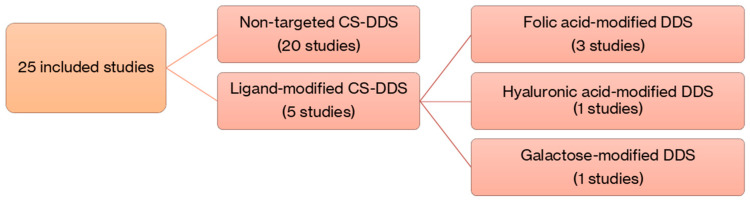
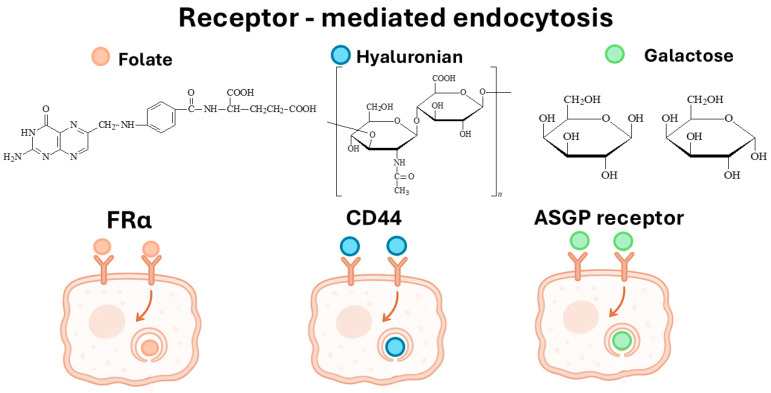
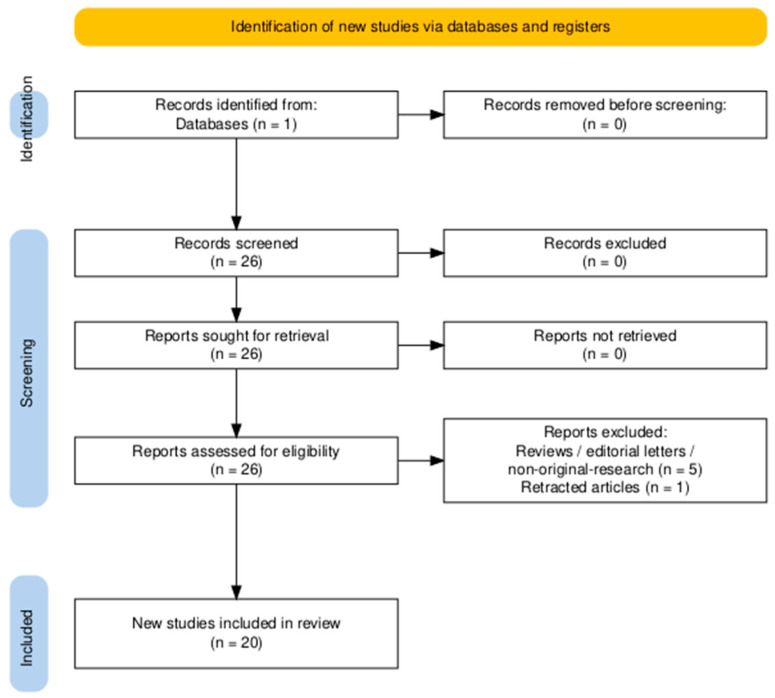
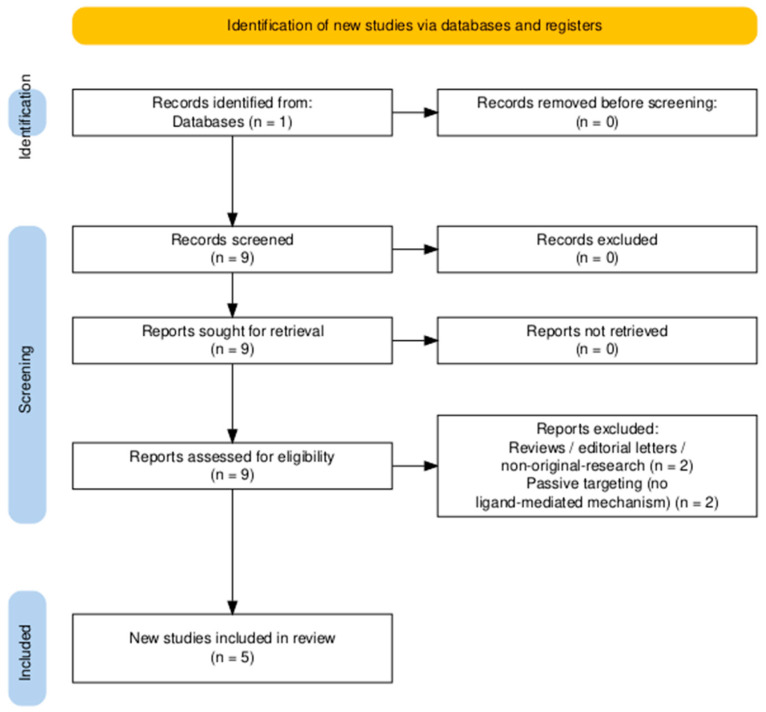
Chitosan (CS) has emerged as a versatile biopolymer for designing drug delivery systems (DDS) in colorectal cancer (CRC) therapy due to its biocompatibility, mucoadhesive properties, and ability to be surface-functionalized. This scoping review systematically analyzed current experimental studies on CS-based DDS for CRC, comparing non-targeted formulations with ligand-modified systems to identify advances in targeting efficiency, drug release behavior, and biological outcomes. Among the twenty-five initially identified studies, divided into two categories, non-targeted CS-based DDSs and ligand-modified CS-DDSs, five fulfilled the inclusion criteria for ligand-functionalized systems. These incorporated targeting moieties, such as folic acid (FA), hyaluronic acid (HA), and galactose (Gal), to achieve receptor-mediated uptake via FRα, CD44, and ASGP receptors, respectively. Ligand modification consistently enhanced cellular uptake, reduced IC50 values, and improved tumor-selective cytotoxicity compared to non-targeted systems. However, in vivo validation remains scarce, with only one study confirming tumor accumulation in xenograft models. Moreover, no clinical trials currently assess CS-based nanocarriers for the treatment of CRC. Overall, CS represents a promising modular platform for targeted nanomedicine, but translational progress requires bridging preclinical success with comprehensive in vivo and clinical evaluation.
Verified 2026-11-10 · 2 references not checked yet
Overview
AI snapshot
Written from the paper’s full text.
TL;DR
This scoping review maps 25 original studies on chitosan-based drug delivery systems for colorectal cancer, comparing non-targeted and ligand-modified formulations. Ligand modification with folate, hyaluronic acid, or galactose improved uptake and cytotoxicity in vitro, but in vivo and clinical evidence remains scarce.
Key findings
- Of 25 included original studies, 20 were non-targeted chitosan-based DDS and 5 met criteria for ligand-modified active targeting; the ligands were folic acid, hyaluronic acid, and galactose, targeting FRα, CD44, and ASGPR, respectively.
- Ligand-modified systems showed up to a 1.5–3-fold increase in cellular uptake in FRα+ and CD44+ colorectal cancer cells and reduced IC50 values by 40–70% relative to non-functionalized chitosan carriers; only one study demonstrated tumor accumulation in xenograft models.
- Non-targeted systems included 15 oral colon-directed formulations across eight studies and 13 intravenously administered DDS across 12 studies; examples include PEG-OA-modified chitosan micelles reducing tumor volume by 50%, charge-reversal Oxa-R-NGs achieving 77% oxaliplatin release under tumor-mimicking pH with ultrasound, capecitabine-loaded chitosan NPs producing approximately 72% tumor reduction within 21 days, and SN-38 chitosan systems with *Bifidobacterium bifidum* achieving approximately 80% tumor suppression.
- No clinical trials directly evaluate chitosan-based nanocarriers for colorectal cancer; registered chitosan cancer trials focus on supportive, surgical, or topical applications rather than systemic anticancer drug delivery.
Methods
- Scoping review conducted according to PRISMA-ScR, using PubMed searches limited to original research articles in English published January 2020–June 2025, with two complementary search strategies: a broad MeSH-based query and a ligand-targeted Title/Abstract search.
- Inclusion required a chitosan-based DDS for colorectal cancer, a chemotherapeutic payload, and experimental in vitro and/or in vivo biological evaluation; exclusions included non-CRC studies, no chitosan, no chemotherapeutic agent, no biological results, reviews, book chapters, and non-English papers.
- Screening and data extraction were performed by four independent reviewers, with discrepancies resolved by a fifth reviewer; extracted data covered DDS composition, ligands, drug, release methodology, cytotoxicity, animal models, and biological effects, and studies were categorized as non-targeted or ligand-modified.
Limitations
- The paper states that in vivo validation is scarce, with only one study confirming tumor accumulation in xenograft models and no clinical trials of chitosan-based nanocarriers for CRC; most studies used 2D monolayer models, pharmacokinetic and immunogenicity data were underreported, chitosan materials were heterogeneous, methods were not standardized, and in vivo work relied on immunocompromised xenograft models. It also notes receptor heterogeneity, binding-site barrier effects, variable ligand density, lack of ligand-density optimization or saturation kinetics, short-duration studies with unclear sample sizes, and frequent lack of appropriate comparator groups.
- Evident from the text: as a scoping review, it does not report a quantitative meta-analysis or formal risk-of-bias assessment, and the search was restricted to PubMed, English-language, 2020–2025 publications, which may omit relevant non-English or older studies.
Model-written summary. Check it against the paper before relying on it.
Integrity signals
Registry
Cites
Statistics
Figures
Verification
Claims the paper makes
29 No basis given · 23 Own interpretation · 11 Not checked yet · 9 Own result · 6 No full text of the sources · 1 Couldn’t confirm · 1 Own method · accuracy not yet measured
The paper states this without a source or data behind it here, so there is nothing to check it against. The quote shows it is in the paper.
In the paper
“HA-CD44 targeting proved particularly effective against metastatic and stem-like CRC phenotypes”
§ Chitosan-Based Drug Delivery Systems for Targeted Chemotherapy in Colorectal Cancer: A Scoping Review > 2. Review Results > 2.3. Comparative Analysis: Non-Targeted vs. Ligand-Modified CS-Based DDS
plaindirect- Asserted: passes — The authors put it forward as true.
- Checkable: passes — It can be checked against evidence.
- Load-bearing: passes — The paper’s conclusions depend on it.
- Based: passes — The paper gives a reason why it holds.
The paper states this without a source or data behind it here, so there is nothing to check it against. The quote shows it is in the paper.
In the paper
“Ligand-modified DDSs exhibited superior penetration in TME-mimicking models”
§ Chitosan-Based Drug Delivery Systems for Targeted Chemotherapy in Colorectal Cancer: A Scoping Review > 2. Review Results > 2.3. Comparative Analysis: Non-Targeted vs. Ligand-Modified CS-Based DDS
plaindirect- Asserted: passes — The authors put it forward as true.
- Checkable: passes — It can be checked against evidence.
- Load-bearing: passes — The paper’s conclusions depend on it.
- Based: passes — The paper gives a reason why it holds.
The paper states this without a source or data behind it here, so there is nothing to check it against. The quote shows it is in the paper.
In the paper
“None of the ligand-modified CS-based nanocarriers identified in this review has advanced beyond preclinical testing”
§ Chitosan-Based Drug Delivery Systems for Targeted Chemotherapy in Colorectal Cancer: A Scoping Review > 5. Conclusions
plain- Asserted: passes — The authors put it forward as true.
- Checkable: passes — It can be checked against evidence.
- Load-bearing: passes — The paper’s conclusions depend on it.
- Based: passes — The paper gives a reason why it holds.
The paper states this without a source or data behind it here, so there is nothing to check it against. The quote shows it is in the paper.
In the paper
“factors that were rarely controlled or compared across studies.”
§ Chitosan-Based Drug Delivery Systems for Targeted Chemotherapy in Colorectal Cancer: A Scoping Review > 2. Review Results > 2.3. Comparative Analysis: Non-Targeted vs. Ligand-Modified CS-Based DDS
plain- Asserted: passes — The authors put it forward as true.
- Checkable: passes — It can be checked against evidence.
- Load-bearing: passes — The paper’s conclusions depend on it.
- Based: passes — The paper gives a reason why it holds.
The paper states this without a source or data behind it here, so there is nothing to check it against. The quote shows it is in the paper.
In the paper
“A comparative evaluation of the included studies revealed distinct performance differences between non-targeted and ligand-modified CS-based DDS in terms of cellular uptake, cytotoxicity, TME penetration, toxicity profile, and targeting efficiency.”
§ Chitosan-Based Drug Delivery Systems for Targeted Chemotherapy in Colorectal Cancer: A Scoping Review > 2. Review Results > 2.3. Comparative Analysis: Non-Targeted vs. Ligand-Modified CS-Based DDS
plaincorrelational- Asserted: passes — The authors put it forward as true.
- Checkable: passes — It can be checked against evidence.
- Load-bearing: passes — The paper’s conclusions depend on it.
- Based: passes — The paper gives a reason why it holds.
A result the paper reports from its own data — it cites no other source for it, so there is none to check. The quote shows it is in the paper.
In the paper
“Collectively, these trials primarily focus on supportive, surgical, or topical therapeutic applications rather than systemic anticancer drug delivery”
§ Chitosan-Based Drug Delivery Systems for Targeted Chemotherapy in Colorectal Cancer: A Scoping Review > 3. Clinical Perspective
plain- Asserted: passes — The authors put it forward as true.
- Checkable: passes — It can be checked against evidence.
- Load-bearing: passes — The paper’s conclusions depend on it.
- Based: passes — The paper gives a reason why it holds.
A result the paper reports from its own data — it cites no other source for it, so there is none to check. The quote shows it is in the paper.
In the paper
“Ligand conjugation significantly enhanced receptor-mediated internalization efficiency compared to passive uptake mechanisms in non-targeted systems.”
§ Chitosan-Based Drug Delivery Systems for Targeted Chemotherapy in Colorectal Cancer: A Scoping Review > 2. Review Results > 2.3. Comparative Analysis: Non-Targeted vs. Ligand-Modified CS-Based DDS
boosteddirect- Asserted: passes — The authors put it forward as true.
- Checkable: passes — It can be checked against evidence.
- Load-bearing: passes — The paper’s conclusions depend on it.
- Based: passes — The paper gives a reason why it holds.
A result the paper reports from its own data — it cites no other source for it, so there is none to check. The quote shows it is in the paper.
In the paper
“A total of 13 CS-based DDS across 12 studies were administered intravenously”
§ Chitosan-Based Drug Delivery Systems for Targeted Chemotherapy in Colorectal Cancer: A Scoping Review > 2. Review Results > 2.1. Chitosan-Based DDS
plain- Asserted: passes — The authors put it forward as true.
- Checkable: passes — It can be checked against evidence.
- Load-bearing: unclear — It is unclear whether the paper’s conclusions depend on it.
- Based: passes — The paper gives a reason why it holds.
The paper states this without a source or data behind it here, so there is nothing to check it against. The quote shows it is in the paper.
In the paper
“In many cases, studies lacked appropriate comparator groups, such as standard chemotherapeutic regimens”
§ Chitosan-Based Drug Delivery Systems for Targeted Chemotherapy in Colorectal Cancer: A Scoping Review > 2. Review Results > 2.1. Chitosan-Based DDS
plain- Asserted: passes — The authors put it forward as true.
- Checkable: passes — It can be checked against evidence.
- Load-bearing: passes — The paper’s conclusions depend on it.
- Based: passes — The paper gives a reason why it holds.
The paper states this without a source or data behind it here, so there is nothing to check it against. The quote shows it is in the paper.
In the paper
“Ligand-functionalized CS-based DDS generally exhibited lower systemic and off-target toxicity than free drugs and non-targeted systems.”
§ Chitosan-Based Drug Delivery Systems for Targeted Chemotherapy in Colorectal Cancer: A Scoping Review > 2. Review Results > 2.3. Comparative Analysis: Non-Targeted vs. Ligand-Modified CS-Based DDS
plaindirect- Asserted: passes — The authors put it forward as true.
- Checkable: passes — It can be checked against evidence.
- Load-bearing: passes — The paper’s conclusions depend on it.
- Based: passes — The paper gives a reason why it holds.
The paper states this without a source or data behind it here, so there is nothing to check it against. The quote shows it is in the paper.
In the paper
“Despite these promising findings, the in vivo efficacy of active targeting remains insufficiently validated.”
§ Chitosan-Based Drug Delivery Systems for Targeted Chemotherapy in Colorectal Cancer: A Scoping Review > 2. Review Results > 2.3. Comparative Analysis: Non-Targeted vs. Ligand-Modified CS-Based DDS
plain- Asserted: passes — The authors put it forward as true.
- Checkable: passes — It can be checked against evidence.
- Load-bearing: passes — The paper’s conclusions depend on it.
- Based: passes — The paper gives a reason why it holds.
A result the paper reports from its own data — it cites no other source for it, so there is none to check. The quote shows it is in the paper.
In the paper
“A significant methodological limitation across studies was the predominant reliance on two-dimensional (2D) monolayer cell cultures (e.g., HT-29, HCT116), with limited exploration of three-dimensional (3D) models or metastatic CRC cell lines.”
§ Chitosan-Based Drug Delivery Systems for Targeted Chemotherapy in Colorectal Cancer: A Scoping Review > 2. Review Results > 2.1. Chitosan-Based DDS
plain- Asserted: passes — The authors put it forward as true.
- Checkable: passes — It can be checked against evidence.
- Load-bearing: passes — The paper’s conclusions depend on it.
- Based: passes — The paper gives a reason why it holds.
The paper states this without a source or data behind it here, so there is nothing to check it against. The quote shows it is in the paper.
In the paper
“A substantial barrier is the heterogeneity of CS materials used across formulations. Formulations varied widely in molecular weight, degree of deacetylation, viscosity grade, type of cross-linking agents, density, and purification source, critically affect solubility, charge distribution, mucoadhesion, and cellular uptake.”
§ Chitosan-Based Drug Delivery Systems for Targeted Chemotherapy in Colorectal Cancer: A Scoping Review > 2. Review Results > 2.1. Chitosan-Based DDS
plaindirect- Asserted: passes — The authors put it forward as true.
- Checkable: passes — It can be checked against evidence.
- Load-bearing: passes — The paper’s conclusions depend on it.
- Based: passes — The paper gives a reason why it holds.
A result the paper reports from its own data — it cites no other source for it, so there is none to check. The quote shows it is in the paper.
In the paper
“Across eight studies, a total of 15 distinct pH-responsive or colon-directed formulations were identified”
§ Chitosan-Based Drug Delivery Systems for Targeted Chemotherapy in Colorectal Cancer: A Scoping Review > 2. Review Results > 2.1. Chitosan-Based DDS
plain- Asserted: passes — The authors put it forward as true.
- Checkable: passes — It can be checked against evidence.
- Load-bearing: unclear — It is unclear whether the paper’s conclusions depend on it.
- Based: passes — The paper gives a reason why it holds.
The paper states this without a source or data behind it here, so there is nothing to check it against. The quote shows it is in the paper.
In the paper
“IC50 values were reduced by 40–70% relative to non-functionalized CS carriers”
§ Chitosan-Based Drug Delivery Systems for Targeted Chemotherapy in Colorectal Cancer: A Scoping Review > 2. Review Results > 2.3. Comparative Analysis: Non-Targeted vs. Ligand-Modified CS-Based DDS
plaindirect- Asserted: passes — The authors put it forward as true.
- Checkable: passes — It can be checked against evidence.
- Load-bearing: passes — The paper’s conclusions depend on it.
- Based: passes — The paper gives a reason why it holds.
The paper states this without a source or data behind it here, so there is nothing to check it against. The quote shows it is in the paper.
In the paper
“In vitro assays consistently demonstrated enhanced cytotoxicity of CS-encapsulated drugs compared to their free forms”
§ Chitosan-Based Drug Delivery Systems for Targeted Chemotherapy in Colorectal Cancer: A Scoping Review > 2. Review Results > 2.1. Chitosan-Based DDS
boosteddirect- Asserted: passes — The authors put it forward as true.
- Checkable: passes — It can be checked against evidence.
- Load-bearing: passes — The paper’s conclusions depend on it.
- Based: passes — The paper gives a reason why it holds.
A conclusion the paper draws from its own results — it cites no other source for it, so there is none to check. The quote shows it is in the paper.
In the paper
“Despite promising efficacy, the overall level of biological evidence supporting non-targeted CS-based DDS remains limited.”
§ Chitosan-Based Drug Delivery Systems for Targeted Chemotherapy in Colorectal Cancer: A Scoping Review > 2. Review Results > 2.1. Chitosan-Based DDS
plain- Asserted: passes — The authors put it forward as true.
- Checkable: passes — It can be checked against evidence.
- Load-bearing: passes — The paper’s conclusions depend on it.
- Based: passes — The paper gives a reason why it holds.
A conclusion the paper draws from its own results — it cites no other source for it, so there is none to check. The quote shows it is in the paper.
In the paper
“However, the therapeutic benefit of FA-based targeting strongly depends on the heterogeneous expression of folate receptors across CRC subtypes.”
§ Chitosan-Based Drug Delivery Systems for Targeted Chemotherapy in Colorectal Cancer: A Scoping Review > 2. Review Results > 2.2. Ligand-Modified CS-Based DDS
boostedconditional- Asserted: passes — The authors put it forward as true.
- Checkable: passes — It can be checked against evidence.
- Load-bearing: passes — The paper’s conclusions depend on it.
- Based: passes — The paper gives a reason why it holds.
A conclusion the paper draws from its own results — it cites no other source for it, so there is none to check. The quote shows it is in the paper.
In the paper
“The absence of comprehensive in vivo data, pharmacokinetic profiling, and long-term biosafety evaluation continues to hinder clinical translation.”
§ Chitosan-Based Drug Delivery Systems for Targeted Chemotherapy in Colorectal Cancer: A Scoping Review > 2. Review Results > 2.3. Comparative Analysis: Non-Targeted vs. Ligand-Modified CS-Based DDS
plaindirect- Asserted: passes — The authors put it forward as true.
- Checkable: passes — It can be checked against evidence.
- Load-bearing: passes — The paper’s conclusions depend on it.
- Based: passes — The paper gives a reason why it holds.
A conclusion the paper draws from its own results — it cites no other source for it, so there is none to check. The quote shows it is in the paper.
In the paper
“These findings collectively confirm the critical role of FR-mediated targeting in improving the selectivity and potency of CS-based DDS against CRC.”
§ Chitosan-Based Drug Delivery Systems for Targeted Chemotherapy in Colorectal Cancer: A Scoping Review > 2. Review Results > 2.2. Ligand-Modified CS-Based DDS
boosteddirect- Asserted: passes — The authors put it forward as true.
- Checkable: passes — It can be checked against evidence.
- Load-bearing: passes — The paper’s conclusions depend on it.
- Based: passes — The paper gives a reason why it holds.
A conclusion the paper draws from its own results — it cites no other source for it, so there is none to check. The quote shows it is in the paper.
In the paper
“Reported improvements in tumor inhibition or IC50 reduction must therefore be regarded as preliminary signals, not definitive therapeutic advantages.”
§ Chitosan-Based Drug Delivery Systems for Targeted Chemotherapy in Colorectal Cancer: A Scoping Review > 2. Review Results > 2.1. Chitosan-Based DDS
plain- Asserted: passes — The authors put it forward as true.
- Checkable: unclear — It is unclear whether it could be checked against evidence.
- Load-bearing: passes — The paper’s conclusions depend on it.
- Based: passes — The paper gives a reason why it holds.
A conclusion the paper draws from its own results — it cites no other source for it, so there is none to check. The quote shows it is in the paper.
In the paper
“Across all ligand types, receptor heterogeneity, binding-site barrier effects, and variable ligand density present unresolved limitations that may diminish targeting consistency in vivo.”
§ Chitosan-Based Drug Delivery Systems for Targeted Chemotherapy in Colorectal Cancer: A Scoping Review > 2. Review Results > 2.2. Ligand-Modified CS-Based DDS
hedgedconditional- Asserted: passes — The authors put it forward as true.
- Checkable: passes — It can be checked against evidence.
- Load-bearing: passes — The paper’s conclusions depend on it.
- Based: passes — The paper gives a reason why it holds.
A conclusion the paper draws from its own results — it cites no other source for it, so there is none to check. The quote shows it is in the paper.
In the paper
“underscoring the persistent challenges that impede transition from laboratory to clinical application.”
§ Chitosan-Based Drug Delivery Systems for Targeted Chemotherapy in Colorectal Cancer: A Scoping Review > 5. Conclusions
plaindirect- Asserted: passes — The authors put it forward as true.
- Checkable: passes — It can be checked against evidence.
- Load-bearing: passes — The paper’s conclusions depend on it.
- Based: passes — The paper gives a reason why it holds.
A conclusion the paper draws from its own results — it cites no other source for it, so there is none to check. The quote shows it is in the paper.
In the paper
“These differences arise not only from the presence of a ligand but also from receptor density, ligand-receptor binding affinity, NPs surface charge, and steric accessibility of the targeting moiety”
§ Chitosan-Based Drug Delivery Systems for Targeted Chemotherapy in Colorectal Cancer: A Scoping Review > 2. Review Results > 2.3. Comparative Analysis: Non-Targeted vs. Ligand-Modified CS-Based DDS
plaindirect- Asserted: passes — The authors put it forward as true.
- Checkable: passes — It can be checked against evidence.
- Load-bearing: passes — The paper’s conclusions depend on it.
- Based: passes — The paper gives a reason why it holds.
A conclusion the paper draws from its own results — it cites no other source for it, so there is none to check. The quote shows it is in the paper.
In the paper
“Despite remarkable in vitro and preclinical progress, the clinical translation of CS-based DDSs, particularly those employing ligand-mediated targeting, still remains limited.”
§ Chitosan-Based Drug Delivery Systems for Targeted Chemotherapy in Colorectal Cancer: A Scoping Review > 5. Conclusions
plain- Asserted: passes — The authors put it forward as true.
- Checkable: passes — It can be checked against evidence.
- Load-bearing: passes — The paper’s conclusions depend on it.
- Based: passes — The paper gives a reason why it holds.
A conclusion the paper draws from its own results — it cites no other source for it, so there is none to check. The quote shows it is in the paper.
In the paper
“attributed to receptor-mediated internalization, enhanced mucoadhesion, and improved stability under acidic pH (6.5–6.8)”
§ Chitosan-Based Drug Delivery Systems for Targeted Chemotherapy in Colorectal Cancer: A Scoping Review > 2. Review Results > 2.3. Comparative Analysis: Non-Targeted vs. Ligand-Modified CS-Based DDS
plaindirect- Asserted: passes — The authors put it forward as true.
- Checkable: passes — It can be checked against evidence.
- Load-bearing: passes — The paper’s conclusions depend on it.
- Based: passes — The paper gives a reason why it holds.
A conclusion the paper draws from its own results — it cites no other source for it, so there is none to check. The quote shows it is in the paper.
In the paper
“As a result, tumor accumulation and antitumor efficacy may be overestimated compared with immunocompetent hosts.”
§ Chitosan-Based Drug Delivery Systems for Targeted Chemotherapy in Colorectal Cancer: A Scoping Review > 2. Review Results > 2.1. Chitosan-Based DDS
hedgedconditional- Asserted: passes — The authors put it forward as true.
- Checkable: passes — It can be checked against evidence.
- Load-bearing: passes — The paper’s conclusions depend on it.
- Based: passes — The paper gives a reason why it holds.
A conclusion the paper draws from its own results — it cites no other source for it, so there is none to check. The quote shows it is in the paper.
In the paper
“Enhanced tumor specificity reduced undesired cytotoxicity in normal fibroblast and epithelial cells.”
§ Chitosan-Based Drug Delivery Systems for Targeted Chemotherapy in Colorectal Cancer: A Scoping Review > 2. Review Results > 2.3. Comparative Analysis: Non-Targeted vs. Ligand-Modified CS-Based DDS
plaindirect- Asserted: passes — The authors put it forward as true.
- Checkable: passes — It can be checked against evidence.
- Load-bearing: passes — The paper’s conclusions depend on it.
- Based: passes — The paper gives a reason why it holds.
A conclusion the paper draws from its own results — it cites no other source for it, so there is none to check. The quote shows it is in the paper.
In the paper
“Models lacking intact immune surveillance also fail to predict potential immunogenicity or long-term biosafety of CS-based DDS.”
§ Chitosan-Based Drug Delivery Systems for Targeted Chemotherapy in Colorectal Cancer: A Scoping Review > 2. Review Results > 2.1. Chitosan-Based DDS
plaindirect- Asserted: passes — The authors put it forward as true.
- Checkable: passes — It can be checked against evidence.
- Load-bearing: passes — The paper’s conclusions depend on it.
- Based: passes — The paper gives a reason why it holds.
A conclusion the paper draws from its own results — it cites no other source for it, so there is none to check. The quote shows it is in the paper.
In the paper
“underscoring the lack of translational or clinical evaluation of CS-based DDS in oncology.”
§ Chitosan-Based Drug Delivery Systems for Targeted Chemotherapy in Colorectal Cancer: A Scoping Review > 3. Clinical Perspective
plain- Asserted: passes — The authors put it forward as true.
- Checkable: passes — It can be checked against evidence.
- Load-bearing: passes — The paper’s conclusions depend on it.
- Based: passes — The paper gives a reason why it holds.
A conclusion the paper draws from its own results — it cites no other source for it, so there is none to check. The quote shows it is in the paper.
In the paper
“indicating enhanced intracellular drug accumulation and potency”
§ Chitosan-Based Drug Delivery Systems for Targeted Chemotherapy in Colorectal Cancer: A Scoping Review > 2. Review Results > 2.3. Comparative Analysis: Non-Targeted vs. Ligand-Modified CS-Based DDS
hedgeddirect- Asserted: passes — The authors put it forward as true.
- Checkable: passes — It can be checked against evidence.
- Load-bearing: passes — The paper’s conclusions depend on it.
- Based: passes — The paper gives a reason why it holds.
A conclusion the paper draws from its own results — it cites no other source for it, so there is none to check. The quote shows it is in the paper.
In the paper
“However, translation remains limited by the scarcity of immunocompetent animal models, minimal pharmacokinetic and immunogenicity characterization, and high variability in CS composition across studies.”
§ Chitosan-Based Drug Delivery Systems for Targeted Chemotherapy in Colorectal Cancer: A Scoping Review > 2. Review Results > 2.1. Chitosan-Based DDS
plaindirect- Asserted: passes — The authors put it forward as true.
- Checkable: passes — It can be checked against evidence.
- Load-bearing: passes — The paper’s conclusions depend on it.
- Based: passes — The paper gives a reason why it holds.
A conclusion the paper draws from its own results — it cites no other source for it, so there is none to check. The quote shows it is in the paper.
In the paper
“Collectively, these findings indicate that dual-layer protection, combining an enteric polymer with a CS matrix, provides substantially greater stability and colon-targeting precision than CS-NPs alone, which otherwise exhibit faster release kinetics and measurable systemic absorption.”
§ Chitosan-Based Drug Delivery Systems for Targeted Chemotherapy in Colorectal Cancer: A Scoping Review > 2. Review Results > 2.1. Chitosan-Based DDS
hedgeddirect- Asserted: passes — The authors put it forward as true.
- Checkable: passes — It can be checked against evidence.
- Load-bearing: passes — The paper’s conclusions depend on it.
- Based: passes — The paper gives a reason why it holds.
- It may state two separate claims as one. 43
- The quote only partly states this claim. 5
- Probably not a substantial claim. 4
The cited sources that could be checked couldn’t confirm or dispute this claim.
In the paper
“However, ASGPR expression in CRC is heterogeneous within CRC lesions [94]. Therefore, while Gal enhances uptake in some CRC models, its broader applicability may be limited.”
§ Chitosan-Based Drug Delivery Systems for Targeted Chemotherapy in Colorectal Cancer: A Scoping Review > 2. Review Results > 2.2. Ligand-Modified CS-Based DDS
What the sources say
- Could not verifycites [94] Ramezani, S., Parkhideh, A., Bhattacharya, P.K., Farach-Carson, M.C., and Harrington, D.A. (2021). Beyond colonoscopy: Exploring new cell surface biomarkers for detection of early, heterogenous colorectal lesions. Front. Oncol., 11. sourceExperimental — accuracy not yet measured
The citation is attached to the assertion that ASGPR expression varies within CRC lesions. Searches for ASGPR and asialoglycoprotein receptor found no passage addressing that receptor; the Surface Biomarkers sections instead discuss variation in other markers, including GPRC5A and galectin-3. Those passages cannot establish the ASGPR-specific claim. (LLM, conf=0.72)
hedgedconditional- Asserted: passes — The authors put it forward as true.
- Checkable: passes — It can be checked against evidence.
- Load-bearing: passes — The paper’s conclusions depend on it.
- Based: passes — The paper gives a reason why it holds.
It may state two separate claims as one.
- Could not verify
The paper states this without a source or data behind it here, so there is nothing to check it against. The quote shows it is in the paper.
In the paper
“Moreover, the biocompatible nature of CS and its derivatives contributed to reduced gastrointestinal irritation and improved tolerability, as reported in both in vitro and limited in vivo assessments.”
§ Chitosan-Based Drug Delivery Systems for Targeted Chemotherapy in Colorectal Cancer: A Scoping Review > 2. Review Results > 2.3. Comparative Analysis: Non-Targeted vs. Ligand-Modified CS-Based DDS
plaindirect- Asserted: passes — The authors put it forward as true.
- Checkable: passes — It can be checked against evidence.
- Load-bearing: unclear — It is unclear whether the paper’s conclusions depend on it.
- Based: passes — The paper gives a reason why it holds.
It may state two separate claims as one.
A result the paper reports from its own data — it cites no other source for it, so there is none to check. The quote shows it is in the paper.
In the paper
“Despite these promising in vitro results, the translational maturity of ligand-modified CS-based DDS remains limited. Most studies were restricted to 2D monolayer models, with only one demonstrating in vivo targeting efficiency. Data on pharmacokinetics, biodistribution, and long-term biosafety are still lacking.”
§ Chitosan-Based Drug Delivery Systems for Targeted Chemotherapy in Colorectal Cancer: A Scoping Review > 2. Review Results > 2.2. Ligand-Modified CS-Based DDS
plain- Asserted: passes — The authors put it forward as true.
- Checkable: passes — It can be checked against evidence.
- Load-bearing: passes — The paper’s conclusions depend on it.
- Based: passes — The paper gives a reason why it holds.
It may state two separate claims as one.
A result the paper reports from its own data — it cites no other source for it, so there is none to check. The quote shows it is in the paper.
In the paper
“This scoping review identified and analyzed a total of 25 original research articles that met the inclusion criteria. These studies were grouped into two categories based on the design of the DDS: (1) CS-based DDS without active targeting ligands, and (2) ligand-modified CS-based DDS for selective drug delivery to CRC cells.”
§ Chitosan-Based Drug Delivery Systems for Targeted Chemotherapy in Colorectal Cancer: A Scoping Review > 2. Review Results
plain- Asserted: passes — The authors put it forward as true.
- Checkable: passes — It can be checked against evidence.
- Load-bearing: unclear — It is unclear whether the paper’s conclusions depend on it.
- Based: passes — The paper gives a reason why it holds.
It may state two separate claims as one. The quote only partly states this claim.
None of the sources cited for this claim have been checked yet.
In the paper
“HA-based systems effectively targeted CD44, overexpressing CRC phenotypes, key drivers of stemness and metastasis, showing enhanced tumor accumulation, reduced migration, and selective cytotoxicity compared with free apigenin [70].”
§ Chitosan-Based Drug Delivery Systems for Targeted Chemotherapy in Colorectal Cancer: A Scoping Review > 2. Review Results > 2.2. Ligand-Modified CS-Based DDS
What the sources say
- Not checked yetcites [70] Yang, B., Mao, Y., Zhang, Y., Hao, Y., Guo, M., Li, B., and Peng, H. (2023). HA-coated PLGA nanoparticles loaded with apigenin for colon cancer with high expression of CD44. Molecules, 28. source
Checked before — its earlier verdict is held back until a new check runs.
plaindirect- Asserted: passes — The authors put it forward as true.
- Checkable: passes — It can be checked against evidence.
- Load-bearing: unclear — It is unclear whether the paper’s conclusions depend on it.
- Based: passes — The paper gives a reason why it holds.
It may state two separate claims as one.
- Not checked yet
The paper states this without a source or data behind it here, so there is nothing to check it against. The quote shows it is in the paper.
In the paper
“Moreover, the pharmacokinetic and immunogenicity profiles remain underreported for most systems.”
§ Chitosan-Based Drug Delivery Systems for Targeted Chemotherapy in Colorectal Cancer: A Scoping Review > 2. Review Results > 2.1. Chitosan-Based DDS
plain- Asserted: passes — The authors put it forward as true.
- Checkable: passes — It can be checked against evidence.
- Load-bearing: passes — The paper’s conclusions depend on it.
- Based: passes — The paper gives a reason why it holds.
The quote only partly states this claim.
A result the paper reports from its own data — it cites no other source for it, so there is none to check. The quote shows it is in the paper.
In the paper
“Only a few clinical trials (ClinicalTrials.gov, accessed 11 November 2025) involving CS in cancer therapy have been registered to date, and none directly evaluate CS-based nanocarriers for CRC.”
§ Chitosan-Based Drug Delivery Systems for Targeted Chemotherapy in Colorectal Cancer: A Scoping Review > 3. Clinical Perspective
plain- Asserted: passes — The authors put it forward as true.
- Checkable: passes — It can be checked against evidence.
- Load-bearing: passes — The paper’s conclusions depend on it.
- Based: passes — The paper gives a reason why it holds.
It may state two separate claims as one.
None of the sources cited for this claim have been checked yet.
In the paper
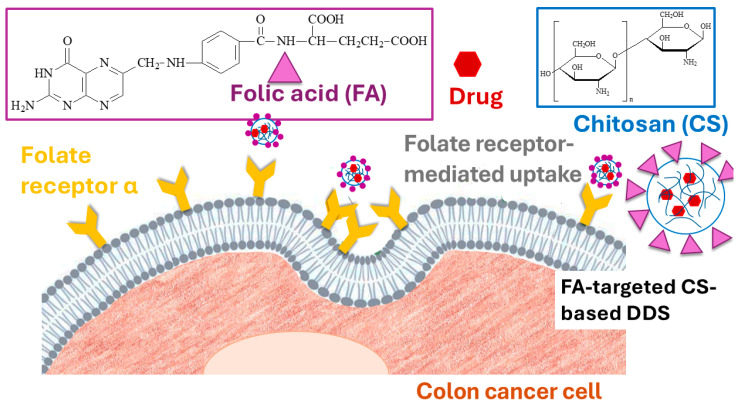
“Consistent with these findings, FA-conjugated CS NPs demonstrated superior internalization in FR-overexpressing colorectal cancer cells and significantly enhanced the cytotoxicity of 5-FU and RSV/FER combinations compared with non-targeted CS carriers [67,69].”
§ Chitosan-Based Drug Delivery Systems for Targeted Chemotherapy in Colorectal Cancer: A Scoping Review > 2. Review Results > 2.2. Ligand-Modified CS-Based DDS
What the sources say
- Not checked yetcites [67] Ullah, S., Azad, A.K., Nawaz, A., Shah, K.U., Iqbal, M., Albadrani, G.M., Al-Joufi, F.A., Sayed, A.A., and Abdel-Daim, M.M. (2022). 5-fluorouracil-loaded folic-acid-fabricated chitosan nanoparticles for site-targeted drug delivery cargo. Polymers, 14. source
Checked before — its earlier verdict is held back until a new check runs.
- Not checked — no full text of the sourcecites [69] Kumar, 2020, Targeted delivery and apoptosis induction of trans-resveratrol-ferulic acid loaded chitosan coated folic acid conjugate solid lipid nanoparticles in colon cancer cells, Carbohydr. Polym. source
boosteddirect- Asserted: passes — The authors put it forward as true.
- Checkable: passes — It can be checked against evidence.
- Load-bearing: passes — The paper’s conclusions depend on it.
- Based: passes — The paper gives a reason why it holds.
It may state two separate claims as one.
- Not checked yet
The paper states this without a source or data behind it here, so there is nothing to check it against. The quote shows it is in the paper.
In the paper
“Only one study demonstrated successful tumor accumulation in xenograft models, while the remaining investigations were restricted to 2D monolayer or co-culture systems.”
§ Chitosan-Based Drug Delivery Systems for Targeted Chemotherapy in Colorectal Cancer: A Scoping Review > 2. Review Results > 2.3. Comparative Analysis: Non-Targeted vs. Ligand-Modified CS-Based DDS
boosted- Asserted: passes — The authors put it forward as true.
- Checkable: passes — It can be checked against evidence.
- Load-bearing: passes — The paper’s conclusions depend on it.
- Based: passes — The paper gives a reason why it holds.
It may state two separate claims as one.
The paper states this without a source or data behind it here, so there is nothing to check it against. The quote shows it is in the paper.
In the paper
“Among active targeting ligands, FA-based systems exhibited the most substantial receptor-mediated uptake and cytotoxic response, followed by HA- and Gal-functionalized formulations.”
§ Chitosan-Based Drug Delivery Systems for Targeted Chemotherapy in Colorectal Cancer: A Scoping Review > 2. Review Results > 2.3. Comparative Analysis: Non-Targeted vs. Ligand-Modified CS-Based DDS
plaindirect- Asserted: passes — The authors put it forward as true.
- Checkable: passes — It can be checked against evidence.
- Load-bearing: passes — The paper’s conclusions depend on it.
- Based: passes — The paper gives a reason why it holds.
It may state two separate claims as one.
The paper states this without a source or data behind it here, so there is nothing to check it against. The quote shows it is in the paper.
In the paper
“These ligand-functionalized systems consistently demonstrated enhanced cellular uptake, improved cytotoxicity, and stronger tumor localization compared to non-targeted CS carriers.”
§ Chitosan-Based Drug Delivery Systems for Targeted Chemotherapy in Colorectal Cancer: A Scoping Review > 2. Review Results > 2.2. Ligand-Modified CS-Based DDS
boosteddirect- Asserted: passes — The authors put it forward as true.
- Checkable: passes — It can be checked against evidence.
- Load-bearing: passes — The paper’s conclusions depend on it.
- Based: passes — The paper gives a reason why it holds.
It may state two separate claims as one.
None of the sources cited for this claim have been checked yet.
In the paper
“capecitabine (CTB)-loaded CS NPs resulted in approximately 72% tumor reduction within 21 days in a DMH-induced CRC mouse model, while concurrently downregulating pro-angiogenic and inflammatory mediators [52]”
§ Chitosan-Based Drug Delivery Systems for Targeted Chemotherapy in Colorectal Cancer: A Scoping Review > 2. Review Results > 2.1. Chitosan-Based DDS
What the sources say
- Not checked yetcites [52] Bhattacharya, S., Page, A., and Shinde, P. (2024). Capecitabine loaded potato starch-chitosan nanoparticles: A novel approach for targeted therapy and improved outcomes in aggressive colon cancer. Eur. J. Pharm. Biopharm., 200. source
Checked before — its earlier verdict is held back until a new check runs.
plaindirect- Asserted: passes — The authors put it forward as true.
- Checkable: passes — It can be checked against evidence.
- Load-bearing: unclear — It is unclear whether the paper’s conclusions depend on it.
- Based: passes — The paper gives a reason why it holds.
It may state two separate claims as one.
- Not checked yet
None of the sources cited for this claim have been checked yet.
In the paper
“Overall, FA conjugation significantly improved selective drug internalization into FRα-overexpressing CRC cells, reduced off-target toxicity, and enhanced cytotoxicity for agents such as 5-FU, IMT, and polyphenols.”
§ Chitosan-Based Drug Delivery Systems for Targeted Chemotherapy in Colorectal Cancer: A Scoping Review > 2. Review Results > 2.2. Ligand-Modified CS-Based DDS
boosteddirect- Asserted: passes — The authors put it forward as true.
- Checkable: passes — It can be checked against evidence.
- Load-bearing: passes — The paper’s conclusions depend on it.
- Based: passes — The paper gives a reason why it holds.
It may state two separate claims as one.
A result the paper reports from its own data — it cites no other source for it, so there is none to check. The quote shows it is in the paper.
In the paper
“Most of these formulations exhibited minimal drug release under gastric conditions and preferential release at colonic pH.”
§ Chitosan-Based Drug Delivery Systems for Targeted Chemotherapy in Colorectal Cancer: A Scoping Review > 2. Review Results > 2.1. Chitosan-Based DDS
plain- Asserted: passes — The authors put it forward as true.
- Checkable: passes — It can be checked against evidence.
- Load-bearing: passes — The paper’s conclusions depend on it.
- Based: passes — The paper gives a reason why it holds.
It may state two separate claims as one.
The paper states this without a source or data behind it here, so there is nothing to check it against. The quote shows it is in the paper.
In the paper
“FA and HA functionalization provided additional protection against premature drug release in neutral physiological conditions (pH 7.4) while enabling responsive release in mildly acidic or enzymatically active environments, consistent with CRC tumor pH gradients.”
§ Chitosan-Based Drug Delivery Systems for Targeted Chemotherapy in Colorectal Cancer: A Scoping Review > 2. Review Results > 2.3. Comparative Analysis: Non-Targeted vs. Ligand-Modified CS-Based DDS
plaindirect- Asserted: passes — The authors put it forward as true.
- Checkable: passes — It can be checked against evidence.
- Load-bearing: passes — The paper’s conclusions depend on it.
- Based: passes — The paper gives a reason why it holds.
It may state two separate claims as one.
The paper states this without a source or data behind it here, so there is nothing to check it against. The quote shows it is in the paper.
In the paper
“However, such high inhibition rates were often reported from short-duration studies with unclear or unreported sample sizes, and lacking key methodological details.”
§ Chitosan-Based Drug Delivery Systems for Targeted Chemotherapy in Colorectal Cancer: A Scoping Review > 2. Review Results > 2.1. Chitosan-Based DDS
plaincorrelational- Asserted: passes — The authors put it forward as true.
- Checkable: passes — It can be checked against evidence.
- Load-bearing: passes — The paper’s conclusions depend on it.
- Based: passes — The paper gives a reason why it holds.
It may state two separate claims as one.
The paper states this without a source or data behind it here, so there is nothing to check it against. The quote shows it is in the paper.
In the paper
“In vivo imaging confirmed efficient tumor accumulation of HA-coated NPs with minimal off-target distribution, validating CD44-mediated active targeting as a powerful strategy for CRC therapy.”
§ Chitosan-Based Drug Delivery Systems for Targeted Chemotherapy in Colorectal Cancer: A Scoping Review > 2. Review Results > 2.2. Ligand-Modified CS-Based DDS
boosteddirect- Asserted: passes — The authors put it forward as true.
- Checkable: passes — It can be checked against evidence.
- Load-bearing: passes — The paper’s conclusions depend on it.
- Based: passes — The paper gives a reason why it holds.
It may state two separate claims as one.
The paper states this without a source or data behind it here, so there is nothing to check it against. The quote shows it is in the paper.
In the paper
“In contrast, non-targeted CS NPs primarily relied on electrostatic interactions or EPR effects, yielding slower uptake kinetics and higher IC50 values.”
§ Chitosan-Based Drug Delivery Systems for Targeted Chemotherapy in Colorectal Cancer: A Scoping Review > 2. Review Results > 2.3. Comparative Analysis: Non-Targeted vs. Ligand-Modified CS-Based DDS
plaindirect- Asserted: passes — The authors put it forward as true.
- Checkable: passes — It can be checked against evidence.
- Load-bearing: passes — The paper’s conclusions depend on it.
- Based: passes — The paper gives a reason why it holds.
It may state two separate claims as one.
In the paper
“Similarly, FA-functionalized CS-coated Zn–MOF nanocomposites exhibited pronounced FR-mediated uptake and vigorous proapoptotic and autophagic activity in HCT116 cells [68].”
§ Chitosan-Based Drug Delivery Systems for Targeted Chemotherapy in Colorectal Cancer: A Scoping Review > 2. Review Results > 2.2. Ligand-Modified CS-Based DDS
What the sources say
- Not checked — no full text of the sourcecites [68] Mokri, 2022, Chitosan-coated Zn-metal-organic framework nanocomposites for effective targeted delivery of LNA-antisense miR-224 to colon tumor: In vitro studies, Gene Ther. source
boosteddirect- Asserted: passes — The authors put it forward as true.
- Checkable: passes — It can be checked against evidence.
- Load-bearing: unclear — It is unclear whether the paper’s conclusions depend on it.
- Based: passes — The paper gives a reason why it holds.
It may state two separate claims as one.
The paper states this without a source or data behind it here, so there is nothing to check it against. The quote shows it is in the paper.
In the paper
“Most formulations exhibited controlled or pH-responsive release profiles.”
§ Chitosan-Based Drug Delivery Systems for Targeted Chemotherapy in Colorectal Cancer: A Scoping Review > 2. Review Results > 2.1. Chitosan-Based DDS
plain- Asserted: passes — The authors put it forward as true.
- Checkable: passes — It can be checked against evidence.
- Load-bearing: fails — The paper’s conclusions may not depend on it.
- Based: fails — The paper may give no reason why it holds.
Probably not a substantial claim. The paper’s conclusions may not depend on it. The paper may give no reason why it holds. The quote only partly states this claim.
The paper states this without a source or data behind it here, so there is nothing to check it against. The quote shows it is in the paper.
In the paper
“Only a minority included in vivo validation, and the depth of pharmacokinetic or immunogenicity analyses was generally insufficient to support translational development.”
§ Chitosan-Based Drug Delivery Systems for Targeted Chemotherapy in Colorectal Cancer: A Scoping Review > 2. Review Results > 2.1. Chitosan-Based DDS
plain- Asserted: passes — The authors put it forward as true.
- Checkable: passes — It can be checked against evidence.
- Load-bearing: passes — The paper’s conclusions depend on it.
- Based: passes — The paper gives a reason why it holds.
It may state two separate claims as one.
The paper states this without a source or data behind it here, so there is nothing to check it against. The quote shows it is in the paper.
In the paper
“None of the included studies systematically optimized ligand density or assessed saturation kinetics, which are crucial for translational performance.”
§ Chitosan-Based Drug Delivery Systems for Targeted Chemotherapy in Colorectal Cancer: A Scoping Review > 2. Review Results > 2.2. Ligand-Modified CS-Based DDS
plain- Asserted: passes — The authors put it forward as true.
- Checkable: passes — It can be checked against evidence.
- Load-bearing: passes — The paper’s conclusions depend on it.
- Based: passes — The paper gives a reason why it holds.
It may state two separate claims as one.
The paper states this without a source or data behind it here, so there is nothing to check it against. The quote shows it is in the paper.
In the paper
“whereas Gal-ASGPR interactions enhanced selectivity and minimized fibroblast toxicity.”
§ Chitosan-Based Drug Delivery Systems for Targeted Chemotherapy in Colorectal Cancer: A Scoping Review > 2. Review Results > 2.3. Comparative Analysis: Non-Targeted vs. Ligand-Modified CS-Based DDS
plaindirect- Asserted: passes — The authors put it forward as true.
- Checkable: passes — It can be checked against evidence.
- Load-bearing: passes — The paper’s conclusions depend on it.
- Based: passes — The paper gives a reason why it holds.
It may state two separate claims as one.
In the paper
“SN-38 CS-based systems co-administered with Bifidobacterium bifidum, achieved approximately 80% tumor suppression, doubling the efficacy observed without probiotic co-treatment [43].”
§ Chitosan-Based Drug Delivery Systems for Targeted Chemotherapy in Colorectal Cancer: A Scoping Review > 2. Review Results > 2.1. Chitosan-Based DDS
What the sources say
- Not checked — no full text of the sourcecites [43] Wu, 2024, Chitosan nanomedicines-engineered bifidobacteria complexes for effective colorectal tumor-targeted delivery of SN-38, Int. J. Pharm. source
plaindirect- Asserted: passes — The authors put it forward as true.
- Checkable: passes — It can be checked against evidence.
- Load-bearing: unclear — It is unclear whether the paper’s conclusions depend on it.
- Based: passes — The paper gives a reason why it holds.
It may state two separate claims as one.
None of the sources cited for this claim have been checked yet.
In the paper
“Carbohydrate-mediated targeting was further demonstrated in galactosylated CS-functionalized MSNPs, which achieved selective cytotoxicity toward HT-29 colon cancer cells via ASGPR recognition, while exhibiting reduced toxicity toward normal fibroblasts [71].”
§ Chitosan-Based Drug Delivery Systems for Targeted Chemotherapy in Colorectal Cancer: A Scoping Review > 2. Review Results > 2.2. Ligand-Modified CS-Based DDS
What the sources say
- Not checked yetcites [71] Liu, 2018, Galactosylated chitosan-functionalized mesoporous silica nanoparticles for efficient colon cancer cell-targeted drug delivery, R. Soc. Open Sci. source
Checked before — its earlier verdict is held back until a new check runs.
plaindirect- Asserted: passes — The authors put it forward as true.
- Checkable: passes — It can be checked against evidence.
- Load-bearing: passes — The paper’s conclusions depend on it.
- Based: passes — The paper gives a reason why it holds.
It may state two separate claims as one.
- Not checked yet
The paper states this without a source or data behind it here, so there is nothing to check it against. The quote shows it is in the paper.
In the paper
“In summary, ligand modification significantly outperformed non-targeted CS-DDS in terms of cellular uptake, cytotoxicity, and tumor-specific accumulation, while maintaining excellent biocompatibility.”
§ Chitosan-Based Drug Delivery Systems for Targeted Chemotherapy in Colorectal Cancer: A Scoping Review > 2. Review Results > 2.3. Comparative Analysis: Non-Targeted vs. Ligand-Modified CS-Based DDS
boosteddirect- Asserted: passes — The authors put it forward as true.
- Checkable: passes — It can be checked against evidence.
- Load-bearing: passes — The paper’s conclusions depend on it.
- Based: passes — The paper gives a reason why it holds.
It may state two separate claims as one.
The paper states this without a source or data behind it here, so there is nothing to check it against. The quote shows it is in the paper.
In the paper
“several in vivo studies reported superior tumor suppression, reduced systemic toxicity, and prolonged survival in CRC models.”
§ Chitosan-Based Drug Delivery Systems for Targeted Chemotherapy in Colorectal Cancer: A Scoping Review > 2. Review Results > 2.1. Chitosan-Based DDS
plaindirect- Asserted: passes — The authors put it forward as true.
- Checkable: passes — It can be checked against evidence.
- Load-bearing: unclear — It is unclear whether the paper’s conclusions depend on it.
- Based: passes — The paper gives a reason why it holds.
It may state two separate claims as one. The quote only partly states this claim.
None of the sources cited for this claim have been checked yet.
In the paper
“HA-based CS or PLGA nanocarriers exploited CD44 overexpression, a major driver of CRC stemness and metastasis, to achieve enhanced tumor uptake, robust anti-proliferative activity, and reduced cell migration compared with free apigenin or uncoated NPs [70].”
§ Chitosan-Based Drug Delivery Systems for Targeted Chemotherapy in Colorectal Cancer: A Scoping Review > 2. Review Results > 2.2. Ligand-Modified CS-Based DDS
What the sources say
- Not checked yetcites [70] Yang, B., Mao, Y., Zhang, Y., Hao, Y., Guo, M., Li, B., and Peng, H. (2023). HA-coated PLGA nanoparticles loaded with apigenin for colon cancer with high expression of CD44. Molecules, 28. source
Checked before — its earlier verdict is held back until a new check runs.
plaindirect- Asserted: passes — The authors put it forward as true.
- Checkable: passes — It can be checked against evidence.
- Load-bearing: passes — The paper’s conclusions depend on it.
- Based: passes — The paper gives a reason why it holds.
It may state two separate claims as one.
- Not checked yet
The paper states this without a source or data behind it here, so there is nothing to check it against. The quote shows it is in the paper.
In the paper
“Accordingly, IC50 values were significantly reduced, and therapeutic efficacy was improved both in vitro and, in one instance, in vivo.”
§ Chitosan-Based Drug Delivery Systems for Targeted Chemotherapy in Colorectal Cancer: A Scoping Review > 2. Review Results > 2.2. Ligand-Modified CS-Based DDS
plaindirect- Asserted: passes — The authors put it forward as true.
- Checkable: passes — It can be checked against evidence.
- Load-bearing: passes — The paper’s conclusions depend on it.
- Based: passes — The paper gives a reason why it holds.
It may state two separate claims as one.
The paper states this without a source or data behind it here, so there is nothing to check it against. The quote shows it is in the paper.
In the paper
“Overall, ligand modification of CS-based DDS consistently enhanced tumor-selective uptake, reduced IC50 values, and induced stronger apoptotic responses compared to non-targeted systems and free drugs.”
§ Chitosan-Based Drug Delivery Systems for Targeted Chemotherapy in Colorectal Cancer: A Scoping Review > 2. Review Results > 2.2. Ligand-Modified CS-Based DDS
boosteddirect- Asserted: passes — The authors put it forward as true.
- Checkable: passes — It can be checked against evidence.
- Load-bearing: passes — The paper’s conclusions depend on it.
- Based: passes — The paper gives a reason why it holds.
It may state two separate claims as one.
The paper states this without a source or data behind it here, so there is nothing to check it against. The quote shows it is in the paper.
In the paper
“FA- and HA-modified CS-DDS showed up to a 1.5–3-fold increase in cellular uptake in FRα+ and CD44+ colorectal cancer cells, respectively.”
§ Chitosan-Based Drug Delivery Systems for Targeted Chemotherapy in Colorectal Cancer: A Scoping Review > 2. Review Results > 2.3. Comparative Analysis: Non-Targeted vs. Ligand-Modified CS-Based DDS
plaindirect- Asserted: passes — The authors put it forward as true.
- Checkable: passes — It can be checked against evidence.
- Load-bearing: passes — The paper’s conclusions depend on it.
- Based: passes — The paper gives a reason why it holds.
It may state two separate claims as one.
In the paper
“Similarly, mesoporous silica nanoparticles (MSNPs) functionalized with FA exhibited strong FR-mediated uptake and selective cytotoxicity toward HT-29 cells, confirming the effectiveness of FA as a targeting ligand for site-specific CRC therapy [68].”
§ Chitosan-Based Drug Delivery Systems for Targeted Chemotherapy in Colorectal Cancer: A Scoping Review > 2. Review Results > 2.2. Ligand-Modified CS-Based DDS
What the sources say
- Not checked — no full text of the sourcecites [68] Mokri, 2022, Chitosan-coated Zn-metal-organic framework nanocomposites for effective targeted delivery of LNA-antisense miR-224 to colon tumor: In vitro studies, Gene Ther. source
boosteddirect- Asserted: passes — The authors put it forward as true.
- Checkable: passes — It can be checked against evidence.
- Load-bearing: unclear — It is unclear whether the paper’s conclusions depend on it.
- Based: passes — The paper gives a reason why it holds.
It may state two separate claims as one.
None of the sources cited for this claim have been checked yet.
In the paper
“Although nine studies were initially identified, two review articles [64,65] were excluded as non-original research. Among the remaining seven experimental papers, two were removed during full-text screening due to the absence of active ligand-receptor targeting.”
§ Chitosan-Based Drug Delivery Systems for Targeted Chemotherapy in Colorectal Cancer: A Scoping Review > 2. Review Results > 2.2. Ligand-Modified CS-Based DDS
What the sources say
- Not checked — no full text of the sourcecites [64] Bhirud, 2024, Bioengineered carbohydrate polymers for colon-specific drug release: Current trends and future prospects, J. Biomed. Mater. Res. Part A source
- Not checked yetcites [65] Sharma, 2023, A shift in focus towards precision oncology, driven by revolutionary nanodiagnostics; revealing mysterious pathways in colorectal carcinogenesis, J. Cancer Res. Clin. Oncol. source
Checked before — its earlier verdict is held back until a new check runs.
plain- Asserted: passes — The authors put it forward as true.
- Checkable: passes — It can be checked against evidence.
- Load-bearing: unclear — It is unclear whether the paper’s conclusions depend on it.
- Based: passes — The paper gives a reason why it holds.
It may state two separate claims as one.
None of the sources cited for this claim have been checked yet.
In the paper
“Additionally, high molecular weight HA may exhibit slower internalization rates, whereas low molecular weight HA may induce pro-inflammatory signaling—factors not systematically assessed in current studies [88].”
§ Chitosan-Based Drug Delivery Systems for Targeted Chemotherapy in Colorectal Cancer: A Scoping Review > 2. Review Results > 2.2. Ligand-Modified CS-Based DDS
What the sources say
- Not checked yetcites [88] Rayahin, 2015, High and low molecular weight hyaluronic acid differentially influence macrophage activation, ACS Biomater. Sci. Eng. source
Checked before — its earlier verdict is held back until a new check runs.
hedgedconditional- Asserted: passes — The authors put it forward as true.
- Checkable: passes — It can be checked against evidence.
- Load-bearing: unclear — It is unclear whether the paper’s conclusions depend on it.
- Based: passes — The paper gives a reason why it holds.
It may state two separate claims as one.
- Not checked yet
A conclusion the paper draws from its own results — it cites no other source for it, so there is none to check. The quote shows it is in the paper.
In the paper
“Furthermore, most in vivo studies relied on xenograft models in immunocompromised mice, which do not replicate the human immune response, stromal architecture, or cytokine profile influencing NPs clearance and tumor penetration.”
§ Chitosan-Based Drug Delivery Systems for Targeted Chemotherapy in Colorectal Cancer: A Scoping Review > 2. Review Results > 2.1. Chitosan-Based DDS
plaindirect- Asserted: passes — The authors put it forward as true.
- Checkable: passes — It can be checked against evidence.
- Load-bearing: passes — The paper’s conclusions depend on it.
- Based: passes — The paper gives a reason why it holds.
It may state two separate claims as one.
What the paper did — it cites no source for this, so there is none to check. The quote shows it is in the paper.
In the paper
“Four independent reviewers conducted the screening and data extraction, while discrepancies were resolved through discussion with a fifth reviewer.”
§ Chitosan-Based Drug Delivery Systems for Targeted Chemotherapy in Colorectal Cancer: A Scoping Review > 4. Materials and Methods > 4.3. Data Screening and Extraction
plain- Asserted: passes — The authors put it forward as true.
- Checkable: passes — It can be checked against evidence.
- Load-bearing: fails — The paper’s conclusions may not depend on it.
- Based: passes — The paper gives a reason why it holds.
Probably not a substantial claim. The paper’s conclusions may not depend on it. It may state two separate claims as one.
In the paper
“This scoping review was conducted in accordance with the PRISMA-ScR (Preferred Reporting Items for Systematic Reviews and Meta-Analyses extension for Scoping Reviews) guidelines [95].”
§ Chitosan-Based Drug Delivery Systems for Targeted Chemotherapy in Colorectal Cancer: A Scoping Review > 4. Materials and Methods
What the sources say
- Not checked yetcites [95] Arksey, 2005, Scoping studies: Towards a methodological framework, Int. J. Soc. Res. Methodol. source
plain- Asserted: passes — The authors put it forward as true.
- Checkable: passes — It can be checked against evidence.
- Load-bearing: fails — The paper’s conclusions may not depend on it.
- Based: passes — The paper gives a reason why it holds.
Probably not a substantial claim. The paper’s conclusions may not depend on it.
A conclusion the paper draws from its own results — it cites no other source for it, so there is none to check. The quote shows it is in the paper.
In the paper
“Nonetheless, clinical translation is currently constrained by methodological inconsistencies, limited long-term toxicity data, and insufficient pharmacokinetic characterization.”
§ Chitosan-Based Drug Delivery Systems for Targeted Chemotherapy in Colorectal Cancer: A Scoping Review > 2. Review Results > 2.1. Chitosan-Based DDS
plaindirect- Asserted: passes — The authors put it forward as true.
- Checkable: passes — It can be checked against evidence.
- Load-bearing: passes — The paper’s conclusions depend on it.
- Based: passes — The paper gives a reason why it holds.
The quote only partly states this claim.
A conclusion the paper draws from its own results — it cites no other source for it, so there is none to check. The quote shows it is in the paper.
In the paper
“Across diverse drug classes, including fluoropyrimidines, kinase inhibitors, topoisomerase inhibitors, and phytochemicals, CS-based carriers consistently improved antitumor activity through better drug retention, controlled release, and preferential tumor targeting in preclinical screening, but current evidence is insufficient to support translation.”
§ Chitosan-Based Drug Delivery Systems for Targeted Chemotherapy in Colorectal Cancer: A Scoping Review > 2. Review Results > 2.1. Chitosan-Based DDS
plaindirect- Asserted: passes — The authors put it forward as true.
- Checkable: passes — It can be checked against evidence.
- Load-bearing: passes — The paper’s conclusions depend on it.
- Based: passes — The paper gives a reason why it holds.
It may state two separate claims as one.
A claim is checked only against the cited paper’s full text, never its abstract, and none is available for its sources.
In the paper
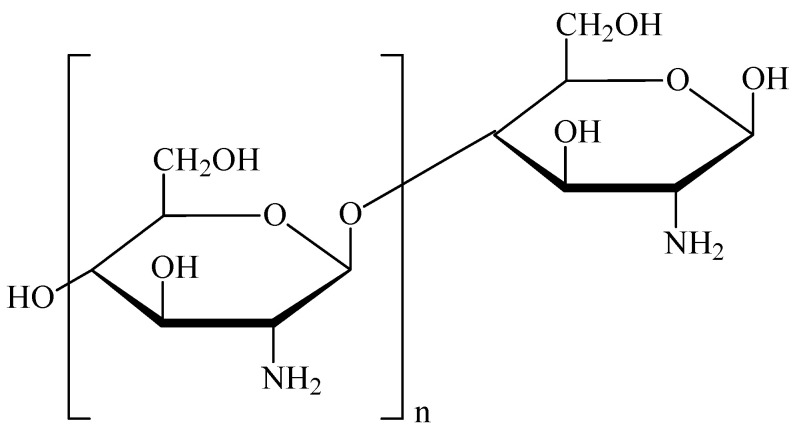
“Although CS has numerous valuable advantages, it also has several limitations that affect its use in the delivery of anticancer drugs. These include low thermal stability [11,12] and ductility [13,14], poor solubility of CS above pH 6.5 [15,16], high hydrophilicity and swelling properties, which may lead to premature drug release and reduced structural stability.”
§ Chitosan-Based Drug Delivery Systems for Targeted Chemotherapy in Colorectal Cancer: A Scoping Review > 1. Introduction
What the sources say
- Not checked — no full text of the sourcecites [11] Neto, 2005, Thermal analysis of chitosan based networks, Carbohydr. Polym. source
- Not checked — no full text of the sourcecites [12] Zawadzki, 2010, Thermal treatment of chitosan in various conditions, Carbohydr. Polym. source
- Not checked — no full text of the sourcecites [13] Kolhe, 2003, Improvement in ductility of chitosan through blending and copolymerization with PEG: FTIR investigation of molecular interactions, Biomacromolecules source
- Not checked — no full text of the sourcecites [14] Wahba, 2020, Enhancement of the mechanical properties of chitosan, J. Biomater. Sci. Polym. Ed. source
- Not checked — no full text of the sourcecites [15] Qin, 2006, Water-solubility of chitosan and its antimicrobial activity, Carbohydr. Polym. source
- Not checked — no full text of the sourcecites [16] Sogias, 2010, Exploring the factors affecting the solubility of chitosan in water, Macromol. Chem. Phys. source
plaindirect- Asserted: passes — The authors put it forward as true.
- Checkable: passes — It can be checked against evidence.
- Load-bearing: passes — The paper’s conclusions depend on it.
- Based: passes — The paper gives a reason why it holds.
It may state two separate claims as one.
In the paper
“Moreover, surface binding limits deeper tumor penetration, a phenomenon not addressed in current studies [78].”
§ Chitosan-Based Drug Delivery Systems for Targeted Chemotherapy in Colorectal Cancer: A Scoping Review > 2. Review Results > 2.2. Ligand-Modified CS-Based DDS
What the sources say
- Not checked — no full text of the sourcecites [78] Xia, 2010, Folate-targeted therapies for cancer, J. Med. Chem. source
plaindirect- Asserted: passes — The authors put it forward as true.
- Checkable: passes — It can be checked against evidence.
- Load-bearing: unclear — It is unclear whether the paper’s conclusions depend on it.
- Based: passes — The paper gives a reason why it holds.
It may state two separate claims as one.
A conclusion the paper draws from its own results — it cites no other source for it, so there is none to check. The quote shows it is in the paper.
In the paper
“Overall, intravenous CS-based DDS demonstrated improved tumor targeting, controlled release within the TME, and enhanced therapeutic efficacy compared with free drugs.”
§ Chitosan-Based Drug Delivery Systems for Targeted Chemotherapy in Colorectal Cancer: A Scoping Review > 2. Review Results > 2.1. Chitosan-Based DDS
boosteddirect- Asserted: passes — The authors put it forward as true.
- Checkable: passes — It can be checked against evidence.
- Load-bearing: passes — The paper’s conclusions depend on it.
- Based: unclear — It is unclear why the paper says it holds.
It may state two separate claims as one.
In the paper
“Yang et al. [20] demonstrated that steam sterilization significantly darkens CS powder, gamma irradiation causes strong depolymerization above 10 kGy, and ethylene oxide induces only minor changes in crystallinity and structure.”
§ Chitosan-Based Drug Delivery Systems for Targeted Chemotherapy in Colorectal Cancer: A Scoping Review > 1. Introduction
What the sources say
- Not checked — no full text of the sourcecites [20] Yang, 2007, The effect of different sterilization procedures on chitosan dried powder, J. Appl. Polym. Sci. source
boosteddirect- Asserted: passes — The authors put it forward as true.
- Checkable: passes — It can be checked against evidence.
- Load-bearing: fails — The paper’s conclusions may not depend on it.
- Based: passes — The paper gives a reason why it holds.
Probably not a substantial claim. The paper’s conclusions may not depend on it. It may state two separate claims as one.
A conclusion the paper draws from its own results — it cites no other source for it, so there is none to check. The quote shows it is in the paper.
In the paper
“the absence of standardized experimental methodologies and heterogeneous in vivo endpoints further undermine comparability and reproducibility.”
§ Chitosan-Based Drug Delivery Systems for Targeted Chemotherapy in Colorectal Cancer: A Scoping Review > 2. Review Results > 2.1. Chitosan-Based DDS
plaindirect- Asserted: passes — The authors put it forward as true.
- Checkable: passes — It can be checked against evidence.
- Load-bearing: passes — The paper’s conclusions depend on it.
- Based: passes — The paper gives a reason why it holds.
It may state two separate claims as one.
None of the sources cited for this claim have been checked yet.
In the paper
“To date, CS-based DDSs have been confirmed to have excellent anticancer properties [23]. Among other things, they are effective against oral cancer, breast cancer, prostate cancer, glioblastoma multiforme, liver cancer, and colon cancer, while also demonstrating satisfactory biocompatibility with typically developing cells and/or tissues.”
§ Chitosan-Based Drug Delivery Systems for Targeted Chemotherapy in Colorectal Cancer: A Scoping Review > 1. Introduction
What the sources say
- Not checked yetcites [23] Piotrowska, U., and Orzechowska, K. (2024). Advances in chitosan-based smart hydrogels for colorectal cancer treatment. Pharmaceuticals, 17. source
Checked before — its earlier verdict is held back until a new check runs.
boosteddirect- Asserted: passes — The authors put it forward as true.
- Checkable: passes — It can be checked against evidence.
- Load-bearing: passes — The paper’s conclusions depend on it.
- Based: passes — The paper gives a reason why it holds.
It may state two separate claims as one.
- Not checked yet
None of the sources cited for this claim have been checked yet.
In the paper
“Nonetheless, CD44 expression varies widely between CRC stages [86,87]. This heterogeneity may limit uniform nanoparticle uptake across entire tumors.”
§ Chitosan-Based Drug Delivery Systems for Targeted Chemotherapy in Colorectal Cancer: A Scoping Review > 2. Review Results > 2.2. Ligand-Modified CS-Based DDS
What the sources say
- Not checked — no full text of the sourcecites [86] Huh, 2009, Expression of standard CD44 in human colorectal carcinoma: Association with prognosis, Pathol. Int. source
- Not checked yetcites [87] Wang, Z., Tang, Y., Xie, L., Huang, A., Xue, C., Gu, Z., Wang, K., and Zong, S. (2019). The prognostic and clinical value of CD44 in colorectal cancer: A meta-analysis. Front. Oncol., 9. source
Checked before — its earlier verdict is held back until a new check runs.
hedgedconditional- Asserted: passes — The authors put it forward as true.
- Checkable: passes — It can be checked against evidence.
- Load-bearing: unclear — It is unclear whether the paper’s conclusions depend on it.
- Based: passes — The paper gives a reason why it holds.
It may state two separate claims as one.
A conclusion the paper draws from its own results — it cites no other source for it, so there is none to check. The quote shows it is in the paper.
In the paper
“Due to inconsistent reporting, direct comparisons between formulations are limited and broader generalization is not possible.”
§ Chitosan-Based Drug Delivery Systems for Targeted Chemotherapy in Colorectal Cancer: A Scoping Review > 2. Review Results > 2.1. Chitosan-Based DDS
plaindirect- Asserted: passes — The authors put it forward as true.
- Checkable: passes — It can be checked against evidence.
- Load-bearing: passes — The paper’s conclusions depend on it.
- Based: passes — The paper gives a reason why it holds.
It may state two separate claims as one.
The paper relies on this without support.
Chitosan is non-toxic, biodegradable, biocompatible, low-immunogenicity, mucoadhesive, and absorption-enhancing.
“CS is a non-toxic, biodegradable polymer characterized by high biocompatibility, low immunogenicity, and mucoadhesive as well as absorption-enhancing properties.”
The paper relies on this without support.
Chitosan-based DDS are being developed as targeted therapies employing ligands such as folic acid, hyaluronic acid, galactose, and antisense oligonucleotides, which enable receptor-specific interactions with the folate receptor, CD44, and the asialoglycoprotein receptor.
“Importantly, these systems are also being developed as targeted therapies employing a range of common ligands, such as folic acid (FA), hyaluronic acid (HA), galactose (Gal), and antisense oligonucleotides, which enable receptor-specific interactions with the folate receptor (FR), CD44, and the asialoglycoprotein receptor (ASGPR).”
Self-check
Percentages, sums and reported differences re-computed from the paper’s own numbers.
Each contradiction between two passages listed here was confirmed by an independent check.
Rated minor: it would not touch a result — a value no result rests on, a p-value that stays on the same side of the significance level, or a conflict that is clerical, resolved elsewhere in the paper, or outside its own findings.
In the paper
§ Chitosan-Based Drug Delivery Systems for Targeted Chemotherapy in Colorectal Cancer: A Scoping Review > 4. Materials and Methods > 4.3. Data Screening and Extraction
“The first group included CS-based DDS for CRC without necessarily incorporating targeting ligands and is discussed in Section 2.2 and summarized in Table 1. The second group comprised ligand-modified DDS designed for targeted therapy and is presented in Section 2.3, with corresponding data in Table 2.”
§ Chitosan-Based Drug Delivery Systems for Targeted Chemotherapy in Colorectal Cancer: A Scoping Review > 2. Review Results > 2.2. Ligand-Modified CS-Based DDS
“### 2.2. Ligand-Modified CS-Based DDS”
Rated minor: it would not touch a result — a value no result rests on, a p-value that stays on the same side of the significance level, or a conflict that is clerical, resolved elsewhere in the paper, or outside its own findings.
In the paper
§ Chitosan-Based Drug Delivery Systems for Targeted Chemotherapy in Colorectal Cancer: A Scoping Review > 2. Review Results > 2.2. Ligand-Modified CS-Based DDS
“Similarly, mesoporous silica nanoparticles (MSNPs) functionalized with FA exhibited strong FR-mediated uptake and selective cytotoxicity toward HT-29 cells, confirming the effectiveness of FA as a targeting ligand for site-specific CRC therapy [68].”
§ Chitosan-Based Drug Delivery Systems for Targeted Chemotherapy in Colorectal Cancer: A Scoping Review > 2. Review Results > 2.2. Ligand-Modified CS-Based DDS
“Similarly, FA-functionalized CS-coated Zn–MOF nanocomposites exhibited pronounced FR-mediated uptake and vigorous proapoptotic and autophagic activity in HCT116 cells [68].”
Citations
Cites
Sung, H., Ferlay, J., Siegel, R. L., Laversanne, M., Soerjomataram, I., Jemal, A., & Bray, F. (2021) · CA: A Cancer Journal for Clinicians · doi:10.3322/caac.21660 · Cited by 108,699
Scoping studies: towards a methodological framework
Arksey, H., & O'Malley, L. (2005) · International Journal of Social Research Methodology · doi:10.1080/1364557032000119616 · Cited by 36,742
Dekker, E., Tanis, P. J., Vleugels, J. L. A., Kasi, P. M., & Wallace, M. B. (2019) · The Lancet · doi:10.1016/s0140-6736(19)32319-0 · Cited by 5,313
Haddaway, N. R., Page, M. J., Pritchard, C. C., & McGuinness, L. A. (2022) · Campbell Systematic Reviews · doi:10.1002/cl2.1230 · Cited by 3,486
Stability of Chitosan—A Challenge for Pharmaceutical and Biomedical Applications
Szymańska, E., & Winnicka, K. (2015) · Marine Drugs · doi:10.3390/md13041819 · Cited by 953
Updating the Definition of Cancer
Brown, J. S., Amend, S. R., Austin, R. H., Gatenby, R. A., Hammarlund, E. U., & Pienta, K. J. (2023) · Molecular Cancer Research · doi:10.1158/1541-7786.mcr-23-0411 · Cited by 825
Water-solubility of chitosan and its antimicrobial activity
QIN, C., LI, H., XIAO, Q., LIU, Y., ZHU, J., & DU, Y. (2006) · Carbohydrate Polymers · doi:10.1016/j.carbpol.2005.09.023 · Cited by 636
Asialoglycoprotein receptor mediated hepatocyte targeting — Strategies and applications
D’souza, A. A., & Devarajan, P. V. (2015) · Journal of Controlled Release · doi:10.1016/j.jconrel.2015.02.022 · Cited by 633
Folate Receptor-Mediated Drug Targeting: From Therapeutics to Diagnostics
Hilgenbrink, A. R., & Low, P. S. (2005) · Journal of Pharmaceutical Sciences · doi:10.1002/jps.20457 · Cited by 629
High and low molecular weight hyaluronic acid differentially influence macrophage activation
Rayahin, J. E., Buhrman, J. S., Zhang, Y., Koh, T. J., & Gemeinhart, R. A. (2015) · ACS Biomaterials Science & Engineering · doi:10.1021/acsbiomaterials.5b00181 · Cited by 605
Cited by
Sorted by citations
Hydrogels—Advanced Polymer Platforms for Drug Delivery
(Vatcu), R. E., Iacob, A.-T., Fulga, I., Gioia, M. L. D., Dragostin, I., Fulga, A., Samal, S. K., & Dragostin, O.-M. (2026) · Polymers · doi:10.3390/polym18060709 · Cited by 15
Rahmati, F. (2026) · Bioscience Nanotechnology · doi:10.1186/s44331-026-00017-7 · Cited by 5
Wang, Q., Liu, Z., & Jin, K. (2026) · International Journal of Nanomedicine · doi:10.2147/ijn.s581940 · Cited by 3
Dudhwala, Y. D., Shah, D. P., Haswani, N. G., Kapoor, D. U., Prajapati, B. G., Alsaidan, O. A., & Alzarea, S. I. (2026) · International Journal of Pharmaceutics · doi:10.1016/j.ijpharm.2026.127098 · Cited by 3
Harnessing 5-fluorouracil-loaded chitosan nanoparticles for targeted colon cancer therapy
Paria, A., Rawat, E., Sharma, S., Almoyad, M. A. A., Wahab, S., Gandhi, S. M., & Kapoor, D. U. (2026) · Therapeutic Delivery · doi:10.1080/20415990.2026.2653447 · Cited by 1
Metadata
- Authors
- Piotrowska, U., Szatko, J., Nowakowska, A., Klimaszewska, E., Ogorzałek, M., & Sobczak, M.
- Affiliations
- Medical University of Warsaw (PL)
- Department of Cosmetology, Faculty of Medical Sciences and Health Sciences, Casimir Pulaski University of Radom, 27 Chrobrego Str., 26-600 Radom, Poland
- Corresponding author
- Piotrowska, Urszula
- Venue
- Marine Drugs
- Publisher
- MDPI AG
- Published
- 2025-12-06
- Volume
- 23
- Issue
- 12
- Pages
- 467
- ISSN
- 1660-3397 (ISSN-L)
- PMC
- PMC12734999
- OpenAlex
- W4417113590
- Cited by
- 14
- References
- 94
- Citations by year
- 2026: 14
- FWCI
- 0.69
- Type
- journal article
- Language
- en
- Open access
- gold
- doi.org
- Licence
- Locations
- Marine Drugs (publishedVersion, cc-by)
- PubMed (publishedVersion)
- PubMed Central (publishedVersion, cc-by)
- DOAJ (DOAJ: Directory of Open Access Journals) (submittedVersion, cc-by-sa)
- Funders
- National Science Centre, Poland (2022/47/D/NZ7/01403)
- Topics
- Physical Sciences › Materials Science › Biomaterials › Nanoparticle-Based Drug Delivery
- Life Sciences › Pharmacology, Toxicology and Pharmaceutics › Pharmaceutical Science › Advanced Drug Delivery Systems
- Life Sciences › Biochemistry, Genetics and Molecular Biology › Molecular Biology › RNA Interference and Gene Delivery
- Keywords
- chitosan, drug delivery systems, colorectal cancer, targeted chemotherapy, folic acid, hyaluronic acid, galactose, folate receptor alpha, CD44, mucoadhesion, tumor targeting, drug release, nanomedicine
- MeSH terms
- Animals, Antineoplastic Agents, Drug Carriers, Humans, Hyaluronic Acid, Colorectal Neoplasms, Drug Delivery Systems, Chitosan, Drug Liberation
About these checks
Registry, retraction, Cites and statistics results are computed, not judged, with one exception: a printed reference that no index lists is read once by a model before it counts as a citation error. Claims are extracted by a model and kept only when their quote appears verbatim in the text; each cited source is then checked, with a model’s help, for whether it says what the claim relies on. Those verdicts can be wrong — read the claim’s quote and the cited source before relying on one.
A language model drew the claims from the paper on 2026-11-10, under version 3 of the claim definition (model deepseek-v4.1-flash, prompt extract-v3).
A second model labelled each claim on 2026-11-10 (model jev-1.13-20260917, definition revision gold-guideline-v0.2).
Cited sources are checked with a language model’s help (gpt-6-sol).
Statistics and arithmetic are recomputed, not judged.
Confidence bands are shown only for fields calibrated on our annotated test set. None is calibrated yet, so no band is shown.
What counts as a claim ›How we measure confidence ›How we check this ›
Are you an author, or do you see a problem with this page? Request a review
