

The Prevalence and Clinical Significance of Toe Walking in Autism Spectrum Disorder: A Cross-Sectional Study in an Italian Pediatric Sample
Open accessThe DOI matches its Crossref record; 50 of the 50 references it cites were found in a registry or an index; 21 of the 36 sources its claims cite were checked for support.
Abstract
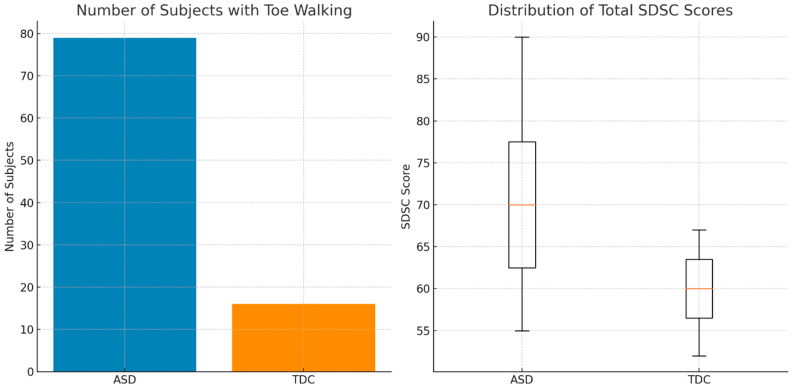
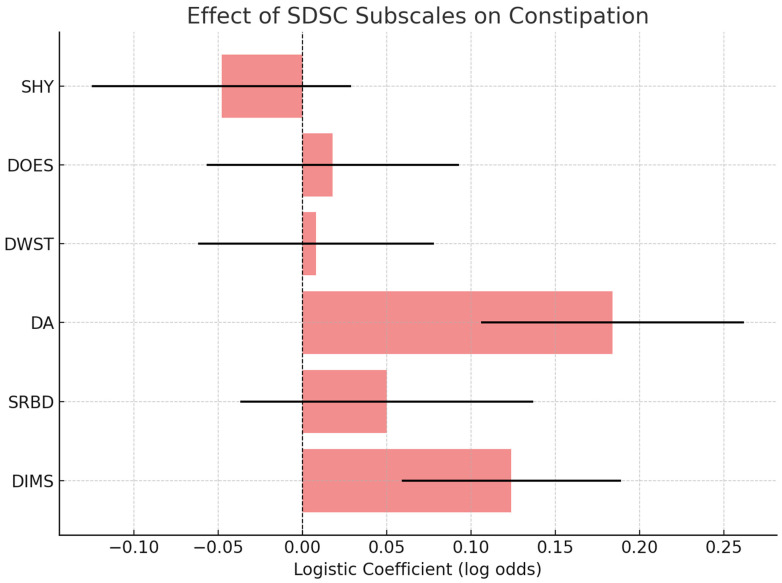
Background and Objectives: Toe walking (TW) is frequently observed in children with Autism Spectrum Disorder (ASD), yet its clinical significance and association with comorbid conditions remain poorly understood. This study aimed to examine the prevalence of TW in a large Italian cohort of children with ASD and to explore its association with ASD severity, sleep disturbances, feeding behaviors, and gastrointestinal symptoms. Materials and Methods: A total of 289 children with ASD and 289 typically developing controls (TDC), matched for age and sex, were evaluated in a multicentric observational study. TW was assessed during neurodevelopmental evaluations. Sleep quality was assessed using the Sleep Disturbance Scale for Children (SDSC), feeding behaviors via the Brief Autism Mealtime Behavior Inventory (BAMBI), and gastrointestinal symptoms through clinical reporting. Statistical analyses included Chi-square tests, Mann–Whitney U tests, Spearman correlations, and logistic regressions. Results: TW was significantly more prevalent in the ASD group (27.3%) than in TDC (5.5%, p < 0.0001). Within the ASD group, TW occurred in 50.5% of children with Level 3 severity but was absent in Levels 1 and 2 (p < 0.0001). Males exhibited TW more frequently than females. Children with TW had higher SDSC scores (ρ = 0.33, p < 0.0001), though no subscale independently predicted TW. Constipation was reported in 100% of children with Level 3 ASD and was strongly correlated with SDSC total scores (ρ = 0.58, p < 0.0001). The Disorders of Arousal (DA) subscale emerged as an independent predictor of constipation (β = 0.184, p = 0.019). Conclusions: TW in ASD appears to be a marker of greater neurodevelopmental severity and is associated with sleep disturbances and gastrointestinal dysfunction. These findings support the hypothesis that TW may reflect broader dysfunctions involving the gut–brain axis, sensory processing, and motor control. The routine clinical assessment of TW should include the evaluation of sleep and somatic symptoms to better understand the multisystemic nature of ASD phenotypes.
Overview
CoChat Summary
TL;DR
In a cross-sectional Italian sample of 289 children with ASD and 289 age- and sex-matched typically developing controls, toe walking was significantly more common in ASD and concentrated in more severe phenotypes. TW was linked to sleep disturbance and constipation, suggesting it may mark broader gut–brain-axis and multisystemic dysfunction.
Key findings
- TW was reported in 27.3% of the ASD group vs. 5.5% of controls (Chi2 = 53.2, p < 0.0001) in the Results/Abstract; the Discussion instead reports 49.5% vs. 2.8%.
- Within ASD, the Results/Abstract state TW was absent in Levels 1 and 2 and present in 50.5% of Level 3 children (Chi2 = 158.3, p < 0.0001); the Discussion reports a gradient of 13.2% in Level 1, 51.2% in Level 2, and 82.5% in Level 3. Males showed TW more frequently than females (p < 0.0001).
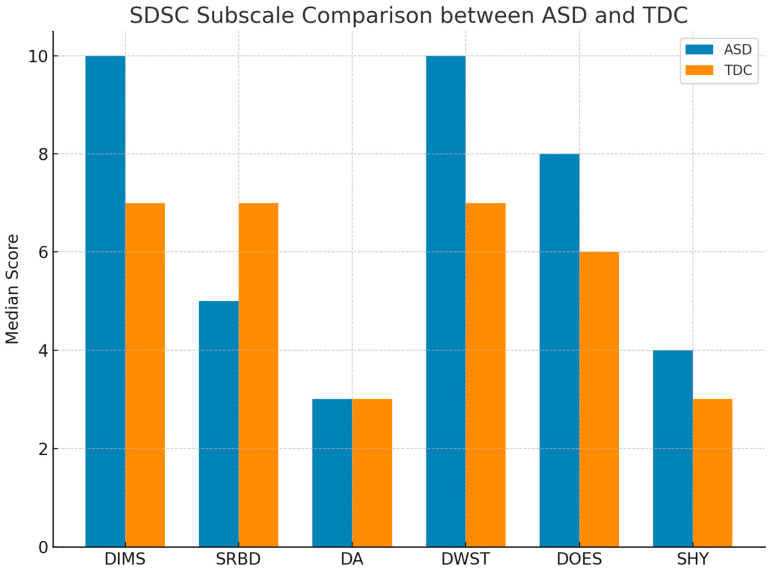
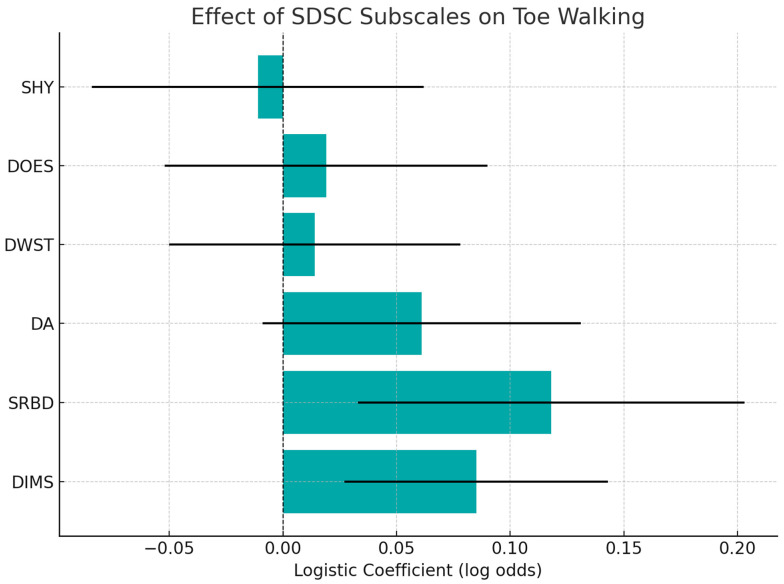
- Children with TW had higher total SDSC scores (median 54.0 vs. 46.0; Spearman ρ = 0.33, p < 0.0001), but no SDSC subscale independently predicted TW, though DIMS and SRBD approached significance.
- Constipation was present in 100% of Level 3 ASD children and 16.8% of Level 1/2 children; it correlated with total SDSC scores (ρ = 0.58, p < 0.0001), and the Disorders of Arousal subscale independently predicted constipation (β = 0.184, p = 0.019). The Discussion also states TW was associated with higher BAMBI scores, but no numeric BAMBI result is reported in the Results.
Methods
- Multicentric observational cross-sectional study of 289 children with ASD aged 3–8 years (mean 5.9 ± 1.1 years) and 289 age- and sex-matched typically developing controls (mean 5.93 ± 0.80 years), recruited from Italian pediatric neuropsychiatric outpatient services.
- ASD diagnosis and severity were based on DSM-5 criteria, with ADOS-2, cognitive screening, and developmental motor observation; TW was clinically assessed by observing spontaneous barefoot gait, including heel contact at initial stance, bilateral symmetry, and consistency.
- Sleep was measured with the SDSC (26 items, six subscales), feeding with the BAMBI, and gastrointestinal symptoms by clinical reporting. Analyses used Chi-square tests, Mann–Whitney U tests, Spearman correlations, and logistic regressions in SPSS v29, with p < 0.05.
Limitations
- Stated: the cross-sectional design precludes causal inference; parent-reported questionnaires may introduce recall or reporting bias; the sample may not represent all children with ASD, particularly those with co-occurring neurological or genetic conditions; future longitudinal and objective gait/autonomic studies are needed.
- Evident from the text: prevalence and severity-gradient figures are internally inconsistent between the Results/Abstract and Discussion (e.g., 27.3% vs. 49.5% TW in ASD; TW absent in Levels 1–2 vs. 13.2%/51.2%/82.5% across Levels 1–3), complicating interpretation.
- The Discussion notes no direct microbiome composition or metabolomic markers were measured, and BAMBI findings are discussed without corresponding numeric results in the Results section.
Model-written summary. Check it against the paper before relying on it.
Integrity signals
Registry
Cites
Statistics
Figures
Verification
Claims the paper makes
15 Valid · 2 Not valid · 11 Not checked · 33 Own results and interpretations
The cited sources support only part of this claim — read each source’s verdict below.
In the paper
“While TW can occur in typically developing children and may resolve spontaneously, its persistence in children with more severe forms of ASD may reflect alterations in motor planning, sensory processing [39].”
§ The Prevalence and Clinical Significance of Toe Walking in Autism Spectrum Disorder: A Cross-Sectional Study in an Italian Pediatric Sample > 4. Discussion
What the sources say
- Partly supportedcites [39] Będziechowska-Czyżewska M. Malak R. Romanowski M. Andrusiewicz M. Samborski W. Baum E. Postural Differences in Speaking Versus Non-Speaking Children with Autism Spectrum Disorder Children 2025 12 145 10.3390/children12020145 40003247 PMC11853906 sourceExperimental — accuracy not yet measured
The Discussion links toe walking in children with ASD to sensory-processing difficulties and reports it more often among non-speaking children. It does not establish that toe walking persists in more severe ASD or link that persistence to altered motor planning. The Results describe the group difference as a tendency (p = 0.076). No page numbers are available in our copy. (LLM, conf=0.86)
hedgedstates a possible cause- Asserted: passes — The authors put it forward as true.
- Checkable: passes — It can be checked against evidence.
- Load-bearing: unclear — It is unclear whether the paper’s conclusions depend on it.
- Based: passes — The paper gives a reason why it holds.
- Partly supported
The cited sources support only part of this claim — read each source’s verdict below.
In the paper
“This association corroborates the notion that motor dysregulation and sleep alterations may share underlying neurobiological mechanisms in ASD [40].”
§ The Prevalence and Clinical Significance of Toe Walking in Autism Spectrum Disorder: A Cross-Sectional Study in an Italian Pediatric Sample > 4. Discussion
What the sources say
- Partly supportedcites [40] Liu D. Nanclares C. Simbriger K. Fang K. Lorsung E. Le N. Amorim I.S. Chalkiadaki K. Pathak S.S. Li J. Autistic-like Behavior and Cerebellar Dysfunction in Bmal1 Mutant Mice Ameliorated by mTORC1 Inhibition Mol. Psychiatry 2023 28 3727 3738 10.1038/s41380-022-01499-6 35301425 PMC9481983 sourceExperimental — accuracy not yet measured
The Introduction identifies sleep problems as common in ASD, and the Results report motor-coordination deficits in mice lacking the circadian clock gene Bmal1. These findings are consistent with a possible shared mechanism, but the paper does not test sleep disturbances alongside motor deficits or examine toe walking. The cited evidence therefore does not establish the proposed link in people with ASD. (LLM, conf=0.83)
hedgedstates an association- Asserted: passes — The authors put it forward as true.
- Checkable: passes — It can be checked against evidence.
- Load-bearing: passes — The paper’s conclusions depend on it.
- Based: passes — The paper gives a reason why it holds.
- Partly supported
The cited sources that could be checked couldn’t confirm or dispute this claim.
In the paper
“Children with TW were significantly more likely to exhibit selective or ritualized feeding behaviors [43].”
§ The Prevalence and Clinical Significance of Toe Walking in Autism Spectrum Disorder: A Cross-Sectional Study in an Italian Pediatric Sample > 4. Discussion
What the sources say
- Could not verifycites [43] Nimbley E. Golds L. Sharpe H. Gillespie-Smith K. Duffy F. Sensory Processing and Eating Behaviours in Autism: A Systematic Review Eur. Eat. Disord. Rev. 2022 30 538 559 10.1002/erv.2920 35737818 PMC9545673 sourceExperimental — accuracy not yet measured
The Food selectivity or fussiness and Ritualistic eating behaviours sections report associations with sensory processing, not toe walking. A search for “toe walking” found no passage linking it to selective or ritualized feeding behaviours; page numbers were unavailable in our copy. (LLM, conf=0.76)
plainstates an association- Asserted: passes — The authors put it forward as true.
- Checkable: passes — It can be checked against evidence.
- Load-bearing: unclear — It is unclear whether the paper’s conclusions depend on it.
- Based: passes — The paper gives a reason why it holds.
- Could not verify
The cited sources support only part of this claim — read each source’s verdict below.
In the paper
“The correlation between TW and higher BAMBI scores further supports the hypothesis that TW is embedded in a broader phenotype of sensory–behavioral dysregulation [42].”
§ The Prevalence and Clinical Significance of Toe Walking in Autism Spectrum Disorder: A Cross-Sectional Study in an Italian Pediatric Sample > 4. Discussion
What the sources say
- Partly supportedcites [42] Baum S.H. Stevenson R.A. Wallace M.T. Behavioral, Perceptual, and Neural Alterations in Sensory and Multisensory Function in Autism Spectrum Disorder Prog. Neurobiol. 2015 134 140 160 10.1016/j.pneurobio.2015.09.007 26455789 PMC4730891 sourceExperimental — accuracy not yet measured
Section 2 describes sensory differences across multiple modalities in autism and links sensory processing to other ASD symptoms. The paper does not connect toe walking to that broader pattern or discuss BAMBI scores; the reported correlation is the citing authors’ own finding. (LLM, conf=0.83)
hedgedstates an association- Asserted: passes — The authors put it forward as true.
- Checkable: passes — It can be checked against evidence.
- Load-bearing: passes — The paper’s conclusions depend on it.
- Based: passes — The paper gives a reason why it holds.
- Rests on an assumption not shown here.
- Partly supported
Every source the paper cites for this claim was checked and supports it.
In the paper
“Our findings revealed a markedly higher prevalence of TW in the ASD population (49.5%) compared to neurotypical peers (2.8%), consistent with previous literature reporting TW as a frequent motor pattern in ASD children, particularly if they were non-speaking [39].”
§ The Prevalence and Clinical Significance of Toe Walking in Autism Spectrum Disorder: A Cross-Sectional Study in an Italian Pediatric Sample > 4. Discussion
What the sources say
- Supportedcites [39] Będziechowska-Czyżewska M. Malak R. Romanowski M. Andrusiewicz M. Samborski W. Baum E. Postural Differences in Speaking Versus Non-Speaking Children with Autism Spectrum Disorder Children 2025 12 145 10.3390/children12020145 40003247 PMC11853906 source
The citation supports the previous-literature clause, not the citing authors’ own 49.5% versus 2.8% finding. The source’s Discussion reports toe walking in 25% of its ASD sample, and its Results describe a tendency for non-speaking children to toe-walk more often than speaking children (p = 0.076). Its small sample limits generalizability. (LLM, conf=0.88)
plainstates an association- Asserted: passes — The authors put it forward as true.
- Checkable: passes — It can be checked against evidence.
- Load-bearing: passes — The paper’s conclusions depend on it.
- Based: passes — The paper gives a reason why it holds.
- Supported
28 more claims · 1 with their cited sources checked
Create a free account to see all 61 claims and to verify the 2 references still open.
- Probably not a substantial claim. 21
- It may state two separate claims as one. 14
Self-check
Percentages, sums and reported differences re-computed from the paper’s own numbers.
Each contradiction between two passages listed here was confirmed by an independent check.
Rated major: it would touch a result — a value a result rests on, reported and recomputed p-values on opposite sides of the significance level, two passages that conflict with no sign which is right, or a cited work retracted before this paper was published.
In the paper
§ The Prevalence and Clinical Significance of Toe Walking in Autism Spectrum Disorder: A Cross-Sectional Study in an Italian Pediatric Sample > 4. Discussion
“Our findings revealed a markedly higher prevalence of TW in the ASD population (49.5%) compared to neurotypical peers (2.8%)”
§ The Prevalence and Clinical Significance of Toe Walking in Autism Spectrum Disorder: A Cross-Sectional Study in an Italian Pediatric Sample > 3. Results
“toe walking (TW) was observed in 27.3% of children, compared to 5.5% in the typically developing controls (TDC)”
Rated major: it would touch a result — a value a result rests on, reported and recomputed p-values on opposite sides of the significance level, two passages that conflict with no sign which is right, or a cited work retracted before this paper was published.
In the paper
§ The Prevalence and Clinical Significance of Toe Walking in Autism Spectrum Disorder: A Cross-Sectional Study in an Italian Pediatric Sample > 3. Results
“In the ASD group (n = 289), toe walking (TW) was observed in 27.3% of children”
§ The Prevalence and Clinical Significance of Toe Walking in Autism Spectrum Disorder: A Cross-Sectional Study in an Italian Pediatric Sample > 3. Results
“TW was completely absent in Levels 1 and 2 while it was present in 50.5% of children with Level 3 ASD”
Rated major: it would touch a result — a value a result rests on, reported and recomputed p-values on opposite sides of the significance level, two passages that conflict with no sign which is right, or a cited work retracted before this paper was published.
In the paper
§ The Prevalence and Clinical Significance of Toe Walking in Autism Spectrum Disorder: A Cross-Sectional Study in an Italian Pediatric Sample > 3. Results
“TW was completely absent in Levels 1 and 2 while it was present in 50.5% of children with Level 3 ASD”
§ The Prevalence and Clinical Significance of Toe Walking in Autism Spectrum Disorder: A Cross-Sectional Study in an Italian Pediatric Sample > 4. Discussion
“13.2% in Level 1, 51.2% in Level 2, and 82.5% in Level 3”
Rated minor: it would not touch a result — a value no result rests on, a p-value that stays on the same side of the significance level, or a conflict that is clerical, resolved elsewhere in the paper, or outside its own findings.
In the paper
§ The Prevalence and Clinical Significance of Toe Walking in Autism Spectrum Disorder: A Cross-Sectional Study in an Italian Pediatric Sample > 2. Materials and Methods > 2.2. Population
“289 children diagnosed with Autism Spectrum Disorder, aged 3–8 years (mean 5.9 ± 1.1 years)”
§ The Prevalence and Clinical Significance of Toe Walking in Autism Spectrum Disorder: A Cross-Sectional Study in an Italian Pediatric Sample > 3. Results
“the mean age was 5.91 ± 0.76 years in the ASD group”
Citations
Cites
Diagnostic and Statistical Manual of Mental Disorders
American Psychiatric Association (2013) · doi:10.1176/appi.books.9780890425596 · Cited by 116,369
Adams, J. B., Johansen, L. J., Powell, L. D., Quig, D., & Rubin, R. A. (2011) · BMC Gastroenterology · doi:10.1186/1471-230x-11-22 · Cited by 1,076 · cited 1×
“Moreover, has been reported that the severity of gastrointestinal disorders in children with ASD may be closely linked to the intensity of neuropsychiatric symptoms, with more severe GI issues observed in individuals with more pronounced neuropsychiatric symptoms, and vice versa [33,34].”
The Possible Role of the Microbiota-Gut-Brain-Axis in Autism Spectrum Disorder
Srikantha, P., & Mohajeri, M. H. (2019) · International Journal of Molecular Sciences · doi:10.3390/ijms20092115 · Cited by 400 · cited 1×
“This suggests that gut microbiota might play a role in worsening the symptoms associated with ASD [45].”
Baum, S. H., Stevenson, R. A., & Wallace, M. T. (2015) · Progress in Neurobiology · doi:10.1016/j.pneurobio.2015.09.007 · Cited by 370 · cited 1×
“The correlation between TW and higher BAMBI scores further supports the hypothesis that TW is embedded in a broader phenotype of sensory–behavioral dysregulation [42].”
Lukens, C. T., & Linscheid, T. R. (2008) · Journal of Autism and Developmental Disorders · doi:10.1007/s10803-007-0401-5 · Cited by 278
Autism: the micro-movement perspective
Torres, E. B., Brincker, M., Isenhower, R. W., Yanovich, P., Stigler, K. A., Nurnberger, J. I., Metaxas, D. N., & José, J. V. (2013) · Frontiers in Integrative Neuroscience · doi:10.3389/fnint.2013.00032 · Cited by 257 · cited 1×
“These ideas have been reinforced by previous studies indicating differences in upper limb kinematics [9] and variability in micro-movements [10] between individuals with ASD and those who are typically developing (TD).”
Morton, J. T., Jin, D.-M., Mills, R. H., Shao, Y., Rahman, G., McDonald, D., Zhu, Q., Balaban, M., Jiang, Y., Cantrell, K., et al. (2023) · Nature Neuroscience · doi:10.1038/s41593-023-01361-0 · Cited by 221
Anzulewicz, A., Sobota, K., & Delafield-Butt, J. T. (2016) · Scientific Reports · doi:10.1038/srep31107 · Cited by 216 · cited 1×
“Additionally, the atypical neuro-motor development has been suggested as a different putative endophenotype for ASD [7], or the repeated observations of unusual motor development in ASD strongly suggest that more targeted and objective evaluations of movement could reveal bio-behavioral markers [8].”
Use of Machine Learning to Identify Children with Autism and Their Motor Abnormalities
Crippa, A., Salvatore, C., Perego, P., Forti, S., Nobile, M., Molteni, M., & Castiglioni, I. (2015) · Journal of Autism and Developmental Disorders · doi:10.1007/s10803-015-2379-8 · Cited by 208 · cited 1×
“These ideas have been reinforced by previous studies indicating differences in upper limb kinematics [9] and variability in micro-movements [10] between individuals with ASD and those who are typically developing (TD).”
Interoceptive Ability and Body Awareness in Autism Spectrum Disorder
Schauder, K. B., Mash, L. E., Bryant, L. K., & Cascio, C. J. (2015) · Journal of Experimental Child Psychology · doi:10.1016/j.jecp.2014.11.002 · Cited by 187 · cited 1×
“Such findings align with theories proposing altered interoception and sensory aversions in ASD, which manifest across multiple functional domains, including motor output, feeding routines, and sleep patterns [44].”
Abnormalities of joint mobility and gait in children with autism spectrum disorders
Shetreat-Klein, M., Shinnar, S., & Rapin, I. (2014) · Brain and Development · doi:10.1016/j.braindev.2012.02.005 · Cited by 153 · cited 1×
“Furthermore, TW is often linked to greater joint mobility and a delayed onset of walking in children with ASD [17].”
The Prevalence and Course of Idiopathic Toe-Walking in 5-Year-Old Children
Engström, P., & Tedroff, K. (2012) · Pediatrics · doi:10.1542/peds.2012-0225 · Cited by 104 · cited 1×
“Unlike passive limitations seen in conditions such as cerebral palsy, TW in idiopathic or ASD-related cases does not usually involve biomechanical constrictions [2].”
Persistent Toe Walking in Autism
Barrow, W. J., Jaworski, M., & Accardo, P. J. (2011) · Journal of Child Neurology · doi:10.1177/0883073810385344 · Cited by 100 · cited 1×
“While some studies found no direct relationship between TW and sensory symptoms in ASD [12,15,18], others identified sensory processing differences in children with idiopathic TW [19–21].”
Sensory Processing and Eating Behaviours in Autism: A Systematic Review
Nimbley, E., Golds, L., Sharpe, H., Gillespie‐Smith, K., & Duffy, F. (2022) · European Eating Disorders Review · doi:10.1002/erv.2920 · Cited by 93 · cited 1×
“Children with TW were significantly more likely to exhibit selective or ritualized feeding behaviors [43].”
Motor abnormalities as a putative endophenotype for Autism Spectrum Disorders
Esposito, G., & Pașca, S. P. (2013) · Frontiers in Integrative Neuroscience · doi:10.3389/fnint.2013.00043 · Cited by 73 · cited 1×
“Additionally, the atypical neuro-motor development has been suggested as a different putative endophenotype for ASD [7], or the repeated observations of unusual motor development in ASD strongly suggest that more targeted and objective evaluations of movement could reveal bio-behavioral markers [8].”
Memari, A. H., Ghanouni, P., Shayestehfar, M., & Ghaheri, B. (2014) · Asian Journal of Sports Medicine · doi:10.5812/asjsm.22963 · Cited by 72 · cited 1×
“These alterations may interfere with motor planning and execution, contributing to atypical gait patterns such as toe walking [23].”
Infant muscle tone and childhood autistic traits: A longitudinal study in the general population
Serdarević, F., Ghassabian, A., van Batenburg‐Eddes, T., White, T. J. H., Blanken, L. M. E., Jaddoe, V. W. V., Verhulst, F. C., & Tiemeier, H. W. (2017) · Autism Research · doi:10.1002/aur.1739 · Cited by 67 · cited 1×
“About the motor impairment among subjects with ASD, hypotonia has been linked to autistic traits observed by the age of 6 in a longitudinal study [6].”
Williams, C. M., Tinley, P., Curtin, M., Wakefield, S., & Nielsen, S. (2014) · Journal of Child Neurology · doi:10.1177/0883073812470001 · Cited by 63 · cited 1×
“While some studies found no direct relationship between TW and sensory symptoms in ASD [12,15,18], others identified sensory processing differences in children with idiopathic TW [19–21].”
Savino, R., Carotenuto, M., Polito, A. N., Noia, S. D., Albenzio, M., Scarinci, A., Ambrosi, A., Sessa, F., Tartaglia, N., & Messina, G. (2020) · Brain Sciences · doi:10.3390/brainsci10090631 · Cited by 63 · cited 1×
“Although this study did not directly measure microbiome composition or metabolomic markers, the observed associations prompt further research into the potential role of intestinal microbiota in modulating motor behaviors such as TW [46–48].”
Self-citationAutism and toe-walking: Are they related? Trends and treatment patterns between 2005 and 2016
Leyden, J., Fung, L., & Frick, S. (2019) · Journal of Children's Orthopaedics · doi:10.1302/1863-2548.13.180160 · Cited by 56 · cited 1×
“It also tends to persist longer in children with ASD who do not receive intervention compared to their typically developing peers [16].”
Liu, D., Nanclares, C., Simbriger, K., Fang, K., Lorsung, E., Le, N., Amorim, I. S., Chalkiadaki, K., Pathak, S. S., Li, J., et al. (2023) · Molecular Psychiatry · doi:10.1038/s41380-022-01499-6 · Cited by 56
Savino, R., Carotenuto, M., Polito, A. N., Di Noia, S., Albenzio, M., Scarinci, A., Ambrosi, A., Sessa, F., Tartaglia, N., & Messina, G. (2020) · doi:10.20944/preprints202007.0425.v1 · Cited by 54
Self-citationEarly detection of autism spectrum disorder: gait deviations and machine learning
Ganai, U. J., Ratne, A., Bhushan, B., & Venkatesh, K. S. (2025) · Scientific Reports · doi:10.1038/s41598-025-85348-w · Cited by 51 · cited 1×
“The previous literature has identi-fied motor coordination impairments and atypical gait patterns as early manifestations in children with ASD [11].”
Relationships between Brain Activity, Tryptophan-Related Gut Metabolites, and Autism Symptomatology
Aziz-Zadeh, L., Ringold, S. M., Jayashankar, A., Kilroy, E., Butera, C., Jacobs, J. P., Tanartkit, S., Mahurkar-Joshi, S., Bhatt, R. R., Dapretto, M., et al. (2025) · Nature Communications · doi:10.1038/s41467-025-58459-1 · Cited by 51
Effects of Motor Control Intervention for Children With Idiopathic Toe Walking: A 5-Case Series
Clark, E., Sweeney, J. K., Yocum, A., & McCoy, S. W. (2010) · Pediatric Physical Therapy · doi:10.1097/pep.0b013e3181f9d5b8 · Cited by 48 · cited 1×
“TW appears to be a limited range of motion in the ankle and the inability to achieve heel strike at the beginning of the gait cycle [3].”
Toe Walking in Autism: Further Observations
Accardo, P. J., & Barrow, W. (2015) · Journal of Child Neurology · doi:10.1177/0883073814521298 · Cited by 44
The Gut–Brain–Microbiota Connection and Its Role in Autism Spectrum Disorders
Młynarska, E., Barszcz, E., Budny, E., Gajewska, A., Kopeć, K., Wasiak, J., Rysz, J., & Franczyk, B. (2025) · Nutrients · doi:10.3390/nu17071135 · Cited by 44 · cited 1×
“In addition to motor symptoms, children with ASD frequently experience comorbid sleep disturbances [27,28], feeding and eating disorders (FEEDs) [29,30], and gastrointestinal symptoms such as constipation [31].”
Gigliotti, F., Giovannone, F., Belli, A., & Sogos, C. (2024) · Children · doi:10.3390/children11070875 · Cited by 33 · cited 1×
“Studies have reported associations between TW and altered sensory processing, language delays, and minor neurological dysfunctions [25,26].”
Toe Walking Assessment in Autism Spectrum Disorder Subjects: A Systematic Review
Valagussa, G., Trentin, L., Signori, A., & Grossi, E. (2018) · Autism Research · doi:10.1002/aur.2009 · Cited by 27 · cited 3×
“Additionally, individuals with ASD and TW display more “under-responsive/seeks sensation” patterns [14] and differences in vestibular processing [21].”
InfluentialMartinez-Cayuelas, E., Gavela-Pérez, T., Rodrigo-Moreno, M., Losada-Del Pozo, R., Moreno-Vinues, B., Garces, C., & Soriano-Guillén, L. (2024) · Journal of Autism and Developmental Disorders · doi:10.1007/s10803-023-05934-7 · Cited by 24 · cited 1×
“Sleep difficulties not only exacerbate behavioral symptoms in ASD but may also interfere with sensorimotor integration, thereby perpetuating TW behavior [41].”
Williams, C., Tinley, P., & Rawicki, B. (2014) · Journal of the American Podiatric Medical Association · doi:10.7547/0003-0538-104.3.253 · Cited by 23
Brief Autism Mealtime Behavior Inventory (BAMBI): Italian Translation and Validation
Lamboglia, A., Romano, R., Valente, D., Berardi, A., Cavalli, G., Giovannone, F., Sogos, C., Tofani, M., & Galeoto, G. (2023) · Children · doi:10.3390/children10071201 · Cited by 23 · cited 1×
“Feeding behavior and selectivity were measured using the Brief Autism Mealtime Behavior Inventory (BAMBI), a validated tool with established clinical cut-off scores indicating feeding pathology [37].”
Savarese, G., Mandia, R., Diavoletto, A., Piscitelli, M., Impemba, F., Siervi, A. D., Carpinelli, L., Bottiglieri, F., Sessa, M., & Corrivetti, G. (2025) · Pediatric Reports · doi:10.3390/pediatric17010004 · Cited by 23 · cited 1×
“Studies have reported associations between TW and altered sensory processing, language delays, and minor neurological dysfunctions [25,26].”
Perturbations in gut microbiota in autism spectrum disorder: a systematic review
Tao, X., Li, Z., Wang, D., Pu, J., Liu, Y., Gui, S., Zhong, X., Yang, D., Zhou, H., Tao, W., et al. (2025) · Frontiers in Neuroscience · doi:10.3389/fnins.2025.1448478 · Cited by 23 · cited 1×
“Moreover, has been reported that the severity of gastrointestinal disorders in children with ASD may be closely linked to the intensity of neuropsychiatric symptoms, with more severe GI issues observed in individuals with more pronounced neuropsychiatric symptoms, and vice versa [33,34].”
Donne, J. H., Powell, J. A., Fahey, M. C., Beare, R. J., Kolic, J., & Williams, C. (2023) · Physiotherapy · doi:10.1016/j.physio.2026.102083 · Cited by 14
Donne, J. H., Powell, J. A., Fahey, M. C., Beare, R., Kolic, J., & Williams, C. M. (2023) · Acta Paediatrica · doi:10.1111/apa.16821 · Cited by 12 · cited 1×
“In general, the estimated prevalence of TW is approximately 5% among typically developing children, with a slightly higher occurrence in males; particularly, children may exhibit toe walking occasionally as they are learning to walk [5].”
Insomnia in Children Affected by Autism Spectrum Disorder: The Role of Melatonin in Treatment
Bruni, O., Biggio, G., Malorgio, E., & Nobili, L. (2024) · Sleep Medicine · doi:10.1016/j.sleep.2024.05.046 · Cited by 11 · cited 1×
“In addition to motor symptoms, children with ASD frequently experience comorbid sleep disturbances [27,28], feeding and eating disorders (FEEDs) [29,30], and gastrointestinal symptoms such as constipation [31].”
Sleep Disturbance Scale for Children: Italian Validation in Autism Spectrum Disorder Population
Mignolli, E., Scialpi, A., Valente, D., Berardi, A., Galeoto, G., & Tofani, M. (2022) · International Journal of Environmental Research and Public Health · doi:10.3390/ijerph191610163 · Cited by 10 · cited 1×
“…which consists of 26 items grouped into six subscales, including Disorders of Initiating and Maintaining Sleep (DIMS), Sleep Breathing Disorders (SBD), Disorders of Arousal (DA), Sleep–Wake Transition Disorders (SWTD), Disorders of Excessive Somno-lence (DOES), and Sleep Hyperhidrosis (SHY) [36].”
The Management of Toe Walking in Children with Autism Spectrum Disorder: “Cast and Go”
Manfredi, F., Riefoli, F., Coviello, M., & Dibello, D. (2022) · Children · doi:10.3390/children9101477 · Cited by 10 · cited 1×
“Additionally, the interactions between their sensorimotor, visual, and auditory systems may play a significant role in how they maintain postural control [24].”
Hu, D.-X., Lu, C.-M., Si, X.-Y., Wu, Q.-T., Wu, L.-H., Zhong, H.-J., & He, X.-X. (2025) · Frontiers in Pediatrics · doi:10.3389/fped.2025.1528167 · Cited by 10 · cited 1×
“These gastrointestinal issues can worsen behavioral problems, including rigidity, hyperactivity, and social withdrawal [35].”
Assessing sensory processing differences in children with idiopathic toe walking: A pilot study
Chu, V. W., Girolami, G. L., & Grant-Beuttler, M. (2022) · Physiotherapy Theory and Practice · doi:10.1080/09593985.2022.2073929 · Cited by 9 · cited 2×
“Additionally, individuals with ASD and TW display more “under-responsive/seeks sensation” patterns [14] and differences in vestibular processing [21].”
Camia, M., Sacco, R., Boncoddo, M., Bellomo, F., Cucinotta, F., Ricciardello, A., Turriziani, L., Tomaiuolo, P., Costantini, R. C., D'Amico, R., et al. (2024) · Research in Autism Spectrum Disorders · doi:10.1016/j.rasd.2024.102457 · Cited by 9 · cited 5×
“In ASD, TW has been associated with lower cognitive levels, greater language and motor impairments, and an increased severity of autism symptoms [15].”
InfluentialChapek, M., & Kessler, J. (2025) · The Journal of Foot and Ankle Surgery · doi:10.1053/j.jfas.2024.08.005 · Cited by 6 · cited 1×
“In general, TW is significantly more prevalent in children with Autism Spectrum Disorder (ASD) compared to typically developing children, with prevalence rates ranging from 6.3% to 32% among those with ASD [13,14].”
InfluentialZheng, R., Huang, S., Feng, P., Liu, S., Jiang, M., Li, H., Zheng, P., Mi, Y., & Li, E. (2025) · Frontiers in Microbiology · doi:10.3389/fmicb.2025.1557174 · Cited by 6 · cited 1×
“Although this study did not directly measure microbiome composition or metabolomic markers, the observed associations prompt further research into the potential role of intestinal microbiota in modulating motor behaviors such as TW [46–48].”
Sharp, W. G. (2025) · International Journal of Eating Disorders · doi:10.1002/eat.24316 · Cited by 5 · cited 1×
“In addition to motor symptoms, children with ASD frequently experience comorbid sleep disturbances [27,28], feeding and eating disorders (FEEDs) [29,30], and gastrointestinal symptoms such as constipation [31].”
Postural Differences in Speaking Versus Non-Speaking Children with Autism Spectrum Disorder
Będziechowska-Czyżewska, M., Malak, R., Romanowski, M., Andrusiewicz, M., Samborski, W., & Baum, E. (2025) · Children · doi:10.3390/children12020145 · Cited by 4 · cited 2×
“%) compared to neurotypical peers (2.8%), consistent with previous literature reporting TW as a frequent motor pattern in ASD children, particularly if they were non-speaking [39].”
InfluentialVoci, A., Mazzone, L., De Stefano, D., Valeriani, M., Bruni, O., & Moavero, R. (2024) · Journal of Clinical Sleep Medicine · doi:10.5664/jcsm.10902 · Cited by 3 · cited 1×
“In addition to motor symptoms, children with ASD frequently experience comorbid sleep disturbances [27,28], feeding and eating disorders (FEEDs) [29,30], and gastrointestinal symptoms such as constipation [31].”
Socie, C., Descamps, A., Thouvenin, B., Peigné, C. D. F., Abadie, V., & Ouss, L. (2025) · Archives de Pédiatrie · doi:10.1016/j.arcped.2025.02.001 · Cited by 3 · cited 1×
“In addition to motor symptoms, children with ASD frequently experience comorbid sleep disturbances [27,28], feeding and eating disorders (FEEDs) [29,30], and gastrointestinal symptoms such as constipation [31].”
Zide, J. R., Riccio, A. I., Zak, T. K., et al. (2023) · Foot & Ankle Orthopaedics · doi:10.1177/2473011423s00189 · Cited by 2 · cited 1×
“Notably, children with ASD who toe walk show higher rates of recurrence after surgical intervention compared to those with idiopathic toe walking [22].”
Adeniyi, Y. C., Adeniyi, A. F., & Oyewole, O. A. (2020) · Indian Journal of Case Reports · doi:10.32677/ijcr.2020.v06.i09.001 · Cited by 1 · cited 3×
“While TW in some children may stem from underlying conditions such as cerebral palsy, there are instances where no clear cause is identified, leading to the classification of idiopathic or habitual toe walking (ITW) [4].”
Influential
Cited by
Gnazzo, M., Bargiacchi, G., Esposito, M., Passerini, R., Varriale, E., Cerroni, F., Germanò, E., Maltese, A., Parisi, L., Roccella, M., et al. (2026) · Disabilities · doi:10.3390/disabilities6030046 · Cited by 2
Self-citationPerricone, E., Caldaci, A., Cacciaguerra, G., Nora, A. D., Parano, C., & Pavone, V. (2026) · Frontiers in Medicine · doi:10.3389/fmed.2026.1832930 · Cited by 1
“…that toe walking in ASD may be associated with broader neurodevelopmental severity, including motor and language impairment and autism symptom severity, supporting the hypothesis that ASD-related toe walking may reflect a more complex clinical phenotype than idiopathic toe walking alone (42, 43).”
Gnazzo, M., Bargiacchi, G., Baldini, V., Esposito, M., Passerini, R., Varriale, E., Cerroni, F., Germanò, E., Maltese, A., Parisi, L., et al. (2026) · Children · doi:10.3390/children13081081 · Cited by 1
Self-citationGnazzo, M., Bargiacchi, G., Gallai, B., Spoto, G., Rosa, G. D., Baldini, V., Parisi, L., Maltese, A., Roccella, M., Germanò, E., et al. (2026) · Medicina · doi:10.3390/medicina62091764
“[9].”
InfluentialSelf-citationde Almeida, D. R., Higa, J. S. F., Carvalho, G. F., Brito, F. S., & Silva, L. T. D. (2026) · Aracê. · doi:10.56238/arev8n9-152
Metadata
- Authors
- Costanza, C., Gallai, B., Sorrentino, M., Gnazzo, M., Pisanò, G., Parisi, L., Germanò, E., Maltese, A., Esposito, M., Roccella, M., & Carotenuto, M.
- Affiliations
- University of Palermo (IT)
- University of Perugia (IT)
- Saint Camillus International University of Health and Medical Sciences (IT)
- University of Modena and Reggio Emilia (IT)
- University of Messina (IT)
- University of Campania "Luigi Vanvitelli" (IT)
- Corresponding author
- Gnazzo, Martina
- Carotenuto, Marco
- ORCID
- Venue
- Medicina
- Publisher
- MDPI AG
- Published
- 2025-07-25
- Volume
- 61
- Issue
- 8
- Pages
- 1346
- ISSN
- 1010-660X (ISSN-L)
- 1648-9144
- PMC
- PMC12387827
- OpenAlex
- W4412914110
- Cited by
- 8
- References
- 49
- Citations by year
- 2026: 8
- FWCI
- 3.30
- Type
- journal article
- Language
- en
- Open access
- gold
- doi.org
- Licence
- Locations
- Medicina (publishedVersion, cc-by)
- Europe PMC (PubMed Central) (publishedVersion, cc-by)
- PubMed Central (publishedVersion, cc-by)
- PubMed (publishedVersion)
- Nova Science Publishers (Nova Science Publishers, Inc.) (submittedVersion, other-oa)
- DOAJ (DOAJ: Directory of Open Access Journals) (submittedVersion, cc-by-sa)
- Archivio Istituzionale della Ricerca - Università degli Studi della Campania "Luigi Vanvitelli" (submittedVersion)
- Topics
- Life Sciences › Neuroscience › Cognitive Neuroscience › Autism Spectrum Disorder Research
- Health Sciences › Medicine › Psychiatry and Mental health › Child Nutrition and Feeding Issues
- Health Sciences › Medicine › Rehabilitation › Cerebral Palsy and Movement Disorders
- Keywords
- toe walking, autism spectrum disorder, prevalence, ASD severity, sleep disorders, constipation, gastrointestinal symptoms, feeding behavior, gut-brain axis, arousal disorders, sex differences, children
- MeSH terms
- Autism Spectrum Disorder, Clinical Relevance, Child, Child, Preschool, Cross-Sectional Studies, Female, Gastrointestinal Diseases, Humans, Italy, Male, Sleep Wake Disorders, Toes, Prevalence, Walking
About these checks
Registry, retraction, Cites and statistics results are computed, not judged, with one exception: a printed reference that no index lists is read once by a model before it counts as a citation error. Claims are extracted by a model and kept only when their quote appears verbatim in the text; each cited source is then checked, with a model’s help, for whether it says what the claim relies on. Those verdicts can be wrong — read the claim’s quote and the cited source before relying on one.
The claim verdicts this report counts are experimental: their accuracy is not yet measured.
A language model drew the claims from the paper on 2026-10-04, under version 3 of the claim definition (model deepseek-v4.1-flash, prompt extract-v3).
A second model labelled each claim on 2026-10-04 (model jev-1.13-20260917, definition revision gold-guideline-v0.2).
Cited sources are checked with a language model’s help (gpt-6-sol).
Statistics and arithmetic are recomputed, not judged.
Confidence bands are shown only for fields calibrated on our annotated test set. None is calibrated yet, so no band is shown.
What counts as a claim ›How we measure confidence ›How we check this ›
Are you an author, or do you see a problem with this page? Request a review
Data sources
Bibliographic data: Semantic Scholar, OpenAlex, Crossref.
Contains information from the Semantic Scholar Academic Graph Datasets, made available under the ODC Attribution License (ODC-BY 1.0).
Semantic Scholar’s data is described in: Kinney, R., et al. (2023). The Semantic Scholar Open Data Platform. arXiv:2301.10140.
