

The DOI matches its Crossref record; 114 of the 116 references it cites were found in a registry or an index.
Effects of Diaphragmatic Breathing on Health: A Narrative Review
Open accessAbstract
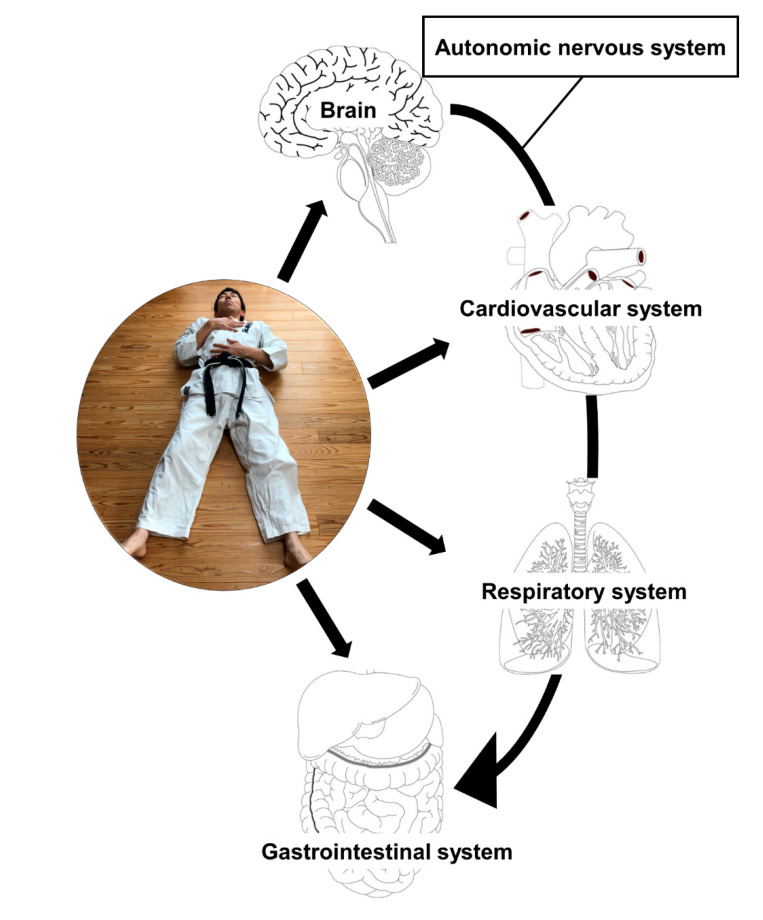
Background: Breathing is an essential part of life. Diaphragmatic breathing (DB) is slow and deep breathing that affects the brain and the cardiovascular, respiratory, and gastrointestinal systems through the modulation of autonomic nervous functions. However, the effects of DB on human health need to be further investigated. Methods: The author conducted a PubMed search regarding the current evidence of the effect of DB on health. Results: This review consists of a total of 10 systematic reviews and 15 randomized controlled trials (RCTs). DB appears to be effective for improving the exercise capacity and respiratory function in patients with chronic obstructive pulmonary disease (COPD). Although the effect of DB on the quality of life (QoL) of patients with asthma needs to be investigated, it may also help in reducing stress; treating eating disorders, chronic functional constipation, hypertension, migraine, and anxiety; and improving the QoL of patients with cancer and gastroesophageal reflux disease (GERD) and the cardiorespiratory fitness of patients with heart failure. Conclusions: Based on this narrative review, the exact usefulness of DB in clinical practice is unclear due to the poor quality of studies. However, it may be a feasible and practical treatment method for various disorders.
Overview
The claims and statistics of this paper haven’t been checked yet.
Run the check — free, no account needed. It reads the open-access text and checks the sources it cites.
Integrity signals
Registry
Cites
Statistics
Figures
Verification
Claims the paper makes
The claims and statistics of this paper haven’t been checked yet.
Run the check — free, no account needed. It reads the open-access text and checks the sources it cites.
Claims other papers make about this one
Each is checked against this paper’s own text: does it say what the citing paper says it does?
The check wasn’t confident either way, so it gives no verdict — never disputed.
In the citing paper
“Systematic reviews and meta-analyses demonstrate that evening exposure to bright or blue-enriched light suppresses melatonin production, delays sleep onset, and reduces overall sleep efficiency by signaling the brain to remain alert, whereas warm, dim lighting and blue-light filters on electronic devices during evening hours minimized circadian disruption [49].”
From Pre-Sleep Anxiety: Mechanisms and Therapeutic Approaches in Clinical Practice. (2026) · cites this paper as [49]
Experimental — accuracy not yet measured
Self-check
Percentages, sums and reported differences re-computed from the paper’s own numbers.
The self-check needs the paper’s full text.
Citations
Cites
Thayer, J. F., Yamamoto, S. S., & Brosschot, J. F. (2010) · International Journal of Cardiology · doi:10.1016/j.ijcard.2009.09.543 · Cited by 2,276
Heart Rate Variability ? A Historical Perspective
Billman, G. E. (2011) · Frontiers in Physiology · doi:10.3389/fphys.2011.00086 · Cited by 786
The physiological effects of slow breathing in the healthy human
Russo, M. A., Santarelli, D. M., & O’Rourke, D. (2017) · Breathe · doi:10.1183/20734735.009817 · Cited by 665 · cited 4×
“This physiological action is reversed in expiration [103].”
BackgroundInfluentialThe Effect of Diaphragmatic Breathing on Attention, Negative Affect and Stress in Healthy Adults
Ma, X., Yue, Z.-Q., Gong, Z.-Q., Zhang, H., Duan, N.-Y., Shi, Y.-T., Wei, G.-X., & Li, Y.-F. (2017) · Frontiers in Psychology · doi:10.3389/fpsyg.2017.00874 · Cited by 509
Self-Regulation of Breathing as a Primary Treatment for Anxiety
Jerath, R., Crawford, M. W., Barnes, V. A., & Harden, K. (2015) · Applied Psychophysiology and Biofeedback · doi:10.1007/s10484-015-9279-8 · Cited by 353
Thomas, M., McKinley, R. K., Freeman, E., & Foy, C. (2001) · BMJ · doi:10.1136/bmj.322.7294.1098 · Cited by 294
Zou, L., Sasaki, J. E., Wei, G.-X., Huang, T., Yeung, A. S., Neto, O. B., Chen, K. W., & Hui, S. S.-C. (2018) · Journal of Clinical Medicine · doi:10.3390/jcm7110404 · Cited by 267
Bernardi, L., Gabutti, A., Porta, C., & Spicuzza, L. (2001) · Journal of Hypertension · doi:10.1097/00004872-200112000-00016 · Cited by 243 · cited 1×
“DB that controlled RR at six breaths/min reduces the chemoreflex response to hypoxia and hypercapnia compared with normal breathing [104].”
BackgroundRicoy, J., Rodríguez‐Núñez, N., Álvarez-Dobaño, J. M., Toubes, M. E., Riveiro, V., & Valdés, L. (2018) · Pulmonology · doi:10.1016/j.pulmoe.2018.10.008 · Cited by 232
Breathing exercises for chronic obstructive pulmonary disease
Holland, A. E., Hill, C. J., JONES, A. Y. M., & McDonald, C. F. (2012) · Cochrane Database of Systematic Reviews · doi:10.1002/14651858.cd008250.pub2 · Cited by 231
Research works printed but not linked: 3
- Gridina, 2013, Prevalence of chronic hyperventilation syndrome in children and teenagers, Arch. Pediatr. Organe Off. Soc. Fr. Pediatr., 20, 265
- Lindeboom, 1980, Hyperventilation and therapy [Hyperventilatie en therapie], Ned. Tijdschr. Voor Fysiother., 90, 18
- Liu, 2014, Comparisons of different breathing ratios of slow breathing among outpatients with anxiety disorders, J. Med. Health, 3, 57
Cited by
Sorted by citations
Items 101–170 of 170
Febyastuti, I. W., Widyaningtyas, N. H., & Zakaria, E. D. (2024) · Holistic Nursing and Health Science · doi:10.14710/hnhs.6.2.2023.86-95 · Cited by 1
Sepalanita, W., Faturachman, A., & Subiakto, T. (2024) · Jurnal Kesehatan Manarang · doi:10.33490/jkm.v10i1.965 · Cited by 1
“Diaphragmatic breathing exercises maximize the release of air during expiration by reducing intrathoracic volume using abdominal muscles (Hamasaki, 2020).”
BackgroundRezaei, M., Abdi, A., Salari, N., Aznab, M., & Jasemi, S. V. (2025) · Supportive Care in Cancer · doi:10.1007/s00520-025-09207-0 · Cited by 1
“Based on recommendation of similar studies [10, 14, 18] for patients with metastatic cancers, and the researcher team decision, the most suitable duration for patient cooperation is 10 days.”
InfluentialKlasa, K., Sobański, J. A., & Rutkowski, K. (2023) · Psychiatria Polska · doi:10.12740/pp/146824 · Cited by 1
“Hamasaki [54], on the basis of a review of 10 systematic reviews and 15 RCTs regarding diaphragmatic breathing (a core procedure in meditation practices as well as traditional martial arts like tai chi, involving breathing in slowly and deeply through the nose using predominantly the diaphragm and…”
Carter, T., O'Brien, C., Akinbode, T., & Lloyd, I. (2023) · CAND Journal · doi:10.54434/candj.163 · Cited by 1
Holistic Treatment of Inflammatory Disease for the Mobility Impaired
Laymon, M., & Laymon, K. (2023) · Rheumatica Acta Open Access · doi:10.17352/raoa.000015
Hu, T., Medeiros, E. P., Yuan, A., Wu, J., Zheng, Y., Jiang, X., de Albuquerque, V. H. C., & Wu, W. (2023) · Research Square · doi:10.21203/rs.3.rs-3397779/v1 · Cited by 1
Pre-Sleep Anxiety: Mechanisms and Therapeutic Approaches in Clinical Practice.
Song, S., Irfan, M., Tahir, Z., Garrison, K. A., & Ziskind, S. (2026) · Current Sleep Medicine Reports · doi:10.1007/s40675-026-00370-2
Chandra, J. (2021) · International Journal for Research in Applied Science and Engineering Technology · doi:10.22214/ijraset.2021.37317
RELAXATION TRAINING TO REDUCE ANXIETY DUE TO THE COVID-19 PANDEMIC IN PREGNANT WOMEN TRIMESTER III
Mayasari, A., & Isviyanti, I. (2021) · Journal of Educational Health and Community Psychology · doi:10.12928/jehcp.v10i4.21776
Thorat, S. N., & Chougule, S. (2022) · International Journal of Health Sciences · doi:10.53730/ijhs.v6ns8.12876
Setko, A. G., & Zhdanova, О. М. (2023) · Экология человека · doi:10.17816/humeco106761
Assessment of breathing patterns in the context of physical performance in young people
Kozińska, W., & Kuszewski, M. (2023) · Physiotherapy Review · doi:10.5114/phr.2023.126012
A RESPIRAÇÃO CONSCIENTE É BENÉFICA NO CONTROLE DA ANSIEDADE?
Pinto, R. R., dos Antos, F., Gomes, F., Bellino, L. G. S., Pereira, R. M., dos Santos, R. R., & Sagionetti, V. L. (2023) · Editora e-Publicar eBooks · doi:10.47402/ed.ep.c23219225119
The Effect of Respiratory Exercise in The Elderly on Quality of Life and Anxiety
(2023) · Journal of Population Therapeutics and Clinical Pharmacology · doi:10.47750/jptcp.2023.30.15.018
The Effect Of Respiratory Exercise In The Elderly On Quality Of Life And Anxiety
(2023) · Journal of Population Therapeutics and Clinical Pharmacology · doi:10.47750/jptcp.2023.30.16.004
Pontificia Universidad Católica Madre y Maestra, S. D. L. C., Pereyra-Bencosme, K., Arango, D., IPS Sura Virtual, M., Lichtenstein, F., Instituto Butantan / CENTD - Bioinformatics, S. P., Mateo, G. A., Instituto Tecnológico de Santo Domingo, S. D., Gormaz-Bravo, A. S., Universidad del Desarrollo, C., et al. (2023) · Principles and Practice of Clinical Research Journal · doi:10.21801/ppcrj.2023.91.5
The Effect of Diaphragm Muscle Strengthening Exercise Using Incentive Spirometry on Body Balance
Zainuddin, Z., Firdanabila, A. S., & Ambarsarie, R. (2023) · OPSearch American Journal of Open Research · doi:10.58811/opsearch.v2i5.53
Meditação ativa: uma proposta de ferramenta para manejo do estresse
Guerra, R. F., Oliveira, J. C., Danila, A. H., & Tavares, H. (2022) · Congresso Brasileiro de Medicina do Estilo de Vida · doi:10.61661/congresso.cbmev.5.2022.3
Mosa, H. E. S., El-Bready, H. G., El-Sol, A. E. S. H., Taman, R. O., Bayomy, H. E.-S., & Shehata, H. S. (2023) · Menoufia Nursing Journal · doi:10.21608/menj.2023.324227
Anwar, M., Faisal, S., & Hamza, M. M. (2023) · Journal of Health and Rehabilitation Research · doi:10.61919/jhrr.v3i2.250
Fatigue: Physiology and Pathology
(2024) · Frontiers research topics · doi:10.3389/978-2-8325-4471-6
Sánchez-Lozano, J., & Pizarro, S. M. (2024) · Revista de Patología Respiratoria · doi:10.24875/rpr.23000040
Jo, S., Kim, J. H., & Song, C. (2024) · Physical therapy rehabilitation science · doi:10.14474/ptrs.2024.13.1.113
A Theory of Lifetime Welfare: Cycles, Trend, Span, and PoliciesPreprint
Vallejo, H. (2024) · SSRN Electronic Journal · doi:10.2139/ssrn.4830985
AIM AND MEANING OF BREATHING EXERCISES: INTERDISCIPLINARY LITERATURE REVIEW
Steinmane, V., & Fernāte, A. (2024) · SOCIETY INTEGRATION EDUCATION Proceedings of the International Scientific Conference · doi:10.17770/sie2024vol2.7876
“(Hamasaki, 2020)”
Clinical Research on the Application of Inertial Measurement Units in Respiratory Cycle Measurement
Wu, Y., Feng, H., Fu, J., Han, Y., & Pan, H. (2024) · International Convention on Rehabilitation Engineering & Assistive Technology · doi:10.1109/i-create62067.2024.10776418
“Additionally, abdominal breathing helps to relieve tension in the shoulders and neck, reduces movement in the upper body, and allows for greater relaxation while in a supine position[15,16].”
Tahir, H., Tahir, F., Iqbal, F., Tariq, F., Tahir, I., Dastgeer, G. M., & Asim, H. A. B. (2024) · Insights-Journal of Health and Rehabilitation · doi:10.71000/59qb4303
Huttner, S. (2024) · Cultural psychology of education · doi:10.1007/978-3-031-78837-6_9
Gastroösophageale Refluxkrankheit
Pehl, C. (2024) · Springer eBooks · doi:10.1007/978-3-662-68436-8_5
Hassan, M. G., Alotaibi, A. M., Altuwaym, R. H., Alnuwaysir, R. H., Alharbi, R. B., Alnajashi, L. M., Alsaber, M. K., Aldakan, H. F., Hawesa, H., Abdelgabar, Z. A., et al. (2025) · International Journal of General Medicine · doi:10.2147/ijgm.s483995
“13 Nevertheless, while carrying out a diagnostic test such as a sonographic examination, it may be difficult to ensure that the patient is aware of how to carry out the breathing maneuver.”
Atemfokussierte Entspannungstechniken in der TCM-Behandlung des Kinderwunsches
Baumann, M. (2025) · Chinesische Medizin / Chinese Medicine · doi:10.1007/s00052-025-00140-3
Breath of relief: Transforming pediatric asthma care with telemedicine‐guided exercises
Karaaslan, H. B. G., Uçgun, H., Kaya, M., Cengiz, G. N., Ozturk, S., Barut, O., Korkut, Z., Aydemir, S., Meric, Z., Topçu, B., et al. (2025) · Clinical and Translational Allergy · doi:10.1002/clt2.70049 · Cited by 1
“1,30 These studies focused on diaphragmatic breathing with side rib breathing, mouth - to - lip breathing, or endurance training.”
Development of a Wearable Device for Assisting Diaphragmatic Breathing
Anand, Islam, N., Jin, R., Guan, Q., Sun, Y., Song, G., & Shen, T. (2025) · Design of Medical Devices Conference (DMD) · doi:10.1115/dmd2025-1081
Chemotherapy induced nausea-vomiting and breathing exercise: a review
Ekşi, P., & Oğuz, S. (2025) · International Journal of Clinical Trials · doi:10.18203/2349-3259.ijct20252203
Erol, B. N., Gürşen, C., Mümüşoğlu, S., & Kaya, S. (2025) · Journal of Exercise Therapy and Rehabilitation · doi:10.15437/jetr.1655669
Tsakona, P., Hristara-Papadopoulou, A., Apostolou, T. S., Papadopoulou, O., Kitsatis, I., Paschalidou, E. G., Tzimos, C., Grammatikopoulou, M. G., & Tsiroukidou, K. (2025) · Children · doi:10.3390/children12081010
“In a similar clinical study in adolescent boys with severe stress obesity, an aerobic exercise program combined with resistance training reduced oxidative and inducing an increase in antioxidant enzymes [42,66].”
Nikolić, S., Pavlović, R., Stijepić, I., Radulović, N., & Bădău, A. (2025) · Balneo and PRM Research Journal · doi:10.12680/balneo.2025.836
GÜRPINAR, B., Yeşilyurt, S. Y., Urak, Ö., & Sarı, İ. (2025) · İzmir Katip Çelebi Üniversitesi Sağlık Bilimleri Fakültesi Dergisi · doi:10.61399/ikcusbfd.1693424
The effects of diaphragm release on sleep quality: a pilot feasibility study
Erol, E., & Kurtboğan, M. (2025) · BMC Pulmonary Medicine · doi:10.1186/s12890-025-03968-4
“However, its functions extend beyond respiration, as the diaphragm also contributes to vocalisation and swallowing, alongside its primary respiratory function [3].”
Raina, N., Williams, V., & George, J. E. (2025) · International Journal of Community Medicine and Public Health · doi:10.18203/2394-6040.ijcmph20253689
Long Exhalations as Complementary Treatment for Chronic Pain: A Pilot Study
España, J. C., & Vanneste, S. (2025) · Journal of Clinical Medicine · doi:10.3390/jcm14227975
“Breathing techniques have been used for millennia in social and religious contexts, and they have proven benefits for anxiety, depression, memory consolidation and blood pressure, among others [22,23].”
Autonomic indicators of self-transcendence: insights from the numadelic VR paradigm
Bonnelle, V., Parola, G., Andreu, C. I., Hardy, J. L., Wall, J., Timmermann, C., Cebolla, A., Wrzesien, M., & Glowacki, D. R. (2026) · Neuroscience of Consciousness · doi:10.1093/nc/niag009 · Cited by 2
“Slow and high amplitude breathing practices that engage the abdomen (diaphragmatic breathing) or the entire torso (Dirga pranayama, also known as Three-Part Breath or Complete Breath) are well-documented for their positive effect on emotional regulation (Hamasaki 2020).”
Bi, Y., Wang, S., Li, M., Ni, W., Fan, H., Wang, F., Chen, H., Ding, S., & Zhang, Y. (2025) · Respiratory Medicine · doi:10.1016/j.rmed.2025.108555 · Cited by 2
ESTRATÉGIAS PSICOLÓGICAS PARA MANEJO DO ESTRESSE E DA PRESSÃO DO ATLETA DE ALTO RENDIMENTO
Mingotti, V. C., & Werner, P. C. G. (2025) · Revista Contemporânea · doi:10.56083/rcv5n11-169
Reinhardt, M., Conoyer, S. J., Jewell, J. D., & Everett, G. E. (2025) · Journal of Applied School Psychology · doi:10.1080/15377903.2025.2609067
“MDB has been shown to reduce anxiety symptoms by activating the body’s relaxation response, which decreases heart rate, breathing rate, and physiological stress markers (Chen et al., 2017; Hamasaki, 2020; Ma et al., 2017; Zaccaro et al., 2018).”
Disruption of Pre-Bötzinger Complex neuropeptidergic tonality controls fear and metabolic responsePreprint
Shetty, S., Farmanbar, A., Toh, P., Yildiz, R., Jang, Y., Duesman, S. J., Warnock, A., Espinoza, D., Stanley, S., Rajbhandari, P., et al. (2026) · bioRxiv (Cold Spring Harbor Laboratory) · doi:10.64898/2026.01.01.697304
mostafa, M., Hossam, A., Mohamed, A., Elnahas, N. G. M., & Gehad, E. (2026) · Health sport rehabilitation · doi:10.58962/hsr.1298
Woo, S.-C., Kim, J., Kim, J.-H., Lyu, Y. R., & Park, Y.-C. (2025) · The Journal of Internal Korean Medicine · doi:10.22246/jikm.2025.46.6.1352
Management of Temporomandibular Disorders
Beecroft, E. V., Penlington, C., & Durham, J. (2026) · BDJ clinician's guides · doi:10.1007/978-3-032-01301-9_5
Sari, D. P., Yona, S., Anakumi, M., Pramesty, M., Putri, I. S., Supriati, L., Arifin, Y., & Prayitno, H. (2026) · AIDS Care · doi:10.1080/09540121.2026.2630013
“The 4–7–8 breathing method is described by Hamasaki (2020).”
InfluentialLin, B.-Y., & Weng, C. (2026) · Patient Preference and Adherence · doi:10.2147/ppa.s585899
Kwa, E., Cheong, S.-K., & Lee, P. (2026) · Journal of Visual Impairment & Blindness · doi:10.1177/0145482x261432658
“Hamasaki (2020) reviewed that deep breathing may not signi fi - cantly affect aerobic capacity in healthy individuals.”
Koller, Á., Decker, S., Takács, J., Harangozo, A., Faludi, B., & Horváth, T. (2026) · Life · doi:10.3390/life16040634
Crisafulli, O., Quintiero, V., Spaggiari, C. V., Odone, A., & D’Antona, G. (2026) · Frontiers in Physiology · doi:10.3389/fphys.2026.1793253
Manish Kumar, S., Kalpana, A. P., & Santha Kumar, S. (2026) · Cureus · doi:10.7759/cureus.110150
“A systematic review has shown that diaphragmatic breathing may be useful for stress management, and evidence suggests that diaphragmatic breathing enhances pulmonary function [8,13-15].”
R2MR: An evaluation of pre-post training data across cohorts
Wood, V. M., Bailey, S., & Guest, K. (2026) · Journal of Military Veteran and Family Health · doi:10.3138/jmvfh-2025-0092
Ekşi, P., & Oğuz, S. (2026) · International Journal of Clinical Trials · doi:10.18203/2349-3259.ijct20262507
Entre o cuidado e o currículo: o lugar da educação física na prevenção da autolesão na adolescência
Piovesan, C. C., Azambuja, C. R., Pandolfo, K. C. M., & dos Santos, D. L. (2026) · Educação (UFSM) · doi:10.5902/1984644495767
Wicaksana, I. G. A. T., Harta, I. P. A. N., Kamaryati, N. P., & Putra, I. N. A. M. (2025) · Nurse Professional Education Journal · doi:10.67958/nurseedu.v1i1.14
“The observed improvement aligns with prior research that has demonstrated the effectiveness of slow deep breathing in promoting parasympathetic nervous activity, enhancing relaxation, and decreasing cortisol levels and sympathetic responses (Hasbi, 2022; Hamasaki, 2020).”
Maulana, R., Rák, Á., Földi, S., & Cserey, G. (2026) · IEEE Access · doi:10.1109/access.2026.3728740
“In the exhalation, the opposite process occurs, with the abdomen returning to its initial condition [34].”
Korkmaz, A. N., İNCE, E., Dağ, İ., Ataç, A., Ağdere, S. A., & Atak, E. (2026) · Bilecik Şeyh Edebali Üniversitesi Sağlık Bilimleri Fakültesi Dergisi · doi:10.61535/bseusbfd.1669102
Bishnoi, A., & Hernandez, M. E. (2026) · Sensors · doi:10.3390/s26185834
“Respiratory rhythms are tightly coupled with brain activity, influencing neural oscillations, cognitive performance, and movement execution [1,2].”
Martial Arts as Therapeutic Exercise
Hamasaki, H. (2026) · Springer eBooks · doi:10.1007/978-981-92-1629-1_124-1
Self-citationHild, J., Riethmüller, O., Sandrock, T., Lerch, D. J., Birkle, J., Diederichs, F., & Wagner-Hartl, V. (2026) · International Conference on Automotive User Interfaces and Interactive Vehicular Applications (AutomotiveUI) · doi:10.1145/3828158.3838272
“Many studies examining the effects of Diaphragmatic Breathing use relatively short intervention periods ranging from about 10 to 15 minutes [6].”
Sampathkumar, A., Pooja, K. M., Ponvel, K., Manikandhan, R., & Damodaran, B. (2026) · Journal of Maxillofacial and Oral Surgery · doi:10.1007/s12663-026-03268-2
The Fontan Choir: Singing for Single Ventricle Health and Wellbeing Feasibility Study
Ward, K. M., Bartolome, S. J., Steltzer, M. M., Snyder, A., Gregoire, S., Vogel, C., McNulty, D. C., Gustafson, N. J., Brancaccio, T., Allen, K. Y., et al. (2026) · Pediatric Cardiology · doi:10.1007/s00246-026-04483-x
Relaxation interventions in neurological rehabilitation: a scoping review
Rings, P., Dziurla, J., Damme, T. V., Alaerts, K., Groll, C., & Zietz, D. (2026) · Journal of Rehabilitation Medicine · doi:10.2340/jrm.v58.45972
“Structured relaxation interventions include the Benson relaxation technique (24), progressive muscle relaxation (PMR) (25), autogenic training (26), diaphragmatic breathing (DB) (27), guided imagery (GI) (28), and biofeedback interventions (29), among others.”
Khandare, N. B., & Patil, A. S. (2026) · International Journal of Innovative Science and Research Technology (IJISRT) · doi:10.38124/ijisrt/26oct121
“A narrative review outlines the possible effects of diaphragmatic breathing on health and on physiological regulation, although the evidence differs among clinical populations [5].”
Metadata
- Authors
- Hamasaki, H.
- Affiliations
- Hamasaki Clinic, 2-21-4 Nishida, Kagoshima, Kagoshima 890-0046, Japan
- Corresponding author
- Hamasaki, Hidetaka
- ORCID
- Hamasaki, Hidetaka
- Venue
- Medicines
- Publisher
- MDPI AG
- Published
- 2020-10-15
- Volume
- 7
- Issue
- 10
- Pages
- 65
- ISSN
- 2305-6320 (ISSN-L)
- PMC
- PMC7602530
- OpenAlex
- W3093114155
- Cited by
- 173
- References
- 116
- Citations by year
- 2026: 28 · 2025: 42 · 2024: 43 · 2023: 35 · 2022: 21 · 2021: 4
- FWCI
- 2.55
- Type
- journal article
- Language
- en
- Open access
- gold
- doi.org
- Licence
- Locations
- Medicines (publishedVersion, cc-by)
- PubMed Central (publishedVersion, cc-by)
- PubMed (publishedVersion)
- DOAJ (DOAJ: Directory of Open Access Journals) (submittedVersion, cc-by-sa)
- Topics
- Health Sciences › Medicine › Cardiology and Cardiovascular Medicine › Heart Rate Variability and Autonomic Control
- Life Sciences › Neuroscience › Endocrine and Autonomic Systems › Neuroscience of respiration and sleep
- Health Sciences › Medicine › Pulmonary and Respiratory Medicine › Respiratory and Cough-Related Research
- Keywords
- diaphragmatic breathing, slow deep breathing, autonomic nervous system modulation, chronic obstructive pulmonary disease, asthma, stress reduction, eating disorders, chronic functional constipation, hypertension, migraine, anxiety, cancer, gastroesophageal reflux disease, heart failure, cardiorespiratory fitness, quality of life, respiratory function
About these checks
Registry, retraction, Cites and statistics results are computed, not judged, with one exception: a printed reference that no index lists is read once by a model before it counts as a citation error. Claims are extracted by a model and kept only when their quote appears verbatim in the text; each cited source is then checked, with a model’s help, for whether it says what the claim relies on. Those verdicts can be wrong — read the claim’s quote and the cited source before relying on one.
Statistics and arithmetic are recomputed, not judged.
Confidence bands are shown only for fields calibrated on our annotated test set. None is calibrated yet, so no band is shown.
What counts as a claim ›How we measure confidence ›How we check this ›
Are you an author, or do you see a problem with this page? Request a review
