

The Barriers and Facilitators of Different Stakeholders When Deprescribing Benzodiazepine Receptor Agonists in Older Patients—A Systematic Review
Open accessThe DOI matches its Crossref record; 25 of the 26 references it cites were found in a registry or an index.
Abstract
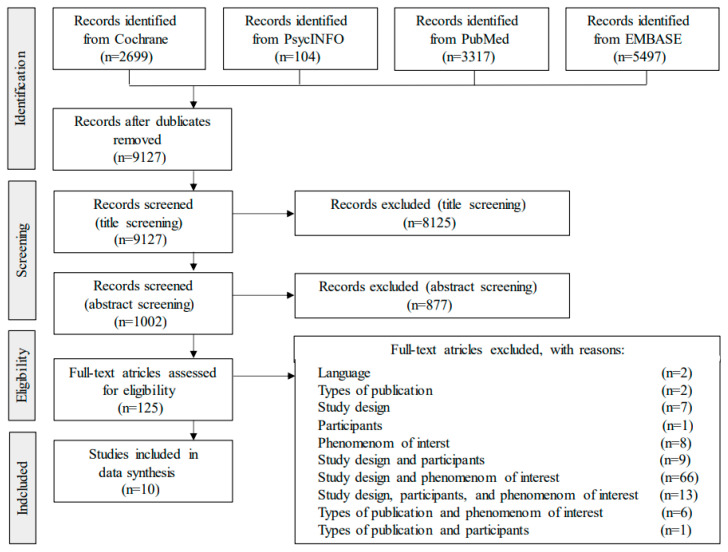
Treatment of older patients with benzodiazepines and Z-drugs (BZRA) is associated with an increased risk of side effects. However, this treatment is still used among these patients. Deprescribing can be a tool to reduce inappropriate medication. This review aims to identify and compare barriers and facilitators of stakeholders involved in BZRA deprescribing in older patients and uncover potential gaps in the research field. The search was conducted in PubMed, EMBASE, PsycINFO, and Cochrane Library. Ten articles based on qualitative data on BZRA deprescribing in older patients (≥65 years) published between 2005–2020 were included. Six articles referred to patients as stakeholders, two referred to physicians, and one to nurses and caregivers, respectively, indicating a need for more studies in the field. More barriers than facilitators were identified. Important findings were the patient willingness to deprescribe BZRA compared to physicians, who did not mention deprescribing to patients due to barriers such as expected patient resistance. Nurses mentioned barriers like lack of knowledge and the feeling that their options were not valued by physicians; education was found to be a shared deprescribing facilitator among the stakeholders. Being aware of deprescribing barriers and facilitators can be helpful in future successful deprescribing interventions.
Overview
The claims and statistics of this paper haven’t been checked yet.
Free: it reads the open-access text and checks the first 5 claims that cite a source we can check. Create a free account to check every claim.
Integrity signals
Registry
Cites
Statistics
Figures
Verification
Claims the paper makes
The claims and statistics of this paper haven’t been checked yet.
Free: it reads the open-access text and checks the first 5 claims that cite a source we can check. Create a free account to check every claim.
Claims other papers make about this one
Each is checked against this paper’s own text: does it say what the citing paper says it does?
The source backs part of the claim, not all of it — or backs it for a different population, condition or comparison.
In the citing paper
“Fragmented care can be a barrier to effective BZD tapering because attitudes, knowledge, and conflicting advice from a patient’s medical teams (e.g., primary care, psychiatry, neurology, other specialty clinicians) and care partners can influence the BZD tapering process.92,169,170”
From Joint Clinical Practice Guideline on Benzodiazepine Tapering: Considerations When Risks Outweigh Benefits (2025) · cites this paper as [170]
Experimental — accuracy not yet measured
Self-check
Percentages, sums and reported differences re-computed from the paper’s own numbers.
The self-check needs the paper’s full text.
Citations
Cites
Tong, A., Sainsbury, P., & Craig, J. (2007) · International Journal for Quality in Health Care · doi:10.1093/intqhc/mzm042 · Cited by 42,509
By the 2019 American Geriatrics Society Beers Criteria® Update Expert Panel (2019) · Journal of the American Geriatrics Society · doi:10.1111/jgs.15767 · Cited by 3,163 · cited 3×
“The use of BZRA may be indicated in certain circumstances [7].”
BackgroundInfluentialReducing Inappropriate Polypharmacy: The Process of Deprescribing
Scott, I. A., Hilmer, S. N., Reeve, E., Potter, K., Le Couteur, D., Rigby, D., Gnjidic, D., Del Mar, C. B., Roughead, E. E., Page, A., et al. (2015) · JAMA Internal Medicine · doi:10.1001/jamainternmed.2015.0324 · Cited by 1,584 · cited 1×
“[25] on deprescribing stressed the importance of patient-involvement and shared decision-making.”
BackgroundRobson, C., & McCartan, K. (2016) · UWE Research Repository (UWE Bristol) · Cited by 1,320
Tannenbaum, C., Martin, P., Tamblyn, R., Benedetti, A., & Ahmed, S. (2014) · JAMA Internal Medicine · doi:10.1001/jamainternmed.2014.949 · Cited by 665 · cited 3×
“Some physicians felt that deprescribing lead to unnecessary suffering for the patients [20], which was shared with the patients who expressed concern about withdrawal symptoms [8,17,18,20].”
BackgroundMethodDeveloping the Review Question and Inclusion Criteria
Stern, C., Jordan, Z., & McArthur, A. (2014) · AJN, American Journal of Nursing · doi:10.1097/01.naj.0000445689.67800.86 · Cited by 629 · cited 1×
“The elements of Population, Phenomenon of interest, and Context (PICo) [9] were used to identify search terms in accordance with the objective.”
MethodReeve, E., Shakib, S., Hendrix, I., Roberts, M. S., & Wiese, M. D. (2014) · British Journal of Clinical Pharmacology · doi:10.1111/bcp.12386 · Cited by 388
Deprescribing benzodiazepine receptor agonists: Evidence-based clinical practice guideline.
(2018) · Europe PMC (PubMed Central) · Cited by 250
Vinkers, C. H., & Olivier, B. (2012) · Advances in Pharmacological Sciences · doi:10.1155/2012/416864 · Cited by 195
Physicians’ perspectives on prescribing benzodiazepines for older adults: a qualitative study
Cook, J. M., Marshall, R., Masci, C., & Coyne, J. C. (2007) · Journal of General Internal Medicine · doi:10.1007/s11606-006-0021-3 · Cited by 178 · cited 10×
“Ageism: Finding deprescribing BZRA as unnecessary due the age of the patient 3 * [8,16,17] 2 [20] No data”
BackgroundInfluential
Cited by
Capiau, A., Huys, L., van Poelgeest, E. P., van der Velde, N., Petrović, M., Somers, A., & the EuGMS Task, F. G. O. F. (2022) · European Geriatric Medicine · doi:10.1007/s41999-022-00731-4 · Cited by 95
“Patients and physicians were most often targeted in interventions toward deprescribing of BZDs in older people, while relatives, pharmacists or other professional caregivers were often not involved [80, 82].”
BackgroundInfluentialEvrard, P., Pétein, C., Beuscart, J.-B., & Spinewine, A. (2022) · Implementation Science · doi:10.1186/s13012-022-01206-7 · Cited by 62
“Compared to another recent systematic review on this topic, which only included qualitative evidence [25], our approach enabled us to include more data and gain a deeper understanding of BZRA deprescribing.”
BackgroundResultBrunner, E., Chen, C.-Y. A., Klein, T., Maust, D., Mazer-Amirshahi, M., Mecca, M., Najera, D., Ogbonna, C., Rajneesh, K. F., Roll, E., et al. (2025) · Journal of General Internal Medicine · doi:10.1007/s11606-025-09499-2 · Cited by 51
“92,169,170 Although this situation may exist for any patients with multiple health-care providers, it is particularly common among older adults.”
Discontinuation of psychotropic medication: a synthesis of evidence across medication classes.
Vinkers, C. H., Kupka, R. W., Penninx, B. W., Ruhé, H. G., van Gaalen, J. M., van Haaren, P. C. F., Schellekens, A. F. A., Jauhar, S., Ramos-Quiroga, J. A., Vieta, E., et al. (2024) · Molecular Psychiatry · doi:10.1038/s41380-024-02445-4 · Cited by 51
“Generally, interventions focused on patient self-awareness and education up discontinuation successes [92].”
BackgroundInfluentialZeraatkar, D., Nagraj, S. K., Ling, M., Jassal, T., Kirsh, S., Lima, J. P., Pitre, T., Couban, R., Hussain, M., Seterelv, S. S., et al. (2025) · BMJ · doi:10.1136/bmj-2024-081336 · Cited by 30
Barriers to Deprescribing Benzodiazepines in Older Adults in a Survey of European Physicians
Shapoval, V., Hubert, M. D. S., Evrard, P., Sibille, F., Aubert, C. E., Bolt, L., Tsoutsi, V., Κollia, P., Salvà, A., Miralles, R., et al. (2025) · JAMA Network Open · doi:10.1001/jamanetworkopen.2024.59883 · Cited by 29
Dalin, D. A., Løkke, A., Kristiansen, P., Jensen, C., Birkefoss, K., Christensen, H. R., Godtfredsen, N. S., Hilberg, O., Rohde, J. F., Ussing, A., et al. (2022) · Respiratory Medicine · doi:10.1016/j.rmed.2022.106880 · Cited by 23
Self-citationEvrard, P., Damiaens, A., Patey, A. M., Grimshaw, J., & Spinewine, A. (2023) · Exploratory Research in Clinical and Social Pharmacy · doi:10.1016/j.rcsop.2023.100258 · Cited by 19
“Two recent systematic reviews analyzed barriers and enablers of BZRA deprescribing in older adults, and reported more barriers than enablers, including a lack of knowledge, expected patients' resistance and interprofessional conflicts.(14,15) However, the majority of studies were undertaken in outpatient settings and…”
BackgroundResultMellot, M., Jawal, L., Morel, T., Fournier, J., Tubach, F., Cadwallader, J., Christiaens, A., & Zerah, L. (2024) · Journal of the American Medical Directors Association · doi:10.1016/j.jamda.2023.11.025 · Cited by 17
Okui, T., Park, J., Hirata, A., & Nakashima, N. (2021) · Healthcare · doi:10.3390/healthcare9121724 · Cited by 16
Hürlimann, O., Alers, D., Hauri, N., Leist, P., Schneider, C., Bolt, L., Rodondi, N., & Aubert, C. E. (2024) · BMC Geriatrics · doi:10.1186/s12877-024-05027-9 · Cited by 14
Bužančić, I., & Hadžiabdić, M. O. (2022) · Pharmacy · doi:10.3390/pharmacy10040076 · Cited by 11
Deprescribing: An umbrella review
Japelj, N., Horvat, N., Knez, L., & Kos, M. (2024) · Acta Pharmaceutica · doi:10.2478/acph-2024-0011 · Cited by 9
“In contrast, it is worth noting that healthcare professionals consider the discontinuation of benzodiazepines particularly challenging (83).”
InfluentialDesign, implementation, and evaluation of a pharmacist-led outpatient benzodiazepine-tapering clinic
Gregorian, T., Bradley, K., Campbell, S., Mashburn, R., Beuttler, R., & Keller, M. S. (2022) · Journal of the American Pharmacists Association · doi:10.1016/j.japh.2022.09.025 · Cited by 9
Korppas, M., Tiihonen, M., Lund, M. B., & Kvarnström, K. (2025) · Basic & Clinical Pharmacology & Toxicology · doi:10.1111/bcpt.70106 · Cited by 5
Roig, S. O., Herranz, S., Lleal, M., Sevilla‐Sánchez, D., Jordana, R., Mascaró, Ó., Ferrández, O., de Jaime, E., Estrada, R. B., Nazco, G. J., et al. (2024) · BMC Geriatrics · doi:10.1186/s12877-024-05185-w · Cited by 5
Zlotnik, N., Abbaticchio, A., Theodorlis, M., Cross, M. S., Kitchlu, A., Wilson, J.-A. S., Gagliardi, A. R., & Battistella, M. (2025) · Kidney360 · doi:10.34067/kid.0000000884 · Cited by 5
Shapoval, V., Evrard, P., Sibille, F., López‐Toribio, M., Dalleur, O., Aubert, C. E., Bolt, L., Tsoutsi, V., Ntafouli, M., Maldonado, L. F., et al. (2025) · Basic & Clinical Pharmacology & Toxicology · doi:10.1111/bcpt.70100 · Cited by 5
Healthcare professionals' experiences with the use of antipsychotics in dementia
Jørgensen, S. M., Lech, L. V. J., Vermehren, C., Schiøtz, M. L., Andersen, J. T., Karstoft, K., Andersen, T., Hansen, S. V., & Birke, H. (2024) · Exploratory Research in Clinical and Social Pharmacy · doi:10.1016/j.rcsop.2024.100446 · Cited by 5
“29 This study identified a perceived pattern of continuation of anti-psychotic use, which is supported by a Danish study identifying that more than 50% of all people with dementia remained in treatment one year after initiation, and more than 40% remained in treatment after five years.”
Self-citationShapoval, V., Hubert, M. D. S., Pétein, C., Viaud, C., Adda, T., Aubert, C. E., Mooser, B., Tsoutsi, V., Dikeos, D. G., Maldonado, L. F., et al. (2025) · Age and Ageing · doi:10.1093/ageing/afaf342 · Cited by 4
Development of a medication review intervention by seconding a hospital pharmacist to primary care
Holst, S. S., Hansen, J. M., Kaae, S. S., & Vermehren, C. (2024) · Exploratory Research in Clinical and Social Pharmacy · doi:10.1016/j.rcsop.2024.100505 · Cited by 4
“This was assessed as a positive approach to ensure high implementation, as the GP could obtain the patient's verbal consent to the proposed amendments and professional advice from the CP. 45 In the future, time should be set aside to investigate the lower acceptance rate for patients compared to GPs, as the non-accept…”
BackgroundInfluentialSelf-citationDuarte-Anselmi, G., Pousada, M., Gómez‐Zúñiga, B., & Armayones, M. (2026) · Implementation Science Communications · doi:10.1186/s43058-026-00879-1 · Cited by 3
“Two reviews, Baandrup et al. [38] and Rasmus-sen et al. [46], did not detail specific behavioral interventions.”
Mendes, T. D. B., Nazha, M., Neves, A. L., & Broeiro, P. (2025) · Geriatrics · doi:10.3390/geriatrics10010018 · Cited by 2
“…to discontinuation of BZRA, four of the identified sub-themes corresponded to themes identified in the systematic review by Rasmussen et al. [5] Concerning 1. patient characteristics, other studies point out several topics that did not emerge in this study such as “the existence of an…”
InfluentialChristoforou, L., & Sutcliffe, K. (2025) · BMC Health Services Research · doi:10.1186/s12913-025-13445-7 · Cited by 2
“Existing evidence syntheses including HPs’ perspectives on deprescribing have predominantly focused on psychotropic medications more generally, other drug classes, or on medication overall, with comparatively less attention to ADM specifically (e.g [69–74]).”
Murphy, A. L., Turner, J. P., Rajda, M., Allen, K. G., & Gardner, D. M. (2024) · Canadian Journal on Aging / La Revue canadienne du vieillissement · doi:10.1017/s0714980824000114 · Cited by 2
Katmeh, T., Gardner, D. M., Kiepek, N. C., Macdonald, M., & Murphy, A. L. (2024) · Journal of Sleep Research · doi:10.1111/jsr.14282 · Cited by 2
Evrard, P., Chevallereau, T., Aikpitanyi, J., Pétein, C., Tubeuf, S., Henrard, S., & Spinewine, A. (2024) · BMJ Open · doi:10.1136/bmjopen-2024-085435 · Cited by 2
“Data from two systematic reviews 15 16 indicate that some barriers are specific to the context and setting of care, while others are more generic, such as lack of knowledge and skills among HCPs and patients, perceptions of BZRA effectiveness and fear of withdrawal symptoms.”
Stul, F., Vanderbeken, L., Lejeune, L., Mehuys, E., Petrović, M., Boussery, K., Christiaens, T., & Leeuwen, E. V. (2025) · Acta Clinica Belgica · doi:10.1080/17843286.2025.2572344 · Cited by 1
Simal, I., Vanneste, O., Capiau, A., Petrović, M., Mariman, A., Boussery, K., & Somers, A. (2026) · Acta Clinica Belgica · doi:10.1080/17843286.2026.2711891 · Cited by 1
Deprescribing Benzodiazepines in Older Adults
Pishock, R. A. (2022) · Nursing & Primary Care · doi:10.33425/2639-9474.1213 · Cited by 1
“…to older adults, an overabundance of evidence outlining the risks associated with their use including professional societies and experts deeming them to be inappropriate in this patient population, older adults remain the largest percentage of long-term users of benzodiazepines [25].”
BackgroundInfluentialReis, T., Serra, H., Faria, I., & Xavier, M. (2021) · Research Square · doi:10.21203/rs.3.rs-889021/v1 · Cited by 1
Holst, S. S., Vermehren, C., & Hansen, J. M. (2024) · Research in Social and Administrative Pharmacy · doi:10.1016/j.sapharm.2023.09.013
Self-citationPotentially Inappropriate Medication in Homebound Older Adults Receiving Home Medical Care
Hattori, Y., Kojima, T., Hamaya, H., Yamanaka, T., Ogawa, S., & Akishita, M. (2025) · Annals of Geriatric Medicine and Research · doi:10.4235/agmr.25.0107
Roig, S. O., Herranz, S., Lleal, M., Sevilla‐Sánchez, D., Jordana, R., Mascaró, Ó., Ferrández, O., de Jaime, E., Estrada, R., Nazco, G. J., et al. (2024) · Figshare · doi:10.6084/m9.figshare.26746373
Hürlimann, O., Alers, D., Hauri, N., Leist, P., Schneider, C., Bolt, L., Rodondi, N., & Aubert, C. E. (2024) · Figshare · doi:10.6084/m9.figshare.25751401
Hürlimann, O., Alers, D., Hauri, N., Leist, P., Schneider, C., Bolt, L., Rodondi, N., & Aubert, C. E. (2024) · Figshare · doi:10.6084/m9.figshare.25751467
Roig, S. O., Herranz, S., Lleal, M., Sevilla‐Sánchez, D., Jordana, R., Mascaró, Ó., Ferrández, O., de Jaime, E., Estrada, R., Nazco, G. J., et al. (2024) · Figshare · doi:10.6084/m9.figshare.26746379
Hürlimann, O., Alers, D., Hauri, N., Leist, P., Schneider, C., Bolt, L., Rodondi, N., & Aubert, C. E. (2024) · Figshare · doi:10.6084/m9.figshare.26716042
Deprescribing Falls Risk Increasing Drugs in Older Adults
Kalim, R. A. (2023) · Trinity's Access to Research Output (TARA) (Trinity College Dublin)
Thomas, A. U. (2021) · ScholarWorks (Walden University)
How can deprescribing be safely and routinely implemented within primary care?
Okeowo, D. A. (2023) · White Rose eTheses Online (University of Leeds, The University of Sheffield, University of York)
Reis, T. (2023) · Portuguese National Funding Agency for Science, Research and Technology (RCAAP Project by FCT)
Liu, L., Lu, Y., Nie, L., Wang, C., Wang, L., Chen, B., Guo, Z., Zhang, Y., & Zhang, Z. (2026) · Healthcare · doi:10.3390/healthcare14172856
“However, implementation may be constrained by limited consultation time, workload, insufficient knowledge, anticipated patient resistance, and restricted access to nonpharmacological insomnia care such as CBT-I [37,57,58].”
Sáez, B. A. (2026) · Rovira & Virgili repository
Nagraj, S. K. (2023) · PEARL (University of Plymouth)
Metadata
- Authors
- Rasmussen, A. F., Poulsen, S. S., Oldenburg, L. I. K., & Vermehren, C.
- Affiliations
- University of Copenhagen (DK)
- Corresponding author
- Vermehren, Charlotte
- Venue
- Metabolites
- Publisher
- MDPI AG
- Published
- 2021-04-20
- Volume
- 11
- Issue
- 4
- Pages
- 254
- ISSN
- 2218-1989 (ISSN-L)
- PMC
- PMC8073998
- OpenAlex
- W3154125531
- Cited by
- 39
- References
- 26
- Citations by year
- 2026: 3 · 2025: 11 · 2024: 16 · 2023: 1 · 2022: 6 · 2021: 2
- FWCI
- 0.93
- Type
- journal article
- Language
- en
- Open access
- gold
- doi.org
- Licence
- Locations
- Metabolites (publishedVersion, cc-by)
- PubMed Central (publishedVersion, cc-by)
- PubMed (publishedVersion)
- Research at the University of Copenhagen (University of Copenhagen) (publishedVersion, cc-by)
- DOAJ (DOAJ: Directory of Open Access Journals) (submittedVersion, cc-by-sa)
- Funders
- Region Hovedstaden
- Topics
- Health Sciences › Medicine › Geriatrics and Gerontology › Pharmaceutical Practices and Patient Outcomes
- Health Sciences › Medicine › Anesthesiology and Pain Medicine › Pain Management and Opioid Use
- Health Sciences › Medicine › Public Health, Environmental and Occupational Health › Opioid Use Disorder Treatment
- Keywords
- deprescribing, benzodiazepine receptor agonists, Z-drugs, older adults, barriers and facilitators, stakeholder perspectives, physician-patient communication, nurses' knowledge, inappropriate medication use, polypharmacy
About these checks
Registry, retraction, Cites and statistics results are computed, not judged, with one exception: a printed reference that no index lists is read once by a model before it counts as a citation error. Claims are extracted by a model and kept only when their quote appears verbatim in the text; each cited source is then checked, with a model’s help, for whether it says what the claim relies on. Those verdicts can be wrong — read the claim’s quote and the cited source before relying on one.
Statistics and arithmetic are recomputed, not judged.
Confidence bands are shown only for fields calibrated on our annotated test set. None is calibrated yet, so no band is shown.
What counts as a claim ›How we measure confidence ›How we check this ›
Are you an author, or do you see a problem with this page? Request a review
Data sources
Bibliographic data: Semantic Scholar, OpenAlex, Crossref.
Contains information from the Semantic Scholar Academic Graph Datasets, made available under the ODC Attribution License (ODC-BY 1.0).
Semantic Scholar’s data is described in: Kinney, R., et al. (2023). The Semantic Scholar Open Data Platform. arXiv:2301.10140.
