

Medicinal Plants, Phytochemicals and Regulation of the NLRP3 Inflammasome in Inflammatory Bowel Diseases: A Comprehensive Review
Open accessThe DOI matches its Crossref record; 109 of the 111 references it cites were found in a registry or an index.
Abstract
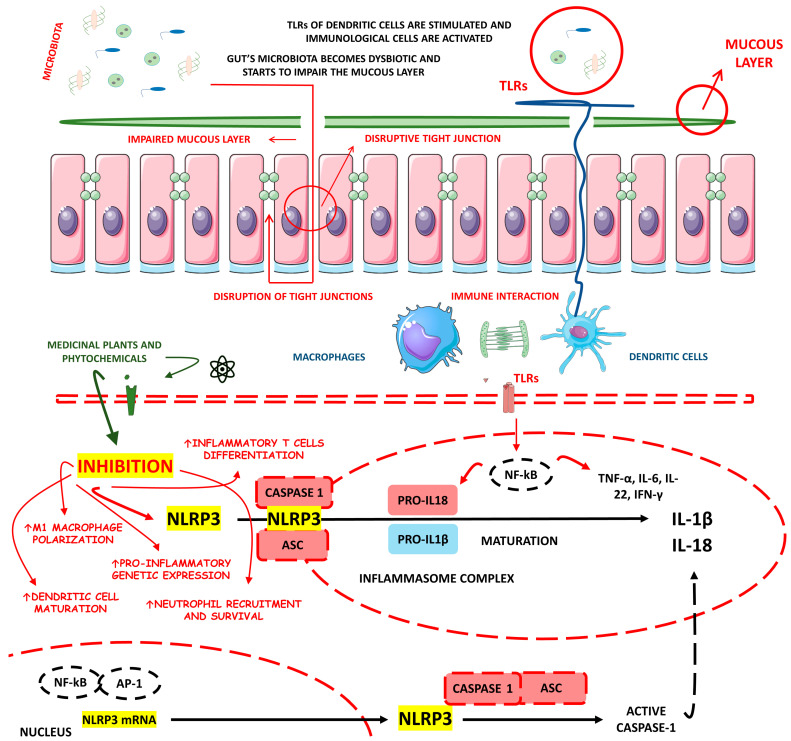
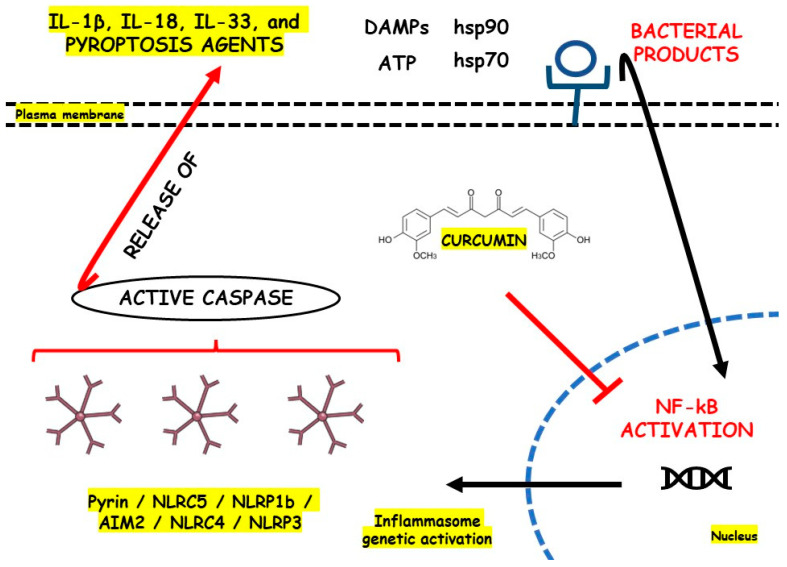
Ongoing research explores the underlying causes of ulcerative colitis and Crohn’s disease. Many experts suggest that dysbiosis in the gut microbiota and genetic, immunological, and environmental factors play significant roles. The term “microbiota” pertains to the collective community of microorganisms, including bacteria, viruses, and fungi, that reside within the gastrointestinal tract, with a particular emphasis on the colon. When there is an imbalance or disruption in the composition of the gut microbiota, it is referred to as dysbiosis. Dysbiosis can trigger inflammation in the intestinal cells and disrupt the innate immune system, leading to oxidative stress, redox signaling, electrophilic stress, and inflammation. The Nod-like Receptor (NLR) Family Pyrin Domain Containing 3 (NLRP3) inflammasome, a key regulator found in immunological and epithelial cells, is crucial in inducing inflammatory diseases, promoting immune responses to the gut microbiota, and regulating the integrity of the intestinal epithelium. Its downstream effectors include caspase-1 and interleukin (IL)-1β. The present study investigated the therapeutic potential of 13 medicinal plants, such as Litsea cubeba, Artemisia anomala, Piper nigrum, Morus macroura, and Agrimonia pilosa, and 29 phytocompounds such as artemisitene, morroniside, protopine, ferulic acid, quercetin, picroside II, and hydroxytyrosol on in vitro and in vivo models of inflammatory bowel diseases (IBD), with a focus on their effects on the NLRP3 inflammasome. The observed effects of these treatments included reductions in IL-1β, tumor necrosis factor-alpha, IL-6, interferon-gamma, and caspase levels, and increased expression of antioxidant enzymes, IL-4, and IL-10, as well as regulation of gut microbiota. These effects could potentially provide substantial advantages in treating IBD with few or no adverse effects as caused by synthetic anti-inflammatory and immunomodulated drugs. However, additional research is necessary to validate these findings clinically and to develop effective treatments that can benefit individuals who suffer from these diseases.
Overview
The claims and statistics of this paper haven’t been checked yet.
Free: it reads the open-access text and checks the first 5 claims that cite a source we can check. Create a free account to check every claim.
Integrity signals
Registry
Cites
Statistics
Figures
Verification
Claims the paper makes
The claims and statistics of this paper haven’t been checked yet.
Free: it reads the open-access text and checks the first 5 claims that cite a source we can check. Create a free account to check every claim.
Claims other papers make about this one
Each is checked against this paper’s own text: does it say what the citing paper says it does?
The cited source says what the claim attributes to it.
In the citing paper
“Direito, R. et al. noted that P-II exhibits potential to inhibit caspase-1 expression [53].”
From Picroside II suppresses chondrocyte pyroptosis through MAPK/NF-κB/NLRP3 signaling pathway alleviates osteoarthritis (2024) · cites this paper as [53]
Self-check
Percentages, sums and reported differences re-computed from the paper’s own numbers.
The self-check needs the paper’s full text.
Citations
Cites
SANRA—a scale for the quality assessment of narrative review articles
Baethge, C., Goldbeck-Wood, S., & Mertens, S. (2019) · Research Integrity and Peer Review · doi:10.1186/s41073-019-0064-8 · Cited by 3,469 · cited 1×
“[14] specifically designed to evaluate the quality of non-systematic reviews.”
BackgroundOrdás, I., Eckmann, L., Talamini, M., Baumgart, D. C., & Sandborn, W. J. (2012) · The Lancet · doi:10.1016/s0140-6736(12)60150-0 · Cited by 2,078
Molecular mechanisms regulating NLRP3 inflammasome activation
Jo, E.-K., Kim, J. K., Shin, D.-M., & Sasakawa, C. (2016) · Cellular & Molecular Immunology · doi:10.1038/cmi.2015.95 · Cited by 1,378 · cited 3×
“Indeed, IL-1β is crucial in mediating pro-inflammatory responses in various tissues among multiple systemic inflammatory diseases and is associated highly with leukocytosis and elevated acute phase proteins [88,90].”
BackgroundGuidelines for the management of inflammatory bowel disease in adults
Carter, M. J., Lobo, A. J., & Travis, S. P. L. (2004) · Gut · doi:10.1136/gut.2004.043372 · Cited by 1,083
Rogler, G., Singh, A., Kavanaugh, A., & Rubin, D. T. (2021) · Gastroenterology · doi:10.1053/j.gastro.2021.07.042 · Cited by 869 · cited 1×
“Common symptoms include diarrhea, rectal bleeding, and abdominal pain [6,7].”
BackgroundNLRP3 inflammasome and its inhibitors: a review
Shao, B.-Z., Xu, Z.-Q., Han, B.-Z., Su, D.-F., & Liu, C. (2015) · Frontiers in Pharmacology · doi:10.3389/fphar.2015.00262 · Cited by 836
NLRP3 Inflammasome and Inflammatory Bowel Disease
Zhen, Y., & Zhang, H. (2019) · Frontiers in Immunology · doi:10.3389/fimmu.2019.00276 · Cited by 649 · cited 2×
“Meanwhile, IL-1β also upregulates IL-2 receptor expression in T cells, which prolongs their survival and enhance their antibody production by direct B cell proliferation [10,102].”
BackgroundEpidemiology and Pathogenesis of Ulcerative Colitis
Du, L., & Ha, C. (2020) · Gastroenterology Clinics of North America · doi:10.1016/j.gtc.2020.07.005 · Cited by 645 · cited 1×
“The aims of a successful treatment consist of maintaining a steroid-free remission, mucosal healing, preventing surgery necessity as well as hospital admission, avoiding disability, and improving the quality of life for all patients [60,68,69].”
BackgroundMetabolic syndrome and cardiovascular diseases: Going beyond traditional risk factors
Silveira Rossi, J. L., Barbalho, S. M., Reverete de Araujo, R., Bechara, M. D., Sloan, K. P., & Sloan, L. A. (2022) · Diabetes/Metabolism Research and Reviews · doi:10.1002/dmrr.3502 · Cited by 604
Self-citationThe NLRP3 inflammasome: Mechanism of action, role in disease and therapies
Wang, L., & Hauenstein, A. V. (2020) · Molecular Aspects of Medicine · doi:10.1016/j.mam.2020.100889 · Cited by 426
Cited by
Fornari Laurindo, L., Aparecido Dias, J., Cressoni Araújo, A., Torres Pomini, K., Machado Galhardi, C., Rucco Penteado Detregiachi, C., Santos de Argollo Haber, L., Donizeti Roque, D., Dib Bechara, M., Vialogo Marques de Castro, M., et al. (2024) · Frontiers in Immunology · doi:10.3389/fimmu.2023.1305933 · Cited by 144
Self-citationBas, T. G. (2026) · International Journal of Molecular Sciences · doi:10.3390/ijms27031404 · Cited by 107
Tauil, R. B., Golono, P. T., de Lima, E. P., Goulart, R. D. Á., Guiguer, É. L., Bechara, M. D., Nicolau, C. C. T., Yanaguizawa, J. L., Fiorini, A. M. R., Méndez‐Sánchez, N., et al. (2024) · Pharmaceuticals · doi:10.3390/ph17101354 · Cited by 87
Self-citationLiu, J., Guan, Y., Yang, L., Fang, H., Sun, H., Sun, Y., Yan, G., Kong, L. D., & Wang, X. (2025) · Pharmaceuticals · doi:10.3390/ph18060912 · Cited by 72
Li, J.-H., Xu, J., Huang, C., Hu, J.-X., Xu, H., Guo, X., Zhang, Y., Xu, J., Peng, Y., Zhang, Y., et al. (2024) · International Journal of Nanomedicine · doi:10.2147/ijn.s493434 · Cited by 62
Ghasemi‐Dehnoo, M., Amini-Khoei, H., Lorigooini, Z., Anjomshoa, M., & Rafieian‐Kopaei, M. (2023) · Inflammopharmacology · doi:10.1007/s10787-023-01277-y · Cited by 54
“Medicinal plants and their derivatives have been widely evaluated for the treatment of IBD in the last few years (Ghasemi-Dehnoo et al. 2022b; Kargar-Dastgerdi et al. 2022; Ekhtiar et al. 2023; Li et al. 2023; Direito et al. 2023).”
BackgroundBarbalho, S. M., Leme Boaro, B., da Silva Camarinha Oliveira, J., Patočka, J., Barbalho Lamas, C., Tanaka, M., & Laurindo, L. F. (2025) · Pharmaceuticals · doi:10.3390/ph18010133 · Cited by 38
Self-citationLaurindo, L. F., de Lima, E. P., Laurindo, L. F., Rodrigues, V. D., Chagas, E. F. B., Goulart, R. D. Á., Araújo, A. C., Guiguer, É. L., Pomini, K. T., Rici, R. E. G., et al. (2024) · Pharmacological Research · doi:10.1016/j.phrs.2024.107430 · Cited by 44
Self-citationTherapeutic Significance of NLRP3 Inflammasome in Cancer: Friend or Foe?
Jalali, A. M., Mitchell, K. J., Pompoco, C., Poludasu, S., Tran, S., & Ramana, K. V. (2024) · International Journal of Molecular Sciences · doi:10.3390/ijms252413689 · Cited by 32
Gangwar, T., Poonia, N., Subudhi, R. N., & Arora, V. (2025) · Naunyn-Schmiedeberg s Archives of Pharmacology · doi:10.1007/s00210-025-03811-x · Cited by 31
“…next sections of this review cover the natural compounds’ therapeutic effects on ulcerative colitis, mechanism of action, advantages, and different formulations developed for the effective delivery of these natural compounds for ulcerative colitis treatment (Direito et al. 2023; Kazemifard 2024).”
Laurindo, L. F., Pomini, K. T., de Lima, E. P., Laurindo, L. F., Rodrigues, V. D., Oliveira, J. D. S. C., Araújo, A. C., Guiguer, É. L., Rici, R. E. G., Maria, D. A., et al. (2024) · Life Sciences · doi:10.1016/j.lfs.2024.123280 · Cited by 21
Self-citationPantalos, G., Vaou, N., Papachristidou, S., Stavropoulou, E., Tsigalou, C., Voidarou, C. C., & Bezirtzoglou, E. (2024) · Applied Sciences · doi:10.3390/app14052177 · Cited by 17
Rahaman, M. M., Wangchuk, P., & Sarker, S. (2025) · Microbial Pathogenesis · doi:10.1016/j.micpath.2025.107608 · Cited by 15
Sharma, D., Sharma, S., Mandal, V., & Dhobi, M. (2023) · Naunyn-Schmiedeberg s Archives of Pharmacology · doi:10.1007/s00210-023-02734-9 · Cited by 14
“Medicinal plants and their phytochemicals can be used to treat inflammatory diseases through antioxidant action or by inhibiting various molecular pathways like NF-κB and NLRP3 inflammasome (Direito et al. 2023).”
Wang, F., Xiao, J., Li, M., He, Q., Wang, X., Pan, Z., Li, S., Wang, H., & Zhou, C. (2024) · PLOS ONE · doi:10.1371/journal.pone.0308731 · Cited by 12
“Direito, R. et al. noted that P-II exhibits potential to inhibit caspase-1 expression [53].”
BackgroundLncRNA-Histone Modification Crosstalk: Orchestrating Cancer Pathobiology
Jasim, S. A., Pallathadka, H., Hjazi, A., Sanghvi, G. V., Rekha, M. M., Agarwal, M., Arya, R., Alasheqi, M. Q., KADHIM, A. J., & Kariem, M. (2025) · Naunyn-Schmiedeberg s Archives of Pharmacology · doi:10.1007/s00210-025-04402-6 · Cited by 12
“Specifically, LINC00152 (also known as CYTOR, ENSG00000222041) could promote colorectal cancer (CRC) progression by interaction with β-catenin (Direito et al. 2023).”
Inflammasomes Are Influenced by Epigenetic and Autophagy Mechanisms in Colorectal Cancer Signaling
Műzes, G., & Sípos, F. (2024) · International Journal of Molecular Sciences · doi:10.3390/ijms25116167 · Cited by 9
“The interventions yielded the following outcomes: decreased levels of IL1 β , TNF α , IL6, INF γ , and caspase-1; increased expression of antioxidant enzymes IL4 and IL10; and modulation of autophagy and the gut microbiota [128–139].”
BackgroundDAMP-ing IBD: Extinguish the Fire and Prevent Smoldering
Sandys, O., Stokkers, P. C. F., & Velde, A. A. T. (2024) · Digestive Diseases and Sciences · doi:10.1007/s10620-024-08523-5 · Cited by 9
Asaduzzaman, M., Nahar, L., Biswas, M. S., & Rahman, M. M. (2026) · Journal of Tropical Medicine · doi:10.1155/jotm/9906781 · Cited by 8
Protective Effect of Piperine on Indomethacin‐Induced Intestinal Damage
Gervasoni, K. N., Iacia, M. V. M. D. S., Silva, K. D., Franco, L. G., Mendes, M. E. F., Neves, T. J. D. C., Sanches, W. S., Oliveira, L. B. D., Saito, E., Vieira, K. C. D. O., et al. (2025) · Molecular Nutrition & Food Research · doi:10.1002/mnfr.70097 · Cited by 3
Wong, W.-T., Li, L., Chiu, H., Menon, M. P., Hsu, H.-T., Lin, W., Wu, C., Ho, C., & Hua, K. (2024) · Journal of Traditional and Complementary Medicine · doi:10.1016/j.jtcme.2024.03.016 · Cited by 3
“51,52 A. cinnamomea is a medicinal fungus that is native to Taiwan and has been used in traditional medicine for various health benefits for a long time.”
Surya, G., Amsaveni, S., & Mahendran, R. (2025) · Asian Journal of Chemistry · doi:10.14233/ajchem.2025.34531 · Cited by 1
Shahrajabian, M. H., & Sun, W. (2025) · Military Medical Science Letters · doi:10.31482/mmsl.2025.007 · Cited by 1
Yang, J., Li, J., Liu, M., Mao, Y., 宿瑞俊, Zhao, C., Yang, J., Wu, Q., & Huang, Y. (2026) · Life · doi:10.3390/life16020273 · Cited by 1
“Therefore, systematic investigation into the composition, quantification, and bioactivity evaluation of primary metabolites amino acids, vitamins, carbohydrates, and steroids in basil is imperative [32].”
Aggarwal, S., Haloi, P., Agarwal, M. K., Saroj, P., Sharma, N., & Kalita, P. (2026) · Journal of Drug Delivery Science and Technology · doi:10.1016/j.jddst.2026.108420 · Cited by 1
Xu, X.-Z., Dong, M.-S., Dai, J.-Y., Wang, Q.-Y., Dong, X.-C., & Jin, Y. (2026) · Frontiers in Microbiology · doi:10.3389/fmicb.2026.1865281 · Cited by 2
“In IBD, NLRP3 activation and gut dysbiosis form a bidirectional reinforcing loop: dysbiosis activates NLRP3, promoting IL-1 β and IL-18 secretion, which further disrupts the intestinal barrier and precipitates more severe dysbiosis (Direito et al., 2023).”
Plant molecules in obesity and the gut microbiota
Eslami, M., Bahar, A., Alipour, T., Hemati, M., Nouri, A., Babaeizad, A., Golpayegani, E., & Bineshjoo, B. (2025) · Elsevier eBooks · doi:10.1016/b978-0-443-27370-4.00029-9
Cui, Y.-X., Yu, D., & Zhang, S.-Q. (2025) · World Chinese Journal of Digestology · doi:10.11569/wcjd.v33.i9.741
Alexander, J., Sarvadnya, A. A., & Jadhav, A. (2026) · World Journal of Biology Pharmacy and Health Sciences · doi:10.30574/wjbphs.2026.25.1.0001
Ergosterol suppresses NLRP3 inflammasome-mediated inflammatory responses through Bmal1
Nguyen, P. L., Liu, B., Lan, S., Pattabiraman, M., & Yu, J. (2026) · Biomedicine & Pharmacotherapy · doi:10.1016/j.biopha.2026.119466 · Cited by 1
Biswas, S., Kalita, J. K., Singh, N. A., Nath, B., Kalita, P., & Sen, S. (2026) · International Immunopharmacology · doi:10.1016/j.intimp.2026.116907
Srivalli, K., & Shanmugam, V. (2026) · International Journal of Drug Delivery Technology · doi:10.25258/ijddt.16.49s.66
Zhou, Y., Qi, G., Yuan, M., Xi, H., Fu, Y., Luo, Y., Zhang, D., Li, P., Geng, H., Yang, P., et al. (2026) · Trends in Food Science & Technology · doi:10.1016/j.tifs.2026.105886
Enhancing Targeted Colorectal Cancer Therapies with Natural Products: Mechanistic Pathways
Armega-Anghelescu, A., Vlad, D. C., Muntean, C., Flangea, C., Baderca, F., Mituletu, M., Vlad, T., & Dumitraşcu, V. (2026) · Biomedicines · doi:10.3390/biomedicines14071448
“Studies have shown that treatment with P.villosa extracts can modulate the levels of key cytokines such as Interferon-gamma (IFN-γ ) and Interleukin-2 (IL-2) and shift the balance of T-cell populations towards a more effective anti-tumour response [147].”
Vafaei, S., Naghibzade, R., Moshkdanian, G., Nikzad, H., Shafiei, G., & Mansoori, M. (2026) · Journal of Ovarian Research · doi:10.1186/s13048-026-02187-7
“In recent years, several herbal medicines and naturally derived phytochemicals have demonstrated the ability to modulate NLRP3 inflammasome signaling and its downstream inflammatory mediators in experimental models [103, 115].”
From antioxidant to signal modulator: The expanding role of quercetin in human health
Kumar, A., Sood, N., Thakur, R., Singh, N., Kalyan, R., Patel, P., & Kurmi, B. D. (2026) · Pharmacological Research - Natural Products · doi:10.1016/j.prenap.2026.100836
PATIL, M. S., PHATAK, R. S., Desai, A. V., Desai, A. V., Sawale, J. A., Karanje, P. S., GANDHI, J. M., Hendre, A., Pawar, J., Sonavale, R. M., et al. (2026) · Asian Journal of Pharmaceutical and Clinical Research · doi:10.22159/ajpcr.2026v19i11.60558
Metadata
- Authors
- Direito, R., Barbalho, S. M., Figueira, M. E., Minniti, G., de Carvalho, G. M., de Oliveira Zanuso, B., de Oliveira dos Santos, A. R., de Góes Corrêa, N., Rodrigues, V. D., de Alvares Goulart, R., Guiguer, E. L., Araújo, A. C., Bosso, H., & Fornari Laurindo, L.
- Affiliations
- University of Lisbon (PT)
- São Paulo State Technological College (BR)
- Universidade de Marília (BR)
- Department of Biochemistry and Pharmacology, School of Medicine, University of Marília (UNIMAR), Avenida Hygino Muzzy Filho, 1001, Marília 17525-902, São Paulo, Brazil
- Faculdade de Medicina de Marília (BR)
- Faculdade de Medicina de São José do Rio Preto (BR)
- ORCID
- Venue
- Metabolites
- Publisher
- MDPI AG
- Published
- 2023-06-06
- Volume
- 13
- Issue
- 6
- Pages
- 728
- ISSN
- 2218-1989 (ISSN-L)
- PMC
- PMC10305268
- OpenAlex
- W4379799957
- Cited by
- 32
- References
- 111
- Citations by year
- 2026: 9 · 2025: 10 · 2024: 11 · 2023: 2
- FWCI
- 0.85
- Type
- journal article
- Language
- en
- Open access
- gold
- doi.org
- Licence
- Locations
- Metabolites (publishedVersion, cc-by)
- PubMed Central (publishedVersion, cc-by)
- PubMed (publishedVersion)
- DOAJ (DOAJ: Directory of Open Access Journals) (submittedVersion, cc-by-sa)
- Topics
- Life Sciences › Biochemistry, Genetics and Molecular Biology › Molecular Biology › Inflammasome and immune disorders
- Health Sciences › Medicine › Gastroenterology › Inflammatory Bowel Disease
- Health Sciences › Medicine › Complementary and alternative medicine › Natural Compounds in Disease Treatment
- Keywords
- inflammatory bowel disease, NLRP3 inflammasome, medicinal plants, phytochemicals, Crohn's disease, ulcerative colitis, gut dysbiosis, caspase-1, IL-1β, oxidative stress, antioxidant enzymes, morroniside, protopine, ferulic acid, quercetin, picroside II, hydroxytyrosol, Litsea cubeba, Artemisia anomala, black pepper, Morus macroura, Agrimonia pilosa, anti-inflammatory therapy
About these checks
Registry, retraction, Cites and statistics results are computed, not judged, with one exception: a printed reference that no index lists is read once by a model before it counts as a citation error. Claims are extracted by a model and kept only when their quote appears verbatim in the text; each cited source is then checked, with a model’s help, for whether it says what the claim relies on. Those verdicts can be wrong — read the claim’s quote and the cited source before relying on one.
Statistics and arithmetic are recomputed, not judged.
Confidence bands are shown only for fields calibrated on our annotated test set. None is calibrated yet, so no band is shown.
What counts as a claim ›How we measure confidence ›How we check this ›
Are you an author, or do you see a problem with this page? Request a review
Data sources
Bibliographic data: Semantic Scholar, OpenAlex, Crossref.
Contains information from the Semantic Scholar Academic Graph Datasets, made available under the ODC Attribution License (ODC-BY 1.0).
Semantic Scholar’s data is described in: Kinney, R., et al. (2023). The Semantic Scholar Open Data Platform. arXiv:2301.10140.
