

The DOI matches its Crossref record; 1 of the 1 references it cites were found in a registry or an index.
Carotenoids and Their Isomers: Color Pigments in Fruits and Vegetables
Abstract
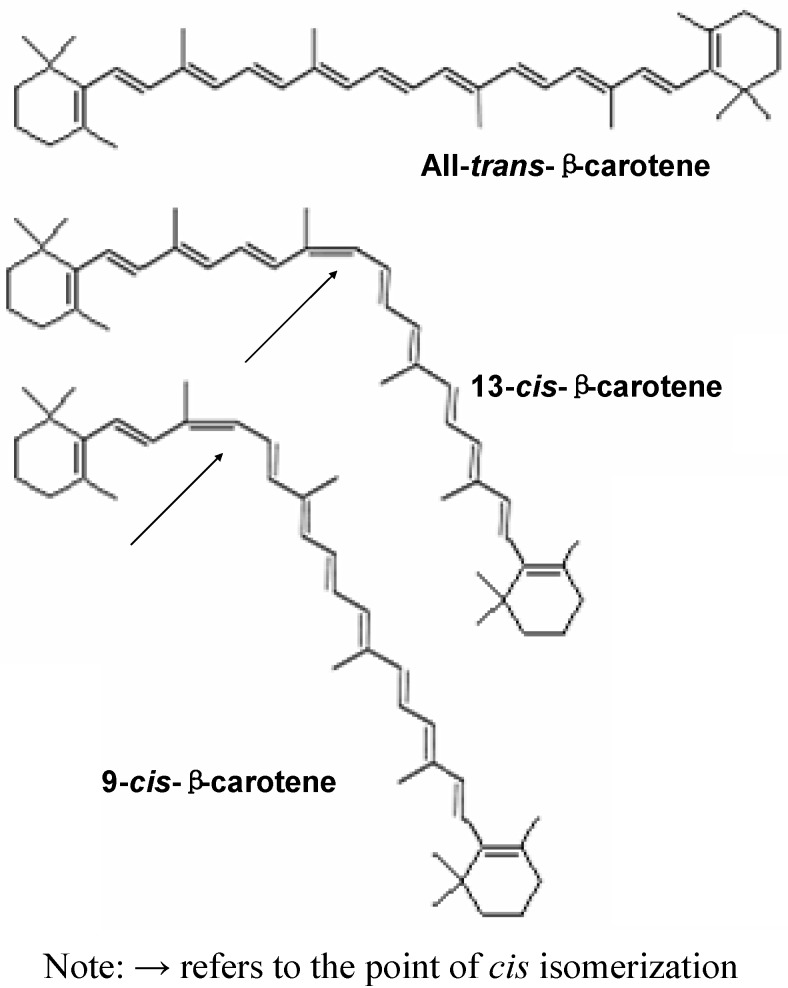
Fruits and vegetables are colorful pigment-containing food sources. Owing to their nutritional benefits and phytochemicals, they are considered as ‘functional food ingredients’. Carotenoids are some of the most vital colored phytochemicals, occurring as all-trans and cis-isomers, and accounting for the brilliant colors of a variety of fruits and vegetables. Carotenoids extensively studied in this regard include β-carotene, lycopene, lutein and zeaxanthin. Coloration of fruits and vegetables depends on their growth maturity, concentration of carotenoid isomers, and food processing methods. This article focuses more on several carotenoids and their isomers present in different fruits and vegetables along with their concentrations. Carotenoids and their geometric isomers also play an important role in protecting cells from oxidation and cellular damages.
Overview
The claims and statistics of this paper haven’t been checked yet.
Run the check — free, no account needed. It reads the open-access text and checks the sources it cites.
Integrity signals
Registry
Cites
Statistics
Figures
Verification
Claims the paper makes
The claims and statistics of this paper haven’t been checked yet.
Run the check — free, no account needed. It reads the open-access text and checks the sources it cites.
Claims other papers make about this one
Each is checked against this paper’s own text: does it say what the citing paper says it does?
In the citing paper
“This could be attributable to the DEO contents of yellowish pigments such as carotenoids and their potential isomers [90,91] or the formation of yellowish oxidation products [92].”
From Preservative Potential of Anethum graveolens Essential Oil on Fish Fillet Quality and Shelf Life During Refrigerated Storage (2025) · cites this paper as [90]
Self-check
Percentages, sums and reported differences re-computed from the paper’s own numbers.
The self-check needs the paper’s full text.
Citations
Cites
Bakker, J., & Timberlake, C. F. (1997) · Journal of Agricultural and Food Chemistry · doi:10.1021/jf960252c · Cited by 522
Research works printed but not linked: 111
- Cooper, 2004, Carotenoids in health and disease: Recent scientific evaluations, research recommendations and the consumer, J. Nutr., 134, 221, 10.1093/jn/134.1.221S · DOI
- Young, 2008, Carotenoids and prostate cancer risk, Mini-Rev. Med. Chem., 8, 529, 10.2174/138955708784223495 · DOI
- Shahidi, 2009, Nutraceuticals and functional foods: Whole versus processed foods, Trends Food Sci. Technol., 20, 376, 10.1016/j.tifs.2008.08.004 · DOI
- Bartley, 1995, Plant carotenoids: Pigments for photoprotection, visual attraction, and human health, Plant Cell, 7, 1027
- Janik, 2008, The xanthophyll cycle pigments in Secale cereale leaves under combined Cd and high light stress conditions, J. Photochem. Photobiol. B, 90, 47, 10.1016/j.jphotobiol.2007.10.006 · DOI
- Lancaster, 1997, Influence of pigment composition on skin color in a wide range of fruit and vegetables, J. Am. Soc. Hortic. Sci., 122, 594, 10.21273/JASHS.122.4.594 · DOI · Paper page
- Rodriguez-Amaya, D.B. (2001). A Guide to Carotenoid Analysis in Foods, International Life Sciences Institute, ILSI Press.
- 2000, Xanthophyll esterification accompanying carotenoid overaccumulation in chromoplast of Capsicum annuum ripening fruits is a constitutive process and useful for ripeness index, J. Agric. Food Chem., 48, 1617, 10.1021/jf9912046 · DOI
- 1994, Changes in carotenoid esterification during the fruit ripening of Capsicum annuum Cv. Bola, Bola. J. Agric. Food Chem., 42, 640, 10.1021/jf00039a007 · DOI
- Schieber, 2005, Occurrence of carotenoid cis-isomers in food: Technological, analytical, and nutritional implications, Trends Food Sci. Technol., 16, 416, 10.1016/j.tifs.2005.03.018 · DOI
- Mertz, 2010, Characterization and thermal lability of carotenoids and vitamin C of tamarillo fruit (Solanum betaceum Cav.), Food Chem., 119, 653, 10.1016/j.foodchem.2009.07.009 · DOI
- Zepka, 2009, Degradation compounds of carotenoids formed during heating of a simulated cashew apple juice, Food Chem., 117, 28, 10.1016/j.foodchem.2009.03.071 · DOI
- Shi, 2010, Effects of supercritical CO2 fluid parameters on chemical composition and yield of carotenoids extracted from pumpkin, LWT – Food Sci. Technol., 43, 39, 10.1016/j.lwt.2009.07.003 · DOI
- Niedzwiedzki, 2009, Ultrafast time resolved absorption spectroscopy of geometric isomers of carotenoids, Chem. Phys., 357, 4, 10.1016/j.chemphys.2008.07.011 · DOI
- Qiu, 2009, Effect of heating on solid β-carotene, Food Chem., 112, 344, 10.1016/j.foodchem.2008.05.071 · DOI
- Liu, 1985, The primary process of vision and the structure of bathorhodopsin: a mechanism for photoisomerization of polyenes, Proc. Natl. Acad. Sci. USA, 82, 259, 10.1073/pnas.82.2.259 · DOI
- Sruamsiri, 2005, Accumulation of all-trans-β-carotene and its 9-cis and 13-cis stereoisomers during postharvest ripening of nine Thai mango cultivars, J. Agric. Food Chem., 53, 4827, 10.1021/jf048168h · DOI
- Aman, 2005, Effects of heating and illumination on trans-cis isomerization and degradation of β-carotene and lutein in isolated spinach chloroplasts, J. Agric. Food Chem., 53, 9512, 10.1021/jf050926w · DOI
- Rickman, 2007, Nutritional comparison of fresh, frozen, and canned fruits and vegetables II. Vitamin A and carotenoids, vitamin E, minerals and fiber, J. Sci. Food Agric., 87, 1185, 10.1002/jsfa.2824 · DOI · Paper page
- Parker, 1996, Absorption, metabolism, and transport of carotenoids, FASEB J., 10, 542, 10.1096/fasebj.10.5.8621054 · DOI
- Gauillard, 2000, Changes in the carotenoid content of apricot (Prunus armeniaca, var Bergeron) during enzymatic browning: β-carotene inhibition of chlorogenic acid degradation, J. Sci. Food Agric., 80, 763, 10.1002/(SICI)1097-0010(20000501)80:6<763::AID-JSFA623>3.0.CO;2-U · DOI
- Bohm, 2002, Trolox equivalent antioxidant capacity of different geometrical isomers of α-carotene, β-carotene, lycopene, and zeaxanthin, J. Agric. Food Chem., 50, 221, 10.1021/jf010888q · DOI
- Chen, 1998, Processing and stability of carotenoid powder from carrot pulp waste, J. Agric. Food Chem., 46, 2312, 10.1021/jf9800817 · DOI
- Goula, 2006, Prediction of lycopene degradation during a drying process of tomato pulp, J. Food Eng., 74, 37, 10.1016/j.jfoodeng.2005.02.023 · DOI
- Mordi, 1993, Oxidative degradation of β-carotene and β-apo-8'-carotenal, Tetrahedron, 49, 911, 10.1016/S0040-4020(01)80333-1 · DOI
- Lhuguenot, 2003, Effect of cis/trans isomerism of β-carotene on the ratios of volatile compounds produced during oxidative degradation, J. Agric. Food Chem., 51, 1984, 10.1021/jf021000g · DOI
- Lin, 2003, Determination of carotenoids in tomato juice by liquid Chromatography, J. Chromatogr. A, 1012, 103, 10.1016/S0021-9673(03)01138-5 · DOI
- Brotton, G., Liaaen-Jensen, S., and Pfander, H. (1995). Carotenoids Spectroscopy, Birkhäuser Verlag. · DOI
- Krinsky, 1979, Carotenoid protection against oxidation, Pure Appl. Chem., 51, 649, 10.1351/pac197951030649 · DOI
- Kaiser, 1989, Lycopene as the most efficient biological carotenoid singlet oxygen quencher, Arch. Biochem. Biophys., 274, 532, 10.1016/0003-9861(89)90467-0 · DOI
- Marx, 2000, Quantitative determination of carotene stereoisomers in carrot juices and vitamin supplemented (ATBC) drinks, Food Chem., 70, 403, 10.1016/S0308-8146(00)00096-0 · DOI
- Khoo, 2010, Carotenoids from Mangifera pajang and their antioxidant capacity, Molecules, 15, 6699, 10.3390/molecules15106699 · DOI
- Hasegawa, 2009, Cultivar influence on carotenoid composition of loquats from Brazil, J. Food Compos. Anal., 22, 196, 10.1016/j.jfca.2008.10.014 · DOI
- Chen, 2004, Improved liquid chromatographic method for determination of carotenoids in Taiwanese mango (Mangifera indica L.), J. Chromatogr. A, 1054, 261, 10.1016/S0021-9673(04)01406-2 · DOI
- Chen, 2007, Effects of different drying treatments on the stability of carotenoids in Taiwanese mango (Mangifera indica L.), Food Chem., 100, 1005, 10.1016/j.foodchem.2005.10.056 · DOI
- Lessin, 1997, Quantification of cis-trans isomers of provitamin A carotenoids in fresh and processed fruits and vegetables, J. Agric. Food Chem., 45, 3728, 10.1021/jf960803z · DOI
- Li, 2007, Maize Y9 encodes a product essential for 15-cis-ζ-carotene isomerization, Plant Physiol., 144, 1181, 10.1104/pp.107.098996 · DOI
- Hulshof, 2007, Quick screening of maize kernels for provitamin A content, J. Food Compos. Anal., 20, 655, 10.1016/j.jfca.2006.04.014 · DOI
- During, 2001, Carotene 15,15’-dioxygenase activity in human tissues and cells: Evidence of an iron dependency, J. Nutr. Biochem., 12, 640, 10.1016/S0955-2863(01)00184-X · DOI
- Holden, 1999, Carotenoid content of U.S. foods: An update of the database, J. Food Compos. Anal., 12, 169, 10.1006/jfca.1999.0827 · DOI
- Guo, 2008, Cis-trans isomerizations of β-carotene and lycopene: A theoretical study, J. Phys. Chem., 112, 12158, 10.1021/jp8019705 · DOI
- Kuki, 1991, Triplet-sensitized and thermal isomerization of all-trans, 7-cis, 9-cis, 13-cis and 15-cis isomers of β-carotene: Configurational dependence of the quantum yield of isomerization via the T1 state, J. Phys. Chem., 95, 7171, 10.1021/j100172a016 · DOI
- Schilling, 2007, Effects of thermal processing and fruit matrix on beta-carotene stability and enzyme inactivation during transformation of mangoes into purée and nectar, Food Chem., 102, 1172, 10.1016/j.foodchem.2006.07.005 · DOI
- Carrillo, 2007, Physical properties and carotenoid content of maize kernels and its nixtamalized snacks, Innov. Food Sci. Emerg. Technol., 8, 385, 10.1016/j.ifset.2007.03.015 · DOI
- Tang, 2000, Pigment change of freeze-dried carotenoid powder during storage, Food Chem., 69, 11, 10.1016/S0308-8146(99)00216-2 · DOI
- Chen, 1998, Degradation and isomerization of chlorophyll a and β-carotene as affected by various heating and illumination treatments, Food Chem., 62, 299, 10.1016/S0308-8146(97)00201-X · DOI
- Marx, 2003, Effects of thermal processing on trans-cis-isomerization of β-carotene in carrot juices and carotene-containing preparations, Food Chem., 83, 609, 10.1016/S0308-8146(03)00255-3 · DOI
- Breitenbach, 2005, ζ-Carotene cis isomers as products and substrates in the plant poly-cis carotenoid biosynthetic pathway to lycopene, Planta, 220, 785, 10.1007/s00425-004-1395-2 · DOI
- Castenmiller, 1998, Bioavailability and bioconversion of carotenoids, Annu. Rev. Nutr., 18, 19, 10.1146/annurev.nutr.18.1.19 · DOI
- Rao, 2007, Carotenoids and human health, Pharmacol. Res., 55, 207, 10.1016/j.phrs.2007.01.012 · DOI
- Boileau, 2002, Bioavailability of all-trans and cis-isomers of lycopene, Exp. Biol. Med., 227, 914, 10.1177/153537020222701012 · DOI
- Schulz, 2005, Potential of NIR-FT-Raman spectroscopy in natural carotenoid analysis, Biopolymers, 77, 212, 10.1002/bip.20215 · DOI
- Kong, 2010, Revealing the power of the natural red pigment lycopene, Molecules, 15, 959, 10.3390/molecules15020959 · DOI
- Soufi, 2009, Digestive stability of xanthophylls exceeds that of carotenes as studied in a dynamic in vitro gastrointestinal system, J. Nutr., 139, 876, 10.3945/jn.108.103655 · DOI
- Failla, 2008, In vitro micellarization and intestinal cell uptake of cis isomers of lycopene exceed those of all-trans lycopene, J. Nutr., 138, 482, 10.1093/jn/138.3.482 · DOI
- Maguer, 2002, Lycopene from Tomatoes, Functional Food: Biochemical & Processing Aspects, 2, 135
- Lee, 2002, Stability of lycopene during heating and illumination in a model system, Food Chem., 78, 425, 10.1016/S0308-8146(02)00146-2 · DOI
- Tyssandier, 2003, Processing of vegetable-borne carotenoids in the human stomach and duodenum, Am. J. Physiol-Gastr. L., 284, G913
- Tee, 1991, Carotenoid composition and content of Malaysian vegetables and fruits by the AOAC and HPLC methods, Food Chem., 41, 309, 10.1016/0308-8146(91)90057-U · DOI
- Losso, 2005, Random centroid optimization of phosphatidylglycerol stabilized lutein-enriched oil-in-water emulsions at acidic pH, Food Chem., 92, 737, 10.1016/j.foodchem.2004.12.029 · DOI
- Matsuno, 1986, Isolation of three new carotenoids and proposed metabolic pathways of carotenoids in hen's egg yolk, Comp. Biochem. Physiol. B, 84, 477, 10.1016/0305-0491(86)90110-0 · DOI
- Handelman, 2001, The evolving role of carotenoids in human biochemistry, Nutrition, 17, 818, 10.1016/S0899-9007(01)00640-2 · DOI
- Emenhiser, 1995, Capability of a polymeric C30 stationary phase to resolve cis-trans carotenoid isomers in reversed-phase liquid chromatography, J. Chromatogr. A, 707, 205, 10.1016/0021-9673(95)00336-L · DOI
- Sander, 2000, C30 stationary phases for the analysis of food by liquid chromatography, J. Chromatogr. A, 880, 189, 10.1016/S0021-9673(00)00121-7 · DOI
- Szabolcs, 1981, Occurrence of some mono-cis-isomers of asymmetric C40-carotenoids, Phytochem., 20, 2411, 10.1016/S0031-9422(00)82677-1 · DOI
- Vicario, 2007, Geometrical isomers of violaxanthin in orange juice, Food Chem., 104, 169, 10.1016/j.foodchem.2006.11.017 · DOI
- Gross, J. (1987). Pigments in Fruits: Food Science and Technology, Academic Press.
- Britton, 2006, HPLC analysis of geometrical isomers of lutein epoxide isolated from dandelion (Taraxacum officinale F. Weber ex Wiggers), Phytochemistry, 67, 771, 10.1016/j.phytochem.2006.02.002 · DOI
- Milanowska, 2005, Heat-induced and light-induced isomerization of the xanthophyll pigment zeaxanthin, J. Photochem. Photobiol. B., 80, 178, 10.1016/j.jphotobiol.2005.05.004 · DOI
- Kishimoto, 2004, Carotenoid composition in petals of chrysanthemum (Dendranthema grandiflorum (Ramat.) Kitamura), Phytochemistry, 65, 2781, 10.1016/j.phytochem.2004.08.038 · DOI
- Yahia, 2006, Extraction, separation and partial identification of ‘Ataulfo’ mango fruit carotenoids, Acta Hortic., 712, 333, 10.17660/ActaHortic.2006.712.37 · DOI
- Furr, 1997, Intestinal absorption and tissue distribution of carotenoids, J. Nutr. Biochem., 8, 364, 10.1016/S0955-2863(97)00060-0 · DOI
- Scott, 1996, The correlation between the intake of lutein, lycopene and β-carotene from vegetables and fruits, and blood plasma concentrations in a group of women aged 50-65 years in the UK, Brit. J. Nutr., 75, 409, 10.1079/BJN19960143 · DOI
- Krinsky, 2005, Carotenoid actions and their relation to health and disease, Mol. Aspects Med., 26, 459, 10.1016/j.mam.2005.10.001 · DOI
- Richardson , T., and Finley, J.W. (1985). Chemical Changes in Food during Processing, Van Nostrand Reinhold Company, Inc. · DOI
- 1990, Pigments present in virgin olive oil, J. Am. Oil Chem. Soc., 67, 192, 10.1007/BF02539624 · DOI
- Watson, R.R. (2001). Vegetables, Fruits, and Herbs in Health Promotion, CRC Press LCC. · DOI
- Ferreres, 2004, Characterization and quantitation of antioxidant constituents of sweet pepper (Capsicum annuum L.), J. Agric. Food Chem., 52, 3861, 10.1021/jf0497915 · DOI
- Markus, 1999, Change in the carotenoid and antioxidant content of spice red pepper (paprika) as a function of ripening and some technological factors, J. Agric. Food Chem., 47, 100, 10.1021/jf980485z · DOI
- Wieruszewski, J.B. (2002). Astaxanthin bioavailabity, retention efficiency and kinetics in Atlantic salmon (Salmo salar) as influenced by pigment concentration and method of administration (kinetics only). Master Thesis.
- West, 1998, Increasing intake of orange fruits is more effective than increasing intake of dark-green leafy vegetables in increasing serum concentrations of retinol and β-carotene in schoolchildren in Indonesia, Am. J. Clin. Nutr., 68, 1058, 10.1093/ajcn/68.5.1058 · DOI
- Muzhingi, 2008, Determination of carotenoids in yellow maize, the effects of saponification and food preparations, Intl. J. Vit. Nutr. Res., 78, 112, 10.1024/0300-9831.78.3.112 · DOI
- Rajyalakshmi, 2001, Total carotenoid and beta-carotene contents of forest green leafy vegetables consumed by tribals of south India, Plant Food Hum. Nutr., 56, 225, 10.1023/A:1011125232097 · DOI
- Bhaskarachary, 1995, Carotene content of some common and less familiar foods of plant origin, Food Chem., 54, 189, 10.1016/0308-8146(95)00029-I · DOI
- Setiawan, 2001, Carotenoid content of selected Indonesian fruits, J. Food Compos. Anal., 14, 169, 10.1006/jfca.2000.0969 · DOI
- Hulshof, 1997, Application of a validated method for the determination of provitamin A carotenoids in Indonesia foods of different maturity and origin, J. Agric. Food Chem., 45, 1174, 10.1021/jf9603137 · DOI
- Yano, 2005, Quantitation of carotenoids in raw and processed fruits in Japan, Food Sci. Technol. Res., 11, 13, 10.3136/fstr.11.13 · DOI
- Lako, 2007, Phytochemical flavonols, carotenoids and the antioxidant properties of a wide selection of Fijian fruit, vegetables and other readily available foods, Food Chem., 101, 1727, 10.1016/j.foodchem.2006.01.031 · DOI
- Bramley, P.M. (2000). Is lycopene beneficial to human health? Phytochem. 54, 233–236. · DOI
- Charoensiri, 2009, Beta-carotene, lycopene, and alpha-tocopherol contents of selected Thai fruits, Food Chem., 113, 202, 10.1016/j.foodchem.2008.07.074 · DOI
- 2007, In vitro bioaccessibility of carotenoids and tocopherols from fruits and vegetables, Food Chem., 102, 641, 10.1016/j.foodchem.2006.05.043 · DOI
- Levy, 1995, Carotenoid pigments and β-carotene in paprika fruits (Capsicum spp.) with different genotypes, J. Agric. Food Chem., 43, 362, 10.1021/jf00050a019 · DOI
- Dias, 2009, Carotenoids in traditional Portuguese fruits and vegetables, Food Chem., 113, 808, 10.1016/j.foodchem.2008.08.002 · DOI
- Gil, 2002, Antioxidant capacities, phenolic compounds, carotenoids, and vitamin C contents of nectarine, peach, and plum cultivars from California, J. Agric. Food Chem., 50, 4976, 10.1021/jf020136b · DOI
- Speek, 1988, Total carotenoids and β-carotene contents of Thai vegetables and effects of processing, Food Chem., 27, 245, 10.1016/0308-8146(88)90010-6 · DOI
- Begum, 1977, The β-carotene content of Indian edible green leaves, Trop. Geogr. Med., 29, 47
- Lakshminarayana, 2005, Determination of major carotenoids in a few Indian leafy vegetables by high-performance liquid chromatography, J. Agric. Food Chem., 53, 2838, 10.1021/jf0481711 · DOI
- Singh, 2007, Variability of carotenes, vitamin C, E and phenolics in Brassica vegetables, J. Food Compos. Anal., 20, 106, 10.1016/j.jfca.2006.08.002 · DOI
- Murkovic, 2002, Carotenoid content in different varieties of pumpkins, J. Food Comp. Anal., 15, 633, 10.1006/jfca.2002.1052 · DOI · Paper page
- Pandey, 2003, Ascorbate and carotenoid content in an Indian collection of pumpkin (Cucurbita moschata Duch. Ex Poir.), Cucurbit Gen. Coop. Rep., 26, 51
- Aruna, 2009, Lutein content of selected Indian vegetables and vegetable oils determined by HPLC, J. Food Compos. Anal., 22, 632, 10.1016/j.jfca.2009.03.006 · DOI
- Khoo, 2008, Carotenoid content of underutilized fruits, Plant Food Hum. Nutr., 63, 170, 10.1007/s11130-008-0090-z · DOI
- Yuan, 2006, Prediagnostic level of serum retinol in relation to reduced risk of hepatocellular carcinoma, J. Natl. Cancer I., 98, 482, 10.1093/jnci/djj104 · DOI
- Homnava, 1990, Provitamin A (alpha-carotene, beta-carotene and beta-cryptoxanthin) and ascorbic acid content of Japanese and American persimmons, J. Food Quality, 13, 85, 10.1111/j.1745-4557.1990.tb00009.x · DOI
- Xianquan, 2005, Stability of lycopene during food processing and storage, J. Med. Food, 8, 413, 10.1089/jmf.2005.8.413 · DOI
- Camara, 1995, Biochemistry and molecular biology of chromoplast development, Int. Rev. Cytol., 163, 175, 10.1016/S0074-7696(08)62211-1 · DOI
- Bouvier, 1996, Xanthophyll biosynthesis, J. Biol. Chem., 271, 28861, 10.1074/jbc.271.46.28861 · DOI
- Prasad, 2011, Carotenoids and antioxidant capacities from Canarium odontophyllum Miq. fruits, Food Chem., 124, 1549, 10.1016/j.foodchem.2010.08.010 · DOI
- Tanaka, 2006, Flower colour and cytochromes P450, Phytochem. Rev., 5, 283, 10.1007/s11101-006-9003-7 · DOI
- Fishler, 1998, Analysis of carotenoids with emphasis on 9-cis β-carotene in vegetables and fruits commonly consumed in Israel, Food Chem., 62, 515, 10.1016/S0308-8146(97)00196-9 · DOI
- Levin, 2006, High pigment tomato mutants—more than just lycopene (a review), Isr. J. Plant Sci., 54, 179, 10.1560/IJPS_54_3_179 · DOI
Cited by
Lutein: More than just a filter for blue light
Kijlstra, A., Tian, Y., Kelly, E. R., & Berendschot, T. T. J. M. (2012) · Progress in Retinal and Eye Research · doi:10.1016/j.preteyeres.2012.03.002 · Cited by 349
Functions, Therapeutic Applications, and Synthesis of Retinoids and Carotenoids
Álvarez, R., Vaz, B., Gronemeyer, H., & de Lera, Á. R. (2014) · Chemical Reviews · doi:10.1021/cr400126u · Cited by 260
The role of carotenoids in human skin
Darvin, M. E., Sterry, W., Lademann, J., & Vergou, T. (2011) · Molecules · doi:10.3390/molecules161210491 · Cited by 193
Pattnaik, M., Pandey, P., Martin, G. J. O., Mishra, H. N., & Ashokkumar, M. (2021) · Foods · doi:10.3390/foods10020279 · Cited by 146
Perumal, A. B., Nambiar, R. B., Sellamuthu, P. S., & Emmanuel, R. S. (2021) · LWT · doi:10.1016/j.lwt.2021.111662 · Cited by 113
Metadata
- Authors
- Khoo, H.-E., Prasad, K. N., Kong, K.-W., Jiang, Y., & Ismail, A.
- Affiliations
- Department of Nutrition and Dietetics, Faculty of Medicine and Health Sciences, Universiti Putra Malaysia, 43400 UPM Serdang, Selangor, Malaysia
- South China Botanical Garden, Chinese Academy of Sciences, Guangzhou 510650, China
- ORCID
- Jiang, Yueming
- Venue
- Molecules
- Publisher
- MDPI AG
- Published
- 2011-02-18
- Volume
- 16
- Issue
- 2
- Pages
- 1710-1738
- ISSN
- 1420-3049
- PMC
- PMC6259627
- Cited by
- 523
- References
- 1
- Language
- en
About these checks
Registry, retraction, Cites and statistics results are computed, not judged, with one exception: a printed reference that no index lists is read once by a model before it counts as a citation error. Claims are extracted by a model and kept only when their quote appears verbatim in the text; each cited source is then checked, with a model’s help, for whether it says what the claim relies on. Those verdicts can be wrong — read the claim’s quote and the cited source before relying on one.
Statistics and arithmetic are recomputed, not judged.
Confidence bands are shown only for fields calibrated on our annotated test set. None is calibrated yet, so no band is shown.
What counts as a claim ›How we measure confidence ›How we check this ›
Are you an author, or do you see a problem with this page? Request a review
How to cite
Cite CoChat for the checks on this page, and the paper for its own findings.
- This page
- CoChat. (2026). Citation check: Carotenoids and Their Isomers: Color Pigments in Fruits and Vegetables. https://app.cochat.ai/papers/10.3390/molecules16021710
- The paper
- Khoo, H.-E., Prasad, K. N., Kong, K.-W., Jiang, Y., & Ismail, A. (2011). Carotenoids and Their Isomers: Color Pigments in Fruits and Vegetables. Molecules. https://doi.org/10.3390/molecules16021710
Data sources
Bibliographic data: Semantic Scholar, OpenAlex, Crossref.
Contains information from the Semantic Scholar Academic Graph Datasets, made available under the ODC Attribution License (ODC-BY 1.0).
Semantic Scholar’s data is described in: Kinney, R., et al. (2023). The Semantic Scholar Open Data Platform. arXiv:2301.10140.
