

The DOI matches its Crossref record; 166 of the 167 references it cites were found in a registry or an index.
PPARs as Nuclear Receptors for Nutrient and Energy Metabolism
Open accessAbstract
It has been more than 36 years since peroxisome proliferator-activated receptors (PPARs) were first recognized as enhancers of peroxisome proliferation. Consequently, many studies in different fields have illustrated that PPARs are nuclear receptors that participate in nutrient and energy metabolism and regulate cellular and whole-body energy homeostasis during lipid and carbohydrate metabolism, cell growth, cancer development, and so on. With increasing challenges to human health, PPARs have attracted much attention for their ability to ameliorate metabolic syndromes. In our previous studies, we found that the complex functions of PPARs may be used as future targets in obesity and atherosclerosis treatments. Here, we review three types of PPARs that play overlapping but distinct roles in nutrient and energy metabolism during different metabolic states and in different organs. Furthermore, research has emerged showing that PPARs also play many other roles in inflammation, central nervous system-related diseases, and cancer. Increasingly, drug development has been based on the use of several selective PPARs as modulators to diminish the adverse effects of the PPAR agonists previously used in clinical practice. In conclusion, the complex roles of PPARs in metabolic networks keep these factors in the forefront of research because it is hoped that they will have potential therapeutic effects in future applications.
Overview
The claims and statistics of this paper haven’t been checked yet.
Run the check — free, no account needed. It reads the open-access text and checks the sources it cites.
Integrity signals
Registry
Cites
Statistics
Figures
Verification
Claims the paper makes
The claims and statistics of this paper haven’t been checked yet.
Run the check — free, no account needed. It reads the open-access text and checks the sources it cites.
Claims other papers make about this one
Each is checked against this paper’s own text: does it say what the citing paper says it does?
The source backs part of the claim, not all of it — or backs it for a different population, condition or comparison.
In the citing paper
“PPARs are concentrated in tissues with high metabolic demand, including the liver, kidneys, and brain, and serve as important regulators of the immune system”
From A Critical Review and Meta-Analysis of Impacts of Per- and Polyfluorinated Substances on the Brain and Behavior (2022) · cites this paper as Hong et al., 2019
Experimental — accuracy not yet measured
Self-check
Percentages, sums and reported differences re-computed from the paper’s own numbers.
The self-check needs the paper’s full text.
Citations
Cites
Lehmann, J. M., Moore, L. B., Smith-Oliver, T. A., Wilkison, W. O., Willson, T. M., & Kliewer, S. A. (1995) · Journal of Biological Chemistry · doi:10.1074/jbc.270.22.12953 · Cited by 3,645
Stimulation of adipogenesis in fibroblasts by PPARγ2, a lipid-activated transcription factor
Tontonoz, P., Hu, E., & Spiegelman, B. M. (1994) · Cell · doi:10.1016/0092-8674(94)90006-x · Cited by 3,564
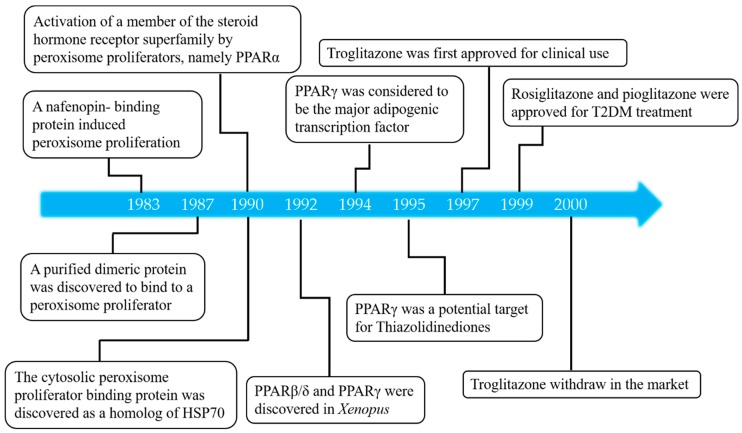
Activation of a member of the steroid hormone receptor superfamily by peroxisome proliferators
Issemann, I., & Green, S. (1990) · Nature · doi:10.1038/347645a0 · Cited by 3,519
Rubins, H. B., Robins, S. J., Collins, D., Fye, C. L., Anderson, J. W., Elam, M. B., Faas, F. H., Linares, E., Schaefer, E. J., Schectman, G., et al. (1999) · New England Journal of Medicine · doi:10.1056/nejm199908053410604 · Cited by 3,439
Effects of Combination Lipid Therapy in Type 2 Diabetes Mellitus
(2010) · New England Journal of Medicine · doi:10.1056/nejmoa1001282 · Cited by 2,837
The mechanisms of action of PPARs
Berger, J., & Moller, D. E. (2002) · Annual Review of Medicine · doi:10.1146/annurev.med.53.082901.104018 · Cited by 2,659
mPPAR gamma 2: tissue-specific regulator of an adipocyte enhancer.Preprint
Tontonoz, P., Hu, E., Graves, R. A., Budavari, A. I., & Spiegelman, B. M. (1994) · Genes & Development · doi:10.1101/gad.8.10.1224 · Cited by 2,181
Adipocytes as regulators of energy balance and glucose homeostasis
Rosen, E. D., & Spiegelman, B. M. (2006) · Nature · doi:10.1038/nature05483 · Cited by 2,170 · cited 1×
“Both are important endocrine organs that secrete different adipokines for systemic energy metabolism [77,78].”
BackgroundPPARγ signaling and metabolism: the good, the bad and the future
Ahmadian, M., Suh, J. M., Hah, N., Liddle, C., Atkins, A. R., Downes, M., & Evans, R. M. (2013) · Nature Medicine · doi:10.1038/nm.3159 · Cited by 2,016
Cited by
Sorted by citations
Mechanisms Mediating the Regulation of Peroxisomal Fatty Acid Beta-Oxidation by PPARα
Tahri-Joutey, M., Andreoletti, P., Surapureddi, S., Nasser, B., Cherkaoui‐Malki, M., & Latruffe, N. (2021) · International Journal of Molecular Sciences · doi:10.3390/ijms22168969 · Cited by 273
Protective Effects of (E)-β-Caryophyllene (BCP) in Chronic Inflammation
Scandiffio, R., Geddo, F., Cottone, E., Querio, G., Antoniotti, S., Gallo, M. P., Maffei, M. E., & Bovolin, P. (2020) · Nutrients · doi:10.3390/nu12113273 · Cited by 194
Starnes, H. M., Rock, K. D., Jackson, T. W., & Belcher, S. M. (2022) · Frontiers in Toxicology · doi:10.3389/ftox.2022.881584 · Cited by 166
“As a generalization, PPARs are concentrated in tissues with high metabolic demand, including the liver, kidneys, and brain, and serve as important regulators of the immune system (Zhang and Young, 2002; Hong et al., 2019; Kirk et al., 2021).”
BackgroundLinking Obesity with Colorectal Cancer: Epidemiology and Mechanistic Insights
Ye, P., Xi, Y., Huang, Z., & Xu, P. (2020) · Cancers · doi:10.3390/cancers12061408 · Cited by 168
Self-citationBilirubin as a signaling molecule
Vı́tek, L. (2020) · Medicinal Research Reviews · doi:10.1002/med.21660 · Cited by 136
Metadata
- Authors
- Hong, F., Pan, S., Guo, Y., Xu, P., & Zhai, Y.
- Affiliations
- Beijing Normal University (CN)
- University of Pittsburgh (US)
- Corresponding author
- Xu, Pengfei
- Zhai, Yonggong
- Venue
- Molecules
- Publisher
- MDPI AG
- Published
- 2019-07-12
- Volume
- 24
- Issue
- 14
- Pages
- 2545
- ISSN
- 1420-3049 (ISSN-L)
- PMC
- PMC6680900
- OpenAlex
- W2961328380
- Cited by
- 233
- References
- 167
- Citations by year
- 2026: 20 · 2025: 38 · 2024: 42 · 2023: 33 · 2022: 41 · 2021: 32 · 2020: 21 · 2019: 6
- FWCI
- 2.22
- Type
- journal article
- Language
- en
- Open access
- gold
- dx.doi.org
- Licence
- Locations
- Molecules (publishedVersion, cc-by)
- Europe PMC (PubMed Central) (publishedVersion, cc-by)
- PubMed Central (publishedVersion, cc-by)
- PubMed (publishedVersion)
- DOAJ (DOAJ: Directory of Open Access Journals) (submittedVersion, cc-by-sa)
- Funders
- National Natural Science Foundation of China (Nos. 31571164, Nos.31271207)
- Topics
- Life Sciences › Biochemistry, Genetics and Molecular Biology › Molecular Biology › Peroxisome Proliferator-Activated Receptors
- Health Sciences › Medicine › Physiology (medical) › Adipose Tissue and Metabolism
- Life Sciences › Biochemistry, Genetics and Molecular Biology › Clinical Biochemistry › Paraoxonase enzyme and polymorphisms
- Keywords
- peroxisome proliferator-activated receptors, nuclear receptors, nutrient metabolism, energy homeostasis, lipid metabolism, carbohydrate metabolism, obesity, atherosclerosis, metabolic syndrome, inflammation, central nervous system disorders, cancer, drug development
- MeSH terms
- Nutrients, Animals, Energy Metabolism, Humans, Organ Specificity, Signal Transduction, Receptors, Cytoplasmic and Nuclear, Peroxisome Proliferator-Activated Receptors
About these checks
Registry, retraction, Cites and statistics results are computed, not judged, with one exception: a printed reference that no index lists is read once by a model before it counts as a citation error. Claims are extracted by a model and kept only when their quote appears verbatim in the text; each cited source is then checked, with a model’s help, for whether it says what the claim relies on. Those verdicts can be wrong — read the claim’s quote and the cited source before relying on one.
Statistics and arithmetic are recomputed, not judged.
Confidence bands are shown only for fields calibrated on our annotated test set. None is calibrated yet, so no band is shown.
What counts as a claim ›How we measure confidence ›How we check this ›
Are you an author, or do you see a problem with this page? Request a review
