

The DOI matches its Crossref record; 303 of the 307 references it cites were found in a registry or an index, and 1 are not checked yet.
An Overview of NO Signaling Pathways in Aging
Open accessAbstract
Nitric Oxide (NO) is a potent signaling molecule involved in the regulation of various cellular mechanisms and pathways under normal and pathological conditions. NO production, its effects, and its efficacy, are extremely sensitive to aging-related changes in the cells. Herein, we review the mechanisms of NO signaling in the cardiovascular system, central nervous system (CNS), reproduction system, as well as its effects on skin, kidneys, thyroid, muscles, and on the immune system during aging. The aging-related decline in NO levels and bioavailability is also discussed in this review. The decreased NO production by endothelial nitric oxide synthase (eNOS) was revealed in the aged cardiovascular system. In the CNS, the decline of the neuronal (n)NOS production of NO was related to the impairment of memory, sleep, and cognition. NO played an important role in the aging of oocytes and aged-induced erectile dysfunction. Aging downregulated NO signaling pathways in endothelial cells resulting in skin, kidney, thyroid, and muscle disorders. Putative therapeutic agents (natural/synthetic) affecting NO signaling mechanisms in the aging process are discussed in the present study. In summary, all of the studies reviewed demonstrate that NO plays a crucial role in the cellular aging processes.
Overview
The claims and statistics of this paper haven’t been checked yet.
Run the check — free, no account needed. It reads the open-access text and checks the sources it cites.
Integrity signals
Registry
Cites
Statistics
Figures
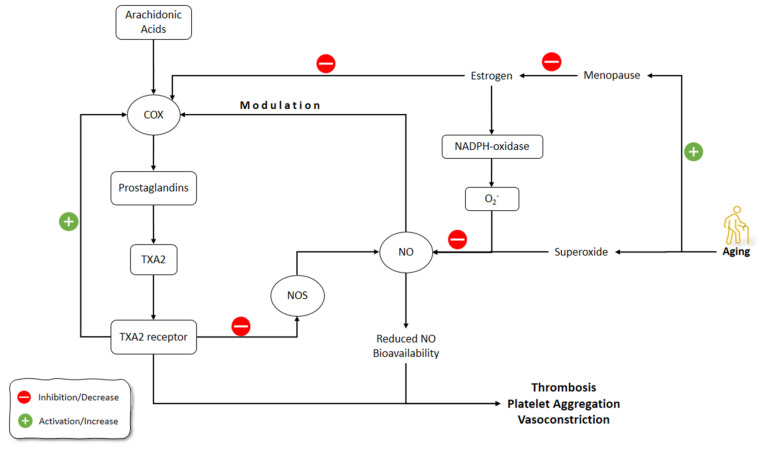
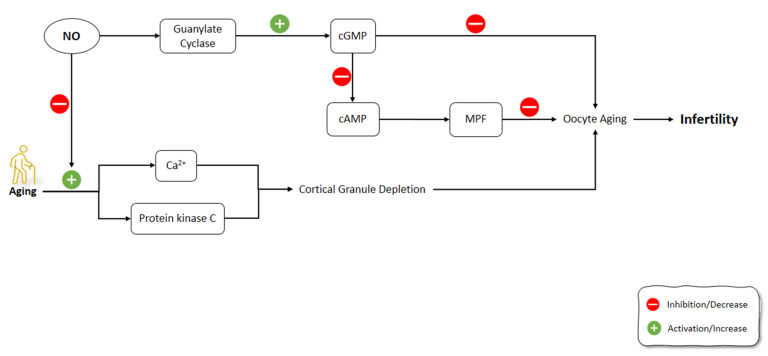
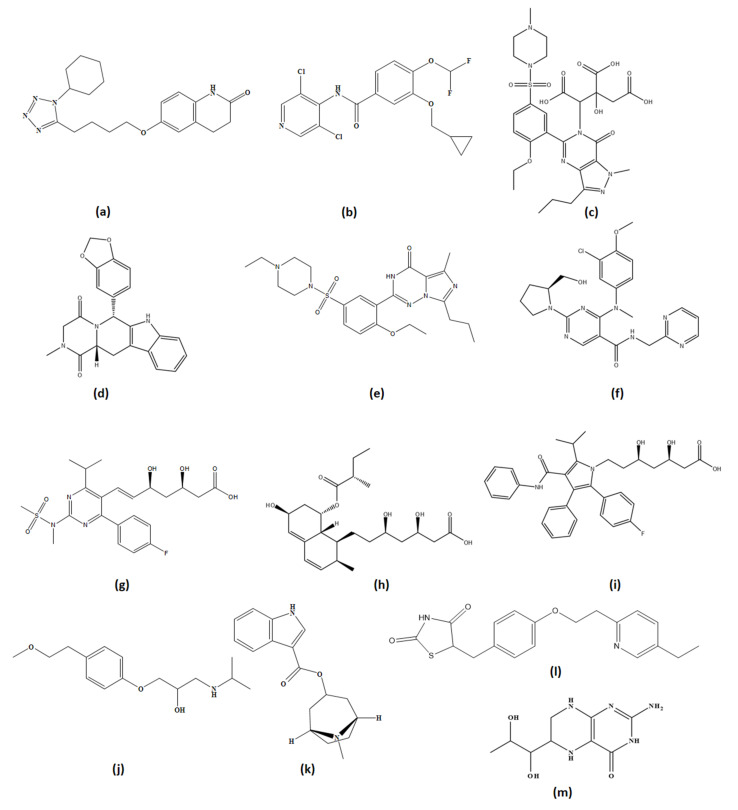
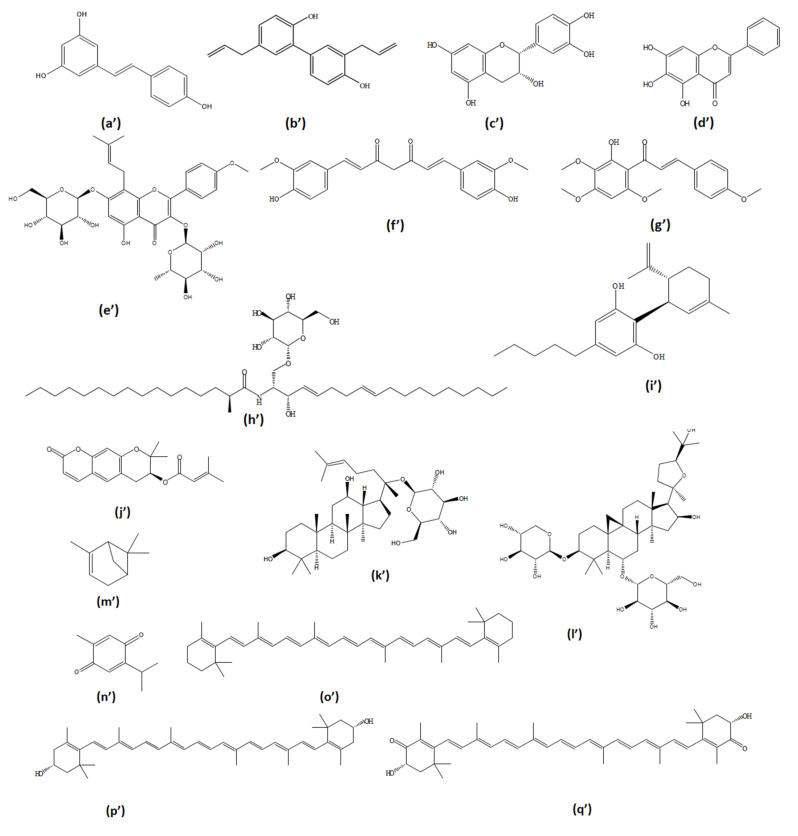
Verification
Claims the paper makes
The claims and statistics of this paper haven’t been checked yet.
Run the check — free, no account needed. It reads the open-access text and checks the sources it cites.
Claims other papers make about this one
Each is checked against this paper’s own text: does it say what the citing paper says it does?
The source backs part of the claim, not all of it — or backs it for a different population, condition or comparison.
In the citing paper
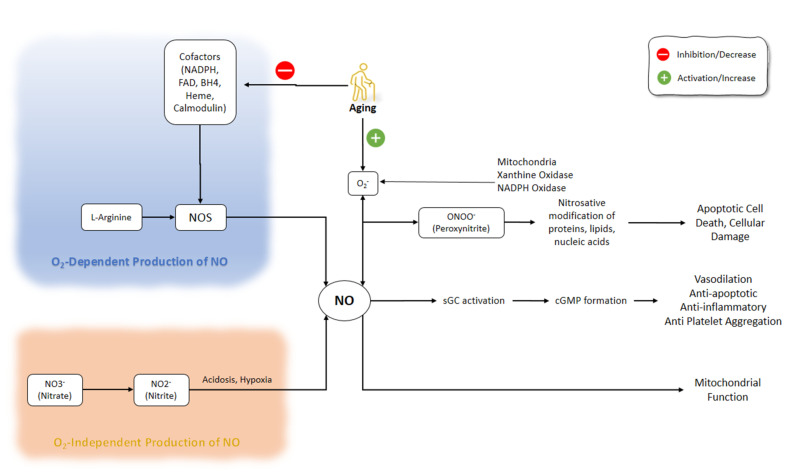
“Consequently, the nitrate-nitrite-NO pathway becomes more important, particularly under hypoxic or acidic conditions [233,234].”
From Dietary Nitrate-Rich Vegetables as Natural Modulators of Health: Mechanisms and Benefits in Ageing Populations (2026) · cites this paper as [233]
Experimental — accuracy not yet measured
Self-check
Percentages, sums and reported differences re-computed from the paper’s own numbers.
The self-check needs the paper’s full text.
Citations
Cites
A novel potent vasoconstrictor peptide produced by vascular endothelial cells
Yanagisawa, M., Kurihara, H., Kimura, S., Tomobe, Y. I., Kobayashi, M., Mitsui, Y., Yazaki, Y., Goto, K., & Masaki, T. (1988) · Nature · doi:10.1038/332411a0 · Cited by 10,716
Nitric Oxide and Peroxynitrite in Health and Disease
Pacher, P., Beckman, J. S., & Liaudet, L. (2007) · Physiological Reviews · doi:10.1152/physrev.00029.2006 · Cited by 6,390
Nitric oxide, superoxide, and peroxynitrite: the good, the bad, and ugly
Beckman, J. S., & Koppenol, W. H. (1996) · American Journal of Physiology-Cell Physiology · doi:10.1152/ajpcell.1996.271.5.c1424 · Cited by 5,513
Nitric oxide synthases: regulation and function
Forstermann, U., & Sessa, W. C. (2012) · European Heart Journal · doi:10.1093/eurheartj/ehr304 · Cited by 4,409
Microglia-mediated neurotoxicity: uncovering the molecular mechanisms
Block, M. L., Zecca, L., & Hong, J.-S. (2007) · Nature Reviews Neuroscience · doi:10.1038/nrn2038 · Cited by 4,110
Nitric oxide synthases: structure, function and inhibition
ALDERTON, W. K., COOPER, C. E., & KNOWLES, R. G. (2001) · Biochemical Journal · doi:10.1042/bj3570593 · Cited by 4,110
Regulation of endothelium-derived nitric oxide production by the protein kinase Akt
Fulton, D. J., Gratton, J., McCabe, T. J. D., Fontana, J. T., Fujio, Y., Walsh, K. X., Franke, T. F., Papapetropoulos, A., & Sessa, W. C. (1999) · Nature · doi:10.1038/21218 · Cited by 2,616
Upregulation of Endothelial Nitric Oxide Synthase by HMG CoA Reductase Inhibitors
Laufs, U., Fata, V. L., Plutzky, J., & Liao, J. K. (1998) · Circulation · doi:10.1161/01.cir.97.12.1129 · Cited by 1,837
Loss of Caveolae, Vascular Dysfunction, and Pulmonary Defects in Caveolin-1 Gene-Disrupted Mice
Dráb, M., Verkade, P., Elger, M., Kasper, M. E., Löhn, M., Lauterbach, B., Menne, J., Lindschau, C., Mende, F., Luft, F. C., et al. (2001) · Science · doi:10.1126/science.1062688 · Cited by 1,555
Role of nitric oxide synthesis in macrophage antimicrobial activity
Nathan, C. F., & Hibbs, J. B. (1991) · Current Opinion in Immunology · doi:10.1016/0952-7915(91)90079-g · Cited by 1,523
Microglia and brain macrophages in the molecular age: from origin to neuropsychiatric disease
Prinz, M., & Priller, J. (2014) · Nature Reviews Neuroscience · doi:10.1038/nrn3722 · Cited by 1,329
Lubos, E., Loscalzo, J., & Handy, D. E. (2011) · Antioxidants & Redox Signaling · doi:10.1089/ars.2010.3586 · Cited by 1,280
Simard, A. R., Soulet, D., Gowing, G., Julien, J.-P., & Rivest, S. (2006) · Neuron · doi:10.1016/j.neuron.2006.01.022 · Cited by 1,265
DNA Deaminating Ability and Genotoxicity of Nitric Oxide and its Progenitors
Wink, D. A., Kasprzak, K. S., Maragos, C. M., Elespuru, R. K., Misra, M., Dunams, T. M., Cebula, T. A., Koch, W. H., Andrews, A. W., Allen, J. S., et al. (1991) · Science · doi:10.1126/science.1948068 · Cited by 1,243
Guanylyl Cyclases and Signaling by Cyclic GMP
Lucas, K. A., Pitari, G. M., Kazerounian, S., Ruiz‐Stewart, I., Park, J. Y., Schulz, S., Chepenik, K. P., & Waldman, S. A. (2000) · Pharmacological Reviews · doi:10.1016/s0031-6997(24)01457-1 · Cited by 1,229
Nitric oxide synthase isozymes. Characterization, purification, molecular cloning, and functions.
Förstermann, U., Closs, E. I., Pollock, J. S., Nakane, M., Schwarz, P., Gath, I., & Kleinert, H. (1994) · Hypertension · doi:10.1161/01.hyp.23.6.1121 · Cited by 1,122
Cellular and molecular mechanisms of endothelial cell dysfunction.
Harrison, D. G. (1997) · Journal of Clinical Investigation · doi:10.1172/jci119751 · Cited by 1,059
Rajfer, J., Aronson, W. J., Bush, P. A., Dorey, F. J., & Ignarro, L. J. (1992) · New England Journal of Medicine · doi:10.1056/nejm199201093260203 · Cited by 1,006
Nitric oxide in skeletal muscle
Kobzik, L., Reid, M. B., Bredt, D. S., & Stamler, J. S. (1994) · Nature · doi:10.1038/372546a0 · Cited by 955
Molecular mechanisms involved in the regulation of the endothelial nitric oxide synthase
Fleming, I., & Busse, R. (2003) · American Journal of Physiology-Regulatory, Integrative and Comparative Physiology · doi:10.1152/ajpregu.00323.2002 · Cited by 955
Mattagajasingh, I., Kim, C.-S., Naqvi, A., Yamamori, T., Hoffman, T. A., Jung, S.-B., DeRicco, J., Kasuno, K., & Irani, K. (2007) · Proceedings of the National Academy of Sciences · doi:10.1073/pnas.0704329104 · Cited by 881
Chemical Basis of Reactive Oxygen Species Reactivity and Involvement in Neurodegenerative Diseases
Collin, F. (2019) · International Journal of Molecular Sciences · doi:10.3390/ijms20102407 · Cited by 852
Dimmeler, S., Haendeler, J., Nehls, M. C., & Zeiher, A. M. (1997) · The Journal of Experimental Medicine · doi:10.1084/jem.185.4.601 · Cited by 806
Nitric oxide regulates the heart by spatial confinement of nitric oxide synthase isoforms
Barouch, L. A., Harrison, R. W., Skaf, M. W., Rosas, G. O., Cappola, T. P., Kobeissi, Z. A., Hobai, I. A., Lemmon, C. A., Burnett, A. L. “., O'Rourke, B. P., et al. (2002) · Nature · doi:10.1038/416337a · Cited by 760
The Role of Catechins in Cellular Responses to Oxidative Stress
Bernatonienė, J., & Kopustinskienė, D. M. (2018) · Molecules · doi:10.3390/molecules23040965 · Cited by 704
Zhou, L., & Zhu, D. (2009) · Nitric Oxide · doi:10.1016/j.niox.2009.03.001 · Cited by 684
Enhanced Peroxynitrite Formation Is Associated with Vascular Aging
van der Loo, B., Labugger, R., Skepper, J. N., Bachschmid, M. M., Kilo, J., Powell, J. M., Palacios‐Callender, M., Erusalimsky, J. D., Quaschning, T., Maliñski, T., et al. (2000) · The Journal of Experimental Medicine · doi:10.1084/jem.192.12.1731 · Cited by 684
Heterogeneity of CNS myeloid cells and their roles in neurodegeneration
Prinz, M., Priller, J., Sisodia, S. S., & Ransohoff, R. M. (2011) · Nature Neuroscience · doi:10.1038/nn.2923 · Cited by 674
Structure of Nitric Oxide Synthase Oxygenase Dimer with Pterin and Substrate
Crane, B. R., Arvai, A. S., Ghosh, D. K., Wu, C., Getzoff, E. D., Stuehr, D. J., & Tainer, J. A. (1998) · Science · doi:10.1126/science.279.5359.2121 · Cited by 673
Endothelial Nitric Oxide Synthase Targeting to Caveolae
Féron, O., Belhassen, L., Kobzik, L., Smith, T. W., Kelly, R. A., & Michel, T. M. (1996) · Journal of Biological Chemistry · doi:10.1074/jbc.271.37.22810 · Cited by 670
Age-Related Reduction of NO Availability and Oxidative Stress in Humans
Taddei, S., Virdis, A., Ghiadoni, L., Salvetti, G., Bernini, G., Magagna, A., & Salvetti, A. (2001) · Hypertension · doi:10.1161/01.hyp.38.2.274 · Cited by 664
Calmodulin is a subunit of nitric oxide synthase from macrophages.
Cho, H. J., Xie, Q. W., Calaycay, J. R., Mumford, R. A., Swiderek, K. M., Lee, T. D., & Nathan, C. (1992) · The Journal of Experimental Medicine · doi:10.1084/jem.176.2.599 · Cited by 635
Mikkelsen, R. B., & Wardman, P. (2003) · Oncogene · doi:10.1038/sj.onc.1206663 · Cited by 604
Aging-Induced Phenotypic Changes and Oxidative Stress Impair Coronary Arteriolar Function
Csiszár, A., Ungvari, Z. I., Edwards, J. G., Kaminski, P. M., Wolin, M. S., Koller, Á., & Kaley, G. (2002) · Circulation Research · doi:10.1161/01.res.0000020401.61826.ea · Cited by 569
Endothelial dysfunction in diabetes mellitus.
Hadi, H. A. R., & Suwaidi, J. M. S. A. (2007) · Europe PMC (PubMed Central) · Cited by 568
Brain aging and neurodegeneration: from a mitochondrial point of view
Grimm, A., & Eckert, A. (2017) · Journal of Neurochemistry · doi:10.1111/jnc.14037 · Cited by 565
Mechanisms of Vascular Aging: New Perspectives
Ungvari, Z. I., Kaley, G., de Cabo, R., Sonntag, W. E., & Csiszár, A. (2010) · The Journals of Gerontology Series A · doi:10.1093/gerona/glq113 · Cited by 548
Nitric Oxide Reversibly Inhibits Seven Members of the Caspase Family via S-Nitrosylation
Li, J., Billiar, T. R., Talanian, R. V., & Kim, Y. M. (1997) · Biochemical and Biophysical Research Communications · doi:10.1006/bbrc.1997.7672 · Cited by 529
Cyclic GMP Phosphodiesterases and Regulation of Smooth Muscle Function
Rybalkin, S. D., Chen, Y., Bornfeldt, K., & Beavo, J. A. (2003) · Circulation Research · doi:10.1161/01.res.0000087541.15600.2b · Cited by 511
Berkowitz, D. E., White, R., Li, D., Minhas, K. M., Cernetich, A., Kim, S., Burke, S., Shoukas, A. A., Nyhan, D., Champion, H. C., et al. (2003) · Circulation · doi:10.1161/01.cir.0000092948.04444.c7 · Cited by 486
Palmieri, E. M., Gonzalez-Cotto, M., Baseler, W. A., Davies, L. C., Ghesquière, B., Maio, N., Rice, C. M., Rouault, T. A., Cassel, T., Higashi, R. M., et al. (2020) · Nature Communications · doi:10.1038/s41467-020-14433-7 · Cited by 483
Age and the Cardiovascular System
Epstein, F. H., & Wei, J. Y. (1992) · New England Journal of Medicine · doi:10.1056/nejm199212103272408 · Cited by 477
Inflammatory Neurodegeneration Mediated by Nitric Oxide, Glutamate, and Mitochondria
Brown, G. C., & Bal‐Price, A. (2003) · Molecular Neurobiology · doi:10.1385/mn:27:3:325 · Cited by 467
Superoxide Excess in Hypertension and Aging
Hamilton, C., Brosnan, M. J., McIntyre, M., Graham, D., & Dominiczak, A. F. (2001) · Hypertension · doi:10.1161/01.hyp.37.2.529 · Cited by 446
(1991) · doi:10.1172/jci115266 · Cited by 429
Role of Nitric Oxide in Inflammation‐Mediated Neurodegeneration
Liu, B., Gao, H., Wang, J., Jeohn, G., Cooper, C. L., & Hong, J. (2002) · Annals of the New York Academy of Sciences · doi:10.1111/j.1749-6632.2002.tb04077.x · Cited by 425
Endothelial Cell Apoptosis in Angiogenesis and Vessel Regression
Dimmeler, S., & Zeiher, A. M. (2000) · Circulation Research · doi:10.1161/01.res.87.6.434 · Cited by 420
Oxygen Reduction by Nitric-oxide Synthases
Stuehr, D. J., Pou, S., & Rosen, G. M. (2001) · Journal of Biological Chemistry · doi:10.1074/jbc.r100011200 · Cited by 409
Vascular endothelial senescence: from mechanisms to pathophysiology
Erusalimsky, J. D. (2009) · Journal of Applied Physiology · doi:10.1152/japplphysiol.91353.2008 · Cited by 399
Satellite cells in human skeletal muscle plasticity
Snijders, T., Nederveen, J. P., McKay, B. R., Joanisse, S., Verdijk, L. B., van Loon, L. J. C., & Parise, G. (2015) · Frontiers in Physiology · doi:10.3389/fphys.2015.00283 · Cited by 381
Nitric oxide inhibition of mitochondrial respiration and its role in cell death
Brown, G. C., & Borutaite, V. (2002) · Free Radical Biology and Medicine · doi:10.1016/s0891-5849(02)01112-7 · Cited by 377
Angiotensin II Induces Apoptosis of Human Endothelial Cells
Dimmeler, S., Rippmann, V., Weiland, U., Haendeler, J., & Zeiher, A. M. (1997) · Circulation Research · doi:10.1161/01.res.81.6.970 · Cited by 373
Dimmeler, S., Haendeler, J., Galle, J., & Zeiher, A. M. (1997) · Circulation · doi:10.1161/01.cir.95.7.1760 · Cited by 371
Bredt, D. S., & Snyder, S. H. (1994) · Neuron · doi:10.1016/0896-6273(94)90348-4 · Cited by 368
The Cellular Fate of Glucose and Its Relevance in Type 2 Diabetes
Bouché, C., Serdy, S., Kahn, C. R., & Goldfine, A. B. (2004) · Endocrine Reviews · doi:10.1210/er.2003-0026 · Cited by 361
Chun, S. Y., Eisenhauer, K. M., Minami, S., Billig, H., Perlas, E., & Hsueh, A. J. W. (1996) · Endocrinology · doi:10.1210/endo.137.4.8625923 · Cited by 360
Aging Enhances the Sensitivity of Endothelial Cells Toward Apoptotic Stimuli
Hoffmann, J., Haendeler, J., Aicher, A., Rössig, L., Vasa‐Nicotera, M., Zeiher, A. M., & Dimmeler, S. (2001) · Circulation Research · doi:10.1161/hh2001.097796 · Cited by 360
Mildner, A., Schlevogt, B., Kierdorf, K., Böttcher, C., Erny, D., Kummer, M. P., Quinn, M., Brück, W., Bechmann, I., Heneka, M. T., et al. (2011) · The Journal of Neuroscience · doi:10.1523/jneurosci.6209-10.2011 · Cited by 351
Reactive Nitrogen Species: Molecular Mechanisms and Potential Significance in Health and Disease
Martínez, M. C., & Andriantsitohaina, R. (2008) · Antioxidants and Redox Signaling · doi:10.1089/ars.2007.1993 · Cited by 345
Endothelial dysfunction and aging: An update
Herrera, M. D., Mingorance, C., Rodríguez‐Rodríguez, R., & de Sotomayor, M. Á. (2009) · Ageing Research Reviews · doi:10.1016/j.arr.2009.07.002 · Cited by 342
Alterations of Nitric Oxide Synthase Expression With Aging and Hypertension in Rats
Chou, T.-C., Yen, M., Li, C., & Ding, Y.-A. (1998) · Hypertension · doi:10.1161/01.hyp.31.2.643 · Cited by 342
Pritchard, K. A., Ackerman, A. W., Gross, E. R., Stepp, D. W., Shi, Y., Fontana, J. T., Baker, J. E., & Sessa, W. C. (2001) · Journal of Biological Chemistry · doi:10.1074/jbc.c100084200 · Cited by 338
Vascular endothelial dysfunction with aging: endothelin-1 and endothelial nitric oxide synthase
Donato, A. J., Gano, L. B., Eskurza, I., Silver, A., Gates, P. E., Jablonski, K., & Seals, D. R. (2009) · American Journal of Physiology-Heart and Circulatory Physiology · doi:10.1152/ajpheart.00689.2008 · Cited by 326
Gratton, J., Fontana, J. T., O’Connor, D. S., García‐Cardeña, G., McCabe, T. J. D., & Sessa, W. C. (2000) · Journal of Biological Chemistry · doi:10.1074/jbc.m001644200 · Cited by 325
Forever young: SIRT3 a shield against mitochondrial meltdown, aging, and neurodegeneration
Kincaid, B., & Bossy‐Wetzel, E. (2013) · Frontiers in Aging Neuroscience · doi:10.3389/fnagi.2013.00048 · Cited by 317
Cernadas, M. R., de Miguel, L. S., Garcı́a-Durán, M., González-Fernández, F., Millás, I., Montón, M., Rodrigo, J., Rico, L., Fernández, A. P., de Frutos, T., et al. (1998) · Circulation Research · doi:10.1161/01.res.83.3.279 · Cited by 316
Law, A. (2001) · Brain Research Reviews · doi:10.1016/s0165-0173(00)00051-5 · Cited by 314
Arginine Nutrition and Cardiovascular Function
Wu, G., & Meininger, C. J. (2000) · Journal of Nutrition · doi:10.1093/jn/130.11.2626 · Cited by 290
Can the immune system be harnessed to repair the CNS?
Popovich, P. G., & Longbrake, E. E. (2008) · Nature reviews. Neuroscience · doi:10.1038/nrn2398 · Cited by 289
Age alters the cardiovascular response to direct passive heating
Minson, C. T., Wladkowski, S. L., Cardell, A. F., Pawelczyk, J. A., & Kenney, W. L. (1998) · Journal of Applied Physiology · doi:10.1152/jappl.1998.84.4.1323 · Cited by 288
Dash, M. B., Douglas, C. L., Vyazovskiy, V. V., Cirelli, C., & Tononi, G. (2009) · Journal of Neuroscience · doi:10.1523/jneurosci.5486-08.2009 · Cited by 286
SIRT‐1 and vascular endothelial dysfunction with ageing in mice and humans
Donato, A. J., Magerko, K. A., Lawson, B. R., Durrant, J., Lesniewski, L. A., & Seals, D. R. (2011) · The Journal of Physiology · doi:10.1113/jphysiol.2011.211219 · Cited by 271
Kitada, M., Ogura, Y., & Koya, D. (2016) · Aging · doi:10.18632/aging.101068 · Cited by 268
Bailey, J. D., Diotallevi, M., NICOL, T., McNeill, E., Shaw, A., Chuaiphichai, S., Hale, A., Starr, A., Nandi, M., Stylianou, E., et al. (2019) · Cell Reports · doi:10.1016/j.celrep.2019.06.018 · Cited by 266
Jurisicova, A., Latham, K. E., Casper, R. F., & Varmuza, S. (1998) · Molecular Reproduction and Development · doi:10.1002/(sici)1098-2795(199811)51:3 · Cited by 264
Minson, C. T., Holowatz, L. A., Wong, B. J., Kenney, W. L., & Wilkins, B. W. (2002) · Journal of Applied Physiology · doi:10.1152/japplphysiol.00229.2002 · Cited by 262
New roles for an old enzyme: Na,K‐ATPase emerges as an interesting drug target
Aperia, A. C. (2007) · Journal of Internal Medicine · doi:10.1111/j.1365-2796.2006.01745.x · Cited by 259
Mikhed, Y., Daiber, A., & Steven, S. (2015) · International Journal of Molecular Sciences · doi:10.3390/ijms160715918 · Cited by 257
Upregulation of Renal and Vascular Nitric Oxide Synthase in Young Spontaneously Hypertensive Rats
Vaziri, N. D., Ni, Z., & Oveisi, F. (1998) · Hypertension · doi:10.1161/01.hyp.31.6.1248 · Cited by 244
Energetics and Oxidative Stress in Synaptic Plasticity and Neurodegenerative Disorders
Mattson, M. P., & Liu, D. (2002) · NeuroMolecular Medicine · doi:10.1385/nmm:2:2:215 · Cited by 242
Aging impairs endothelium-dependent vasodilation in rat skeletal muscle arterioles
Muller‐Delp, J. M., Spier, S. A., Ramsey, M. W., & Delp, M. D. (2002) · American Journal of Physiology-Heart and Circulatory Physiology · doi:10.1152/ajpheart.00004.2002 · Cited by 238
Nitric Oxide in Macrophage Immunometabolism: Hiding in Plain Sight
Palmieri, E. M., McGinity, C., Wink, D. A., & McVicar, D. W. (2020) · Metabolites · doi:10.3390/metabo10110429 · Cited by 237
Murad, F. (1994) · Advances in pharmacology · doi:10.1016/s1054-3589(08)60049-6 · Cited by 236
Cellular oxygen sensing need in CNS function: physiological and pathological implications
Acker, T., & Acker, H. (2004) · Journal of Experimental Biology · doi:10.1242/jeb.01075 · Cited by 234
Distinction between signaling mechanisms in lipid rafts vs. caveolae
Sowa, G., Pypaert, M., & Sessa, W. C. (2001) · Proceedings of the National Academy of Sciences · doi:10.1073/pnas.241409998 · Cited by 233
The contribution of constrictor and dilator nerves to the skin vasodilatation during body heating
Roddie, I. C., Shepherd, J. T., & Whelan, R. F. (1957) · The Journal of Physiology · doi:10.1113/jphysiol.1957.sp005775 · Cited by 228
Moreau, K. L., Stauffer, B. L., Kohrt, W. M., & Seals, D. R. (2013) · The Journal of Clinical Endocrinology & Metabolism · doi:10.1210/jc.2013-2183 · Cited by 222
Effect of Aging on Glucose Homeostasis
Szoke, E., Shrayyef, M. Z., Messing, S. P., Woerle, H. J., van Haeften, T. W., Meyer, C., Mitrakou, A., Pimenta, W. P., & Gerich, J. E. (2008) · Diabetes Care · doi:10.2337/dc07-1443 · Cited by 221
Increased Superoxide and Vascular Dysfunction in CuZnSOD-Deficient Mice
Didion, S. P., Ryan, M. J., Didion, L. A., Fegan, P. E., Sigmund, C. D., & Faraci, F. M. (2002) · Circulation Research · doi:10.1161/01.res.0000043280.65241.04 · Cited by 221
Cyclooxygenase Inhibition Restores Nitric Oxide Activity in Essential Hypertension
Taddei, S., Virdis, A., Ghiadoni, L., Magagna, A., & Salvetti, A. (1997) · Hypertension · doi:10.1161/01.hyp.29.1.274 · Cited by 206
Wang, Y., Wehling‐Henricks, M., Samengo, G., & Tidball, J. G. (2015) · Aging Cell · doi:10.1111/acel.12350 · Cited by 205
Calcium/calmodulin-dependent kinase II and Alzheimer’s disease
Ghosh, A., & Giese, K. P. (2015) · Molecular Brain · doi:10.1186/s13041-015-0166-2 · Cited by 205
Turko, I. V., Ballard, S. A., Francis, S. H., & Corbin, J. D. (1999) · Molecular Pharmacology · doi:10.1124/mol.56.1.124 · Cited by 194
Role of nitric oxide in lysis of tumor cells by cytokine-activated endothelial cells.
Li, L. M., Kilbourn, R. G., Adams, J. M., & Fidler, I. J. (1991) · PubMed · Cited by 189
Nitric Oxide in the Central Nervous System
Paakkari, I., & Lindsberg, P. J. (1995) · Annals of Medicine · doi:10.3109/07853899509002590 · Cited by 189
Jablonka‐Shariff, A., & OLSON, L. M. (1998) · Endocrinology · doi:10.1210/endo.139.6.6054 · Cited by 189
Islet Cell DNA Is a Target of Inflammatory Attack by Nitric Oxide
Fehsel, K., Jalowy, A., Qi, S., Burkart, V., Hartmann, B., & Kolb, H. (1993) · Diabetes · doi:10.2337/diab.42.3.496 · Cited by 188
Green, S. J., Mellouk, S., Hoffman, S. L., Meltzer, M. S., & Nacy, C. A. (1990) · Immunology Letters · doi:10.1016/0165-2478(90)90083-3 · Cited by 185
Schrage, W. G., Joyner, M. J., & Dinenno, F. A. (2004) · The Journal of Physiology · doi:10.1113/jphysiol.2004.061283 · Cited by 184
Regulation of Neuronal Nitric-oxide Synthase by Calmodulin Kinases
Hayashi, Y., Nishio, M., Naito, Y., Yokokura, H., Nimura, Y., Hidaka, H., & Watanabe, Y. (1999) · Journal of Biological Chemistry · doi:10.1074/jbc.274.29.20597 · Cited by 181
Rippe, C., Blimline, M., Magerko, K. A., Lawson, B. R., LaRocca, T. J., Donato, A. J., & Seals, D. R. (2011) · Experimental Gerontology · doi:10.1016/j.exger.2011.10.004 · Cited by 176
Effects of nitric oxide synthase inhibition on cutaneous vasodilation during body heating in humans
Shastry, S., Dietz, N. M., Halliwill, J. R., Reed, A. S., & Joyner, M. J. (1998) · Journal of Applied Physiology · doi:10.1152/jappl.1998.85.3.830 · Cited by 174
Wong, B. J., Wilkins, B. W., Holowatz, L. A., & Minson, C. T. (2003) · Journal of Applied Physiology · doi:10.1152/japplphysiol.00254.2003 · Cited by 172
Insulin says NO to cardiovascular disease
Yu, Q., Gao, F., & Ma, X. L. (2011) · Cardiovascular Research · doi:10.1093/cvr/cvq349 · Cited by 172
Reduced release of nitric oxide to shear stress in mesenteric arteries of aged rats
Sun, D., Huang, A., Yan, E. H., Wu, Z., Yan, C., Kaminski, P. M., Oury, T. D., Wolin, M. S., & Kaley, G. (2004) · American Journal of Physiology-Heart and Circulatory Physiology · doi:10.1152/ajpheart.00854.2003 · Cited by 167
Guilder, G. P. V., Westby, C. M., Greiner, J. J., Stauffer, B. L., & DeSouza, C. A. (2007) · Hypertension · doi:10.1161/hypertensionaha.107.088294 · Cited by 167
Caveolins and the regulation of endothelial nitric oxide synthase in the heart
Féron, O., & Balligand, J. (2006) · Cardiovascular Research · doi:10.1016/j.cardiores.2005.12.014 · Cited by 163
Endothelium‐dependent contractions in SHR: a tale of prostanoid TP and IP receptors
Félétou, M., Verbeuren, T. J., & Vanhoutte, P. M. (2009) · British Journal of Pharmacology · doi:10.1111/j.1476-5381.2008.00060.x · Cited by 162
Decreased active vasodilator sensitivity in aged skin
Kenney, W. L., Morgan, A. L., Farquhar, W. B., Brooks, E. M., Pierzga, J. M., & Derr, J. A. (1997) · American Journal of Physiology-Heart and Circulatory Physiology · doi:10.1152/ajpheart.1997.272.4.h1609 · Cited by 159
Consequences on offspring of abnormal function in ageing gametes
Tarín, J. J. (2000) · Human Reproduction Update · doi:10.1093/humupd/6.6.532 · Cited by 158
Role of nitric oxide in exercise hyperaemia during prolonged rhythmic handgripping in humans.
Dyke, C. K., Proctor, D. N., Dietz, N. M., & Joyner, M. J. (1995) · The Journal of Physiology · doi:10.1113/jphysiol.1995.sp020964 · Cited by 157
Aβ aggregation and possible implications in Alzheimer's disease pathogenesis
Bharadwaj, P. R., Dubey, A. K., Masters, C. L., Martins, R. N., & Macreadie, I. G. (2008) · Journal of Cellular and Molecular Medicine · doi:10.1111/j.1582-4934.2009.00609.x · Cited by 155
Suppression of neuronal apoptosis by S-nitrosylation of caspases
Tenneti, L., D’Emilia, D. M., & Lipton, S. A. (1997) · Neuroscience Letters · doi:10.1016/s0304-3940(97)00780-5 · Cited by 154
Zhao, D., Watson, J. B., & Xie, C.-W. (2004) · Journal of Neurophysiology · doi:10.1152/jn.00485.2004 · Cited by 152
Champion, H. C., Bivalacqua, T. J., Hyman, A. L., Ignarro, L. J., Hellstrom, W. J. G., & Kadowitz, P. J. (1999) · Proceedings of the National Academy of Sciences · doi:10.1073/pnas.96.20.11648 · Cited by 151
Autophagy is required during cycling hypoxia to lower production of reactive oxygen species
Rouschop, K. M. A., Ramaekers, C. H. M. A., Schaaf, M. B. E., Keulers, T. G., Savelkouls, K. G. M., Lambin, P., Koritzinsky, M., & Wouters, B. G. (2009) · Radiotherapy and Oncology · doi:10.1016/j.radonc.2009.06.029 · Cited by 145
Curcumin and cardiovascular diseases: Focus on cellular targets and cascades
Pourbagher‐Shahri, A. M., Farkhondeh, T., Ashrafizadeh, M., Talebi, M., & Samarghandian, S. (2021) · Biomedicine & Pharmacotherapy · doi:10.1016/j.biopha.2020.111214 · Cited by 143
Self-citationNitric oxide and attenuated reflex cutaneous vasodilation in aged skin
Holowatz, L. A., Houghton, B. L., Wong, B. J., Wilkins, B. W., Harding, A. W., Kenney, W. L., & Minson, C. T. (2003) · American Journal of Physiology-Heart and Circulatory Physiology · doi:10.1152/ajpheart.00871.2002 · Cited by 142
Neuronal Nitric Oxide Synthase in Vascular Physiology and Diseases
Costa, E. D., Rezende, B. A., Côrtes, S. F., & Lemos, V. S. (2016) · Frontiers in Physiology · doi:10.3389/fphys.2016.00206 · Cited by 142
Inactivation of NADP+-dependent Isocitrate Dehydrogenase by Peroxynitrite
Lee, J. H., Yang, E. S., & Park, J. (2003) · Journal of Biological Chemistry · doi:10.1074/jbc.m302332200 · Cited by 137
Oelze, M. W., Kröller‐Schön, S., Steven, S., Lubos, E., Doppler, C. E. J., Hausding, M., Tobias, S., Brochhausen, C., Li, H., Torzewski, M., et al. (2013) · Hypertension · doi:10.1161/hypertensionaha.113.01602 · Cited by 136
Ratajczak, P. (2003) · Cardiovascular Research · doi:10.1016/s0008-6363(02)00660-0 · Cited by 132
Changes in nitric oxide precursor, L-arginine, and metabolites, nitrate and nitrite, with aging
Reckelhoff, J. F., Kellum, J. A., Blanchard, E. J., Bacon, E. E., Wesley, A. J., & Kruckeberg, W. C. (1994) · Life Sciences · doi:10.1016/0024-3205(94)00521-4 · Cited by 129
Effect of aging on nitric oxide-mediated penile erection in rats
Garbán, H., Vernet, D. A., Freedman, A. I., Rajfer, J., & González-Cadavid, N. F. (1995) · American Journal of Physiology-Heart and Circulatory Physiology · doi:10.1152/ajpheart.1995.268.1.h467 · Cited by 128
Choi, S. K., Park, Y. S., Choi, D., & Chang, H. I. (2008) · PubMed · Cited by 127
An Overview of the Role of Adipokines in Cardiometabolic Diseases
Farkhondeh, T., Llorens, S., Pourbagher‐Shahri, A. M., Ashrafizadeh, M., Talebi, M., Shakibaei, M., & Samarghandian, S. (2020) · Molecules · doi:10.3390/molecules25215218 · Cited by 127
Self-citationBruning, R. S., Santhanam, L., Stanhewicz, A. E., Smith, C. J. W., Berkowitz, D. E., Kenney, W. L., & Holowatz, L. A. (2012) · Journal of Applied Physiology · doi:10.1152/japplphysiol.01354.2011 · Cited by 126
The cortical reaction and development of activation competence in mammalian oocytes
Ducibella, T. (1996) · Human Reproduction Update · doi:10.1093/humupd/2.1.29 · Cited by 126
Bal‐Price, A., Matthias, A., & Brown, G. C. (2001) · Journal of Neurochemistry · doi:10.1046/j.0022-3042.2001.00675.x · Cited by 122
Molecular Mechanisms of Melatonin-Mediated Cell Protection and Signaling in Health and Disease
Kopustinskienė, D. M., & Bernatonienė, J. (2021) · Pharmaceutics · doi:10.3390/pharmaceutics13020129 · Cited by 120
Enzymology of Nitric Oxide Synthases
Hemmens, B., & Mayer, B. (2003) · Humana Press eBooks · doi:10.1385/1-59259-749-1:1 · Cited by 119
Hecker, M., Nematollahi, H., Hey, C., Busse, R., & Racké, K. (1995) · FEBS Letters · doi:10.1016/0014-5793(95)00039-c · Cited by 119
Lv, L., Zheng, L., Dong, D., Xu, L., Yin, L., Xu, Y., Qi, Y., Han, X., & Peng, J. (2013) · Food and Chemical Toxicology · doi:10.1016/j.fct.2013.07.012 · Cited by 119
Control of heat-induced cutaneous vasodilatation in relation to age
Kenney, W. L. (1988) · European Journal of Applied Physiology · doi:10.1007/bf00691250 · Cited by 118
Potentiometric Analysis of the Flavin Cofactors of Neuronal Nitric Oxide Synthase
Noble, M. A., Munro, A. W., Rivers, S. L., Robledo, L., Daff, S. N., Yellowlees, L. J., Shimizu, T., Sagami, I., Guillemette, J. G., & Chapman, S. K. (1999) · Biochemistry · doi:10.1021/bi992150w · Cited by 117
Increased nitric oxide levels as an early sign of premature aging in diabetes
Stadler, K., Jenei, V., von Bölcsházy, G., Somogyi, A., & Jakus, J. (2003) · Free Radical Biology and Medicine · doi:10.1016/s0891-5849(03)00499-4 · Cited by 116
Tolerance to ischemia and hypoxia is reduced in aged human myocardium
Mariani, J. A., Ou, R., Bailey, M., Rowland, M. A., Nagley, P., Rosenfeldt, F., & Pepe, S. (2000) · Journal of Thoracic and Cardiovascular Surgery · doi:10.1067/mtc.2000.106528 · Cited by 115
Yamauchi, J., Miyazaki, T., Iwasaki, S., Kishi, I., Kuroshima, M., Tei, C., & Yoshimura, Y. (1997) · Endocrinology · doi:10.1210/en.138.9.3630 · Cited by 115
Higashi, Y., Sasaki, S., Nakagawa, K., Kimura, M., Noma, K., Hara, K., Jitsuiki, D., Goto, C., Oshima, T., Chayama, K., et al. (2005) · Atherosclerosis · doi:10.1016/j.atherosclerosis.2005.07.025 · Cited by 110
Effects of α‐lipoic acid on endothelial function in aged diabetic and high‐fat fed rats
Sena, C. M., Nunes, E., Louro, T. M., Proença, T., Fernandes, R., Boarder, M. R., & Seiça, R. M. F. (2007) · British Journal of Pharmacology · doi:10.1038/sj.bjp.0707474 · Cited by 109
Maximal skin vascular conductance in subjects aged 5-85 yr
Martin, H. L., Loomis, J. L., & Kenney, W. L. (1995) · Journal of Applied Physiology · doi:10.1152/jappl.1995.79.1.297 · Cited by 109
Ferrini, M. G., Magee, T. R., Vernet, D. A., Rajfer, J., & González-Cadavid, N. F. (2001) · Biology of Reproduction · doi:10.1095/biolreprod64.3.974 · Cited by 108
Benigni, A., Cassis, P., Conti, S., Perico, L., Corna, D., Cerullo, D., Zentilin, L., Zoja, C., Perna, A., Lionetti, V., et al. (2019) · Antioxidants and Redox Signaling · doi:10.1089/ars.2018.7703 · Cited by 106
Jin, L., Liu, T., Lagoda, G. A., Champion, H. C., Bivalacqua, T. J., & Burnett, A. L. “. (2006) · The FASEB Journal · doi:10.1096/fj.05-4232fje · Cited by 104
Glial reaction in aging and Alzheimer's disease
Unger, J. W. (1998) · Microscopy Research and Technique · doi:10.1002/(sici)1097-0029(19981001)43:1 · Cited by 103
Islam, B. U., Habib, S., Ahmad, P., Allarakha, S., Moinuddin, M., & Ali, A. (2015) · Indian Journal of Clinical Biochemistry · doi:10.1007/s12291-014-0475-8 · Cited by 100
Ashton, A. W., & Ware, J. A. (2004) · Circulation Research · doi:10.1161/01.res.0000138300.41642.15 · Cited by 100
Sexual dimorphism in the aging kidney: Effects on injury and nitric oxide system
Erdely, A., Greenfeld, Z., Wagner, L. J., & Baylis, C. (2003) · Kidney International · doi:10.1046/j.1523-1755.2003.00830.x · Cited by 99
Activation of muscle satellite cells in single-fiber cultures
Anderson, J. E., & Pilipowicz, O. (2002) · Nitric Oxide · doi:10.1016/s1089-8603(02)00011-3 · Cited by 99
Sweating and Cardiovascular Responses of Aged Men to Heat Exposure
Sagawa, S., Shiraki, K., YOUSEF, M. K., & Miki, K. (1988) · Journal of Gerontology · doi:10.1093/geronj/43.1.m1 · Cited by 99
Estradiol selectively stimulates endothelial prostacyclin production through estrogen receptor-α
Sobrino, A., Oviedo, P. J., Novella, S., Laguna-Fernández, A., Bueno, C., García‐Pérez, M. Á., Tarín, J. J., Cano, A., & Hermenegildo, C. (2010) · Journal of Molecular Endocrinology · doi:10.1677/jme-09-0112 · Cited by 98
Molecular mechanism-based therapeutic properties of honey
Talebi, M., Talebi, M., Farkhondeh, T., & Samarghandian, S. (2020) · Biomedicine & Pharmacotherapy · doi:10.1016/j.biopha.2020.110590 · Cited by 98
Self-citationTanaka, J., Qiang, L., Banks, A. S., Welch, C. L., Matsumoto, M., Kitamura, T., Ido-Kitamura, Y., DePinho, R. A., & Accili, D. (2009) · Diabetes · doi:10.2337/db09-0167 · Cited by 97
Aging of the Nitric Oxide System: Are We as Old as Our NO?
Sverdlov, A. L., Ngo, D. T. M., Chan, W. P. A., Chirkov, Y. Y., & Horowitz, J. D. (2014) · Journal of the American Heart Association · doi:10.1161/jaha.114.000973 · Cited by 97
Ferrini, M. G. (2004) · Cardiovascular Research · doi:10.1016/j.cardiores.2003.12.006 · Cited by 95
Baylis, C. (2005) · Experimental Gerontology · doi:10.1016/j.exger.2005.01.008 · Cited by 95
Samengo, G., Avik, A., Fedor, B., Whittaker, D., Myung, K. H., Wehling‐Henricks, M., & Tidball, J. G. (2012) · Aging Cell · doi:10.1111/acel.12003 · Cited by 95
Active hepatocyte growth factor is present in skeletal muscle extracellular matrix
Tatsumi, R., & Allen, R. E. (2004) · Muscle & Nerve · doi:10.1002/mus.20114 · Cited by 94
Aging modulates nitric oxide synthesis and cGMP levels in hippocampus and cerebellum
Chalimoniuk, M., & Strosznajder, J. B. (1998) · Molecular and Chemical Neuropathology · doi:10.1007/bf02815117 · Cited by 94
Emerging cellular and molecular mechanisms underlying anticancer indications of chrysin
Talebi, M., Talebi, M., Farkhondeh, T., Simal‐Gándara, J., Kopustinskienė, D. M., Bernatonienė, J., & Samarghandian, S. (2021) · Cancer Cell International · doi:10.1186/s12935-021-01906-y · Cited by 93
Self-citationEnhanced endothelin-1-mediated leg vascular tone in healthy older subjects
Thijssen, D. H. J., Rongen, G. A. P. J. M., van Dijk, A. P. J., Smits, P., & Hopman, M. T. E. (2007) · Journal of Applied Physiology · doi:10.1152/japplphysiol.00357.2007 · Cited by 92
New insights into the role of the Nrf2 signaling pathway in green tea catechin applications
Talebi, M., Talebi, M., Farkhondeh, T., Mishra, G., İlgün, S., & Samarghandian, S. (2021) · Phytotherapy Research · doi:10.1002/ptr.7033 · Cited by 90
Self-citationDevan, B. D., Bowker, J. L., Duffy, K. B., Bharati, I. S., Jimenez, M. A., Sierra‐Mercado, D., Nelson, C. M., Spangler, E. L., & Ingram, D. K. (2005) · Psychopharmacology · doi:10.1007/s00213-005-0232-z · Cited by 89
Nitric oxide production in the basal forebrain is required for recovery sleep
Kalinchuk, A. V., Lu, Y., Stenberg, D., Rosenberg, P. A., & Porkka‐Heiskanen, T. (2006) · Journal of Neurochemistry · doi:10.1111/j.1471-4159.2006.04077.x · Cited by 88
Nitric Oxide Delays Oocyte Aging
Goud, A. P., Goud, P. T., Diamond, M. P., & Abu‐Soud, H. M. (2005) · Biochemistry · doi:10.1021/bi050711f · Cited by 87
Yamada, M., Tatsumi, R., Kikuiri, T., Okamoto, S., Nonoshita, S., Mizunoya, W., Ikeuchi, Y., Shimokawa, H., Sunagawa, K., & Allen, R. E. (2006) · Muscle & Nerve · doi:10.1002/mus.20601 · Cited by 87
Zhuo, M., & Hawkins, R. D. (1995) · Reviews in the Neurosciences · doi:10.1515/revneuro.1995.6.3.259 · Cited by 85
Schwartz, M., & Baruch, K. (2014) · Journal of Autoimmunity · doi:10.1016/j.jaut.2014.08.002 · Cited by 85
Statin Treatment Upregulates Vascular Neuronal Nitric Oxide Synthase Through Akt/NF-κB Pathway
Nakata, S., Tsutsui, M., Shimokawa, H., Yamashita, T., Tanimoto, A., Tasaki, H., Ozumi, K., Sabanai, K., Morishita, T., Suda, O., et al. (2006) · Arteriosclerosis Thrombosis and Vascular Biology · doi:10.1161/01.atv.0000251615.61858.33 · Cited by 85
Törnell, J., Billig, H., & Hillensjø, T. (1991) · Human Reproduction · doi:10.1093/oxfordjournals.humrep.a137351 · Cited by 84
Sun, Y., Hu, X., Hu, G., Xu, C., & Jiang, H. (2015) · Biological and Pharmaceutical Bulletin · doi:10.1248/bpb.b15-00012 · Cited by 83
Talebi, M., İlgün, S., Ebrahimi, V., Talebi, M., Farkhondeh, T., Ebrahimi, H., & Samarghandian, S. (2020) · Biomedicine & Pharmacotherapy · doi:10.1016/j.biopha.2020.111088 · Cited by 83
Self-citationNitrite uptake and metabolism and oxidant stress in human erythrocytes
May, J. M., Qu, Z., Li, X., & Cobb, C. E. (2000) · American Journal of Physiology-Cell Physiology · doi:10.1152/ajpcell.2000.279.6.c1946 · Cited by 82
Ganie, S. A., Dar, T. A., Bhat, A. H., Dar, K. B., Anees, S., Zargar, M. A., & Masood, A. (2015) · Rejuvenation Research · doi:10.1089/rej.2015.1704 · Cited by 80
Aging blunts the dynamics of vasodilation in isolated skeletal muscle resistance vessels
Behnke, B. J., & Delp, M. D. (2009) · Journal of Applied Physiology · doi:10.1152/japplphysiol.00970.2009 · Cited by 80
MK-801 and 7-Ni attenuate the activation of brain NF-κB induced by LPS
Glezer, I., Munhoz, C. D., Kawamoto, E. M., Marcourakis, T., Avellar, M. C. W., & Scavone, C. (2003) · Neuropharmacology · doi:10.1016/s0028-3908(03)00279-x · Cited by 79
Regulation of the expression of soluble guanylyl cyclase by reactive oxygen species
Gerassimou, C., Kotanidou, A. N., Zhou, Z., Simoes, D. C. M., Roussos, C., & Papapetropoulos, A. (2007) · British Journal of Pharmacology · doi:10.1038/sj.bjp.0707179 · Cited by 78
Kalinchuk, A. V., Stenberg, D., Rosenberg, P. A., & Porkka‐Heiskanen, T. (2006) · European Journal of Neuroscience · doi:10.1111/j.1460-9568.2006.05019.x · Cited by 77
Age-Related Changes in Phosphorylation of Endothelial Nitric Oxide Synthase in the Rat Penis
Musicki, B., Kramer, M. F., Becker, R. E., & Burnett, A. L. “. (2005) · The Journal of Sexual Medicine · doi:10.1111/j.1743-6109.2005.20349.x · Cited by 77
Peroxynitrite: cellular pathology and implications in autoimmunity
Ahmad, R., Hussain, A., & Ahsan, H. (2019) · Journal of Immunoassay and Immunochemistry · doi:10.1080/15321819.2019.1583109 · Cited by 76
Erectile dysfunction in aging: upregulation of endothelial nitric oxide synthase
HAAS, C. A., Seftel, A. D., Razmjouei, K., Ganz, M. B., Hampel, N., & Ferguson, K. (1998) · Urology · doi:10.1016/s0090-4295(97)00715-2 · Cited by 76
Baruch, K., Kertser, A., Porat, Z., & Schwartz, M. (2015) · The EMBO Journal · doi:10.15252/embj.201591468 · Cited by 75
Rosenberg, P. A., Li, Y., Le, M., & Zhang, Y. (2000) · Journal of Neuroscience · doi:10.1523/jneurosci.20-16-06294.2000 · Cited by 74
Ropelle, E. R., Pauli, J. R., Cintra, D. E., da Silva, A. S. R., de Souza, C. T., Guadagnini, D., Carvalho, B. M., Caricilli, A. M., Katashima, C. K., Filho, C., et al. (2012) · Diabetes · doi:10.2337/db12-0339 · Cited by 73
Mechanisms of endothelial dysfunction in the metabolic syndrome
DEEDWANIA, P. C. (2003) · Current Diabetes Reports · doi:10.1007/s11892-003-0019-8 · Cited by 73
Nangle, M. R., Cotter, M. A., & Cameron, N. E. (2003) · Diabetes · doi:10.2337/diabetes.52.9.2396 · Cited by 72
Can we prevent Parkinson's and Alzheimer's disease?
Kedar, N. (2003) · PubMed · Cited by 69
Novensà, L., Novella, S., Medina, P., Segarra, G., Castillo, N., Heras, M., Hermenegildo, C., & Dantas, A. P. (2011) · PLoS ONE · doi:10.1371/journal.pone.0025335 · Cited by 69
Curcumin ameliorates memory deficits via neuronal nitric oxide synthase in aged mice
Yu, S. Y., Zhang, M., Luo, J., Zhang, L., Shao, Y., & Li, G. (2013) · Progress in Neuro-Psychopharmacology and Biological Psychiatry · doi:10.1016/j.pnpbp.2013.05.001 · Cited by 69
Biological and therapeutic activities of thymoquinone: Focus on the Nrf2 signaling pathway
Talebi, M., Talebi, M., Farkhondeh, T., & Samarghandian, S. (2020) · Phytotherapy Research · doi:10.1002/ptr.6905 · Cited by 68
Self-citationWang, H., Wang, L., Liu, X., Li, C., Xu, S., & Farooq, A.-D. (2013) · Pharmacology Biochemistry and Behavior · doi:10.1016/j.pbb.2012.12.016 · Cited by 68
He, L., Pan, Y.-F., Yu, J.-P., Wang, B., Dai, G., & Ying, X. (2021) · International Immunopharmacology · doi:10.1016/j.intimp.2021.107657 · Cited by 68
In Vivo Antioxidant Role of Glutathione Peroxidase: Evidence from Knockout Mice
Lei, X. G. (2002) · Methods in enzymology on CD-ROM/Methods in enzymology · doi:10.1016/s0076-6879(02)47021-8 · Cited by 67
Enzymology of Nitric Oxide Synthases
Stuehr, D. J., & Ghosh, S. (2000) · Handbook of experimental pharmacology · doi:10.1007/978-3-642-57077-3_3 · Cited by 67
Effects of sulforaphane on D-galactose-induced liver aging in rats: Role of keap-1/nrf-2 pathway.
Saleh, D. O., Mansour, D. F., Hashad, I. M., & Bakeer, R. M. (2019) · European Journal of Pharmacology · doi:10.1016/j.ejphar.2019.04.043 · Cited by 65
Qian, Y., Zhang, J., Zhou, X., Yi, R., Mu, J., Long, X., Pan, Y., Zhao, X., & Liu, W. (2018) · Molecules · doi:10.3390/molecules23113026 · Cited by 65
Song, Y. H., Cardounel, A. J., Zweier, J. L., & Xia, Y. (2002) · Biochemistry · doi:10.1021/bi026060u · Cited by 63
Rogers, S. C., Zhang, X., Azhar, G., Luo, S., & Wei, J. Y. (2013) · The Journals of Gerontology Series A · doi:10.1093/gerona/glt033 · Cited by 62
The Positive Regulation of eNOS Signaling by PPAR Agonists in Cardiovascular Diseases
Maccallini, C., Mollica, A., & Amoroso, R. (2017) · American Journal of Cardiovascular Drugs · doi:10.1007/s40256-017-0220-9 · Cited by 62
Evidence for Inducible Nitric Oxide Synthase in Spontaneously Hypertensive Rats
Wu, C.-C., Hong, H.-J., Chou, T., Ding, Y., & Yen, M. (1996) · Biochemical and Biophysical Research Communications · doi:10.1006/bbrc.1996.1682 · Cited by 62
Research works printed but not linked: 4
- Uttenthal, 1998, Neuronal and inducible nitric oxide synthase and nitrotyrosine immunoreactivities in the cerebral cortex of the aging rat, Microsc. Res. Tech., 43, 75, 10.1002/(SICI)1097-0029(19981001)43:1<75::AID-JEMT11>3.0.CO;2-0 · DOI
- Billig, 1991, Regulation of oocyte maturation by changes in ovarian levels of cyclic nucleotides, Hum. Reprod., 6, 411
- Enna, S.J., and Bylund, D.B. (2007). Phosphodiesterase 5. xPharm: The Comprehensive Pharmacology Reference, Elsevier.
- Murphy, 2018, Oral PDE5 inhibitors for erectile dysfunction, U.S. Pharm., 43, 29
Cited by
Sorted by citations
ROS: Basic Concepts, Sources, Cellular Signaling, and its Implications in Aging Pathways
de Almeida, A. J. P. O., de Oliveira, J. C. P. L., Pontes, L. V. D. S., Júnior, J. F. D. S., Gonçalves, T. A. F., Dantas, S. H., Feitosa, M. S. D. A., Silva, A. O., & de Medeiros, I. A. (2022) · Oxidative Medicine and Cellular Longevity · doi:10.1155/2022/1225578 · Cited by 557
Iova, O.-M., Marin, G.-E., Lazar, I., Stănescu, I., Dogaru, G., Nicula, C. A., & Bulboacă, A. E. (2023) · Antioxidants · doi:10.3390/antiox12030753 · Cited by 122
Role of the cGAS-STING Pathway in Aging-related Endothelial Dysfunction
Yu, H., Liao, K., Hu, Y., Lv, D., Luo, M., Liu, Q., Huang, L., & Luo, S. (2022) · Aging and disease · doi:10.14336/ad.2022.0316 · Cited by 84
Dual role of nitric oxide in Alzheimer's disease
Azargoonjahromi, A. (2023) · Nitric Oxide · doi:10.1016/j.niox.2023.03.003 · Cited by 85
Talebi, M., Vadoud, S. A. M., Haratian, A., Talebi, M., Farkhondeh, T., Pourbagher‐Shahri, A. M., & Samarghandian, S. (2022) · Behavioral and Brain Functions · doi:10.1186/s12993-022-00187-3 · Cited by 72
Self-citation
Metadata
- Authors
- Pourbagher-Shahri, A. M., Farkhondeh, T., Talebi, M., Kopustinskiene, D. M., Samarghandian, S., & Bernatoniene, J.
- Affiliations
- Medical Toxicology and Drug Abuse Research Center (MTDRC), Birjand University of Medical Sciences, Birjand 9717853577, Iran
- Birjand University of Medical Sciences (IR)
- Shahid Beheshti University (IR)
- Institute of Pharmaceutical Technologies, Faculty of Pharmacy, Medical Academy, Lithuanian University of Health Sciences, Sukileliu Pr. 13, LT-50161 Kaunas, Lithuania
- Neyshabur University of Medical Sciences (IR)
- Corresponding author
- Samarghandian, Saeed
- ORCID
- Venue
- Molecules
- Publisher
- MDPI AG
- Published
- 2021-07-27
- Volume
- 26
- Issue
- 15
- Pages
- 4533
- ISSN
- 1420-3049 (ISSN-L)
- PMC
- PMC8348219
- OpenAlex
- W3185759716
- Cited by
- 101
- References
- 307
- Citations by year
- 2026: 12 · 2025: 32 · 2024: 19 · 2023: 19 · 2022: 16 · 2021: 3
- FWCI
- 1.90
- Type
- journal article
- Language
- en
- Open access
- gold
- doi.org
- Licence
- Locations
- Molecules (publishedVersion, cc-by)
- PubMed Central (publishedVersion, cc-by)
- PubMed (publishedVersion)
- Lithuanian University of Health Sciences (submittedVersion, cc-by)
- DOAJ (DOAJ: Directory of Open Access Journals) (submittedVersion, cc-by-sa)
- Topics
- Health Sciences › Medicine › Physiology (medical) › Nitric Oxide and Endothelin Effects
- Health Sciences › Medicine › Cardiology and Cardiovascular Medicine › Cardiovascular Health and Disease Prevention
- Life Sciences › Biochemistry, Genetics and Molecular Biology › Aging › Genetics, Aging, and Longevity in Model Organisms
- Keywords
- nitric oxide signaling, aging, endothelial nitric oxide synthase, neuronal nitric oxide synthase, cardiovascular aging, central nervous system aging, reproductive aging, erectile dysfunction, skin aging, kidney aging, muscle aging, immunosenescence, memory and cognition, therapeutic agents
- MeSH terms
- Aging, Animals, Cardiovascular System, Central Nervous System, Female, Genitalia, Humans, Male, Nitric Oxide, Signal Transduction, Down-Regulation, Cellular Senescence, Nitric Oxide Synthase Type I, Nitric Oxide Synthase Type III
About these checks
Registry, retraction, Cites and statistics results are computed, not judged, with one exception: a printed reference that no index lists is read once by a model before it counts as a citation error. Claims are extracted by a model and kept only when their quote appears verbatim in the text; each cited source is then checked, with a model’s help, for whether it says what the claim relies on. Those verdicts can be wrong — read the claim’s quote and the cited source before relying on one.
Statistics and arithmetic are recomputed, not judged.
Confidence bands are shown only for fields calibrated on our annotated test set. None is calibrated yet, so no band is shown.
What counts as a claim ›How we measure confidence ›How we check this ›
Are you an author, or do you see a problem with this page? Request a review
