

Coffee Consumption and Risk of Colorectal Cancer: A Systematic Review and Meta-Analysis of Prospective Studies
Open accessThe DOI matches its Crossref record; 49 of the 49 references it cites were found in a registry or an index.
Abstract
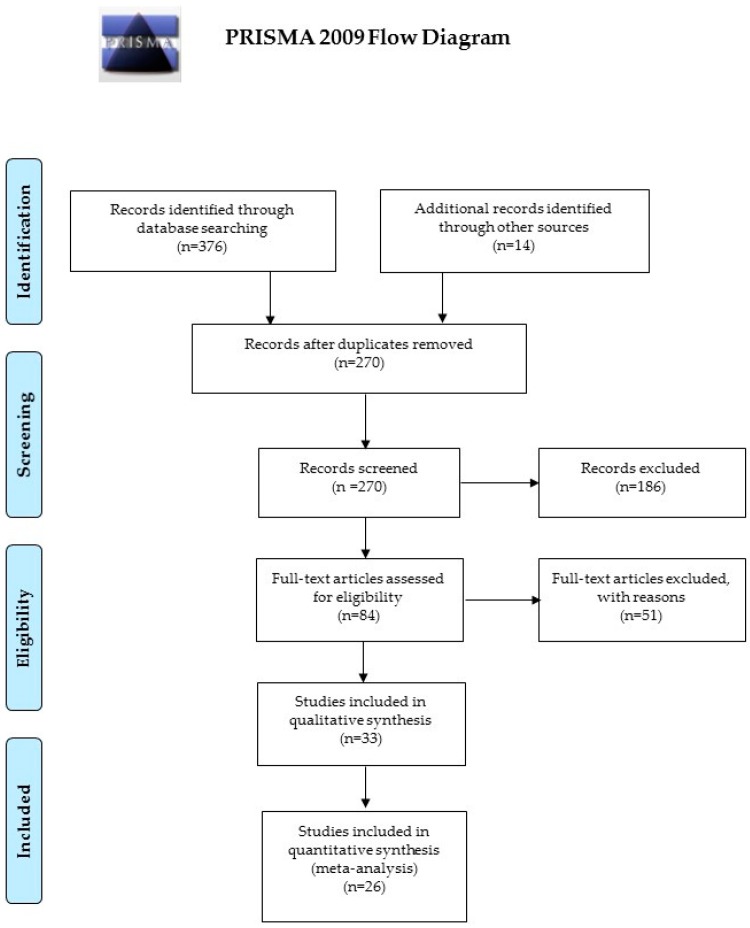
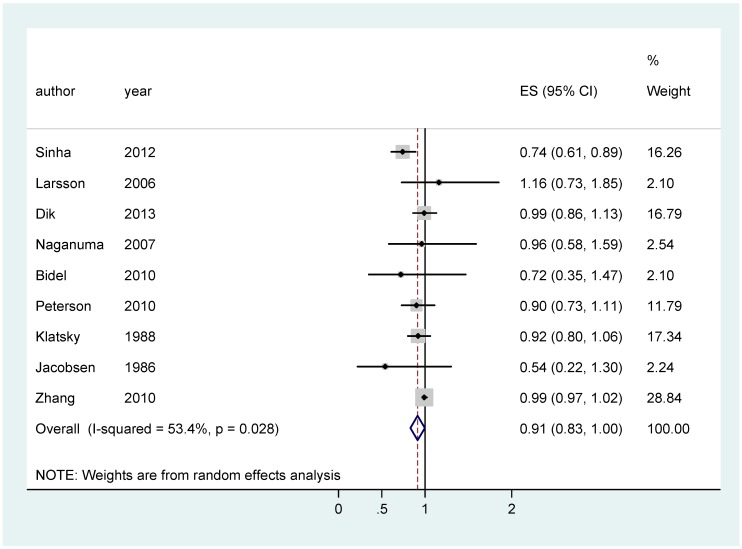
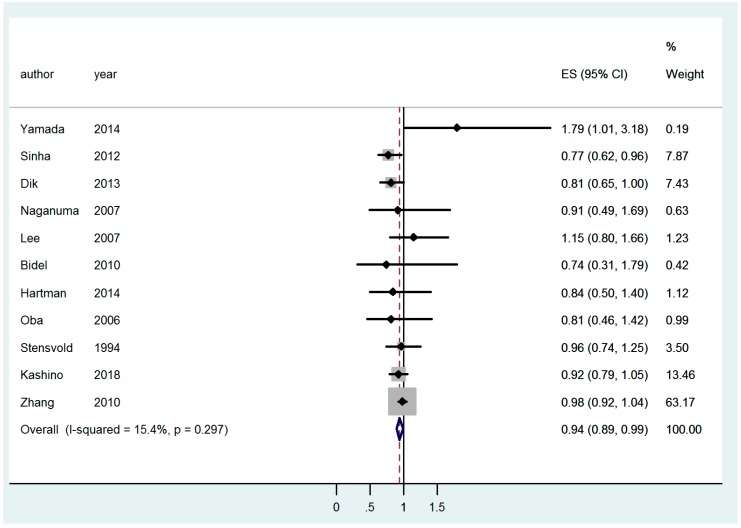
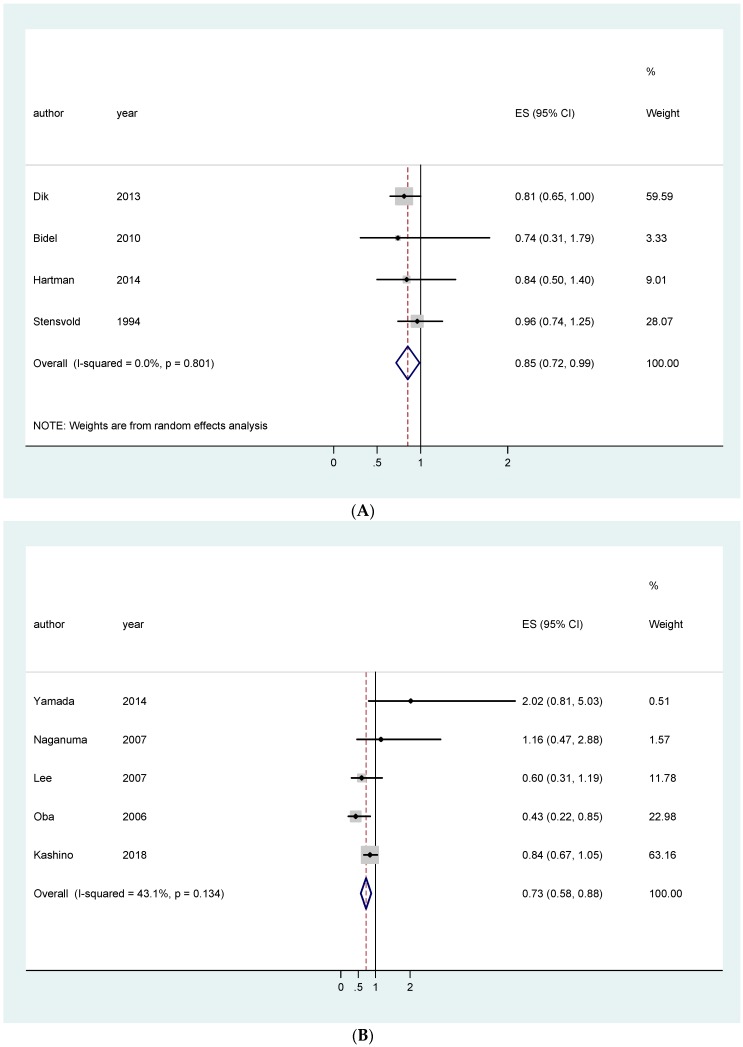
Coffee is a blend of compounds related to gastrointestinal physiology. Given its popularity and the epidemiology of colorectal cancer, the impact of this beverage on public health could be considerable. Our aim was to provide an updated synthesis of the relationship between coffee consumption and the risk of colorectal cancer. We conducted a systematic review and meta-analysis of 26 prospective studies. Regarding colorectal cancer, no significant relationship was detected. Stratifying for ethnicity, a protective effect emerged in US subjects. Concerning colon cancer, coffee proved to exert a protective effect in men and women combined and in men alone. Stratifying for ethnicity, a significant protective effect was noted in European men only and in Asian women only. Concerning rectal cancer, no association was found. Decaffeinated coffee exhibited a protective effect against colorectal cancer in men and women combined. Studies were appraised for their quality by means of the Newcastle-Ottawa Quality Assessment Scale for Cohort studies. Only one study proved to be of low quality. Ethnicity could explain the heterogeneity of the studies. However, little is known about the relationship between the genetic make-up and the risk of colorectal cancer associated with coffee. Further research is warranted.
Overview
The claims and statistics of this paper haven’t been checked yet.
Free: it reads the open-access text and checks the first 5 claims that cite a source we can check. Create a free account to check every claim.
Integrity signals
Registry
Cites
Statistics
Figures
Verification
Claims the paper makes
The claims and statistics of this paper haven’t been checked yet.
Free: it reads the open-access text and checks the first 5 claims that cite a source we can check. Create a free account to check every claim.
Claims other papers make about this one
Each is checked against this paper’s own text: does it say what the citing paper says it does?
The source backs part of the claim, not all of it — or backs it for a different population, condition or comparison.
In the citing paper
“Decaffeinated coffee exhibited a protective effect in both men and women [53].”
From Effects of Coffee and Its Components on the Gastrointestinal Tract and the Brain–Gut Axis (2020) · cites this paper as [53]
Experimental — accuracy not yet measuredThe source backs part of the claim, not all of it — or backs it for a different population, condition or comparison.
In the citing paper
“Similarly, a systematic review and meta-analysis of 24 prospective studies on CRC showed that coffee exerts a protective effect in men and women combined and in men alone.”
From Effects of Coffee and Its Components on the Gastrointestinal Tract and the Brain–Gut Axis (2020) · cites this paper as [53]
Experimental — accuracy not yet measuredThe cited source says what the claim attributes to it.
In the citing paper
“Regarding ethnicity, a significant protective association was noted in European men and in Asian women.”
From Effects of Coffee and Its Components on the Gastrointestinal Tract and the Brain–Gut Axis (2020) · cites this paper as [53]
In the citing paper
“One review and meta-analysis of prospective studies found a protective effect of coffee against colon cancer in men and women combined and in men alone. The effect was mostly significant in European men and Asian women. There was no association between coffee and rectal cancer [177].”
From Effects of Coffee on the Gastro-Intestinal Tract: A Narrative Review and Literature Update (2022) · cites this paper as [177]
Self-check
Percentages, sums and reported differences re-computed from the paper’s own numbers.
The self-check needs the paper’s full text.
Citations
Cites
Preferred Reporting Items for Systematic Reviews and Meta-Analyses: the PRISMA statement
Moher, D., Liberati, A., Tetzlaff, J., Altman, D. G., & for the PRISMA Group (2009) · BMJ · doi:10.1136/bmj.b2535 · Cited by 83,823
Preferred Reporting Items for Systematic Reviews and Meta-Analyses: The PRISMA Statement
Moher, D., Liberati, A., Tetzlaff, J., Altman, D. G., & The PRISMA Group (2009) · PLoS Medicine · doi:10.1371/journal.pmed.1000097 · Cited by 64,042
Wang, G., Ma, R., Qiao, G., Wada, K., Aizawa, Y., & Satoh, T. (2015) · Integrative Medicine International · doi:10.1159/000368408 · Cited by 18,657
Coffee and Health: A Review of Recent Human Research
Higdon, J. V., & Frei, B. (2006) · Critical Reviews in Food Science and Nutrition · doi:10.1080/10408390500400009 · Cited by 1,090 · cited 1×
“As potential mechanisms that may explain the inverse association between coffee consumption and the development of colon cancer, a review by Higdon [46] hypothesizes the presence of diterpenes as a factor of protection.”
Coffee: Biochemistry and Potential Impact on Health
Ludwig, I. A., Clifford, M. N., Lean, M. E. J., Ashihara, H., & Crozier, A. (2014) · Food Funct. · doi:10.1039/c4fo00042k · Cited by 537 · cited 1×
“Moreover, the quantity of caffeine in coffee also depends on the type of mixture used [38], a parameter that was not investigated in the studies considered.”
Coffee, CYP1A2 genotype, and risk of myocardial infarction
Cornelis, M. C., El-Sohemy, A., Kabagambe, E. K., & Campos, H. (2006) · JAMA · doi:10.1001/jama.295.10.1135 · Cited by 490 · cited 1×
“Other biological events or diseases have been found to be characterized by a complex gene–caffeine interaction, such as variability in the cardiovascular response to caffeine [41], coffee consumption and the risk of developing neurodegenerative disorders [42], epithelial ovarian cancer [43], breast cancer [44], or myo…”
Alcohol, physical activity and other risk factors for colorectal cancer: A prospective study
Wu, A., Paganini-Hill, A., Ross, R., & Henderson, B. (1987) · British Journal of Cancer · doi:10.1038/bjc.1987.140 · Cited by 448
Coffee Drinking, Mortality, and Cancer Incidence: Results From a Norwegian Prospective Study 2
(1986) · JNCI: Journal of the National Cancer Institute · doi:10.1093/jnci/76.5.823 · Cited by 218
Coffee and cancer: A prospective study of 43,000 Norwegian men and women
Stensvold, I., & Jacobsen, B. K. (1994) · Cancer Causes & Control · doi:10.1007/bf01694753 · Cited by 202
The enigmatic effects of caffeine in cell cycle and cancer
Bode, A. M., & Dong, Z. (2007) · Cancer Letters · doi:10.1016/j.canlet.2006.03.032 · Cited by 174
Khan, M. M. H., Goto, R., Kobayashi, K., Suzumura, S., Nagata, Y., Sonoda, T., Sakauchi, F., Washio, M., & Mori, M. (2004) · PubMed · Cited by 172
THE RELATIONS OF ALCOHOLIC BEVERAGE USE TO COLON AND RECTAL CANCER
KLATSKY, A. L., ARMSTRONG, M. A., FRIEDMAN, G. D., & HIATT, R. A. (1988) · American Journal of Epidemiology · doi:10.1093/oxfordjournals.aje.a115045 · Cited by 162
Niseteo, T., Komes, D., Belščak-Cvitanović, A., Horžić, D., & Budeč, M. (2012) · Food Chemistry · doi:10.1016/j.foodchem.2012.03.095 · Cited by 161
Oba, S., Shimizu, N., Nagata, C., Shimizu, H., KAMETANI, M., Takeyama, N., Ohnuma, T., & Matsushita, S. (2006) · Cancer Letters · doi:10.1016/j.canlet.2005.12.037 · Cited by 142
Coffee, Tea, and Caffeine Consumption and Incidence of Colon and Rectal Cancer
Michels, K. B., Willett, W. C., Fuchs, C. S., & Giovannucci, E. (2005) · JNCI Journal of the National Cancer Institute · doi:10.1093/jnci/dji039 · Cited by 141
Nilsson, L. M., Johansson, I., Lenner, P., Lindahl, B., & Guelpen, B. R. V. (2010) · Cancer Causes & Control · doi:10.1007/s10552-010-9582-x · Cited by 133
Zhang, X., Albanes, D., Beeson, W. L., van den Brandt, P. A., Buring, J. E., Flood, A., Freudenheim, J. L., Giovannucci, E. L., Goldbohm, R. A., Jaceldo-Siegl, K., et al. (2010) · JNCI: Journal of the National Cancer Institute · doi:10.1093/jnci/djq107 · Cited by 132
Mutagens in coffee and other beverages.
Nagao, M., Fujita, Y., Wakabayashi, K., Nukaya, H., Kosuge, T., & Sugimura, T. (1986) · Environmental Health Perspectives · doi:10.1289/ehp.866789 · Cited by 127
Sinha, R., Cross, A. J., Daniel, C. R., Graubard, B. I., Wu, J. W., Hollenbeck, A. R., Gunter, M. J., Park, Y., & Freedman, N. D. (2012) · American Journal of Clinical Nutrition · doi:10.3945/ajcn.111.031328 · Cited by 125
Diet and supplements and their impact on colorectal cancer.
Pericleous, M., Mandair, D., & Caplin, M. E. (2013) · PubMed · doi:10.3978/j.issn.2078-6891.2013.003 · Cited by 122
Coffee provides a natural multitarget pharmacopeia against the hallmarks of cancer
Gaascht, F., Dicato, M. A., & Diederich, M. F. (2015) · Genes & Nutrition · doi:10.1007/s12263-015-0501-3 · Cited by 115
Prospective study of dietary acrylamide and risk of colorectal cancer among women
Mucci, L. A., Adami, H., & Wolk, A. (2006) · International Journal of Cancer · doi:10.1002/ijc.21309 · Cited by 109
Kotsopoulos, J., Ghadirian, P., El-Sohemy, A., Lynch, H. T., Snyder, C., Daly, M., Domchek, S., Randall, S., Karlan, B., Zhang, P., et al. (2007) · Cancer Epidemiology, Biomarkers & Prevention · doi:10.1158/1055-9965.epi-06-1074 · Cited by 87
Lee, K., Inoue, M., Otani, T., Iwasaki, M., Sasazuki, S., Tsugane, S., & for the JPHC Study Group (2007) · International Journal of Cancer · doi:10.1002/ijc.22778 · Cited by 86
Genetic determinants of blood pressure responses to caffeine drinking
Renda, G., Zimarino, M., Antonucci, I., Tatasciore, A., Ruggieri, B., Bucciarelli, T., Prontera, T., Stuppia, L., & Caterina, R. D. (2011) · American Journal of Clinical Nutrition · doi:10.3945/ajcn.111.018267 · Cited by 82
Tea and coffee consumption and risk of colon and rectal cancer in middle‐aged Finnish men
Hartman, T. J., Tangrea, J. A., Pietinen, P., Malila, N., Virtanen, M., Taylor, P. R., & Albanes, D. (1998) · Nutrition and Cancer · doi:10.1080/01635589809514676 · Cited by 70
Tannin content of tea and coffee
Savolainen, H. (1992) · Journal of Applied Toxicology · doi:10.1002/jat.2550120307 · Cited by 69
Kotsopoulos, J., Vitonis, A. F., Terry, K. L., Vivo, I. D., Cramer, D. W., Hankinson, S. E., & Tworoger, S. S. (2008) · Cancer Causes & Control · doi:10.1007/s10552-008-9247-1 · Cited by 59
Gene-Environment Interaction in Parkinson's Disease: Coffee, ADORA2A, and CYP1A2
Chuang, Y.-H., Lill, C. M., Lee, P.-C., Hansen, J., Lassen, C. F., Bertram, L., Greene, N., Sinsheimer, J. S., & Ritz, B. (2016) · Neuroepidemiology · doi:10.1159/000450855 · Cited by 48
Larsson, S. C., Bergkvist, L., Giovannucci, E., & Wolk, A. (2006) · American Journal of Epidemiology · doi:10.1093/aje/kwj067 · Cited by 47
Coffee consumption and the risk of colorectal cancer: A prospective cohort study in Japan
Naganuma, T., Kuriyama, S., Akhter, M., Kakizaki, M., Nakaya, N., Matsuda‐Ohmori, K., Shimazu, T., Fukao, A., & Tsuji, I. (2007) · International Journal of Cancer · doi:10.1002/ijc.22505 · Cited by 46
Rustan, A. C., Halvorsen, B., Huggett, A. C., Ranheim, T., & Drevon, C. A. (1997) · Arteriosclerosis, Thrombosis, and Vascular Biology · doi:10.1161/01.atv.17.10.2140 · Cited by 44
Dominianni, C., Huang, W.-Y., Berndt, S., Hayes, R. B., & Ahn, J. (2013) · British Journal of Cancer · doi:10.1038/bjc.2013.434 · Cited by 44
Cancer prevention: state of the art and future prospects
Valle, I., Tramalloni, D., & Bragazzi, N. L. (2015) · Journal of preventive medicine and hygiene · doi:10.15167/2421-4248/jpmh2015.56.1.471 · Cited by 43
Self-citationDik, V. K., Bueno-de-Mesquita, H. B., Van Oijen, M. G. H., Siersema, P. D., Uiterwaal, C. S. P. M., Van Gils, C. H., Van Duijnhoven, F. J. B., Cauchi, S., Yengo, L., Froguel, P., et al. (2014) · International Journal of Cancer · doi:10.1002/ijc.28655 · Cited by 40 · cited 1×
“Dik (2014) [31] EPIC study (Europe) All (521,448) F (365,014); M (156,434) High quintile vs.”
Terry, P., Bergkvist, L., Holmberg, L., & Wolk, A. (2001) · Gut · doi:10.1136/gut.49.1.87 · Cited by 36 · cited 1×
“≤2 cups/d F: 52 CC—38 RC; M: 78 CC—41 RC Terry (2001) [16] Sweden F (61,463) ≥4 cups/d vs.”
Coffee Consumption and the Risk of Cancer in the Norwegian Women and Cancer (NOWAC) Study
Lukic, M., Licaj, I., Lund, E., Skeie, G., Weiderpass, E., & Braaten, T. (2016) · European Journal of Epidemiology · doi:10.1007/s10654-016-0142-x · Cited by 35 · cited 1×
“none 1,083 CC—160 RC—12,852 CRC Lukic (2016) [36] Norway F (79,461) >7 cups/d vs.”
Coffee Consumption and Risk of Colorectal Cancer: The Japan Collaborative Cohort Study
Yamada, H., Kawado, M., Aoyama, N., Hashimoto, S., Suzuki, K., Wakai, K., Suzuki, S., Watanabe, Y., & Tamakoshi, A. (2014) · Journal of Epidemiology · doi:10.2188/jea.je20130168 · Cited by 33
Eating frequency and risk of colorectal cancer
Perrigue, M. M., Kantor, E. D., Hastert, T. A., Patterson, R. E., Potter, J. D., Neuhouser, M. L., & White, E. (2013) · Cancer Causes & Control · doi:10.1007/s10552-013-0288-8 · Cited by 32
Kumar, P. M., Paing, S. S. T., Li, H., Pavanni, R., Yuen, Y., Zhao, Y., & Tan, E. K. (2015) · Scientific Reports · doi:10.1038/srep15492 · Cited by 32
Fluid Intake and Colorectal Cancer Risk in the Netherlands Cohort Study
Simons, C. C. J. M., Leurs, L. J., Weijenberg, M. P., Schouten, L. J., Goldbohm, R. A., & van den Brandt, P. A. (2010) · Nutrition and Cancer · doi:10.1080/01635580903407098 · Cited by 30
Caffeine Impact on Metabolic Syndrome Components Is Modulated by a CYP1A2 Variant
Platt, D. E., Ghassibe‐Sabbagh, M., Salameh, P., Salloum, A. K., Haber, M., Mouzaya, F., Gauguier, D., Al-Sarraj, Y. A., El‐Shanti, H., Zalloua, P., et al. (2015) · Annals of Nutrition and Metabolism · doi:10.1159/000441481 · Cited by 30
Kashino, I., Akter, S., Mizoue, T., Sawada, N., Kotemori, A., Matsuo, K., Oze, I., Ito, H., Naito, M., Nakayama, T., et al. (2018) · International Journal of Cancer · doi:10.1002/ijc.31320 · Cited by 30
Methylglyoxal in beverages and foods: its mutagenicity and carcinogenicity.
Nagao, M., Fujita, Y., Sügimura, T., & Kosuge, T. (1986) · PubMed · Cited by 29
Coffee consumption and risk of colorectal cancer
Bidel, S., Hu, G., Jousilahti, P., Antikaínen, R., Pukkala, E., Hakulinen, T. R., & Tuomilehto, J. O. (2010) · European Journal of Clinical Nutrition · doi:10.1038/ejcn.2010.103 · Cited by 28
Peterson, S., Yuan, J.-M., Koh, W.-P., Sun, C.-L., Wang, R., Turesky, R. J., & Yu, M. C. (2009) · Nutrition and Cancer · doi:10.1080/01635580903191528 · Cited by 25
Coffee Consumption and the Incidence of Colorectal Cancer in Women
Groessl, E. J., Allison, M., Larson, J. C., Ho, S. B., Snetsclaar, L. G., Lane, D. S., Tharp, K. M., & Stefanick, M. L. (2016) · Journal of Cancer Epidemiology · doi:10.1155/2016/6918431 · Cited by 20
Mutagenic compounds in soy sauce, Chinese cabbage, coffee and herbal teas.
Nagao, M., Wakabayashi, K., Fujita, Y., Tahira, T., Ochiai, M., & Sugimura, T. (1986) · PubMed · Cited by 19
Marciniak, K., Kiedrowski, M., Gajewska, D., Deptała, A., & Włodarek, D. (2016) · PubMed · Cited by 1
Cited by
Colorectal Cancer: Epidemiology, Risk Factors, and Prevention
Roshandel, G., Ghasemi-Kebria, F., & Malekzadeh, R. (2024) · Cancers · doi:10.3390/cancers16081530 · Cited by 431
Bioavailability and metabolism of chlorogenic acids (acyl‐quinic acids) in humans
Clifford, M. N., Kerimi, A., & Williamson, G. (2020) · Comprehensive Reviews in Food Science and Food Safety · doi:10.1111/1541-4337.12518 · Cited by 182
Effects of Coffee on the Gastro-Intestinal Tract: A Narrative Review and Literature Update
Nehlig, A. (2022) · Nutrients · doi:10.3390/nu14020399 · Cited by 158
Effects of Coffee and Its Components on the Gastrointestinal Tract and the Brain–Gut Axis
Iriondo-DeHond, A., Uranga, J. A., del Castillo, M. D., & Abalo, R. (2020) · Nutrients · doi:10.3390/nu13010088 · Cited by 126
“Decaffeinated coffee exhibited a protective effect in both men and women [53].”
BackgroundCaffeine and its main targets of colorectal cancer
Cui, W., Wang, S.-T., Pan, D., Chang, B., & Sang, L.-X. (2020) · World Journal of Gastrointestinal Oncology · doi:10.4251/wjgo.v12.i2.149 · Cited by 73
Metadata
- Authors
- Sartini, M., Bragazzi, N. L., Spagnolo, A. M., Schinca, E., Ottria, G., Dupont, C., & Cristina, M. L.
- Affiliations
- University of Genoa (IT)
- Corresponding author
- Sartini, Marina
- ORCID
- Venue
- Nutrients
- Publisher
- MDPI AG
- Published
- 2019-03-24
- Volume
- 11
- Issue
- 3
- Pages
- 694
- ISSN
- 2072-6643 (ISSN-L)
- PMC
- PMC6471028
- OpenAlex
- W2922731489
- Cited by
- 68
- References
- 49
- Citations by year
- 2026: 2 · 2025: 6 · 2024: 10 · 2023: 11 · 2022: 17 · 2021: 6 · 2020: 14 · 2019: 2
- FWCI
- 1.25
- Type
- journal article
- Language
- en
- Open access
- gold
- dx.doi.org
- Licence
- Locations
- Nutrients (publishedVersion, cc-by)
- Europe PMC (PubMed Central) (publishedVersion, cc-by)
- PubMed Central (publishedVersion, cc-by)
- PubMed (publishedVersion)
- DOAJ (DOAJ: Directory of Open Access Journals) (submittedVersion, cc-by-sa)
- CINECA IRIS Institutial Research Information System (University of Genoa) (submittedVersion, other-oa)
- Topics
- Health Sciences › Medicine › Pharmacology (medical) › Coffee research and impacts
- Health Sciences › Medicine › Oncology › Colorectal Cancer Screening and Detection
- Health Sciences › Medicine › Public Health, Environmental and Occupational Health › Nutritional Studies and Diet
- Keywords
- coffee consumption, colorectal cancer, colon cancer, rectal cancer, decaffeinated coffee, cancer risk, ethnicity, protective effect, genetic susceptibility
- MeSH terms
- Adult, Coffee, Ethnicity, Female, Humans, Male, Middle Aged, Prospective Studies, Risk Factors, Sex Factors, Colorectal Neoplasms
About these checks
Registry, retraction, Cites and statistics results are computed, not judged, with one exception: a printed reference that no index lists is read once by a model before it counts as a citation error. Claims are extracted by a model and kept only when their quote appears verbatim in the text; each cited source is then checked, with a model’s help, for whether it says what the claim relies on. Those verdicts can be wrong — read the claim’s quote and the cited source before relying on one.
Statistics and arithmetic are recomputed, not judged.
Confidence bands are shown only for fields calibrated on our annotated test set. None is calibrated yet, so no band is shown.
What counts as a claim ›How we measure confidence ›How we check this ›
Are you an author, or do you see a problem with this page? Request a review
Data sources
Bibliographic data: Semantic Scholar, OpenAlex, Crossref.
Contains information from the Semantic Scholar Academic Graph Datasets, made available under the ODC Attribution License (ODC-BY 1.0).
Semantic Scholar’s data is described in: Kinney, R., et al. (2023). The Semantic Scholar Open Data Platform. arXiv:2301.10140.
