

Coffee Silverskin Extract: Nutritional Value, Safety and Effect on Key Biological Functions
Open accessThe DOI matches its Crossref record; 63 of the 64 references it cites were found in a registry or an index, and 1 are not checked yet.
Abstract
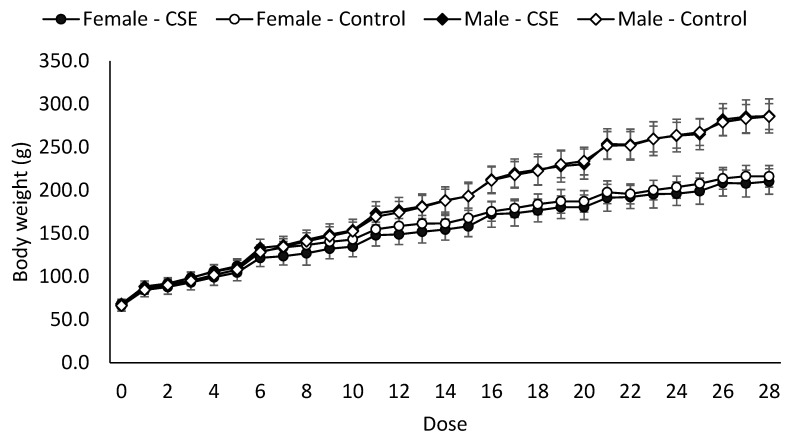
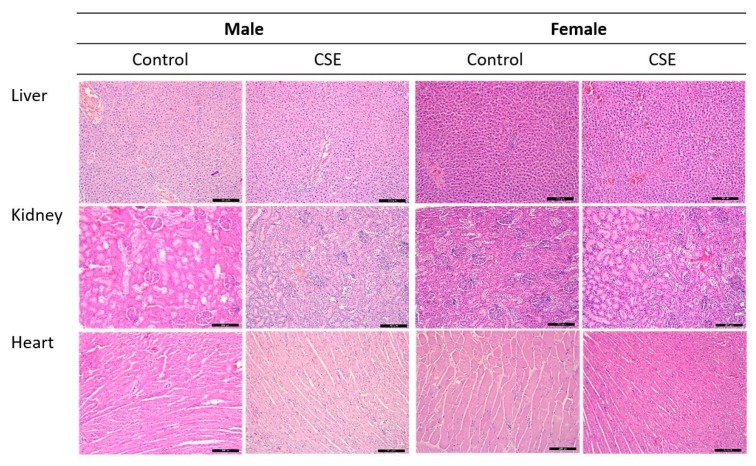
This study aimed to complete the scientific basis for the validation of a coffee silverskin extract (CSE) as a novel food ingredient according to European legislation. Nutritional value, safety, effects on biochemical biomarkers and excretion of short chain fatty acids (SCFAs) in vivo of CSE were assessed. Proteins, amino acids, fat, fatty acids, fiber, simple sugars and micronutrients were analyzed. For the first time, toxicological and physiological effects were evaluated in vivo by a repeated-dose study in healthy Wistar rats. Hormone secretion, antioxidant (enzymatic and no-enzymatic) and anti-inflammatory biomarkers, and dietary fiber fermentability of CSE (analysis of SCFAs in feces) were studied in biological samples. This unique research confirms the feasibility of CSE as a human dietary supplement with several nutrition claims: “source of proteins (16%), potassium, magnesium, calcium and vitamin C, low in fat (0.44%) and high in fiber (22%)”. This is the first report demonstrating that its oral administration (1 g/kg) for 28 days is innocuous. Hormone secretion, antioxidant or anti-inflammatory biomarkers were not affected in heathy animals. Total SCFAs derived from CSE fiber fermentation were significantly higher (p < 0.05) in male treated rats compared to male control rats. All the new information pinpoints CSE as a natural, sustainable and safe food ingredient containing fermentable fiber able to produce SCFAs with beneficial effects on gut microbiota.
Overview
The claims and statistics of this paper haven’t been checked yet.
Free: it reads the open-access text and checks the first 5 claims that cite a source we can check. Create a free account to check every claim.
Integrity signals
Registry
Cites
Statistics
Figures
Verification
Claims the paper makes
The claims and statistics of this paper haven’t been checked yet.
Free: it reads the open-access text and checks the first 5 claims that cite a source we can check. Create a free account to check every claim.
Claims other papers make about this one
Each is checked against this paper’s own text: does it say what the citing paper says it does?
The source backs part of the claim, not all of it — or backs it for a different population, condition or comparison.
In the citing paper
“total SCFAs derived from coffee silverskin extract fermentation were higher in feces of rats treated with the extract for 28 days [177]”
From Effects of Coffee and Its Components on the Gastrointestinal Tract and the Brain–Gut Axis (2020) · cites this paper as [177]
Experimental — accuracy not yet measured
Self-check
Percentages, sums and reported differences re-computed from the paper’s own numbers.
The self-check needs the paper’s full text.
Citations
Cites
Antioxidant activity applying an improved ABTS radical cation decolorization assay
Re, R., Pellegrini, N., Proteggente, A., Pannala, A., Yang, M., & Rice-Evans, C. (1999) · Free Radical Biology and Medicine · doi:10.1016/s0891-5849(98)00315-3 · Cited by 26,165 · cited 1×
“Oxidative Stress Biomarkers Non-enzymatic antioxidant capacity The trapping capacity of cationic free radicals in serum samples was evaluated using the method of radical ABTS+ bleaching described by Re et al. (1999) [25] and modified by Oki et al. (2006) [26] for its use in microplate.”
MethodFrom Dietary Fiber to Host Physiology: Short-Chain Fatty Acids as Key Bacterial Metabolites
Koh, A., De Vadder, F., Kovatcheva-Datchary, P., & Bäckhed, F. (2016) · Cell · doi:10.1016/j.cell.2016.05.041 · Cited by 7,070
den Besten, G., van Eunen, K., Groen, A. K., Venema, K., Reijngoud, D.-J., & Bakker, B. M. (2013) · Journal of Lipid Research · doi:10.1194/jlr.r036012 · Cited by 5,048 · cited 1×
“The major part of butyrate is used as fuel for colonocytes and it plays an important role in maintaining colonic health in humans [69,70].”
BackgroundDietary Intake and Bioavailability of Polyphenols
Scalbert, A., & Williamson, G. (2000) · The Journal of Nutrition · doi:10.1093/jn/130.8.2073s · Cited by 3,658 · cited 1×
“Further studies should be carried out to investigate the antioxidant properties of CSE in certain organs, since polyphenols are metabolized in tissues and these metabolites can also have antioxidant properties [62].”
BackgroundConcordance of the toxicity of pharmaceuticals in humans and in animals
Olson, H., Betton, G., Robinson, D., Thomas, K., Monro, A., Kolaja, G., Lilly, P., Sanders, J., Sipes, G., Bracken, W., et al. (2000) · Regulatory Toxicology and Pharmacology · doi:10.1006/rtph.2000.1399 · Cited by 2,050 · cited 1×
“The analysis of blood parameters in animal models has a high predictive value for alterations of the hematological system in human toxicity [51].”
BackgroundRapid method for determination of total fatty acid content and composition of feedstuffs and feces
Sukhija, P. S., & Palmquist, D. L. (1988) · Journal of Agricultural and Food Chemistry · doi:10.1021/jf00084a019 · Cited by 1,719 · cited 1×
“Fatty acid profile was obtained by gas chromatography (Agilent 7820A GC System equipped with Flame Ionization Detector) analyses [22], calculated according to the ISO 12966-2:2017.”
MethodThe impact of diet and lifestyle on gut microbiota and human health
Conlon, M., & Bird, A. (2014) · Nutrients · doi:10.3390/nu7010017 · Cited by 1,567 · cited 1×
“In the large intestine, dietary fiber is fermented by the microbiota, leading to the generation of short-chain fatty acids (SCFAs) that also contribute to human well-being [9].”
BackgroundPrinciples and Methods of Toxicology
(1984) · Food and Chemical Toxicology · doi:10.1016/0278-6915(84)90066-8 · Cited by 1,423 · cited 1×
“Weight loss is considered of toxicological importance when the reduction is at least 10% less than the initial body weight [44].”
BackgroundProduction, Composition, and Application of Coffee and Its Industrial Residues
Mussatto, S. I., Machado, E. M. S., Martins, S., & Teixeira, J. A. (2011) · Food and Bioprocess Technology · doi:10.1007/s11947-011-0565-z · Cited by 1,010
Scientific Opinion on Dietary Reference Values for carbohydrates and dietary fibre
EFSA Panel on Dietetic Products, N. (2010) · EFSA Journal · doi:10.2903/j.efsa.2010.1462 · Cited by 898
Research works printed but not linked: 1
- World Health Organization Guideline: Potassium Intake for Adults and Children World Health Organization Geneva, Switzerland 2012 23617019
Cited by
Klingel, T., Kremer, J. I., Gottstein, V., Rajcic de Rezende, T., Schwarz, S., & Lachenmeier, D. W. (2020) · Foods · doi:10.3390/foods9050665 · Cited by 264
“In a subacute toxicity study, in which rats received 1 g/kg bw of aqueous coffee silver skin extract orally, no negative effects on hormone secretion and antioxidant or anti-inflammatory biomarkers were observed [129].”
BackgroundApplications of Compounds from Coffee Processing By-Products
Iriondo-DeHond, A., Iriondo-DeHond, M., & del Castillo, M. D. (2020) · Biomolecules · doi:10.3390/biom10091219 · Cited by 167
Self-citationGemechu, F. G. (2020) · Trends in Food Science & Technology · doi:10.1016/j.tifs.2020.08.005 · Cited by 164
Effects of Coffee and Its Components on the Gastrointestinal Tract and the Brain–Gut Axis
Iriondo-DeHond, A., Uranga, J. A., del Castillo, M. D., & Abalo, R. (2020) · Nutrients · doi:10.3390/nu13010088 · Cited by 126
“Interestingly, an aqueous extract of coffee silverskin, another coffee by-product, may also display dietary fiber effect since total SCFAs derived from coffee silverskin extract fermentation were higher in feces of rats treated with the extract for 28 days [177].”
BackgroundSelf-citationIriondo‐DeHond, A., Elizondo, A. S., Iriondo-DeHond, M., Ríos, M. B., Mufari, R., Mendiola, J. A., Ibáñez, E., & del Castillo, M. D. (2020) · Foods · doi:10.3390/foods9050620 · Cited by 100
Self-citation
Metadata
- Authors
- Iriondo-DeHond, A., Rios, M. B., Herrera, T., Rodriguez-Bertos, A., Nuñez, F., San Andres, M. I., Sanchez-Fortun, S., & del Castillo, M. D.
- Affiliations
- Instituto de Investigación en Ciencias de la Alimentación (CIAL) (CSIC-UAM), Calle Nicolas Cabrera 9, 28049 Madrid, Spain
- Instituto de Investigación en Ciencias de la Alimentación (ES)
- Department of Internal Medicine and Animal Surgery, School of Veterinary Sciences, Health Surveillance Center (VISAVET), Complutense University, Puerta de Hierro Ave, 28040 Madrid, Spain
- Consejo Superior de Investigaciones Científicas (ES)
- Facultad de Veterinaria, Universidad Complutense de Madrid, Av. Puerta de Hierro, s/n, 28040 Madrid, Spain
- Venue
- Nutrients
- Publisher
- MDPI AG
- Published
- 2019-11-07
- Volume
- 11
- Issue
- 11
- Pages
- 2693
- ISSN
- 2072-6643 (ISSN-L)
- PMC
- PMC6893552
- OpenAlex
- W2986920744
- Cited by
- 56
- References
- 64
- Citations by year
- 2026: 6 · 2025: 11 · 2024: 8 · 2023: 5 · 2022: 11 · 2021: 9 · 2020: 5 · 2019: 1
- FWCI
- 4.03
- Type
- journal article
- Language
- en
- Open access
- gold
- dx.doi.org
- Licence
- Locations
- Nutrients (publishedVersion, cc-by)
- Europe PMC (PubMed Central) (publishedVersion, cc-by)
- PubMed Central (publishedVersion, cc-by)
- PubMed (publishedVersion)
- Library Open Repository (Universidad Complutense Madrid) (submittedVersion, cc-by)
- DIGITAL.CSIC (Spanish National Research Council (CSIC)) (submittedVersion, cc-by)
- DIGITAL.CSIC (Spanish National Research Council (CSIC)) (submittedVersion, other-oa)
- DOAJ (DOAJ: Directory of Open Access Journals) (submittedVersion)
- Funders
- Ministerio de Economía y Competitividad (AGL2014-57239-R, BES-2015-072191)
- Topics
- Health Sciences › Medicine › Pharmacology (medical) › Coffee research and impacts
- Life Sciences › Agricultural and Biological Sciences › Food Science › Food Nutrient Composition and Product Development
- Life Sciences › Biochemistry, Genetics and Molecular Biology › Molecular Biology › Gut microbiota and health
- Keywords
- novel food ingredients, nutritional composition, dietary fiber, short-chain fatty acids, gut microbiota, antioxidant activity, anti-inflammatory markers, hormone secretion, repeated-dose toxicity, dietary supplements, food safety
- MeSH terms
- Animals, Antioxidants, Body Weight, Coffee, Dietary Fiber, Fatty Acids, Volatile, Female, Male, Nutritive Value, Plant Extracts, Rats, Wistar, Oxidative Stress, Rats
About these checks
Registry, retraction, Cites and statistics results are computed, not judged, with one exception: a printed reference that no index lists is read once by a model before it counts as a citation error. Claims are extracted by a model and kept only when their quote appears verbatim in the text; each cited source is then checked, with a model’s help, for whether it says what the claim relies on. Those verdicts can be wrong — read the claim’s quote and the cited source before relying on one.
Statistics and arithmetic are recomputed, not judged.
Confidence bands are shown only for fields calibrated on our annotated test set. None is calibrated yet, so no band is shown.
What counts as a claim ›How we measure confidence ›How we check this ›
Are you an author, or do you see a problem with this page? Request a review
Data sources
Bibliographic data: Semantic Scholar, OpenAlex, Crossref.
Contains information from the Semantic Scholar Academic Graph Datasets, made available under the ODC Attribution License (ODC-BY 1.0).
Semantic Scholar’s data is described in: Kinney, R., et al. (2023). The Semantic Scholar Open Data Platform. arXiv:2301.10140.
