

The DOI matches its Crossref record; 65 of the 66 references it cites were found in a registry or an index; none of the 65 sources its claims cite is checked for support yet.
Nutritional Status and Implementation of a Nutritional Education Program in Young Female Artistic Gymnasts
Open accessAbstract
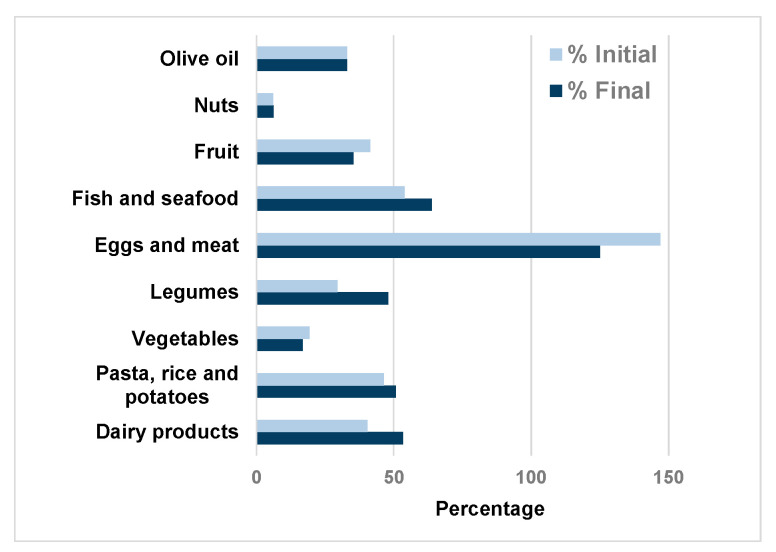
Adolescent high-performance gymnasts are considered to be at risk for low energy intake. The aim of the present study was to determine the effects of implementing a nutritional education program during the sports season on the nutritional status and nutrition knowledge of the female artistic gymnasts from the Technification Center of the Balearic Islands (n = 24; age, 14.1 ± 2.3 years). A quasi-experimental intervention design was applied, which consisted of implementing a nutritional education program of seven sessions given during eight months. Measurements of nutritional intake, nutrition knowledge, and anthropometric parameters, as well as hematological and biochemical blood parameters, were performed. Gymnasts reported low energy and carbohydrate intakes, with significant increases during the study (energy, 28.3 ± 1.4 vs. 32.8 ± 1.4 kcal kg−1, p = 0.015, carbohydrate 3.2 ± 0.2 vs. 3.9 ± 0.2 g kg−1, p = 0.004). The average values for parameters such as hemoglobin, ferritin, lipoprotein, and vitamin C and E levels in the plasma were within normal ranges. Low intakes of most of the food groups were observed during the study, with similar initial and final values. Nutrition knowledge did not change as a result of the study (28.0 ± 1.7 vs. 31.1 ± 1.3, p = 0.185). In conclusion, gymnasts reported low energy intakes. However, blood markers and most of the anthropometrical parameters measured were within normal ranges. The nutrition education program implemented did not produce significant improvements in the dietary habits or nutritional knowledge of gymnasts.
Overview
CoChat Summary
TL;DR
In a quasi-experimental study of 24 young female artistic gymnasts at a Spanish technification center, an eight-month nutrition education program did not significantly improve dietary habits or nutrition knowledge, despite modest increases in energy and carbohydrate intake. Gymnasts reported low energy intakes throughout, yet blood markers and most anthropometric parameters remained within normal ranges.
Key findings
- Energy intake was below recommended levels throughout but rose during the study (28.3 ± 1.4 vs. 32.8 ± 1.4 kcal·kg⁻¹, p = 0.015), as did carbohydrate intake (3.2 ± 0.2 vs. 3.9 ± 0.2 g·kg⁻¹, p = 0.004), still below the 5–6 g·kg⁻¹ suggested for athletes.
- Nutrition knowledge did not change significantly with the intervention (28.0 ± 1.7 vs. 31.1 ± 1.3, p = 0.185), nor did Mediterranean diet adherence (7.21 ± 0.35 vs. 7.56 ± 0.24, p = 0.119) or diet diversity score (2.26 ± 0.35 vs. 2.60 ± 0.17, p = 0.295).
- Blood markers (hemoglobin, ferritin, lipoproteins, vitamins C and E) were within normal ranges; two gymnasts had initial hemoglobin <12 g/dl and four had ferritin <15 ng/dl, but all values were adequate by the end. Mean EAT-26 score was 10.8 ± 8.7, with only one of 24 gymnasts scoring above the at-risk threshold of 20.
- Weight, height, BMI, fat mass, muscle mass and fat-free mass all increased significantly (p < 0.001 for most), while fat mass percentage decreased (p = 0.003).
Methods
- Quasi-experimental pre-post intervention design; 25 female gymnasts recruited from the Sports Technification Center of the Balearic Islands (one withdrew, n = 24; age 14.1 ± 2.3 years) across high-performance (n = 5), technification (n = 10) and follow-up (n = 9) levels.
- Intervention: seven formative nutrition education sessions (45–90 min, monthly) over eight months (October 2008–May 2009) for gymnasts, coaches and/or parents, plus leaflets and individualized advice.
- Measures at baseline, three and six months, and end: three 24-h recalls, semi-quantitative FFQ, nutrition knowledge questionnaire (61 items), EAT-26, hematological/biochemical blood parameters (HPLC for vitamins), anthropometry (ISAK, skinfolds, bioelectrical impedance), and heart-rate monitoring during training. Analysis used paired t-tests and repeated-measures ANOVA in SPSS (p < 0.05).
Limitations
- Stated by the authors: the quasi-experimental design lacked a control group (no comparable group available; withholding the program was considered ethically inappropriate and contamination was expected); small sample size limiting generalizability; three 24-h recalls inadequate for proper micronutrient measurement, with likely under- or mis-reporting bias.
- Evident in the text: the increase in carbohydrate/energy intake may reflect the start of the more demanding training season rather than the intervention (the authors themselves raise this); plasma vitamin D was not measured, so vitamin D status could not be assessed; the intervention's content, frequency, session number and duration are suggested by the authors as possibly inadequate.
Model-written summary. Check it against the paper before relying on it.
Integrity signals
Registry
Cites
Statistics
Figures
Verification
Claims the paper makes
0 Valid · 0 Not valid · 42 Not checked · 73 Own results and interpretations
A result the paper reports from its own data — it cites no other source for it, so there is none to check. The quote shows it is in the paper.
In the paper
“Gymnasts reported low energy and carbohydrate intakes, with significant increases during the study (energy, 28.3 ± 1.4 vs. 32.8 ± 1.4 kcal kg−1, p = 0.015, carbohydrate 3.2 ± 0.2 vs. 3.9 ± 0.2 g kg−1, p = 0.004).”
- Also stated in: § 3.1. Dietary Intake, Quality of the Diet, and Nutrition Knowledge · plain
“However, energy intake was below the recommended level (Table S1) throughout the study.”
- Also stated in: § 4. Discussion · plain
“The main finding of the present study was the low energy intake of gymnasts.”
§ Nutritional Status and Implementation of a Nutritional Education Program in Young Female Artistic Gymnasts > Abstract
plainn = 24- Asserted: passes — The authors put it forward as true.
- Checkable: passes — It can be checked against evidence.
- Load-bearing: passes — The paper’s conclusions depend on it.
- Based: passes — The paper gives a reason why it holds.
- Rests on an assumption not shown here.
- Also stated in: § 3.1. Dietary Intake, Quality of the Diet, and Nutrition Knowledge · plain
A result the paper reports from its own data — it cites no other source for it, so there is none to check. The quote shows it is in the paper.
In the paper
“The plasma vitamin E concentration decreased significantly (p = 0.012) during the study (Table 5).”
§ Nutritional Status and Implementation of a Nutritional Education Program in Young Female Artistic Gymnasts > 3. Results > 3.3. Biochemistry Parameters and Vitamin Levels
plain- Asserted: passes — The authors put it forward as true.
- Checkable: passes — It can be checked against evidence.
- Load-bearing: unclear — It is unclear whether the paper’s conclusions depend on it.
- Based: passes — The paper gives a reason why it holds.
A result the paper reports from its own data — it cites no other source for it, so there is none to check. The quote shows it is in the paper.
In the paper
“Regarding the lipid profile, significant decreases in the total cholesterol (p < 0.001), LDL-cholesterol (p = 0.006), and HDL-cholesterol concentrations were observed (p < 0.001).”
§ Nutritional Status and Implementation of a Nutritional Education Program in Young Female Artistic Gymnasts > 3. Results > 3.3. Biochemistry Parameters and Vitamin Levels
plain- Asserted: passes — The authors put it forward as true.
- Checkable: passes — It can be checked against evidence.
- Load-bearing: unclear — It is unclear whether the paper’s conclusions depend on it.
- Based: passes — The paper gives a reason why it holds.
None of the sources cited for this claim have been checked yet.
In the paper
“While both vitamin A and vitamin C blood levels reflected adequate intakes, it is striking that vitamin E levels were within the normal range despite intake being below recommended values.”
§ Nutritional Status and Implementation of a Nutritional Education Program in Young Female Artistic Gymnasts > 4. Discussion
plain- Asserted: passes — The authors put it forward as true.
- Checkable: passes — It can be checked against evidence.
- Load-bearing: unclear — It is unclear whether the paper’s conclusions depend on it.
- Based: passes — The paper gives a reason why it holds.
A result the paper reports from its own data — it cites no other source for it, so there is none to check. The quote shows it is in the paper.
In the paper
“Furthermore, lipid intake increased (p = 0.006), leading to a decrease in the percentage of energy from proteins (p = 0.015).”
§ Nutritional Status and Implementation of a Nutritional Education Program in Young Female Artistic Gymnasts > 3. Results > 3.1. Dietary Intake, Quality of the Diet, and Nutrition Knowledge
plainstates a cause- Asserted: passes — The authors put it forward as true.
- Checkable: passes — It can be checked against evidence.
- Load-bearing: unclear — It is unclear whether the paper’s conclusions depend on it.
- Based: passes — The paper gives a reason why it holds.
48 more claims
Create a free account to see all 115 claims and to verify the 65 references still open.
- It may state two separate claims as one. 43
- The quote only partly states this claim. 2
- Probably not a substantial claim. 29
Claims other papers make about this one
Each is checked against this paper’s own text: does it say what the citing paper says it does?
In the citing paper
“Despite established nutritional guidelines for athletes (6), a substantial proportion of female athletes fail to meet these recommendations, commonly exhibiting inadequate carbohydrate intake, excessive fat consumption, and insufficient intake of key nutrients such as calcium, iron, and vitamin D (7–9).”
In the citing paper
“In response, nutrition education interventions, delivered through both face-to-face and digital formats, have demonstrated beneficial effects on SNK and, in some cases, on dietary intake among young female athletes (3, 7, 8, 18–28).”
In the citing paper
“Three previous studies in female athletes reported significant improvements in body composition following nutrition education interventions (7, 23, 56), with program durations ranging from 4 to 8 months.”
In the citing paper
“Four studies included in this review used this questionnaire(20,21,33,46).”
From Adolescent athletes have better general than sports nutrition knowledge and lack awareness of supplement recommendations: a systematic literature review (2024) · cites this paper as [21]
In the citing paper
“Aguilo et al.(21) made major modifications to the questionnaire, resulting in only sixty-one questions being included.”
From Adolescent athletes have better general than sports nutrition knowledge and lack awareness of supplement recommendations: a systematic literature review (2024) · cites this paper as [21]
Self-check
Percentages, sums and reported differences re-computed from the paper’s own numbers.
Each contradiction between two passages listed here was confirmed by an independent check.
Rated minor: it would not touch a result — a value no result rests on, a p-value that stays on the same side of the significance level, or a conflict that is clerical, resolved elsewhere in the paper, or outside its own findings.
In the paper
§ Nutritional Status and Implementation of a Nutritional Education Program in Young Female Artistic Gymnasts > 3. Results > 3.4. Physical Activity Levels and Anthropometrical Parameters
“significant increases in weight (p < 0.001), height (p < 0.001), BMI (p < 0.001), fat mass (p = 0.002)”
§ Nutritional Status and Implementation of a Nutritional Education Program in Young Female Artistic Gymnasts > 4. Discussion
“This weight increase could be attributed to the increases in height and fat-free mass without increases in fat mass.”
Rated minor: it would not touch a result — a value no result rests on, a p-value that stays on the same side of the significance level, or a conflict that is clerical, resolved elsewhere in the paper, or outside its own findings.
In the paper
§ Nutritional Status and Implementation of a Nutritional Education Program in Young Female Artistic Gymnasts > 3. Results > 3.1. Dietary Intake, Quality of the Diet, and Nutrition Knowledge
“While initial vitamin A intakes were higher than recommended”
§ Nutritional Status and Implementation of a Nutritional Education Program in Young Female Artistic Gymnasts > 3. Results > 3.1. Dietary Intake, Quality of the Diet, and Nutrition Knowledge
“Therefore, if hydrosoluble vitamins were not considered, only sodium intake at the end of the study and phosphorus intake throughout the study were above the recommended levels.”
Rated minor: it would not touch a result — a value no result rests on, a p-value that stays on the same side of the significance level, or a conflict that is clerical, resolved elsewhere in the paper, or outside its own findings.
In the paper
§ Nutritional Status and Implementation of a Nutritional Education Program in Young Female Artistic Gymnasts > Abstract
“energy, 28.3 ± 1.4 vs. 32.8 ± 1.4 kcal kg−1, p = 0.015”
§ Nutritional Status and Implementation of a Nutritional Education Program in Young Female Artistic Gymnasts > 3. Results > 3.1. Dietary Intake, Quality of the Diet, and Nutrition Knowledge
“based on body weight (p = 0.0015)”
Citations
Cites
Mediterranean diet pyramid today. Science and cultural updates
Bach-Faig, A., Berry, E. M., Lairon, D., Reguant, J., Trichopoulou, A., Dernini, S., Medina, F. X., Battino, M., Belahsen, R., Miranda, G., et al. (2011) · Public Health Nutrition · doi:10.1017/s1368980011002515 · Cited by 1,622
(2007) · Medicine & Science in Sports & Exercise · doi:10.1249/mss.0b013e318149f111 · Cited by 1,554
Nutrition and Athletic Performance
(2016) · Medicine & Science in Sports & Exercise · doi:10.1249/mss.0000000000000852 · Cited by 1,305
Carbohydrates for training and competition
Burke, L. M., Hawley, J. A., Wong, S. H. S., & Jeukendrup, A. E. (2011) · Journal of Sports Sciences · doi:10.1080/02640414.2011.585473 · Cited by 985
International Society of Sports Nutrition Position Stand: protein and exercise
Jäger, R., Kerksick, C. M., Campbell, B. I., Cribb, P. J., Wells, S. D., Skwiat, T. M., Purpura, M., Ziegenfuss, T. N., Ferrando, A. A., Arent, S. M., et al. (2017) · Journal of the International Society of Sports Nutrition · doi:10.1186/s12970-017-0177-8 · Cited by 873
Lipoprotein ratios: Physiological significance and clinical usefulness in cardiovascular prevention
Munoz (2009) · Vascular Health and Risk Management · doi:10.2147/vhrm.s6269 · Cited by 760
International Society of Sports Nutrition position stand: protein and exercise
Campbell, B., Kreider, R. B., Ziegenfuss, T., La Bounty, P., Roberts, M., Burke, D., Landis, J., Lopez, H., & Antonio, J. (2007) · Journal of the International Society of Sports Nutrition · doi:10.1186/1550-2783-4-8 · Cited by 716
Development of a general nutrition knowledge Questionnaire for adults
Parmenter, K., & Wardle, J. (1999) · European Journal of Clinical Nutrition · doi:10.1038/sj.ejcn.1600726 · Cited by 633
International society of sports nutrition position stand: nutrient timing
Kerksick, C. M., Arent, S., Schoenfeld, B. J., Stout, J. R., Campbell, B., Wilborn, C. D., Taylor, L., Kalman, D., Smith-Ryan, A. E., Kreider, R. B., et al. (2017) · Journal of the International Society of Sports Nutrition · doi:10.1186/s12970-017-0189-4 · Cited by 622
Assessment of physical activity in youth
Corder, K., Ekelund, U., Steele, R. M., Wareham, N. J., & Brage, S. (2008) · Journal of Applied Physiology · doi:10.1152/japplphysiol.00094.2008 · Cited by 581
Heath, B. H., & Carter, J. E. L. (1967) · American Journal of Physical Anthropology · doi:10.1002/ajpa.1330270108 · Cited by 531
Separation of White Blood Cells
BØYUM, A. (1964) · Nature · doi:10.1038/204793a0 · Cited by 523
ACSM Position Stand: The Female Athlete Triad
Otis, C. L., Drinkwater, B., Johnson, M., Loucks, A., & Wilmore, J. (1997) · Medicine & Science in Sports & Exercise · doi:10.1097/00005768-199705000-00037 · Cited by 515
State of the Art Reviews: Measurement of Physical Activity in Children and Adolescents
Trost, S. G. (2007) · American Journal of Lifestyle Medicine · doi:10.1177/1559827607301686 · Cited by 404
Torstveit, M. K., Rosenvinge, J. H., & Sundgot‐Borgen, J. (2008) · Scandinavian Journal of Medicine & Science in Sports · doi:10.1111/j.1600-0838.2007.00657.x · Cited by 338
Nutrition Knowledge in Athletes: A Systematic Review
Heaney, S., O’Connor, H., Michael, S., Gifford, J., & Naughton, G. (2011) · International Journal of Sport Nutrition and Exercise Metabolism · doi:10.1123/ijsnem.21.3.248 · Cited by 321
Schröder, H., Covas, M.-I., Marrugat, J., Vila, J., PENA, A., Alcantara, M., & Masià, R. (2001) · Clinical Nutrition · doi:10.1054/clnu.2001.0460 · Cited by 238
Validity of dietary assessment in athletes: a systematic review
Capling, L., Beck, K., Gifford, J., Slater, G., Flood, V., & O’Connor, H. (2017) · Nutrients · doi:10.3390/nu9121313 · Cited by 161
Nutrition in Children and Adolescents
Corkins, M. R., Daniels, S. R., de Ferranti, S. D., Golden, N. H., Kim, J. H., Magge, S. N., & Schwarzenberg, S. J. (2016) · Medical Clinics of North America · doi:10.1016/j.mcna.2016.06.005 · Cited by 137
Role of intensive training in the growth and maturation of artistic gymnasts
Malina, R. M., Baxter-Jones, A. D. G., Armstrong, N., Beunen, G. P., Caine, D., Daly, R. M., Lewis, R. D., Rogol, A. D., & Russell, K. (2013) · Sports Medicine · doi:10.1007/s40279-013-0058-5 · Cited by 126
Eating Attitudes, Body Esteem, Perfectionism and Anxiety of Judo Athletes and Nonathletes
Rouveix, M., Bouget, M., Pannafieux, C., Champely, S., & Filaire, E. (2007) · International Journal of Sports Medicine · doi:10.1055/s-2006-924334 · Cited by 124
Bartrina, J. A., Partearroyo, T., López-Sobaler, A. M., Anta, R. M. O., Varela‐Moreiras, G., Serra‐Majem, L., Pérez‐Rodrigo, C., & The Collaborative Group for the Dietary Guidelines for the Spanish Population (SENC) (2019) · Nutrients · doi:10.3390/nu11112675 · Cited by 123
Fransen, H. P., & Ocké, M. C. (2008) · Current Opinion in Clinical Nutrition & Metabolic Care · doi:10.1097/mco.0b013e32830a49db · Cited by 122
Vitamin D Status of Females in an Elite Gymnastics Program
Lovell, G. (2008) · Clinical Journal of Sport Medicine · doi:10.1097/jsm.0b013e3181650eee · Cited by 119
Nutrition education intervention for college female athletes
Abood, D. A., Black, D. R., & Birnbaum, R. D. (2004) · Journal of Nutrition Education and Behavior · doi:10.1016/s1499-4046(06)60150-4 · Cited by 104
Dietary under-reporting: What foods and which meals are typically under-reported?
Gemming, L., & Ni Mhurchu, C. (2016) · European Journal of Clinical Nutrition · doi:10.1038/ejcn.2015.204 · Cited by 92
Tauler, P., Sureda, A., Cases, N., Aguiló, A., Marroyo, J. A. R., Villa, G., Tur, J. A., & Pons, A. (2005) · The Journal of Nutritional Biochemistry · doi:10.1016/j.jnutbio.2005.10.013 · Cited by 84
Self-citationThe influence of somatotype on anaerobic performance
Ryan-Stewart, H., Faulkner, J., & Jobson, S. (2018) · PLOS ONE · doi:10.1371/journal.pone.0197761 · Cited by 80
Iron status in elite young athletes: gender-dependent influences of diet and exercise
Koehler, K., Braun, H., Achtzehn, S., Hildebrand, U., Predel, H.-G., Mester, J., & Schänzer, W. (2012) · European Journal of Applied Physiology · doi:10.1007/s00421-011-2002-4 · Cited by 78
Sport and triad risk factors influence bone mineral density in collegiate athletes
TENFORDE, A. S., CARLSON, J. L., SAINANI, K. L., CHANG, A. O., KIM, J. H., GOLDEN, N. H., & FREDERICSON, M. (2018) · Medicine & Science in Sports & Exercise · doi:10.1249/mss.0000000000001711 · Cited by 75
Kelley, G. A., & Kelley, K. S. (2007) · Atherosclerosis · doi:10.1016/j.atherosclerosis.2006.04.019 · Cited by 73
Low energy availability and low body fat of female gymnasts before an international competition
Silva, M. ‐. G., & Paiva, T. (2015) · European Journal of Sport Science · doi:10.1080/17461391.2014.969323 · Cited by 72
Gender-related differences in elite gymnasts: the female athlete triad
Weimann, E. (2002) · Journal of Applied Physiology · doi:10.1152/japplphysiol.00572.2001 · Cited by 62
Evaluation of Iranian college athletes’ sport nutrition knowledge
Jessri, M., Jessri, M., RashidKhani, B., & Zinn, C. (2010) · International Journal of Sport Nutrition and Exercise Metabolism · doi:10.1123/ijsnem.20.3.257 · Cited by 62
Understanding Eating Disorders in Elite Gymnastics
Tan, J. O. A., Calitri, R., Bloodworth, A., & McNamee, M. J. (2016) · Clinics in Sports Medicine · doi:10.1016/j.csm.2015.10.002 · Cited by 56
‘Everything revolves around gymnastics’: Athletes and parents make sense of elite youth sport
Smits, F., Jacobs, F., & Knoppers, A. (2017) · Sport in Society · doi:10.1080/17430437.2015.1124564 · Cited by 55
Anthropometric somatotype of Italian sport participants.
Gualdi‐Russo, E., & Graziani, I. (1993) · PubMed · Cited by 49
Ashdown-Franks, G., Vancampfort, D., Firth, J., Smith, L., Sabiston, C. M., Stubbs, B., & Koyanagi, A. (2019) · International Journal of Behavioral Nutrition and Physical Activity · doi:10.1186/s12966-019-0796-3 · Cited by 49
Iron status of highly active adolescents: Evidence of depleted iron stores in gymnasts
Constantini, N. W., Eliakim, A., Zigel, L., Yaaron, M., & Falk, B. (2000) · International Journal of Sport Nutrition and Exercise Metabolism · doi:10.1123/ijsnem.10.1.62 · Cited by 42
Iron Status of Female Collegiate Athletes Involved in Different Sports
Gropper, S. S., Blessing, D., Dunham, K., & Barksdale, J. M. (2006) · Biological Trace Element Research · doi:10.1385/bter:109:1:001 · Cited by 39
Nutritional Status Assessment: A manual for population studies
(1991) · doi:10.1007/978-1-4899-6946-0 · Cited by 37
Silva, M.-R. G., Silva, H.-H., & Paiva, T. (2018) · European Journal of Pediatrics · doi:10.1007/s00431-018-3124-z · Cited by 36
López, I. J. P., Sánchez, P. T., & Delgado‐Fernández, M. (2015) · PubMed · doi:10.3305/nh.2015.32.2.9144 · Cited by 33
Eating disorders and weight control behaviors change over a collegiate sport season
Thompson, A., Petrie, T., & Anderson, C. (2017) · Journal of Science and Medicine in Sport · doi:10.1016/j.jsams.2017.03.005 · Cited by 33
Ekelund, U., Yngve, A., & Sjöström, M. (1999) · Scandinavian Journal of Medicine & Science in Sports · doi:10.1111/j.1600-0838.1999.tb00243.x · Cited by 31
Shoemaker, M. E., Gillen, Z. M., McKay, B. D., Koehler, K., & Cramer, J. T. (2020) · Journal of the American College of Nutrition · doi:10.1080/07315724.2019.1621229 · Cited by 29
A retrospective growth study of female gymnasts and girl swimmers
Peltenburg, A., Erich, W., Zonderland, M., Bernink, M., VanDenBrande*, J., & Huisveld, I. (1984) · International Journal of Sports Medicine · doi:10.1055/s-2008-1025917 · Cited by 28
Nutrition Education, Body Composition, and Dietary Intake of Female College Athletes
Welch, P. K., Zager, K. A., Endres, J., & Poon, S. W. (1987) · The Physician and Sportsmedicine · doi:10.1080/00913847.1987.11709252 · Cited by 25
Anthropometric profile of elite acrobatic gymnasts and prediction of role performance.
Taboada-Iglesias, Y., Gutiérrez-Sánchez, Á., & Santana, M. V. (2016) · PubMed · Cited by 23
Iron status in female athletes participating in team ball-sports
Ahmadi, A., Enayatizad, N., Akbarzadeh, M., Asadi, S., & Tabatabaee, S. H. R. (2010) · Pakistan Journal of Biological Sciences · doi:10.3923/pjbs.2010.93.96 · Cited by 22
Body physique and proportionality of Brazilian female artistic gymnasts
Bacciotti, S., Baxter-Jones, A., Gaya, A., & Maia, J. (2018) · Journal of Sports Sciences · doi:10.1080/02640414.2017.1340655 · Cited by 22
Karmali, S., Ng, V., Battram, D., Burke, S., Morrow, D., Pearson, E. S., Tucker, P., Mantler, T., Cramp, A., Petrella, R., et al. (2019) · BMC Public Health · doi:10.1186/s12889-019-6640-5 · Cited by 16
SOMATOTYPE AND BODY COMPOSITION OF ELITE BRAZILIAN GYMNASTS
João, A. F., & Filho, J. F. (2015) · Science of Gymnastics Journal · doi:10.52165/sgj.7.2.45-54 · Cited by 11
Reche-García, C., Martínez‐Rodríguez, A., Martínez-Fernández, M. D. C., & Sanz, J. M. M. (2020) · Nutrición Hospitalaria · doi:10.20960/nh.03141 · Cited by 10
Sureira, T. M., Amancio, O. S., & Braga, J. A. P. (2012) · International Journal of Sport Nutrition and Exercise Metabolism · doi:10.1123/ijsnem.22.4.243 · Cited by 8
LDL peroxidation in adolescent female gymnasts.
Guerra, A., Rêgo, C., Castro, E. M. B., Laires, M. J., Silva, D., Sinde, S., Monteiro, C. P., Silva, Z., Lebre, E., & Bicho, M. (2000) · PubMed · Cited by 8
A framework for nutrition education programmes
Smith, B. W., & Smitasiri, S. (1997) · Cited by 8
Aspectos nutricionales, antropométricos y psicológicos en gimnasia rítmica
San Mauro Martín, I. (2016) · Nutrición Hospitalaria · doi:10.20960/nh.383 · Cited by 5
Estado nutricional en adolescentes deportistas
Calvo, M. T. M., Garrido, G., Soriano, L., Donoso, M. A., Martínez, J. G., & Hernández, M. (2003) · Revista española de pediatría · Cited by 4
Crecimiento físico y estado nutricional de gimnastas rítmicas de élite
Gómez‐Campos, R., Camargo, C. A., de Arruda, M. V. S., & Cossio-Bolaños, M. (2013) · Nutrición clínica y dietética hospitalaria/Nutrición clínica, dietética hospitalaria · Cited by 3
Irurtia, A., Busquets, A., Marina, M., & Pons, V. (2008) · Archivos de medicina del deporte: revista de la Federación Española de Medicina del Deporte y de la Confederación Iberoamericana de Medicina del Deporte · Cited by 3
Protocolo diagnóstico de la pérdida de peso en la adolescencia
Lázaro, P. J. R. (2010) · Medicine - Programa de Formación Médica Continuada Acreditado · doi:10.1016/s0304-5412(10)70224-9 · Cited by 3
Evaluación del estatus nutricional de vitamina E
Olmedilla Alonso, B., Córdoba Chicote, C., Deulofeu Piquet, R., Granado Lorencio, F., Lara Navarro, E., & Ruiz Budría, J. (2018) · Revista del Laboratorio Clínico · doi:10.1016/j.labcli.2017.01.002 · Cited by 1
(1997) · PubMed
(2017) · PubMed
Research works printed but not linked: 6
- Hassan, 2020, Health Guidelines to Promote Healthy Eating and Physical Activity: Recommendations and Reports, School Nutrition and Activity: Impacts on Well Being, Volume 60, 273
- Camargo, 2013, Physical Growth and Nutritional Status of Elite Rhythmic Gymnasts, Nutr. Clín. Diet. Hosp., 33, 31
- 2010, Diagnostic protocol for weight loss in adolescence, Medicine, 10, 4234
- Guerra, 2000, Susceptibilidade à Lipoperoxidaçao das LDL em Adolescentes do Sexo Feminino Practicantes de Ginástica Rítmica de Rendimiento, Rev. Port. Cardiol., 19, 1129
- Carrascosa, 2011, Estudios Españoles de Crecimiento 2010, Rev. Esp. Endocrinol. Pediatr., 2, 53
- Busquets, 2008, Talla, peso, somatotipo y composición corporal en gimnastas femeninas de élite a lo largo de la edad, Arch. Med. Deport., 25, 259
Cited by
Nutritional Recommendations for the Young Athlete
Hecht, C., Bank, N., Cook, B., & Mistovich, R. J. (2023) · Journal of the Pediatric Orthopaedic Society of North America · doi:10.55275/jposna-2023-599 · Cited by 48
Nutritional counseling in athletes: a systematic review
Fiorini, S., Neri, L. D. C. L., Guglielmetti, M., Pedrolini, E., Tagliabue, A., Quatromoni, P. A., & Ferraris, C. (2023) · Frontiers in Nutrition · doi:10.3389/fnut.2023.1250567 · Cited by 45
Hulland, S. C., Trakman, G. L., & Alcock, R. D. (2024) · British Journal of Nutrition · doi:10.1017/s0007114523002799 · Cited by 34
Villa, M., Villa, G., Seco‐Calvo, J., Mielgo‐Ayuso, J., & Collado, P. S. (2021) · Nutrients · doi:10.3390/nu13062083 · Cited by 33
Lower calcium and iron intake in adolescent gymnasts: A case of concern for youth sports nutrition
Vicente, F., Holanda, M., Ramalho, R., Mendes, J., Marques-Vidal, P. M., & Pereira, P. M. D. C. C. (2023) · Nutrition · doi:10.1016/j.nut.2023.112020 · Cited by 9
Metadata
- Authors
- Aguilo, A., Lozano, L., Tauler, P., Nafría, M., Colom, M., & Martínez, S.
- Affiliations
- Research Group on Evidence, Lifestyles and Health, Department of Nursing and Physiotherapy, Research Institute of Health Sciences (IUNICS), University of the Balearic Islands, 07122 Palma, Spain
- Research Institute of Health Sciences (ES)
- Health Research Institute of the Balearic Islands (ES)
- Corresponding author
- Tauler, Pedro
- Venue
- Nutrients
- Publisher
- MDPI AG
- Published
- 2021-04-21
- Volume
- 13
- Issue
- 5
- Pages
- 1399
- ISSN
- 2072-6643 (ISSN-L)
- PMC
- PMC8143314
- OpenAlex
- W3154927307
- Cited by
- 23
- References
- 66
- Citations by year
- 2026: 8 · 2025: 6 · 2024: 1 · 2023: 7 · 2021: 1
- FWCI
- 1.38
- Type
- journal article
- Language
- en
- Open access
- gold
- doi.org
- Licence
- Locations
- Nutrients (publishedVersion, cc-by)
- PubMed (publishedVersion)
- PubMed Central (publishedVersion, cc-by)
- Docusalut (Conselleria de Salut i Consum del Govern de les Illes Balears) (submittedVersion, cc-by)
- Hispana (submittedVersion, cc-by)
- Funders
- Consorci Escola Balear de l‘Esport. Conselleria de Presidència. Govern de les Illes Balears (Ref 1292)
- Topics
- Health Sciences › Nursing › Nutrition and Dietetics › Nutrition, Health and Food Behavior
- Social Sciences › Psychology › Clinical Psychology › Eating Disorders and Behaviors
- Health Sciences › Medicine › Public Health, Environmental and Occupational Health › Nutrition and Health Studies
- Keywords
- nutrition education, artistic gymnasts, youth athletes, energy intake, carbohydrate intake, nutrition knowledge, dietary habits, nutritional status, micronutrient status, female athletes, sports nutrition
- MeSH terms
- Adolescent, Blood Cell Count, Energy Intake, Diet, Drinking, Female, Food, Health Education, Health Plan Implementation, Humans, Iron, Health Knowledge, Attitudes, Practice, Nutritional Status, Vitamins, Exercise, Fitness Centers
About these checks
Registry, retraction, Cites and statistics results are computed, not judged, with one exception: a printed reference that no index lists is read once by a model before it counts as a citation error. Claims are extracted by a model and kept only when their quote appears verbatim in the text; each cited source is then checked, with a model’s help, for whether it says what the claim relies on. Those verdicts can be wrong — read the claim’s quote and the cited source before relying on one.
A language model drew the claims from the paper on 2026-11-14, under version 3 of the claim definition (model deepseek-v4.1-flash, prompt extract-v3).
A second model labelled each claim on 2026-11-14 (model jev-1.13-20260917, definition revision gold-guideline-v0.2).
Statistics and arithmetic are recomputed, not judged.
Confidence bands are shown only for fields calibrated on our annotated test set. None is calibrated yet, so no band is shown.
What counts as a claim ›How we measure confidence ›How we check this ›
Are you an author, or do you see a problem with this page? Request a review
Data sources
Bibliographic data: Semantic Scholar, OpenAlex, Crossref.
Contains information from the Semantic Scholar Academic Graph Datasets, made available under the ODC Attribution License (ODC-BY 1.0).
Semantic Scholar’s data is described in: Kinney, R., et al. (2023). The Semantic Scholar Open Data Platform. arXiv:2301.10140.
