

The DOI matches its Crossref record; 50 of the 52 references it cites were found in a registry or an index, and 2 are not checked yet.
Preventive Vitamin D Supplementation and Risk for COVID-19 Infection: A Systematic Review and Meta-Analysis
Open accessAbstract
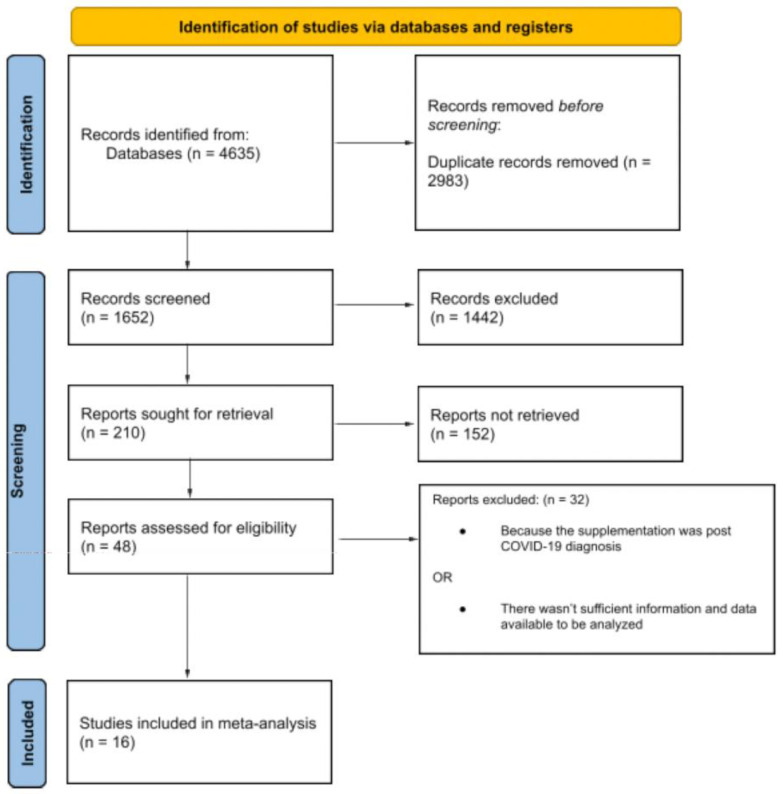
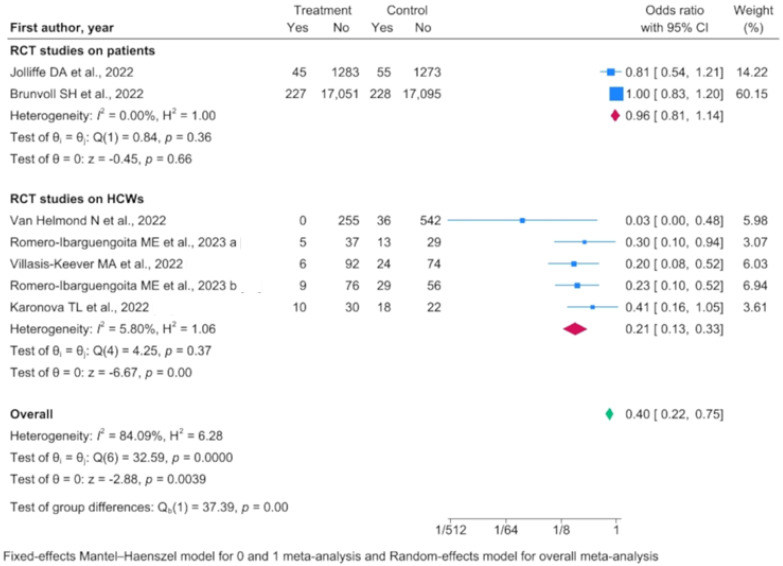
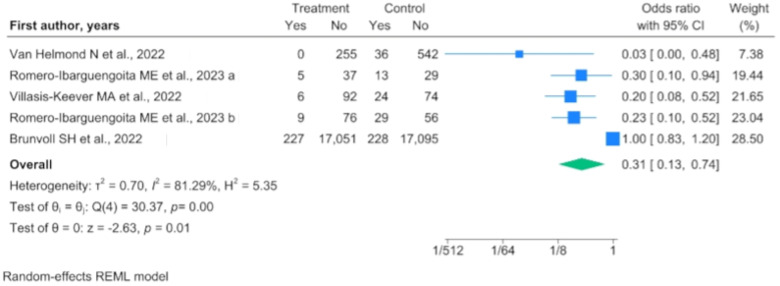
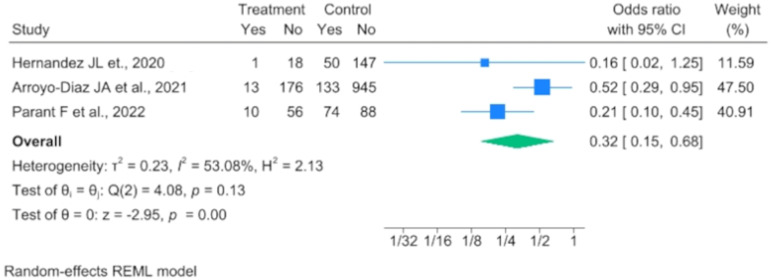
Over the past few decades, vitamin D has been found to play a crucial role in bone homeostasis, muscle function, oncogenesis, immune response and metabolism. In the context of the COVID-19 pandemic, numerous researchers have tried to determine the role vitamin D might play in the immune response to the virus. The aim of this systematic review and meta-analysis is to demonstrate that preventive vitamin D supplementation can play a protective role in the incidence of COVID-19, mortality and admission to intensive care units (ICUs). A comprehensive search on the PubMed/MEDLINE, Scopus, Cochrane and Google Scholar databases was performed on 15 May 2023, and two of the authors independently screened the literature. As effect measures, we calculated the Odds Ratios with their corresponding 95% confidence intervals (ICs). The assessment of potential bias and the evaluation of study quality will be conducted independently by two researchers. Sixteen publications were selected for inclusion in the meta-analysis. Our findings indicate that vitamin D supplementation has a protective effect against the incidence of COVID-19 in RCT studies (OR 0.403, 95% IC 0.218, 0.747), in the incidence of COVID-19 in analytical studies (OR = 0.592, 95% IC 0.476–0.736) and in ICU admission (OR 0.317, 95% IC 0.147–0.680). Subsequent analyses were conducted by type of subject treated (patient/healthcare workers) and type of supplementation (vitamin D vs. placebo/no treatment or high dose vs. low dose). Our meta-analysis suggests a definitive and significant association between the protective role of vitamin D and COVID-19 incidence and ICU admission.
Overview
The claims and statistics of this paper haven’t been checked yet.
Run the check — free, no account needed. It reads the open-access text and checks the sources it cites.
Integrity signals
Registry
Cites
Statistics
Figures
Verification
Claims the paper makes
The claims and statistics of this paper haven’t been checked yet.
Run the check — free, no account needed. It reads the open-access text and checks the sources it cites.
Claims other papers make about this one
Each is checked against this paper’s own text: does it say what the citing paper says it does?
The source backs part of the claim, not all of it — or backs it for a different population, condition or comparison.
In the citing paper
“Additionally, there are still limited meta-analyses on the role of nutrient supplementation in preventing COVID-19 and influenza.”
From Comparative effectiveness of oral nutritional supplements in preventing respiratory tract infections among adults: a systematic review and network meta-analysis (2025) · cites this paper as [17]
Experimental — accuracy not yet measured
Self-check
Percentages, sums and reported differences re-computed from the paper’s own numbers.
The self-check needs the paper’s full text.
Citations
Cites
The PRISMA 2020 statement: An updated guideline for reporting systematic reviews
Page, M. J., McKenzie, J. E., Bossuyt, P. M., Boutron, I., Hoffmann, T. C., Mulrow, C. D., Shamseer, L., Tetzlaff, J. M., Akl, E. A., Brennan, S. E., et al. (2021) · BMJ · doi:10.1136/bmj.n71 · Cited by 108,283
Holick, M. F. (2007) · New England Journal of Medicine · doi:10.1056/nejmra070553 · Cited by 13,720
Grant, W., Lahore, H., McDonnell, S., Baggerly, C., French, C., Aliano, J., & Bhattoa, H. (2020) · Nutrients · doi:10.3390/nu12040988 · Cited by 2,066
Estimates of optimal vitamin D status
Dawson-Hughes, B., Heaney, R. P., Holick, M. F., Lips, P., Meunier, P. J., & Vieth, R. (2005) · Osteoporosis International · doi:10.1007/s00198-005-1867-7 · Cited by 1,854
Ma, L.-L., Wang, Y.-Y., Yang, Z.-H., Huang, D., Weng, H., & Zeng, X.-T. (2020) · Military Medical Research · doi:10.1186/s40779-020-00238-8 · Cited by 1,648
Skeletal and Extraskeletal Actions of Vitamin D: Current Evidence and Outstanding Questions
Bouillon, R., Marcocci, C., Carmeliet, G., Bikle, D., White, J. H., Dawson-Hughes, B., Lips, P., Munns, C. F., Lazaretti-Castro, M., Giustina, A., et al. (2019) · Endocrine Reviews · doi:10.1210/er.2018-00126 · Cited by 1,143
Autier, P. (2007) · Archives of Internal Medicine · doi:10.1001/archinte.167.16.1730 · Cited by 1,104
Lamers, M. M., & Haagmans, B. L. (2022) · Nature Reviews Microbiology · doi:10.1038/s41579-022-00713-0 · Cited by 983
Low serum vitamin D levels and tuberculosis: a systematic review and meta-analysis
Nnoaham, K. E., & Clarke, A. (2008) · International Journal of Epidemiology · doi:10.1093/ije/dym247 · Cited by 681
Pathology and Pathogenesis of Severe Acute Respiratory Syndrome
Gu, J., & Korteweg, C. (2007) · The American Journal of Pathology · doi:10.2353/ajpath.2007.061088 · Cited by 592
Role of vitamin D in preventing of COVID-19 infection, progression and severity
Ali, N. (2020) · Journal of Infection and Public Health · doi:10.1016/j.jiph.2020.06.021 · Cited by 568
Vitamin D concentrations and COVID-19 infection in UK Biobank
Hastie, C. E., Mackay, D. F., Ho, F., Celis-Morales, C. A., Katikireddi, S. V., Niedzwiedz, C. L., Jani, B. D., Welsh, P., Mair, F. S., Gray, S. R., et al. (2020) · Diabetes & Metabolic Syndrome: Clinical Research & Reviews · doi:10.1016/j.dsx.2020.04.050 · Cited by 440
Sabetta, J. R., DePetrillo, P., Cipriani, R. J., Smardin, J., Burns, L. A., & Landry, M. L. (2010) · PLoS ONE · doi:10.1371/journal.pone.0011088 · Cited by 422
SARS-CoV-2 positivity rates associated with circulating 25-hydroxyvitamin D levels
Kaufman, H. W., Niles, J. K., Kroll, M. H., Bi, C., & Holick, M. F. (2020) · PLOS ONE · doi:10.1371/journal.pone.0239252 · Cited by 384
Grant, W. B., Lahore, H., McDonnell, S. L., et al. (2020) · Preprints.org · doi:10.20944/preprints202003.0235.v2 · Cited by 314
Vitamin D Status in Hospitalized Patients with SARS-CoV-2 Infection
Hernández, J. L., Nan, D., Fernandez-Ayala, M., García-Unzueta, M., Hernández-Hernández, M. A., López-Hoyos, M., Muñoz-Cacho, P., Olmos, J. M., Gutiérrez-Cuadra, M., Ruiz-Cubillán, J. J., et al. (2021) · The Journal of Clinical Endocrinology & Metabolism · doi:10.1210/clinem/dgaa733 · Cited by 279
Annweiler, G., Corvaisier, M., Gautier, J., Dubée, V., Legrand, E., Sacco, G., & Annweiler, C. (2020) · Nutrients · doi:10.3390/nu12113377 · Cited by 257
Vitamin D for prevention of respiratory tract infections: A systematic review and meta-analysis
Charan, J., Goyal, J., Saxena, D., & Yadav, P. (2012) · Journal of Pharmacology and Pharmacotherapeutics · doi:10.4103/0976-500x.103685 · Cited by 228
Jolliffe, D. A., Greenberg, L., Hooper, R., Mathyssen, C., Rafiq, R., de Jongh, R. T., Camargo, C. A., Griffiths, C., Janssens, W., & Martineau, A. R. (2019) · Thorax · doi:10.1136/thoraxjnl-2018-212092 · Cited by 207
The Role of Vitamin D in Prevention and Treatment of Infection
Gunville, C. F., Mourani, P. M., & Ginde, A. A. (2013) · Inflammation & Allergy - Drug Targets · doi:10.2174/18715281113129990046 · Cited by 184
Vitamin D: Newer Concepts of Its Metabolism and Function at the Basic and Clinical Level
Bikle, D. D. (2020) · Journal of the Endocrine Society · doi:10.1210/jendso/bvz038 · Cited by 184
Vitamin D supplementation and COVID-19 risk: a population-based, cohort study
Oristrell, J., Oliva, J. C., Casado, E., Subirana, I., Domínguez, D., Toloba, A., Balado, A., & Grau, M. (2021) · Journal of Endocrinological Investigation · doi:10.1007/s40618-021-01639-9 · Cited by 133
Vitamin D supplementation and clinical outcomes in COVID-19: a systematic review and meta-analysis
Pal, R., Banerjee, M., Bhadada, S. K., Shetty, A., Singh, B., & Vyas, A. (2021) · Journal of Endocrinological Investigation · doi:10.1007/s40618-021-01614-4 · Cited by 123
Jolliffe, D. A., Holt, H., Greenig, M., Talaei, M., Perdek, N., Pfeffer, P., Vivaldi, G., Maltby, S., Symons, J., Barlow, N. L., et al. (2022) · BMJ · doi:10.1136/bmj-2022-071230 · Cited by 116
Villasís-Keever, M. Á., López‐Alarcón, M., Miranda-Novales, M. G., Zurita‐Cruz, J. N., Barradas-Vázquez, A. S., González-Ibarra, J., Martínez-Reyes, M., Grajales-Muñíz, C., Santacruz-Tinoco, C. E., Martínez-Miguel, B., et al. (2022) · Archives of Medical Research · doi:10.1016/j.arcmed.2022.04.003 · Cited by 99
Ma, H., Zhou, T., Heianza, Y., & Qi, L. (2020) · American Journal of Clinical Nutrition · doi:10.1093/ajcn/nqaa381 · Cited by 82
Charoenngam, N., Shirvani, A., Reddy, N., Vodopivec, D. M., Apovian, C. M., & Holick, M. F. (2021) · Endocrine Practice · doi:10.1016/j.eprac.2021.02.013 · Cited by 79
Association between vitamin D supplementation and COVID-19 infection and mortality
Gibbons, J. B., Norton, E. C., McCullough, J. S., Meltzer, D. O., Lavigne, J. E., Fiedler, V. C., & Gibbons, R. D. (2022) · Scientific Reports · doi:10.1038/s41598-022-24053-4 · Cited by 79
Cangiano, B., on behalf of “Mons. G. Bicchierai” nursing home group#, Fatti, L. M., Danesi, L., Gazzano, G., Croci, M., Vitale, G., Gilardini, L., Bonadonna, S., Chiodini, I., et al. (2020) · Aging · doi:10.18632/aging.202307 · Cited by 76
Does vitamin D supplementation reduce COVID-19 severity?: a systematic review
Shah, K. H., Varna, V. P., Sharma, U., & Mavalankar, D. V. (2022) · QJM · doi:10.1093/qjmed/hcac040 · Cited by 76
Cereda, E., Bogliolo, L., Lobascio, F., Barichella, M., Zecchinelli, A., Pezzoli, G., & Caccialanza, R. (2020) · Nutrition · doi:10.1016/j.nut.2020.111055 · Cited by 70
Brown, L. L., Cohen, B., Tabor, D. C., Zappalà, G., Maruvada, P., & Coates, P. M. (2018) · BMC Proceedings · doi:10.1186/s12919-018-0102-4 · Cited by 65
Brunvoll, S. H., Nygaard, A. B., Ellingjord‐Dale, M., Holland, P., Istre, M. S., Kalleberg, K. T., Søraas, C. L., Holven, K. B., Ulven, S. M., Hjartåker, A., et al. (2022) · BMJ · doi:10.1136/bmj-2022-071245 · Cited by 62
Petrakis, V., Panopoulou, M. I., Rafailidis, P. I., Lemonakis, N., Lazaridis, G., Terzi, I., Papazoglou, D., & Panagopoulos, P. (2023) · Pathogens · doi:10.3390/pathogens12060780 · Cited by 57
Beran, A., Mhanna, M., Srour, O., Ayesh, H., Stewart, J. M., Hjouj, M., Khokher, W., Mhanna, A. S., Ghazaleh, D., Khader, Y., et al. (2022) · Clinical Nutrition ESPEN · doi:10.1016/j.clnesp.2021.12.033 · Cited by 54
Hariyanto, T. I., Intan, D., Hananto, J. E., Harapan, H., & Kurniawan, A. (2021) · Reviews in Medical Virology · doi:10.1002/rmv.2269 · Cited by 43
Каронова, Т. Л., Golovatyuk, K. A., Kudryavtsev, I. V., Chernikova, A. T., Mikhaylova, A. A., Aquino, A. D., Lagutina, D. I., Zaikova, E. K., Kalinina, O., Головкин, А. С., et al. (2022) · Nutrients · doi:10.3390/nu14132602 · Cited by 42
Oristrell, J., Oliva, J. C., Subirana, I., Casado, E., Domínguez, D., Toloba, A., Aguilera, P., Clos, J. E., Fafián, P., & Grau, M. (2021) · Biomedicines · doi:10.3390/biomedicines9050509 · Cited by 34
van Helmond, N., Brobyn, T. L., LaRiccia, P. J., Cafaro, T., Hunter, K. M., Roy, S., Bandomer, B., Ng, K. Q., Goldstein, H., Mitrev, L. V., et al. (2022) · Nutrients · doi:10.3390/nu15010180 · Cited by 22
Parisini, A., Boni, S., Vacca, E. B., Bobbio, N., Puente, F. D., Feasi, M., Prinapori, R., Lattuada, M., Sartini, M., Cristina, M. L., et al. (2023) · Antibiotics · doi:10.3390/antibiotics12081278 · Cited by 18
Self-citationVitamin D Endocrine System and COVID‐19
Bouillon, R., & Quesada‐Gómez, J. M. (2021) · JBMR Plus · doi:10.1002/jbm4.10576 · Cited by 17
Parant, F., Bouloy, J., Haesebaert, J., Bendim’red, L., Goldet, K., Vanhems, P., Hénaff, L., Gilbert, T., Cuerq, C., Blond, E., et al. (2022) · Nutrients · doi:10.3390/nu14081641 · Cited by 16
Vitamin D in the prevention or treatment of COVID-19
Martineau, A. R. (2022) · Proceedings of The Nutrition Society · doi:10.1017/s0029665122002798 · Cited by 14
Wang, J., Feng, M., Ying, S., Zhou, J., & Li, X. (2018) · PubMed Central · Cited by 13
Arroyo, J. A., Julve, J., Vlacho, B., Corcoy, R., Ponte, P. H., Román, E. M., Navas-Méndez, E., Llauradó, G., Franch‐Nadal, J., Domingo, P., et al. (2021) · Frontiers in Public Health · doi:10.3389/fpubh.2021.758347 · Cited by 12
Authors’ response: Ethnicity and vitamin D supplementations for COVID‐19
Hariyanto, T. I., Intan, D., Hananto, J. E., Harapan, H., & Kurniawan, A. (2021) · Reviews in Medical Virology · doi:10.1002/rmv.2280 · Cited by 12
Sartini, M., Puente, F. D., Oliva, M., Carbone, A., Vacca, E. B., Parisini, A., Boni, S., Bobbio, N., Feasi, M., Battistella, A., et al. (2021) · Journal of Clinical Medicine · doi:10.3390/jcm10225239 · Cited by 8
Self-citationRomero-Ibarguengoitia, M. E., Gutiérrez-González, D., Cantú-López, C., Sanz‐Sánchez, M. Á., & González‐Cantú, A. (2023) · Microorganisms · doi:10.3390/microorganisms11020282 · Cited by 8
Ødum, S.-L. F., & Kongsbak‐Wismann, M. (2023) · Basic & Clinical Pharmacology & Toxicology · doi:10.1111/bcpt.13872 · Cited by 8
Liu, Y., Clare, S., D’Erasmo, G., Heilbronner, A. K., Dash, A. S., Krez, A. N., Zaworski, C., Haseltine, K., Serota, A. C., Miller, A. O., et al. (2023) · Journal of Nutrition · doi:10.1016/j.tjnut.2023.03.001 · Cited by 8
The Effect of Active Vitamin D on Coronavirus
Hu, X. (2023) · Highlights in Science Engineering and Technology · doi:10.54097/hset.v30i.5235 · Cited by 1
Research works printed but not linked: 3
- Institute of Medicine (IOM) (2011). Dietary Reference Intakes for Calcium and Vitamin D, The National Academies Press.
- Ross, A.C., Caballero, B., Cousins, R.J., Tucker, K.L., and Ziegler, T.R. (2014). Modern Nutrition in Health and Disease, Lippincott Williams & Wilkins. [11th ed.].
- Sartini, M., Del Puente, F., Carbone, A., and Oliva, M. (2023). Preventive Vitamin D Supplementation and Risk for COVID-19 Infection: A Systematic Review and Meta-Analysis. PROSPERO, CRD42023469817.
Cited by
Vitamin D and its analogs in immune system regulation
Artusa, P., & White, J. H. (2024) · Pharmacological Reviews · doi:10.1016/j.pharmr.2024.100032 · Cited by 95
Sobczak, M., & Pawliczak, R. (2024) · Nutrients · doi:10.3390/nu16101402 · Cited by 25
Dalamaga, Μ., Emfietzoglou, R., Petropoulou, D., Kypraiou, M., Kounatidis, D. C., Vallianou, N. G., Karras, S. Ν., Magkos, F., & Karampela, Ι. (2026) · Current Nutrition Reports · doi:10.1007/s13668-026-00748-2 · Cited by 18
Vitamin D and COVID-19: Clinical Evidence and Immunological Insights
Căliman-Sturdza, O. A., Gheorghita, R. E., & Șoldănescu, I. (2025) · Life · doi:10.3390/life15050733 · Cited by 18
Zhang, X., Wu, J., Dong, H., Shang, N., Li, Y., Zhang, Y., Guo, S., & Mei, X. (2024) · Frontiers in Nutrition · doi:10.3389/fnut.2024.1441847 · Cited by 14
Metadata
- Authors
- Sartini, M., Del Puente, F., Oliva, M., Carbone, A., Bobbio, N., Schinca, E., Giribone, L., & Cristina, M. L.
- Affiliations
- Ente Ospedaliero Ospedali Galliera (IT)
- Department of Infectious Diseases, Galliera Hospital, 16128 Genoa, Italy
- University of Genoa (IT)
- Corresponding author
- Sartini, Marina
- ORCID
- Venue
- Nutrients
- Publisher
- MDPI AG
- Published
- 2024-02-28
- Volume
- 16
- Issue
- 5
- Pages
- 679
- ISSN
- 2072-6643 (ISSN-L)
- PMC
- PMC10935157
- OpenAlex
- W4392241458
- Cited by
- 38
- References
- 51
- Citations by year
- 2026: 10 · 2025: 17 · 2024: 11
- FWCI
- 2.84
- Type
- journal article
- Language
- en
- Open access
- gold
- doi.org
- Licence
- Locations
- Nutrients (publishedVersion, cc-by)
- PubMed Central (publishedVersion, cc-by)
- PubMed (publishedVersion)
- CINECA IRIS Institutial Research Information System (University of Genoa) (submittedVersion, other-oa)
- Topics
- Health Sciences › Medicine › Endocrinology, Diabetes and Metabolism › Vitamin D Research Studies
- Health Sciences › Medicine › Infectious Diseases › COVID-19 Clinical Research Studies
- Health Sciences › Medicine › Infectious Diseases › SARS-CoV-2 and COVID-19 Research
- Keywords
- vitamin D supplementation, COVID-19 pandemic, preventive supplementation, COVID-19 incidence, intensive care unit admission, COVID-19 mortality, immune response, healthcare workers, vitamin D dose
- MeSH terms
- COVID-19, SARS-CoV-2, Humans, Intensive Care Units, Vitamin D, Vitamin D Deficiency, Vitamins, Incidence, Dietary Supplements, Pandemics
About these checks
Registry, retraction, Cites and statistics results are computed, not judged, with one exception: a printed reference that no index lists is read once by a model before it counts as a citation error. Claims are extracted by a model and kept only when their quote appears verbatim in the text; each cited source is then checked, with a model’s help, for whether it says what the claim relies on. Those verdicts can be wrong — read the claim’s quote and the cited source before relying on one.
Statistics and arithmetic are recomputed, not judged.
Confidence bands are shown only for fields calibrated on our annotated test set. None is calibrated yet, so no band is shown.
What counts as a claim ›How we measure confidence ›How we check this ›
Are you an author, or do you see a problem with this page? Request a review
Data sources
Bibliographic data: Semantic Scholar, OpenAlex, Crossref.
Contains information from the Semantic Scholar Academic Graph Datasets, made available under the ODC Attribution License (ODC-BY 1.0).
Semantic Scholar’s data is described in: Kinney, R., et al. (2023). The Semantic Scholar Open Data Platform. arXiv:2301.10140.
