

Effects of Heat Stress-Induced Sex Hormone Dysregulation on Reproduction and Growth in Male Adolescents and Beneficial Foods
Open accessThe DOI matches its Crossref record; 124 of the 124 references it cites were found in a registry or an index; none of the 113 sources its claims cite is checked for support yet.
Abstract
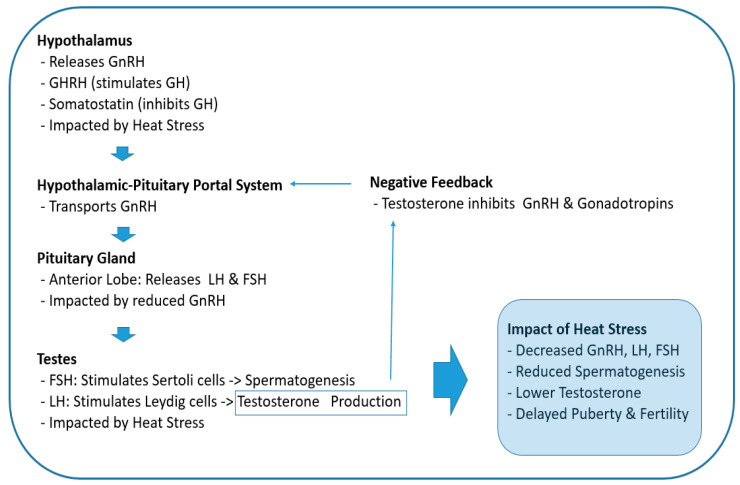
Heat stress due to climate warming can significantly affect the synthesis of sex hormones in male adolescents, which can impair the ability of the hypothalamus to secrete gonadotropin-releasing hormone on the hypothalamic–pituitary–gonadal axis, which leads to a decrease in luteinizing hormone and follicle-stimulating hormone, which ultimately negatively affects spermatogenesis and testosterone synthesis. For optimal spermatogenesis, the testicular temperature should be 2–6 °C lower than body temperature. Heat stress directly affects the testes, damaging them and reducing testosterone synthesis. Additionally, chronic heat stress abnormally increases the level of aromatase in Leydig cells, which increases estradiol synthesis while decreasing testosterone, leading to an imbalance of sex hormones and spermatogenesis failure. Low levels of testosterone in male adolescents lead to delayed puberty and incomplete sexual maturation, negatively affect height growth and bone mineral density, and can lead to a decrease in lean body mass and an increase in fat mass. In order for male adolescents to acquire healthy reproductive capacity, it is recommended to provide sufficient nutrition and energy, avoid exposure to heat stress, and provide foods and supplements to prevent or repair testosterone reduction, germ cell damage, and sperm count reduction caused by heat stress so that they can enter a healthy adulthood.
Overview
CoChat Summary
TL;DR
This narrative review argues that heat stress in male adolescents disrupts the hypothalamic–pituitary–gonadal axis and testicular steroidogenesis, lowering testosterone and raising estradiol, with negative effects on puberty, growth, bone mineral density, body composition, and fertility. It reviews foods and supplements—melatonin, Tanshinone IIA, *Lycium barbarum* polysaccharide, zinc sulfate plus folic acid, and flavonoids—as potential preventive or reparative measures, while noting the evidence is largely from adult and animal studies.
Key findings
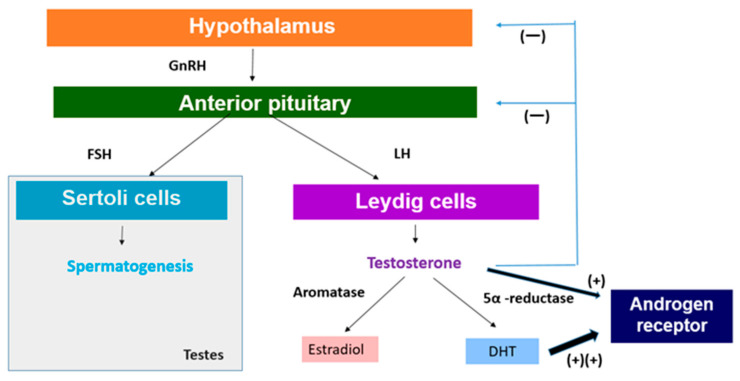
- Heat stress impairs the HPG axis by reducing hypothalamic GnRH secretion, which lowers LH and FSH and ultimately decreases testosterone synthesis and spermatogenesis; for optimal spermatogenesis, testicular temperature should be 2–6 °C lower than body temperature.
- Chronic heat stress can abnormally increase aromatase in Leydig cells, increasing estradiol synthesis while decreasing testosterone; Oka et al. found that chronic heat stress (40 °C for over 12 h) stimulated aromatase transcription in R2C rat Leydig tumor cells, whereas acute heat stress did not.
- Low testosterone in male adolescents is linked to delayed or incomplete puberty, negative effects on height growth and bone mineral density, decreased lean body mass, and increased fat mass; circulating testosterone in congenital hypogonadotropic hypogonadism is typically <3 nmol/L (86.5 ng/dL), and a study of 24,440 Vietnamese adult men reported positive correlation between testicular size and testosterone.
- Potential protective or reparative agents reviewed include melatonin, Tanshinone IIA, *Lycium barbarum* polysaccharide, zinc sulfate plus folic acid, and flavonoids; in infertile men, 45 days of daily oral 6 mg melatonin increased endogenous melatonin, improved total antioxidant capacity in urine and seminal fluid, and reduced oxidative sperm DNA damage.
Methods
- Design: narrative review; no systematic search strategy, inclusion criteria, or meta-analytic method is stated.
- Data/sample: synthesizes animal, human, epidemiological, and clinical studies, with examples including a longitudinal study of 10,802 Chinese men, a multicenter study of 78,952 sperm samples from 33,234 donors, and a retrospective analysis of 24,440 Vietnamese adult men.
- Analysis: narrative synthesis of mechanisms and evidence on heat stress, sex hormone dysregulation, reproduction/growth, and beneficial foods/supplements; no primary data collection or formal quantitative synthesis.
Limitations
- Stated in the paper: the review was written based on adult reproductive studies and animal model studies because there is currently no study conducted on the effects of heat stress on sex hormone regulation and reproduction in male adolescence; more research is needed.
- Evident from the text: as a narrative review, it lacks systematic search and quality appraisal, and many causal claims and supplement recommendations are extrapolated from non-adolescent or non-human models rather than tested directly in male adolescents.
Model-written summary. Check it against the paper before relying on it.
Integrity signals
Registry
Cites
Statistics
Figures
Verification
Claims the paper makes
0 Valid · 0 Not valid · 98 Not checked · 16 Own results and interpretations
A conclusion the paper draws from its own results — it cites no other source for it, so there is none to check. The quote shows it is in the paper.
In the paper
“low testosterone levels can delay the start of this process, delaying puberty.”
§ Effects of Heat Stress-Induced Sex Hormone Dysregulation on Reproduction and Growth in Male Adolescents and Beneficial Foods > 3. Effects of Dysregulated Sexual Hormone during Adolescence on Reproductive System and Growth > 3.1. Low Levels of Testosterone and Reproductive System
plainstates a cause- Asserted: passes — The authors put it forward as true.
- Checkable: passes — It can be checked against evidence.
- Load-bearing: passes — The paper’s conclusions depend on it.
- Based: passes — The paper gives a reason why it holds.
- Rests on 2 assumptions not shown here.
In the paper
“In the absence of an appropriate level of testosterone, the growth of the testis slows, resulting in smaller testes, which can also be confirmed in the circulating testosterone levels of patients with hypogonadism [67].”
§ Effects of Heat Stress-Induced Sex Hormone Dysregulation on Reproduction and Growth in Male Adolescents and Beneficial Foods > 3. Effects of Dysregulated Sexual Hormone during Adolescence on Reproductive System and Growth > 3.1. Low Levels of Testosterone and Reproductive System
What the sources say
- Not checked yetcites [67] Li L. Lin W. Wang Z. Huang R. Xia H. Li Z. Deng J. Ye T. Hormone Regulation in Testicular Development and Function Int. J. Mol. Sci. 2024 25 5805 10.3390/ijms25115805 38891991 PMC11172568 source
plainstates a cause- Asserted: passes — The authors put it forward as true.
- Checkable: passes — It can be checked against evidence.
- Load-bearing: passes — The paper’s conclusions depend on it.
- Based: passes — The paper gives a reason why it holds.
- Rests on 2 assumptions not shown here.
In the paper
“Spermatogenesis requires an appropriate balance between testicular testosterone and estradiol [26].”
§ Effects of Heat Stress-Induced Sex Hormone Dysregulation on Reproduction and Growth in Male Adolescents and Beneficial Foods > 2. Effect of Heat Stress on Sexual Hormonal Synthesis in Male Adolescents > 2.3. Chronic Heat Stress Can Lead to an Imbalance of Testosterone and Estradiol
What the sources say
- Not checked yetcites [26] Ketchem J.M. Bowman E.J. Isales C.M. Male sex hormones, aging, and inflammation Biogerontology 2023 24 1 25 10.1007/s10522-022-10002-1 36596999 PMC9810526 source
plainstates a cause- Asserted: passes — The authors put it forward as true.
- Checkable: passes — It can be checked against evidence.
- Load-bearing: passes — The paper’s conclusions depend on it.
- Based: passes — The paper gives a reason why it holds.
In the paper
“which suggests that the increase in aromatase levels in Leydig cells due to chronic heat stress is a factor causing an imbalance between testosterone and estradiol in men with spermatogenesis failure.”
§ Effects of Heat Stress-Induced Sex Hormone Dysregulation on Reproduction and Growth in Male Adolescents and Beneficial Foods > 2. Effect of Heat Stress on Sexual Hormonal Synthesis in Male Adolescents > 2.3. Chronic Heat Stress Can Lead to an Imbalance of Testosterone and Estradiol
What the sources say
- Not checked yetcites [53] Oka S. Matsukuma H. Horiguchi N. Kobayashi T. Shiraishi K. Heat stress upregulates aromatases expression through nuclear DAX-1 deficiency in R2C Leydig tumor cells Mol. Cell. Endocrinol. 2022 558 111766 10.1016/j.mce.2022.111766 36075317 source
hedgedstates a cause- Asserted: passes — The authors put it forward as true.
- Checkable: passes — It can be checked against evidence.
- Load-bearing: passes — The paper’s conclusions depend on it.
- Based: passes — The paper gives a reason why it holds.
In the paper
“negatively affect height growth and bone mineral density”
- Also stated in: § 3.2. Low Levels of Testosterone Impact on Height and Bone Mineral Density in Adolescence · plain
“Decreased testosterone synthesis can lead to lower BMD”
§ Effects of Heat Stress-Induced Sex Hormone Dysregulation on Reproduction and Growth in Male Adolescents and Beneficial Foods > Abstract
What the sources say
- Not checked yetcites [26] Ketchem J.M. Bowman E.J. Isales C.M. Male sex hormones, aging, and inflammation Biogerontology 2023 24 1 25 10.1007/s10522-022-10002-1 36596999 PMC9810526 source
plainstates a cause- Asserted: passes — The authors put it forward as true.
- Checkable: passes — It can be checked against evidence.
- Load-bearing: passes — The paper’s conclusions depend on it.
- Based: passes — The paper gives a reason why it holds.
- Rests on 2 assumptions not shown here.
- Also stated in: § 3.2. Low Levels of Testosterone Impact on Height and Bone Mineral Density in Adolescence · plain
77 more claims
Create a free account to see all 114 claims and to verify the 113 references still open.
- It may state two separate claims as one. 32
- Probably not a substantial claim. 1
Self-check
Percentages, sums and reported differences re-computed from the paper’s own numbers.
Each contradiction between two passages listed here was confirmed by an independent check.
Rated major: it would touch a result — a value a result rests on, reported and recomputed p-values on opposite sides of the significance level, two passages that conflict with no sign which is right, or a cited work retracted before this paper was published.
In the paper
§ Effects of Heat Stress-Induced Sex Hormone Dysregulation on Reproduction and Growth in Male Adolescents and Beneficial Foods > 1. Introduction
“Several studies have already verified that heat stress can interfere with sex hormone synthesis in male adolescents by causing oxidative stress, inflammation, and apoptosis within germ cells [12,13].”
§ Effects of Heat Stress-Induced Sex Hormone Dysregulation on Reproduction and Growth in Male Adolescents and Beneficial Foods > 5. Conclusions
“there is currently no study conducted on the effects of heat stress on sex hormone regulation and reproduction in male adolescence.”
Rated minor: it would not touch a result — a value no result rests on, a p-value that stays on the same side of the significance level, or a conflict that is clerical, resolved elsewhere in the paper, or outside its own findings.
In the paper
§ Effects of Heat Stress-Induced Sex Hormone Dysregulation on Reproduction and Growth in Male Adolescents and Beneficial Foods > 4. Beneficial Foods That Help Prevent or Recover from Low Testosterone and Infertility Caused by Heat Stress > 4.2. The Role of Melatonin in Preventing Reproductive Damage Caused by Heat Stress
“In an animal model studying the reproductive function of male dairy cows, it was found that melatonin treatment could upregulate the gene expression of MT2 (Metallothionein-2A), which was downregulated by heat stress, improve the changes in the extracellular matrix components, and restore the serum testosterone level [107].”
§ Effects of Heat Stress-Induced Sex Hormone Dysregulation on Reproduction and Growth in Male Adolescents and Beneficial Foods > 4. Beneficial Foods That Help Prevent or Recover from Low Testosterone and Infertility Caused by Heat Stress > 4.2. The Role of Melatonin in Preventing Reproductive Damage Caused by Heat Stress
“melatonin could prevent testicular and sperm cell damage and improve semen quality in heat-stressed male dairy goats by inhibiting the PI3K/AKT signalling pathway [107].”
Rated minor: it would not touch a result — a value no result rests on, a p-value that stays on the same side of the significance level, or a conflict that is clerical, resolved elsewhere in the paper, or outside its own findings.
In the paper
§ Effects of Heat Stress-Induced Sex Hormone Dysregulation on Reproduction and Growth in Male Adolescents and Beneficial Foods > 1. Introduction
“youth is defined as 15 to 24 years of age.”
§ Effects of Heat Stress-Induced Sex Hormone Dysregulation on Reproduction and Growth in Male Adolescents and Beneficial Foods > 1. Introduction
“Youth includes all age groups from 10 to 24 years old [15].”
Citations
Cites
Our future: a Lancet commission on adolescent health and wellbeing
Patton, G. C., Sawyer, S. M., Santelli, J. S., Ross, D. A., Afifi, R., Allen, N. B., Arora, M., Azzopardi, P., Baldwin, W., Bonell, C., et al. (2016) · The Lancet · doi:10.1016/s0140-6736(16)00579-1 · Cited by 3,785 · cited 4×
“…of the total national population aged 10–24 years compared to the national population in 2019 shows that in most African countries, 30–35% of the total population belongs to this population group, which is easily exposed to environmental heat stress and is most susceptible to damage [15,18].”
BackgroundInfluentialSawyer, S. M., Azzopardi, P. S., Wickremarathne, D., & Patton, G. C. (2018) · The Lancet Child & Adolescent Health · doi:10.1016/s2352-4642(18)30022-1 · Cited by 3,666
Predicting basal metabolic rate, new standards and review of previous work.
Wn, S. (1985) · PubMed · Cited by 3,415
Antioxidant Systems and Oxidative Stress in the Testes
Aitken, R. J., & Roman, S. D. (2008) · Oxidative Medicine and Cellular Longevity · doi:10.4161/oxim.1.1.6843 · Cited by 834 · cited 2×
“…supply, leading to hypoxia and detrimental e ff ects on the tissue [37,38]. well-controlled local environment, temperature may be elevated by heat stress, and higher temperatures may result testicular metabolism without increased blood supply, leading to local hypoxia effects on the tissue [37,38].”
BackgroundKatznelson, L., Finkelstein, J. S., Schoenfeld, D. A., Rosenthal, D. I., Anderson, E. J., & Klibanski, A. (1996) · The Journal of Clinical Endocrinology & Metabolism · doi:10.1210/jcem.81.12.8954042 · Cited by 791 · cited 1×
“Katznelson et al. have previously reported in a study of healthy, hypogonadal men with low serum testosterone levels that they had lower LBM and higher fat mass compared to age-matched eugonadal men [93].”
ResultEffects of heat stress on mammalian reproduction
Hansen, P. J. (2009) · Philosophical Transactions of the Royal Society B: Biological Sciences · doi:10.1098/rstb.2009.0131 · Cited by 743
Bone mineral accrual from 8 to 30 years of age: An estimation of peak bone mass
Baxter-Jones, A. D., Faulkner, R. A., Forwood, M. R., Mirwald, R. L., & Bailey, D. A. (2011) · Journal of Bone and Mineral Research · doi:10.1002/jbmr.412 · Cited by 683 · cited 1×
“It is already well known that BMD in adolescence peaks in the late teens and early 20s [70].”
BackgroundMelatonin: A Multitasking Molecule
Reiter, R. J., Tan, D.-X., & Fuentes-Broto, L. (2010) · Progress in Brain Research · doi:10.1016/s0079-6123(08)81008-4 · Cited by 642
Pubertal development and regulation
Abreu, A. P., & Kaiser, U. B. (2016) · The Lancet Diabetes & Endocrinology · doi:10.1016/s2213-8587(15)00418-0 · Cited by 611 · cited 4×
“With the onset of puberty, the hypothalamic– pituitary–gonadal axis begins to regulate gonadotropin levels and gonadal function [20].”
BackgroundInfluentialPower, M. L., & Schulkin, J. (2008) · British Journal of Nutrition · doi:10.1017/s0007114507853347 · Cited by 605
Cited by
Olayiwola, S. F., & Adedokun, S. A. (2025) · Frontiers in Veterinary Science · doi:10.3389/fvets.2025.1691532 · Cited by 49
Liu, Q.-Q., Li, X., Li, J.-H., Zhou, Y., Lei, M.-K., Yin, W.-Q., Ren, Y., Yang, C., & Zhang, C.-X. (2025) · Antioxidants · doi:10.3390/antiox14060630 · Cited by 14
Fraile‐Μartinez, O., Ortega, M. A., & Montero, C. G. (2026) · International Journal of Molecular Sciences · doi:10.3390/ijms27020692 · Cited by 13
Kumar, V. R. S., Radhakrishnan, P. K., Panchal, D., Vinay, D., Raj, Y., Sharma, R., Vohra, Y., Rana, S., & Singh, S. K. (2025) · npj Microgravity · doi:10.1038/s41526-025-00517-5 · Cited by 11
Chai, J., Wen, Z., Chen, L., Pu, Q., Luo, T., Wu, X., Ma, Z., Luo, Z., Luo, J., & Wang, J. (2025) · Antioxidants · doi:10.3390/antiox14060623 · Cited by 10
Heat stress and human reproduction: effects and pathogenesis
Akhigbe, R. E., Omole, A. I., Oyedokun, P. A., Odetayo, A. F., Ashamu, E. A., & Akhigbe, T. M. (2025) · Journal of Thermal Biology · doi:10.1016/j.jtherbio.2025.104302 · Cited by 8
Nishan, M. N. H., Ferdous, A., Ahmed, M., & Akter, K. (2025) · PLOS Global Public Health · doi:10.1371/journal.pgph.0005133 · Cited by 8
Oral niacin mitigates heat-induced reproductive impairments in male mice
Zahra, M., Divar, M. R., Jelodar, G., Reza, M. H., Sanaz, A. J., Amir, M. A., & Eshghi, D. (2025) · Scientific Reports · doi:10.1038/s41598-025-22341-3 · Cited by 8
Endocrine Parameters and Climate Change
Arneth, B. M. (2025) · Endocrines · doi:10.3390/endocrines6010005 · Cited by 6
Shen, W., Luo, X., Jin, X., Ma, X., Jiang, X., Jin, C., Feng, B., Che, L., Fang, Z., Xu, S., et al. (2025) · Molecular Nutrition & Food Research · doi:10.1002/mnfr.70162 · Cited by 6
Sun, H., Zhang, L.-H., Wang, J., Chen, R., Liu, Y., Zhang, P.-C., & Niu, C. (2025) · International Immunopharmacology · doi:10.1016/j.intimp.2025.114549 · Cited by 5
A brain–body perspective on thermoregulatory adaptation
Aten, S., Lynch, N. A., Saper, C. B., & Machado, N. (2025) · Current Biology · doi:10.1016/j.cub.2025.09.023 · Cited by 5
Li, B., Ming, R., Qiu, G., & Guo, H. (2025) · International Journal of Biological Macromolecules · doi:10.1016/j.ijbiomac.2025.149223 · Cited by 4
Hnamler, L., & Trivedi, A. K. (2025) · Journal of Neuroendocrinology · doi:10.1111/jne.70095 · Cited by 3
Ulusu, N. N. (2026) · Frontiers in Endocrinology · doi:10.3389/fendo.2026.1813234 · Cited by 2
Raphalalani, Z. C., Malatji, D. P., & Chimonyo, M. (2025) · Frontiers in Sustainable Food Systems · doi:10.3389/fsufs.2025.1674537 · Cited by 2
Amini, A., & Behnam, B. (2026) · International Journal of Environmental Research and Public Health · doi:10.3390/ijerph23030331 · Cited by 2
Benefits of aromatase blockers for increased testosterone in poultry: A mini-review
Yuneldi, R. F., Aırın, C. M., Sarmin, S., Prawira, A. Y., & Astutı, P. (2025) · Veterinary World · doi:10.14202/vetworld.2025.1190-1198 · Cited by 2
Wang, M., Fu, T.-S., Wang, X.-Q., Chen, M.-W., Zhou, H.-D., Bai, X.-N., Aierken, A., Li, Y., Li, F.-E., Hu, L.-Y., et al. (2026) · Animal Advances · doi:10.48130/animadv-0025-0041 · Cited by 2
Tan, W., Wang, S., Gao, M., Liu, R., Xing, Y., Xiang, H., & Ma, Y. (2026) · Environmental Research · doi:10.1016/j.envres.2026.124847 · Cited by 2
Zhang, S., Wang, D., Qi, J., Li, J., Liu, S., Sun, H., Liang, S., & Sun, B. (2026) · Journal of Animal Science and Biotechnology/Journal of animal science and biotechnology · doi:10.1186/s40104-025-01336-0 · Cited by 2
Chai, H., Zhao, D., Yu, X., Shaoshuai, Z., Ji, F., Peng, W., Song, J., Diao, X., & Wu, H. (2026) · Agriculture · doi:10.3390/agriculture16141508 · Cited by 1
Mechanisms of heat stress-induced testicular damage in rats
Li, Z., Zhi, H., Liang, Q., Li, J., Yi, X., Wu, H., & Qin, Q. (2026) · International Journal of Biometeorology · doi:10.1007/s00484-026-03238-w · Cited by 1
Wang, F., Sun, Q., Sun, G., Lu, J., Shi, Z., Zhang, Z., Guo, M., Li, Q. H., Wang, S., An, L., et al. (2026) · Biology of Reproduction · doi:10.1093/biolre/ioag033 · Cited by 1
Aldahhan, R. A. (2025) · Elsevier eBooks · doi:10.1016/b978-0-443-21477-6.00419-3 · Cited by 1
Fatmila, D. T., Yudi, Purwantara, B., Hasan, F., & Sutanto, W. H. (2025) · Indonesian Journal of Agricultural Research · doi:10.32734/injar.v8i2.20096 · Cited by 1
Hu, X.-C., Bai, S., Jin, Q., Zong, L., Guo, N., Chen, M., Li, M., Qian, B.-M., Cao, C., Luo, L., et al. (2026) · Asian Journal of Andrology · doi:10.4103/aja202646
Normal Reference Values for Testicular Volume in Adult Somali Men: A Retrospective Study
Osman, K. A., Maqul, A. H., Farah, A., Sahal, A., & Osman, W. A. (2026) · Research and Reports in Urology · doi:10.2147/rru.s615746
Tamulionytė-Skėrė, R., Baltaduonytė, R., Pockevičius, A., Pelenė, U., Šlyžienė, B., & Palubinskas, G. (2026) · Frontiers in Veterinary Science · doi:10.3389/fvets.2026.1873966
Jhang, H., Lee, W., Lee, J.-T., Kim, Y., Sun, S., Chang, S.-S., & Choe, S.-A. (2026) · Journal of Korean Medical Science · doi:10.3346/jkms.2026.41.e25
Dougherty, D. C. (2025) · VTechWorks (Virginia Tech)
Fadl, A. M., Adel, O., Youssef, F. S., Abdulkader, M. S., & Fayez, E. S. (2026) · Animal Reproduction Science · doi:10.1016/j.anireprosci.2026.108343
Fadl, A. M., Fayez, E. S., Youssef, F. S., Essam, M., Saber, M. M., & Adel, O. (2026) · Reproduction in Domestic Animals · doi:10.1111/rda.70322
Frageri, I. (2026) · AMS Dottorato Institutional Doctoral Theses Repository (University of Bologna) · doi:10.48676/unibo/amsdottorato/13081
Pan, C.-L., Wang, W., Sun, J., Wei, Z., Yang, Y., & Liu, Z. (2026) · Frontiers in Pharmacology · doi:10.3389/fphar.2026.1907124
Leverage of Curcumin Nanoliposome against Heat Stress in New Zealand Male Rabbits
Maha, S. A.-E., Saleh, M. A., Mohammed, F. A.-F., Elkhawaga, E., Shukry, E., Elsaid, G. A., Hagag, S., & Youssef, F. S. (2025) · Egyptian Journal of Veterinary Science · doi:10.21608/ejvs.2025.370741.2739
Ma, X., Wu, K., Ni, J., Shen, W., Huang, L., Che, L., Feng, B., Hua, L., Zhuo, Y., Fang, Z., et al. (2026) · Theriogenology · doi:10.1016/j.theriogenology.2026.118348
Hassan, R. A., Ahmed, O. M., Gabbar, M. A., Abdel-Hadi, D. S., & Mohamed, M. B. N. (2026) · Journal of Livestock Science · doi:10.33259/jlivestsci.2026.950-966
Hamady, J. J. (2025) · Journal of Agriculture Aquaculture and Animal Science · doi:10.69739/jaaas.v2i1.405
Seasonal variation of sex hormones and semen quality in Simental bulls
Kowalczyk, A., Gruszczyńska, J., Kuczaj, M., Czerniawska‐Piątkowska, E., GRZEGRZÓŁKA, B., Szul, A., Hebda, L., & Świderek, W. P. (2025) · Animal Science Papers and Reports · doi:10.2478/aspr-2025-0019
Roisyabillah, D. A., & Naimah, N. (2026) · Journal Of Social Research · doi:10.55324/josr.v5i5.3161
Mohamed, A., Aboelmaaty, A. M., & Nasreldeen, M. S. (2026) · Comparative Clinical Pathology · doi:10.1007/s00580-026-03856-1
Li, B., Ming, R., Liu, Y., & Guo, H. (2026) · Reproductive Sciences · doi:10.1007/s43032-026-02209-1
Uppin, S. R., & Sanikop, G. (2026) · Journal of Ayurveda and Integrative Medicine · doi:10.1016/j.jaim.2026.101433
Metadata
- Authors
- Ko, S.-H.
- Affiliations
- Sookmyung Women's University (KR)
- Corresponding author
- Ko, Seong-Hee
- ORCID
- Ko, Seong-Hee
- Venue
- Nutrients
- Publisher
- MDPI AG
- Published
- 2024-09-08
- Volume
- 16
- Issue
- 17
- Pages
- 3032
- ISSN
- 2072-6643 (ISSN-L)
- PMC
- PMC11397449
- OpenAlex
- W4402374951
- Semantic Scholar
- 0f60c833b2515382a1c98b9b10e14c60e6410184
- Cited by
- 44
- References
- 120
- Citations by year
- 2026: 23 · 2025: 21
- FWCI
- 1.97
- Type
- journal article
- Language
- en
- Open access
- gold
- doi.org
- Licence
- Locations
- Nutrients (publishedVersion, cc-by)
- Preprints.org (submittedVersion, cc-by)
- PubMed Central (publishedVersion, cc-by)
- PubMed (publishedVersion)
- Topics
- Health Sciences › Medicine › Reproductive Medicine › Sperm and Testicular Function
- Health Sciences › Medicine › Reproductive Medicine › Hypothalamic control of reproductive hormones
- Health Sciences › Medicine › Endocrinology, Diabetes and Metabolism › Hormonal and reproductive studies
- Keywords
- heat stress, adolescent boys, spermatogenesis, testosterone production, hypothalamic-pituitary-gonadal axis, gonadotropins, testicular temperature, aromatase, Leydig cells, delayed puberty, sexual maturation, height growth, bone mineral density, lean body mass, fat mass, global warming, reproductive health, dietary supplements
- MeSH terms
- Adolescent, Humans, Male, Reproduction, Gonadal Steroid Hormones, Sexual Maturation, Spermatogenesis, Testis, Testosterone, Heat-Shock Response
About these checks
Registry, retraction, Cites and statistics results are computed, not judged, with one exception: a printed reference that no index lists is read once by a model before it counts as a citation error. Claims are extracted by a model and kept only when their quote appears verbatim in the text; each cited source is then checked, with a model’s help, for whether it says what the claim relies on. Those verdicts can be wrong — read the claim’s quote and the cited source before relying on one.
A language model drew the claims from the paper on 2026-11-27, under version 3 of the claim definition (model deepseek-v4.1-flash, prompt extract-v3).
A second model labelled each claim on 2026-11-27 (model jev-1.13-20260917, definition revision gold-guideline-v0.2).
Statistics and arithmetic are recomputed, not judged.
Confidence bands are shown only for fields calibrated on our annotated test set. None is calibrated yet, so no band is shown.
What counts as a claim ›How we measure confidence ›How we check this ›
Are you an author, or do you see a problem with this page? Request a review
Data sources
Bibliographic data: Semantic Scholar, OpenAlex, Crossref.
Contains information from the Semantic Scholar Academic Graph Datasets, made available under the ODC Attribution License (ODC-BY 1.0).
Semantic Scholar’s data is described in: Kinney, R., et al. (2023). The Semantic Scholar Open Data Platform. arXiv:2301.10140.
