

Effects of Heat Stress-Induced Sex Hormone Dysregulation on Reproduction and Growth in Male Adolescents and Beneficial Foods
Open accessThe DOI matches its Crossref record; 124 of the 124 references it cites were found in a registry or an index; none of the 113 sources its claims cite is checked for support yet.
Abstract
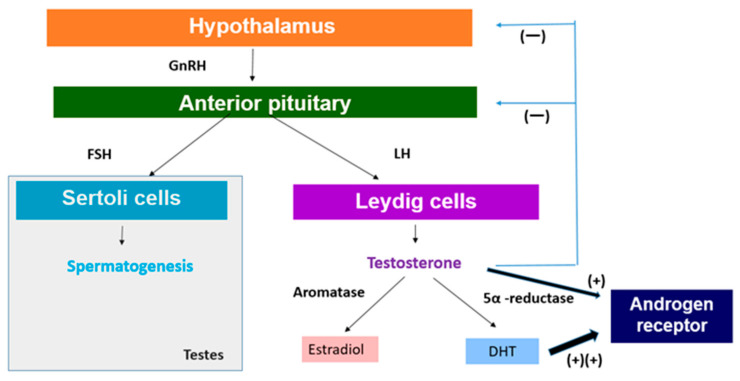
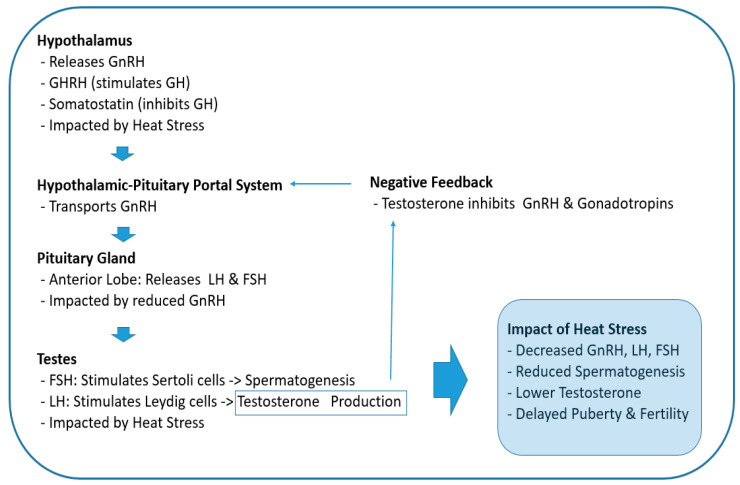
Heat stress due to climate warming can significantly affect the synthesis of sex hormones in male adolescents, which can impair the ability of the hypothalamus to secrete gonadotropin-releasing hormone on the hypothalamic–pituitary–gonadal axis, which leads to a decrease in luteinizing hormone and follicle-stimulating hormone, which ultimately negatively affects spermatogenesis and testosterone synthesis. For optimal spermatogenesis, the testicular temperature should be 2–6 °C lower than body temperature. Heat stress directly affects the testes, damaging them and reducing testosterone synthesis. Additionally, chronic heat stress abnormally increases the level of aromatase in Leydig cells, which increases estradiol synthesis while decreasing testosterone, leading to an imbalance of sex hormones and spermatogenesis failure. Low levels of testosterone in male adolescents lead to delayed puberty and incomplete sexual maturation, negatively affect height growth and bone mineral density, and can lead to a decrease in lean body mass and an increase in fat mass. In order for male adolescents to acquire healthy reproductive capacity, it is recommended to provide sufficient nutrition and energy, avoid exposure to heat stress, and provide foods and supplements to prevent or repair testosterone reduction, germ cell damage, and sperm count reduction caused by heat stress so that they can enter a healthy adulthood.
Overview
CoChat Summary
TL;DR
This narrative review argues that heat stress in male adolescents disrupts the hypothalamic–pituitary–gonadal axis and testicular steroidogenesis, lowering testosterone and raising estradiol, with negative effects on puberty, growth, bone mineral density, body composition, and fertility. It reviews foods and supplements—melatonin, Tanshinone IIA, *Lycium barbarum* polysaccharide, zinc sulfate plus folic acid, and flavonoids—as potential preventive or reparative measures, while noting the evidence is largely from adult and animal studies.
Key findings
- Heat stress impairs the HPG axis by reducing hypothalamic GnRH secretion, which lowers LH and FSH and ultimately decreases testosterone synthesis and spermatogenesis; for optimal spermatogenesis, testicular temperature should be 2–6 °C lower than body temperature.
- Chronic heat stress can abnormally increase aromatase in Leydig cells, increasing estradiol synthesis while decreasing testosterone; Oka et al. found that chronic heat stress (40 °C for over 12 h) stimulated aromatase transcription in R2C rat Leydig tumor cells, whereas acute heat stress did not.
- Low testosterone in male adolescents is linked to delayed or incomplete puberty, negative effects on height growth and bone mineral density, decreased lean body mass, and increased fat mass; circulating testosterone in congenital hypogonadotropic hypogonadism is typically <3 nmol/L (86.5 ng/dL), and a study of 24,440 Vietnamese adult men reported positive correlation between testicular size and testosterone.
- Potential protective or reparative agents reviewed include melatonin, Tanshinone IIA, *Lycium barbarum* polysaccharide, zinc sulfate plus folic acid, and flavonoids; in infertile men, 45 days of daily oral 6 mg melatonin increased endogenous melatonin, improved total antioxidant capacity in urine and seminal fluid, and reduced oxidative sperm DNA damage.
Methods
- Design: narrative review; no systematic search strategy, inclusion criteria, or meta-analytic method is stated.
- Data/sample: synthesizes animal, human, epidemiological, and clinical studies, with examples including a longitudinal study of 10,802 Chinese men, a multicenter study of 78,952 sperm samples from 33,234 donors, and a retrospective analysis of 24,440 Vietnamese adult men.
- Analysis: narrative synthesis of mechanisms and evidence on heat stress, sex hormone dysregulation, reproduction/growth, and beneficial foods/supplements; no primary data collection or formal quantitative synthesis.
Limitations
- Stated in the paper: the review was written based on adult reproductive studies and animal model studies because there is currently no study conducted on the effects of heat stress on sex hormone regulation and reproduction in male adolescence; more research is needed.
- Evident from the text: as a narrative review, it lacks systematic search and quality appraisal, and many causal claims and supplement recommendations are extrapolated from non-adolescent or non-human models rather than tested directly in male adolescents.
Model-written summary. Check it against the paper before relying on it.
Integrity signals
Registry
Cites
Statistics
Figures
Verification
Claims the paper makes
0 Valid · 0 Not valid · 98 Not checked · 16 Own results and interpretations
A conclusion the paper draws from its own results — it cites no other source for it, so there is none to check. The quote shows it is in the paper.
In the paper
“low testosterone levels can delay the start of this process, delaying puberty.”
§ Effects of Heat Stress-Induced Sex Hormone Dysregulation on Reproduction and Growth in Male Adolescents and Beneficial Foods > 3. Effects of Dysregulated Sexual Hormone during Adolescence on Reproductive System and Growth > 3.1. Low Levels of Testosterone and Reproductive System
plainstates a cause- Asserted: passes — The authors put it forward as true.
- Checkable: passes — It can be checked against evidence.
- Load-bearing: passes — The paper’s conclusions depend on it.
- Based: passes — The paper gives a reason why it holds.
- Rests on 2 assumptions not shown here.
In the paper
“In the absence of an appropriate level of testosterone, the growth of the testis slows, resulting in smaller testes, which can also be confirmed in the circulating testosterone levels of patients with hypogonadism [67].”
§ Effects of Heat Stress-Induced Sex Hormone Dysregulation on Reproduction and Growth in Male Adolescents and Beneficial Foods > 3. Effects of Dysregulated Sexual Hormone during Adolescence on Reproductive System and Growth > 3.1. Low Levels of Testosterone and Reproductive System
What the sources say
- Not checked yetcites [67] Li L. Lin W. Wang Z. Huang R. Xia H. Li Z. Deng J. Ye T. Hormone Regulation in Testicular Development and Function Int. J. Mol. Sci. 2024 25 5805 10.3390/ijms25115805 38891991 PMC11172568 source
plainstates a cause- Asserted: passes — The authors put it forward as true.
- Checkable: passes — It can be checked against evidence.
- Load-bearing: passes — The paper’s conclusions depend on it.
- Based: passes — The paper gives a reason why it holds.
- Rests on 2 assumptions not shown here.
In the paper
“Spermatogenesis requires an appropriate balance between testicular testosterone and estradiol [26].”
§ Effects of Heat Stress-Induced Sex Hormone Dysregulation on Reproduction and Growth in Male Adolescents and Beneficial Foods > 2. Effect of Heat Stress on Sexual Hormonal Synthesis in Male Adolescents > 2.3. Chronic Heat Stress Can Lead to an Imbalance of Testosterone and Estradiol
What the sources say
- Not checked yetcites [26] Ketchem J.M. Bowman E.J. Isales C.M. Male sex hormones, aging, and inflammation Biogerontology 2023 24 1 25 10.1007/s10522-022-10002-1 36596999 PMC9810526 source
plainstates a cause- Asserted: passes — The authors put it forward as true.
- Checkable: passes — It can be checked against evidence.
- Load-bearing: passes — The paper’s conclusions depend on it.
- Based: passes — The paper gives a reason why it holds.
In the paper
“which suggests that the increase in aromatase levels in Leydig cells due to chronic heat stress is a factor causing an imbalance between testosterone and estradiol in men with spermatogenesis failure.”
§ Effects of Heat Stress-Induced Sex Hormone Dysregulation on Reproduction and Growth in Male Adolescents and Beneficial Foods > 2. Effect of Heat Stress on Sexual Hormonal Synthesis in Male Adolescents > 2.3. Chronic Heat Stress Can Lead to an Imbalance of Testosterone and Estradiol
What the sources say
- Not checked yetcites [53] Oka S. Matsukuma H. Horiguchi N. Kobayashi T. Shiraishi K. Heat stress upregulates aromatases expression through nuclear DAX-1 deficiency in R2C Leydig tumor cells Mol. Cell. Endocrinol. 2022 558 111766 10.1016/j.mce.2022.111766 36075317 source
hedgedstates a cause- Asserted: passes — The authors put it forward as true.
- Checkable: passes — It can be checked against evidence.
- Load-bearing: passes — The paper’s conclusions depend on it.
- Based: passes — The paper gives a reason why it holds.
In the paper
“negatively affect height growth and bone mineral density”
- Also stated in: § 3.2. Low Levels of Testosterone Impact on Height and Bone Mineral Density in Adolescence · plain
“Decreased testosterone synthesis can lead to lower BMD”
§ Effects of Heat Stress-Induced Sex Hormone Dysregulation on Reproduction and Growth in Male Adolescents and Beneficial Foods > Abstract
What the sources say
- Not checked yetcites [26] Ketchem J.M. Bowman E.J. Isales C.M. Male sex hormones, aging, and inflammation Biogerontology 2023 24 1 25 10.1007/s10522-022-10002-1 36596999 PMC9810526 source
plainstates a cause- Asserted: passes — The authors put it forward as true.
- Checkable: passes — It can be checked against evidence.
- Load-bearing: passes — The paper’s conclusions depend on it.
- Based: passes — The paper gives a reason why it holds.
- Rests on 2 assumptions not shown here.
- Also stated in: § 3.2. Low Levels of Testosterone Impact on Height and Bone Mineral Density in Adolescence · plain
77 more claims
Create a free account to see all 114 claims and to verify the 113 references still open.
- It may state two separate claims as one. 32
- Probably not a substantial claim. 1
Self-check
Percentages, sums and reported differences re-computed from the paper’s own numbers.
Each contradiction between two passages listed here was confirmed by an independent check.
Rated major: it would touch a result — a value a result rests on, reported and recomputed p-values on opposite sides of the significance level, two passages that conflict with no sign which is right, or a cited work retracted before this paper was published.
In the paper
§ Effects of Heat Stress-Induced Sex Hormone Dysregulation on Reproduction and Growth in Male Adolescents and Beneficial Foods > 1. Introduction
“Several studies have already verified that heat stress can interfere with sex hormone synthesis in male adolescents by causing oxidative stress, inflammation, and apoptosis within germ cells [12,13].”
§ Effects of Heat Stress-Induced Sex Hormone Dysregulation on Reproduction and Growth in Male Adolescents and Beneficial Foods > 5. Conclusions
“there is currently no study conducted on the effects of heat stress on sex hormone regulation and reproduction in male adolescence.”
Rated minor: it would not touch a result — a value no result rests on, a p-value that stays on the same side of the significance level, or a conflict that is clerical, resolved elsewhere in the paper, or outside its own findings.
In the paper
§ Effects of Heat Stress-Induced Sex Hormone Dysregulation on Reproduction and Growth in Male Adolescents and Beneficial Foods > 4. Beneficial Foods That Help Prevent or Recover from Low Testosterone and Infertility Caused by Heat Stress > 4.2. The Role of Melatonin in Preventing Reproductive Damage Caused by Heat Stress
“In an animal model studying the reproductive function of male dairy cows, it was found that melatonin treatment could upregulate the gene expression of MT2 (Metallothionein-2A), which was downregulated by heat stress, improve the changes in the extracellular matrix components, and restore the serum testosterone level [107].”
§ Effects of Heat Stress-Induced Sex Hormone Dysregulation on Reproduction and Growth in Male Adolescents and Beneficial Foods > 4. Beneficial Foods That Help Prevent or Recover from Low Testosterone and Infertility Caused by Heat Stress > 4.2. The Role of Melatonin in Preventing Reproductive Damage Caused by Heat Stress
“melatonin could prevent testicular and sperm cell damage and improve semen quality in heat-stressed male dairy goats by inhibiting the PI3K/AKT signalling pathway [107].”
Rated minor: it would not touch a result — a value no result rests on, a p-value that stays on the same side of the significance level, or a conflict that is clerical, resolved elsewhere in the paper, or outside its own findings.
In the paper
§ Effects of Heat Stress-Induced Sex Hormone Dysregulation on Reproduction and Growth in Male Adolescents and Beneficial Foods > 1. Introduction
“youth is defined as 15 to 24 years of age.”
§ Effects of Heat Stress-Induced Sex Hormone Dysregulation on Reproduction and Growth in Male Adolescents and Beneficial Foods > 1. Introduction
“Youth includes all age groups from 10 to 24 years old [15].”
Citations
Cites
Our future: a Lancet commission on adolescent health and wellbeing
Patton, G. C., Sawyer, S. M., Santelli, J. S., Ross, D. A., Afifi, R., Allen, N. B., Arora, M., Azzopardi, P., Baldwin, W., Bonell, C., et al. (2016) · The Lancet · doi:10.1016/s0140-6736(16)00579-1 · Cited by 3,785 · cited 4×
“…of the total national population aged 10–24 years compared to the national population in 2019 shows that in most African countries, 30–35% of the total population belongs to this population group, which is easily exposed to environmental heat stress and is most susceptible to damage [15,18].”
BackgroundInfluentialSawyer, S. M., Azzopardi, P. S., Wickremarathne, D., & Patton, G. C. (2018) · The Lancet Child & Adolescent Health · doi:10.1016/s2352-4642(18)30022-1 · Cited by 3,666
Predicting basal metabolic rate, new standards and review of previous work.
Wn, S. (1985) · PubMed · Cited by 3,415
Antioxidant Systems and Oxidative Stress in the Testes
Aitken, R. J., & Roman, S. D. (2008) · Oxidative Medicine and Cellular Longevity · doi:10.4161/oxim.1.1.6843 · Cited by 834 · cited 2×
“…supply, leading to hypoxia and detrimental e ff ects on the tissue [37,38]. well-controlled local environment, temperature may be elevated by heat stress, and higher temperatures may result testicular metabolism without increased blood supply, leading to local hypoxia effects on the tissue [37,38].”
BackgroundKatznelson, L., Finkelstein, J. S., Schoenfeld, D. A., Rosenthal, D. I., Anderson, E. J., & Klibanski, A. (1996) · The Journal of Clinical Endocrinology & Metabolism · doi:10.1210/jcem.81.12.8954042 · Cited by 791 · cited 1×
“Katznelson et al. have previously reported in a study of healthy, hypogonadal men with low serum testosterone levels that they had lower LBM and higher fat mass compared to age-matched eugonadal men [93].”
ResultEffects of heat stress on mammalian reproduction
Hansen, P. J. (2009) · Philosophical Transactions of the Royal Society B: Biological Sciences · doi:10.1098/rstb.2009.0131 · Cited by 743
Bone mineral accrual from 8 to 30 years of age: An estimation of peak bone mass
Baxter-Jones, A. D., Faulkner, R. A., Forwood, M. R., Mirwald, R. L., & Bailey, D. A. (2011) · Journal of Bone and Mineral Research · doi:10.1002/jbmr.412 · Cited by 683 · cited 1×
“It is already well known that BMD in adolescence peaks in the late teens and early 20s [70].”
BackgroundMelatonin: A Multitasking Molecule
Reiter, R. J., Tan, D.-X., & Fuentes-Broto, L. (2010) · Progress in Brain Research · doi:10.1016/s0079-6123(08)81008-4 · Cited by 642
Pubertal development and regulation
Abreu, A. P., & Kaiser, U. B. (2016) · The Lancet Diabetes & Endocrinology · doi:10.1016/s2213-8587(15)00418-0 · Cited by 611 · cited 4×
“With the onset of puberty, the hypothalamic– pituitary–gonadal axis begins to regulate gonadotropin levels and gonadal function [20].”
BackgroundInfluentialPower, M. L., & Schulkin, J. (2008) · British Journal of Nutrition · doi:10.1017/s0007114507853347 · Cited by 605
Nutrition in adolescents: physiology, metabolism, and nutritional needs
Das, J. K., Salam, R. A., Thornburg, K. L., Prentice, A. M., Campisi, S., Lassi, Z. S., Koletzko, B., & Bhutta, Z. A. (2017) · Annals of the New York Academy of Sciences · doi:10.1111/nyas.13330 · Cited by 597 · cited 2×
“However, if total energy intake falls below BMR, ECG and AEE may be impaired, leading to growth failure, delayed puberty, and impaired bone mass accumulation in male adolescence [97].”
BackgroundSingh, R., Artaza, J. N., Taylor, W. E., Gonzalez-Cadavid, N. F., & Bhasin, S. (2003) · Endocrinology · doi:10.1210/en.2003-0741 · Cited by 555
Effect of testosterone on muscle mass and muscle protein synthesis
Griggs, R. C., Kingston, W., Jozefowicz, R. F., Herr, B. E., Forbes, G., & Halliday, D. (1989) · Journal of Applied Physiology · doi:10.1152/jappl.1989.66.1.498 · Cited by 517 · cited 1×
“Griggs et al. reported that testosterone increases muscle protein synthesis (MPS) without affecting whole-body protein synthesis [87], which is owing to the fact that testosterone increases the expression of insulin like growth factor 1 (IGF1) in muscle [88].”
BackgroundMenopause-Associated Lipid Metabolic Disorders and Foods Beneficial for Postmenopausal Women
Ko, S.-H., & Kim, H.-S. (2020) · Nutrients · doi:10.3390/nu12010202 · Cited by 516
Self-citationAmory, J. K., Watts, N. B., Easley, K. A., Sutton, P. R., Anawalt, B. D., Matsumoto, A. M., Bremner, W. J., & Tenover, J. L. (2004) · The Journal of Clinical Endocrinology & Metabolism · doi:10.1210/jc.2003-031110 · Cited by 475 · cited 1×
“However, it was demonstrated that testosterone treatment in elderly men with hypogonadism increases BMD [78].”
BackgroundEndocrine Regulation of the Growth Plate
Nilsson, O., Marino, R., De Luca, F., Phillip, M., & Baron, J. (2005) · Hormone Research in Paediatrics · doi:10.1159/000088791 · Cited by 441
Adolescence and the next generation
Patton, G. C., Olsson, C. A., Skirbekk, V., Saffery, R., Wlodek, M. E., Azzopardi, P. S., Stonawski, M., Rasmussen, B., Spry, E., Francis, K., et al. (2018) · Nature · doi:10.1038/nature25759 · Cited by 385
Changes in Bone Mineral Density with Age in Men and Women: A Longitudinal Study
Warming, L., Hassager, C., & Christiansen, C. (2002) · Osteoporosis International · doi:10.1007/s001980200001 · Cited by 382
Mauras, N., Hayes, V., Welch, S., Rini, A., Helgeson, K., Dokler, M., Veldhuis, J. D., & Urban, R. J. (1998) · The Journal of Clinical Endocrinology & Metabolism · doi:10.1210/jcem.83.6.4892 · Cited by 368
Dietary Sources and Bioactivities of Melatonin
Meng, X., Li, Y., Li, S., Zhou, Y., Gan, R.-Y., Xu, D.-P., & Li, H.-B. (2017) · Nutrients · doi:10.3390/nu9040367 · Cited by 362 · cited 1×
“Some types of mushrooms, grains, sprouted legumes, or seeds are also good dietary sources of melatonin [112].”
BackgroundThe Neuroendocrinology of Human Puberty Revisited
Grumbach, M. M. (2002) · Hormone Research in Paediatrics · doi:10.1159/000058094 · Cited by 362
Plant, T. M., & Marshall, G. R. (2001) · Endocrine Reviews · doi:10.1210/edrv.22.6.0446 · Cited by 357
Medical implications of melatonin: receptor-mediated and receptor-independent actions.
Reiter, R. J., Tan, D. X., Manchester, L. C., Terrón, M. P., Flores, L. J., & Koppisepi, S. (2007) · PubMed · Cited by 350
Nichi, M., Bols, P. E. J., Züge, R. M., Barnabé, V. H., Goovaerts, I., Barnabé, R. C., & Cortada, C. N. M. (2006) · Theriogenology · doi:10.1016/j.theriogenology.2006.01.056 · Cited by 350
The 2021 western North America heat wave among the most extreme events ever recorded globally
Thompson, V., Kennedy-Asser, A. T., Vosper, E., Lo, Y. T. E., Huntingford, C., Andrews, O., Collins, M., Hegerl, G. C., & Mitchell, D. (2022) · Science Advances · doi:10.1126/sciadv.abm6860 · Cited by 318
Oduwole, O. O., Huhtaniemi, I. T., & Misrahi, M. (2021) · International Journal of Molecular Sciences · doi:10.3390/ijms222312735 · Cited by 301
Stress hormone and male reproductive function
Hardy, M. P., Gao, H.-B., Dong, Q., Ge, R., Wang, Q., Chai, W. R., Feng, X., & Sottas, C. (2005) · Cell and Tissue Research · doi:10.1007/s00441-005-0006-2 · Cited by 298
Zhao, L., Yao, C., Xing, X., Jing, T., Li, P., Zhu, Z., Yang, C., Zhai, J., Tian, R., Chen, H., et al. (2020) · Nature Communications · doi:10.1038/s41467-020-19414-4 · Cited by 298
Proof of the effect of testosterone on skeletal muscle
Bhasin, S., Woodhouse, L., & Storer, T. (2001) · Journal of Endocrinology · doi:10.1677/joe.0.1700027 · Cited by 293
Ward, J. L., Azzopardi, P. S., Francis, K. L., Santelli, J. S., Skirbekk, V., Sawyer, S. M., Kassebaum, N. J., Mokdad, A. H., Hay, S. I., Abd-Allah, F., et al. (2021) · The Lancet · doi:10.1016/s0140-6736(21)01546-4 · Cited by 292
Paediatric and adult-onset male hypogonadism
Salonia, A., Rastrelli, G., Hackett, G., Seminara, S. B., Huhtaniemi, I. T., Rey, R. A., Hellstrom, W. J. G., Palmert, M. R., Corona, G., Dohle, G. R., et al. (2019) · Nature Reviews Disease Primers · doi:10.1038/s41572-019-0087-y · Cited by 286
Mauras, N. (1998) · Journal of Clinical Endocrinology & Metabolism · doi:10.1210/jc.83.6.1886 · Cited by 280
Rockett, J. C., Mapp, F. L., Garges, J. B., Luft, J. C., Mori, C., & Dix, D. J. (2001) · Biology of Reproduction · doi:10.1095/biolreprod65.1.229 · Cited by 277
Energy Metabolism Changes and Dysregulated Lipid Metabolism in Postmenopausal Women
Ko, S.-H., & Jung, Y. (2021) · Nutrients · doi:10.3390/nu13124556 · Cited by 275
Self-citationWang, C. (1996) · Journal of Clinical Endocrinology & Metabolism · doi:10.1210/jc.81.10.3654 · Cited by 261
Effects of IGF-1 isoforms on muscle growth and sarcopenia
Ascenzi, F., Barberi, L., Dobrowolny, G., Villa Nova Bacurau, A., Nicoletti, C., Rizzuto, E., Rosenthal, N., Scicchitano, B. M., & Musarò, A. (2019) · Aging Cell · doi:10.1111/acel.12954 · Cited by 250 · cited 1×
“It has also been shown to increase anabolic pathways and hypertrophy when administered to skeletal muscle [89].”
BackgroundGlobal climate change and human health: Pathways and possible solutions
Zhao, Q., Yu, P., Mahendran, R., Huang, W., Gao, Y., Yang, Z., Ye, T., Wen, B., Wu, Y., Li, S., et al. (2022) · Eco-Environment & Health · doi:10.1016/j.eehl.2022.04.004 · Cited by 250
Dihydrotestosterone: Biochemistry, Physiology, and Clinical Implications of Elevated Blood Levels
Swerdloff, R. S., Dudley, R. E., Page, S. T., Wang, C., & Salameh, W. A. (2017) · Endocrine Reviews · doi:10.1210/er.2016-1067 · Cited by 237
The Hypoxic Testicle: Physiology and Pathophysiology
Reyes, J. G., Farias, J. G., Henríquez-Olavarrieta, S., Madrid, E., Parraga, M., Zepeda, A. B., & Moreno, R. D. (2012) · Oxidative Medicine and Cellular Longevity · doi:10.1155/2012/929285 · Cited by 234
Autophagy regulates testosterone synthesis by facilitating cholesterol uptake in Leydig cells
Gao, F., Li, G., Liu, C., Gao, H., Wang, H., Liu, W., Chen, M., Shang, Y., Wang, L., Shi, J., et al. (2018) · Journal of Cell Biology · doi:10.1083/jcb.201710078 · Cited by 213
Short-Term Oxandrolone Administration Stimulates Net Muscle Protein Synthesis in Young Men1
Sheffield-Moore, M., Urban, R. J., Wolf, S. E., Jiang, J., Catlin, D. H., Herndon, D. N., Wolfe, R. R., & Ferrando, A. A. (1999) · The Journal of Clinical Endocrinology & Metabolism · doi:10.1210/jcem.84.8.5923 · Cited by 199
Factors that Affect Bone Mineral Accrual in the Adolescent Growth Spurt
Whiting, S. J., Vatanparast, H., Baxter-Jones, A., Faulkner, R. A., Mirwald, R., & Bailey, D. A. (2004) · The Journal of Nutrition · doi:10.1093/jn/134.3.696s · Cited by 198
The effects of oestrogens on linear bone growth
Juul, A. (2001) · Human Reproduction Update · doi:10.1093/humupd/7.3.303 · Cited by 196
Gauer, R. L., McNutt, R., & Bryan, K. (2019) · PubMed · Cited by 193
Sae‐Teaw, M., Johns, J., Johns, N. P., & Subongkot, S. (2013) · Journal of Pineal Research · doi:10.1111/jpi.12025 · Cited by 183
Prospective therapeutic potential of Tanshinone IIA: An updated overview
Ansari, M. A., Khan, F. B., Safdari, H. A., Almatroudi, A., Alzohairy, M. A., Safdari, M., Amirizadeh, M., Rehman, S., Equbal, M. J., & Hoque, M. (2021) · Pharmacological Research · doi:10.1016/j.phrs.2020.105364 · Cited by 179
Neuroendocrine control by kisspeptins: role in metabolic regulation of fertility
Navarro, V. M., & Tena-Sempere, M. (2012) · Nature Reviews Endocrinology · doi:10.1038/nrendo.2011.147 · Cited by 178
Sperm nuclear DNA fragmentation and mitochondrial activity in men with varicocele
Blumer, C. G., Fariello, R. M., Restelli, A. E., Spaine, D. M., Bertolla, R. P., & Cedenho, A. P. (2008) · Fertility and Sterility · doi:10.1016/j.fertnstert.2007.09.007 · Cited by 176
Hormone Regulation in Testicular Development and Function
Li, L., Lin, W., Wang, Z., Huang, R., Xia, H., Li, Z., Deng, J., Ye, T., Huang, Y., & Yang, Y. (2024) · International Journal of Molecular Sciences · doi:10.3390/ijms25115805 · Cited by 175
The effects of heat on the testes of mammals
Setchell, B. P. (2006) · Adelaide Research & Scholarship (AR&S) (University of Adelaide) · Cited by 163
(1971) · Pediatrics · doi:10.1542/pedsv47is1fullf · Cited by 148 · cited 1×
“That is, it is the minimum amount of energy required to sustain life processes [98], which increases rapidly until age 2 and declines throughout adolescence [99].”
BackgroundWeimar, J. D., DiRusso, C. C., Delio, R., & Black, P. N. (2002) · Journal of Biological Chemistry · doi:10.1074/jbc.m107022200 · Cited by 147
Testes size, testosterone production and reproductive behaviour in a natural mammalian mating system
Preston, B. T., Stevenson, I. R., Lincoln, G. A., Monfort, S. L., Pilkington, J. G., & Wilson, K. (2011) · Journal of Animal Ecology · doi:10.1111/j.1365-2656.2011.01907.x · Cited by 138
The growth plate: a physiologic overview
Ağırdil, Y. (2020) · EFORT Open Reviews · doi:10.1302/2058-5241.5.190088 · Cited by 136
Heat Stress and Animal Productivity
Aggarwal, A., & Upadhyay, R. C. (2012) · Springer eBooks · doi:10.1007/978-81-322-0879-2 · Cited by 135
Cross-Sectional Versus Longitudinal Evaluation of Bone Loss in Men and Women
Melton, L. J., Khosla, S., Atkinson, E. J., O’Connor, M. K., O’Fallon, W. M., & Riggs, B. L. (2000) · Osteoporosis International · doi:10.1007/s001980070080 · Cited by 133
Hamilton, T. R. D. S., Mendes, C. M., Castro, L. S. D., Assis, P. M. D., Siqueira, A. F. P., Delgado, J. D. C., Goissis, M. D., Muiño-Blanco, T., Cebrián-Pérez, J. Á., Nichi, M., et al. (2016) · Oxidative Medicine and Cellular Longevity · doi:10.1155/2016/1687657 · Cited by 114
West, D. W. D., & Phillips, S. M. (2010) · The Physician and Sportsmedicine · doi:10.3810/psm.2010.10.1814 · Cited by 110 · cited 1×
“Griggs et al. reported that testosterone increases muscle protein synthesis (MPS) without affecting whole-body protein synthesis [87], which is owing to the fact that testosterone increases the expression of insulin like growth factor 1 (IGF1) in muscle [88].”
BackgroundThe aging male hypothalamic–pituitary–gonadal axis: Pulsatility and feedback
Veldhuis, J. D., Keenan, D. M., Liu, P. Y., Iranmanesh, A., Takahashi, P. Y., & Nehra, A. X. (2009) · Molecular and Cellular Endocrinology · doi:10.1016/j.mce.2008.09.005 · Cited by 102
Zhou, Y., Meng, T., Wu, L., Duan, Y., Li, G., Shi, C., Zhang, H., Peng, Z., Fan, C., Ma, J., et al. (2020) · Environment International · doi:10.1016/j.envint.2019.105364 · Cited by 100
Melatonin alleviates heat stress-induced oxidative stress and apoptosis in human spermatozoa
Zhao, F., Whiting, S., Lambourne, S., Aitken, R. J., & Sun, Y.-P. (2021) · Free Radical Biology and Medicine · doi:10.1016/j.freeradbiomed.2021.01.014 · Cited by 96
A Review on the Impact of Oxidative Stress and Medicinal Plants on Leydig Cells
Monageng, E., Offor, U., Takalani, N. B., Mohlala, K., & Opuwari, C. S. (2023) · Antioxidants · doi:10.3390/antiox12081559 · Cited by 94
Male sex hormones, aging, and inflammation
Ketchem, J. M., Bowman, E. J., & Isales, C. M. (2023) · Biogerontology · doi:10.1007/s10522-022-10002-1 · Cited by 92
Testosterone and its metabolites - modulators of brain functions
Durdiakova, J., Ostatnikova, D., & Celec, P. (2011) · Acta Neurobiologiae Experimentalis · doi:10.55782/ane-2011-1863 · Cited by 91
Heat stress response of somatic cells in the testis
Aldahhan, R. A., & Stanton, P. G. (2021) · Molecular and Cellular Endocrinology · doi:10.1016/j.mce.2021.111216 · Cited by 91
Heat Stress as a Barrier to Successful Reproduction and Potential Alleviation Strategies in Cattle
Khan, I., Mesalam, A., Heo, Y. S., Lee, S.-H., Nabi, G., & Kong, I.-K. (2023) · Animals · doi:10.3390/ani13142359 · Cited by 88
Exogenous melatonin supplementation prevents oxidative stress‐evoked DNA damage in human spermatozoa
Bejarano, I., Monllor, F., Marchena, A. M., Ortiz, A., Lozano, G., Jiménez, M. I., Gaspar, P., García, J. F., Pariente, J. A., Rodríguez, A. B., et al. (2014) · Journal of Pineal Research · doi:10.1111/jpi.12172 · Cited by 87
Adrenoreceptors and nitric oxide in the cardiovascular system
Conti, V., Russomanno, G., Corbi, G., Izzo, V., Vecchione, C., & Filippelli, A. (2013) · Frontiers in Physiology · doi:10.3389/fphys.2013.00321 · Cited by 87
Melatonin protects the mouse testis against heat-induced damage
Zhang, P., Zheng, Y., Lv, Y., Li, F., Su, L., Qin, Y., & Zeng, W. (2020) · Molecular Human Reproduction · doi:10.1093/molehr/gaaa002 · Cited by 85
Turner, A., Chen, T. C., Barber, T. W., Malabanan, A. O., Holick, M. F., & Tangpricha, V. (2004) · Clinical Endocrinology · doi:10.1111/j.1365-2265.2004.02125.x · Cited by 83
Targeting 5α-reductase for prostate cancer prevention and treatment
Nacusi, L. P., & Tindall, D. J. (2011) · Nature Reviews Urology · doi:10.1038/nrurol.2011.67 · Cited by 83
Holliday, M. A. (1971) · PubMed · Cited by 82
Deng, C., Zhang, J., Huo, Y., Xue, H., Wang, W., Zhang, J., & Wang, X. (2022) · Journal of Pineal Research · doi:10.1111/jpi.12819 · Cited by 78
Short-Term Oxandrolone Administration Stimulates Net Muscle Protein Synthesis in Young Men
Sheffield‐Moore, M. (1999) · The Journal of Clinical Endocrinology & Metabolism · doi:10.1210/jc.84.8.2705 · Cited by 74
Do heat stress and deficits in DNA repair pathways have a negative impact on male fertility?
Paul, C., Melton, D. W., & Saunders, P. T. K. (2008) · Molecular Human Reproduction · doi:10.1093/molehr/gam089 · Cited by 73
Circulating sex hormone levels in relation to male sperm quality
Zhao, W., Jing, J., Shao, Y., Zeng, R., Wang, C.-C., Yao, B., & Hang, D. (2020) · BMC Urology · doi:10.1186/s12894-020-00674-7 · Cited by 70
Hamerezaee, M., Dehghan, S. F., Golbabaei, F., Fathi, A., Barzegar, L., & Heidarnejad, N. (2018) · Safety and Health at Work · doi:10.1016/j.shaw.2017.07.003 · Cited by 68
Heat Stress: A Serious Disruptor of the Reproductive Physiology of Dairy Cows
Dovolou, E., Giannoulis, T., Nanas, I., & Amiridis, G. S. (2023) · Animals · doi:10.3390/ani13111846 · Cited by 68
Seminal plasma androgen/oestrogen balance in infertile men
LUBOSHITZKY, R., KAPLAN‐ZVERLING, M., SHEN‐ORR, Z., NAVE, R., & HERER, P. (2002) · International Journal of Andrology · doi:10.1046/j.1365-2605.2002.00376.x · Cited by 64
Climate change and pregnancy complications: From hormones to the immune response
Yüzen, D., Graf, I., Diemert, A., & Arck, P. C. (2023) · Frontiers in Endocrinology · doi:10.3389/fendo.2023.1149284 · Cited by 61
The Role of Heat Shock Factors in Mammalian Spermatogenesis
Widlak, W., & Vydra, N. (2017) · Advances in Anatomy, Embryology and Cell Biology · doi:10.1007/978-3-319-51409-3_3 · Cited by 61
Robinson, B. R., Netherton, J. K., Ogle, R. A., & Baker, M. A. (2023) · Biological Reviews · doi:10.1111/brv.12921 · Cited by 54
Cai, H., Qin, D., & Peng, S. (2021) · Bioscience Reports · doi:10.1042/bsr20210443 · Cited by 50
Low Testosterone in Adolescents & Young Adults
Cohen, J., Nassau, D. E., Patel, P., & Ramasamy, R. (2020) · Frontiers in Endocrinology · doi:10.3389/fendo.2019.00916 · Cited by 49
Hassanein, E. M., Szelényi, Z., & Szenci, O. (2024) · Animals · doi:10.3390/ani14101473 · Cited by 48
Sex and Gender Differences in Body Composition, Lipid Metabolism, and Glucose Regulation
Ethun, K. F. (2016) · Elsevier eBooks · doi:10.1016/b978-0-12-802388-4.00009-4 · Cited by 47
Fadl, A. M., Abdelnaby, E. A., & El‐Sherbiny, H. R. (2022) · Reproduction in Domestic Animals · doi:10.1111/rda.14096 · Cited by 45
Traish, A. M. (2017) · Advances in Experimental Medicine and Biology · doi:10.1007/978-3-319-70178-3_22 · Cited by 43
Nutraceuticals: A New Challenge against Cadmium-Induced Testicular Injury
Marini, H. R., Micali, A., Squadrito, G., Puzzolo, D., Freni, J., Antonuccio, P., & Minutoli, L. (2022) · Nutrients · doi:10.3390/nu14030663 · Cited by 43
Melatonin in traditional Mediterranean diets
Iriti, M., Varoni, E. M., & Vitalini, S. (2010) · Journal of Pineal Research · doi:10.1111/j.1600-079x.2010.00777.x · Cited by 41
Acute Testosterone Deficiency Alters Adipose Tissue Fatty Acid Storage
Santosa, S., Bush, N. C., & Jensen, M. D. (2017) · The Journal of Clinical Endocrinology & Metabolism · doi:10.1210/jc.2017-00757 · Cited by 37 · cited 1×
“Excitingly, Santosa et al. demonstrated that testosterone inhibits fatty acid storage through inhibition of lipoprotein lipase (LPL) and acyl coenzyme A synthetase (ACS) activities [83].”
BackgroundPotential Function of Testicular MicroRNAs in Heat-Stress-Induced Spermatogenesis Disorders
Gan, M., Jing, Y., Xie, Z., Ma, J., Chen, L., Zhang, S., Zhao, Y., Niu, L., Wang, Y., Li, X., et al. (2023) · International Journal of Molecular Sciences · doi:10.3390/ijms24108809 · Cited by 37
Testicular Heat Stress and Sperm Quality
Durairajanayagam, D., Sharma, R. K., du Plessis, S. S., & Agarwal, A. (2014) · Male Infertility · doi:10.1007/978-1-4939-1040-3_8 · Cited by 35
Gonadotropin-releasing hormone II: a multi-purpose neuropeptide
Schneider, J. S., & Rissman, E. F. (2008) · Integrative and Comparative Biology · doi:10.1093/icb/icn018 · Cited by 34
Kim, H.-D., Kim, Y.-J., Jang, M., Bae, S.-G., Yun, S.-H., Lee, M.-R., Seo, Y.-R., Cho, J.-K., Kim, S.-J., & Lee, W.-J. (2022) · Animals · doi:10.3390/ani12212967 · Cited by 34
Effects of scrotal heating on sperm surface protein PH‐20 expression in sheep
Fleming, J. S., Yu, F., McDonald, R. M., Meyers, S. A., Montgomery, G. W., Smith, J. F., & Nicholson, H. D. (2004) · Molecular Reproduction and Development · doi:10.1002/mrd.20049 · Cited by 32
Male Infertility: A Complete Guide to Lifestyle and Environmental Factors
du Plessis, S. S., Sabanegh, Jr., & Agarwal, A. K. (2014) · Springer eBooks · doi:10.1007/978-1-4939-1040-3 · Cited by 28
Hu, S., Liu, D., Liu, S., Li, C., & Guo, J. (2021) · Evidence-Based Complementary and Alternative Medicine · doi:10.1155/2021/5574202 · Cited by 27
Liu, Y., Cai, H., Guo, X., Aierken, A., Hua, J., Ma, B., & Peng, S. (2022) · Stress Biology · doi:10.1007/s44154-022-00068-9 · Cited by 26
Andrology: Male Reproductive Health and Dysfunction
Nieschlag, E., Behre, H. M., Kliesch, S., & Nieschlag, S. (2023) · Springer eBooks · doi:10.1007/978-3-031-31574-9 · Cited by 26
Effects of temperature anomaly on sperm quality: A multi-center study of 33,234 men
Xiao, L., Wang, Q., Ni, H., Xu, T. S., Cai, X., Dai, T., Wang, L., Song, C., Li, Y., Li, F., et al. (2024) · Heliyon · doi:10.1016/j.heliyon.2024.e26765 · Cited by 25
Aldahhan, R. A., Stanton, P. G., Ludlow, H., de Kretser, D. M., & Hedger, M. P. (2019) · Molecular and Cellular Endocrinology · doi:10.1016/j.mce.2019.110546 · Cited by 25
Shiraishi, K., Oka, S., & Matsuyama, H. (2021) · The Journal of Clinical Endocrinology & Metabolism · doi:10.1210/clinem/dgaa860 · Cited by 24
Aggarwal, A., & Upadhyay, R. (2013) · Heat Stress and Animal Productivity · doi:10.1007/978-81-322-0879-2_2 · Cited by 23
Guo, Y., Chen, H., Wang, Q.-J., Qi, X., Li, Q., Fu, W., Huang, J., Yao, C.-Y., Liu, Z.-Y., Wang, M.-Z., et al. (2021) · Theriogenology · doi:10.1016/j.theriogenology.2020.12.015 · Cited by 23
van, Z. S., Zupp, J., Hayman, D., & Setchell, B. (1995) · Reproduction, Fertility and Development · doi:10.1071/rd9951117 · Cited by 22
Netherton, J. K., Robinson, B. R., Ogle, R. A., Gunn, A., Villaverde, A. I. S. B., Colyvas, K., Wise, C., Russo, T., Dowdell, A., & Baker, M. A. (2022) · Scientific Reports · doi:10.1038/s41598-022-17708-9 · Cited by 21
Atta, M. S., Farrag, F. A., Almadaly, E. A., Ghoneim, H. A., Hafez, A., Jaouni, S. K. A., Mousa, S. A., & El‐Far, A. H. (2020) · Journal of Thermal Biology · doi:10.1016/j.jtherbio.2020.102683 · Cited by 20
Jeremy, M., Gurusubramanian, G., Roy, V. K., & Kharwar, R. K. (2021) · The Journal of Steroid Biochemistry and Molecular Biology · doi:10.1016/j.jsbmb.2021.106011 · Cited by 20
Hou, W., Dong, Y., Zhang, J., Yin, Z., Wen, H., Xiong, L., & Li, W. (2012) · Journal of Andrology · doi:10.2164/jandrol.112.016584 · Cited by 18
Zhou, J., Zhao, J., Li, Y., Bai, Y., Wu, Y. M., Xiang, B., & Zhu, H. (2023) · Theoretical and Applied Climatology · doi:10.1007/s00704-023-04609-8 · Cited by 18
Barranco, I., Casao, A., Pérez‐Patiño, C., Parrilla, I., Muiño-Blanco, T., Martinez, E. A., Cebrián-Pérez, J. Á., & Roca, J. (2017) · Journal of Animal Science · doi:10.2527/jas2016.1286 · Cited by 17
Winters, S. J., Wang, C., & The Fortigel Study Group (2010) · Journal of Andrology · doi:10.2164/jandrol.109.009035 · Cited by 15
Cheng, Q., Zhao, Y., & Li, J. (2017) · Molecular Medicine Reports · doi:10.3892/mmr.2017.6760 · Cited by 15
Bai, L., Zhang, Y., Zheng, C., Xu, S., He, Y., Yu, G., Huang, D., Huang, Y., Li, M., & Xu, C. (2023) · Cell Stress and Chaperones · doi:10.1007/s12192-023-01367-4 · Cited by 13
Nguyen Hoai, B., Hoang, L., Tran, D., Nguyen Cao, T., Doan Tien, L., Sansone, A., & Jannini, E. A. (2022) · Andrologia · doi:10.1111/and.14333 · Cited by 12
Lu, B., Liang, W., Liang, C., Yu, Z., Xie, X., & Chen, Z. (2021) · Brazilian Journal of Poultry Science · doi:10.1590/1806-9061-2019-1056 · Cited by 12
Changes of Extreme High Temperature by Global Warming in the Northern Hemisphere
Cao, C., Guan, X., Sun, W., Guo, S., & Chen, B. (2022) · Journal of Applied Meteorology and Climatology · doi:10.1175/jamc-d-22-0043.1 · Cited by 10
The effect of testosterone level on metabolic syndrome: a cross-sectional study
Gucenmez, S., Yildiz, P., Donderici, O., & Serter, R. (2024) · Hormones · doi:10.1007/s42000-023-00507-w · Cited by 7
Physiology of Testicular Function
Wistuba, J., Neuhaus, N., & Nieschlag, E. (2023) · Andrology · doi:10.1007/978-3-031-31574-9_2 · Cited by 7
Aggarwal, A., & Upadhyay, R. (2013) · Heat Stress and Animal Productivity · doi:10.1007/978-81-322-0879-2_4 · Cited by 6
Oka, S., Matsukuma, H., Horiguchi, N., Kobayashi, T., & Shiraishi, K. (2022) · Molecular and Cellular Endocrinology · doi:10.1016/j.mce.2022.111766 · Cited by 5
Diagnostic Biomarkers of Heat Stress Induced- DNA in Occupational Exposure: A Systematic Review
Habibi, P., Ostad, S. N., Heydari, A., Monazzam, M. R., Foroushani, A. R., Ghazi-Khansari, M., & Golbabaei, F. (2022) · بهداشت و ایمنی کار · Cited by 5
Body composition characteristics during puberty in girls and boys from Eastern Austria
Kirchengast, S., & Göstl, A. (2003) · International Journal of Anthropology · doi:10.1007/bf02447542 · Cited by 4
Cited by
Olayiwola, S. F., & Adedokun, S. A. (2025) · Frontiers in Veterinary Science · doi:10.3389/fvets.2025.1691532 · Cited by 49
Liu, Q.-Q., Li, X., Li, J.-H., Zhou, Y., Lei, M.-K., Yin, W.-Q., Ren, Y., Yang, C., & Zhang, C.-X. (2025) · Antioxidants · doi:10.3390/antiox14060630 · Cited by 14
Fraile‐Μartinez, O., Ortega, M. A., & Montero, C. G. (2026) · International Journal of Molecular Sciences · doi:10.3390/ijms27020692 · Cited by 13
Kumar, V. R. S., Radhakrishnan, P. K., Panchal, D., Vinay, D., Raj, Y., Sharma, R., Vohra, Y., Rana, S., & Singh, S. K. (2025) · npj Microgravity · doi:10.1038/s41526-025-00517-5 · Cited by 11
Chai, J., Wen, Z., Chen, L., Pu, Q., Luo, T., Wu, X., Ma, Z., Luo, Z., Luo, J., & Wang, J. (2025) · Antioxidants · doi:10.3390/antiox14060623 · Cited by 10
Metadata
- Authors
- Ko, S.-H.
- Affiliations
- Sookmyung Women's University (KR)
- Corresponding author
- Ko, Seong-Hee
- ORCID
- Ko, Seong-Hee
- Venue
- Nutrients
- Publisher
- MDPI AG
- Published
- 2024-09-08
- Volume
- 16
- Issue
- 17
- Pages
- 3032
- ISSN
- 2072-6643 (ISSN-L)
- PMC
- PMC11397449
- OpenAlex
- W4402374951
- Semantic Scholar
- 0f60c833b2515382a1c98b9b10e14c60e6410184
- Cited by
- 44
- References
- 120
- Citations by year
- 2026: 23 · 2025: 21
- FWCI
- 1.97
- Type
- journal article
- Language
- en
- Open access
- gold
- doi.org
- Licence
- Locations
- Nutrients (publishedVersion, cc-by)
- Preprints.org (submittedVersion, cc-by)
- PubMed Central (publishedVersion, cc-by)
- PubMed (publishedVersion)
- Topics
- Health Sciences › Medicine › Reproductive Medicine › Sperm and Testicular Function
- Health Sciences › Medicine › Reproductive Medicine › Hypothalamic control of reproductive hormones
- Health Sciences › Medicine › Endocrinology, Diabetes and Metabolism › Hormonal and reproductive studies
- Keywords
- heat stress, adolescent boys, spermatogenesis, testosterone production, hypothalamic-pituitary-gonadal axis, gonadotropins, testicular temperature, aromatase, Leydig cells, delayed puberty, sexual maturation, height growth, bone mineral density, lean body mass, fat mass, global warming, reproductive health, dietary supplements
- MeSH terms
- Adolescent, Humans, Male, Reproduction, Gonadal Steroid Hormones, Sexual Maturation, Spermatogenesis, Testis, Testosterone, Heat-Shock Response
About these checks
Registry, retraction, Cites and statistics results are computed, not judged, with one exception: a printed reference that no index lists is read once by a model before it counts as a citation error. Claims are extracted by a model and kept only when their quote appears verbatim in the text; each cited source is then checked, with a model’s help, for whether it says what the claim relies on. Those verdicts can be wrong — read the claim’s quote and the cited source before relying on one.
A language model drew the claims from the paper on 2026-11-27, under version 3 of the claim definition (model deepseek-v4.1-flash, prompt extract-v3).
A second model labelled each claim on 2026-11-27 (model jev-1.13-20260917, definition revision gold-guideline-v0.2).
Statistics and arithmetic are recomputed, not judged.
Confidence bands are shown only for fields calibrated on our annotated test set. None is calibrated yet, so no band is shown.
What counts as a claim ›How we measure confidence ›How we check this ›
Are you an author, or do you see a problem with this page? Request a review
Data sources
Bibliographic data: Semantic Scholar, OpenAlex, Crossref.
Contains information from the Semantic Scholar Academic Graph Datasets, made available under the ODC Attribution License (ODC-BY 1.0).
Semantic Scholar’s data is described in: Kinney, R., et al. (2023). The Semantic Scholar Open Data Platform. arXiv:2301.10140.
