

The DOI matches its Crossref record; 5 of the 5 references it cites were found in a registry or an index.
Viral Interactions with PDZ Domain-Containing Proteins—An Oncogenic Trait?
Abstract
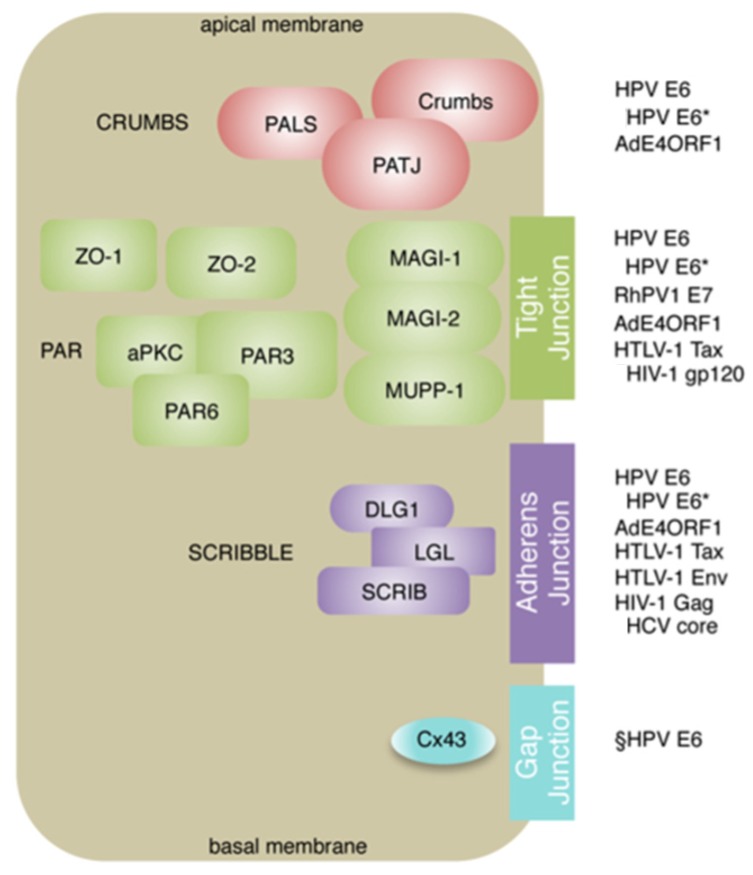
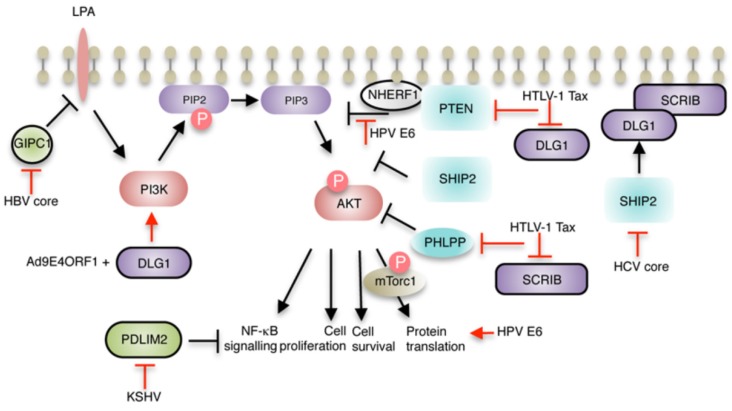
Many of the human viruses with oncogenic capabilities, either in their natural host or in experimental systems (hepatitis B and C, human T cell leukaemia virus type 1, Kaposi sarcoma herpesvirus, human immunodeficiency virus, high-risk human papillomaviruses and adenovirus type 9), encode in their limited genome the ability to target cellular proteins containing PSD95/ DLG/ZO-1 (PDZ) interaction modules. In many cases (but not always), the viruses have evolved to bind the PDZ domains using the same short linear peptide motifs found in host protein-PDZ interactions, and in some cases regulate the interactions in a similar fashion by phosphorylation. What is striking is that the diverse viruses target a common subset of PDZ proteins that are intimately involved in controlling cell polarity and the structure and function of intercellular junctions, including tight junctions. Cell polarity is fundamental to the control of cell proliferation and cell survival and disruption of polarity and the signal transduction pathways involved is a key event in tumourigenesis. This review focuses on the oncogenic viruses and the role of targeting PDZ proteins in the virus life cycle and the contribution of virus-PDZ protein interactions to virus-mediated oncogenesis. We highlight how many of the viral associations with PDZ proteins lead to deregulation of PI3K/AKT signalling, benefitting virus replication but as a consequence also contributing to oncogenesis.
Overview
The claims and statistics of this paper haven’t been checked yet.
Run the check — free, no account needed. It reads the open-access text and checks the sources it cites.
Integrity signals
Registry
Cites
Statistics
Figures
Verification
Claims the paper makes
The claims and statistics of this paper haven’t been checked yet.
Run the check — free, no account needed. It reads the open-access text and checks the sources it cites.
Claims other papers make about this one
Each is checked against this paper’s own text: does it say what the citing paper says it does?
In the citing paper
“Over 20 different PDZ domain-containing proteins have been identified as targets of the high-risk E6 proteins [271]; amongst them are discs of large tumour suppressor (hDlg) [268,269], scribble tumour suppressor (hScrib) [272] and Membrane-associated guanylate kinase inverted 1 (MAGI-1) [273,274]”
From The Not-So-Good, the Bad and the Ugly: HPV E5, E6 and E7 Oncoproteins in the Orchestration of Carcinogenesis (2021) · cites this paper as [271]
Self-check
Percentages, sums and reported differences re-computed from the paper’s own numbers.
The self-check needs the paper’s full text.
Citations
Cites
A review of human carcinogens—Part B: biological agents
Bouvard, V., Baan, R., Straif, K., Grosse, Y., Secretan, B., Ghissassi, F. E., Benbrahim-Tallaa, L., Guha, N., Freeman, C., Galichet, L., et al. (2009) · The Lancet Oncology · doi:10.1016/s1470-2045(09)70096-8 · Cited by 2,935
A Specificity Map for the PDZ Domain Family
Tonikian, R., Zhang, Y., Sazinsky, S. L., Currell, B., Yeh, J.-H., Reva, B., Held, H. A., Appleton, B. A., Evangelista, M., Wu, Y., et al. (2008) · PLoS Biology · doi:10.1371/journal.pbio.0060239 · Cited by 476
Interpreting cancer genomes using systematic host network perturbations by tumour virus proteins
Rozenblatt-Rosen, O., Deo, R. C., Padi, M., Adelmant, G., Calderwood, M. A., Rolland, T., Grace, M., Dricot, A., Askenazi, M., Tavares, M., et al. (2012) · Nature · doi:10.1038/nature11288 · Cited by 378
Al-Sadi, R., Guo, S., Ye, D., & Ma, T. Y. (2013) · The American Journal of Pathology · doi:10.1016/j.ajpath.2013.09.001 · Cited by 262
Feigin, M. E., Akshinthala, S. D., Araki, K., Rosenberg, A. Z., Muthuswamy, L. B., Martin, B., Lehmann, B. D., Berman, H. K., Pietenpol, J. A., Cardiff, R. D., et al. (2014) · Cancer Research · doi:10.1158/0008-5472.can-13-3415 · Cited by 135
Research works printed but not linked: 140
- Lee, 2010, PDZ domains and their binding partners: Structure, specificity, and modification, Cell. Commun. Signal., 8, 8, 10.1186/1478-811X-8-8 · DOI
- Subbaiah, 2011, PDZ domains: The building blocks regulating tumorigenesis, Biochem. J., 439, 195, 10.1042/BJ20110903 · DOI · Paper page
- Roberts, 2012, The PDZ protein discs-large (dlg): The “Jekyll and Hyde” of the epithelial polarity proteins, FEBS J., 279, 3549, 10.1111/j.1742-4658.2012.08729.x · DOI
- Massimi, P., Zori, P., Roberts, S., and Banks, L. (2012). Differential regulation of cell-cell contact, invasion and anoikis by hScrib and hDlg in keratinocytes. PLoS ONE, 7. · DOI
- Hawkins, E.D., Oliaro, J., Ramsbottom, K.M., Newbold, A., Humbert, P.O., Johnstone, R.W., and Russell, S.M. (2015). Scribble acts as an oncogene in emu-myc-driven lymphoma. Oncogene. · DOI
- Jimenez-Guardeno, J.M., Nieto-Torres, J.L., DeDiego, M.L., Regla-Nava, J.A., Fernandez-Delgado, R., Castano-Rodriguez, C., and Enjuanes, L. (2014). The PDZ-binding motif of severe acute respiratory syndrome coronavirus envelope protein is a determinant of viral pathogenesis. PLoS Pathog., 10. · DOI
- Nieto-Torres, J.L., DeDiego, M.L., Verdia-Baguena, C., Jimenez-Guardeno, J.M., Regla-Nava, J.A., Fernandez-Delgado, R., Castano-Rodriguez, C., Alcaraz, A., Torres, J., and Aguilella, V.M. (2014). Severe acute respiratory syndrome coronavirus envelope protein ion channel activity promotes virus fitness and pathogenesis. PLoS Pathog., 10. · DOI
- Teoh, 2010, The SARS coronavirus E protein interacts with pals1 and alters tight junction formation and epithelial morphogenesis, Mol. Biol. Cell., 21, 3838, 10.1091/mbc.e10-04-0338 · DOI
- Terrien, 2012, Interference with the Pten-Mast2 interaction by a viral protein leads to cellular relocalization of Pten, Sci. Signal., 5, ra58, 10.1126/scisignal.2002941 · DOI
- Prehaud, 2010, Attenuation of rabies virulence: Takeover by the cytoplasmic domain of its envelope protein, Sci. Signal., 3, ra5, 10.1126/scisignal.2000510 · DOI
- Obenauer, 2006, Large-scale sequence analysis of avian influenza isolates, Science, 311, 1576, 10.1126/science.1121586 · DOI
- Soubies, 2010, Species-specific contribution of the four C-terminal amino acids of Influenza A virus NS1 protein to virulence, J. Virol., 84, 6733, 10.1128/JVI.02427-09 · DOI
- Cauthen, 2007, Amelioration of influenza virus pathogenesis in chickens attributed to the enhanced interferon-inducing capacity of a virus with a truncated NS1 gene, J. Virol., 81, 1838, 10.1128/JVI.01667-06 · DOI
- Li, 2006, The NS1 gene contributes to the virulence of H5N1 avian influenza viruses, J. Virol., 80, 11115, 10.1128/JVI.00993-06 · DOI
- Kim, 2014, The PDZ-binding motif of the avian NS1 protein affects transmission of the 2009 Influenza A(H1N1) virus, Biochem. Biophys. Res. Commun., 449, 19, 10.1016/j.bbrc.2014.04.132 · DOI
- Soubies, 2010, Truncation of the NS1 protein converts a low pathogenic avian influenza virus into a strong interferon inducer in duck cells, Avian Dis., 54, 527, 10.1637/8707-031709-Reg.1 · DOI
- Jackson, 2008, A new influenza virus virulence determinant: The NS1 protein four c-terminal residues modulate pathogenicity, Proc. Natl. Acad. Sci. USA, 105, 4381, 10.1073/pnas.0800482105 · DOI
- Thomas, 2011, Analysis of the PDZ binding specificities of influenza a virus NS1 proteins, Virol. J., 8, 25, 10.1186/1743-422X-8-25 · DOI
- Golebiewski, 2011, The avian influenza virus NS1 ESEV PDZ binding motif associates with Dlg1 and scribble to disrupt cellular tight junctions, J. Virol., 85, 10639, 10.1128/JVI.05070-11 · DOI
- Yu, J., Li, X., Wang, Y., Li, B., Li, H., Li, Y., Zhou, W., Zhang, C., Rao, Z., and Bartlam, M. (2011). PDLIM2 selectively interacts with the PDZ binding motif of highly pathogenic avian H5N1 influenza A virus NS1. PLoS ONE, 6. · DOI
- Liu, 2010, The ESEV PDZ-binding motif of the avian influenza a virus NS1 protein protects infected cells from apoptosis by directly targeting scribble, J. Virol., 84, 11164, 10.1128/JVI.01278-10 · DOI
- Awad, 2013, Ship2 regulates epithelial cell polarity through its lipid product, which binds to Dlg1, a pathway subverted by hepatitis C virus core protein, Mol. Biol. Cell., 24, 2171, 10.1091/mbc.e12-08-0626 · DOI
- Razanskas, 2010, Interaction of hepatitis B virus core protein with human GIPC1, Arch. Virol., 155, 247, 10.1007/s00705-009-0561-z · DOI
- Hsu, 2007, Suppression of hepatitis B viral gene expression by protein-tyrosine phosphatase PTPN3, J. Biomed. Sci., 14, 731, 10.1007/s11373-007-9187-x · DOI
- Sun, 2015, Oncovirus kaposi sarcoma herpesvirus (KSHV) represses tumor suppressor pdlim2 to persistently activate nuclear factor kappaB (NF-kappaB) and Stat3 transcription factors for tumorigenesis and tumor maintenance, J. Biol. Chem., 290, 7362, 10.1074/jbc.C115.637918 · DOI
- Henning, 2010, PDZD8 is a novel Gag-interacting factor that promotes retroviral infection, J. Virol., 84, 8990, 10.1128/JVI.00843-10 · DOI
- Perugi, 2009, Human discs large is a new negative regulator of human immunodeficiency virus-1 infectivity, Mol. Biol. Cell, 20, 498, 10.1091/mbc.e08-02-0189 · DOI
- Alvarez, 2012, The PDZ-adaptor protein syntenin-1 regulates HIV-1 entry, Mol. Biol. Cell, 23, 2253, 10.1091/mbc.e11-12-1003 · DOI
- Nazli, A., Chan, O., Dobson-Belaire, W.N., Ouellet, M., Tremblay, M.J., Gray-Owen, S.D., Arsenault, A.L., and Kaushic, C. (2010). Exposure to HIV-1 directly impairs mucosal epithelial barrier integrity allowing microbial translocation. PLoS Pathog., 6. · DOI
- Blot, 2004, Human DLG protein binds to the envelope glycoproteins of human T-cell leukemia virus type 1 and regulates envelope mediated cell-cell fusion in T lymphocytes, J. Cell Sci., 117, 3983, 10.1242/jcs.01266 · DOI
- Rousset, 1998, The C-terminus of the HTLV-1 Tax oncoprotein mediates interaction with the PDZ domain of cellular proteins, Oncogene, 16, 643, 10.1038/sj.onc.1201567 · DOI
- Suzuki, 1999, Tax oncoprotein of HTLV-1 binds to the human homologue of drosophila discs large tumor suppressor protein, hDlg, and perturbs its function in cell growth control, Oncogene, 18, 5967, 10.1038/sj.onc.1203008 · DOI
- Makokha, 2013, Human T-cell leukemia virus type 1 Tax protein interacts with and mislocalizes the PDZ domain protein Magi-1, Cancer Sci., 104, 313, 10.1111/cas.12087 · DOI
- Ohashi, 2004, Human T-cell leukemia virus type 1 Tax oncoprotein induces and interacts with a multi-PDZ domain protein, Magi-3, Virology, 320, 52, 10.1016/j.virol.2003.11.014 · DOI
- Glaunsinger, 2000, Interactions of the PDZ-protein Magi-1 with adenovirus E4-orf1 and high-risk papillomavirus E6 oncoproteins, Oncogene, 19, 5270, 10.1038/sj.onc.1203906 · DOI · Paper page
- Glaunsinger, 2001, Link of the unique oncogenic properties of adenovirus type 9 E4-Orf1 to a select interaction with the candidate tumor suppressor protein Zo-2, Embo J., 20, 5578, 10.1093/emboj/20.20.5578 · DOI
- Lee, 2000, Multi-PDZ domain protein Mupp1 is a cellular target for both adenovirus E4-Orf1 and high-risk papillomavirus type 18 E6 oncoproteins, J. Virol., 74, 9680, 10.1128/JVI.74.20.9680-9693.2000 · DOI
- Latorre, 2005, Viral oncoprotein-induced mislocalization of select PDZ proteins disrupts tight junctions and causes polarity defects in epithelial cells, J. Cell Sci., 118, 4283, 10.1242/jcs.02560 · DOI
- Frese, 2006, Oncogenic function for the Dlg1 mammalian homolog of the Drosophila discs-large tumor suppressor, Embo J., 25, 1406, 10.1038/sj.emboj.7601030 · DOI
- Lazic, 2012, Human papillomavirus type 8 E6 oncoprotein inhibits transcription of the PDZ protein syntenin-2, J. Virol., 86, 7943, 10.1128/JVI.00132-12 · DOI
- Tomaic, 2009, Human and primate tumour viruses use PDZ binding as an evolutionarily conserved mechanism of targeting cell polarity regulators, Oncogene, 28, 1, 10.1038/onc.2008.365 · DOI
- Pim, 2009, The human papillomavirus (hpv) E6* proteins from high-risk, mucosal hpvs can direct degradation of cellular proteins in the absence of full-length E6 protein, J. Virol., 83, 9863, 10.1128/JVI.00539-09 · DOI
- Storrs, 2007, Patj, a tight junction-associated pdz protein, is a novel degradation target of high-risk human papillomavirus E6 and the alternatively spliced isoform 18 E6, J. Virol., 81, 4080, 10.1128/JVI.02545-06 · DOI
- Ivarsson, 2014, Large-scale interaction profiling of PDZ domains through proteomic peptide-phage display using human and viral phage peptidomes, Proc. Natl. Acad. Sci. USA, 111, 2542, 10.1073/pnas.1312296111 · DOI · Paper page
- Belotti, 2013, The human PDZome: A gateway to PSD95-disc large-zonula occludens (PDZ)-mediated functions, Mol. Cell. Proteom., 12, 2587, 10.1074/mcp.O112.021022 · DOI
- Mee, 2010, Hepatitis C virus infection reduces hepatocellular polarity in a vascular endothelial growth factor-dependent manner, Gastroenterology, 138, 1134, 10.1053/j.gastro.2009.11.047 · DOI
- Eyre, N.S., Drummer, H.E., and Beard, M.R. (2010). The SR-BI partner PDZK1 facilitates hepatitis C virus entry. PLoS Pathog., 6. · DOI
- Li, 2012, Interaction networks of hepatitis C virus NS4B: Implications for antiviral therapy, Cell. Microbiol., 14, 994, 10.1111/j.1462-5822.2012.01773.x · DOI
- Melik, 2012, Two PDZ binding motifs within NS5 have roles in tick-borne encephalitis virus replication, Virus Res., 169, 54, 10.1016/j.virusres.2012.07.001 · DOI
- Ellencrona, 2009, Flavivirus NS5 associates with host-cell proteins zonula occludens-1 (Zo-1) and regulating synaptic membrane exocytosis-2 (RIMS2) via an internal PDZ binding mechanism, Biol. Chem., 390, 319, 10.1515/BC.2009.041 · DOI
- Javier, 2011, Emerging theme: Cellular PDZ proteins as common targets of pathogenic viruses, J. Virol., 85, 11544, 10.1128/JVI.05410-11 · DOI · Paper page
- Hirakawa, 2003, Gipc binds to the human lutropin receptor (hLHR) through an unusual PDZ domain binding motif, and it regulates the sorting of the internalized human choriogonadotropin and the density of cell surface hLHR, J. Biol. Chem., 278, 49348, 10.1074/jbc.M306557200 · DOI
- Varsano, T., Taupin, V., Guo, L., Baterina, O.Y., and Farquhar, M.G. (2012). The PDZ protein Gipc regulates trafficking of the LPA1 receptor from APPl signaling endosomes and attenuates the cell's response to LPA. PLoS ONE, 7. · DOI
- Rawat, 2015, The hepatitis B virus (HBV) hbx protein activates Akt to simultaneously regulate HBV replication and hepatocyte survival, J. Virol., 89, 999, 10.1128/JVI.02440-14 · DOI
- Tanaka, 2007, PDLIM2-mediated termination of transcription factor NF-kappaB activation by intranuclear sequestration and degradation of the p65 subunit, Nat. Immunol., 8, 584, 10.1038/ni1464 · DOI
- Guth, 2014, Contribution of PDXD8 to stabilization of the human immunodeficiency virus type 1 capsid, J. Virol., 88, 4612, 10.1128/JVI.02945-13 · DOI
- Alvarez, 2005, Histone deacetylase 6 regulates human immunodeficiency virus type 1 infection, Mol. Biol. Cell, 16, 5445, 10.1091/mbc.e05-04-0354 · DOI
- Henning, 2011, PDZD8 is a novel moesin-interacting cytoskeletal regulatory protein that suppresses infection by herpes simplex virus type 1, Virology, 415, 114, 10.1016/j.virol.2011.04.006 · DOI
- Zhang, 2015, Efficient human immunodeficiency virus (hiv-1) infection of cells lacking PDZD8, Virology, 481, 73, 10.1016/j.virol.2015.01.034 · DOI
- Ilinskaya, 2010, Opposing effects of a tyrosine-based sorting motif and a PDZ-binding motif regulate human t-lymphotropic virus type 1 envelope trafficking, J. Virol., 84, 6995, 10.1128/JVI.01853-09 · DOI
- Yoshida, 2008, Knockdown of synapse-associated protein Dlg1 reduces syncytium formation induced by human t-cell leukemia virus type 1, Virus Genes, 37, 9, 10.1007/s11262-008-0234-0 · DOI
- Hirata, 2004, PDZ domain-binding motif of human T-cell leukemia virus type 1 Tax oncoprotein augments the transforming activity in a rat fibroblast cell line, Virology, 318, 327, 10.1016/j.virol.2003.10.006 · DOI
- Tanaka, 1990, Oncogenic transformation by the Tax gene of humanT-cell leukemia virus type 1 in vitro, Proc. Natl. Acad. Sci. USA, 87, 1071, 10.1073/pnas.87.3.1071 · DOI
- Grossman, 1995, Development of leukemia in mice transgenic for the Tax gene of human T-cell leukemia virus type 1, Proc. Natl. Acad. Sci. USA, 92, 1057, 10.1073/pnas.92.4.1057 · DOI
- Xie, 2006, PDZ binding motif of HTLV-1 Tax promotes virus-mediated t-cell proliferation in vitro and persistence in vivo, Blood, 107, 1980, 10.1182/blood-2005-03-1333 · DOI
- Round, 2007, Scaffold protein Dlgh1 coordinates alternative p38 kinase activation, directing T cell receptor signals toward NFAT but not NF-kappaB transcription factors, Nat. Immunol., 8, 154, 10.1038/ni1422 · DOI
- Bidoia, 2010, The pleiotropic protein kinase CK2 phosphorylates HTLV-1 Tax protein in vitro, targeting its PDZ-binding motif, Virus Genes, 41, 149, 10.1007/s11262-010-0494-3 · DOI
- Xavier, 2004, Discs large (dlg1) complexes in lymphocyte activation, J. Cell Biol., 166, 173, 10.1083/jcb.200309044 · DOI
- Oliaro, 2005, A network of PDZ-containing proteins regulates T cell polarity and morphology during migration and immunological synapse formation, Immunity, 22, 737, 10.1016/j.immuni.2005.04.009 · DOI
- Mesnard, 2007, The PDZ domain-binding motif of the human T cell leukemia virus type 1 Tax protein induces mislocalization of the tumor suppressor hscrib in T cells, J. Biol. Chem., 282, 33132, 10.1074/jbc.M702279200 · DOI
- Lee, 1997, Binding of human virus oncoproteins to hdlg/SAP97, a mammalian homolog of the drosophila discs large tumor suppressor protein, Proc. Natl. Acad. Sci. USA, 94, 6670, 10.1073/pnas.94.13.6670 · DOI · Paper page
- Stephenson, 2007, Dlgh1 is a negative regulator of T-lymphocyte proliferation, Mol. Cell. Biol., 27, 7574, 10.1128/MCB.00439-07 · DOI
- Cherian, 2015, Akt pathway activation by human T-cell leukemia virus type 1 Tax oncoprotein, J. Biol. Chem., 290, 26270, 10.1074/jbc.M115.684746 · DOI
- Aoyagi, 2010, The PDZ domain binding motif (PBM) of human T-cell leukemia virus type 1 Tax can be substituted by heterologous pbms from viral oncoproteins during T-cell transformation, Virus Genes, 40, 193, 10.1007/s11262-009-0447-x · DOI
- Narayan, 2009, Cdk phosphorylation of the discs large tumour suppressor controls its localisation and stability, J. Cell Sci., 122, 65, 10.1242/jcs.024554 · DOI
- Ishioka, 2006, Inactivation of tumor suppressor dlg1 augments transformation of a T-cell line induced by humanT-cell leukemia virus type 1 Tax protein, Retrovirology, 3, 71, 10.1186/1742-4690-3-71 · DOI
- Lin, 2012, Scaffold protein disc large homolog 1 is required for T-cell receptor-induced activation of regulatory T-cell function, Proc. Natl. Acad. Sci. USA, 109, 1625, 10.1073/pnas.1110120109 · DOI
- Li, 2011, Scribble-mediated membrane targeting of PHLPP1 is required for its negative regulation of Akt, EMBO Rep., 12, 818, 10.1038/embor.2011.106 · DOI
- Adey, 2000, Threonine phosphorylation of the MMAC1/Pten PDZ binding domain both inhibits and stimulates PDZ binding, Cancer Res., 60, 35
- Sotelo, 2012, A functional network of the tumor suppressors APC, hdlg, and Pten, that relies on recognition of specific PDZ-domains, J. Cell. Biochem., 113, 2661, 10.1002/jcb.24141 · DOI
- Wilson, 2003, Binding of HTLV-1 tax oncoprotein to the precursor of interleukin-16, a T cell PDZ domain-containing protein, Virology, 306, 60, 10.1016/S0042-6822(02)00056-9 · DOI
- Javier, 1991, Human adenovirus type 9-induced rat mammary tumors, J. Virol., 65, 3192, 10.1128/jvi.65.6.3192-3202.1991 · DOI
- Javier, 1992, Requirement for the adenovirus type 9 E4 region in production of mammary tumors, Science, 257, 1267, 10.1126/science.1519063 · DOI
- Frese, 2003, Selective pdz protein-dependent stimulation of phosphatidylinositol 3-kinase by the adenovirus E4-Orf1 oncoprotein, Oncogene, 22, 710, 10.1038/sj.onc.1206151 · DOI
- Chung, 2007, A new crucial protein interaction element that targets the adenovirus E4-Orf1 oncoprotein to membrane vesicles, J. Virol., 81, 4787, 10.1128/JVI.02855-06 · DOI
- Kong, K., Kumar, M., Taruishi, M., and Javier, R.T. (2014). The human adenovirus E4-Orf1 protein subverts discs large 1 to mediate membrane recruitment and dysregulation of phosphatidylinositol 3-kinase. PLoS Pathog., 10. · DOI
- Kong, 2015, Adenovirus E4-Orf1 dysregulates epidermal growth factor and insulin/insulin-like growth factor receptors to mediate constitutive myc expression, J. Virol., 89, 10774, 10.1128/JVI.01463-15 · DOI
- Kumar, 2014, Hijacking Dlg1 for oncogenic phosphatidylinositol 3-kinase activation in human epithelial cells is a conserved mechanism of human adenovirus E4-Orf1 proteins, J. Virol., 88, 14268, 10.1128/JVI.02324-14 · DOI
- Van Doorslaer, K., DeSalle, R., Einstein, M.H., and Burk, R.D. (2015). Degradation of human PDZ-proteins by human alphapapillomaviruses represents an evolutionary adaptation to a novel cellular niche. PLoS Pathog., 11. · DOI
- Delury, 2013, The role of protein kinase A regulation of the E6 PDZ-binding domain during the differentiation-dependent life cycle of human papillomavirus type 18, J. Virol., 87, 9463, 10.1128/JVI.01234-13 · DOI
- Lee, 2004, Role of the PDZ domain-binding motif of the oncoprotein E6 in the pathogenesis of human papillomavirus type 31, J. Virol., 78, 12366, 10.1128/JVI.78.22.12366-12377.2004 · DOI · Paper page
- Nicolaides, 2011, Stabilization of HPV16 E6 protein by PDZ proteins, and potential implications for genome maintenance, Virology, 414, 137, 10.1016/j.virol.2011.03.017 · DOI · Paper page
- Brimer, 2014, Papillomavirus E6 PDZ interactions can be replaced by repression of p53 to promote episomal human papillomavirus genome maintenance, J. Virol., 88, 3027, 10.1128/JVI.02360-13 · DOI
- Nguyen, 2003, Requirement of PDZ-containing proteins for cell cycle regulation and differentiation in the mouse lens epithelium, Mol. Cell. Biol., 23, 8970, 10.1128/MCB.23.24.8970-8981.2003 · DOI
- Nguyen, 2003, The PDZ ligand domain of the human papillomavirus type 16 E6 protein is required for E6's induction of epithelial hyperplasia in vivo, J. Virol., 77, 6957, 10.1128/JVI.77.12.6957-6964.2003 · DOI
- Spanos, 2008, Deletion of the PDZ motif of HPV16E preventing immortalization and anchorage-independent growth in human tonsil epithelial cells, Head Neck, 30, 139, 10.1002/hed.20673 · DOI
- Watson, 2003, Activity of the human papillomavirus E6 PDZ-binding motif correlates with an enhanced morphological transformation of immortalized human keratinocytes, J. Cell Sci., 116, 4925, 10.1242/jcs.00809 · DOI
- Jing, 2007, Degradation of tyrosine phosphatase Ptpn3 (PTPH1) by association with oncogenic human papillomavirus E6 proteins, J. Virol., 81, 2231, 10.1128/JVI.01979-06 · DOI
- Kiyono, 1997, Binding of high-risk human papillomavirus E6 oncoproteins to the human homologue of the drosophila discs large tumor suppressor protein, Proc. Natl. Acad. Sci. USA, 94, 11612, 10.1073/pnas.94.21.11612 · DOI · Paper page
- Shai, 2007, The human papillomavirus E6 oncogene dysregulates the cell cycle and contributes to cervical carcinogenesis through two independent activities, Cancer Res., 67, 1626, 10.1158/0008-5472.CAN-06-3344 · DOI
- Muench, 2009, Binding of PDZ proteins to HPV E6 proteins does neither correlate with epidemiological risk classification nor with the immortalization of foreskin keratinocytes, Virology, 387, 380, 10.1016/j.virol.2009.02.018 · DOI
- Massimi, 2008, Hpv E6 degradation of p53 and PDZ containing substrates in an E6AP null background, Oncogene, 27, 1800, 10.1038/sj.onc.1210810 · DOI
- Kuballa, 2007, The role of the ubiquitin ligase E6-AP in human papillomavirus E6-mediated degradation of PDZ domain-containing proteins, J. Biol. Chem., 282, 65, 10.1074/jbc.M605117200 · DOI · Paper page
- Gardiol, 1999, Oncogenic human papillomavirus E6 proteins target the discs large tumour suppressor for proteasome-mediated degradation, Oncogene, 18, 5487, 10.1038/sj.onc.1202920 · DOI · Paper page
- Krishna Subbaiah, V., Massimi, P., Boon, S.S., Myers, M.P., Sharek, L., Garcia-Mata, R., and Banks, L. (2012). The invasive capacity of HPV transformed cells requires the hDlg-dependent enhancement of SGEF/RHOG activity. PLoS Pathog., 8. · DOI
- Sun, 2015, HPV16 E6 controls the gap junction protein Cx43 in cervical tumour cells, Viruses, 7, 5243, 10.3390/v7102871 · DOI
- Nakagawa, 2000, Human scribble (vartul) is targeted for ubiquitin-mediated degradation by the high-risk papillomavirus e6 proteins and the E6AP ubiquitin-protein ligase, Mol. Cell. Biol., 20, 8244, 10.1128/MCB.20.21.8244-8253.2000 · DOI · Paper page
- Thomas, 2002, Oncogenic human papillomavirus E6 proteins target the Magi-2 and Magi-3 proteins for degradation, Oncogene, 21, 5088, 10.1038/sj.onc.1205668 · DOI
- Hampson, 2004, The PDZ protein Tip-1 is a gain of function target of the HPV16 E6 oncoprotein, Int. J. Oncol., 25, 1249
- Reynaud, 2005, Human papillomavirus type 18 E6 protein binds the cellular PDZ protein Tip-2/GIPC, which is involved in transforming growth factor beta signaling and triggers its degradation by the proteasome, J. Virol., 79, 4229, 10.1128/JVI.79.7.4229-4237.2005 · DOI
- Handa, 2007, E6AP-dependent degradation of Dlg4/PSD95 by high-risk human papillomavirus type 18 E6 protein, J. Virol., 81, 1379, 10.1128/JVI.01712-06 · DOI
- Topffer, 2007, Protein tyrosine phosphatase H1 is a target of the E6 oncoprotein of high-risk genital human papillomaviruses, J. Gen. Virol., 88, 2956, 10.1099/vir.0.83123-0 · DOI
- Jeong, 2007, Human papillomavirus type 16 E6 protein interacts with cystic fibrosis transmembrane regulator-associated ligand and promotes E6-associated protein-mediated ubiquitination and proteasomal degradation, Oncogene, 26, 487, 10.1038/sj.onc.1209837 · DOI
- Spanos, 2008, The PDZ binding motif of human papillomavirus type 16 E6 induces PTPN13 loss, which allows anchorage-independent growth and synergizes with ras for invasive growth, J. Virol., 82, 2493, 10.1128/JVI.02188-07 · DOI
- Accardi, 2011, E6 and E7 from human papillomavirus type 16 cooperate to target the PDZ protein Na/H exchange regulatory factor 1, J. Virol., 85, 8208, 10.1128/JVI.00114-11 · DOI
- Facciuto, 2014, Human papillomavirus (HPV)-18 E6 oncoprotein interferes with the epithelial cell polarity PAR3 protein, Mol. Oncol., 8, 533, 10.1016/j.molonc.2014.01.002 · DOI
- Thomas, 2015, PDZRN3/LNX3 is a novel target of human papillomavirus type 16 (HPV-16) and hpv-18 E6, J. Virol., 89, 1439, 10.1128/JVI.01743-14 · DOI
- Roberts, 2007, Changes in localization of human discs large (hdlg) during keratinocyte differentiation are [corrected] associated with expression of alternatively spliced hdlg variants, Exp. Cell Res., 313, 2521, 10.1016/j.yexcr.2007.05.017 · DOI
- Massimi, 2004, Hpv E6 specifically targets different cellular pools of its PDZ domain-containing tumour suppressor substrates for proteasome-mediated degradation, Oncogene, 23, 8033, 10.1038/sj.onc.1207977 · DOI
- Narayan, 2009, The high-risk HPV E6 oncoprotein preferentially targets phosphorylated nuclear forms of hdlg, Virology, 387, 1, 10.1016/j.virol.2009.02.030 · DOI
- Macdonald, 2012, A functional interaction between the MAGUK protein hdlg and the gap junction protein connexin 43 in cervical tumour cells, Biochem. J., 446, 9, 10.1042/BJ20111144 · DOI
- Watson, 2002, Changes in expression of the human homologue of the drosophila discs large tumour suppressor protein in high-grade premalignant cervical neoplasias, Carcinogenesis, 23, 1791, 10.1093/carcin/23.11.1791 · DOI
- Kranjec, 2014, Restoration of Magi-1 expression in human papillomavirus-positive tumor cells induces cell growth arrest and apoptosis, J. Virol., 88, 7155, 10.1128/JVI.03247-13 · DOI
- James, 2006, Human papillomavirus type 16 E6 activates NF-kappaB, induces ciap-2 expression, and protects against apoptosis in a PDZ binding motif-dependent manner, J. Virol., 80, 5301, 10.1128/JVI.01942-05 · DOI
- Spangle, 2012, Activation of cap-dependent translation by mucosal human papillomavirus E6 proteins is dependent on the integrity of the LXXLL binding motif, J. Virol., 86, 7466, 10.1128/JVI.00487-12 · DOI
- Cavatorta, 2004, Differential expression of the human homologue of drosophila discs large oncosuppressor in histologic samples from human papillomavirus-associated lesions as a marker for progression to malignancy, Int. J. Cancer, 111, 373, 10.1002/ijc.20275 · DOI
- Nakagawa, 2004, Analysis of the expression and localisation of a LAP protein, human scribble, in the normal and neoplastic epithelium of uterine cervix, Br. J. Cancer, 90, 194, 10.1038/sj.bjc.6601465 · DOI
- Kranjec, 2011, A systematic analysis of human papillomavirus (HPV) E6 PDZ substrates identifies Magi-1 as a major target of HPV type 16 (HPV-16) and HPV-18 whose loss accompanies disruption of tight junctions, J. Virol., 85, 1757, 10.1128/JVI.01756-10 · DOI
- Choi, 2014, Roles of the PDZ domain-binding motif of the human papillomavirus type 16 E6 on the immortalization and differentiation of primary human foreskin keratinocytes, Virus Genes, 48, 224, 10.1007/s11262-013-1017-9 · DOI
- Simonson, 2005, Two distinct activities contribute to human papillomavirus 16 E6’s oncogenic potential, Cancer Res., 65, 8266, 10.1158/0008-5472.CAN-05-1651 · DOI
- Kuhne, 2000, Differential regulation of human papillomavirus E6 by protein kinase A: Conditional degradation of human discs large protein by oncogenic E6, Oncogene, 19, 5884, 10.1038/sj.onc.1203988 · DOI
- Boon, 2015, Cancer-causing human papillomavirus E6 proteins display major differences in the phospho-regulation of their PDZ interactions, J. Virol., 89, 1579, 10.1128/JVI.01961-14 · DOI
- Boon, 2013, High-risk human papillomavirus e6 oncoproteins interact with 14–3-3zeta in a PDZ binding motif-dependent manner, J. Virol., 87, 1586, 10.1128/JVI.02074-12 · DOI
- Thomas, 2005, The hscrib/dlg apico-basal control complex is differentially targeted by HPV-16 and HPV-18 E6 proteins, Oncogene, 24, 6222, 10.1038/sj.onc.1208757 · DOI · Paper page
- Hoover, 2009, Impaired PTPN13 phosphatase activity in spontaneous or hpv-induced squamous cell carcinomas potentiates oncogene signaling through the MAP kinase pathway, Oncogene, 28, 3960, 10.1038/onc.2009.251 · DOI
- Hong, S., and Laimins, L.A. (2013). The Jak-Stat transcriptional regulator, Stat-5, activates the ATM DNA damage pathway to induce HPV 31 genome amplification upon epithelial differentiation. PLoS Pathog. · DOI
- Zimmermann, 2006, PDZ domain-phosphoinositide interactions in cell-signaling, Verh K Acad. Geneeskd Belg., 68, 271
- Diehl, 2013, Make yourself at home: Viral hijacking of the PI3k/Akt signaling pathway, Viruses, 5, 3192, 10.3390/v5123192 · DOI
- Ramirez, 2015, Targeting the two oncogenic functional sites of the HPV E6 oncoprotein with a high-affinity bivalent ligand, Angew. Chem. Int. Ed. Engl., 54, 7958, 10.1002/anie.201502646 · DOI
- Belyaeva, 2014, An RNA aptamer targets the PDZ-binding motif of the HPV16 E6 oncoprotein, Cancers (Basel), 6, 1553, 10.3390/cancers6031553 · DOI
Cited by
Basukala, O., & Banks, L. (2021) · Viruses · doi:10.3390/v13101892 · Cited by 137
Metadata
- Authors
- James, C., & Roberts, S.
- Venue
- Pathogens
- Publisher
- MDPI AG
- Published
- 2016-01-18
- Volume
- 5
- Issue
- 1
- Pages
- 8
- ISSN
- 2076-0817
- PMC
- PMC4810129
- Cited by
- 83
- References
- 5
- Language
- en
About these checks
Registry, retraction, Cites and statistics results are computed, not judged, with one exception: a printed reference that no index lists is read once by a model before it counts as a citation error. Claims are extracted by a model and kept only when their quote appears verbatim in the text; each cited source is then checked, with a model’s help, for whether it says what the claim relies on. Those verdicts can be wrong — read the claim’s quote and the cited source before relying on one.
Statistics and arithmetic are recomputed, not judged.
Confidence bands are shown only for fields calibrated on our annotated test set. None is calibrated yet, so no band is shown.
What counts as a claim ›How we measure confidence ›How we check this ›
Are you an author, or do you see a problem with this page? Request a review
