

The DOI matches its Crossref record; 333 of the 338 references it cites were found in a registry or an index, and 3 are not checked yet.
Current Challenges and Opportunities of Photodynamic Therapy against Cancer
Open accessAbstract
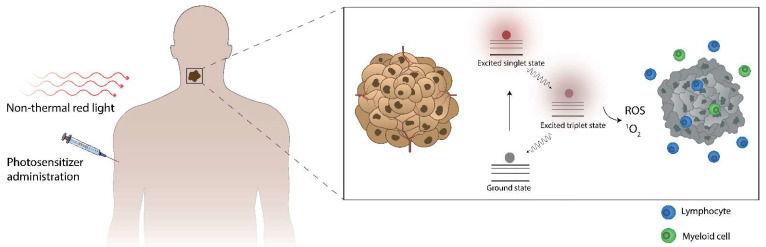
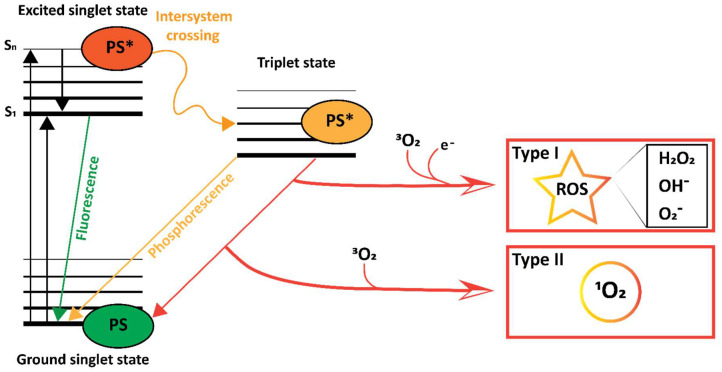
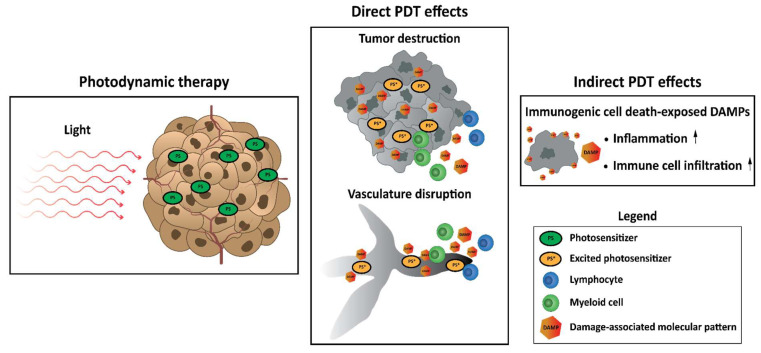
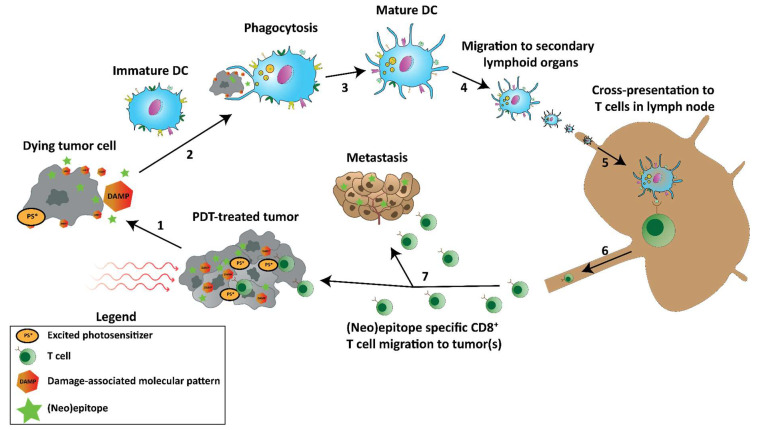
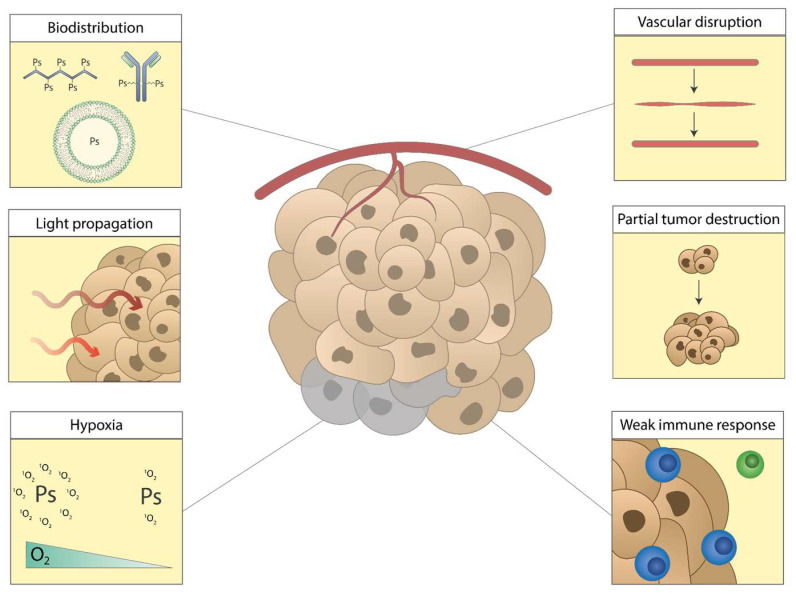
BACKGROUND: Photodynamic therapy (PDT) is an established, minimally invasive treatment for specific types of cancer. During PDT, reactive oxygen species (ROS) are generated that ultimately induce cell death and disruption of the tumor area. Moreover, PDT can result in damage to the tumor vasculature and induce the release and/or exposure of damage-associated molecular patterns (DAMPs) that may initiate an antitumor immune response. However, there are currently several challenges of PDT that limit its widespread application for certain indications in the clinic. METHODS: A literature study was conducted to comprehensively discuss these challenges and to identify opportunities for improvement. RESULTS: The most notable challenges of PDT and opportunities to improve them have been identified and discussed. CONCLUSIONS: The recent efforts to improve the current challenges of PDT are promising, most notably those that focus on enhancing immune responses initiated by the treatment. The application of these improvements has the potential to enhance the antitumor efficacy of PDT, thereby broadening its potential application in the clinic.
Overview
The claims and statistics of this paper haven’t been checked yet.
Run the check — free, no account needed. It reads the open-access text and checks the sources it cites.
Integrity signals
Registry
Cites
Statistics
Figures
Verification
Claims the paper makes
The claims and statistics of this paper haven’t been checked yet.
Run the check — free, no account needed. It reads the open-access text and checks the sources it cites.
Claims other papers make about this one
Each is checked against this paper’s own text: does it say what the citing paper says it does?
The source backs part of the claim, not all of it — or backs it for a different population, condition or comparison.
In the citing paper
“This combination produces ROS, which can cause oxidative damage to targeted cells, including bacteria, fungi, parasites, viruses, and cancer cells, without significantly harming healthy tissues [134,135].”
From Emerging Applications of Chlorella sp. and Spirulina (Arthrospira) sp. (2023) · cites this paper as [134]
Experimental — accuracy not yet measured
Self-check
Percentages, sums and reported differences re-computed from the paper’s own numbers.
The self-check needs the paper’s full text.
Citations
Cites
Valadi, H., Ekström, K., Bossios, A., Sjöstrand, M., Lee, J. J., & Lötvall, J. O. (2007) · Nature Cell Biology · doi:10.1038/ncb1596 · Cited by 12,834
Photodynamic therapy for cancer
Dolmans, D. E. J. G. J., Fukumura, D., & Jain, R. K. (2003) · Nature reviews. Cancer · doi:10.1038/nrc1071 · Cited by 6,850
Galluzzi, L., Vitale, I., Aaronson, S. A., Abrams, J. M., Adam, D., Agostinis, P., Alnemri, E. S., Altucci, L., Amelio, I., Andrews, D. W., et al. (2018) · Cell Death & Differentiation · doi:10.1038/s41418-017-0012-4 · Cited by 6,680
Photodynamic therapy of cancer: An update
Agostinis, P., Berg, K., Cengel, K. A., Foster, T. H., Girotti, A. W., Gollnick, S. O., Hahn, S. M., Hamblin, M. R., Juzeniene, A., Kessel, D., et al. (2011) · CA: A Cancer Journal for Clinicians · doi:10.3322/caac.20114 · Cited by 5,145
Release of chromatin protein HMGB1 by necrotic cells triggers inflammation
Scaffidi, P., Misteli, T., & Bianchi, M. E. (2002) · Nature · doi:10.1038/nature00858 · Cited by 4,221
Activation of apoptosis signalling pathways by reactive oxygen species
Redza-Dutordoir, M., & Averill-Bates, D. A. (2016) · Biochimica et Biophysica Acta (BBA) - Molecular Cell Research · doi:10.1016/j.bbamcr.2016.09.012 · Cited by 3,731
Immunogenic Cell Death in Cancer Therapy
Kroemer, G., Galluzzi, L., Kepp, O., & Zitvogel, L. (2013) · Annual Review of Immunology · doi:10.1146/annurev-immunol-032712-100008 · Cited by 3,303
Yang, Y., Li, S., Yang, Q., Shi, Y., Zheng, M., Liu, Y., Chen, F., Song, G., Xu, H., Wan, T., et al. (2014) · Cellular Physiology and Biochemistry · doi:10.1159/000358696 · Cited by 3,263
Immunogenic cell death and DAMPs in cancer therapy
Krysko, D. V., Garg, A. D., Kaczmarek, A., Krysko, O., Agostinis, P., & Vandenabeele, P. (2012) · Nature Reviews Cancer · doi:10.1038/nrc3380 · Cited by 3,223
Calreticulin exposure dictates the immunogenicity of cancer cell death
Obeid, M., Tesniere, A., Ghiringhelli, F., Fimia, G. M., Apetoh, L., Perfettini, J.-L., Castedo, M., Mignot, G., Panaretakis, T., Casares, N., et al. (2007) · Nature Medicine · doi:10.1038/nm1523 · Cited by 3,216
Research works printed but not linked: 3
- Raab, 1900, Uber die Wirkung, fluorescirender Stoffe auf infusorien, Z. Biol., 39, 524
- Tappeiner, 1904, Über die Wirkungen der photodynamischen (fluoreszierenden) Stoffe auf Protozoen und Enzyme, Deutsch. Arch. Klin. Med., 80, 427
- Lipson, 1961, The use of a derivative of hematoporhyrin in tumor detection, J. Natl. Cancer Inst., 26, 1
Cited by
Sorted by citations
Alvarez, N., & Sevilla, A. (2024) · International Journal of Molecular Sciences · doi:10.3390/ijms25021023 · Cited by 269
Photodynamic therapy for cancer: mechanisms, photosensitizers, nanocarriers, and clinical studies
Zhao, W., Wang, L., Zhang, M., Liu, Z., Wu, C., Pan, X., Huang, Z., Lu, C. T., & Quan, G. (2024) · MedComm · doi:10.1002/mco2.603 · Cited by 182
Emerging nitric oxide gas‐assisted cancer photothermal treatment
Liang, S., Liu, Y., Zhu, H., Liao, G., Zhu, W., & Zhang, L. (2024) · Exploration · doi:10.1002/exp.20230163 · Cited by 138
Emerging Applications of Chlorella sp. and Spirulina (Arthrospira) sp.
Abreu, A. P., Martins, R., & Nunes, J. (2023) · Bioengineering · doi:10.3390/bioengineering10080955 · Cited by 119
A Comprehensive Review of Inorganic Sonosensitizers for Sonodynamic Therapy
Chen, P., Zhang, P., Shah, N. H., Cui, Y., & Wang, Y. (2023) · International Journal of Molecular Sciences · doi:10.3390/ijms241512001 · Cited by 83
Metadata
- Authors
- Huis in ‘t Veld, R. V., Heuts, J., Ma, S., Cruz, L. J., Ossendorp, F. A., & Jager, M. J.
- Affiliations
- Department of Ophthalmology, Leiden University Medical Centre (LUMC), 2333 ZA Leiden, Zuid-Holland, The Netherlands
- Leiden University Medical Center (NL)
- Venue
- Pharmaceutics
- Publisher
- MDPI AG
- Published
- 2023-01-18
- Volume
- 15
- Issue
- 2
- Pages
- 330
- ISSN
- 1999-4923 (ISSN-L)
- PMC
- PMC9965442
- OpenAlex
- W4317425740
- Cited by
- 159
- References
- 338
- Citations by year
- 2026: 35 · 2025: 50 · 2024: 48 · 2023: 26
- FWCI
- 7.36
- Type
- journal article
- Language
- en
- Open access
- gold
- doi.org
- Licence
- Locations
- Pharmaceutics (publishedVersion, cc-by)
- PubMed Central (publishedVersion, cc-by)
- PubMed (publishedVersion)
- DOAJ (DOAJ: Directory of Open Access Journals) (submittedVersion, cc-by-sa)
- Funders
- Health-Holland (LSHM19061)
- Topics
- Life Sciences › Biochemistry, Genetics and Molecular Biology › Cancer Research › Photodynamic Therapy Research Studies
- Physical Sciences › Engineering › Biomedical Engineering › Nanoplatforms for cancer theranostics
- Health Sciences › Medicine › Dermatology › Nonmelanoma Skin Cancer Studies
- Keywords
- photodynamic therapy, cancer therapy, reactive oxygen species, cancer cell death, damage-associated molecular patterns, antitumor immunity, immunotherapy
About these checks
Registry, retraction, Cites and statistics results are computed, not judged, with one exception: a printed reference that no index lists is read once by a model before it counts as a citation error. Claims are extracted by a model and kept only when their quote appears verbatim in the text; each cited source is then checked, with a model’s help, for whether it says what the claim relies on. Those verdicts can be wrong — read the claim’s quote and the cited source before relying on one.
Statistics and arithmetic are recomputed, not judged.
Confidence bands are shown only for fields calibrated on our annotated test set. None is calibrated yet, so no band is shown.
What counts as a claim ›How we measure confidence ›How we check this ›
Are you an author, or do you see a problem with this page? Request a review
