

The DOI matches its Crossref record; 65 of the 68 references it cites were found in a registry or an index.
Exogenous Paclobutrazol Reinforces the Antioxidant and Antimicrobial Properties of Lavender (Lavandula officinalis L.) Oil through Modulating Its Composition of Oxygenated Terpenes
Open accessAbstract
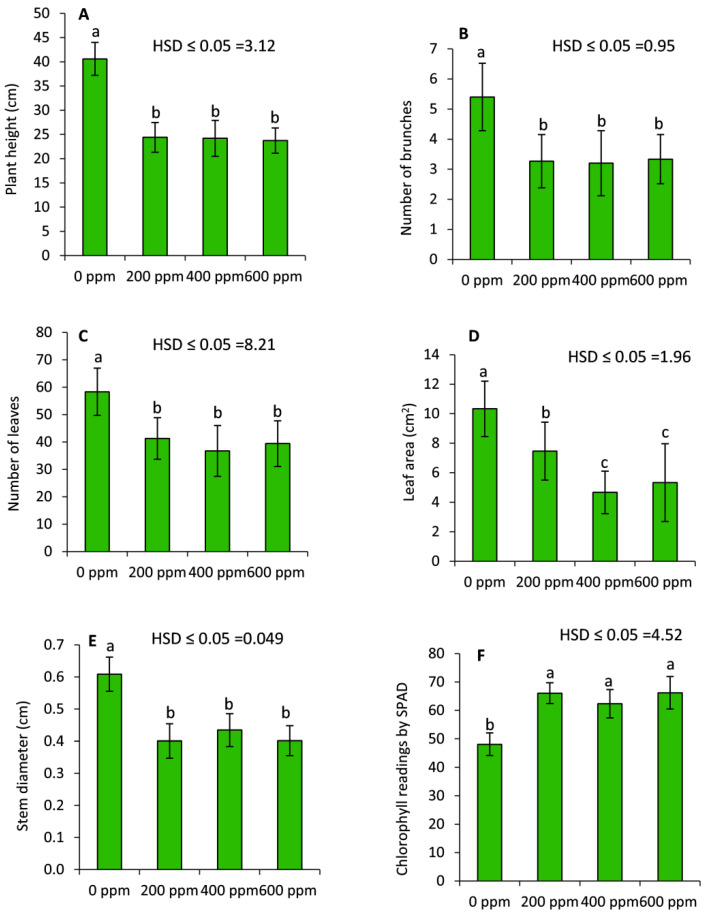
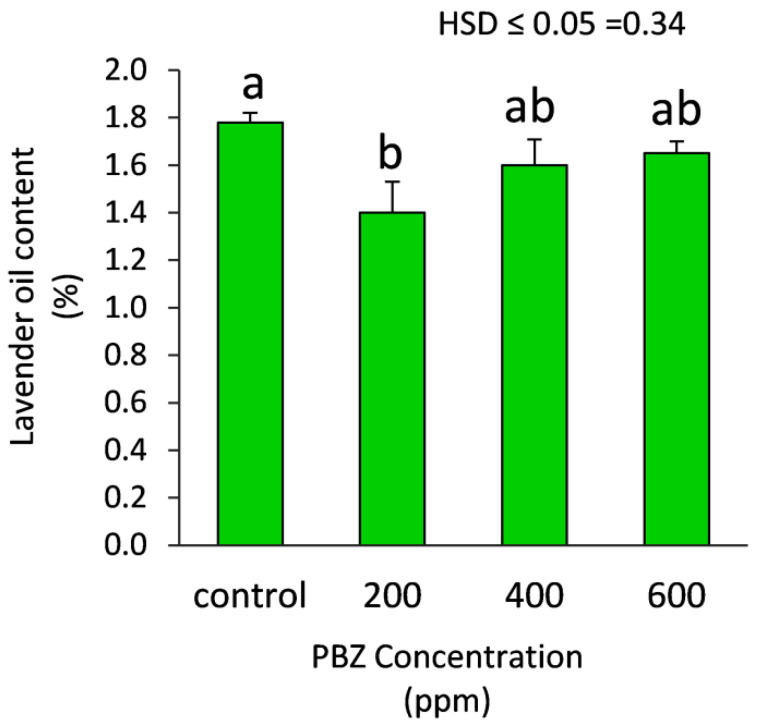
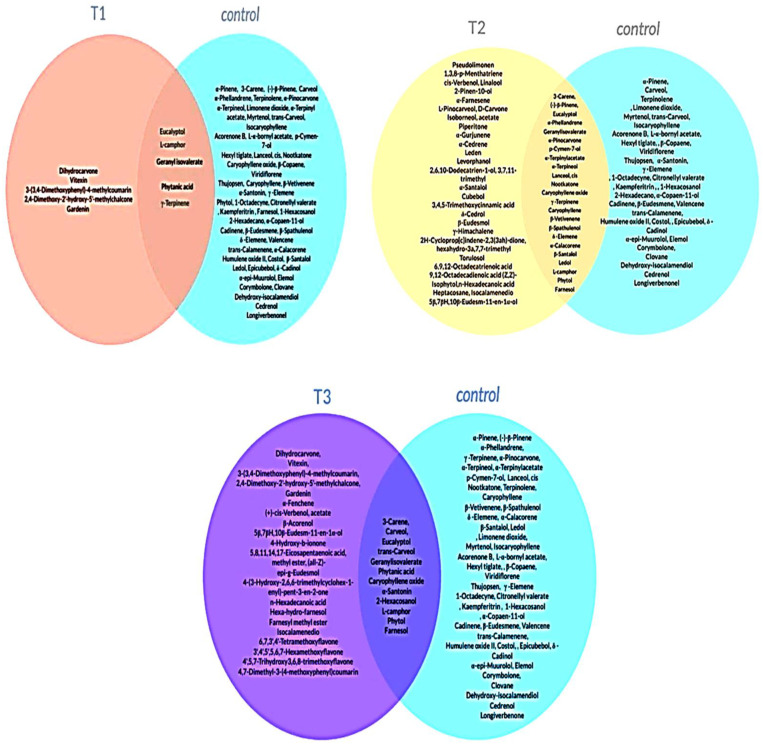
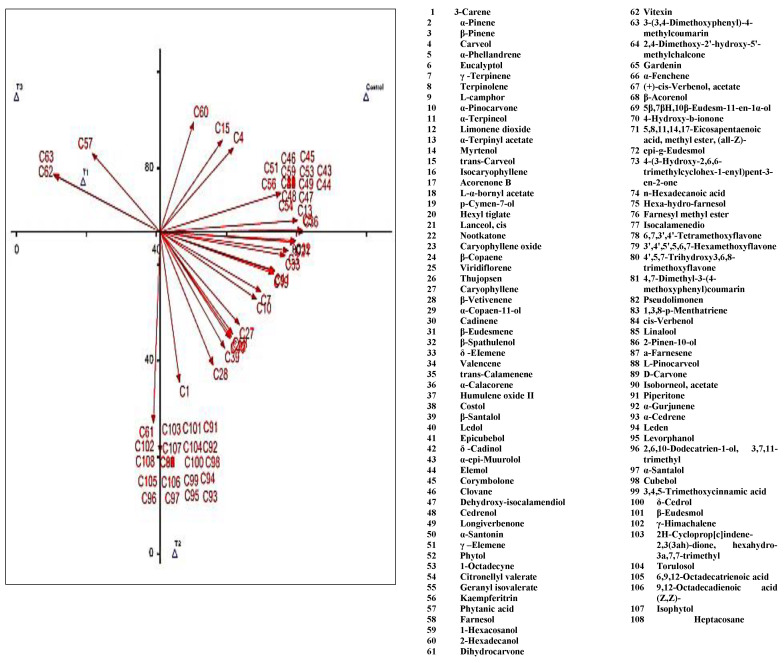
Plant growth regulators can affect the primary and secondary metabolites of various plant species. However, the effect of paclobutrazol (PBZ) on the composition of lavender oil, especially related to the terpenoid pathway, is still unclear in literatures. In this study, the effect of PBZ as a foliar spray (0.200, 400 and 600 ppm) on the vegetative growth, phytochemical content, and both antioxidant and antimicrobial properties of lavender oil were investigated. The results indicated that all examined PBZ treatments led to a significant (p ≤ 0.05) decrease in growth parameters compared to the untreated plants. Meanwhile, the yield of essential oil was significantly decreased by the treatment of PBZ at 200 ppm compared to the control. In contrast, applied-PBZ significantly enhanced the chlorophyll content and displayed a marked change in the composition of the essential oil. This change included an obvious and significant increase in 3-carene, eucalyptol, γ–terpinene, α-pinocarvone, caryophyllene, β-vetivenene, β-santalol, ledol, geranyl isovalerate, farnesol, caryophyllene oxide, and phytol percentage. Generally, the highest significant values were achieved by the treatment of 400 ppm compared to the other treatments. Furthermore, this treatment showed the highest free radical scavenging activity against DPPH (1,1-diphenyl-2-picrylhydrazyl) by 13% over the control. Additionally, to determine the antimicrobial activities of the extracted oil, each treatment was examined against two strains of Gram positive bacteria (S. aureus and B. cereus), two strains of Gram negative bacteria (S. enteritidis and E. coli), and two fungal species (C. albicans and A. niger) represent the yeast modal and filamentous fungus, respectively. The findings demonstrated that all examined species were more sensitive to the oil that was extracted from lavender plants, treated with 400 ppm PBZ, compared to the other concentrations.
Overview
The claims and statistics of this paper haven’t been checked yet.
Run the check — free, no account needed. It reads the open-access text and checks the sources it cites.
Integrity signals
Registry
Cites
Statistics
Figures
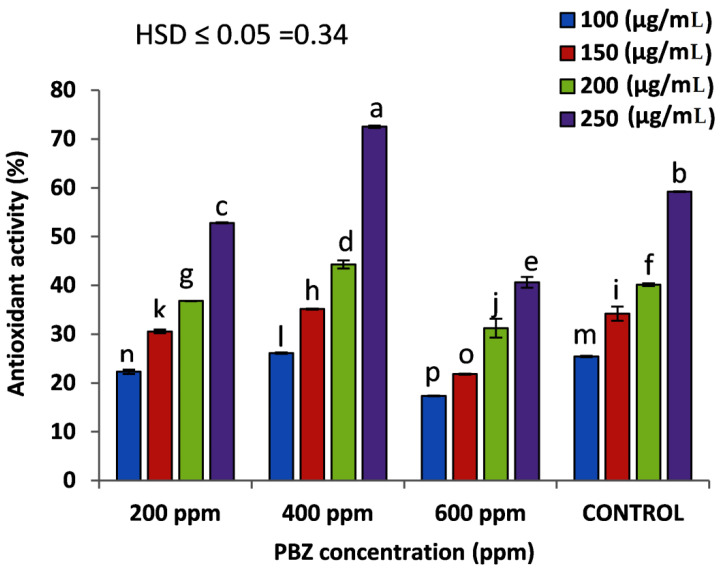
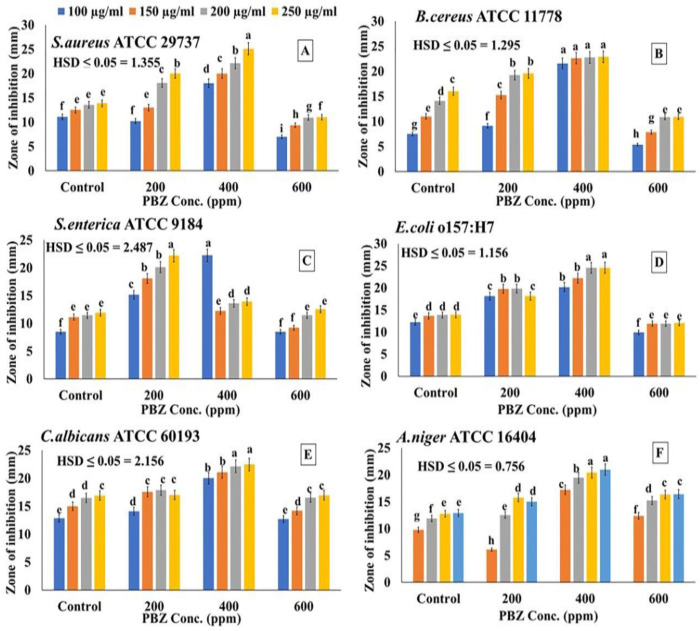
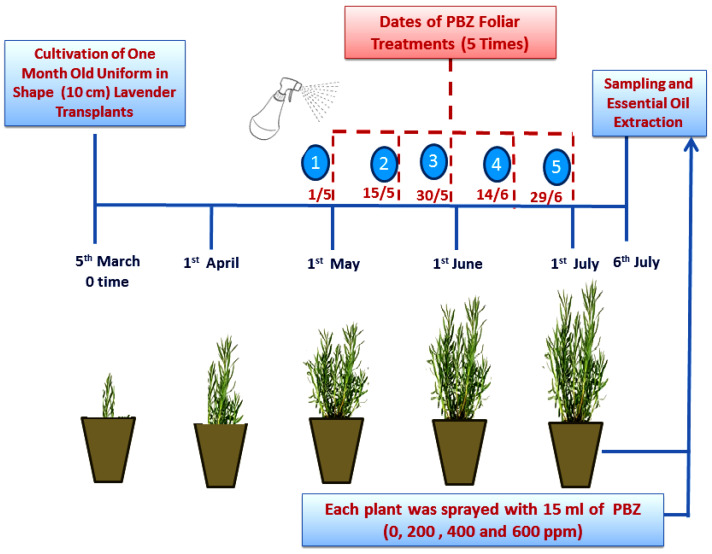
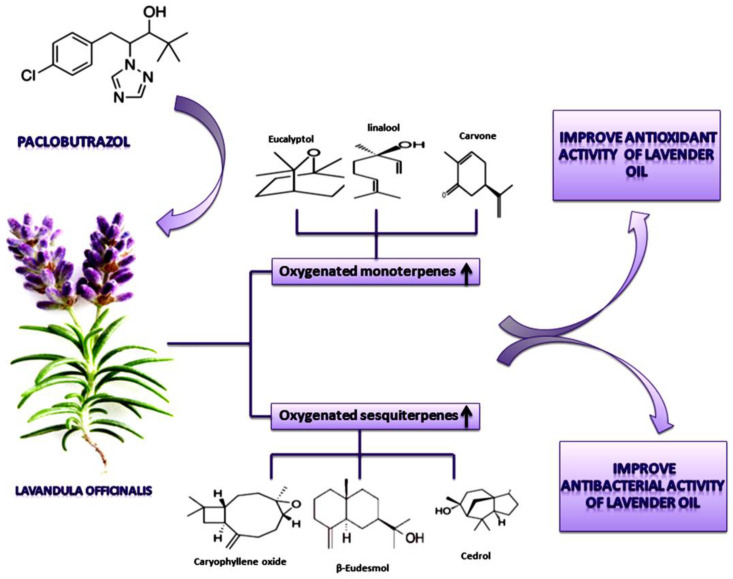
Verification
Claims the paper makes
The claims and statistics of this paper haven’t been checked yet.
Run the check — free, no account needed. It reads the open-access text and checks the sources it cites.
Self-check
Percentages, sums and reported differences re-computed from the paper’s own numbers.
The self-check needs the paper’s full text.
Citations
Cites
Essential oils: Their antibacterial properties and potential applications in foods—A review
Burt, S. (2004) · International Journal of Food Microbiology · doi:10.1016/j.ijfoodmicro.2004.03.022 · Cited by 10,488
Hyldgaard, M., Mygind, T., & Meyer, R. L. (2012) · Frontiers in Microbiology · doi:10.3389/fmicb.2012.00012 · Cited by 2,191
Antimicrobial Activity of Some Essential Oils—Present Status and Future Perspectives
Chouhan, S., Sharma, K., & Guleria, S. (2017) · Medicines · doi:10.3390/medicines4030058 · Cited by 1,697
Factors affecting secondary metabolite production in plants: volatile components and essential oils
Figueiredo, A. C., Barroso, J. G., Pedro, L. G., & Scheffer, J. J. C. (2008) · Flavour and Fragrance Journal · doi:10.1002/ffj.1875 · Cited by 1,377
Biological Activities of Essential Oils: From Plant Chemoecology to Traditional Healing Systems
Sharifi-Rad, J., Sureda, A., Tenore, G., Daglia, M., Sharifi-Rad, M., Valussi, M., Tundis, R., Sharifi-Rad, M., Loizzo, M., Ademiluyi, A., et al. (2017) · Molecules · doi:10.3390/molecules22010070 · Cited by 889
Antibacterial Activity of Terpenes and Terpenoids Present in Essential Oils
Guimarães, A. C., Meireles, L. M., Lemos, M. F., Guimarães, M. C. C., Endringer, D. C., Fronza, M., & Scherer, R. (2019) · Molecules · doi:10.3390/molecules24132471 · Cited by 861
Oussalah, M., Caillet, S., Saucier, L., & Lacroix, M. (2006) · Food Control · doi:10.1016/j.foodcont.2005.11.009 · Cited by 816
Antioxidant Activity of Essential Oils
Amorati, R., Foti, M. C., & Valgimigli, L. (2013) · Journal of Agricultural and Food Chemistry · doi:10.1021/jf403496k · Cited by 803
Bharath, P., Gahir, S., & Raghavendra, A. S. (2021) · Frontiers in Plant Science · doi:10.3389/fpls.2021.615114 · Cited by 545
Zengin, H., & Baysal, A. (2014) · Molecules · doi:10.3390/molecules191117773 · Cited by 519
Research works printed but not linked: 4
- Salehi, 2018, Plants of the genus Lavandula: From farm to pharmacy, Nat. Prod. Commun., 13, 1934578X1801301037
- Sikora, 2008, The application of essentials oils to natural and organic cosmetics, Pol. J. Cosmetol., 11, 89
- Vaishnavi, 2021, Strategies to Improve Stability of Essential Oils, J. Pharm. Sci. Res., 13, 416
- Ershadi, 2014, Paclobutrazol-induced biochemical changes in pomegranate (Punica granatum L.) cv. ‘Malas Saveh’ under freezing stress, Int. J. Hortic. Sci. Technol., 1, 181
Cited by
Sorted by citations
Ansabayeva, A., Makhambetov, M., Rebouh, N. Y., Abdelkader, M., Saudy, H. S., Hassan, K. M., Nasser, M. A. E.-H., Ali, M. A. A., & Ebrahim, M. (2025) · Horticulturae · doi:10.3390/horticulturae11030260 · Cited by 178
Self-citationAli, M. A. A., Nasser, M. A. E.-H., Abdelhamid, A. N., Ali, I. A. A., Saudy, H. S., & Hassan, K. M. (2023) · Journal of soil science and plant nutrition · doi:10.1007/s42729-023-01586-9 · Cited by 86
Self-citationHassan, K. M., Ajaj, R., Abdelhamid, A. N., Ebrahim, M., Hassan, I. F. Z., Hassan, F. A. S., Alam‐Eldein, S. M., & Ali, M. A. A. (2024) · Horticulturae · doi:10.3390/horticulturae10080806 · Cited by 53
Self-citationEl-Nasr, M. K. A., Hassan, K. M., Abd-Elhalim, B. T., Kucher, D. E., Rebouh, N. Y., Ansabayeva, A., Abdelkader, M., Ali, M. A. A., & Nasser, M. A. E.-H. (2025) · Plants · doi:10.3390/plants14142192 · Cited by 42
Self-citationEmam, T. M., Hosni, A., Ismail, A., El-Kinany, R. G., Hewidy, M., Saudy, H. S., Omar, M., Ibrahim, M. T. S., Sui, S., & El-Sayed, S. M. (2024) · Journal of soil science and plant nutrition · doi:10.1007/s42729-024-02125-w · Cited by 31
Self-citation
Metadata
- Authors
- El-Sayed, S. M., Hassan, K. M., Abdelhamid, A. N., Yousef, E. E., Abdellatif, Y. M. R., Abu-Hussien, S. H., Nasser, M. A., Elshalakany, W. A., Darwish, D. B. E., Abdulmajeed, A. M., Alabdallah, N. M., Al-Qahtani, S. M., Al-Harbi, N. A., Dessoky, E. S., Ashour, H., & Ibrahim, M. F. M.
- Affiliations
- Ain Shams University (EG)
- Department of Agricultural Botany, Faculty of Agriculture, Ain Shams University, Cairo 11566, Egypt
- Mansoura University (EG)
- University of Tabuk (SA)
- Imam Abdulrahman Bin Faisal University (SA)
- Biology Department, University College of Tayma, University of Tabuk, P.O. Box 741, Tabuk 47512, Saudi Arabia
- Taif University (SA)
- Corresponding author
- Ibrahim, Mohamed F. M.
- ORCID
- Venue
- Plants
- Publisher
- MDPI AG
- Published
- 2022-06-19
- Volume
- 11
- Issue
- 12
- Pages
- 1607
- ISSN
- 2223-7747 (ISSN-L)
- PMC
- PMC9230930
- OpenAlex
- W4283162630
- Cited by
- 25
- References
- 68
- Citations by year
- 2026: 5 · 2025: 11 · 2024: 5 · 2023: 3 · 2022: 1
- FWCI
- 2.66
- Type
- journal article
- Language
- en
- Open access
- gold
- doi.org
- Licence
- Locations
- Plants (publishedVersion, cc-by)
- PubMed Central (publishedVersion, cc-by)
- PubMed (publishedVersion)
- DOAJ (DOAJ: Directory of Open Access Journals) (submittedVersion, cc-by-sa)
- Funders
- Ain Shams University, Faculty of Agriculture, Cairo, Egypt
- Topics
- Life Sciences › Agricultural and Biological Sciences › Food Science › Essential Oils and Antimicrobial Activity
- Life Sciences › Biochemistry, Genetics and Molecular Biology › Molecular Biology › Plant biochemistry and biosynthesis
- Life Sciences › Agricultural and Biological Sciences › Plant Science › Flowering Plant Growth and Cultivation
- Keywords
- paclobutrazol, Lavandula angustifolia, lavender essential oil, plant growth regulators, oxygenated terpenes, essential oil composition, antioxidant activity, antimicrobial activity, free radical scavenging, DPPH, essential oil yield, vegetative growth, chlorophyll content, Staphylococcus aureus, Bacillus cereus, Salmonella Enteritidis, Escherichia coli, Candida albicans, Aspergillus niger, foliar application
About these checks
Registry, retraction, Cites and statistics results are computed, not judged, with one exception: a printed reference that no index lists is read once by a model before it counts as a citation error. Claims are extracted by a model and kept only when their quote appears verbatim in the text; each cited source is then checked, with a model’s help, for whether it says what the claim relies on. Those verdicts can be wrong — read the claim’s quote and the cited source before relying on one.
Statistics and arithmetic are recomputed, not judged.
Confidence bands are shown only for fields calibrated on our annotated test set. None is calibrated yet, so no band is shown.
What counts as a claim ›How we measure confidence ›How we check this ›
Are you an author, or do you see a problem with this page? Request a review
