

The DOI matches its Crossref record; 33 of the 33 references it cites were found in a registry or an index.
Continuous Monitoring of Turning in Patients with Movement Disability
Open accessAbstract
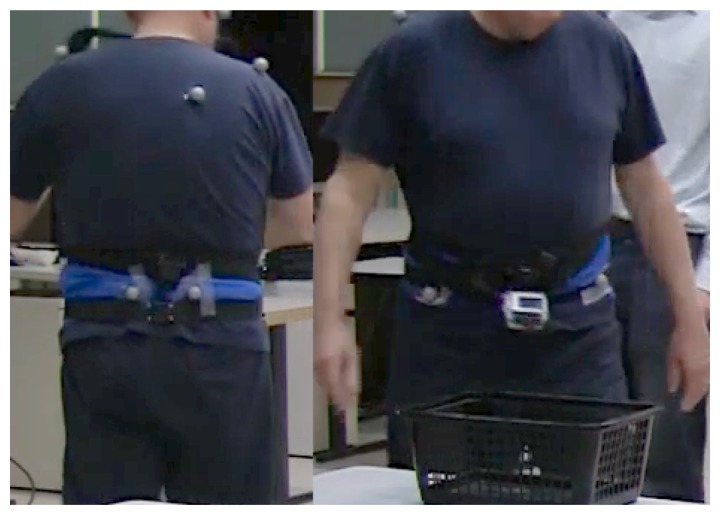
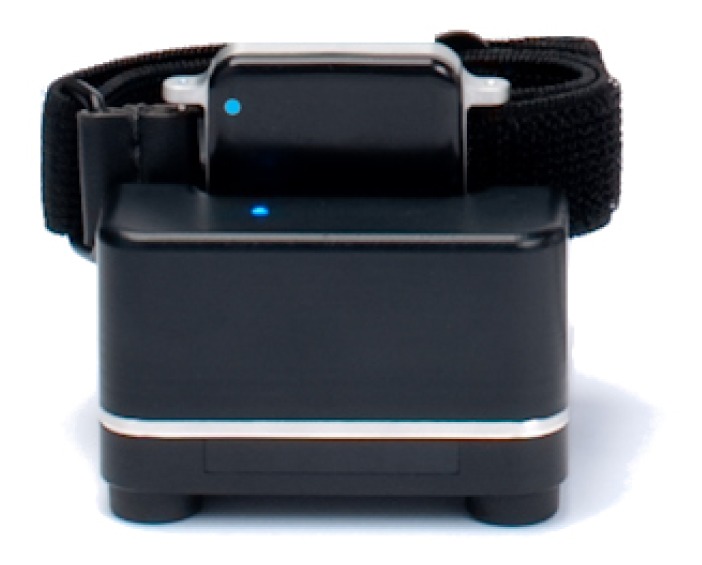
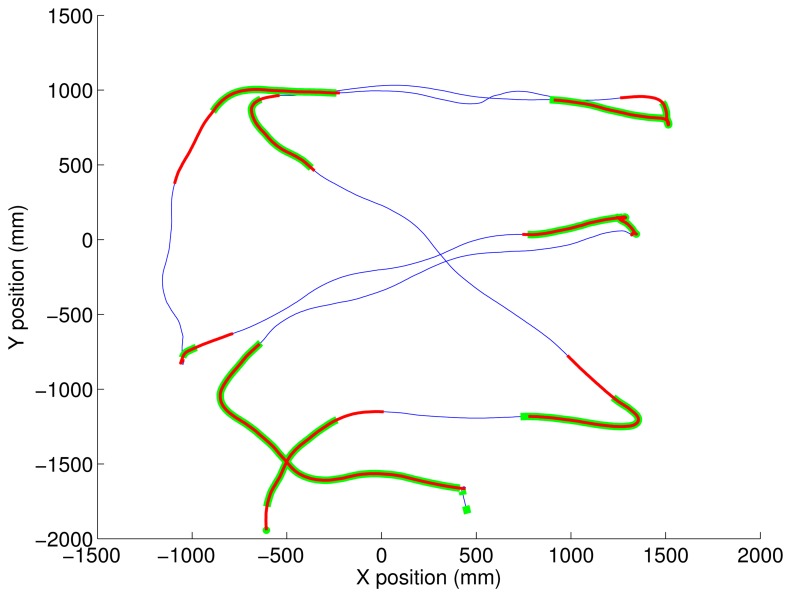
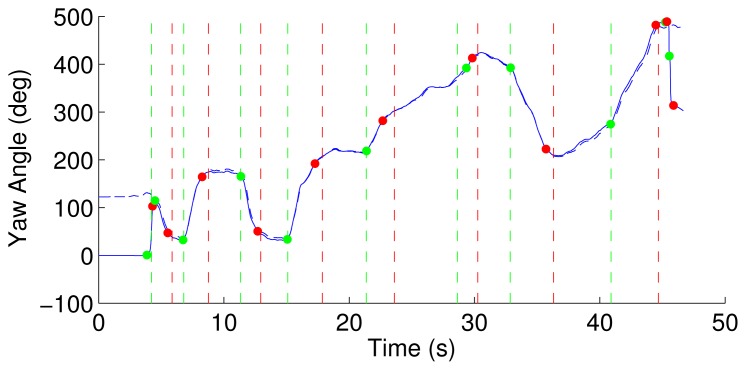
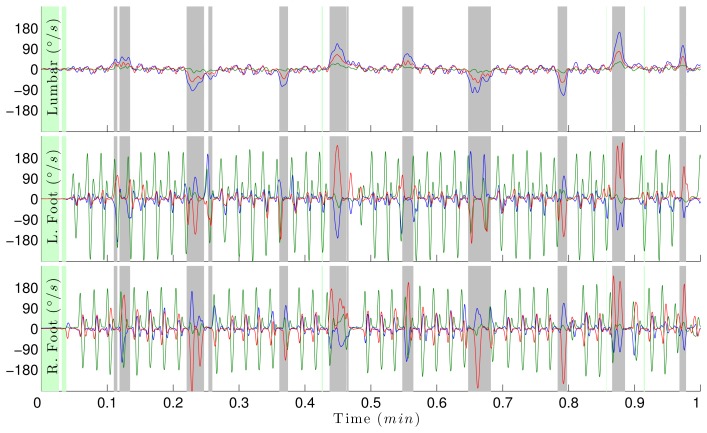
Difficulty with turning is a major contributor to mobility disability and falls in people with movement disorders, such as Parkinson’s disease (PD). Turning often results in freezing and/or falling in patients with PD. However, asking a patient to execute a turn in the clinic often does not reveal their impairments. Continuous monitoring of turning with wearable sensors during spontaneous daily activities may help clinicians and patients determine who is at risk of falls and could benefit from preventative interventions. In this study, we show that continuous monitoring of natural turning with wearable sensors during daily activities inside and outside the home is feasible for people with PD and elderly people. We developed an algorithm to detect and characterize turns during gait, using wearable inertial sensors. First, we validate the turning algorithm in the laboratory against a Motion Analysis system and against a video analysis of 21 PD patients and 19 control (CT) subjects wearing an inertial sensor on the pelvis. Compared to Motion Analysis and video, the algorithm maintained a sensitivity of 0.90 and 0.76 and a specificity of 0.75 and 0.65, respectively. Second, we apply the turning algorithm to data collected in the home from 12 PD and 18 CT subjects. The algorithm successfully detects turn characteristics, and the results show that, compared to controls, PD subjects tend to take shorter turns with smaller turn angles and more steps. Furthermore, PD subjects show more variability in all turn metrics throughout the day and the week.
Overview
The claims and statistics of this paper haven’t been checked yet.
Run the check — free, no account needed. It reads the open-access text and checks the sources it cites.
Integrity signals
Registry
Cites
Statistics
Figures
Verification
Claims the paper makes
The claims and statistics of this paper haven’t been checked yet.
Run the check — free, no account needed. It reads the open-access text and checks the sources it cites.
Claims other papers make about this one
Each is checked against this paper’s own text: does it say what the citing paper says it does?
In the citing paper
“The present findings are also in line with other studies measuring remote physical activity in PD, which were traditionally performed over shorter timeframes (i.e., 1 day to 1 week).”
From Evaluation of smartphone‐based testing to generate exploratory outcome measures in a phase 1 Parkinson's disease clinical trial (2018) · cites this paper as [48]
In the citing paper
“These reported significantly less motor activity in PD compared to controls (e.g., fewer steps and shorter bouts of physical activity,48, 70) some of which were related to disease severity71”
From Evaluation of smartphone‐based testing to generate exploratory outcome measures in a phase 1 Parkinson's disease clinical trial (2018) · cites this paper as [48]
Self-check
Percentages, sums and reported differences re-computed from the paper’s own numbers.
The self-check needs the paper’s full text.
Citations
Cites
Gait Analysis Using Wearable Sensors
Tao, W., Liu, T., Zheng, R., & Feng, H. (2012) · Sensors · doi:10.3390/s120202255 · Cited by 1,252
Physical performance measures in the clinical setting
Studenski, S., Perera, S., Wallace, D., Chandler, J. M., Duncan, P. W., Rooney, E., Fox, M., & Guralnik, J. M. (2003) · Journal of the American Geriatrics Society · doi:10.1046/j.1532-5415.2003.51104.x · Cited by 1,218
Ganz, D., Bao, Y., Shekelle, P., & Rubenstein, L. (2007) · Journal of the American Medical Association (JAMA) · doi:10.1001/jama.297.1.77 · Cited by 878
Prospective assessment of falls in Parkinson's disease
Bloem, B. R., Grimbergen, Y. A. M., Cramer, M., Willemsen, M., & Zwinderman, A. H. (2001) · Journal of Neurology · doi:10.1007/s004150170047 · Cited by 869
Wearable Assistant for Parkinson’s Disease Patients With the Freezing of Gait Symptom
Bachlin, M., Plotnik, M., Roggen, D., Maidan, I., Hausdorff, J. M., Giladi, N., & Troster, G. (2010) · IEEE Transactions on Information Technology in Biomedicine · doi:10.1109/titb.2009.2036165 · Cited by 693
A meta‐analysis of six prospective studies of falling in Parkinson's disease
Pickering, R. M., Grimbergen, Y. A. M., Rigney, U., Ashburn, A., Mazibrada, G., Wood, B. H., Gray, P., Kerr, G., & Bloem, B. R. (2007) · Movement Disorders · doi:10.1002/mds.21598 · Cited by 587
Properties of the ‘Timed Up and Go’ Test: More than Meets the Eye
Herman, T., Giladi, N., & Hausdorff, J. M. (2010) · Gerontology · doi:10.1159/000314963 · Cited by 575
Fall Frequency and Characteristics and the Risk of Hip Fractures
Cumming, R. G., & Klineberg, R. J. (1994) · Journal of the American Geriatrics Society · doi:10.1111/j.1532-5415.1994.tb06540.x · Cited by 418
Moe‐Nilssen, R. (1998) · Clinical Biomechanics · doi:10.1016/s0268-0033(98)00089-8 · Cited by 406
Zampieri, C., Salarian, A., Carlson‐Kuhta, P., Aminian, K., Nutt, J. G., & Horak, F. B. (2009) · Journal of Neurology Neurosurgery & Psychiatry · doi:10.1136/jnnp.2009.173740 · Cited by 367
Self-citationMoore, O., Peretz, C., & Giladi, N. (2007) · Movement Disorders · doi:10.1002/mds.21659 · Cited by 348
On-Shoe Wearable Sensors for Gait and Turning Assessment of Patients With Parkinson's Disease
Mariani, B., Jiménez, M. C., Vingerhoets, F. J. G., & Aminian, K. (2013) · IEEE Transactions on Biomedical Engineering · doi:10.1109/tbme.2012.2227317 · Cited by 277
Shoulder and Elbow Joint Angle Tracking With Inertial Sensors
El‐Gohary, M., & McNames, J. (2012) · IEEE Transactions on Biomedical Engineering · doi:10.1109/tbme.2012.2208750 · Cited by 264
Self-citationObjective biomarkers of balance and gait for Parkinson's disease using body‐worn sensors
Horak, F. B., & Mancini, M. (2013) · Movement Disorders · doi:10.1002/mds.25684 · Cited by 256
Self-citationMancini, M., Zampieri, C., Carlson‐Kuhta, P., Chiari, L., & Horak, F. B. (2009) · European Journal of Neurology · doi:10.1111/j.1468-1331.2009.02641.x · Cited by 177
Self-citationFeldman, F., & Robinovitch, S. N. (2007) · Journal of Biomechanics · doi:10.1016/j.jbiomech.2007.01.019 · Cited by 169
Latt, M. D., Menz, H. B., Fung, V. S. C., & Lord, S. R. (2009) · The Journals of Gerontology Series A · doi:10.1093/gerona/glp009 · Cited by 156
Quantification of Motor Impairment in Parkinson's Disease Using an Instrumented Timed Up and Go Test
Palmerini, L., Mellone, S., Avanzolini, G., Valzania, F., & Chiari, L. (2013) · IEEE Transactions on Neural Systems and Rehabilitation Engineering · doi:10.1109/tnsre.2012.2236577 · Cited by 142
Self-citationDevelopment of a Clinical Measure of Turning for Older Adults
Dite, W., & Temple, V. A. (2002) · American Journal of Physical Medicine & Rehabilitation · doi:10.1097/00002060-200211000-00010 · Cited by 117
Real-Time Gait Cycle Parameter Recognition Using a Wearable Accelerometry System
Yang, C.-C., Hsu, Y., Shih, K., & Lu, J.-M. (2011) · Sensors · doi:10.3390/s110807314 · Cited by 116
Zampieri, C., Salarian, A., Carlson-Kuhta, P., Nutt, J. G., & Horak, F. B. (2011) · Parkinsonism & Related Disorders · doi:10.1016/j.parkreldis.2010.08.001 · Cited by 103
Self-citationdeFOG — A real time system for detection and unfreezing of gait of Parkinson’s patients
Jovanov, E., Wang, E. Q., Verhagen, L., Fredrickson, M., & Fratangelo, R. (2009) · Annual International Conference of the IEEE Engineering in Medicine and Biology Society (EMBC) · doi:10.1109/iembs.2009.5334257 · Cited by 98
Salarian, A., Zampieri, C., Horak, F. B., Carlson‐Kuhta, P., Nutt, J. G., & Aminian, K. (2009) · Annual International Conference of the IEEE Engineering in Medicine and Biology Society (EMBC) · doi:10.1109/iembs.2009.5333970 · Cited by 98
Self-citationDo Clinical Scales of Balance Reflect Turning Abnormalities in People With Parkinson's Disease?
King, L. A., Mancini, M., Priest, K. C., Salarian, A., Rodrigues-de-Paula, F., & Horak, F. B. (2012) · Neurology Report · doi:10.1097/npt.0b013e31824620d1 · Cited by 97
Self-citationEvaluation of Falls Risk in Community-Dwelling Older Adults Using Body-Worn Sensors
Greene, B. R., Doheny, E. P., Walsh, C., Cunningham, C., Crosby, L., & Kenny, R. A. (2012) · Gerontology · doi:10.1159/000337259 · Cited by 95
Detecting freezing-of-gait during unscripted and unconstrained activity
Cole, B. T., Roy, S. H., & Nawab, S. H. (2011) · Annual International Conference of the IEEE Engineering in Medicine and Biology Society (EMBC) · doi:10.1109/iembs.2011.6091367 · Cited by 92
A new actigraph for long-term registration of the duration and intensity of tremor and movement
Someren, E. J. W. V., Vonk, B. F. M., Thijssen, W. A., Speelman, J. D., Schuurman, P. R., Mirmiran, M., & Swaab, D. F. (1998) · IEEE Transactions on Biomedical Engineering · doi:10.1109/10.661163 · Cited by 91
Rochester, L., CHASTIN, S. F. M., Lord, S., Baker, K., & Burn, D. J. (2011) · Journal of Neurology · doi:10.1007/s00415-011-6301-9 · Cited by 71
A new approach in the assessment of motor activity in Parkinson's disease.
van Hilten, J. J., Middelkoop, H. A. M., KERKHOF, G. A., & Roos, R. A. C. (1991) · Journal of Neurology Neurosurgery & Psychiatry · doi:10.1136/jnnp.54.11.976 · Cited by 66
Stack, E. L., Jupp, K., & Ashburn, A. (2004) · Disability and Rehabilitation · doi:10.1080/09638280410001663085 · Cited by 62
Moore, S. T., Dilda, V., Hakim, B., & MacDougall, H. G. (2011) · BioMedical Engineering OnLine · doi:10.1186/1475-925x-10-82 · Cited by 43
A simple method to assess freezing of gait in Parkinson's disease patients
Popović, M. B., Djuric-Jovicic, M. D., Radovanovic, S. M., Petrović, I. N., & Kostić, V. (2010) · Brazilian Journal of Medical and Biological Research · doi:10.1590/s0100-879x2010007500077 · Cited by 33
Impaired mobility and Parkinson's disease
Ashburn, A., & Stack, E. L. (2008) · Disability and Rehabilitation · doi:10.1080/09638280701828898 · Cited by 2
Cited by
Sorted by citations
Toward Pervasive Gait Analysis With Wearable Sensors: A Systematic Review
Chen, S., Lach, J., Lo, B. P. L., & Yang, G. (2016) · IEEE Journal of Biomedical and Health Informatics · doi:10.1109/jbhi.2016.2608720 · Cited by 443
Free‐living monitoring of Parkinson's disease: Lessons from the field
Din, S. D., Godfrey, A., Mazzà, C., Lord, S., & Rochester, L. (2016) · Movement Disorders · doi:10.1002/mds.26718 · Cited by 377
Validity and repeatability of inertial measurement units for measuring gait parameters
Washabaugh, E. P., Kalyanaraman, T., Adamczyk, P. G., Claflin, E. S., & Krishnan, C. (2017) · Gait & Posture · doi:10.1016/j.gaitpost.2017.04.013 · Cited by 331
Lipsmeier, F., Taylor, K. I., Kilchenmann, T., Wolf, D., Scotland, A., Schjodt‐Eriksen, J., Cheng, W., Fernandez‐Garcia, I., Siebourg‐Polster, J., Jin, L., et al. (2018) · Movement Disorders · doi:10.1002/mds.27376 · Cited by 266
Role of Body-Worn Movement Monitor Technology for Balance and Gait Rehabilitation
Horak, F. B., King, L. A., & Mancini, M. (2014) · Physical Therapy · doi:10.2522/ptj.20140253 · Cited by 227
Self-citation
Metadata
- Authors
- El-Gohary, M., Pearson, S., McNames, J., Mancini, M., Horak, F., Mellone, S., & Chiari, L.
- Affiliations
- APDM, Inc., Portland, OR 97201, USA
- APDM (United States) (US)
- Oregon Health & Science University (US)
- Venue
- Sensors
- Publisher
- MDPI AG
- Published
- 2013-12-27
- Volume
- 14
- Issue
- 1
- Pages
- 356-369
- ISSN
- 1424-8220 (ISSN-L)
- PMC
- PMC3926561
- OpenAlex
- W2067428313
- Cited by
- 258
- References
- 33
- Citations by year
- 2026: 17 · 2025: 20 · 2024: 16 · 2023: 21 · 2022: 26 · 2021: 27 · 2020: 25 · 2019: 28 · 2018: 23 · 2017: 29 · 2016: 16 · 2015: 5 · 2014: 5
- FWCI
- 22.53
- Type
- journal article
- Language
- en
- Open access
- gold
- doi.org
- Licence
- Locations
- Sensors (publishedVersion, cc-by)
- Europe PMC (PubMed Central) (publishedVersion, other-oa)
- PubMed Central (publishedVersion, cc-by)
- PubMed (publishedVersion)
- PDXScholar (Portland State University) (submittedVersion)
- Archivio istituzionale della ricerca (Alma Mater Studiorum Università di Bologna) (submittedVersion, cc-by)
- DOAJ (DOAJ: Directory of Open Access Journals) (submittedVersion, cc-by-sa)
- Funders
- National Institute on Aging (R01AG006457)
- National Institute of Neurological Disorders and Stroke (R41NS076088)
- Topics
- Health Sciences › Health Professions › Physical Therapy, Sports Therapy and Rehabilitation › Balance, Gait, and Falls Prevention
- Physical Sciences › Computer Science › Computer Vision and Pattern Recognition › Context-Aware Activity Recognition Systems
- Physical Sciences › Engineering › Biomedical Engineering › Gait Recognition and Analysis
- Keywords
- turning, Parkinson's disease, mobility impairment, wearable inertial sensors, fall risk, freezing of gait, gait analysis, home monitoring, older adults, daily activities, turning angle, step count
- MeSH terms
- Aged, Algorithms, Female, Persons with Disabilities, Humans, Male, Middle Aged, Movement, Parkinson Disease, Biosensing Techniques
About these checks
Registry, retraction, Cites and statistics results are computed, not judged, with one exception: a printed reference that no index lists is read once by a model before it counts as a citation error. Claims are extracted by a model and kept only when their quote appears verbatim in the text; each cited source is then checked, with a model’s help, for whether it says what the claim relies on. Those verdicts can be wrong — read the claim’s quote and the cited source before relying on one.
Statistics and arithmetic are recomputed, not judged.
Confidence bands are shown only for fields calibrated on our annotated test set. None is calibrated yet, so no band is shown.
What counts as a claim ›How we measure confidence ›How we check this ›
Are you an author, or do you see a problem with this page? Request a review
